
Search
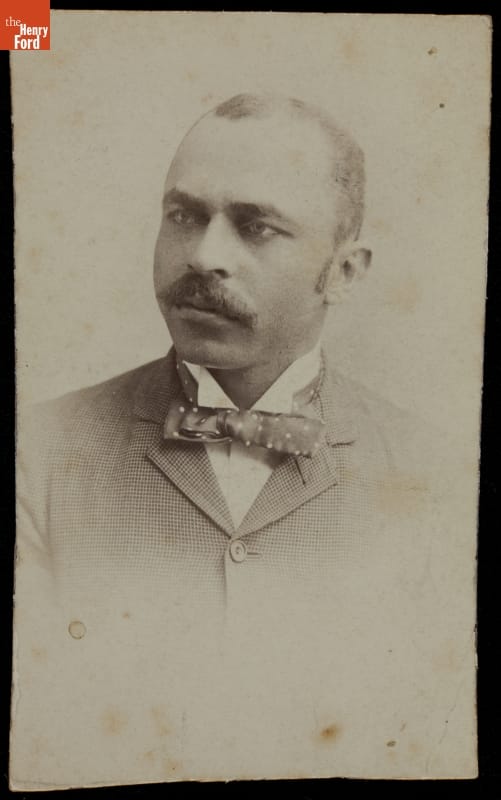
- Portrait of a Young Man Wearing a Bow Tie, circa 1890 -
- circa 1890
- Collections - Artifact
Portrait of a Young Man Wearing a Bow Tie, circa 1890
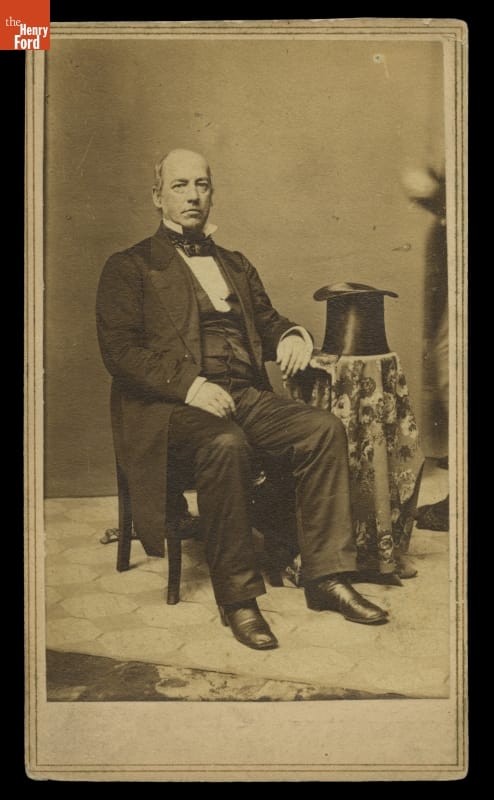
- Portrait of Caleb B. Smith, 1861-1863 - Cartes-de-visite, small, professionally made photographs on cardboard stock, remained popular in the United States from the Civil War in the 1860s through the 1880s. Many were given to friends and loved ones, but enterprising photographers also produced images of famous individuals to sell to the collecting-crazed public. Celebrities, military officers and politicians, such as Caleb Smith, President Abraham Lincoln's first Secretary of the Interior, were popular subjects.
- 1861-1863
- Collections - Artifact
Portrait of Caleb B. Smith, 1861-1863
Cartes-de-visite, small, professionally made photographs on cardboard stock, remained popular in the United States from the Civil War in the 1860s through the 1880s. Many were given to friends and loved ones, but enterprising photographers also produced images of famous individuals to sell to the collecting-crazed public. Celebrities, military officers and politicians, such as Caleb Smith, President Abraham Lincoln's first Secretary of the Interior, were popular subjects.
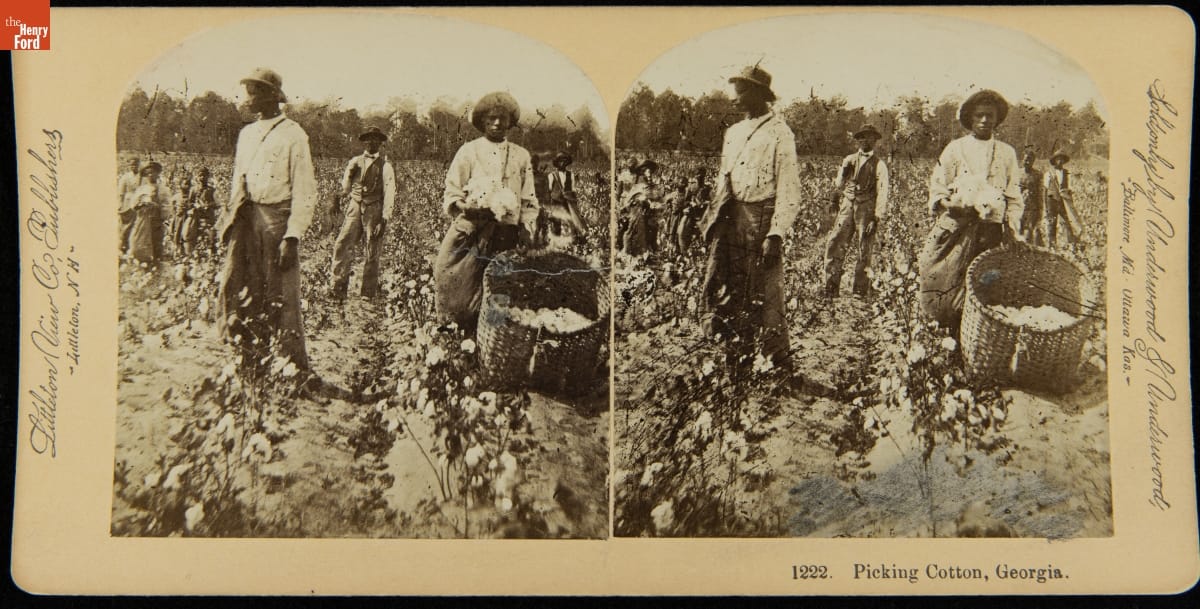
- Picking Cotton, Georgia, 1887 -
- 1887
- Collections - Artifact
Picking Cotton, Georgia, 1887
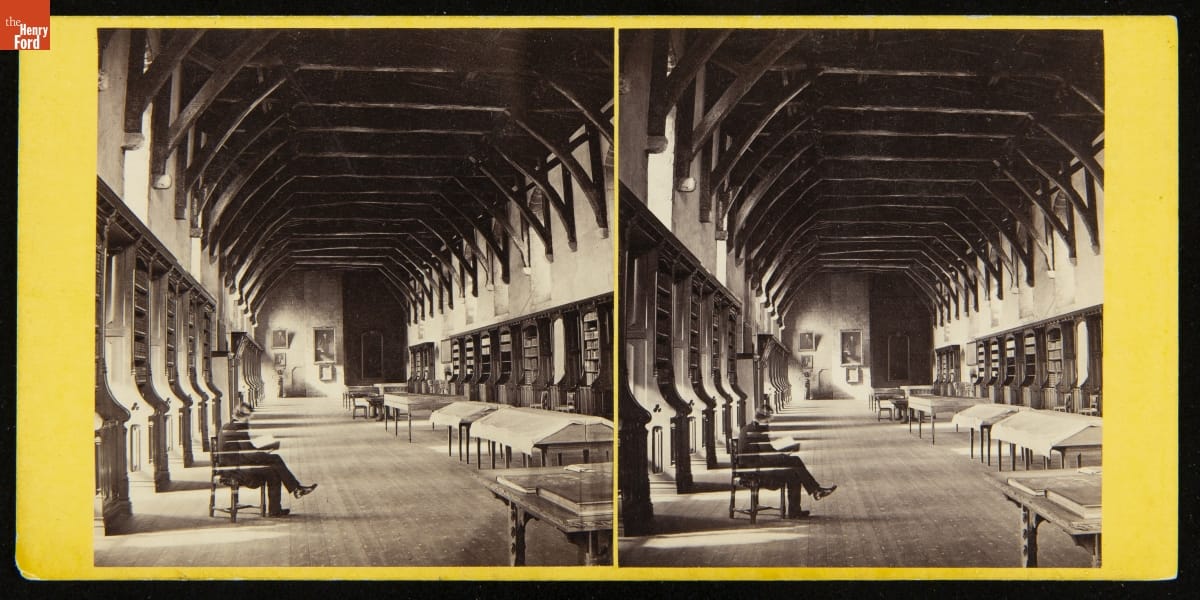
- Stereograph, "Durham Cathedral--The Library," 1870-1873 - The Durham Cathedral in northern England has housed a collection of religious texts, manuscripts, and secular works since its early founding. Dedicated areas throughout the Cathedral served as a library space over time. The library pictured in this stereograph opened in the mid-1800s to accommodate the Cathedral's growing collection.
- 1870-1873
- Collections - Artifact
Stereograph, "Durham Cathedral--The Library," 1870-1873
The Durham Cathedral in northern England has housed a collection of religious texts, manuscripts, and secular works since its early founding. Dedicated areas throughout the Cathedral served as a library space over time. The library pictured in this stereograph opened in the mid-1800s to accommodate the Cathedral's growing collection.
- Portrait of a Clergyman, circa 1865 -
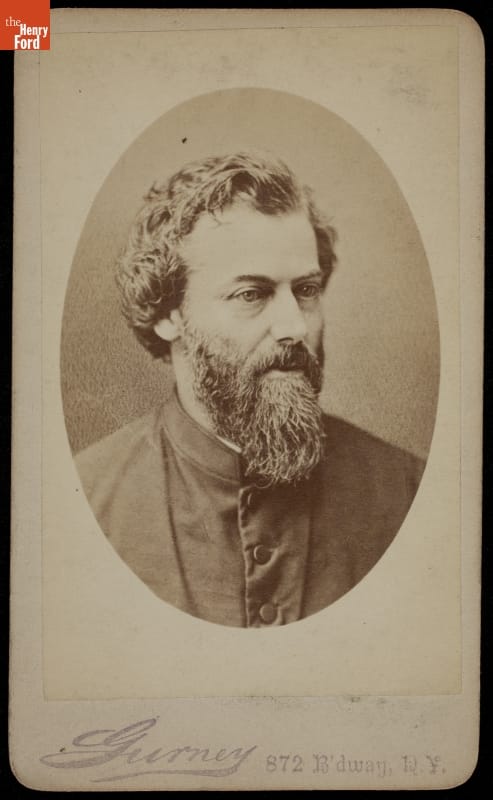
- circa 1865
- Collections - Artifact
Portrait of a Clergyman, circa 1865
- Portrait of a Clergyman, circa 1860 -
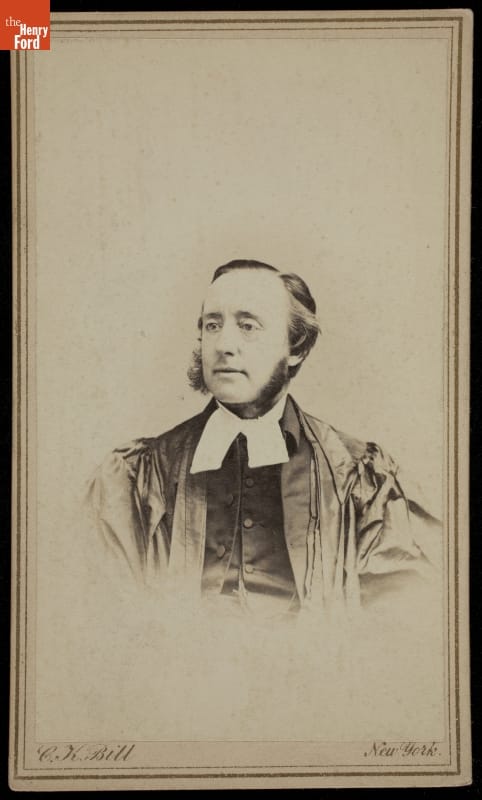
- circa 1860
- Collections - Artifact
Portrait of a Clergyman, circa 1860
- Abraham Lincoln and His Son, Tad, 1864 - This portrait shows President Abraham Lincoln and his youngest son, Tad. The original photograph was taken by Anthony Berger in the Mathew Brady studio in Washington, D.C., on February 9, 1864. D.C. Burnite & Company of Harrisburg, Pennsylvania, made this carte-de-visite from a copy of Berger's photo. Because of its appealing subject of Abraham Lincoln as a father, it was a popular image to purchase and place in albums.
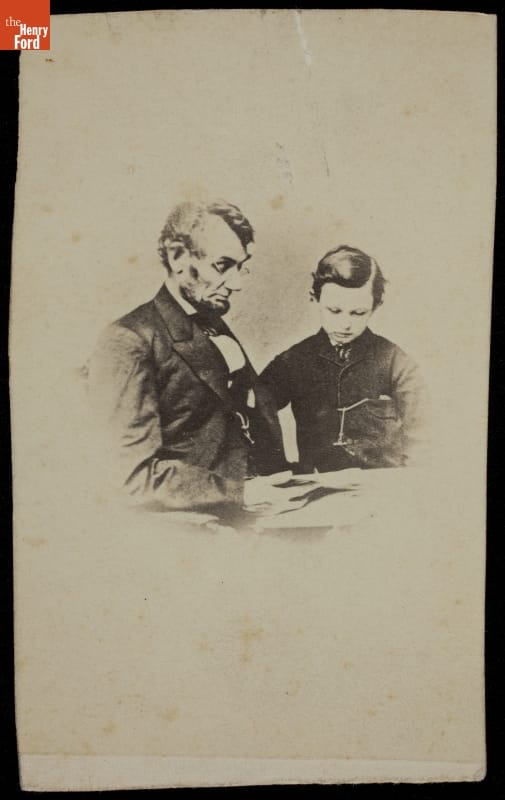
- February 09, 1864
- Collections - Artifact
Abraham Lincoln and His Son, Tad, 1864
This portrait shows President Abraham Lincoln and his youngest son, Tad. The original photograph was taken by Anthony Berger in the Mathew Brady studio in Washington, D.C., on February 9, 1864. D.C. Burnite & Company of Harrisburg, Pennsylvania, made this carte-de-visite from a copy of Berger's photo. Because of its appealing subject of Abraham Lincoln as a father, it was a popular image to purchase and place in albums.
- Charles Steinmetz, August 1904 - Charles Steinmetz excelled at applying mathematical theory and scientific methods to practical engineering, helping define the role of "scientist-engineer" in the American electrical industry. Steinmetz developed important theories on alternating currents, conducted breakthrough experiments on power loss, and authored a number of influential textbooks. His innovations shaped the electrical engineering profession and improved and expanded electrical distribution systems.
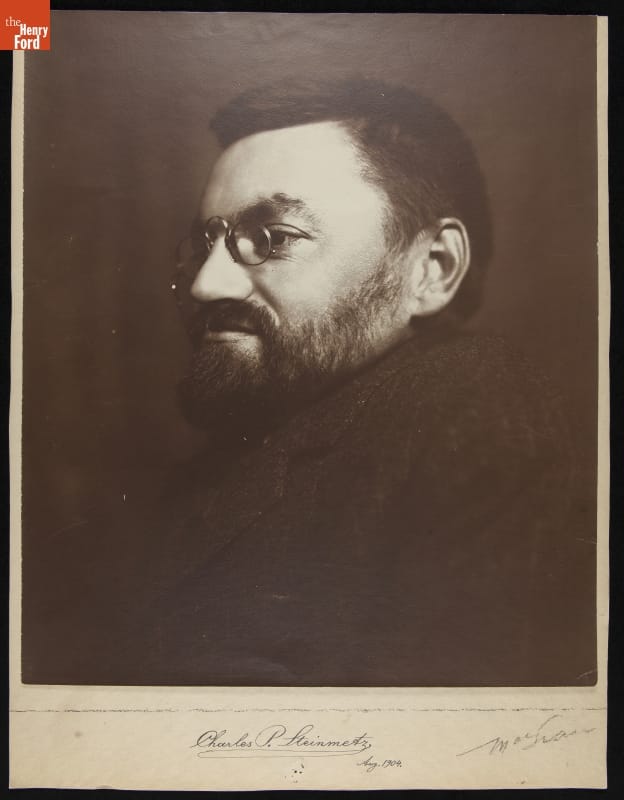
- August 01, 1904
- Collections - Artifact
Charles Steinmetz, August 1904
Charles Steinmetz excelled at applying mathematical theory and scientific methods to practical engineering, helping define the role of "scientist-engineer" in the American electrical industry. Steinmetz developed important theories on alternating currents, conducted breakthrough experiments on power loss, and authored a number of influential textbooks. His innovations shaped the electrical engineering profession and improved and expanded electrical distribution systems.
- Portraits of Dr. Alonson B. Howard, circa 1865-1866 and Cynthia Coryell Edmunds Howard, circa 1858-1860 - Alonson Howard, Jr., a doctor practicing medicine in Tekonsha Township, Michigan, married his second wife, Cynthia Coryell Edmunds, in August 1858. Dr. Howard's first wife had passed away a year earlier. Cynthia became a caring stepmother to Alonson's two sons, and the couple would have four children of their own.
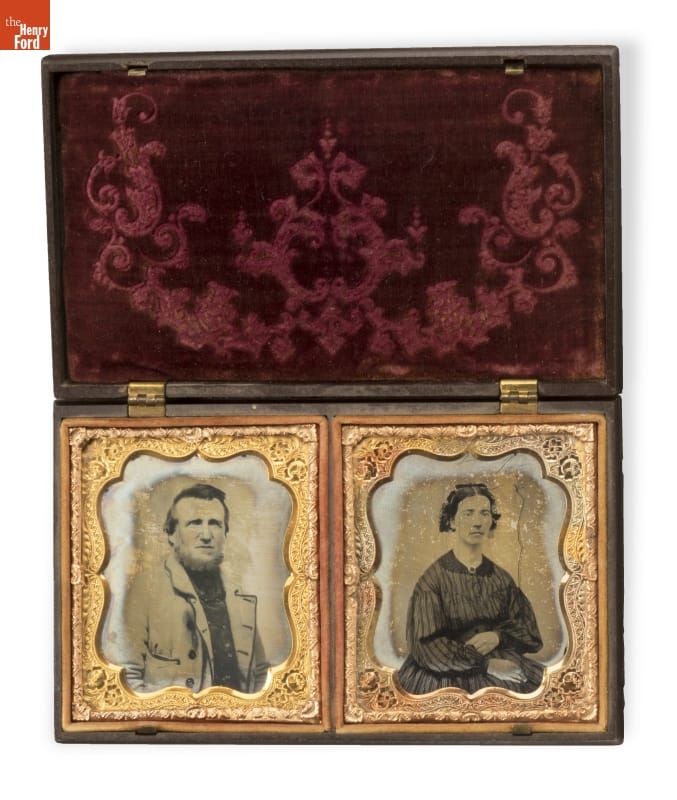
- circa 1858-circa 1865
- Collections - Artifact
Portraits of Dr. Alonson B. Howard, circa 1865-1866 and Cynthia Coryell Edmunds Howard, circa 1858-1860
Alonson Howard, Jr., a doctor practicing medicine in Tekonsha Township, Michigan, married his second wife, Cynthia Coryell Edmunds, in August 1858. Dr. Howard's first wife had passed away a year earlier. Cynthia became a caring stepmother to Alonson's two sons, and the couple would have four children of their own.
- Ford-Ferguson 9N Tractor Plowing and Mowing, October 9, 1940 -
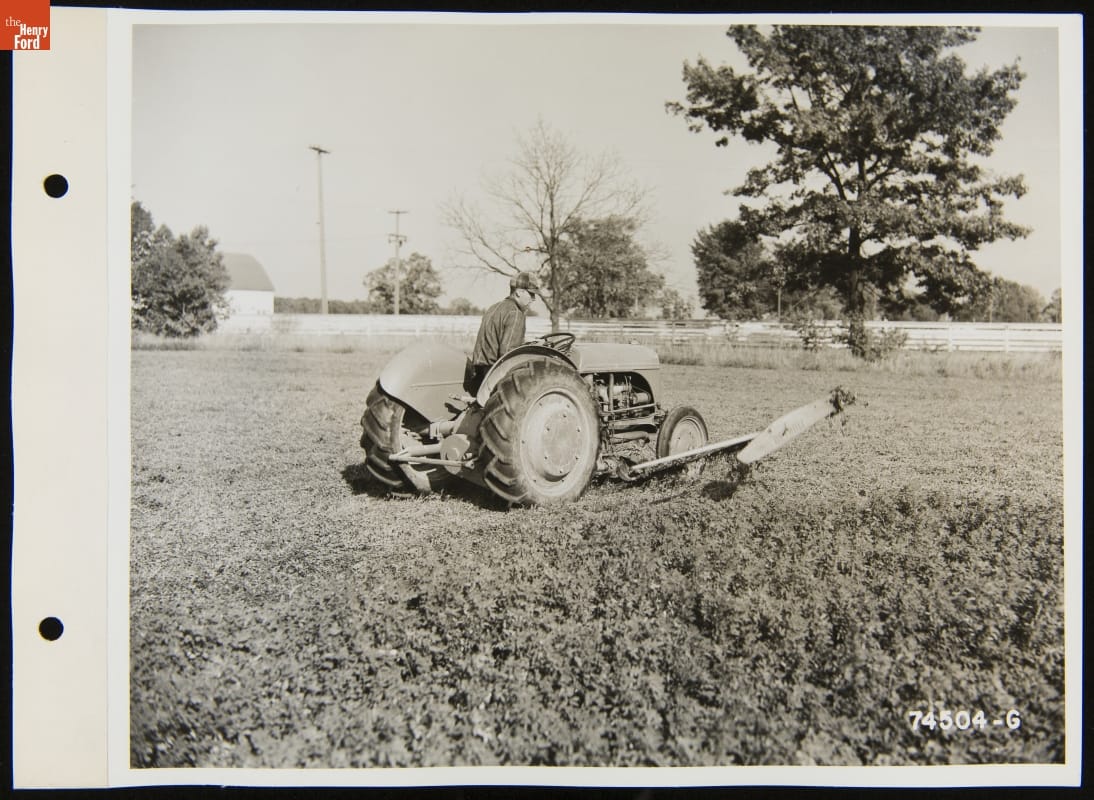
- October 09, 1940
- Collections - Artifact
Ford-Ferguson 9N Tractor Plowing and Mowing, October 9, 1940