
Search
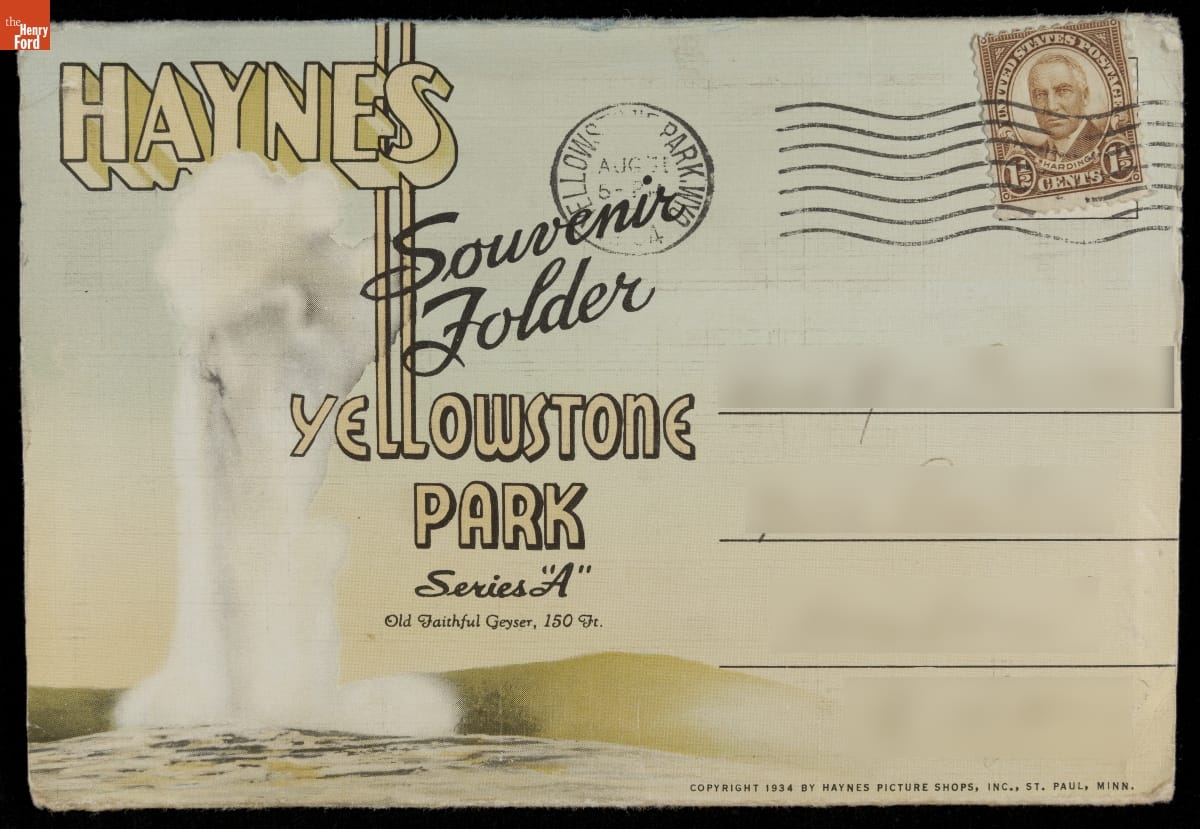
- "Haynes Souvenir Folder of Yellowstone Park," 1934 - Yellowstone National Park, established 1872, was America's first national park. After automobiles were allowed in the national parks (Yellowstone in 1915), attendance increased dramatically. The growing popularity of Yellowstone, like other parks, led to improvements in roads, campgrounds, parking lots, supply stations, and restrooms--along with an increase in souvenirs like this postcard viewbook.
- 1934
- Collections - Artifact
"Haynes Souvenir Folder of Yellowstone Park," 1934
Yellowstone National Park, established 1872, was America's first national park. After automobiles were allowed in the national parks (Yellowstone in 1915), attendance increased dramatically. The growing popularity of Yellowstone, like other parks, led to improvements in roads, campgrounds, parking lots, supply stations, and restrooms--along with an increase in souvenirs like this postcard viewbook.
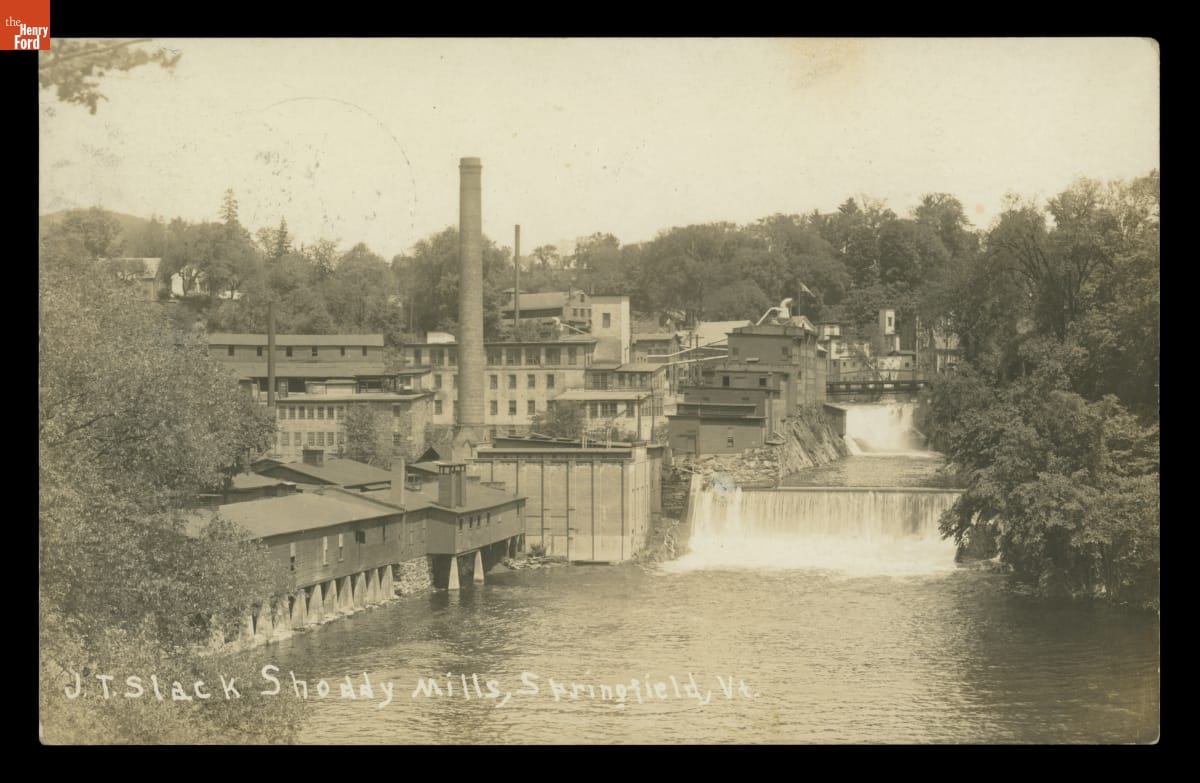
- "J.T. Slack Shoddy Mills, Springfield, Vt.," circa 1910 -
- circa 1910
- Collections - Artifact
"J.T. Slack Shoddy Mills, Springfield, Vt.," circa 1910
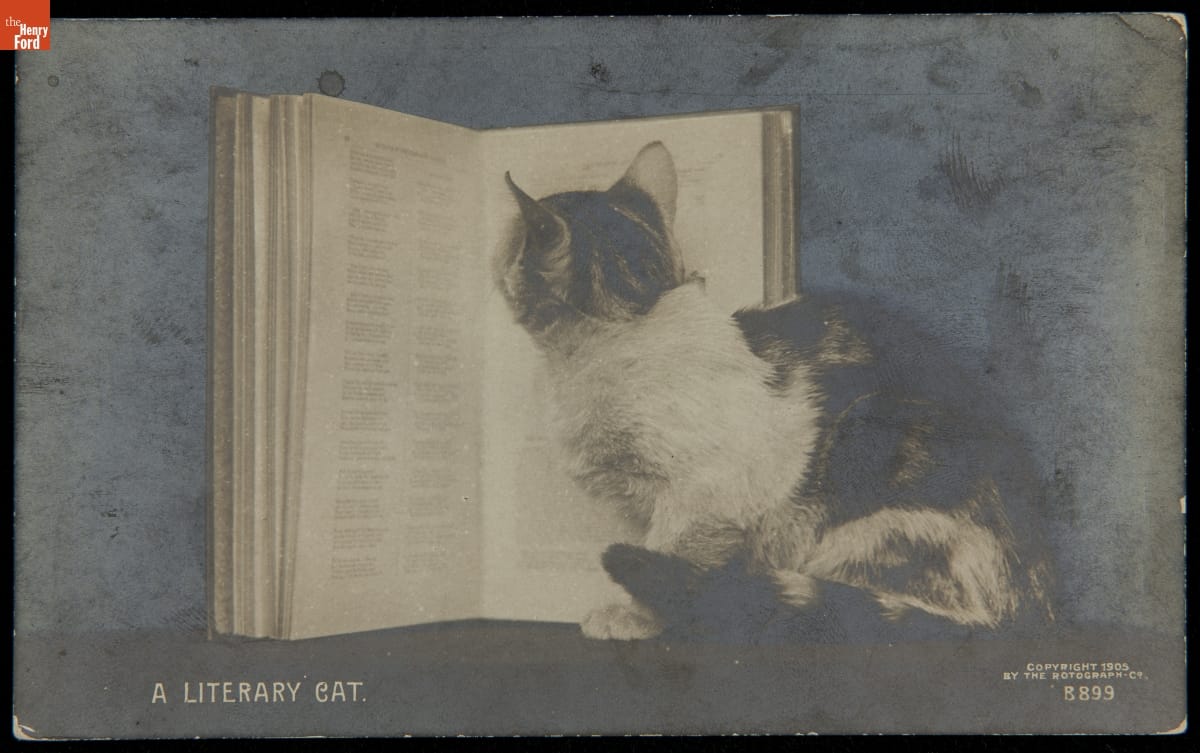
- Postcard, "A Literary Cat," 1909 - Depictions of cats and kittens often appeared in art and folk art in the United States. Inexpensive lithograph prints made in the mid-19th century helped to make this topic popular. Starting in the late 1890s picture postcards included these types of popular illustrations of cats. Sending colorful postcards through the U.S. mail continued to be widespread well into the 1910s.
- 1909
- Collections - Artifact
Postcard, "A Literary Cat," 1909
Depictions of cats and kittens often appeared in art and folk art in the United States. Inexpensive lithograph prints made in the mid-19th century helped to make this topic popular. Starting in the late 1890s picture postcards included these types of popular illustrations of cats. Sending colorful postcards through the U.S. mail continued to be widespread well into the 1910s.
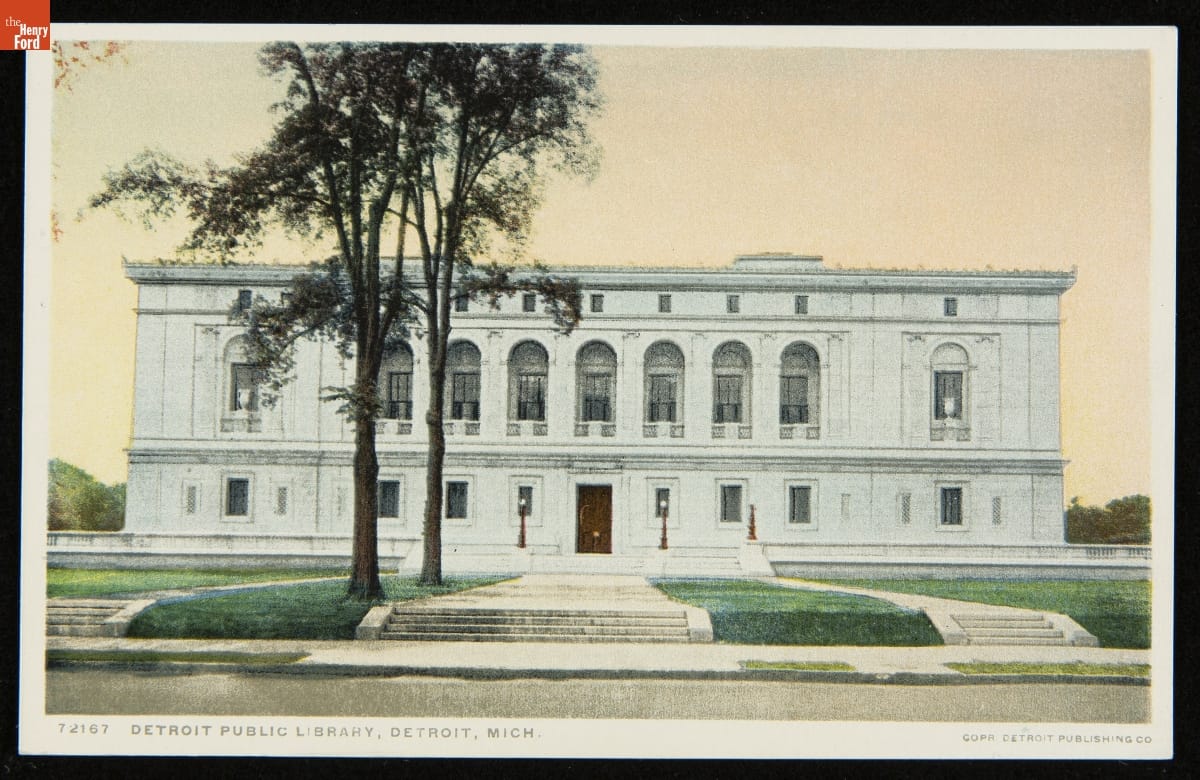
- Postcard, "Detroit Public Library, Detroit, Mich.," circa 1920 - Andrew Carnegie (1835-1919) amassed an immense fortune from railroads, oil, and steel. He devoted his later years to philanthropy. Between 1886 and 1919, Carnegie donated more than $40 million to build 1,679 new libraries in communities of all sizes across America. This library building, funded by a Carnegie grant and designed by New York City architect Cass Gilbert, opened in 1921 in Detroit, Michigan.
- circa 1920
- Collections - Artifact
Postcard, "Detroit Public Library, Detroit, Mich.," circa 1920
Andrew Carnegie (1835-1919) amassed an immense fortune from railroads, oil, and steel. He devoted his later years to philanthropy. Between 1886 and 1919, Carnegie donated more than $40 million to build 1,679 new libraries in communities of all sizes across America. This library building, funded by a Carnegie grant and designed by New York City architect Cass Gilbert, opened in 1921 in Detroit, Michigan.
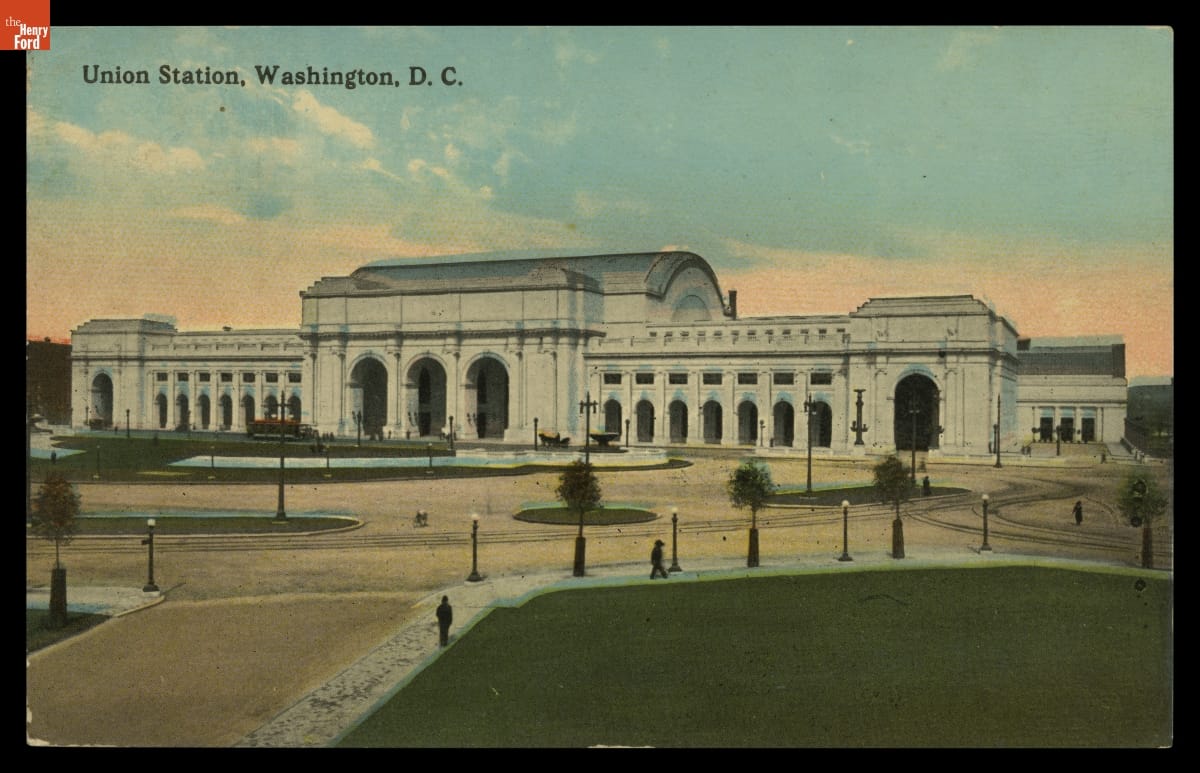
- Union Station, Washington, D.C., circa 1913 - Washington's Union Station was opened by the Baltimore & Ohio and Pennsylvania Railroads in 1907. The monumental building -- well suited to a city of monuments -- was part of a larger project to beautify the nation's capital in the early 1900s. Removal of the Pennsylvania Railroad's previous station, located directly on the National Mall, was a major component of the plan.
- April 27, 1913
- Collections - Artifact
Union Station, Washington, D.C., circa 1913
Washington's Union Station was opened by the Baltimore & Ohio and Pennsylvania Railroads in 1907. The monumental building -- well suited to a city of monuments -- was part of a larger project to beautify the nation's capital in the early 1900s. Removal of the Pennsylvania Railroad's previous station, located directly on the National Mall, was a major component of the plan.
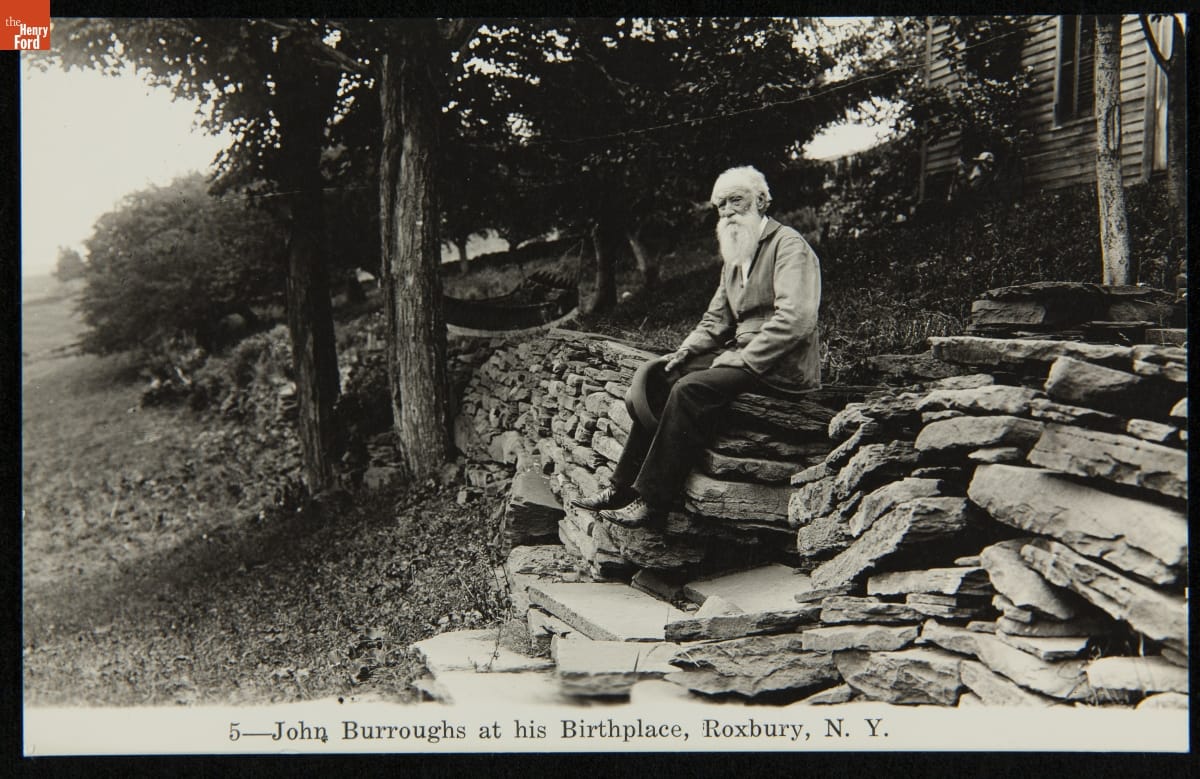
- John Burroughs Sitting at his Birthplace, Roxbury, New York, circa 1915 - John Burroughs (1837-1921), an internationally known naturalist and writer, was born on a dairy farm near Roxbury, New York, in the Catskills Mountains. After working as an itinerant teacher and living in Washington, D.C., Burroughs returned to the Catskills and built a home. There, he could visit his birthplace and the surrounding lands where he grew up.
- circa 1915
- Collections - Artifact
John Burroughs Sitting at his Birthplace, Roxbury, New York, circa 1915
John Burroughs (1837-1921), an internationally known naturalist and writer, was born on a dairy farm near Roxbury, New York, in the Catskills Mountains. After working as an itinerant teacher and living in Washington, D.C., Burroughs returned to the Catskills and built a home. There, he could visit his birthplace and the surrounding lands where he grew up.
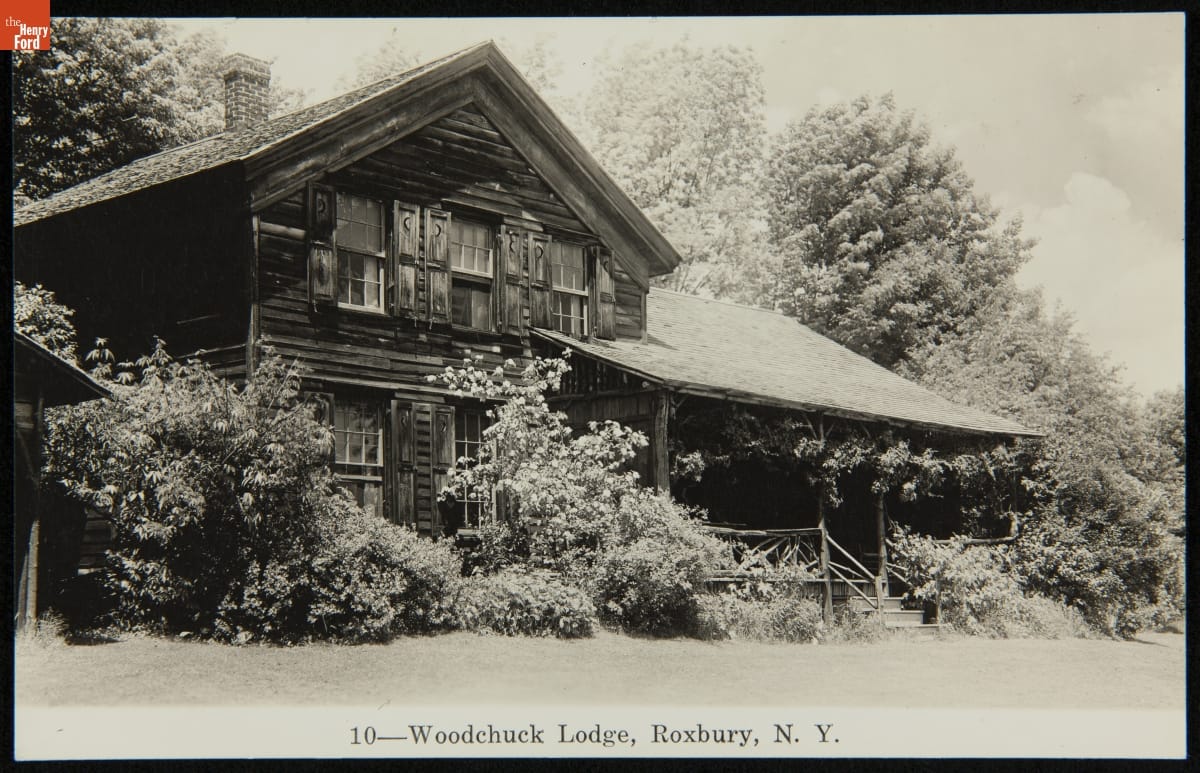
- Woodchuck Lodge, Roxbury, New York, circa 1920 - John Burroughs (1837-1921) was an internationally known naturalist and essayist who wrote about accessible and familiar landscapes. In 1913, with financial assistance from Henry Ford, Burroughs purchased the house built by his brother Curtis on land near Burroughs's birthplace in Roxbury, New York. Woodchuck Lodge, as Burroughs referred to it, became his summer retreat and its natural surroundings became the subject of his creative works.
- circa 1920
- Collections - Artifact
Woodchuck Lodge, Roxbury, New York, circa 1920
John Burroughs (1837-1921) was an internationally known naturalist and essayist who wrote about accessible and familiar landscapes. In 1913, with financial assistance from Henry Ford, Burroughs purchased the house built by his brother Curtis on land near Burroughs's birthplace in Roxbury, New York. Woodchuck Lodge, as Burroughs referred to it, became his summer retreat and its natural surroundings became the subject of his creative works.
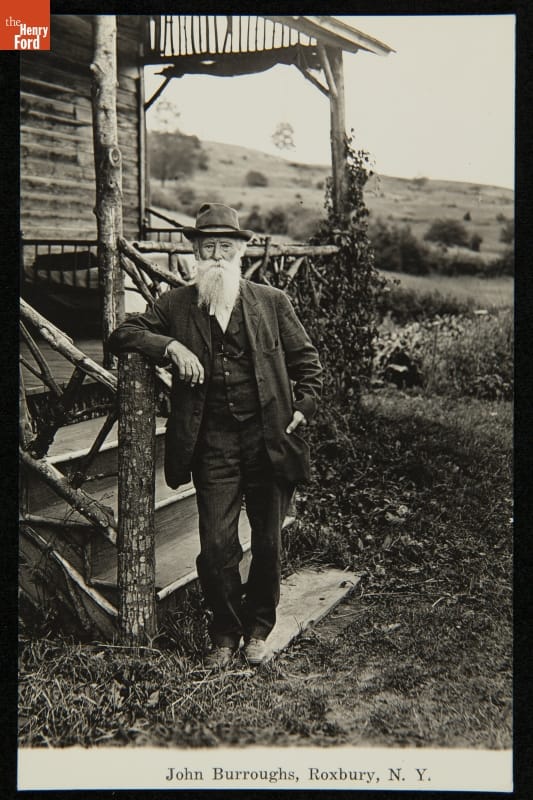
- John Burroughs Standing by Woodchuck Lodge, circa 1915 - John Burroughs (1837-1921) was an internationally known naturalist and essayist who wrote about accessible and familiar landscapes. In 1913, with financial assistance from Henry Ford, Burroughs purchased the house built by his brother Curtis on land near Burroughs's birthplace in Roxbury, New York. Woodchuck Lodge, as Burroughs referred to it, became his summer retreat and its natural surroundings became the subject of his creative works.
- circa 1915
- Collections - Artifact
John Burroughs Standing by Woodchuck Lodge, circa 1915
John Burroughs (1837-1921) was an internationally known naturalist and essayist who wrote about accessible and familiar landscapes. In 1913, with financial assistance from Henry Ford, Burroughs purchased the house built by his brother Curtis on land near Burroughs's birthplace in Roxbury, New York. Woodchuck Lodge, as Burroughs referred to it, became his summer retreat and its natural surroundings became the subject of his creative works.
- Postcard, "Union Stock Yards, Live Stock Exchange, South Omaha, Nebraska," 1939 -
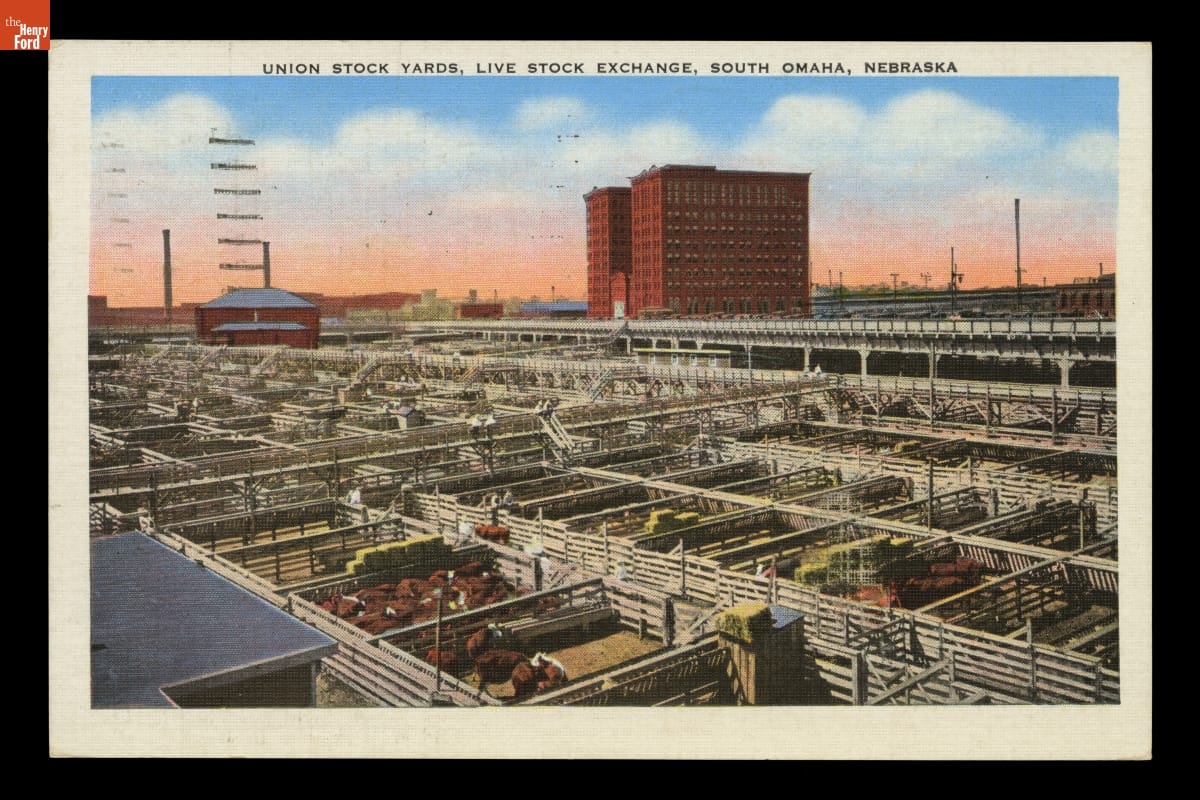
- 1939
- Collections - Artifact
Postcard, "Union Stock Yards, Live Stock Exchange, South Omaha, Nebraska," 1939
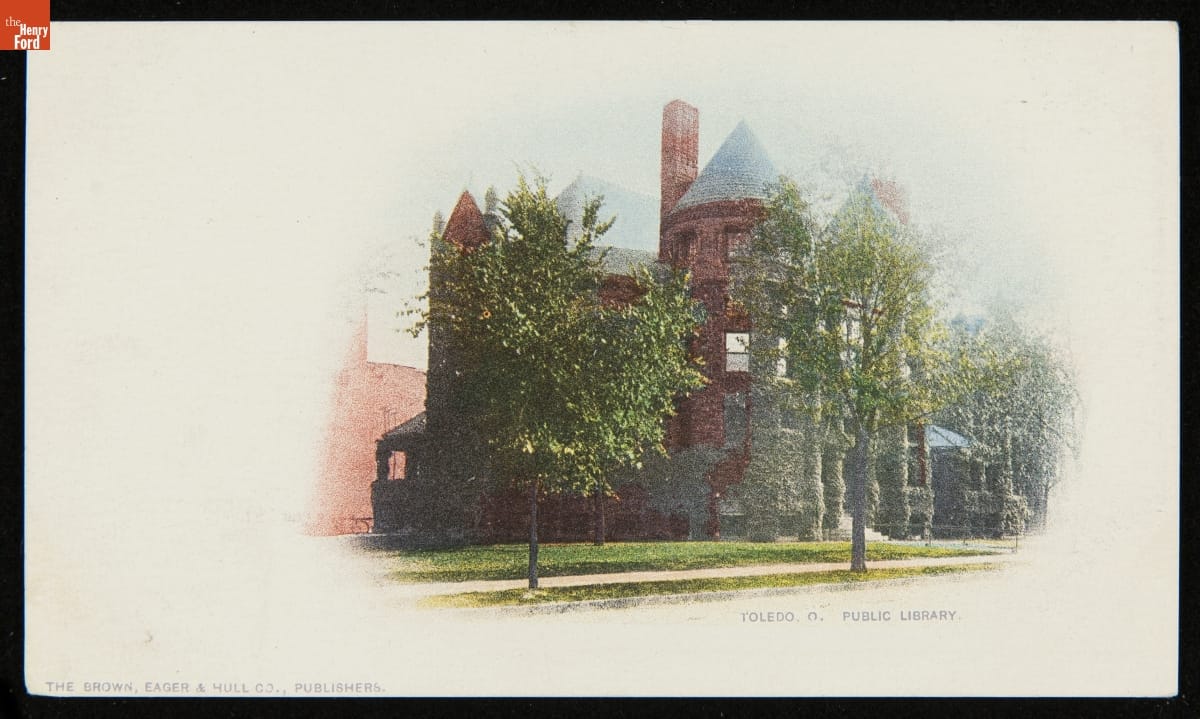
- Postcard, "Toledo, O. Public Library," circa 1900 - Until the 20th century, most book collections were not available to everyday Americans. They were either privately owned, accessible only by paid subscription, or stored away haphazardly. In communities with dedicated public library buildings (often among the most imposing structures in town), they were sources of civic pride. This building housed the Lucas County (Ohio) library from its opening in 1890 until 1940.
- circa 1900
- Collections - Artifact
Postcard, "Toledo, O. Public Library," circa 1900
Until the 20th century, most book collections were not available to everyday Americans. They were either privately owned, accessible only by paid subscription, or stored away haphazardly. In communities with dedicated public library buildings (often among the most imposing structures in town), they were sources of civic pride. This building housed the Lucas County (Ohio) library from its opening in 1890 until 1940.