
Search
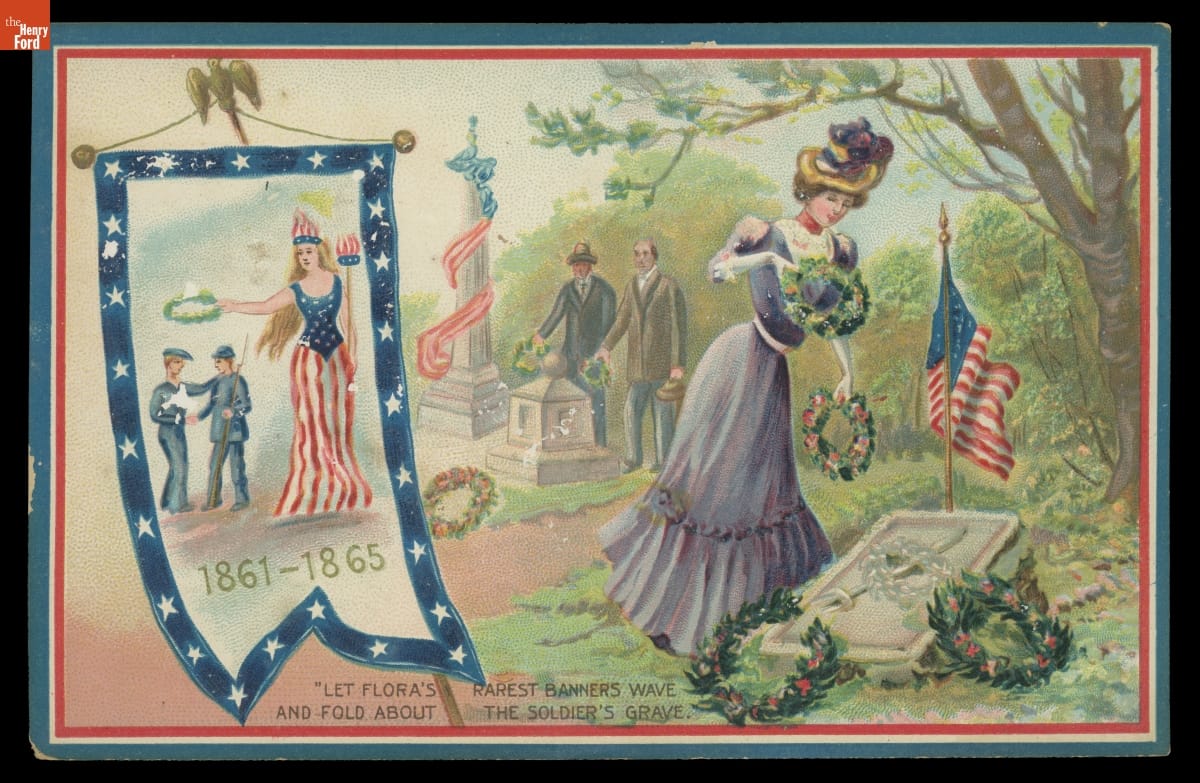
- Decoration Day Postcard, "Let Flora's Rarest Banners Wave and Fold about the Soldier's Grave," 1908 - Beginning in 1868, May 30 was proclaimed "Decoration Day" as a day for mourners to honor the Civil War dead by decorating their graves with flowers. After World War I, the observance became better known as Memorial Day, and it broadened to honor the dead of all America's wars. Memorial Day was declared a national holiday in 1971.
- 1905
- Collections - Artifact
Decoration Day Postcard, "Let Flora's Rarest Banners Wave and Fold about the Soldier's Grave," 1908
Beginning in 1868, May 30 was proclaimed "Decoration Day" as a day for mourners to honor the Civil War dead by decorating their graves with flowers. After World War I, the observance became better known as Memorial Day, and it broadened to honor the dead of all America's wars. Memorial Day was declared a national holiday in 1971.
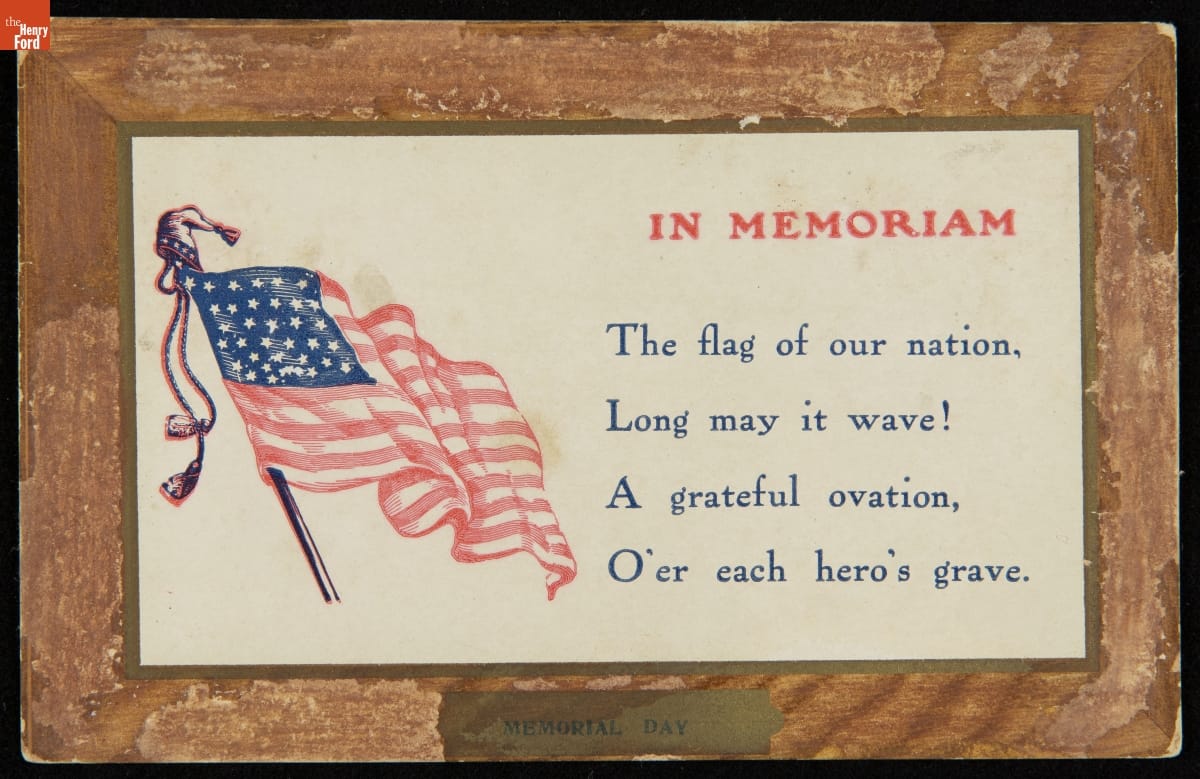
- "In Memoriam, The flag of our nation, Long may it wave! A grateful ovation, O'er each hero's grave." circa 1906 - Beginning in 1868, May 30 was proclaimed "Decoration Day" as a day for mourners to honor the Civil War dead by decorating their graves with flowers. After World War I, the observance became better known as Memorial Day, and it broadened to honor the dead of all America's wars. Memorial Day was declared a national holiday in 1971.
- circa 1906
- Collections - Artifact
"In Memoriam, The flag of our nation, Long may it wave! A grateful ovation, O'er each hero's grave." circa 1906
Beginning in 1868, May 30 was proclaimed "Decoration Day" as a day for mourners to honor the Civil War dead by decorating their graves with flowers. After World War I, the observance became better known as Memorial Day, and it broadened to honor the dead of all America's wars. Memorial Day was declared a national holiday in 1971.
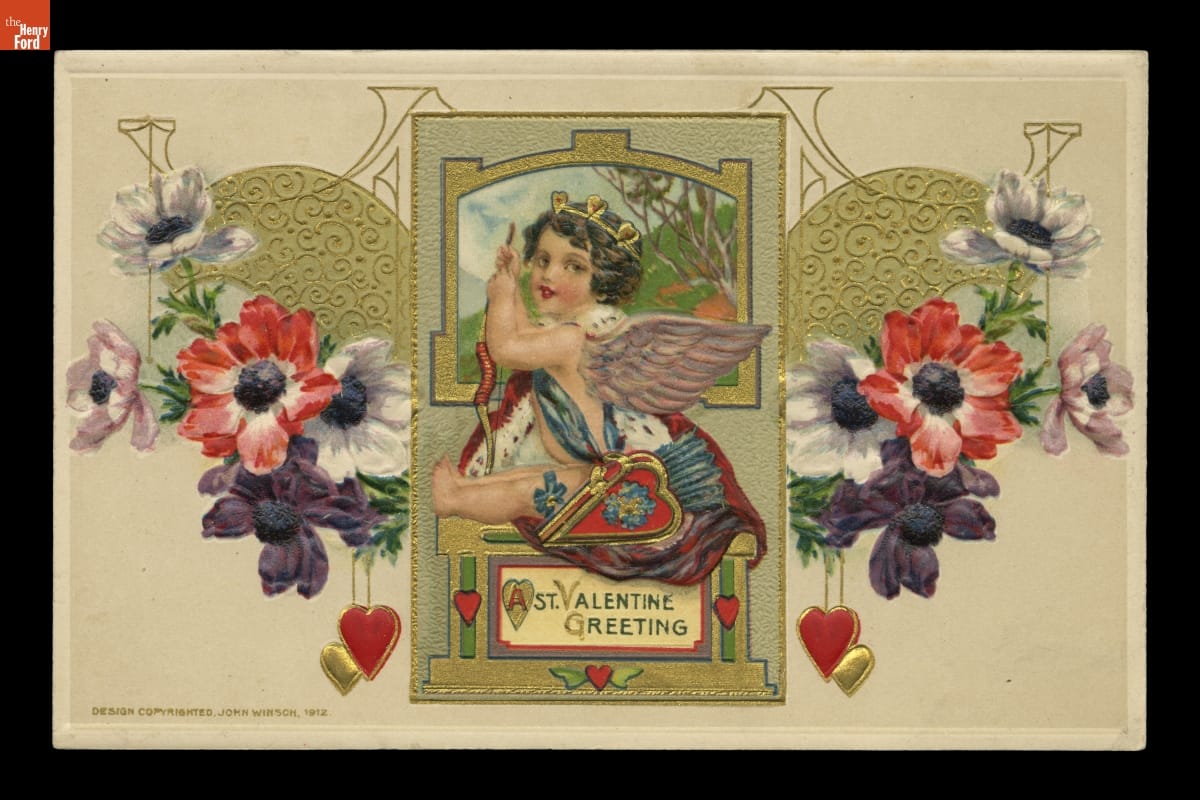
- Valentine's Day Greeting Postcard, 1912 - The custom of sending messages of affection on February 14 dates back to Roman times, when mid-February was a time to meet and court prospective mates. The earliest American valentines were labors of love, handmade by the sender. The spread of commercially produced valentines in the second half of the nineteenth century made sending and receiving Valentine's Day cards a more lighthearted activity.
- 1912
- Collections - Artifact
Valentine's Day Greeting Postcard, 1912
The custom of sending messages of affection on February 14 dates back to Roman times, when mid-February was a time to meet and court prospective mates. The earliest American valentines were labors of love, handmade by the sender. The spread of commercially produced valentines in the second half of the nineteenth century made sending and receiving Valentine's Day cards a more lighthearted activity.
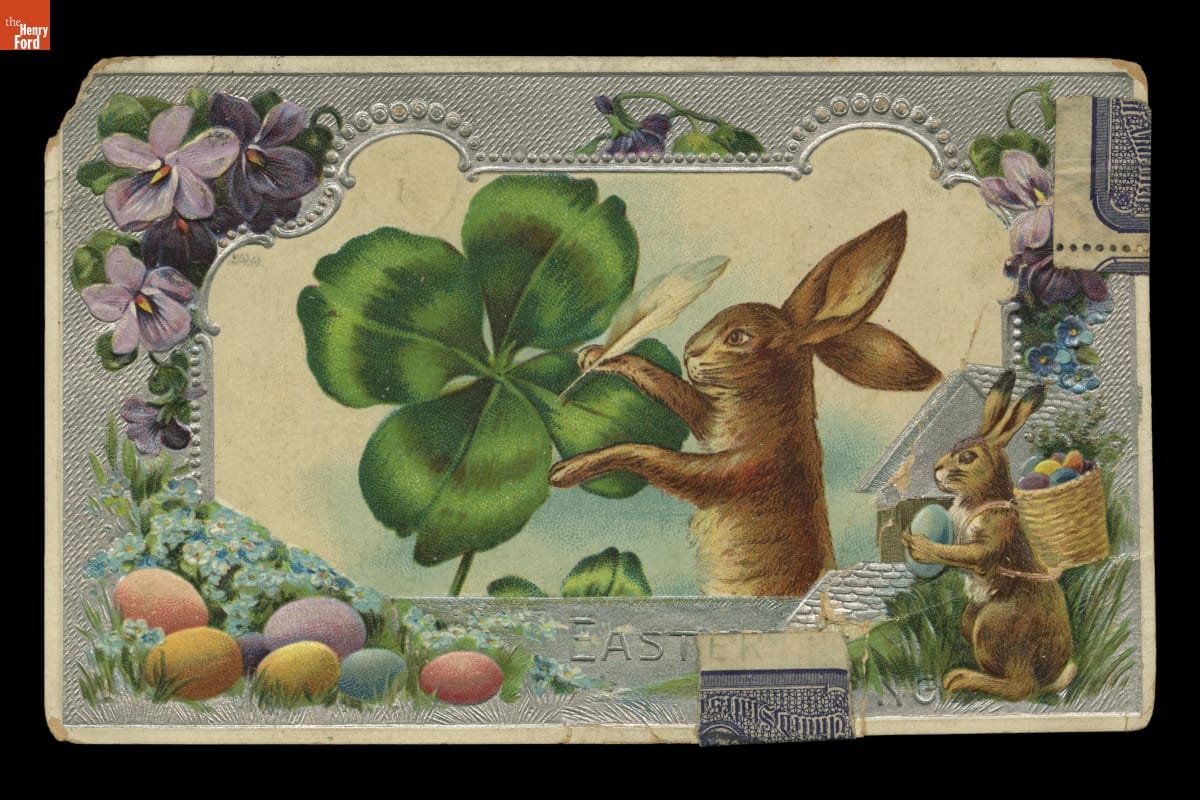
- Easter Greeting Postcard, circa 1910 - Sending greeting cards and postcards for the Easter holiday became popular in the United States by the 1880s. Publishers made cards with themes of a religious nature as well as secular decorations to celebrate the arrival of spring. Artists working for these publishers illustrated the cards with images symbolic of the season, such as crosses, angels, flowers, eggs, children, birds, and rabbits.
- circa 1910
- Collections - Artifact
Easter Greeting Postcard, circa 1910
Sending greeting cards and postcards for the Easter holiday became popular in the United States by the 1880s. Publishers made cards with themes of a religious nature as well as secular decorations to celebrate the arrival of spring. Artists working for these publishers illustrated the cards with images symbolic of the season, such as crosses, angels, flowers, eggs, children, birds, and rabbits.
- "A Happy Easter," circa 1910 - Sending greeting cards and postcards for the Easter holiday became popular in the United States by the 1880s. Publishers made cards with themes of a religious nature as well as secular decorations to celebrate the arrival of spring. Artists working for these publishers illustrated the cards with images symbolic of the season, such as crosses, angels, flowers, eggs, children, birds, and rabbits.
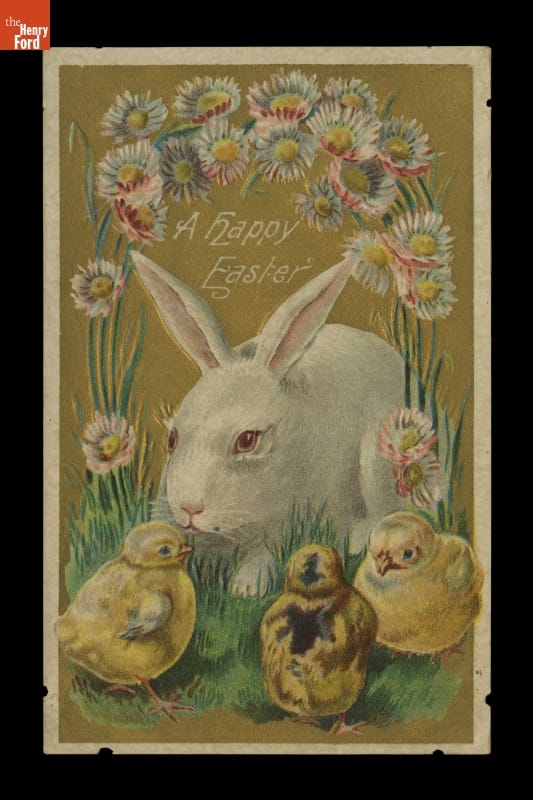
- 1910
- Collections - Artifact
"A Happy Easter," circa 1910
Sending greeting cards and postcards for the Easter holiday became popular in the United States by the 1880s. Publishers made cards with themes of a religious nature as well as secular decorations to celebrate the arrival of spring. Artists working for these publishers illustrated the cards with images symbolic of the season, such as crosses, angels, flowers, eggs, children, birds, and rabbits.
- "Christmas Greetings," 1910-1920 - Colorful, commercially designed greeting cards were popular in early 20th-century America--especially during the holidays. Friends and neighbors customarily exchanged cards wishing one another a Merry Christmas or Happy New Year. This example features a child, a common motif that captured the youthful delight of the season and the promise of the coming year.
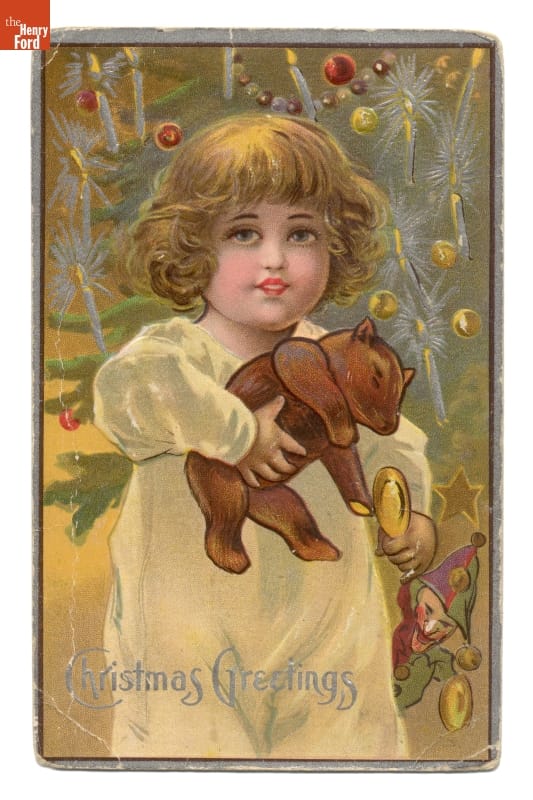
- 1910-1920
- Collections - Artifact
"Christmas Greetings," 1910-1920
Colorful, commercially designed greeting cards were popular in early 20th-century America--especially during the holidays. Friends and neighbors customarily exchanged cards wishing one another a Merry Christmas or Happy New Year. This example features a child, a common motif that captured the youthful delight of the season and the promise of the coming year.
- "A Joyous Christmastide," 1910-1920 - Colorful, commercially designed greeting cards were popular in early 20th-century America--especially during the holidays. Friends and neighbors commonly exchanged cards wishing the recipient a merry Christmas or happy New Year. To represent the youthful delight of the season and the promise of the coming year, publishers sometimes decorated Christmas cards with images of children.
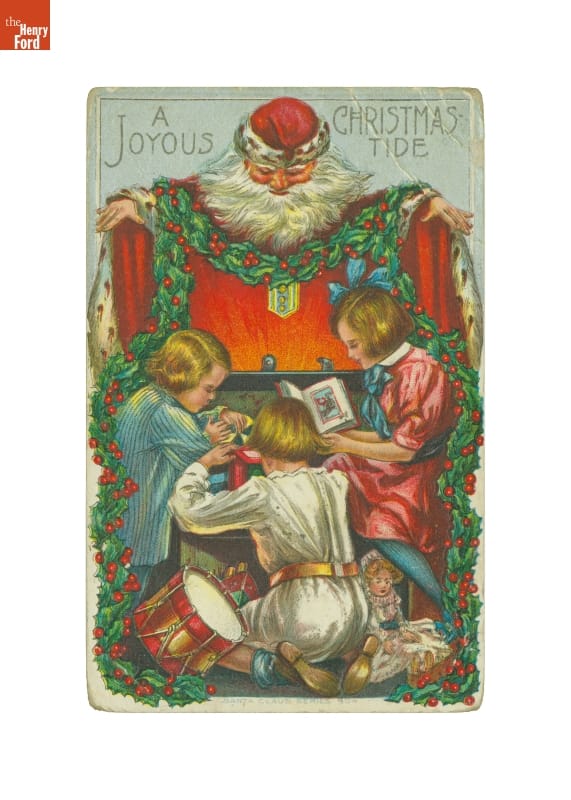
- 1910-1920
- Collections - Artifact
"A Joyous Christmastide," 1910-1920
Colorful, commercially designed greeting cards were popular in early 20th-century America--especially during the holidays. Friends and neighbors commonly exchanged cards wishing the recipient a merry Christmas or happy New Year. To represent the youthful delight of the season and the promise of the coming year, publishers sometimes decorated Christmas cards with images of children.
- "When Hallowe'en Has Come to Pass, May You See My Face in Your Looking Glass," circa 1916 - By the late 1800s, a distinct blend of Halloween customs had emerged in the United States. The holiday was mostly an innocent celebration of mystery and fun into the 20th century, though traditions often reflected Halloween's supernatural origins. This greeting card depicts one popular superstition that a looking glass could reveal a young lady's romantic future during Halloween.
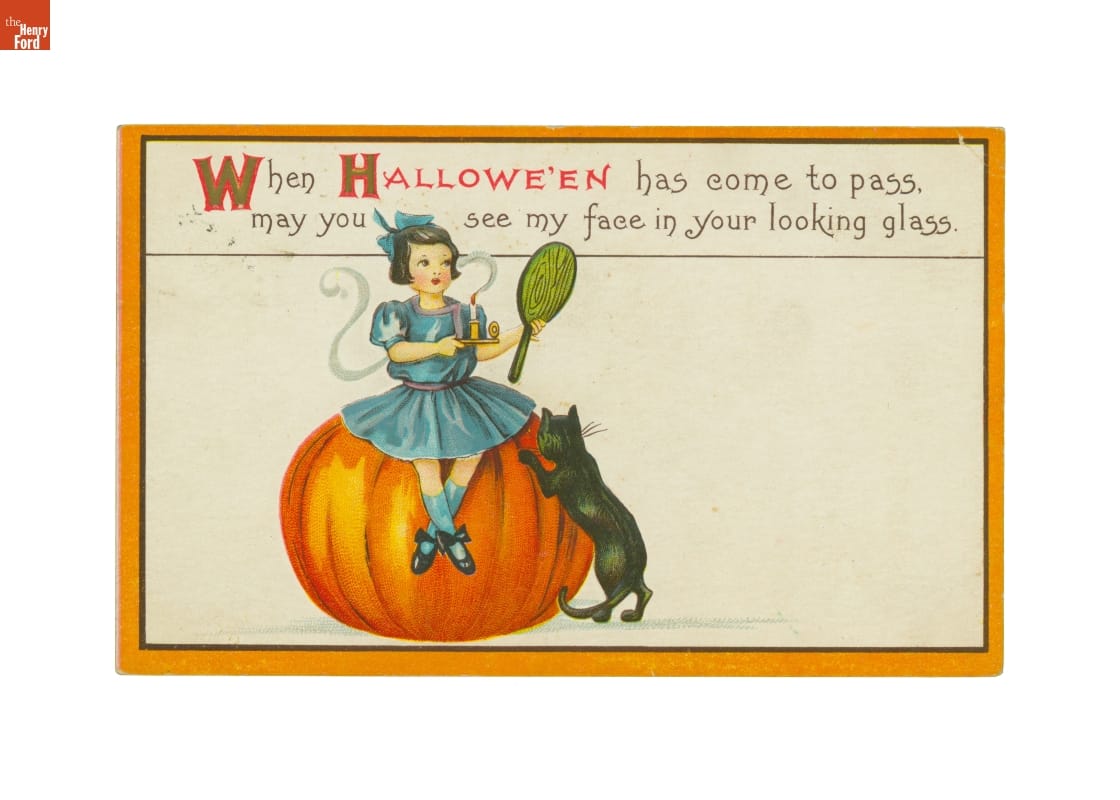
- circa 1916
- Collections - Artifact
"When Hallowe'en Has Come to Pass, May You See My Face in Your Looking Glass," circa 1916
By the late 1800s, a distinct blend of Halloween customs had emerged in the United States. The holiday was mostly an innocent celebration of mystery and fun into the 20th century, though traditions often reflected Halloween's supernatural origins. This greeting card depicts one popular superstition that a looking glass could reveal a young lady's romantic future during Halloween.
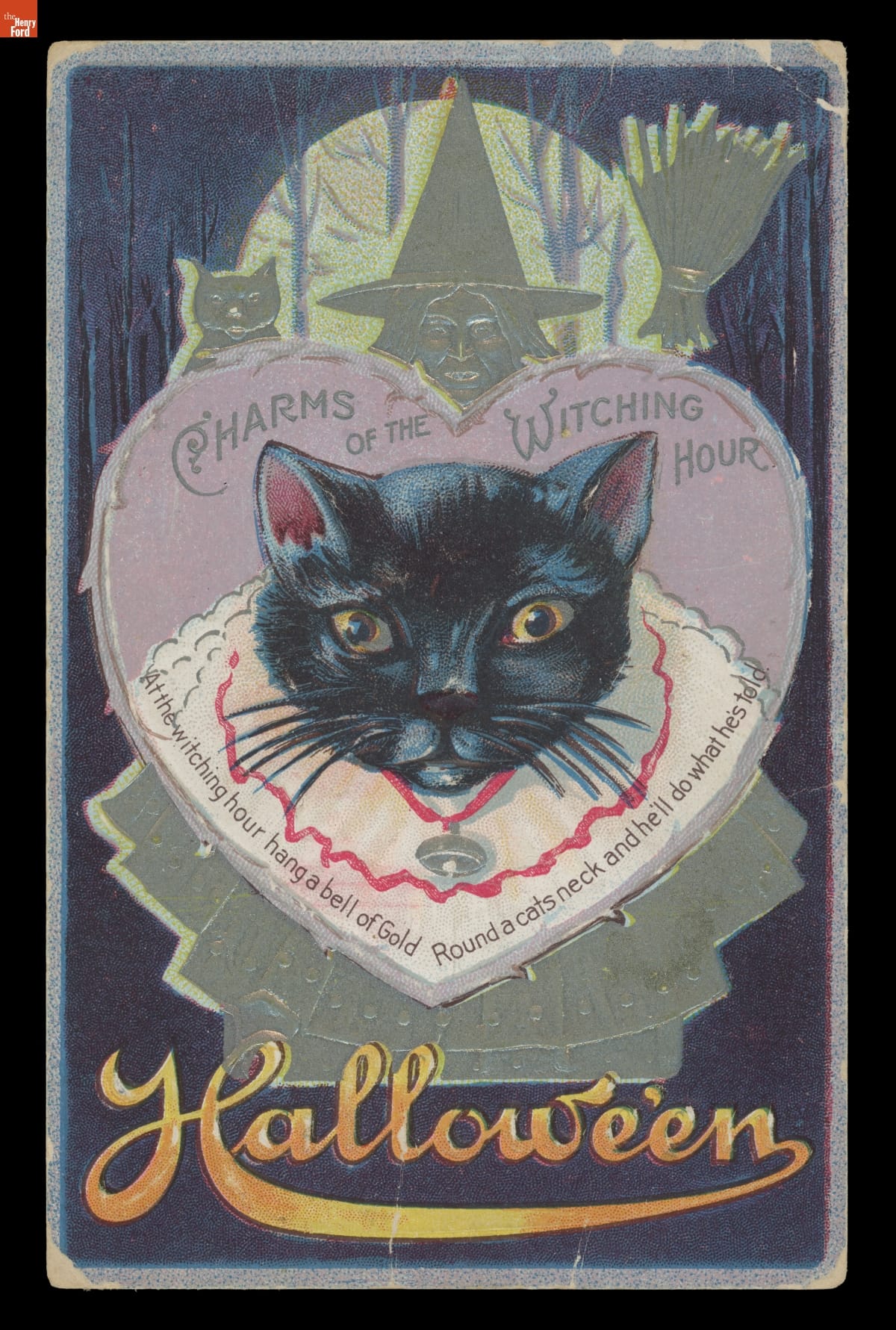
- "Charms of the Witching Hour," circa 1915 - A distinctly American blend of Halloween traditions emerged by the late 1800s. Into the 20th century, the holiday was mostly an innocent celebration of mystery and fun, but friends and neighbors often exchanged seasonal greeting cards that evoked Halloween's superstitious origins. This colorful example alludes to olden customs and beliefs involving witchcraft and black cats.
- circa 1915
- Collections - Artifact
"Charms of the Witching Hour," circa 1915
A distinctly American blend of Halloween traditions emerged by the late 1800s. Into the 20th century, the holiday was mostly an innocent celebration of mystery and fun, but friends and neighbors often exchanged seasonal greeting cards that evoked Halloween's superstitious origins. This colorful example alludes to olden customs and beliefs involving witchcraft and black cats.
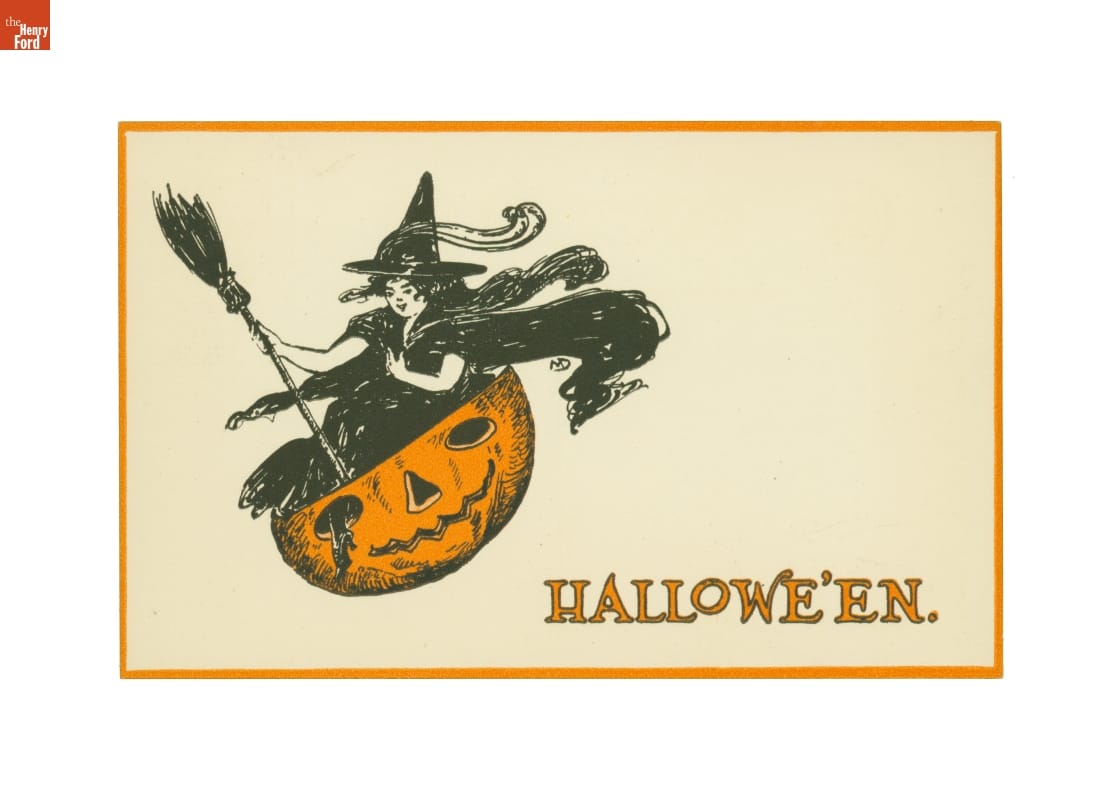
- "Hallowe'en," circa 1910 - A distinctly American blend of Halloween traditions emerged by the late 1800s. Into the 20th century, the holiday became a national celebration of mystery and fun. Often, friends and neighbors exchanged seasonal greeting cards. This colorful example features a witch and a jack-o-lantern -- two symbols of Halloween's superstitious origins.
- circa 1910
- Collections - Artifact
"Hallowe'en," circa 1910
A distinctly American blend of Halloween traditions emerged by the late 1800s. Into the 20th century, the holiday became a national celebration of mystery and fun. Often, friends and neighbors exchanged seasonal greeting cards. This colorful example features a witch and a jack-o-lantern -- two symbols of Halloween's superstitious origins.