
Search
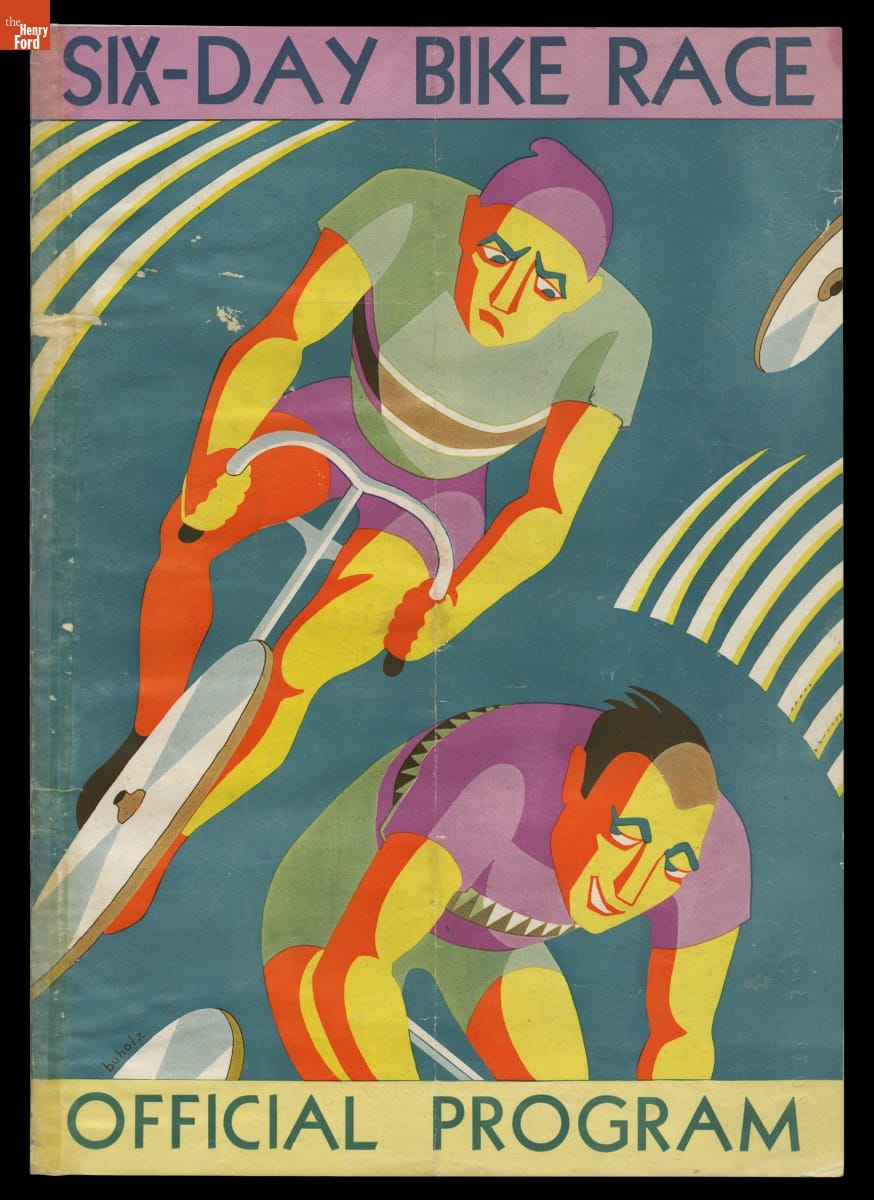
- "Six-Day Bike Race Official Program," 1931 - Six-day bicycle races were popular from the 1880s into the 1930s. These extreme endurance competitions had cyclists riding continuously for six days with only brief stops for food or rest. The overall victory went to the rider who completed the most laps over the six-day period. Prize money could total several thousand dollars at a single event.
- 1931
- Collections - Artifact
"Six-Day Bike Race Official Program," 1931
Six-day bicycle races were popular from the 1880s into the 1930s. These extreme endurance competitions had cyclists riding continuously for six days with only brief stops for food or rest. The overall victory went to the rider who completed the most laps over the six-day period. Prize money could total several thousand dollars at a single event.
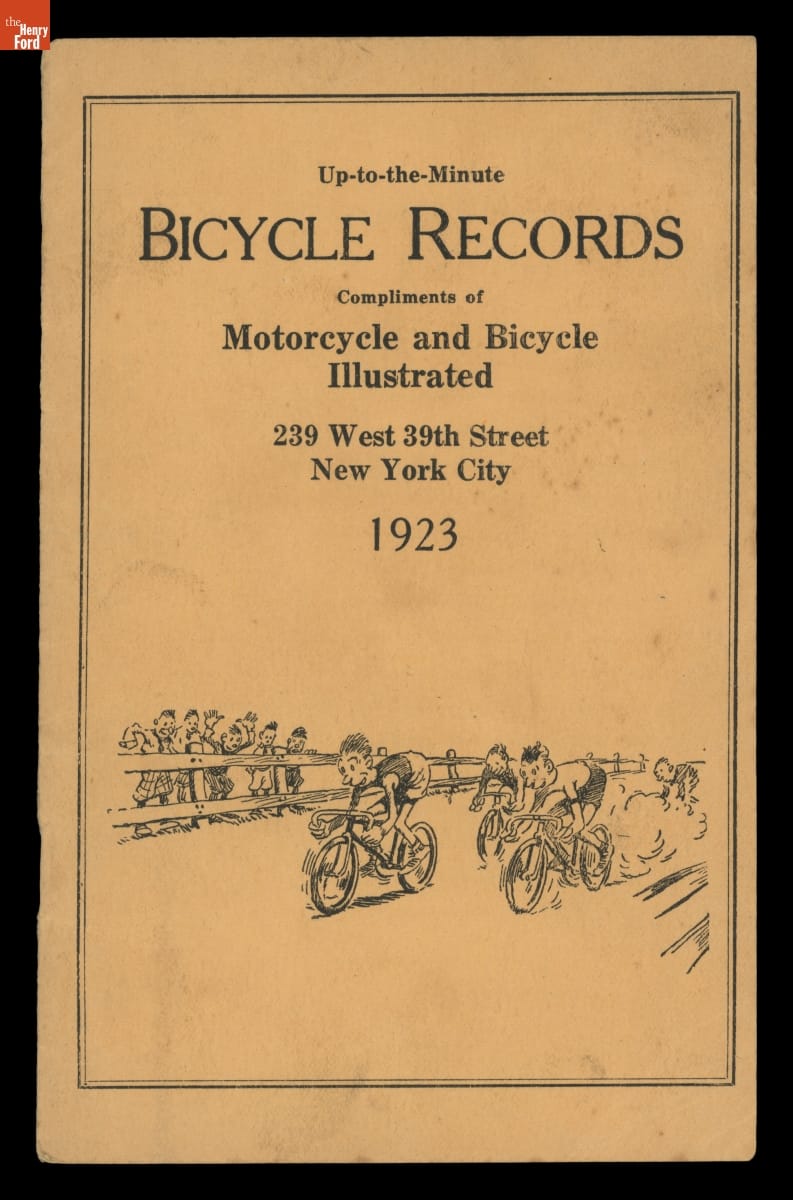
- "Up-to-the-Minute Bicycle Records," 1923 - Bicycle races attracted large crowds from the late 19th century well into the 20th. These competitions promoted the cycling industry and encouraged technological development. This booklet contains eight pages of amateur and professional speed records, championship winners, and major-contest victors. Though the booklet was published in 1923, its "up-to-the-minute" records were only current through 1922.
- 1923
- Collections - Artifact
"Up-to-the-Minute Bicycle Records," 1923
Bicycle races attracted large crowds from the late 19th century well into the 20th. These competitions promoted the cycling industry and encouraged technological development. This booklet contains eight pages of amateur and professional speed records, championship winners, and major-contest victors. Though the booklet was published in 1923, its "up-to-the-minute" records were only current through 1922.
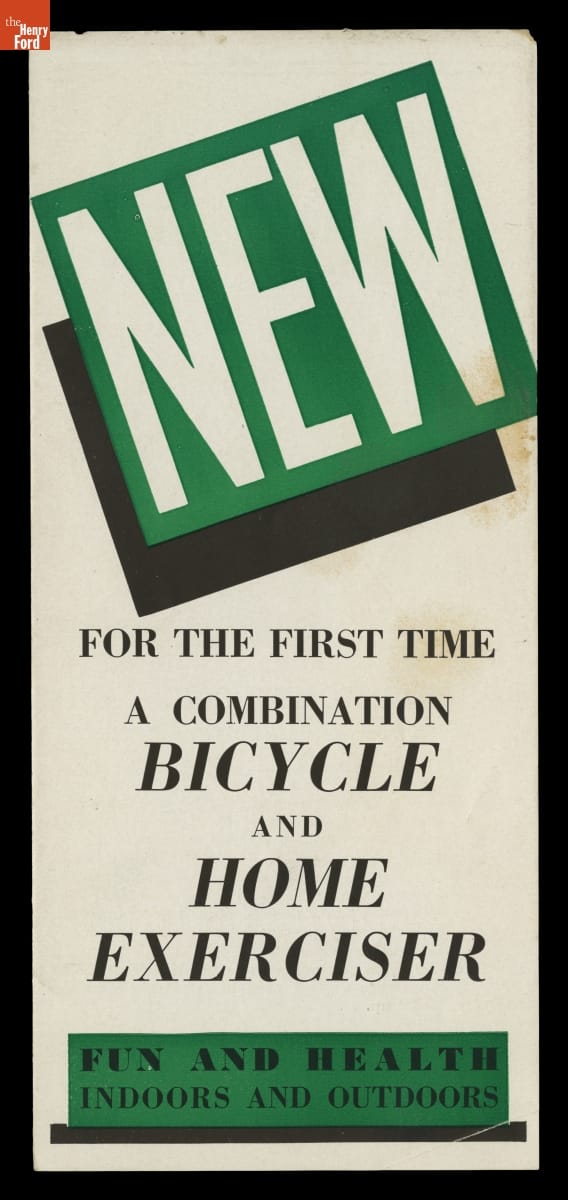
- "New For the First Time: A Combination Bicycle and Home Exerciser" - Bicycles provide health benefits to regular riders, but not everyone wants to bike in wet weather or through wintertime snow and ice. Chicago Cycle Supply Company manufactured a "Cyclexerciser" that turned any bicycle into a stationary exercise bike. The device, which mounted a conventional bicycle on ball-bearing rollers, was based on a patent by professional cyclist Roy Mobeck.
- 1940-1958
- Collections - Artifact
"New For the First Time: A Combination Bicycle and Home Exerciser"
Bicycles provide health benefits to regular riders, but not everyone wants to bike in wet weather or through wintertime snow and ice. Chicago Cycle Supply Company manufactured a "Cyclexerciser" that turned any bicycle into a stationary exercise bike. The device, which mounted a conventional bicycle on ball-bearing rollers, was based on a patent by professional cyclist Roy Mobeck.
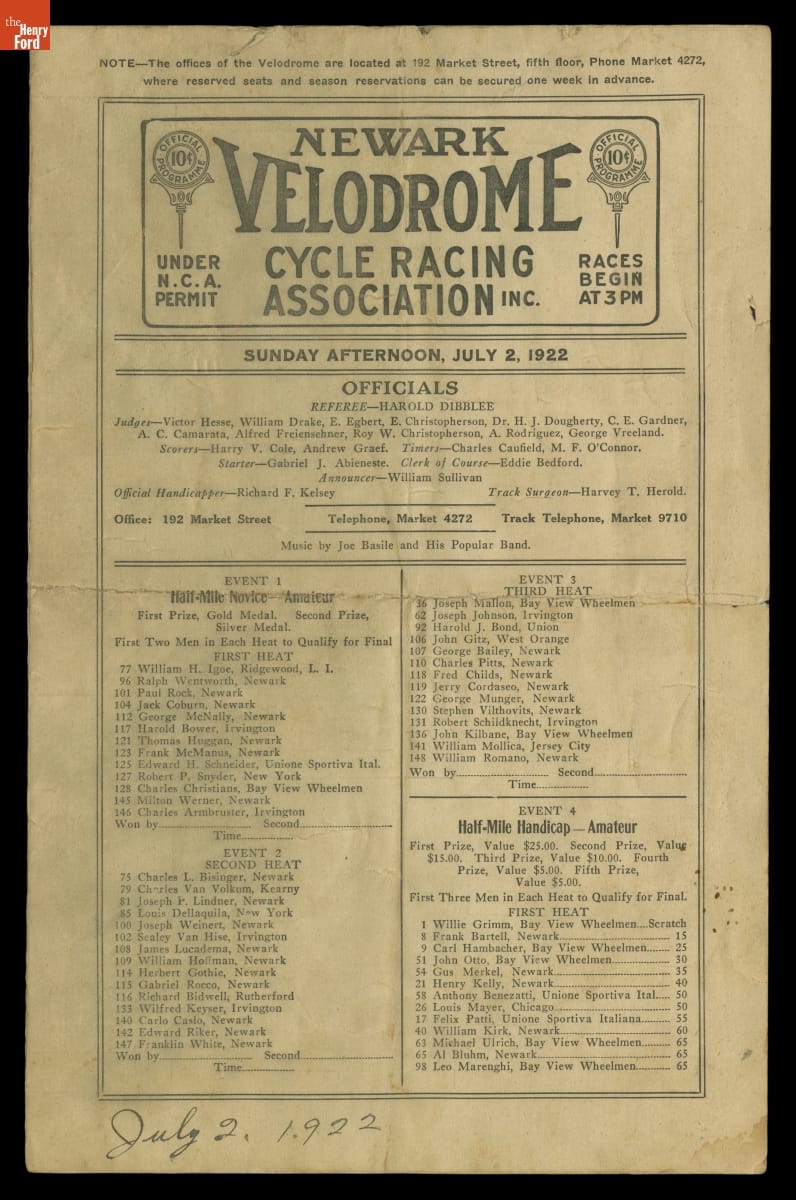
- Newark Velodrome Cycle Racing Association Program, Sunday, July 2, 1922 - "Velodrome" describes indoor or outdoor tracks used for bicycle racing. The first tracks were flat, with simple surfaces of cinders or shale. By the early 20th century, steeply banked turns and improved wood, concrete or asphalt surfaces were common. This program is for a series of races at New Jersey's Newark Velodrome. The arena and its one-sixth-mile track were demolished in 1930.
- July 02, 1922
- Collections - Artifact
Newark Velodrome Cycle Racing Association Program, Sunday, July 2, 1922
"Velodrome" describes indoor or outdoor tracks used for bicycle racing. The first tracks were flat, with simple surfaces of cinders or shale. By the early 20th century, steeply banked turns and improved wood, concrete or asphalt surfaces were common. This program is for a series of races at New Jersey's Newark Velodrome. The arena and its one-sixth-mile track were demolished in 1930.
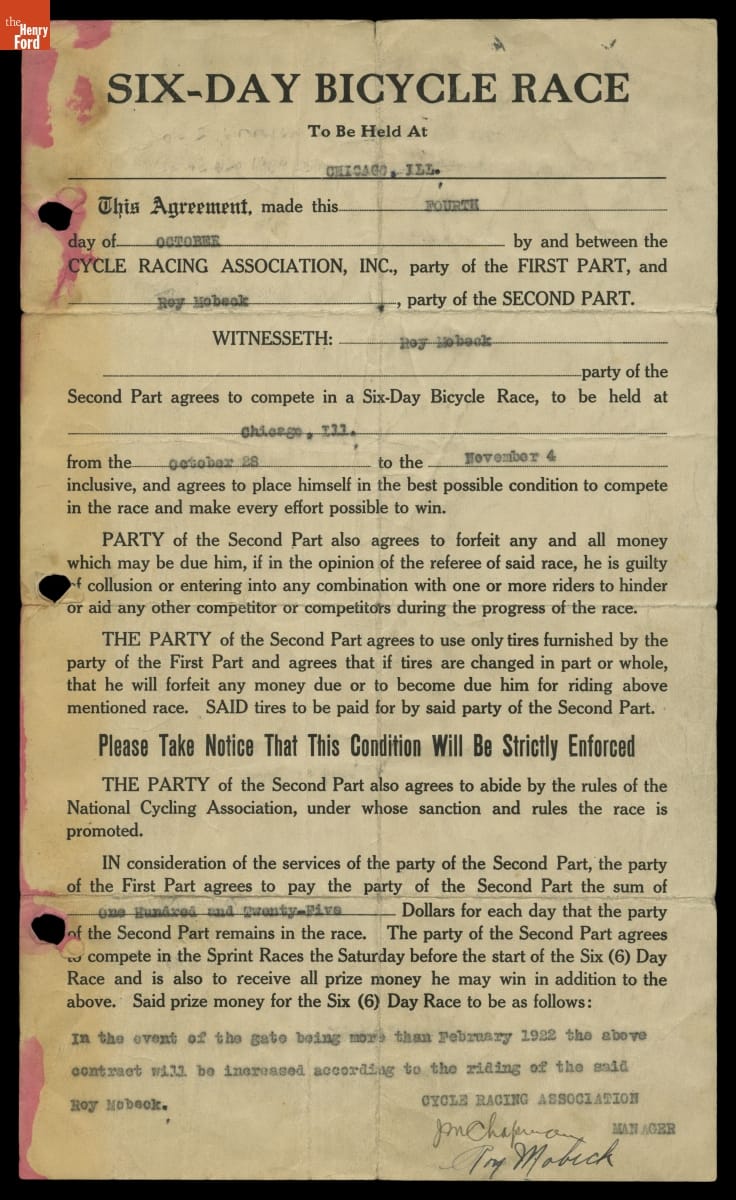
- Cycle Racing Association, Inc. Six-Day Bicycle Contract Signed by Roy Mobeck, 1922 - Roy Mobeck of Chicago, Illinois, began bicycle racing as an amateur in the late 1910s. He participated in and won several local competitions. Mobeck turned professional in the early 1920s, and he competed in six-day races throughout the Midwest. These extreme endurance contests had cyclists riding continuously for six days with only brief stops for food or rest.
- 1922
- Collections - Artifact
Cycle Racing Association, Inc. Six-Day Bicycle Contract Signed by Roy Mobeck, 1922
Roy Mobeck of Chicago, Illinois, began bicycle racing as an amateur in the late 1910s. He participated in and won several local competitions. Mobeck turned professional in the early 1920s, and he competed in six-day races throughout the Midwest. These extreme endurance contests had cyclists riding continuously for six days with only brief stops for food or rest.
- "Associated Cycle Dealers of Chicago Souvenir Year Book and Program," 1922 - Bicycle races attracted large crowds from the late 19th century well into the 20th. These competitions promoted the cycling industry and encouraged technological development. This yearbook, published in 1940 by the Associated Cycle Dealers of Chicago, contains 40 pages of advertisements, profiles of professional cyclists, and photographs from the greater Chicago area.
- 1922
- Collections - Artifact
"Associated Cycle Dealers of Chicago Souvenir Year Book and Program," 1922
Bicycle races attracted large crowds from the late 19th century well into the 20th. These competitions promoted the cycling industry and encouraged technological development. This yearbook, published in 1940 by the Associated Cycle Dealers of Chicago, contains 40 pages of advertisements, profiles of professional cyclists, and photographs from the greater Chicago area.