
Search
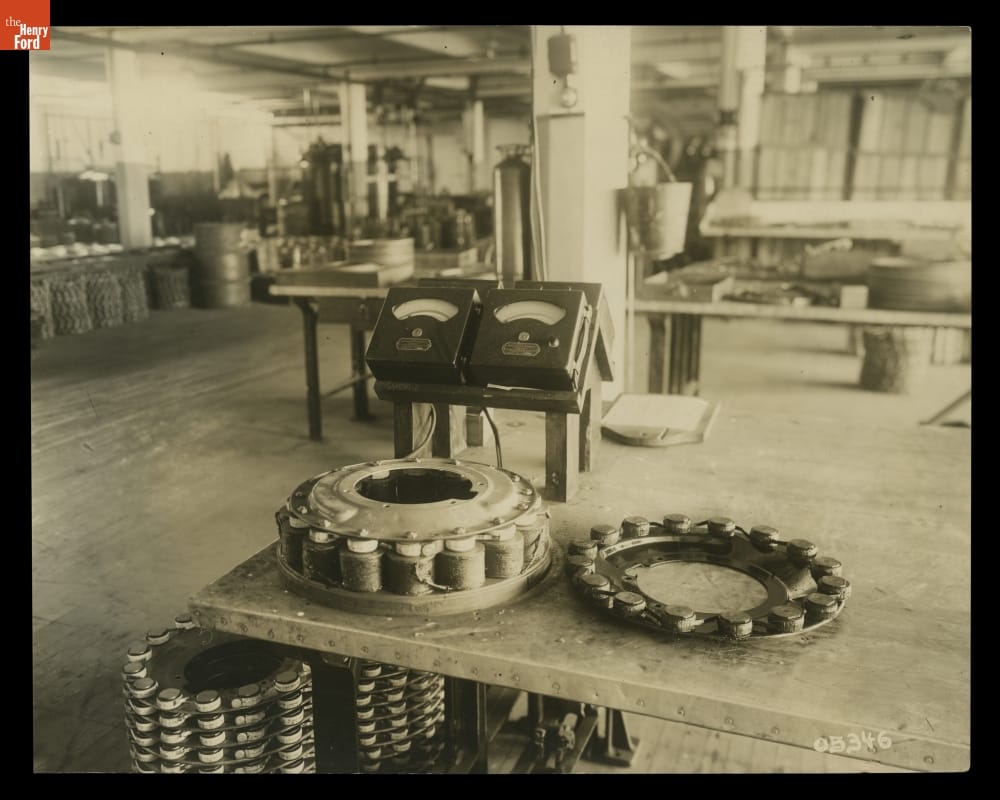
- Equipment for Testing Magnetos in the Ford Motor Company Highland Park Plant, circa 1913 - The Ford Model T's magneto generated electricity to produce the spark that ignited the fuel-air mixture in its engine cylinders. The T's magneto was built into its flywheel rather than as a separate unit driven by a belt or chain from the engine. The design typified the clever, compact engineering found throughout the Model T.
- circa 1913
- Collections - Artifact
Equipment for Testing Magnetos in the Ford Motor Company Highland Park Plant, circa 1913
The Ford Model T's magneto generated electricity to produce the spark that ignited the fuel-air mixture in its engine cylinders. The T's magneto was built into its flywheel rather than as a separate unit driven by a belt or chain from the engine. The design typified the clever, compact engineering found throughout the Model T.
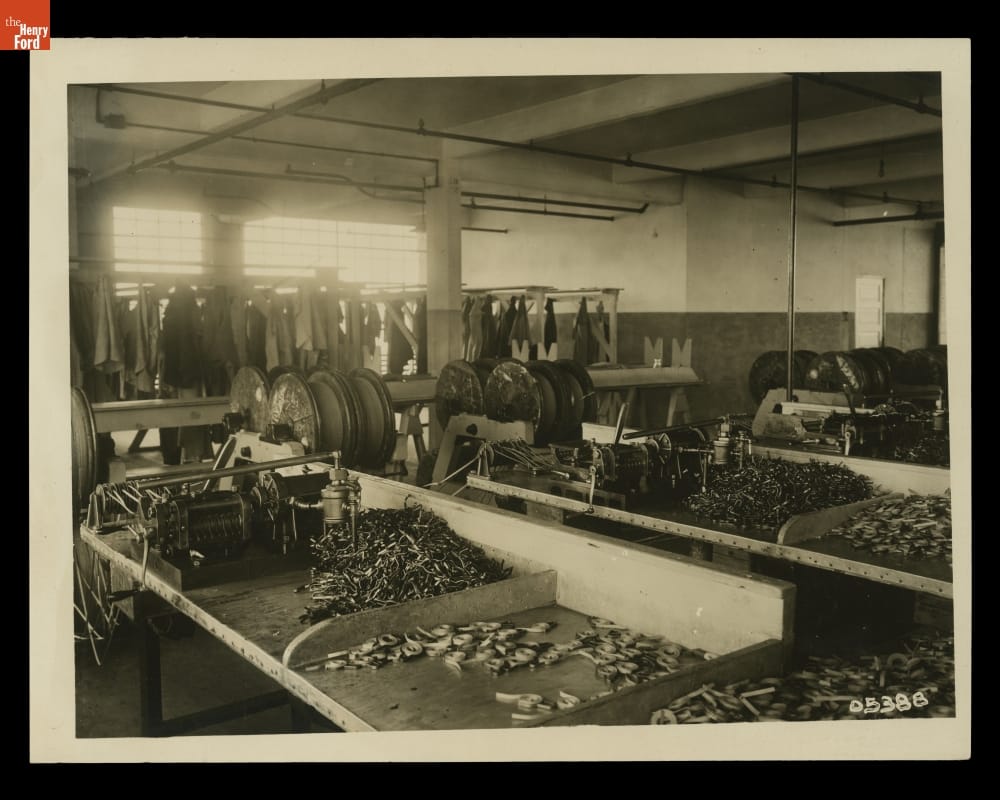
- Equipment for Making Magneto Coils in the Ford Motor Company Highland Park Plant, circa 1913 - The Ford Model T's magneto generated electricity to produce the spark that ignited the fuel-air mixture in its engine cylinders. It was built into the engine flywheel rather than as a separate unit driven by a belt or chain. Sixteen magnets on the spinning flywheel passed by 16 stationary coils, producing a low-voltage electrical current.
- circa 1913
- Collections - Artifact
Equipment for Making Magneto Coils in the Ford Motor Company Highland Park Plant, circa 1913
The Ford Model T's magneto generated electricity to produce the spark that ignited the fuel-air mixture in its engine cylinders. It was built into the engine flywheel rather than as a separate unit driven by a belt or chain. Sixteen magnets on the spinning flywheel passed by 16 stationary coils, producing a low-voltage electrical current.
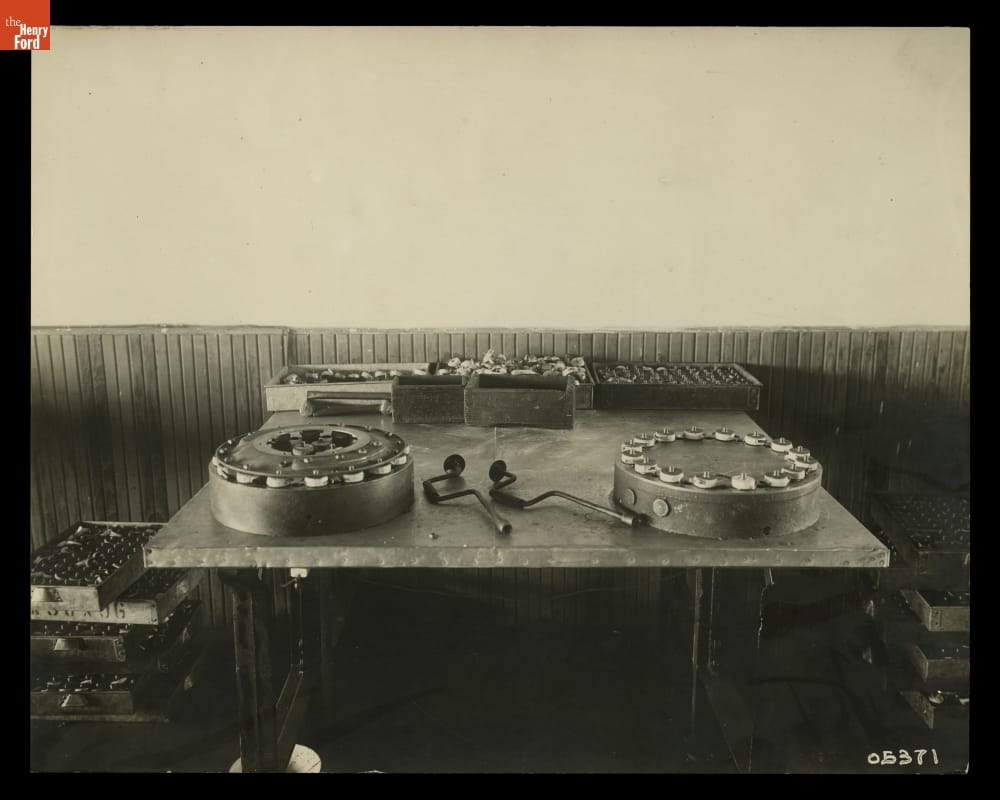
- Static Assembly of Magnetos in the Ford Motor Company Highland Park Plant, circa 1913 - The Ford Model T's magneto generated electricity to produce the spark that ignited the fuel-air mixture in its engine cylinders. The T's magneto was built into its flywheel rather than as a separate unit driven by a belt or chain from the engine. The design typified the clever, compact engineering found throughout the Model T.
- circa 1913
- Collections - Artifact
Static Assembly of Magnetos in the Ford Motor Company Highland Park Plant, circa 1913
The Ford Model T's magneto generated electricity to produce the spark that ignited the fuel-air mixture in its engine cylinders. The T's magneto was built into its flywheel rather than as a separate unit driven by a belt or chain from the engine. The design typified the clever, compact engineering found throughout the Model T.
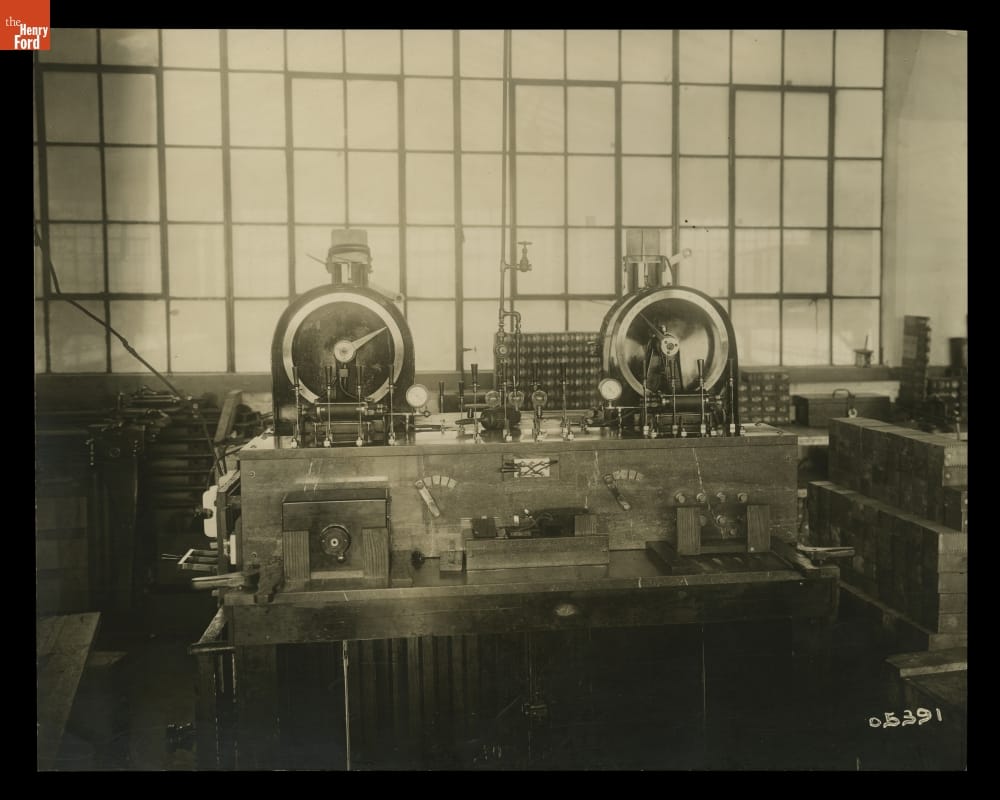
- Equipment for Testing Magneto Coils in the Ford Motor Company Highland Park Plant, circa 1913 - The Ford Model T's magneto generated electricity to produce the spark that ignited the fuel-air mixture in its engine cylinders. It was built into the engine flywheel rather than as a separate unit driven by a belt or chain. Sixteen magnets on the spinning flywheel passed by 16 stationary coils, producing a low-voltage electrical current.
- circa 1913
- Collections - Artifact
Equipment for Testing Magneto Coils in the Ford Motor Company Highland Park Plant, circa 1913
The Ford Model T's magneto generated electricity to produce the spark that ignited the fuel-air mixture in its engine cylinders. It was built into the engine flywheel rather than as a separate unit driven by a belt or chain. Sixteen magnets on the spinning flywheel passed by 16 stationary coils, producing a low-voltage electrical current.
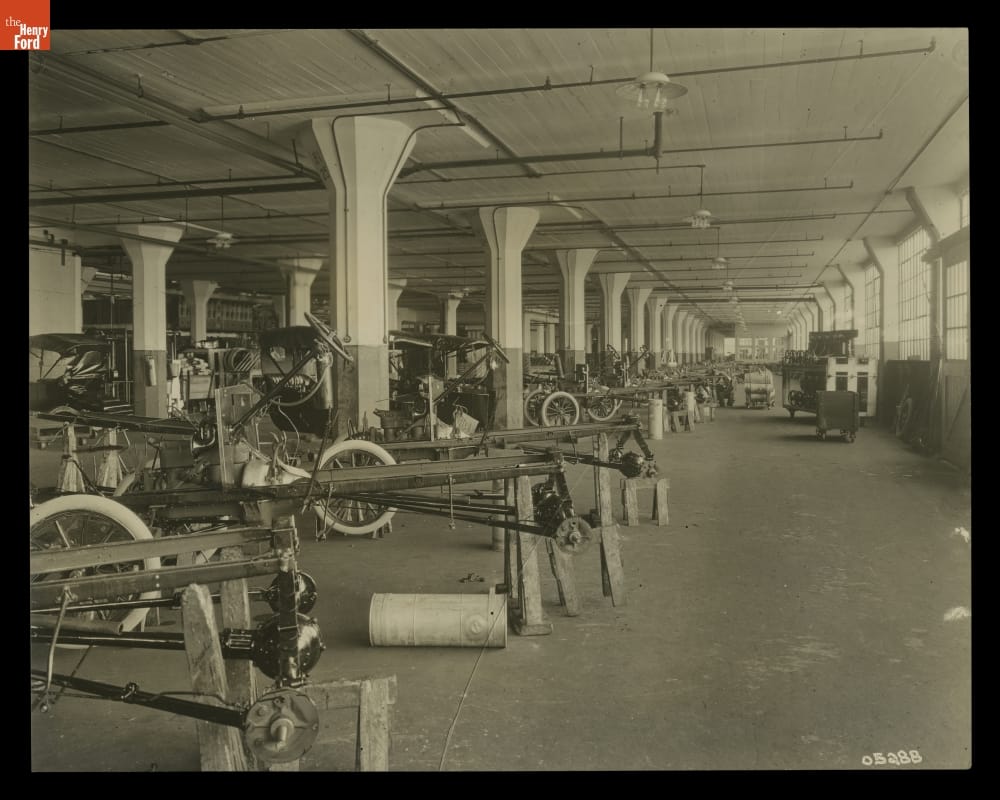
- Ford Model T Static Assembly at the Highland Park Plant, circa 1913 - For more than three years at Highland Park, Ford continued manufacturing Model Ts using traditional stationary-assembly methods, with small teams building each car from start to finish. It was meticulous work done by skilled craftspeople, and output was limited by the nature of the process. The moving assembly line, implemented in 1913-1914, provided a faster means of production.
- circa 1913
- Collections - Artifact
Ford Model T Static Assembly at the Highland Park Plant, circa 1913
For more than three years at Highland Park, Ford continued manufacturing Model Ts using traditional stationary-assembly methods, with small teams building each car from start to finish. It was meticulous work done by skilled craftspeople, and output was limited by the nature of the process. The moving assembly line, implemented in 1913-1914, provided a faster means of production.
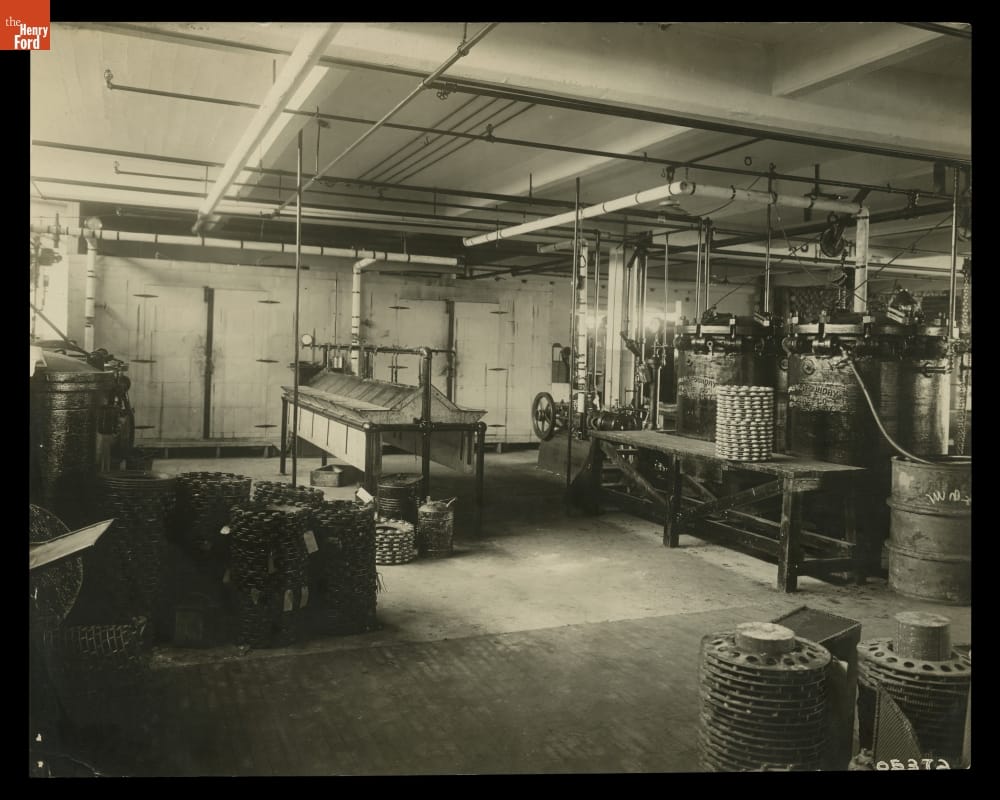
- Equipment for Treating Magnetos in the Ford Motor Company Highland Park Plant, circa 1913 - The Ford Model T's magneto generated electricity to produce the spark that ignited the fuel-air mixture in its engine cylinders. The T's magneto was built into its flywheel rather than as a separate unit driven by a belt or chain from the engine. The design typified the clever, compact engineering found throughout the Model T.
- circa 1913
- Collections - Artifact
Equipment for Treating Magnetos in the Ford Motor Company Highland Park Plant, circa 1913
The Ford Model T's magneto generated electricity to produce the spark that ignited the fuel-air mixture in its engine cylinders. The T's magneto was built into its flywheel rather than as a separate unit driven by a belt or chain from the engine. The design typified the clever, compact engineering found throughout the Model T.
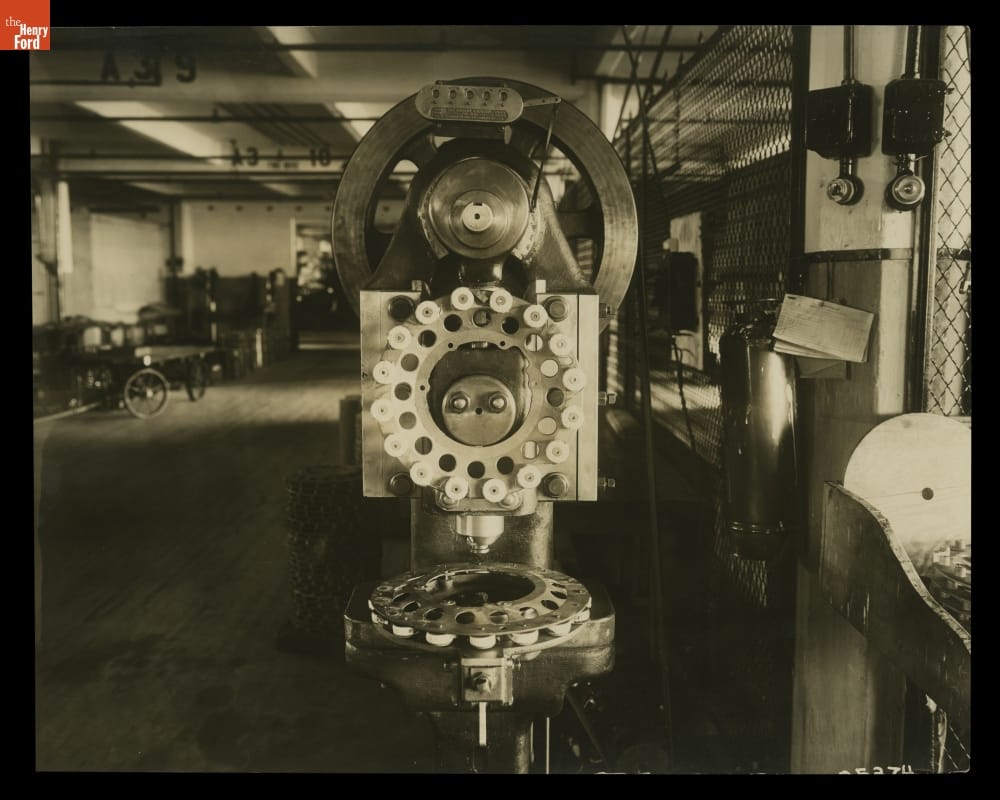
- Equipment for Riveting Magnetos in the Ford Motor Company Highland Park Plant, circa 1913 - The Ford Model T's magneto generated electricity to produce the spark that ignited the fuel-air mixture in its engine cylinders. The T's magneto was built into its flywheel rather than as a separate unit driven by a belt or chain from the engine. The design typified the clever, compact engineering found throughout the Model T.
- circa 1913
- Collections - Artifact
Equipment for Riveting Magnetos in the Ford Motor Company Highland Park Plant, circa 1913
The Ford Model T's magneto generated electricity to produce the spark that ignited the fuel-air mixture in its engine cylinders. The T's magneto was built into its flywheel rather than as a separate unit driven by a belt or chain from the engine. The design typified the clever, compact engineering found throughout the Model T.