
Search
- Fireman's Hat, 1890-1920 - No piece of equipment symbolizes a firefighter's dangerous work like the fire helmet. Its hard shell protects from falling debris, and its oversized brim directs water away from the neck. Early helmets were made from leather, while later versions featured metal shells. Modern helmets use lightweight composite materials, but they retain the familiar shape.
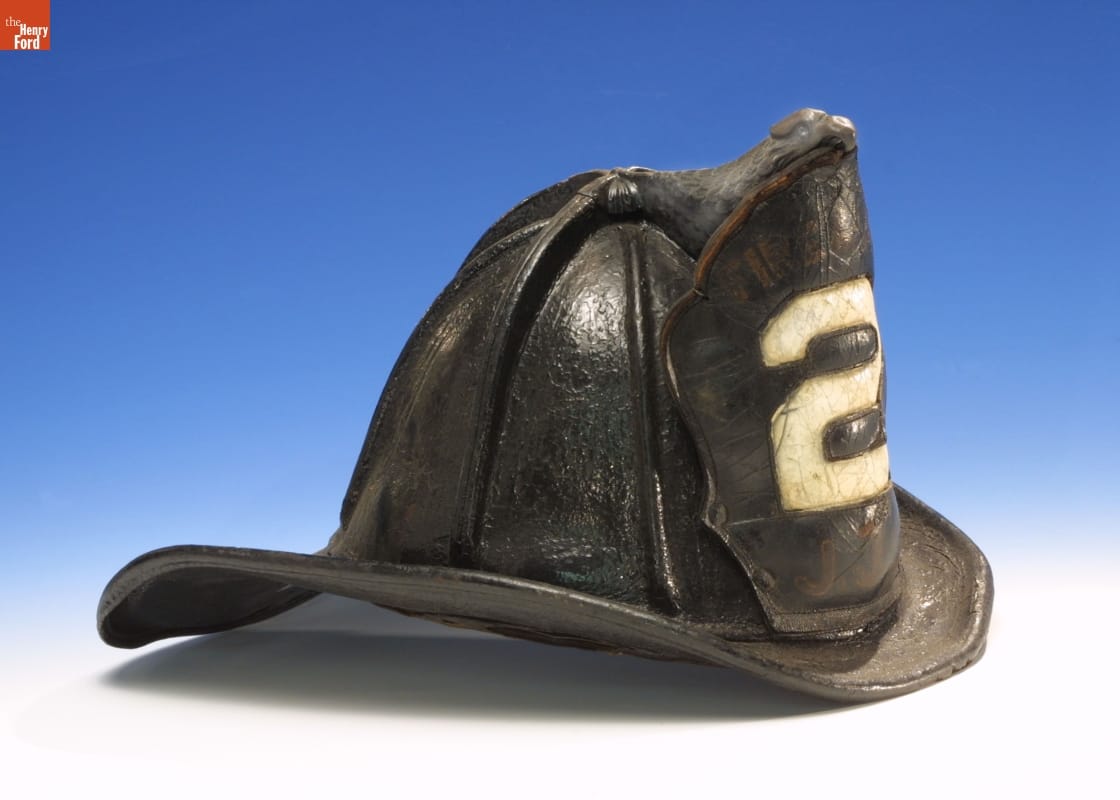
- 1890-1920
- Collections - Artifact
Fireman's Hat, 1890-1920
No piece of equipment symbolizes a firefighter's dangerous work like the fire helmet. Its hard shell protects from falling debris, and its oversized brim directs water away from the neck. Early helmets were made from leather, while later versions featured metal shells. Modern helmets use lightweight composite materials, but they retain the familiar shape.
- Fire Bucket, "CHICAGO. I.L.L. 1821", circa 1821 - Many home and business owners in colonial and early America kept leather fire buckets in case of emergency. When a fire broke out in the community, owners tossed their buckets into the street, where firefighters and local citizens used them to carry water to put out the fire. Buckets decorated with names, initials and numbers helped owners identify their buckets after the fire had been extinguished.
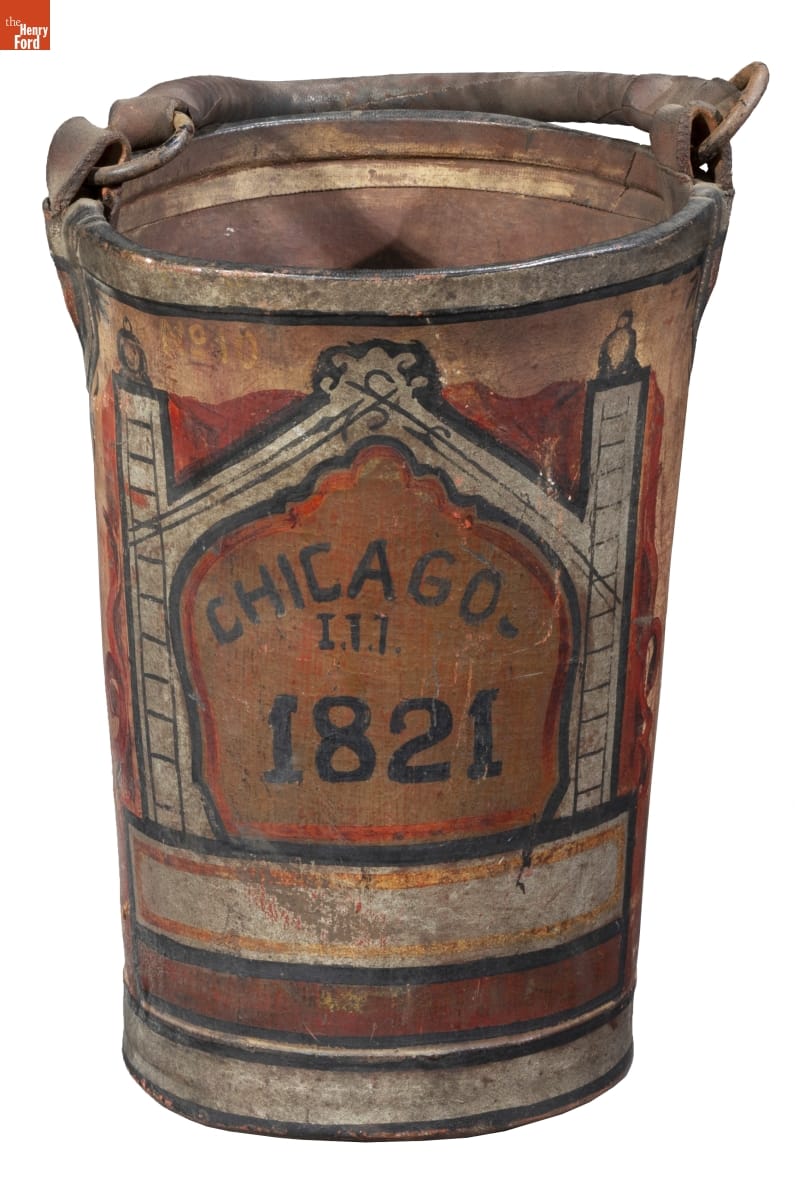
- circa 1821
- Collections - Artifact
Fire Bucket, "CHICAGO. I.L.L. 1821", circa 1821
Many home and business owners in colonial and early America kept leather fire buckets in case of emergency. When a fire broke out in the community, owners tossed their buckets into the street, where firefighters and local citizens used them to carry water to put out the fire. Buckets decorated with names, initials and numbers helped owners identify their buckets after the fire had been extinguished.
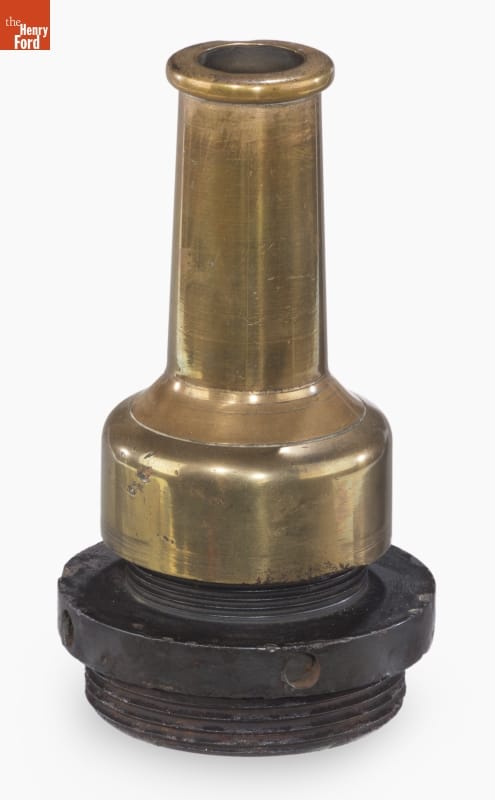
- Fire Hose Nozzle with Coupler - Firefighters use hoses fitted with nozzles to douse destructive flames. Early nozzles, like this brass one, created a simple, straight stream of water. Improvements in nozzle design since the mid-1900s have controlled water flow and pressure -- optimizing a water stream's velocity and reach -- and created new dispersal patterns to help put out the fire.
- Collections - Artifact
Fire Hose Nozzle with Coupler
Firefighters use hoses fitted with nozzles to douse destructive flames. Early nozzles, like this brass one, created a simple, straight stream of water. Improvements in nozzle design since the mid-1900s have controlled water flow and pressure -- optimizing a water stream's velocity and reach -- and created new dispersal patterns to help put out the fire.
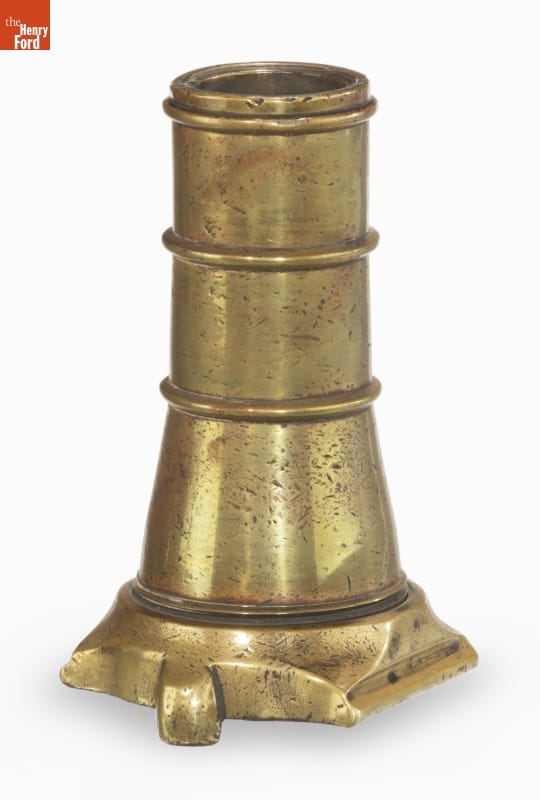
- Fire Hose Nozzle - Firefighters use hoses fitted with nozzles to douse destructive flames. Early nozzles, like this brass one, created a simple, straight stream of water. Improvements in nozzle design since the mid-1900s have controlled water flow and pressure -- optimizing a water stream's velocity and reach -- and created new dispersal patterns to help put out the fire.
- Collections - Artifact
Fire Hose Nozzle
Firefighters use hoses fitted with nozzles to douse destructive flames. Early nozzles, like this brass one, created a simple, straight stream of water. Improvements in nozzle design since the mid-1900s have controlled water flow and pressure -- optimizing a water stream's velocity and reach -- and created new dispersal patterns to help put out the fire.
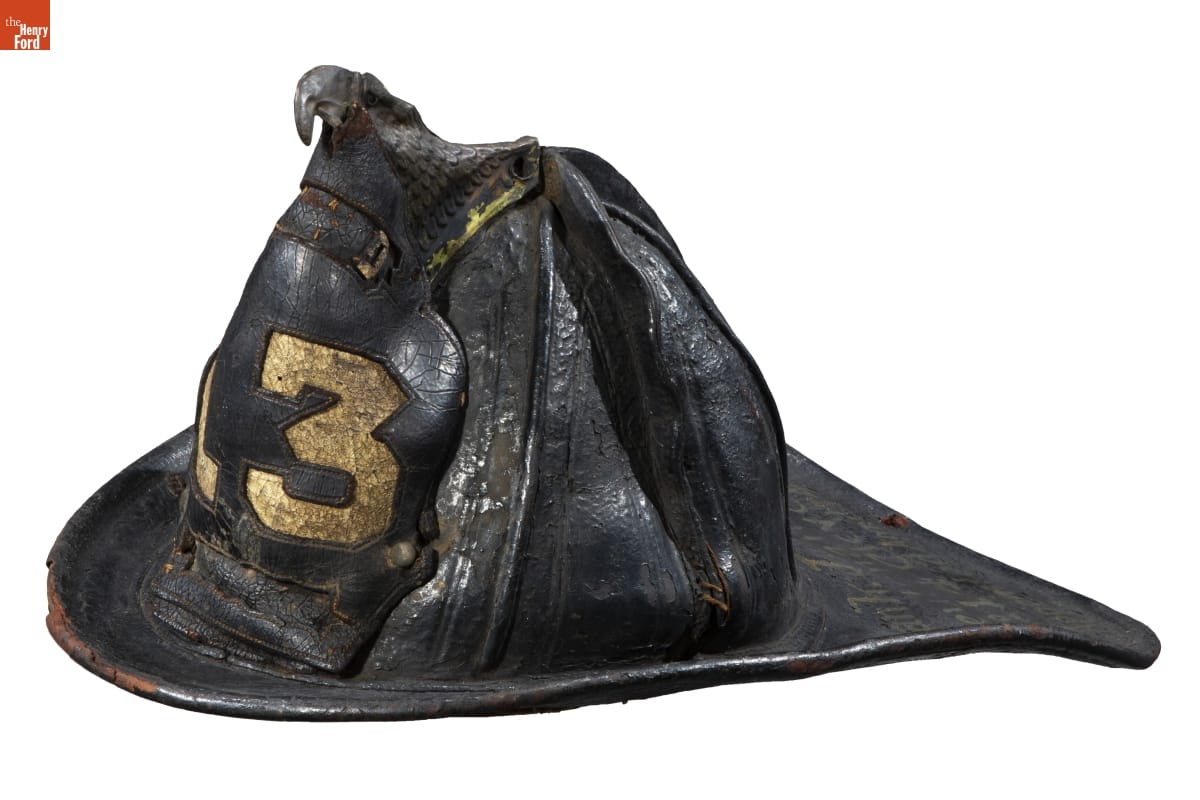
- Fire Hat, Worn by Lieutenant Frank J. Dewey, circa 1872 - No piece of equipment symbolizes a firefighter's dangerous work like the fire helmet. Its hard shell protects from falling debris, and its oversized brim directs water away from the neck. Early helmets were made from leather, while later versions featured metal shells. Modern helmets use lightweight composite materials, but they retain the familiar shape.
- circa 1872
- Collections - Artifact
Fire Hat, Worn by Lieutenant Frank J. Dewey, circa 1872
No piece of equipment symbolizes a firefighter's dangerous work like the fire helmet. Its hard shell protects from falling debris, and its oversized brim directs water away from the neck. Early helmets were made from leather, while later versions featured metal shells. Modern helmets use lightweight composite materials, but they retain the familiar shape.
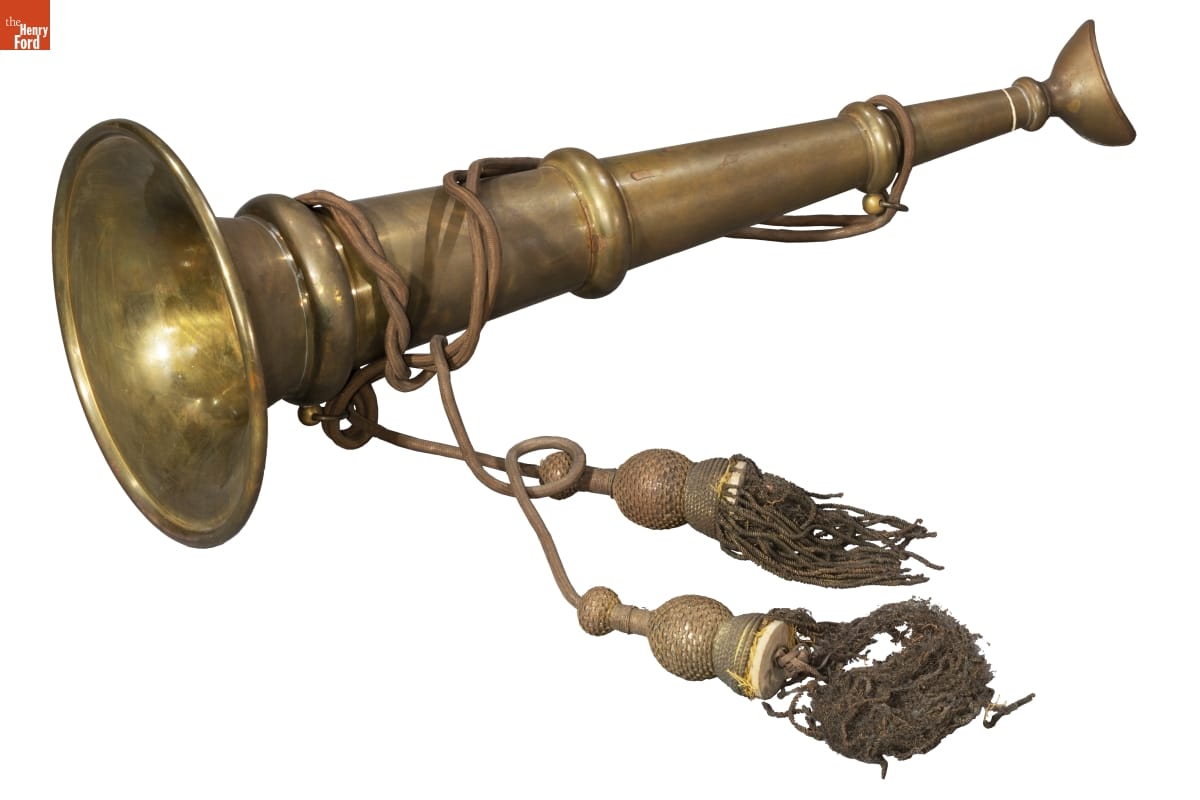
- Fire Trumpet, Used by Captain G. Gairns, 1887 - Firefighters used trumpets to amplify their voices when shouting instructions during a fire. Over time, trumpets took on a symbolic meaning. Special presentation trumpets were awarded to honor firefighters' service or achievements. This trumpet was given to Captain G. Gairns after he was injured, and nearly killed, in an accident while battling a fire in 1887.
- November 11, 1887
- Collections - Artifact
Fire Trumpet, Used by Captain G. Gairns, 1887
Firefighters used trumpets to amplify their voices when shouting instructions during a fire. Over time, trumpets took on a symbolic meaning. Special presentation trumpets were awarded to honor firefighters' service or achievements. This trumpet was given to Captain G. Gairns after he was injured, and nearly killed, in an accident while battling a fire in 1887.