
Search
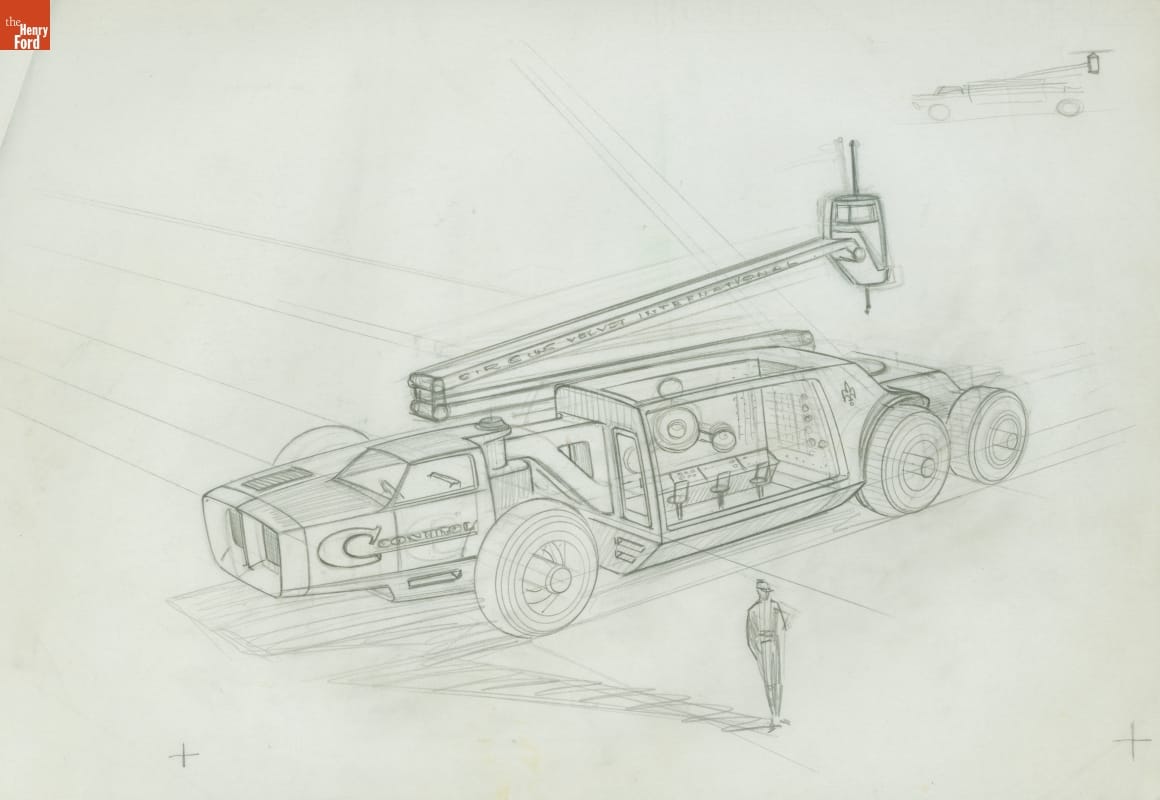
- Circus Performance Control Vehicle, 1967 - In 1966, automobile designer Virgil Exner was approached by a wealthy man with an unusual dream: to build a motorized circus with vehicles for transporting performers and constructing the big top. Exner was eager to begin the novel - though soon abandoned - project and created several concepts, including this control vehicle designed to erect the big top.
- 1967
- Collections - Artifact
Circus Performance Control Vehicle, 1967
In 1966, automobile designer Virgil Exner was approached by a wealthy man with an unusual dream: to build a motorized circus with vehicles for transporting performers and constructing the big top. Exner was eager to begin the novel - though soon abandoned - project and created several concepts, including this control vehicle designed to erect the big top.
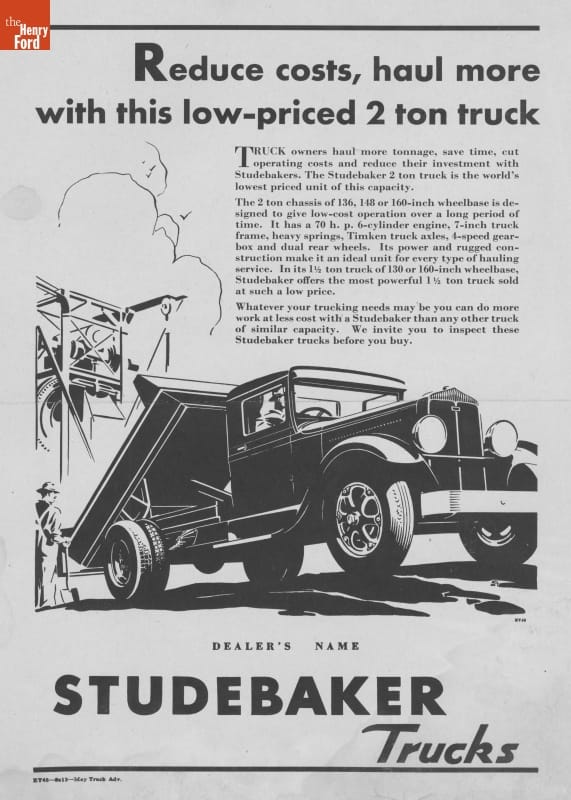
- "Reduce Costs, Haul More with this Low-Priced 2 Ton Truck" Studebaker Advertisement, circa 1932 - Studebaker had built horse-drawn commercial vehicles from the company's founding in 1852, but its entry into the motorized commercial vehicle market was more gradual. Studebaker's first significant heavy-duty trucks debuted for 1931. The company continued to offer various light, medium, and heavy-duty trucks into 1964 -- just two years before Studebaker ended motor vehicle production altogether.
- circa 1932
- Collections - Artifact
"Reduce Costs, Haul More with this Low-Priced 2 Ton Truck" Studebaker Advertisement, circa 1932
Studebaker had built horse-drawn commercial vehicles from the company's founding in 1852, but its entry into the motorized commercial vehicle market was more gradual. Studebaker's first significant heavy-duty trucks debuted for 1931. The company continued to offer various light, medium, and heavy-duty trucks into 1964 -- just two years before Studebaker ended motor vehicle production altogether.
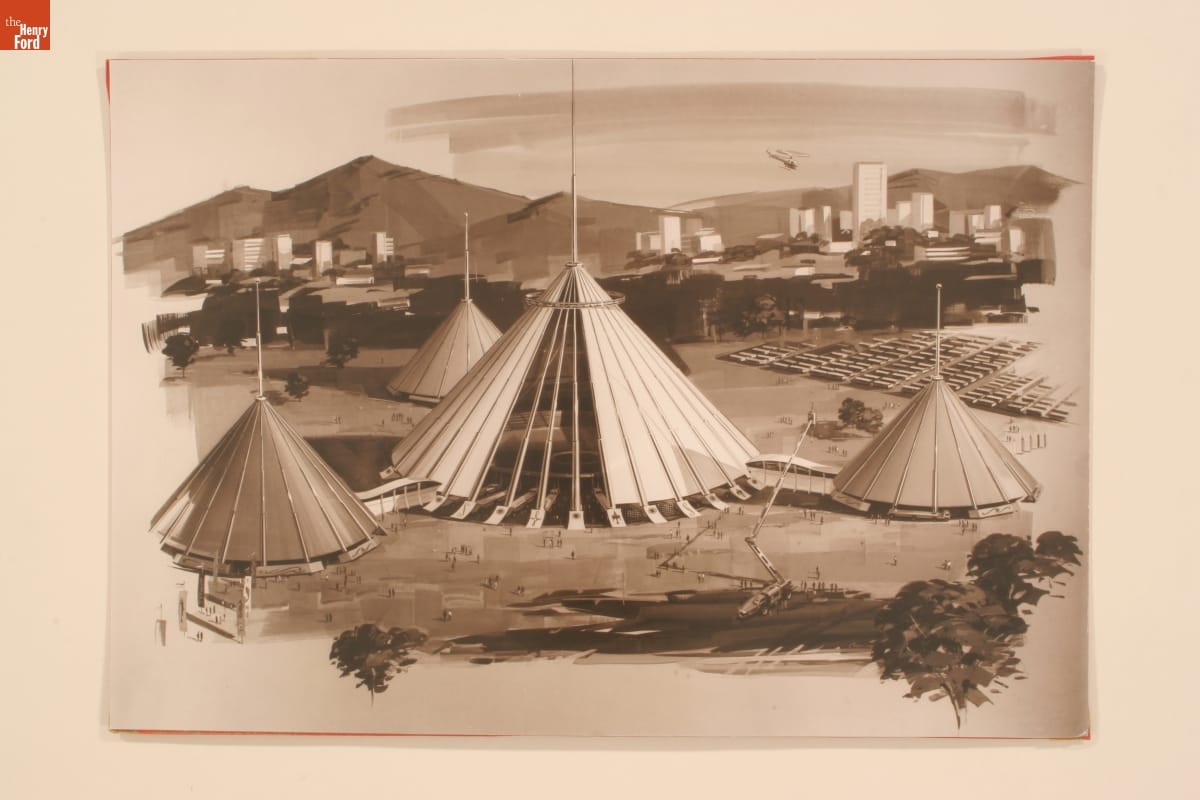
- "Circus Velvet," circa 1967 - In 1966, automobile designer Virgil Exner was approached by a wealthy man with an unusual dream: to build a motorized circus with vehicles for transporting performers and constructing the big top. Exner was eager to begin the novel, though soon abandoned, project. He created several concept vehicles and structures for the spectacle, known as Circus Velvet.
- circa 1967
- Collections - Artifact
"Circus Velvet," circa 1967
In 1966, automobile designer Virgil Exner was approached by a wealthy man with an unusual dream: to build a motorized circus with vehicles for transporting performers and constructing the big top. Exner was eager to begin the novel, though soon abandoned, project. He created several concept vehicles and structures for the spectacle, known as Circus Velvet.
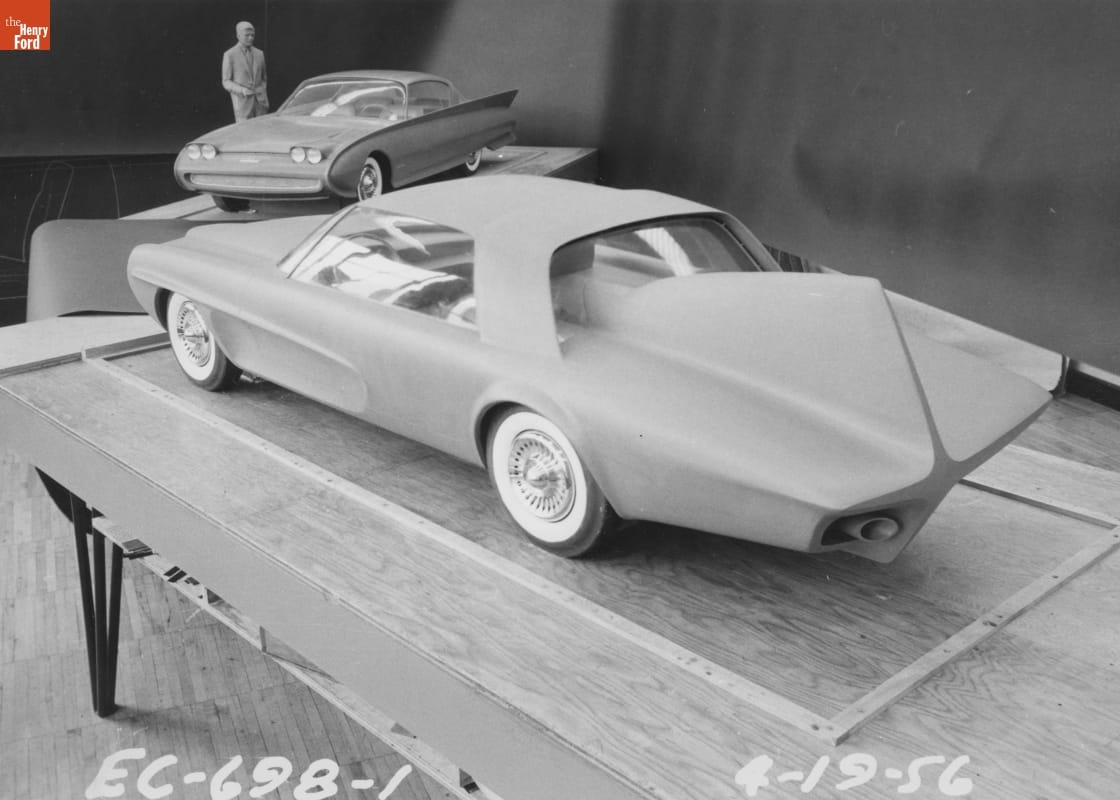
- Clay Model for the 1956 Chrysler Falcon Concept Car Designed by Virgil M. Exner - Virgil Exner designed the two-seat Chrysler Falcon concept car for the 1955 auto show season. The roadster was close in spirit to the contemporary Chevrolet Corvette and Ford Thunderbird, though the simulated knock-off wheels and external exhaust pipes gave the Falcon a somewhat racier appearance. Chrysler chose not to put the car into production.
- April 19, 1956
- Collections - Artifact
Clay Model for the 1956 Chrysler Falcon Concept Car Designed by Virgil M. Exner
Virgil Exner designed the two-seat Chrysler Falcon concept car for the 1955 auto show season. The roadster was close in spirit to the contemporary Chevrolet Corvette and Ford Thunderbird, though the simulated knock-off wheels and external exhaust pipes gave the Falcon a somewhat racier appearance. Chrysler chose not to put the car into production.
- Clay Model for the 1956 Chrysler Falcon Concept Car Designed by Virgil M. Exner - Virgil Exner designed the two-seat Chrysler Falcon concept car for the 1955 auto show season. The roadster was close in spirit to the contemporary Chevrolet Corvette and Ford Thunderbird, though the simulated knock-off wheels and external exhaust pipes gave the Falcon a somewhat racier appearance. Chrysler chose not to put the car into production.
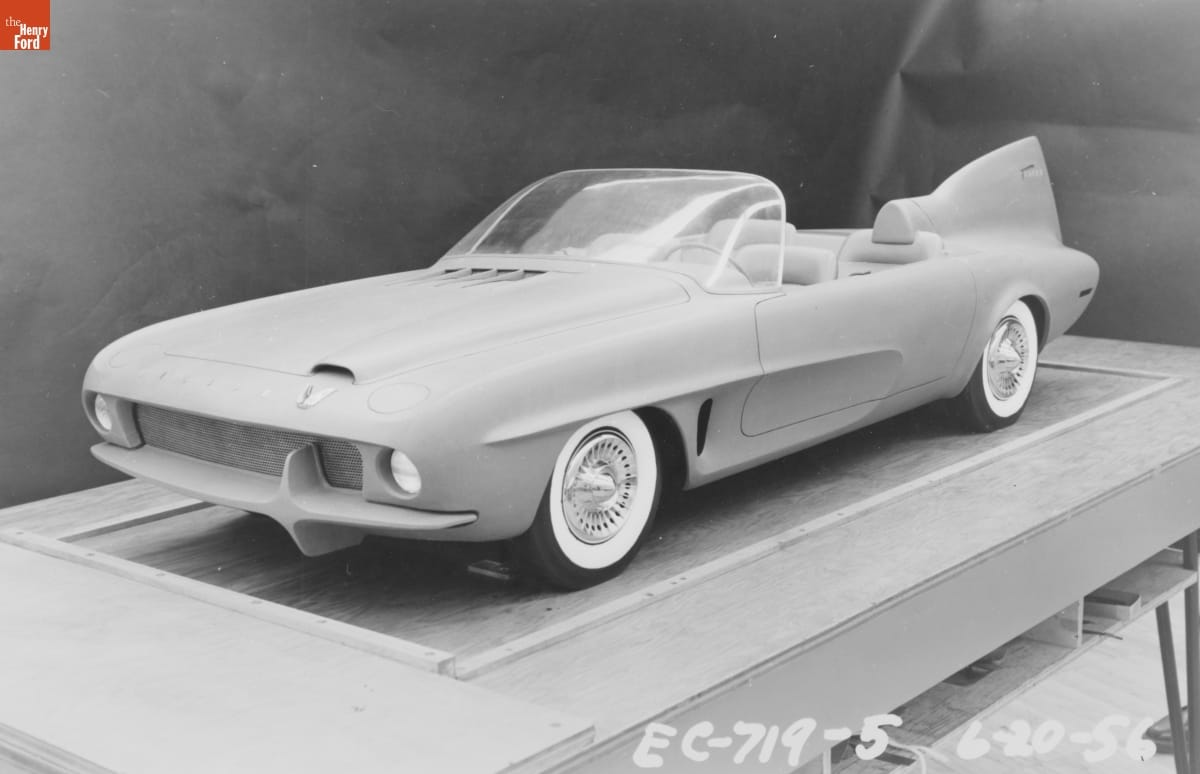
- June 20, 1956
- Collections - Artifact
Clay Model for the 1956 Chrysler Falcon Concept Car Designed by Virgil M. Exner
Virgil Exner designed the two-seat Chrysler Falcon concept car for the 1955 auto show season. The roadster was close in spirit to the contemporary Chevrolet Corvette and Ford Thunderbird, though the simulated knock-off wheels and external exhaust pipes gave the Falcon a somewhat racier appearance. Chrysler chose not to put the car into production.
- Studebaker Champion Mock-Up, 1943 - Virgil Exner's long career in automotive design included time with General Motors, Raymond Loewy Associates, and Studebaker -- for which he produced this work. Exner is best remembered for his tenure as design head at Chrysler, where his dramatic "Forward Look" characterized the company's vehicles from 1955 to 1961.
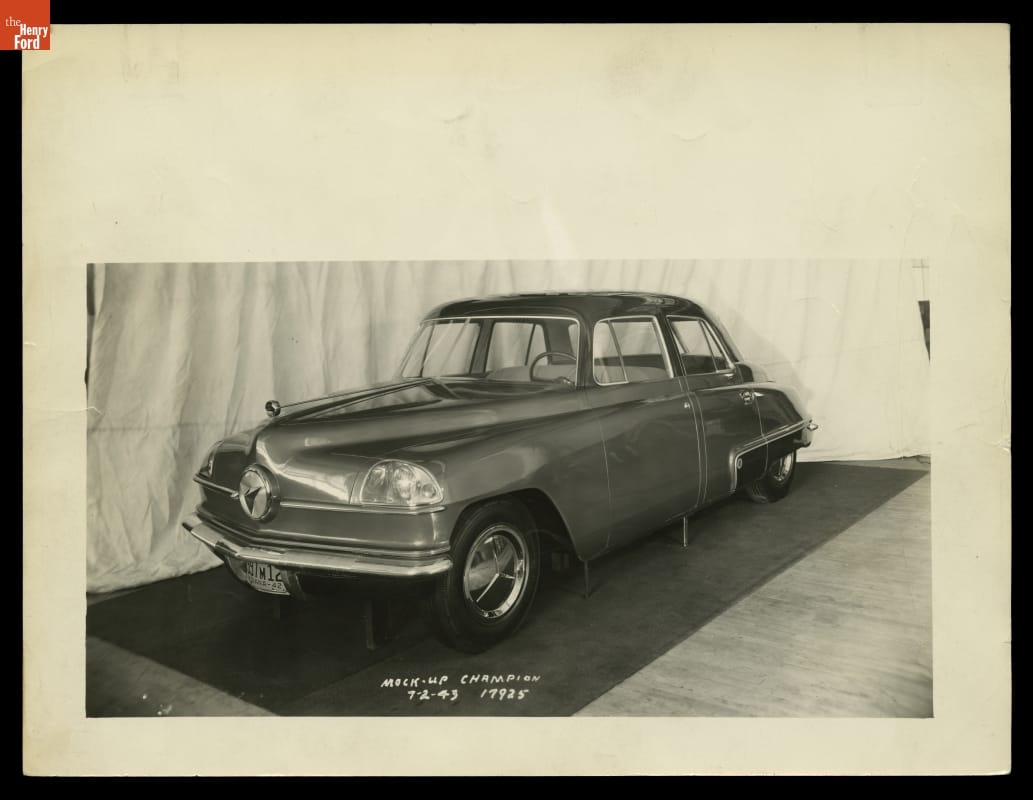
- July 02, 1943
- Collections - Artifact
Studebaker Champion Mock-Up, 1943
Virgil Exner's long career in automotive design included time with General Motors, Raymond Loewy Associates, and Studebaker -- for which he produced this work. Exner is best remembered for his tenure as design head at Chrysler, where his dramatic "Forward Look" characterized the company's vehicles from 1955 to 1961.
- Studebaker Sales Brochure, 1932 - Virgil Exner's long career in automotive design included time with General Motors, Raymond Loewy Associates, and Studebaker -- for which he produced this work. Exner is best remembered for his tenure as design head at Chrysler, where his dramatic "Forward Look" characterized the company's vehicles from 1955 to 1961.
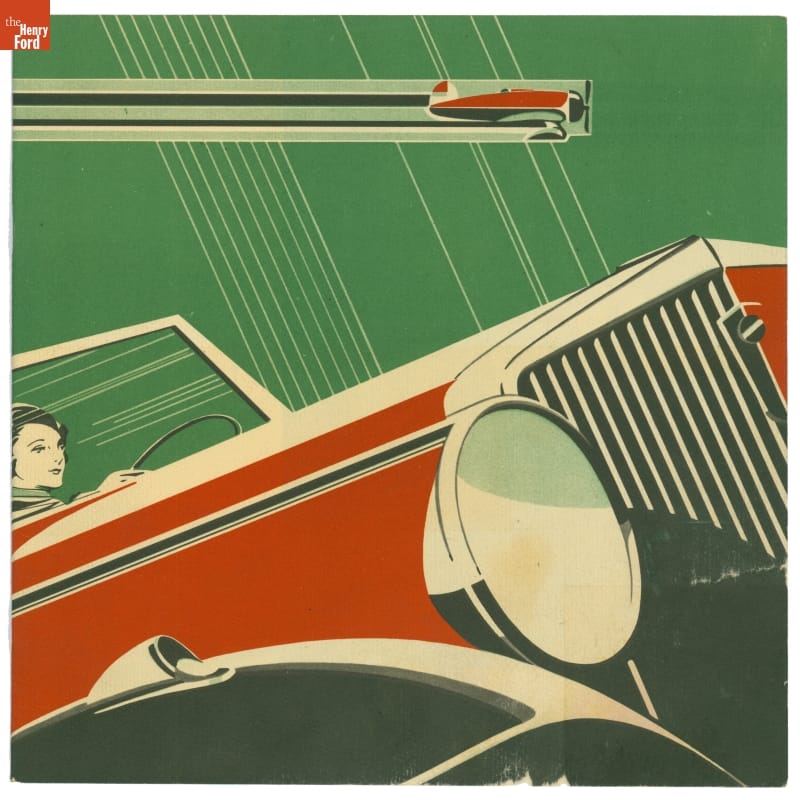
- 1932
- Collections - Artifact
Studebaker Sales Brochure, 1932
Virgil Exner's long career in automotive design included time with General Motors, Raymond Loewy Associates, and Studebaker -- for which he produced this work. Exner is best remembered for his tenure as design head at Chrysler, where his dramatic "Forward Look" characterized the company's vehicles from 1955 to 1961.
- Chrysler "613" Concept Car, 1955-1956 - In the 1950s, Chrysler Corporation's Advanced Styling Studio remade the carmaker's stodgy image with sleek, smooth lines inspired by jet aircraft. The department, headed by chief stylist Virgil Exner, developed several fully operational concept models. Pictured here is the body of #613, an "idea car" that exemplified Exner's "Forward Look" and influenced much of the styling for Chrysler's 1957 300C.
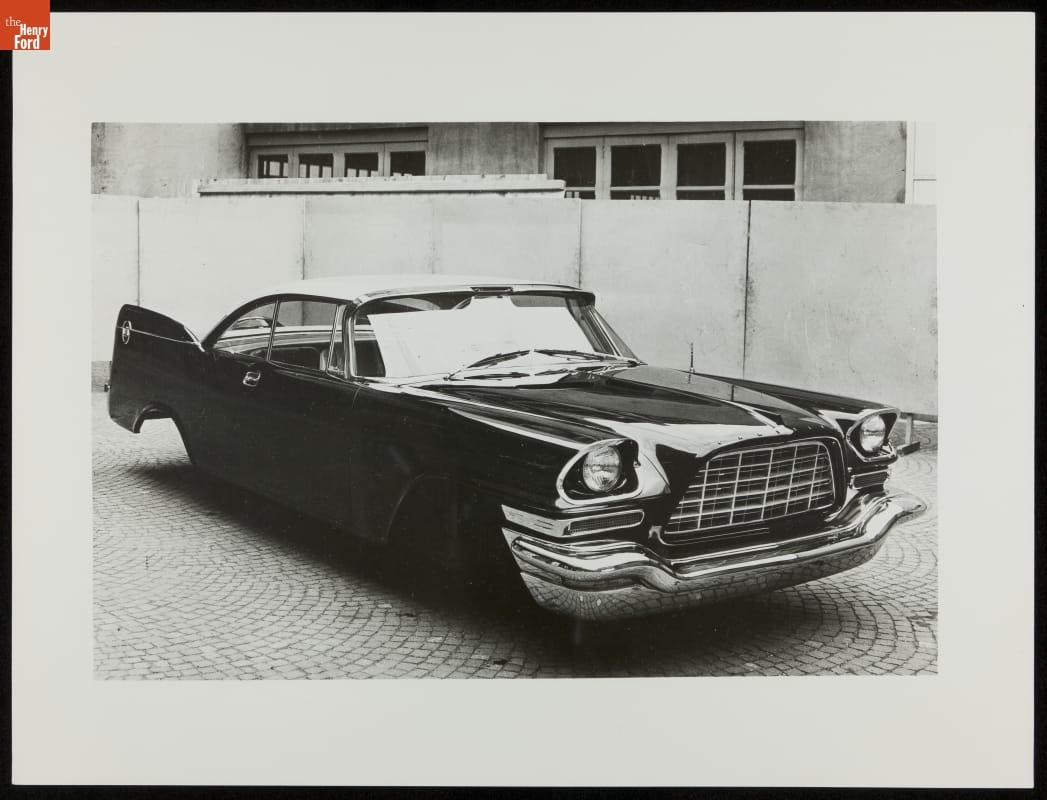
- 1955-1956
- Collections - Artifact
Chrysler "613" Concept Car, 1955-1956
In the 1950s, Chrysler Corporation's Advanced Styling Studio remade the carmaker's stodgy image with sleek, smooth lines inspired by jet aircraft. The department, headed by chief stylist Virgil Exner, developed several fully operational concept models. Pictured here is the body of #613, an "idea car" that exemplified Exner's "Forward Look" and influenced much of the styling for Chrysler's 1957 300C.
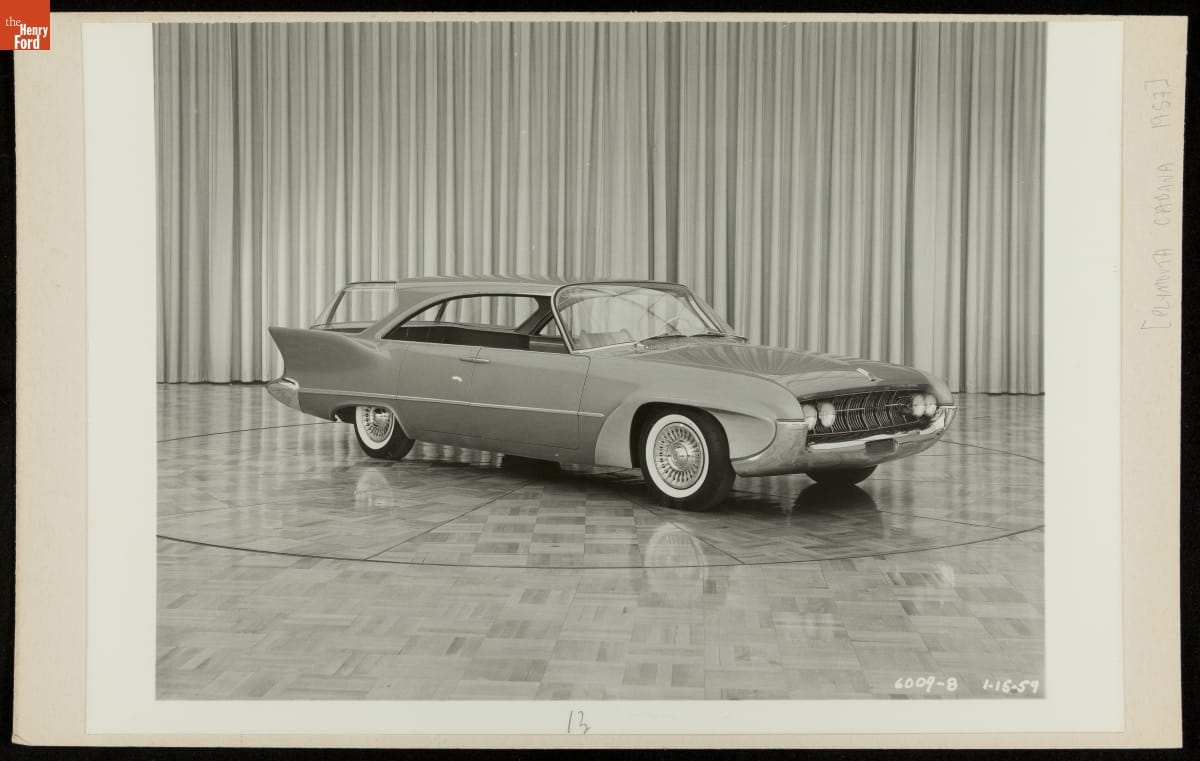
- 1958 Plymouth Cabana Station Wagon - Built by Ghia, the Plymouth Cabana concept car debuted in 1958. The four-door wagon had room for nine passengers. Cabana's hardtop styling, without a B pillar between the doors, provided easier access to the interior -- advantageous for use as an ambulance or a hearse. Cabana was purely for show and lacked a functional powertrain.
- January 15, 1959
- Collections - Artifact
1958 Plymouth Cabana Station Wagon
Built by Ghia, the Plymouth Cabana concept car debuted in 1958. The four-door wagon had room for nine passengers. Cabana's hardtop styling, without a B pillar between the doors, provided easier access to the interior -- advantageous for use as an ambulance or a hearse. Cabana was purely for show and lacked a functional powertrain.
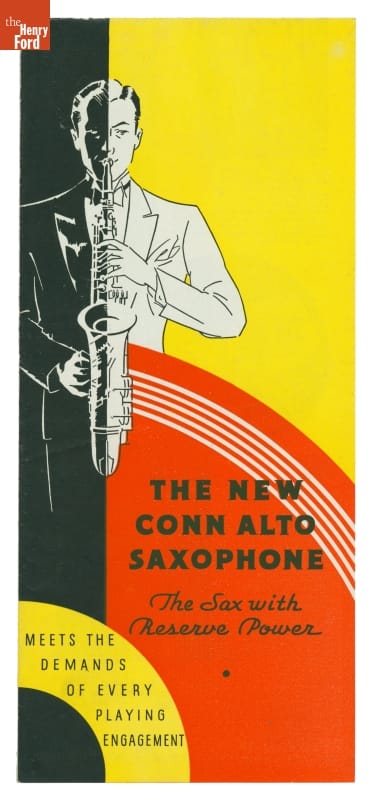
- "The New Conn Alto Saxophone" Brochure, circa 1932 - Virgil Exner's long career in design included time with General Motors, Raymond Loewy Associates, and Studebaker. Exner is best remembered for his work at Chrysler, where he headed design efforts from 1953 to 1961. Following his retirement from Chrysler, Exner consulted on multiple projects including concept cars, motorboats, and revivals of the Duesenberg and Stutz automobile brands.
- circa 1932
- Collections - Artifact
"The New Conn Alto Saxophone" Brochure, circa 1932
Virgil Exner's long career in design included time with General Motors, Raymond Loewy Associates, and Studebaker. Exner is best remembered for his work at Chrysler, where he headed design efforts from 1953 to 1961. Following his retirement from Chrysler, Exner consulted on multiple projects including concept cars, motorboats, and revivals of the Duesenberg and Stutz automobile brands.