
Search
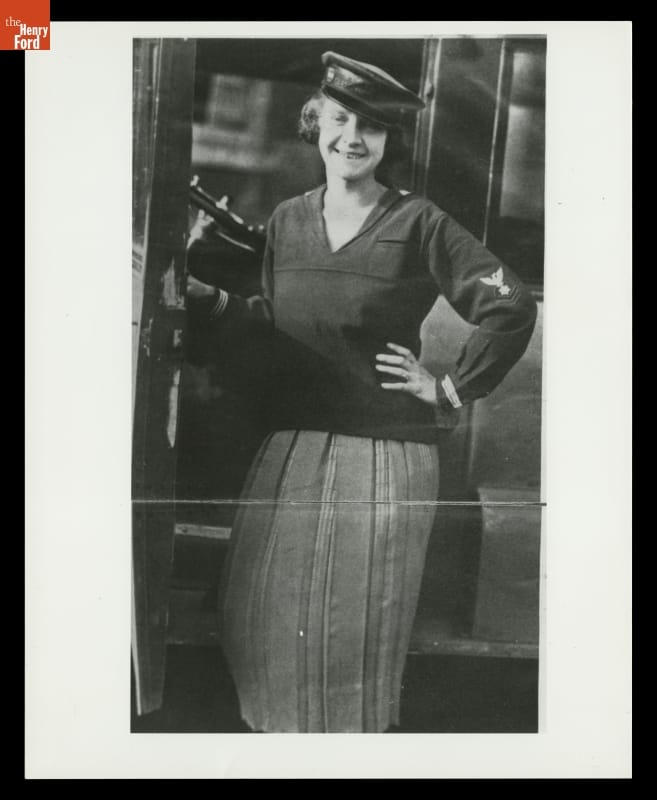
- Helen M. Schultz Brewer, Owner of Red Ball Bus Company, Iowa, circa 1924 - Helen M. Schultz started the Red Ball Transportation Company in 1922 with buses running from Waterloo to Des Moines, Iowa. Schultz met many challenges while establishing her business, including competition from rival bus lines and the railroad, government regulations, and poor highway conditions. She sold Red Ball to the Jefferson Highway Transportation Company in 1930.
- circa 1924
- Collections - Artifact
Helen M. Schultz Brewer, Owner of Red Ball Bus Company, Iowa, circa 1924
Helen M. Schultz started the Red Ball Transportation Company in 1922 with buses running from Waterloo to Des Moines, Iowa. Schultz met many challenges while establishing her business, including competition from rival bus lines and the railroad, government regulations, and poor highway conditions. She sold Red Ball to the Jefferson Highway Transportation Company in 1930.
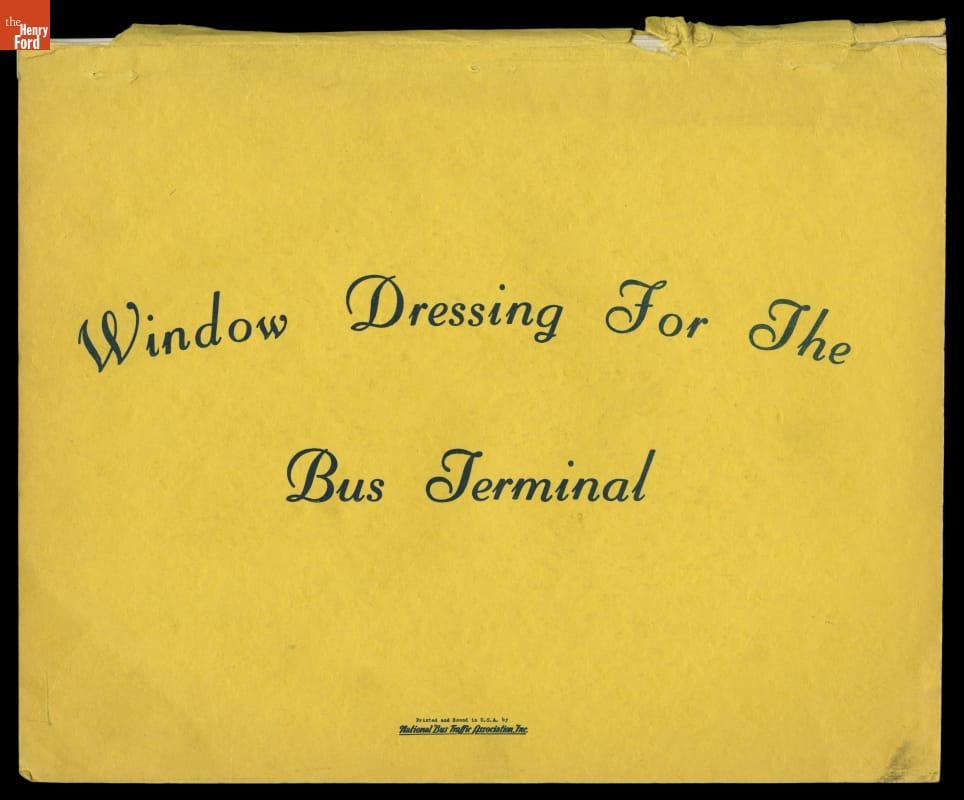
- Manual, "Window Dressing for the Bus Terminal," 1941 - <EM>Bus Transportation</EM> magazine sponsored a yearly contest for the best window displays promoting the industry. This piece was one winner in 1940. The judging staff called it "a highly original design with 'stop and look' appeal." This effective piece of bus terminal window dressing enticed viewers to dream of a Michigan vacation enjoyed while traveling on the Blue Goose line.
- 1941
- Collections - Artifact
Manual, "Window Dressing for the Bus Terminal," 1941
Bus Transportation magazine sponsored a yearly contest for the best window displays promoting the industry. This piece was one winner in 1940. The judging staff called it "a highly original design with 'stop and look' appeal." This effective piece of bus terminal window dressing enticed viewers to dream of a Michigan vacation enjoyed while traveling on the Blue Goose line.
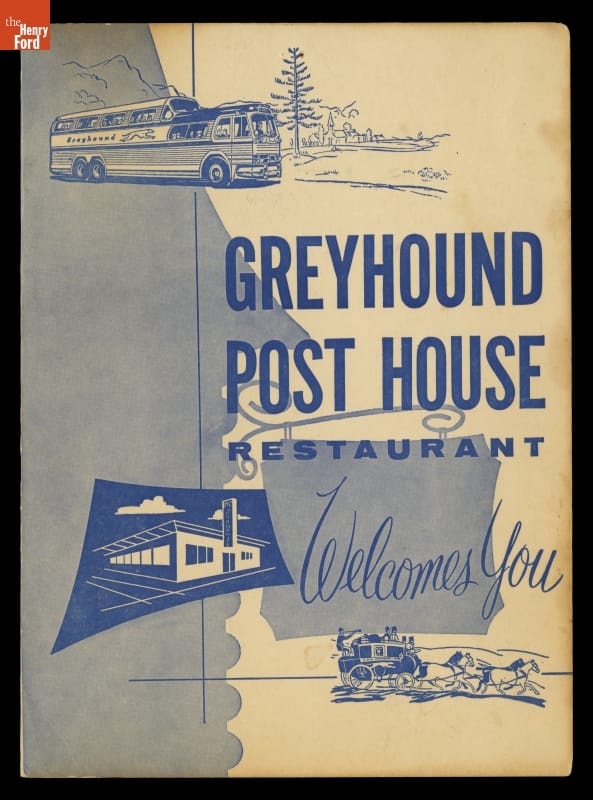
- Menu, "Greyhound Post House Restaurant Welcomes You," Omaha, Nebraska, 1955 - Many long-distance bus companies operated special restaurants to service their travelers. This 1955 menu from the Greyhound line explains that Greyhound's post houses were established to guarantee quality food and sanitary conditions for their travelers. In the days of stagecoach travel, post houses were stops along the way where travelers could rest, eat, and possibly even secure lodgings.
- 1955
- Collections - Artifact
Menu, "Greyhound Post House Restaurant Welcomes You," Omaha, Nebraska, 1955
Many long-distance bus companies operated special restaurants to service their travelers. This 1955 menu from the Greyhound line explains that Greyhound's post houses were established to guarantee quality food and sanitary conditions for their travelers. In the days of stagecoach travel, post houses were stops along the way where travelers could rest, eat, and possibly even secure lodgings.
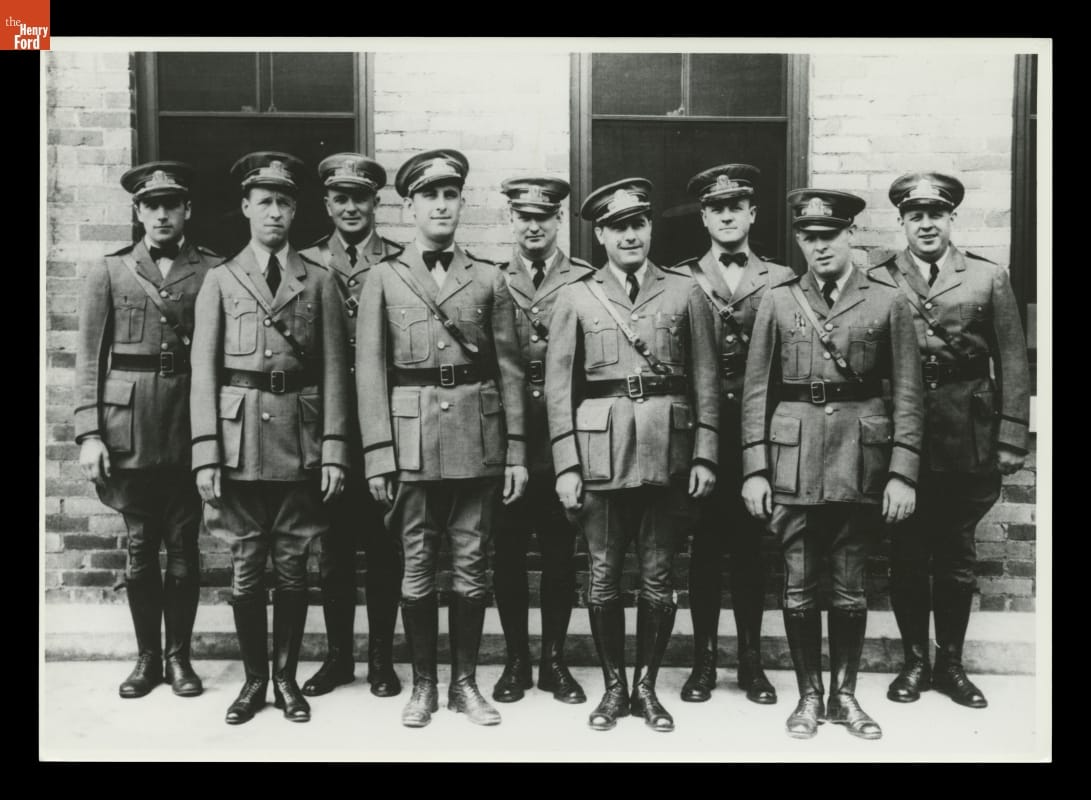
- Northland Greyhound Bus Drivers in New Uniforms, circa 1930 - Greyhound bus drivers pose in their new uniforms in the late 1920s. These uniform jackets, pants, caps and boots gave drivers a very professional appearance--implying that Greyhound bus riders would enjoy a safe and comfortable trip with these experts at the wheel.
- circa 1930
- Collections - Artifact
Northland Greyhound Bus Drivers in New Uniforms, circa 1930
Greyhound bus drivers pose in their new uniforms in the late 1920s. These uniform jackets, pants, caps and boots gave drivers a very professional appearance--implying that Greyhound bus riders would enjoy a safe and comfortable trip with these experts at the wheel.
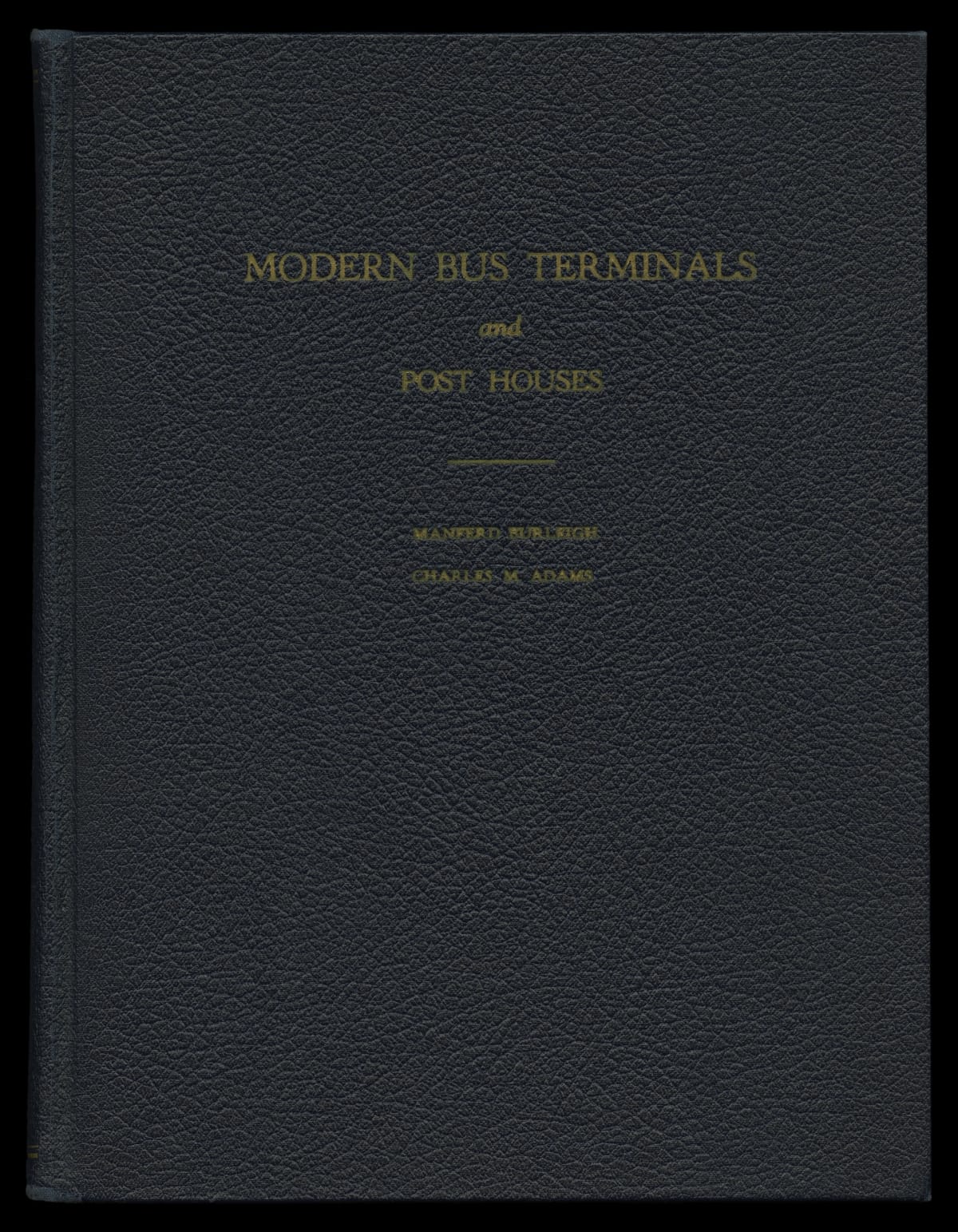
- Book, "Modern Bus Terminals and Post Houses," 1941 - Like railroad stations before them, urban bus terminals were often attractive as well as practical. In the 1930s and 1940s, many bus terminals featured streamlined facades that projected a clean, modern appearance. Detroit's sleek terminal was one of 45 facilities featured in the 1941 book <em>Modern Bus Terminals and Post Houses</em>.
- 1941
- Collections - Artifact
Book, "Modern Bus Terminals and Post Houses," 1941
Like railroad stations before them, urban bus terminals were often attractive as well as practical. In the 1930s and 1940s, many bus terminals featured streamlined facades that projected a clean, modern appearance. Detroit's sleek terminal was one of 45 facilities featured in the 1941 book Modern Bus Terminals and Post Houses.
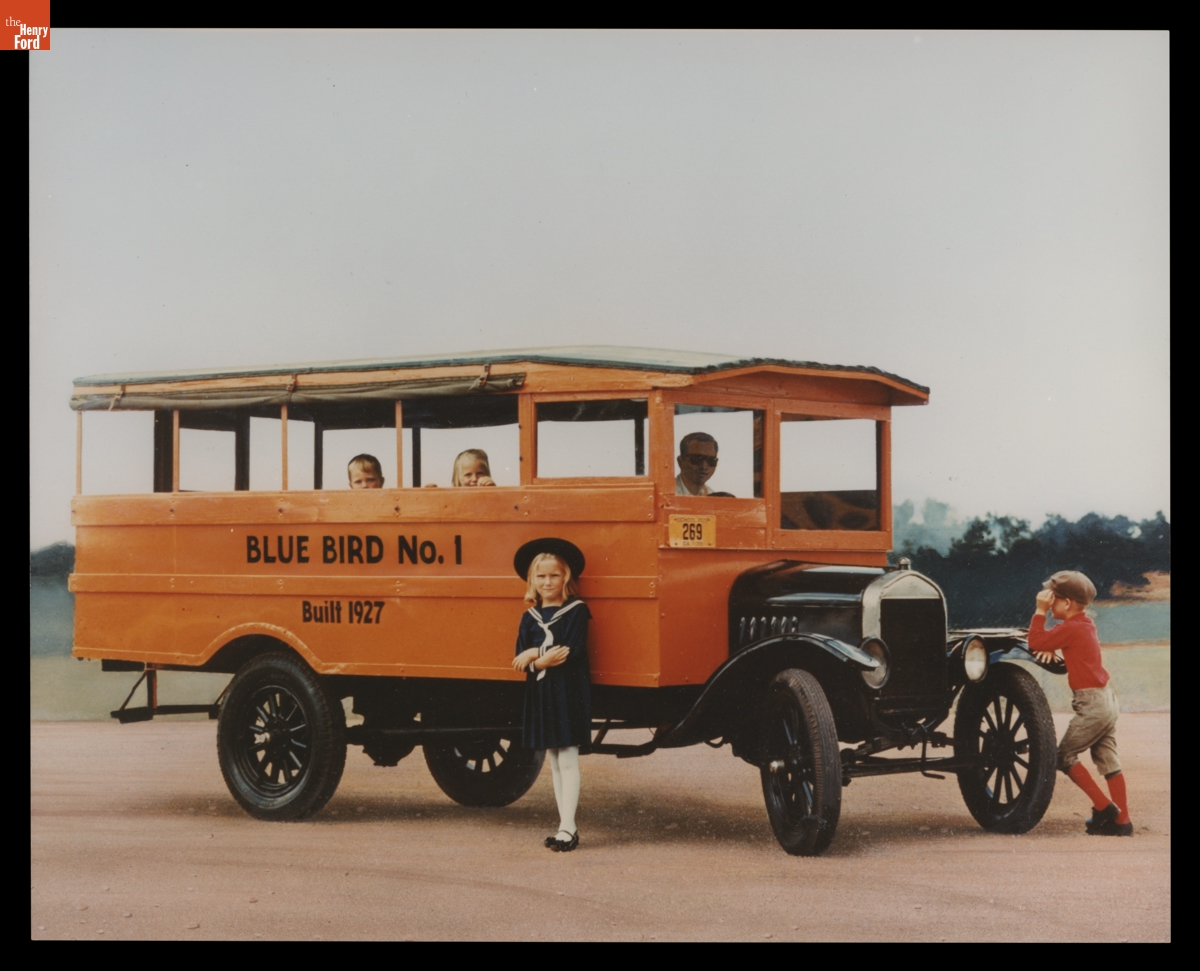
- 1927 Blue Bird School Bus No. 1, circa 1985 -
- circa 1985
- Collections - Artifact
1927 Blue Bird School Bus No. 1, circa 1985
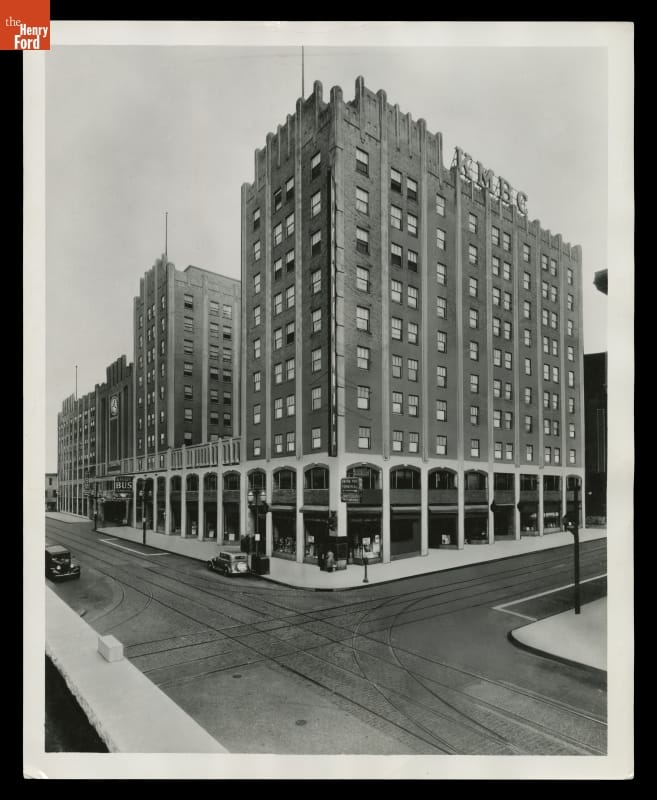
- Pickwick Hotel with Greyhound Bus Terminal, Kansas City, Missouri, circa 1931 - Bus terminals of the 1920s and 1930s were often located in hotels. The Pickwick organization owned the Pickwick bus line and operated a chain of hotels. They often built terminals inside or adjacent to their hotels. The bus terminal in their Kansas City, Missouri, hotel featured a turntable that rotated buses 180 degrees -- allowing buses to exit the same way they entered.
- circa 1931
- Collections - Artifact
Pickwick Hotel with Greyhound Bus Terminal, Kansas City, Missouri, circa 1931
Bus terminals of the 1920s and 1930s were often located in hotels. The Pickwick organization owned the Pickwick bus line and operated a chain of hotels. They often built terminals inside or adjacent to their hotels. The bus terminal in their Kansas City, Missouri, hotel featured a turntable that rotated buses 180 degrees -- allowing buses to exit the same way they entered.
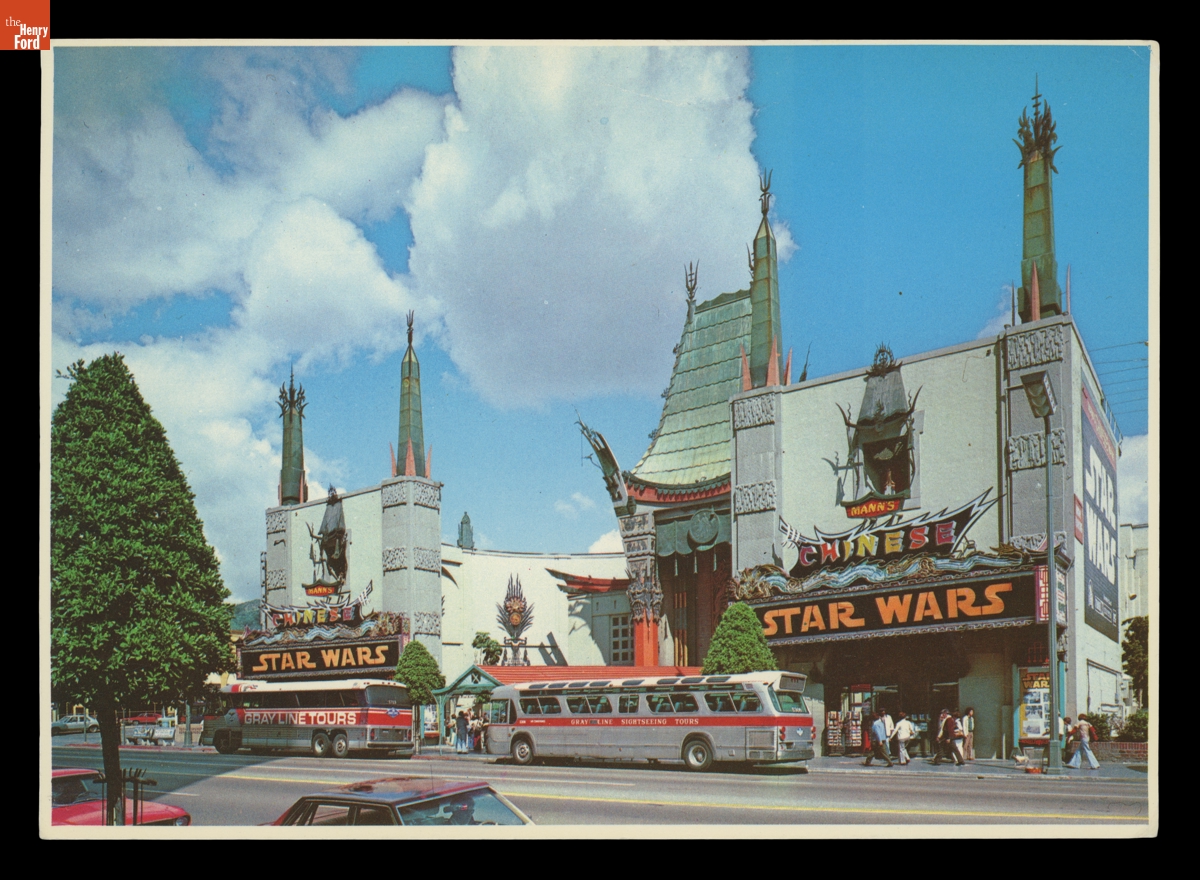
- Mann's Chinese Theater, Hollywood, California, 1977 -
- 1977
- Collections - Artifact
Mann's Chinese Theater, Hollywood, California, 1977
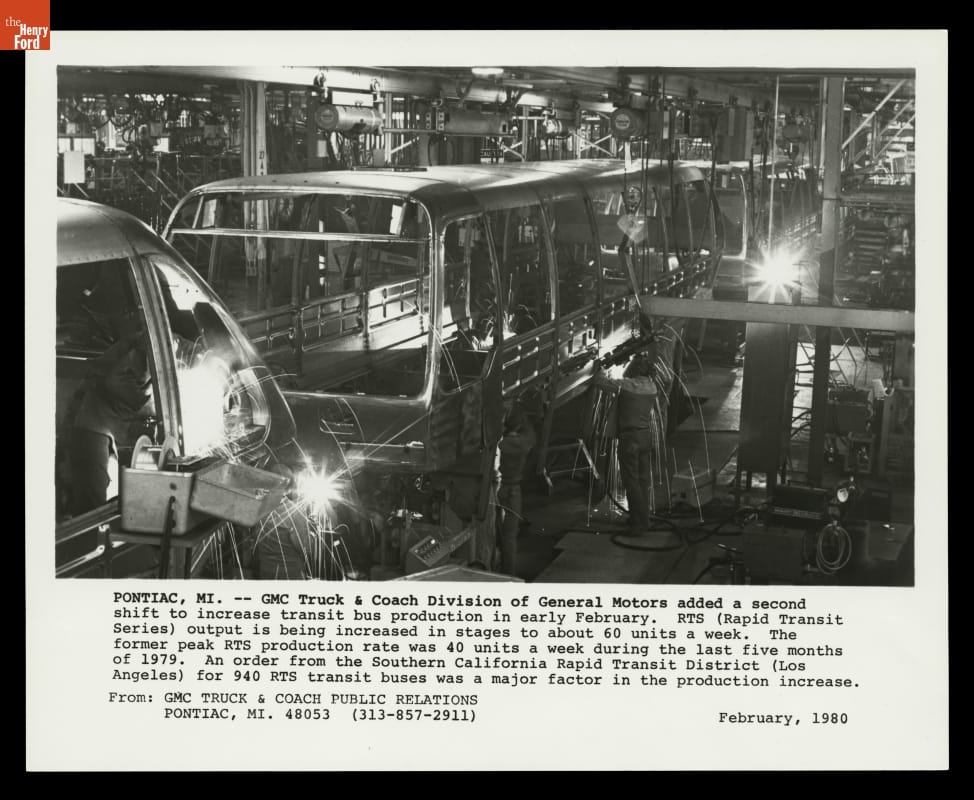
- Bus Production, General Motors Truck and Coach Division, Pontiac, Michigan, 1980 - In this 1980 photograph, rapid transit buses move down the assembly line at the General Motors Truck & Bus Division in Pontiac, Michigan. These buses were part of an order for 940 vehicles bound for the Southern California Rapid Transit District in Los Angeles.
- February 01, 1980
- Collections - Artifact
Bus Production, General Motors Truck and Coach Division, Pontiac, Michigan, 1980
In this 1980 photograph, rapid transit buses move down the assembly line at the General Motors Truck & Bus Division in Pontiac, Michigan. These buses were part of an order for 940 vehicles bound for the Southern California Rapid Transit District in Los Angeles.
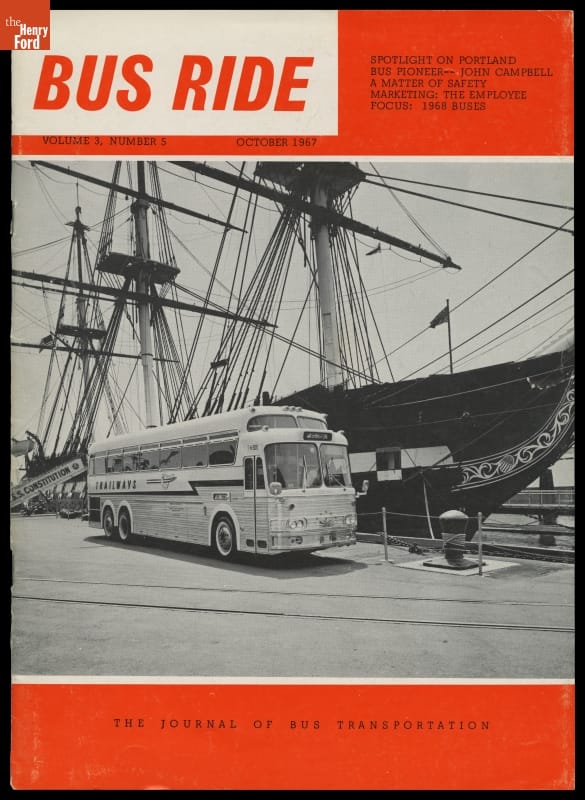
- Magazine, "Bus Ride," October 1967 - <EM>Bus Ride</EM> magazine provides a glimpse of the opportunities and challenges faced by the bus industry during the late 20th and early 21st centuries. Readers are kept apprised of the latest developments in the bus industry, including new technologies, changing regulations, and the evolving travel market. This trade publication also offers a rich array of historical information about individual bus lines.
- October 01, 1967
- Collections - Artifact
Magazine, "Bus Ride," October 1967
Bus Ride magazine provides a glimpse of the opportunities and challenges faced by the bus industry during the late 20th and early 21st centuries. Readers are kept apprised of the latest developments in the bus industry, including new technologies, changing regulations, and the evolving travel market. This trade publication also offers a rich array of historical information about individual bus lines.