
Search
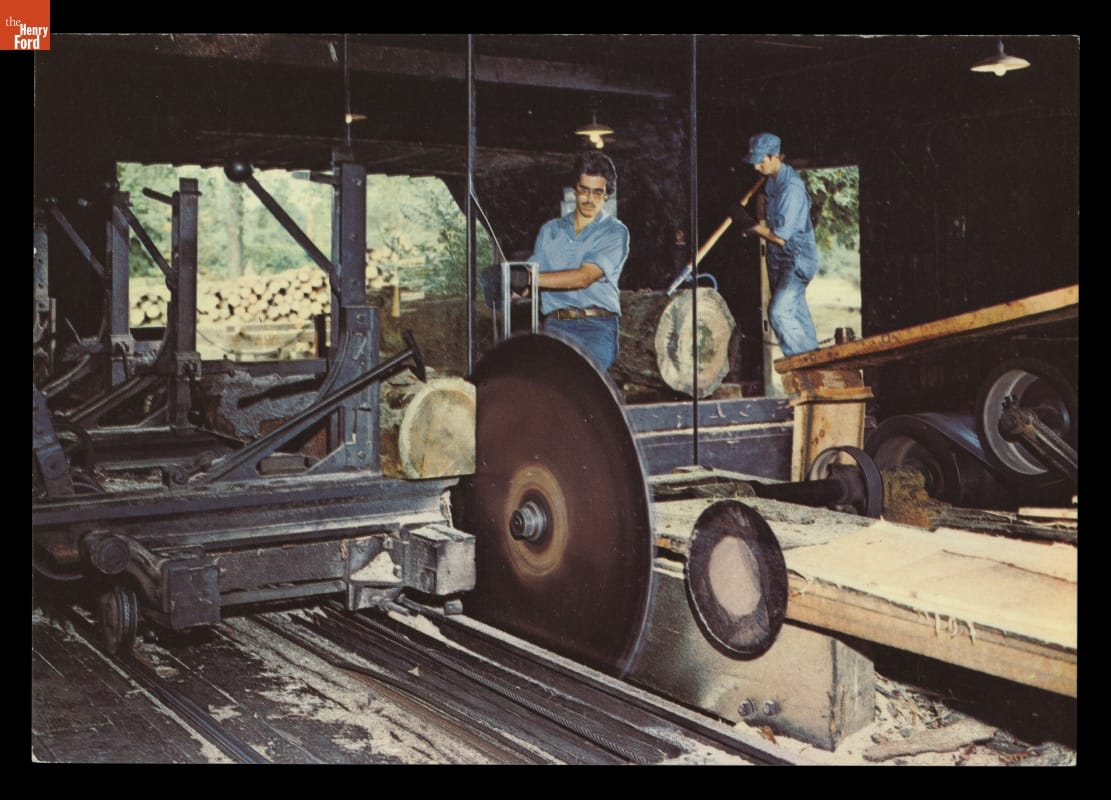
- Circular Sawmill in Greenfield Village, circa 1983 -
- circa 1983
- Collections - Artifact
Circular Sawmill in Greenfield Village, circa 1983
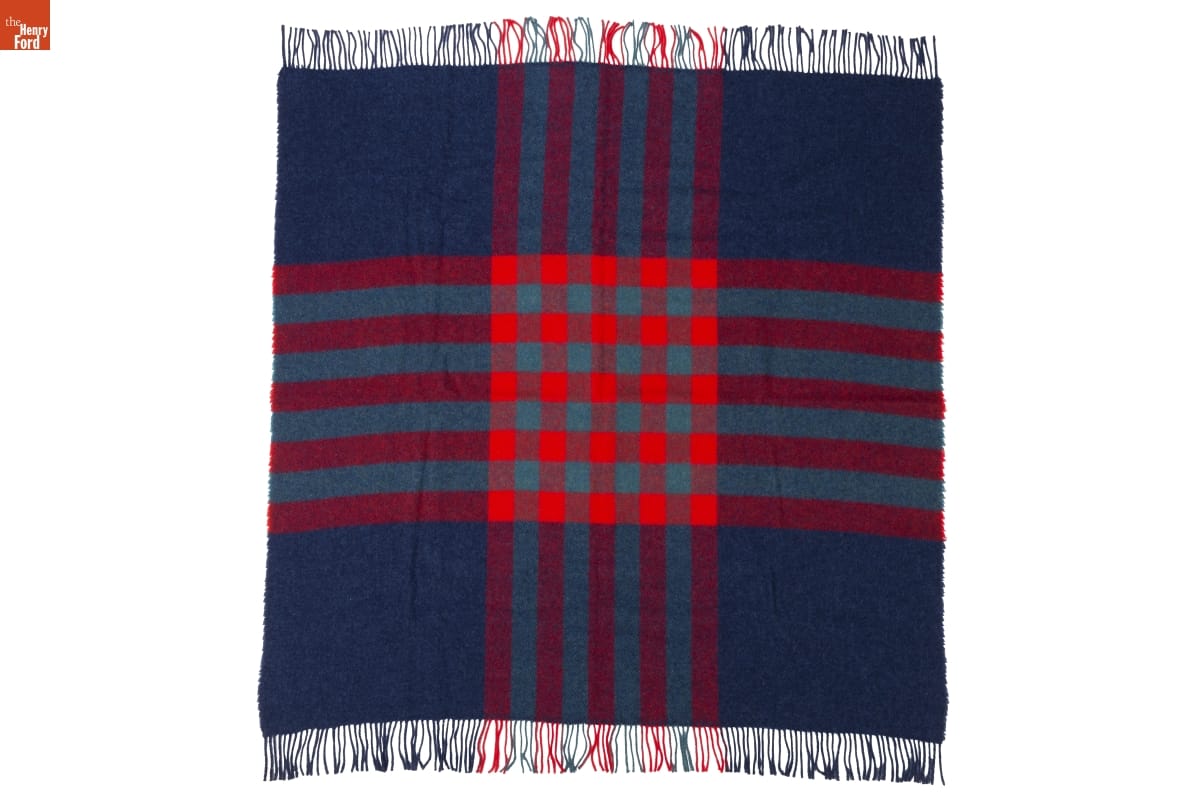
- Wool Blanket, 1996 - Starting in the early 1980s--and already established as an internationally recognized architect--Michael Graves began to pursue a parallel career as a product designer. Over the following three and a half decades he and his collaborators designed everything from humble household goods to limited edition luxury items for clients as diverse as Steuben, Alessi, Target, J. C. Penney, and Disney.
- 1996
- Collections - Artifact
Wool Blanket, 1996
Starting in the early 1980s--and already established as an internationally recognized architect--Michael Graves began to pursue a parallel career as a product designer. Over the following three and a half decades he and his collaborators designed everything from humble household goods to limited edition luxury items for clients as diverse as Steuben, Alessi, Target, J. C. Penney, and Disney.
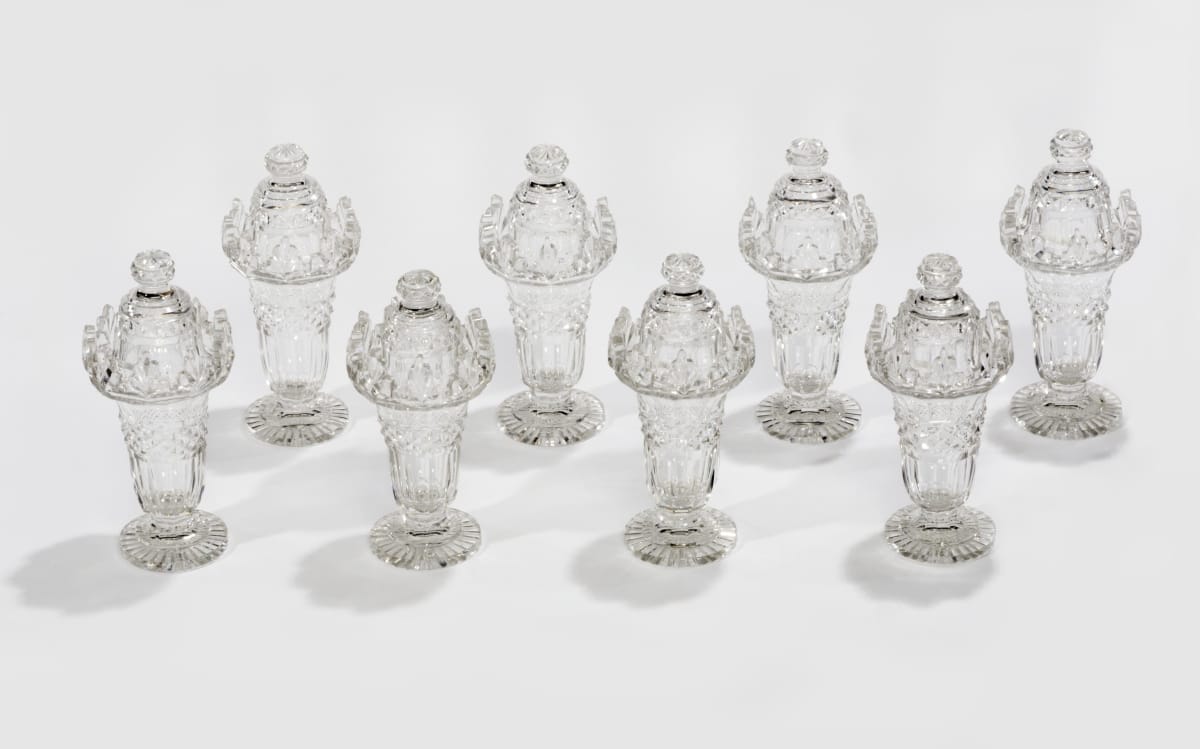
- Custard Cups, 1790-1810 - In the early 18th century, glassmakers in England and Ireland created exquisite translucent cut glassware known as Anglo-Irish glass. Beginning in the 1780s, Anglo-Irish glassmakers found a ready market in America -- now independent from Britain. Americans loved the dazzling interplay of candlelight and glass in their homes, which showed that Americans could attain interiors as fashionable as those in London.
- 1790-1810
- Collections - Artifact
Custard Cups, 1790-1810
In the early 18th century, glassmakers in England and Ireland created exquisite translucent cut glassware known as Anglo-Irish glass. Beginning in the 1780s, Anglo-Irish glassmakers found a ready market in America -- now independent from Britain. Americans loved the dazzling interplay of candlelight and glass in their homes, which showed that Americans could attain interiors as fashionable as those in London.
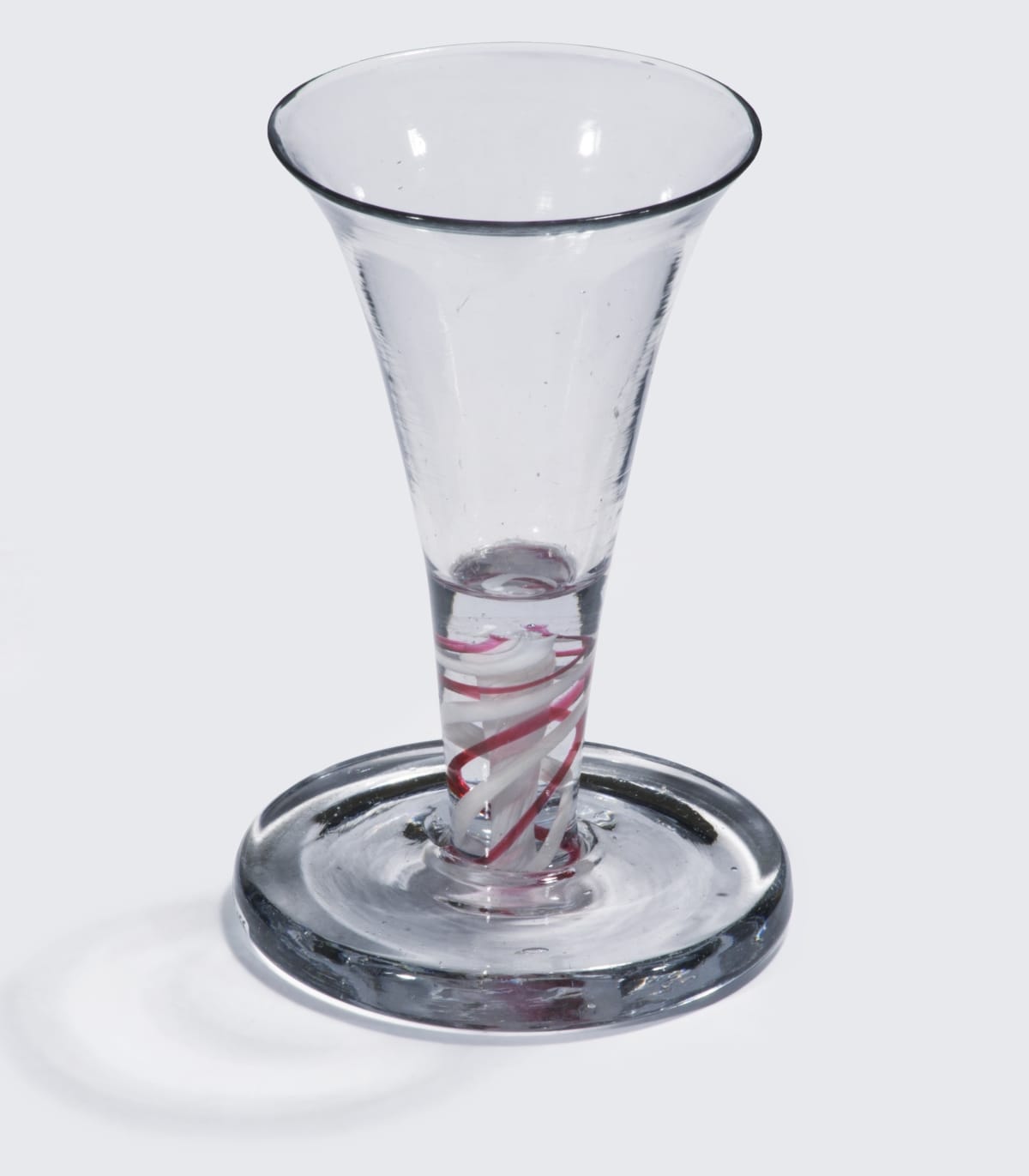
- Wine Glass, 1765-1795 - In the early 18th century, glassmakers in England and Ireland created exquisite translucent cut glassware known as Anglo-Irish glass. Beginning in the 1780s, Anglo-Irish glassmakers found a ready market in America -- now independent from Britain. Americans loved the dazzling interplay of candlelight and glass in their homes, which showed that Americans could attain interiors as fashionable as those in London.
- 1765-1795
- Collections - Artifact
Wine Glass, 1765-1795
In the early 18th century, glassmakers in England and Ireland created exquisite translucent cut glassware known as Anglo-Irish glass. Beginning in the 1780s, Anglo-Irish glassmakers found a ready market in America -- now independent from Britain. Americans loved the dazzling interplay of candlelight and glass in their homes, which showed that Americans could attain interiors as fashionable as those in London.
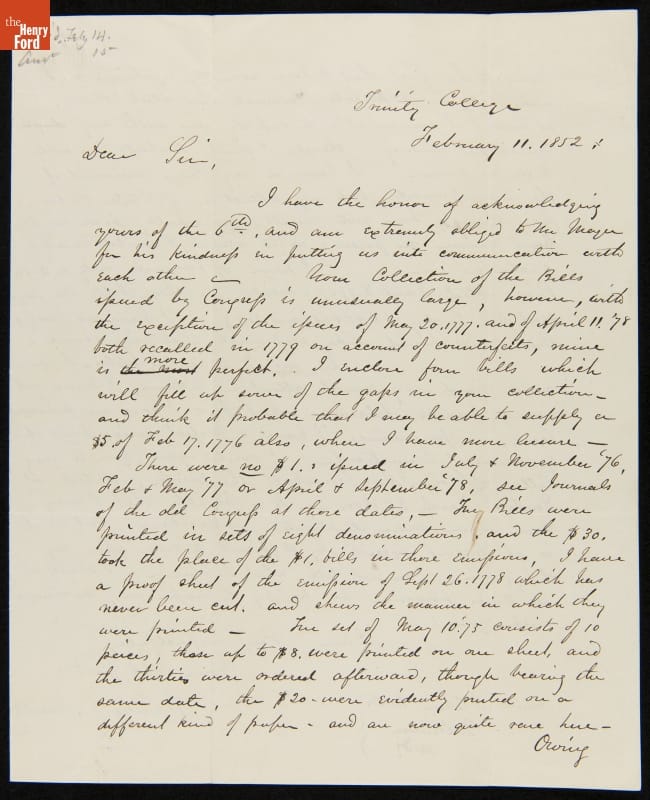
- Letter from Charles J. Hoadly to Joshua I. Cohen, February 11, 1852 - Joshua Cohen (1801-1870) collected autographs, historical documents, and colonial and Continental currency. Cohen, who lived in Baltimore, Maryland, corresponded and traded with other well-known 19th-century collectors to amass his fine collection. In this letter, Charles Hoadly comments of the completeness of his and Cohen's collections. He also offers some bills that "will fill up some of the gaps" in Cohen's collection.
- February 11, 1852
- Collections - Artifact
Letter from Charles J. Hoadly to Joshua I. Cohen, February 11, 1852
Joshua Cohen (1801-1870) collected autographs, historical documents, and colonial and Continental currency. Cohen, who lived in Baltimore, Maryland, corresponded and traded with other well-known 19th-century collectors to amass his fine collection. In this letter, Charles Hoadly comments of the completeness of his and Cohen's collections. He also offers some bills that "will fill up some of the gaps" in Cohen's collection.
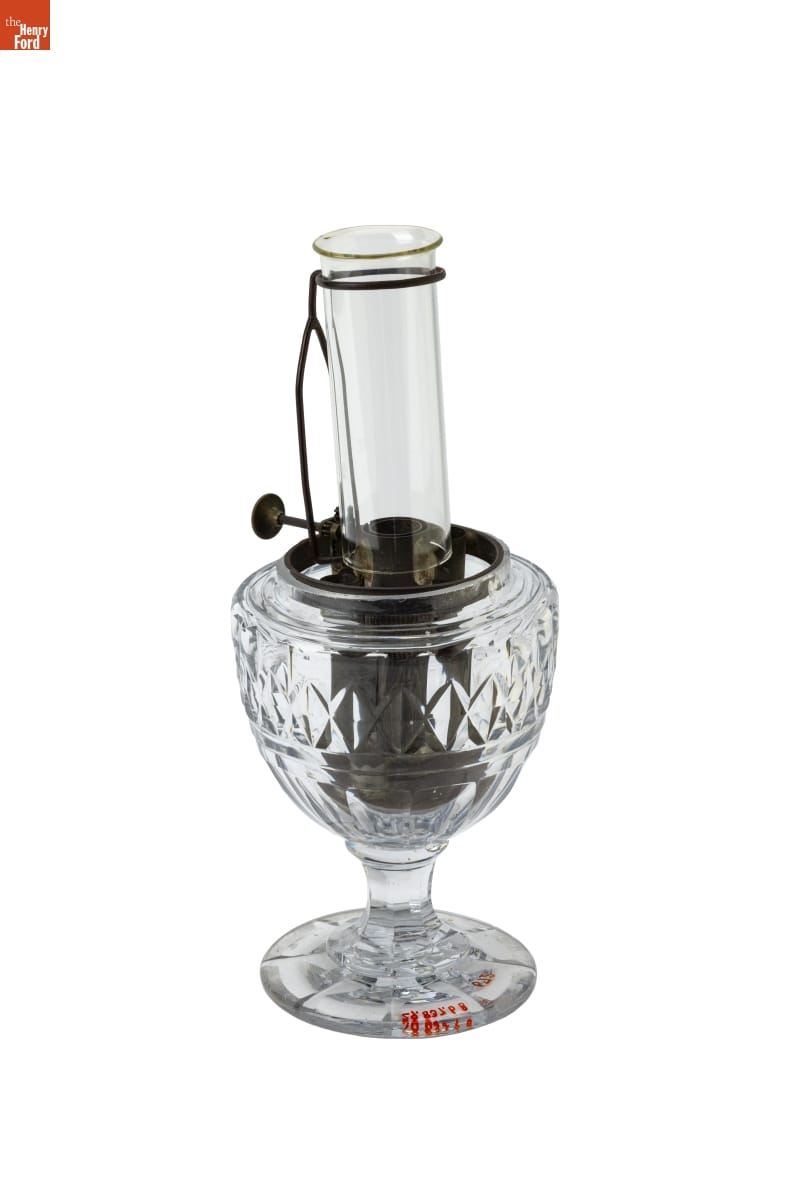
- Argand Lamp, 1790-1850 - Traditional make-dos are useful and precious objects that broke during their working lives. Their owners felt compelled to restore or repurpose these objects in a variety of ways. This lamp started out as an expensive cut glass sugar bowl, but the base now serves as a reservoir for lamp fuel.
- 1790-1850
- Collections - Artifact
Argand Lamp, 1790-1850
Traditional make-dos are useful and precious objects that broke during their working lives. Their owners felt compelled to restore or repurpose these objects in a variety of ways. This lamp started out as an expensive cut glass sugar bowl, but the base now serves as a reservoir for lamp fuel.
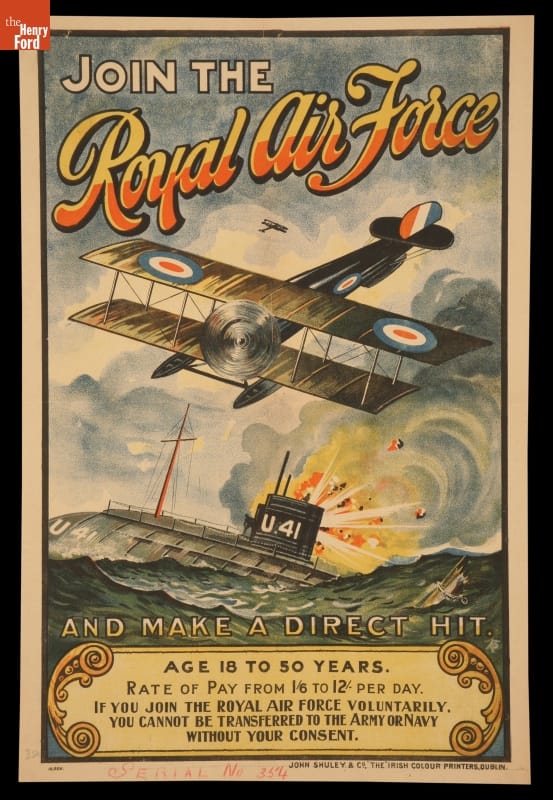
- World War I Poster, "Join the Royal Air Force," circa 1917 - During the First World War, governments of all the warring nations used poster campaigns to encourage civilian and military support of the war effort. Artists widely used an innovative advertising technique for these posters that moved away from a factual depiction of a product's material or event's subject to an emphasis on appealing to the viewer's emotions.
- circa 1917
- Collections - Artifact
World War I Poster, "Join the Royal Air Force," circa 1917
During the First World War, governments of all the warring nations used poster campaigns to encourage civilian and military support of the war effort. Artists widely used an innovative advertising technique for these posters that moved away from a factual depiction of a product's material or event's subject to an emphasis on appealing to the viewer's emotions.
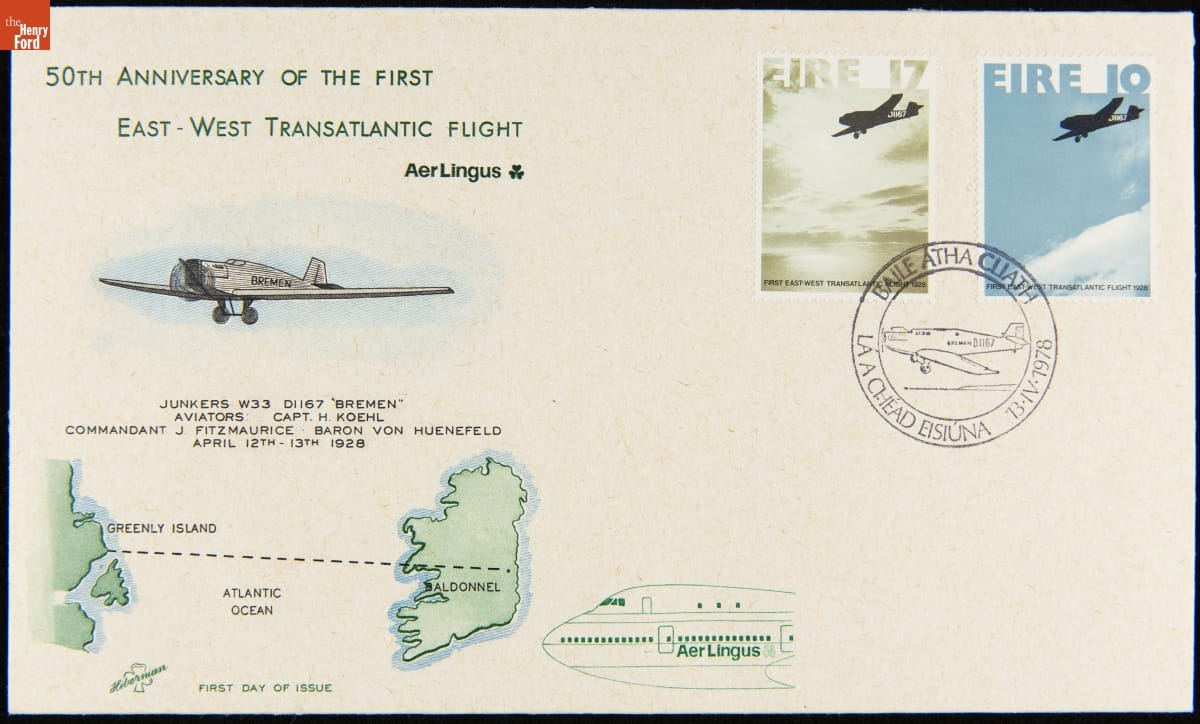
- Aer Lingus Commemorates 50th Anniversary of the 1928 "Bremen" East-West Transatlantic Flight - Ireland's postal service partnered with airline Aer Lingus in 1978 to issue this commemorative first-day cover celebrating the 50th anniversary of the transatlantic flight of the <em>Bremen</em>. Crewed by Hermann Kohl, James Fitzmaurice, and Ehrenfried Guenther von Huenefeld, the <em>Bremen</em>'s flight -- from Baldonnel, Ireland, to Greenly Island, Canada -- was the first east-to-west crossing, made against prevailing westerly winds.
- 1928
- Collections - Artifact
Aer Lingus Commemorates 50th Anniversary of the 1928 "Bremen" East-West Transatlantic Flight
Ireland's postal service partnered with airline Aer Lingus in 1978 to issue this commemorative first-day cover celebrating the 50th anniversary of the transatlantic flight of the Bremen. Crewed by Hermann Kohl, James Fitzmaurice, and Ehrenfried Guenther von Huenefeld, the Bremen's flight -- from Baldonnel, Ireland, to Greenly Island, Canada -- was the first east-to-west crossing, made against prevailing westerly winds.
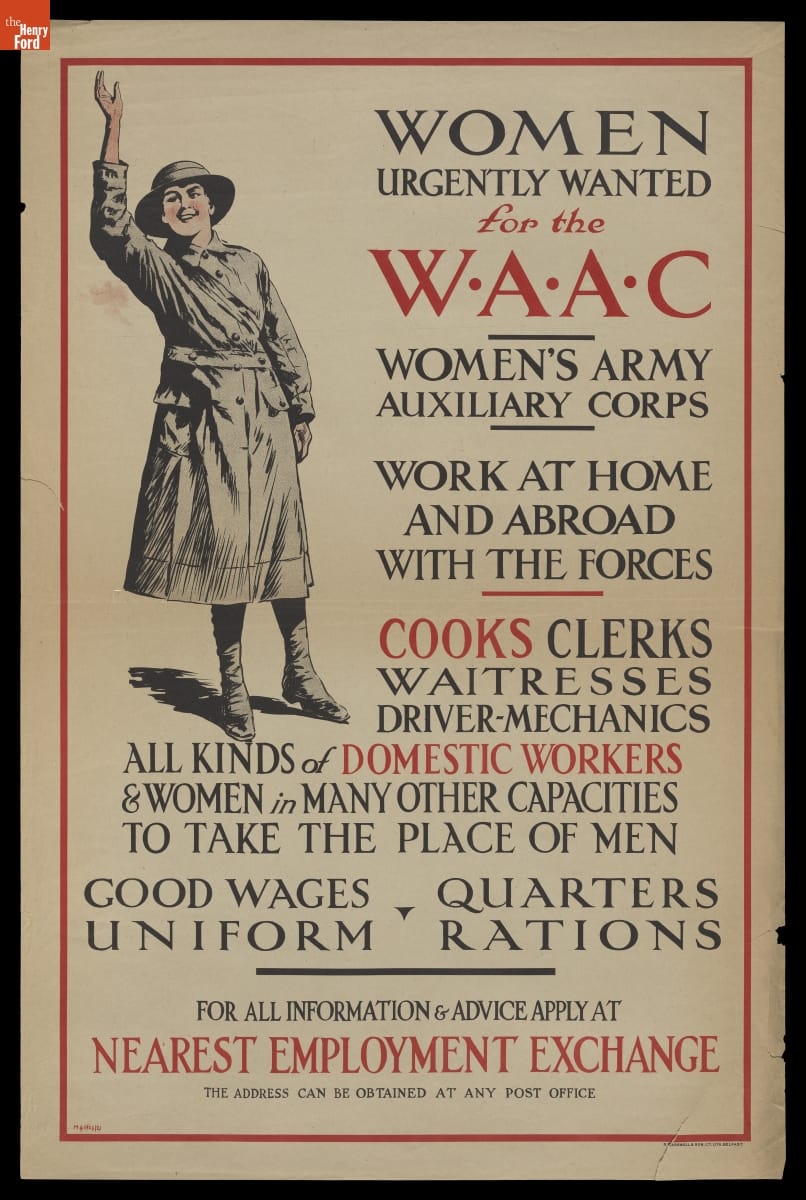
- "Women Urgently Wanted for the W.A.A.C Women's Army Auxiliary Corps," circa 1917 - Over 50,000 British women volunteered with the Women's Army Auxiliary Corps (WAAC) during the last two years of World War I. WAAC volunteers took on non-combat support roles at home and on the frontlines in France and Belgium. It was the first time that women were allowed in the British armed forces in an official capacity outside of nursing.
- circa 1917
- Collections - Artifact
"Women Urgently Wanted for the W.A.A.C Women's Army Auxiliary Corps," circa 1917
Over 50,000 British women volunteered with the Women's Army Auxiliary Corps (WAAC) during the last two years of World War I. WAAC volunteers took on non-combat support roles at home and on the frontlines in France and Belgium. It was the first time that women were allowed in the British armed forces in an official capacity outside of nursing.
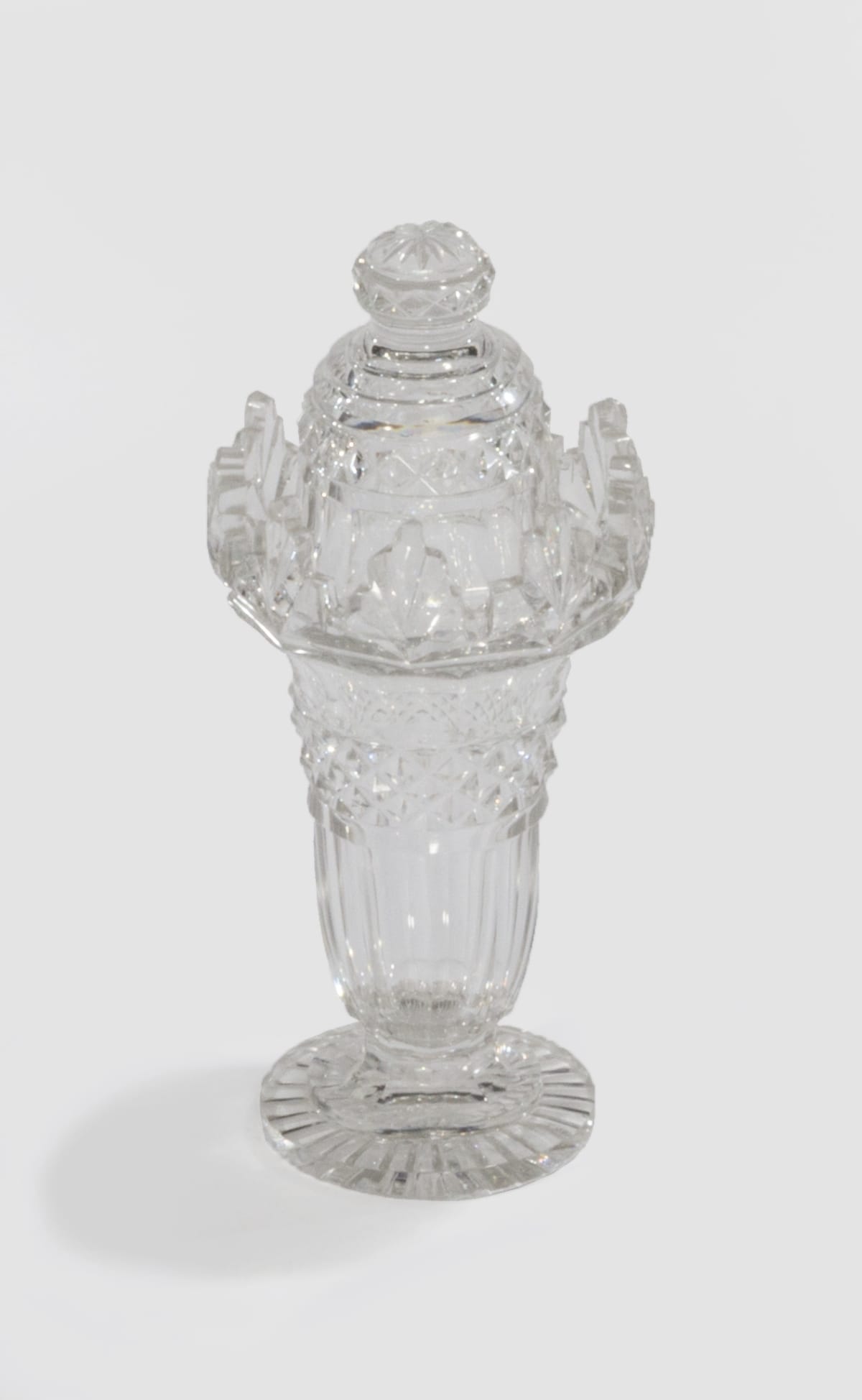
- Custard Cup, 1790-1810 - In the early 18th century, glassmakers in England and Ireland created exquisite translucent cut glassware known as Anglo-Irish glass. Beginning in the 1780s, Anglo-Irish glassmakers found a ready market in America -- now independent from Britain. Americans loved the dazzling interplay of candlelight and glass in their homes, which showed that Americans could attain interiors as fashionable as those in London.
- 1790-1810
- Collections - Artifact
Custard Cup, 1790-1810
In the early 18th century, glassmakers in England and Ireland created exquisite translucent cut glassware known as Anglo-Irish glass. Beginning in the 1780s, Anglo-Irish glassmakers found a ready market in America -- now independent from Britain. Americans loved the dazzling interplay of candlelight and glass in their homes, which showed that Americans could attain interiors as fashionable as those in London.