
Search
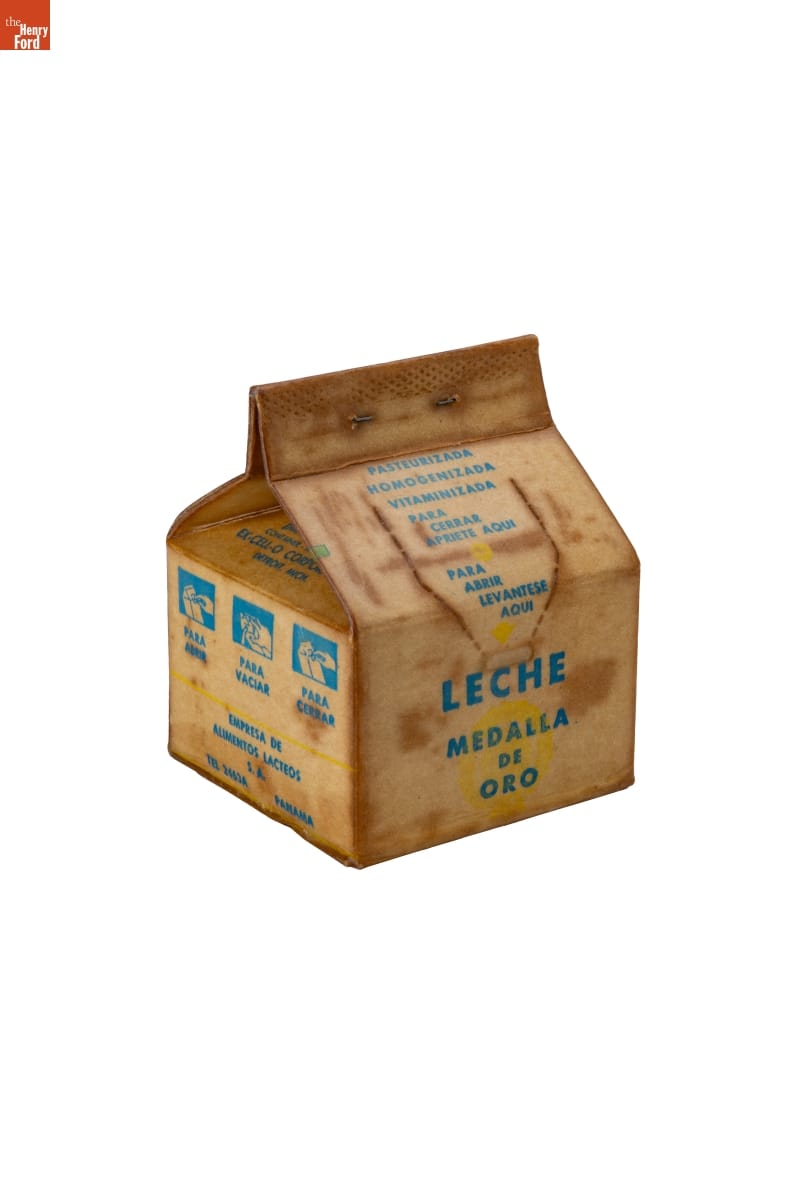
- Medalla de Oro Milk Carton - The quest for a shatter-proof milk container prompted John Van Wormer to patent a paper carton in 1915. Many processors and distributors continued to use breakable glass bottles, but, after 1937, mechanized production made the disposable, wax-coated folded cartons inexpensive and indispensable liquid containers. The iconic design, a box with a gable-end top with a pouring or drinking spout, remains the industry standard today.
- Collections - Artifact
Medalla de Oro Milk Carton
The quest for a shatter-proof milk container prompted John Van Wormer to patent a paper carton in 1915. Many processors and distributors continued to use breakable glass bottles, but, after 1937, mechanized production made the disposable, wax-coated folded cartons inexpensive and indispensable liquid containers. The iconic design, a box with a gable-end top with a pouring or drinking spout, remains the industry standard today.
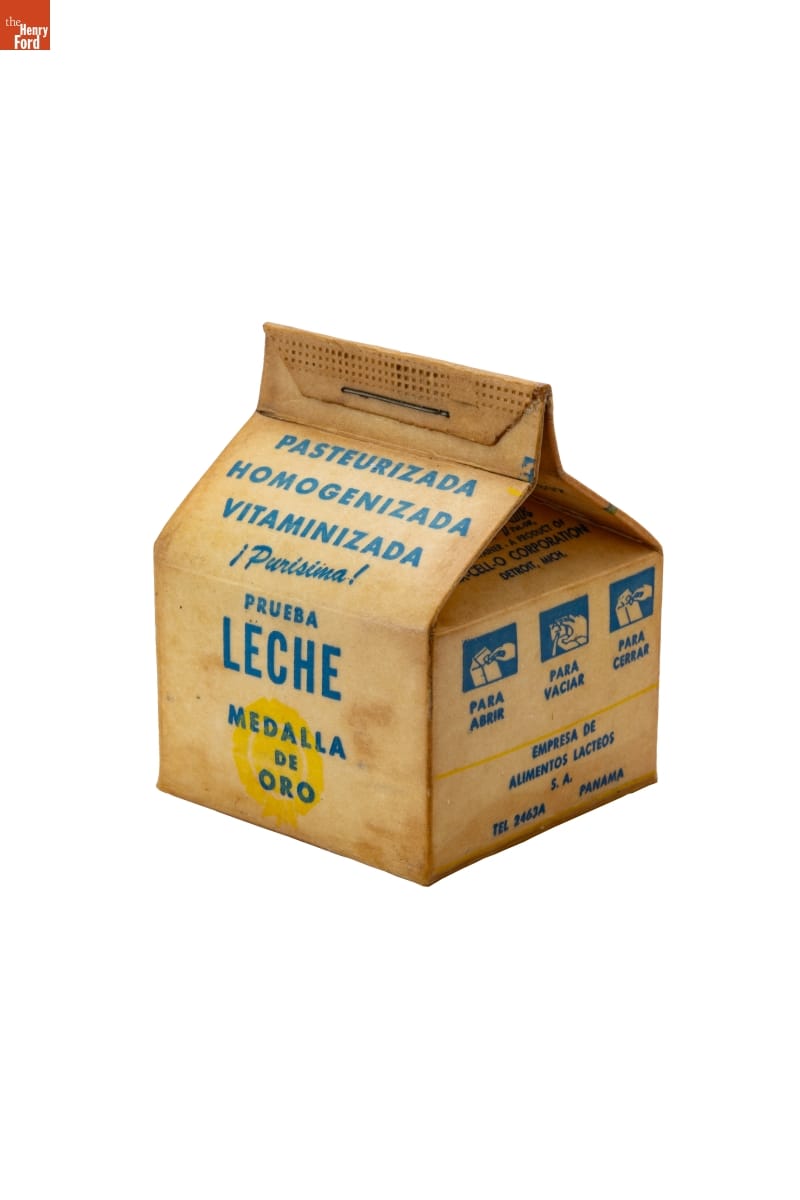
- Medalla de Oro Milk Carton - The quest for a shatter-proof milk container prompted John Van Wormer to patent a paper carton in 1915. Many processors and distributors continued to use breakable glass bottles, but, after 1937, mechanized production made the disposable, wax-coated folded cartons inexpensive and indispensable liquid containers. The iconic design, a box with a gable-end top with a pouring or drinking spout, remains the industry standard today.
- Collections - Artifact
Medalla de Oro Milk Carton
The quest for a shatter-proof milk container prompted John Van Wormer to patent a paper carton in 1915. Many processors and distributors continued to use breakable glass bottles, but, after 1937, mechanized production made the disposable, wax-coated folded cartons inexpensive and indispensable liquid containers. The iconic design, a box with a gable-end top with a pouring or drinking spout, remains the industry standard today.
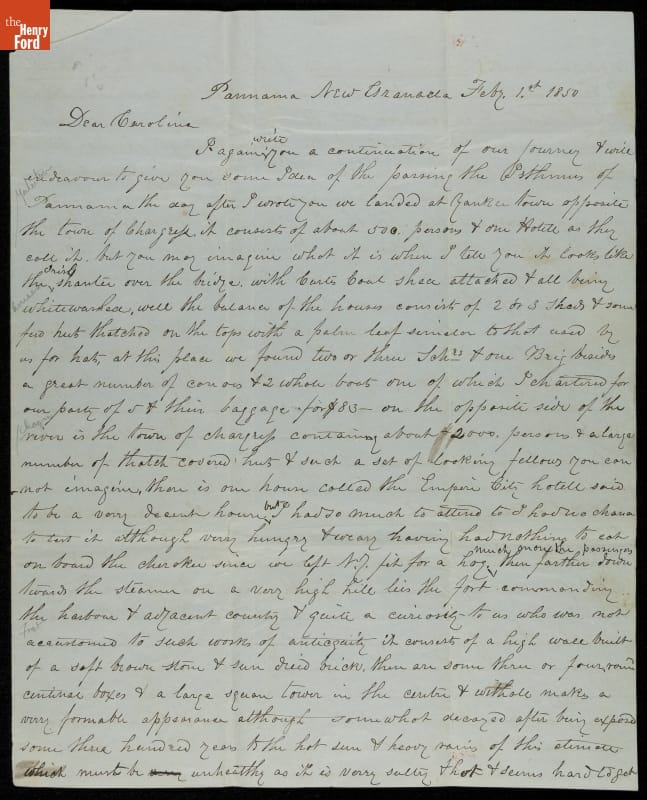
- Letter by California Gold Rush Venturer Charles A. Wood, Written from the Isthmus of Panama, February 1, 1850 - Letter from Charles A. Wood to his wife, Caroline Wood in Neponsett, MA, dated New Oranada, Panama, February 1, 1850, giving a description of his overland trip through the Isthmus of Panama from Yankeetown (Chagres) to New Oranada as part of his journey to California. He gives a detailed description of Yankeetown and Chagres; the vegetation and physical configuration of the jungles; the natives; the "ranchos" owned by Americans which were visited along the route; the conditions on board the steamship "Cherokee" which brought him to Panama; the inland town of Gorgona. Also included is one leaf on which is drawn a rough diagram of the settlement at Yankeetown and a picture of a "rancho" on the River Chagre "as seen from a canoe". On the reverse is a rough architectural drawings of a church and a courthouse.
- February 01, 1850
- Collections - Artifact
Letter by California Gold Rush Venturer Charles A. Wood, Written from the Isthmus of Panama, February 1, 1850
Letter from Charles A. Wood to his wife, Caroline Wood in Neponsett, MA, dated New Oranada, Panama, February 1, 1850, giving a description of his overland trip through the Isthmus of Panama from Yankeetown (Chagres) to New Oranada as part of his journey to California. He gives a detailed description of Yankeetown and Chagres; the vegetation and physical configuration of the jungles; the natives; the "ranchos" owned by Americans which were visited along the route; the conditions on board the steamship "Cherokee" which brought him to Panama; the inland town of Gorgona. Also included is one leaf on which is drawn a rough diagram of the settlement at Yankeetown and a picture of a "rancho" on the River Chagre "as seen from a canoe". On the reverse is a rough architectural drawings of a church and a courthouse.
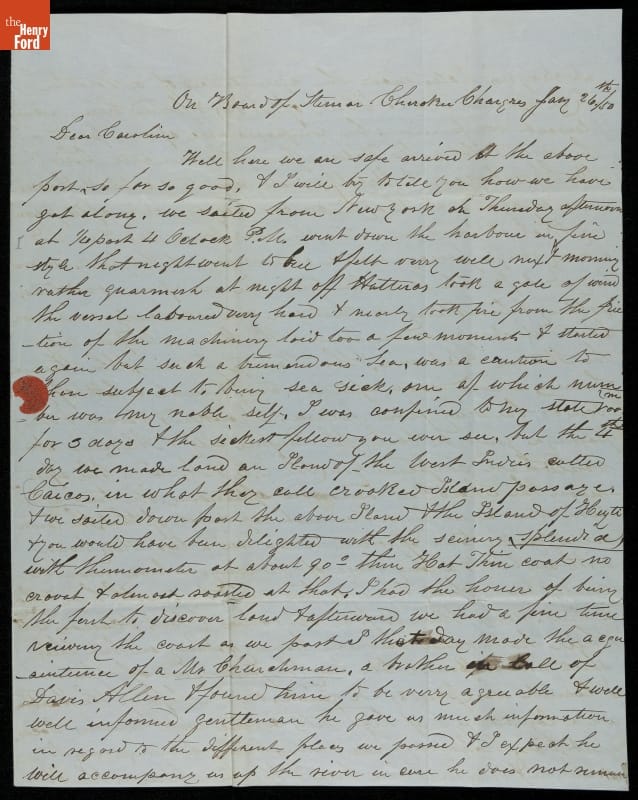
- Letter by California Gold Rush Venturer Charles A. Wood, Written from Chagres Port, Panama, January 26, 1850 - Letter from Charles A. Wood to his wife, Caroline Wood in Neponsett, Mass., dated on board the Steamship "Cherokee" at the port of Chargres (Chagres), Panama, January 26, 1850, concerning the first leg of his trip from New York to the California gold fields by way of Panama. He tells of the people he has met, including Mr. Chamberlain, Mr. Churchman, Mr. Wilder, David Allen (U.S. Consul to the Sandwich Islands), George Welles, and Chris Lilley, a Prizefighter, among others; the ships they have passed, including the Caicos, Empire City, Alabama, Falcon and Severn. He also describes in detail the port of Chagres and the conditions onboard the Cherokee, and gives the latest word from California (i.e., a fire at San Francisco and a murder at Stockton).
- January 26, 1850
- Collections - Artifact
Letter by California Gold Rush Venturer Charles A. Wood, Written from Chagres Port, Panama, January 26, 1850
Letter from Charles A. Wood to his wife, Caroline Wood in Neponsett, Mass., dated on board the Steamship "Cherokee" at the port of Chargres (Chagres), Panama, January 26, 1850, concerning the first leg of his trip from New York to the California gold fields by way of Panama. He tells of the people he has met, including Mr. Chamberlain, Mr. Churchman, Mr. Wilder, David Allen (U.S. Consul to the Sandwich Islands), George Welles, and Chris Lilley, a Prizefighter, among others; the ships they have passed, including the Caicos, Empire City, Alabama, Falcon and Severn. He also describes in detail the port of Chagres and the conditions onboard the Cherokee, and gives the latest word from California (i.e., a fire at San Francisco and a murder at Stockton).
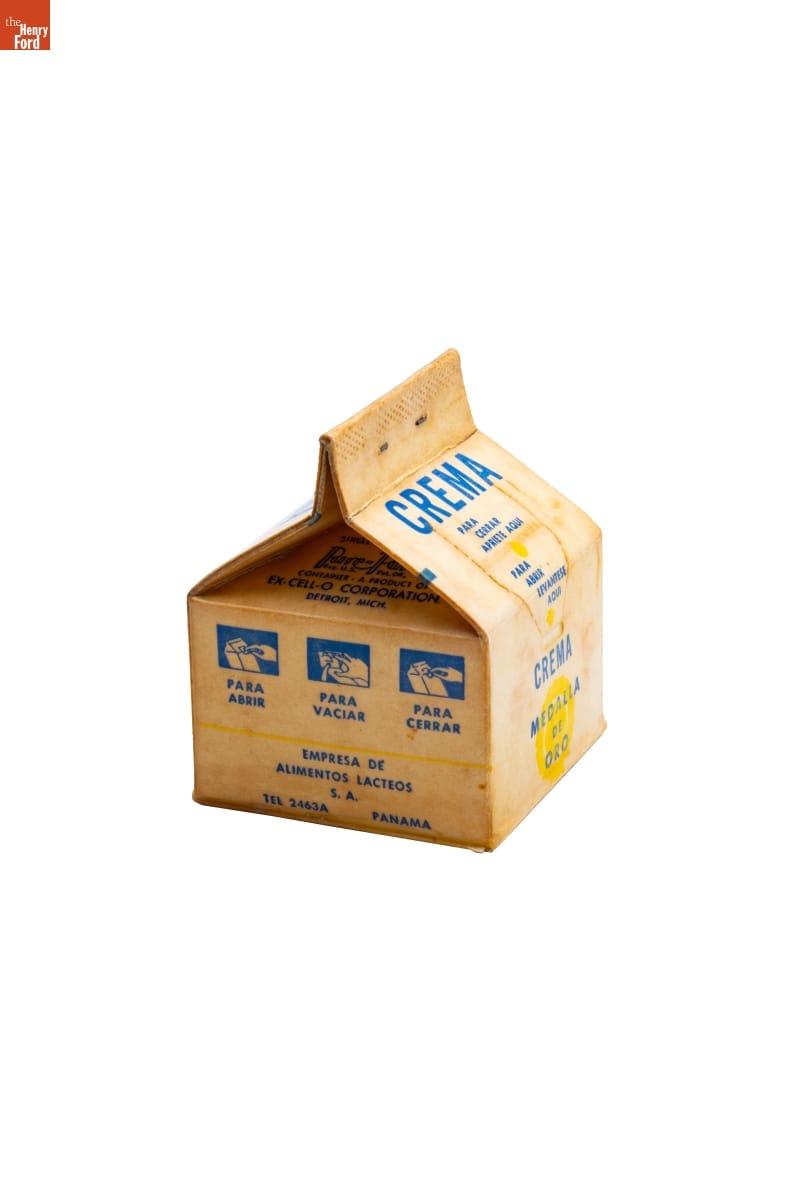
- Medalla de Oro Cream Carton - The quest for a shatter-proof milk container prompted John Van Wormer to patent a paper carton in 1915. Many processors and distributors continued to use breakable glass bottles, but, after 1937, mechanized production made the disposable, wax-coated folded cartons inexpensive and indispensable liquid containers. The iconic design, a box with a gable-end top with a pouring or drinking spout, remains the industry standard today.
- Collections - Artifact
Medalla de Oro Cream Carton
The quest for a shatter-proof milk container prompted John Van Wormer to patent a paper carton in 1915. Many processors and distributors continued to use breakable glass bottles, but, after 1937, mechanized production made the disposable, wax-coated folded cartons inexpensive and indispensable liquid containers. The iconic design, a box with a gable-end top with a pouring or drinking spout, remains the industry standard today.
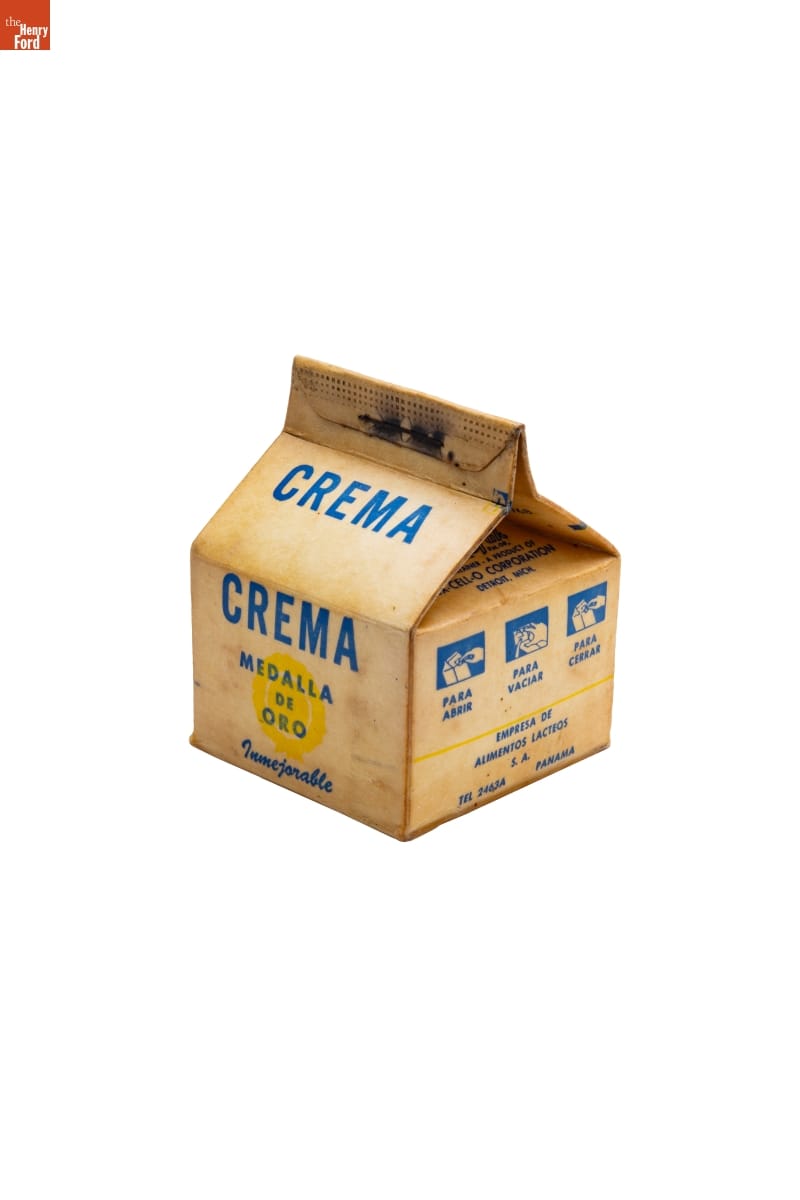
- Medalla de Oro Cream Carton - The quest for a shatter-proof milk container prompted John Van Wormer to patent a paper carton in 1915. Many processors and distributors continued to use breakable glass bottles, but, after 1937, mechanized production made the disposable, wax-coated folded cartons inexpensive and indispensable liquid containers. The iconic design, a box with a gable-end top with a pouring or drinking spout, remains the industry standard today.
- Collections - Artifact
Medalla de Oro Cream Carton
The quest for a shatter-proof milk container prompted John Van Wormer to patent a paper carton in 1915. Many processors and distributors continued to use breakable glass bottles, but, after 1937, mechanized production made the disposable, wax-coated folded cartons inexpensive and indispensable liquid containers. The iconic design, a box with a gable-end top with a pouring or drinking spout, remains the industry standard today.
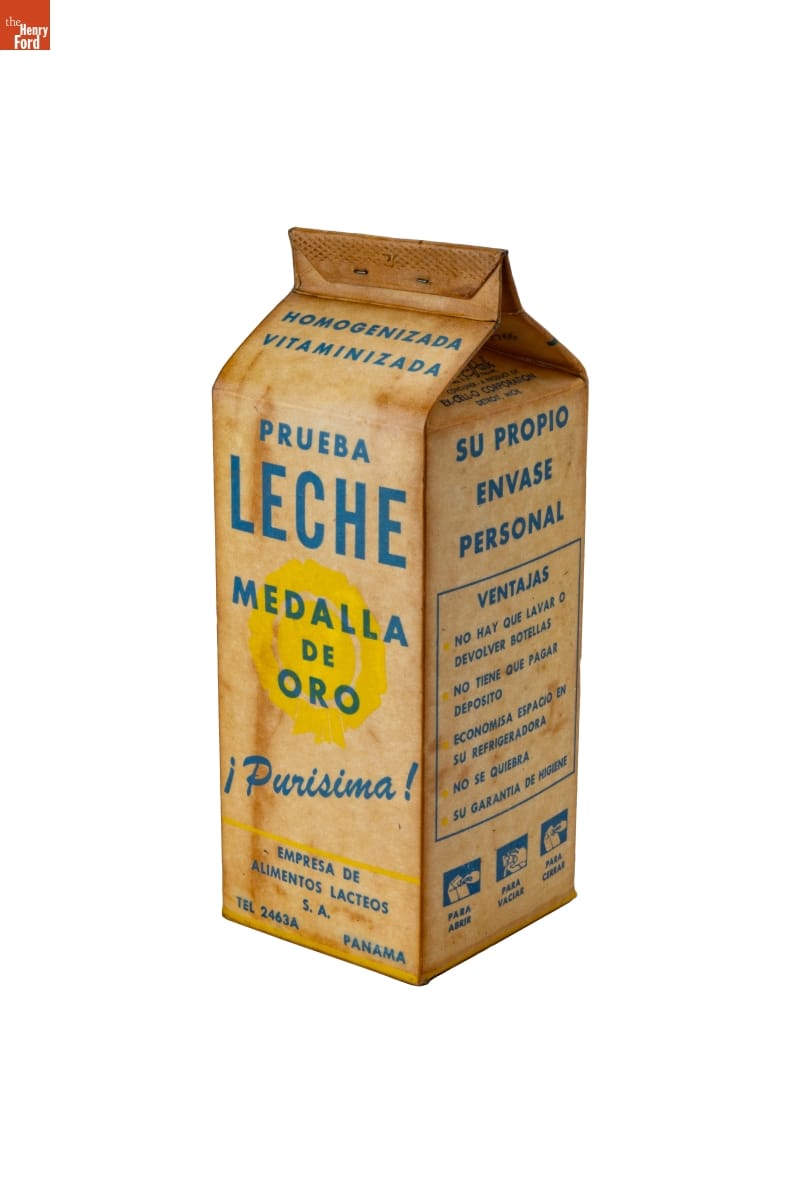
- Medalla de Oro Milk Carton - The quest for a shatter-proof milk container prompted John Van Wormer to patent a paper carton in 1915. Many processors and distributors continued to use breakable glass bottles, but, after 1937, mechanized production made the disposable, wax-coated folded cartons inexpensive and indispensable liquid containers. The iconic design, a box with a gable-end top with a pouring or drinking spout, remains the industry standard today.
- Collections - Artifact
Medalla de Oro Milk Carton
The quest for a shatter-proof milk container prompted John Van Wormer to patent a paper carton in 1915. Many processors and distributors continued to use breakable glass bottles, but, after 1937, mechanized production made the disposable, wax-coated folded cartons inexpensive and indispensable liquid containers. The iconic design, a box with a gable-end top with a pouring or drinking spout, remains the industry standard today.
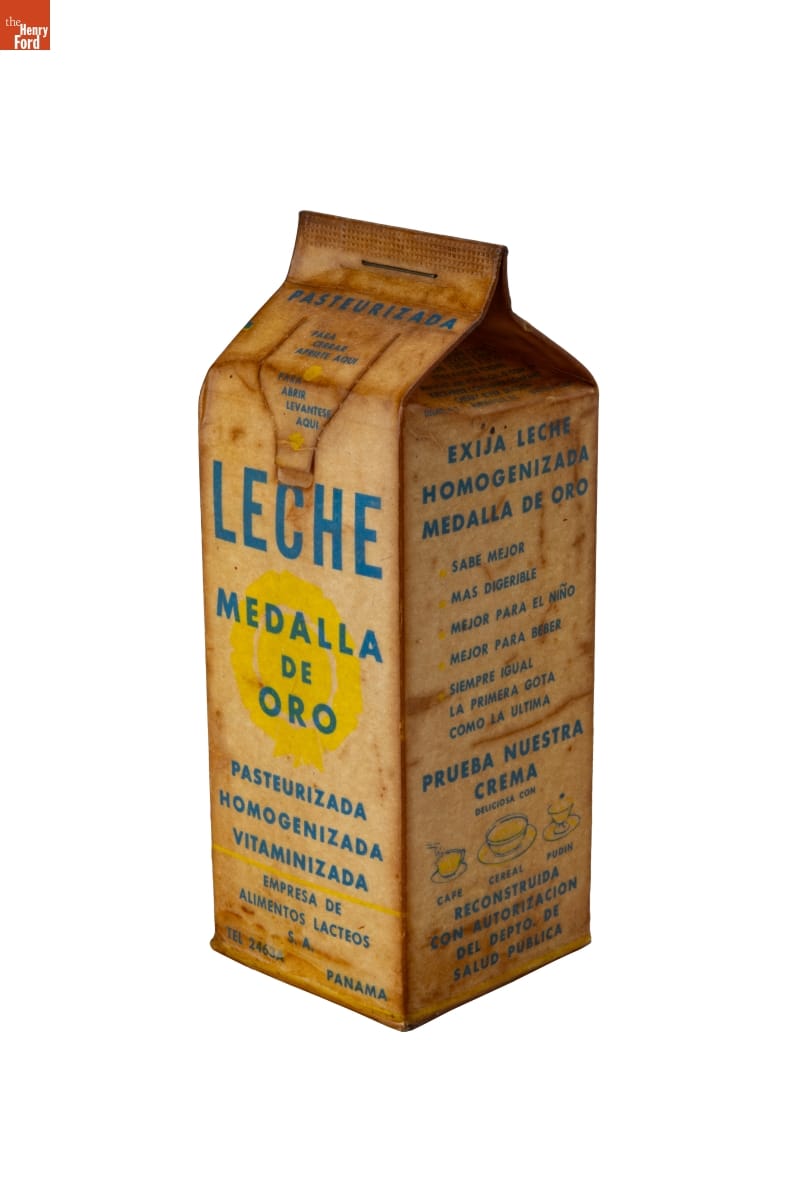
- Medalla de Oro Milk Carton - The quest for a shatter-proof milk container prompted John Van Wormer to patent a paper carton in 1915. Many processors and distributors continued to use breakable glass bottles, but, after 1937, mechanized production made the disposable, wax-coated folded cartons inexpensive and indispensable liquid containers. The iconic design, a box with a gable-end top with a pouring or drinking spout, remains the industry standard today.
- Collections - Artifact
Medalla de Oro Milk Carton
The quest for a shatter-proof milk container prompted John Van Wormer to patent a paper carton in 1915. Many processors and distributors continued to use breakable glass bottles, but, after 1937, mechanized production made the disposable, wax-coated folded cartons inexpensive and indispensable liquid containers. The iconic design, a box with a gable-end top with a pouring or drinking spout, remains the industry standard today.
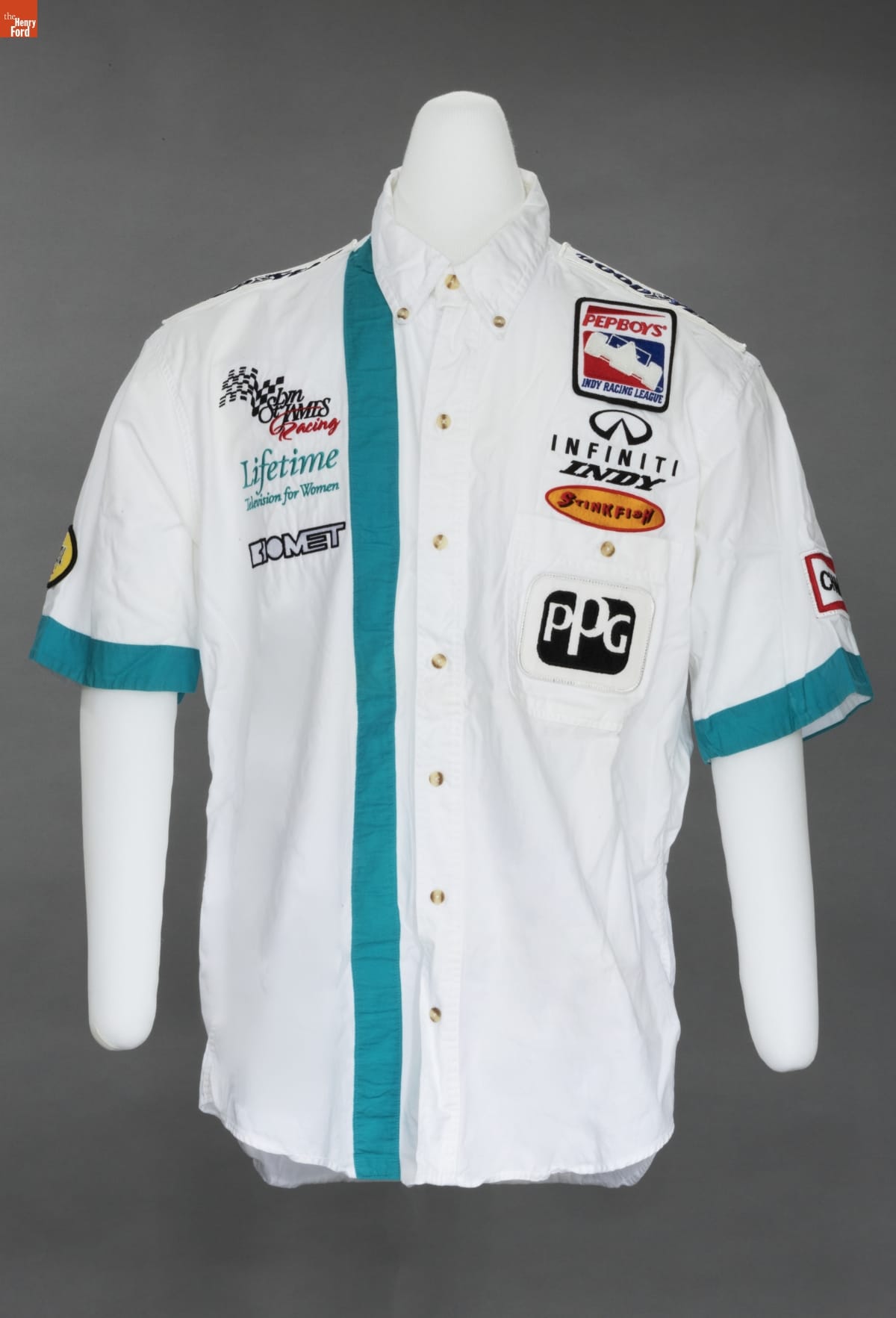
- Shirt, circa 1998 - Lyn St. James competed in the Indianapolis 500 seven times from 1992 through 2000. She just missed qualifying for the 1998 race, posting the 35th-best time and falling short of the 33-car starting grid. She competed that season in the #90 Infiniti-powered G-Force GF01B car, campaigned by her Lyn St. James Racing team.
- circa 1998
- Collections - Artifact
Shirt, circa 1998
Lyn St. James competed in the Indianapolis 500 seven times from 1992 through 2000. She just missed qualifying for the 1998 race, posting the 35th-best time and falling short of the 33-car starting grid. She competed that season in the #90 Infiniti-powered G-Force GF01B car, campaigned by her Lyn St. James Racing team.