
Search
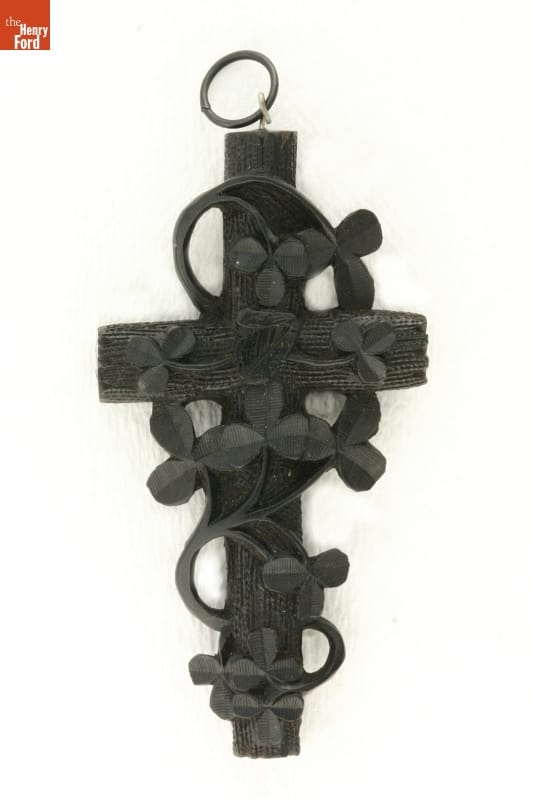
- Bogwood Cross Pendant, 1850-1885 - Bogwood is long-buried wood found in peat bogs or other environments where the wood is preserved from decay. Craftsmen carve the wood into jewelry, trinkets, and other decorative items. In the mid-to-late nineteenth century, a rich supply of bogwood came from Ireland. Bogwood jewelry carved during this period tended to reflect Celtic and Irish designs and motifs.
- 1850-1885
- Collections - Artifact
Bogwood Cross Pendant, 1850-1885
Bogwood is long-buried wood found in peat bogs or other environments where the wood is preserved from decay. Craftsmen carve the wood into jewelry, trinkets, and other decorative items. In the mid-to-late nineteenth century, a rich supply of bogwood came from Ireland. Bogwood jewelry carved during this period tended to reflect Celtic and Irish designs and motifs.
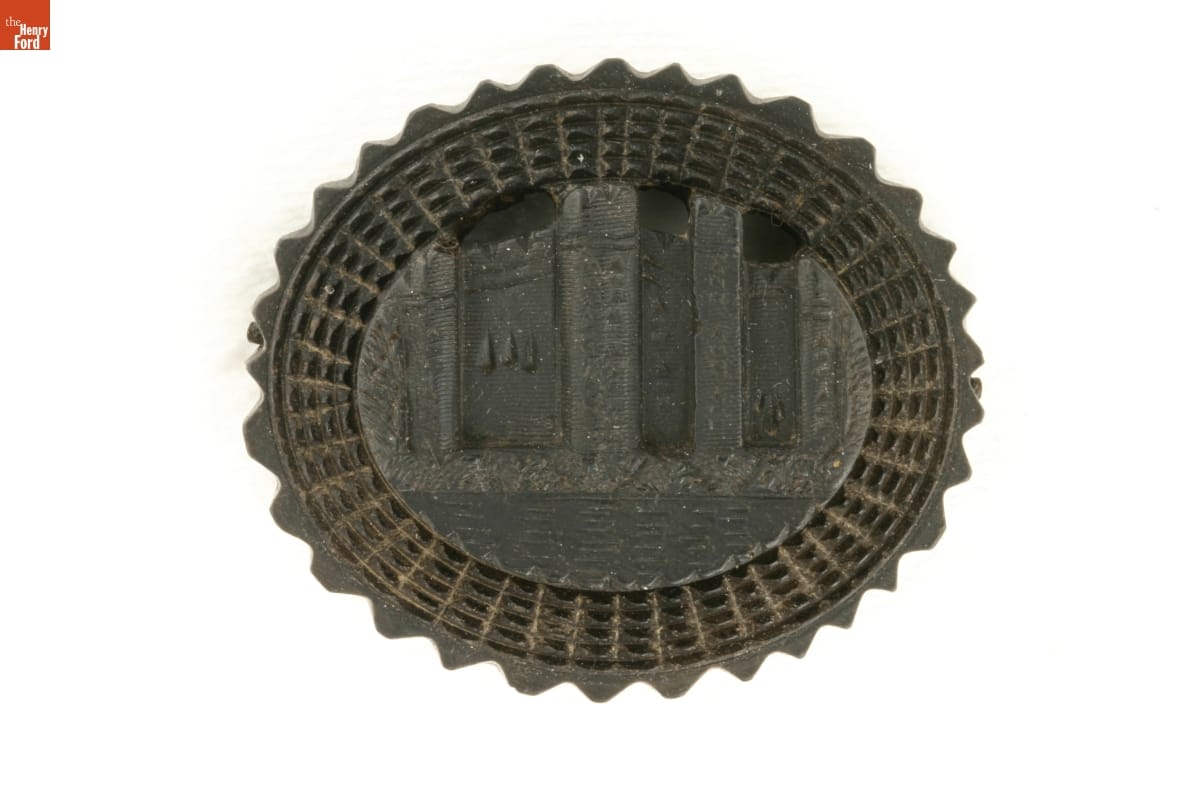
- Bogwood Brooch, 1850-1880 - Bogwood is long-buried wood found in peat bogs or other environments where the wood is preserved from decay. Craftsmen carve the wood into jewelry, trinkets, and other decorative items. In the mid-to-late nineteenth century, a rich supply of bogwood came from Ireland. Bogwood jewelry carved during this period tended to reflect Celtic and Irish designs and motifs.
- 1850-1880
- Collections - Artifact
Bogwood Brooch, 1850-1880
Bogwood is long-buried wood found in peat bogs or other environments where the wood is preserved from decay. Craftsmen carve the wood into jewelry, trinkets, and other decorative items. In the mid-to-late nineteenth century, a rich supply of bogwood came from Ireland. Bogwood jewelry carved during this period tended to reflect Celtic and Irish designs and motifs.
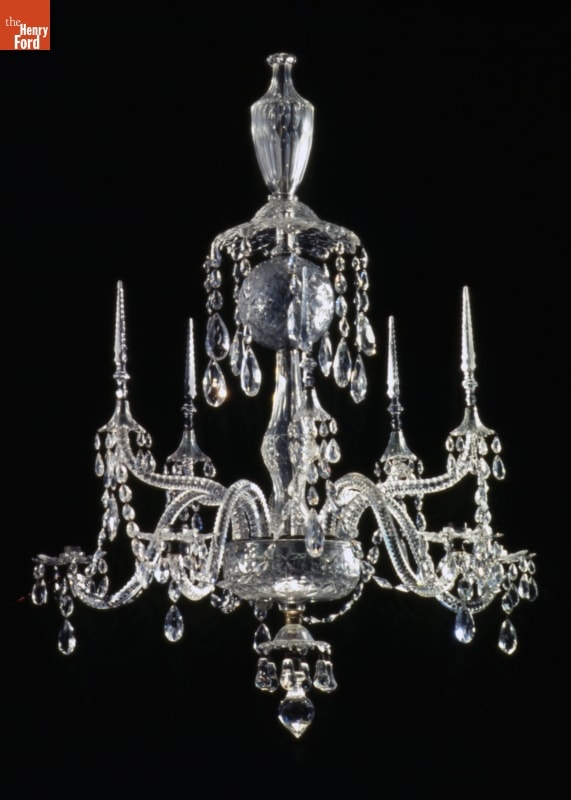
- Candle Chandelier, circa 1795 - This late 18th century chandelier likely illuminated a grand parlor or dining room in the house of a wealthy individual in one of America's large coastal cities. Imported from England or Ireland, it was intended to impress visitors with the good taste of its owner. The glass column, arms, and crystal pendants would have reflected and refracted candlelight into dark corners.
- circa 1795
- Collections - Artifact
Candle Chandelier, circa 1795
This late 18th century chandelier likely illuminated a grand parlor or dining room in the house of a wealthy individual in one of America's large coastal cities. Imported from England or Ireland, it was intended to impress visitors with the good taste of its owner. The glass column, arms, and crystal pendants would have reflected and refracted candlelight into dark corners.
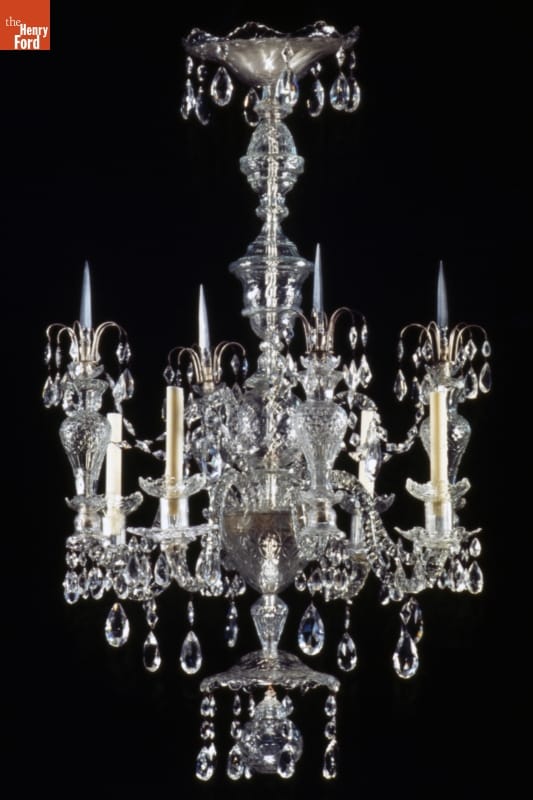
- Candle Chandelier, circa 1770 - This late 18th century chandelier likely illuminated a grand parlor or dining room in the house of a wealthy individual in one of America's large coastal cities. Imported from England or Ireland, it was intended to impress visitors with the good taste of its owner. The glass column, arms, and crystal pendants would have reflected and refracted candlelight into dark corners.
- circa 1770
- Collections - Artifact
Candle Chandelier, circa 1770
This late 18th century chandelier likely illuminated a grand parlor or dining room in the house of a wealthy individual in one of America's large coastal cities. Imported from England or Ireland, it was intended to impress visitors with the good taste of its owner. The glass column, arms, and crystal pendants would have reflected and refracted candlelight into dark corners.
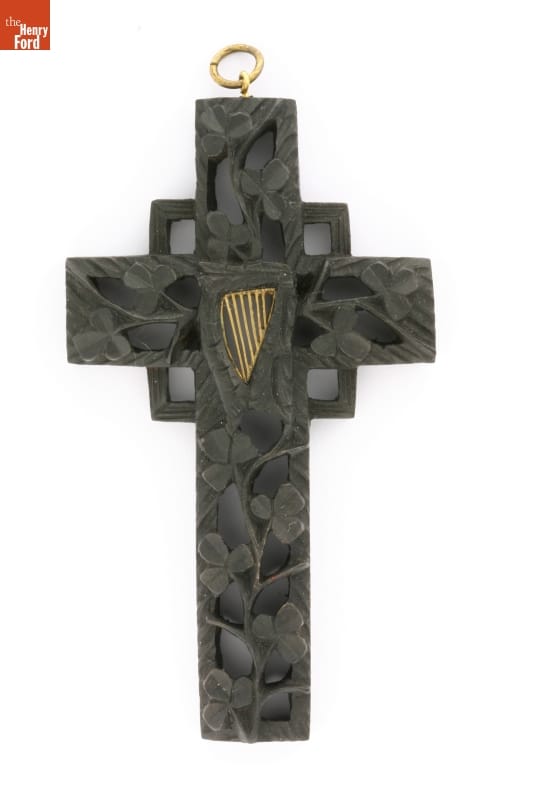
- Bogwood Cross Pendant, 1850-1880 - Bogwood is long-buried wood found in peat bogs or other environments where the wood is preserved from decay. Craftsmen carve the wood into jewelry, trinkets, and other decorative items. In the mid-to-late nineteenth century, a rich supply of bogwood came from Ireland. Bogwood jewelry carved during this period tended to reflect Celtic and Irish designs and motifs.
- 1850-1880
- Collections - Artifact
Bogwood Cross Pendant, 1850-1880
Bogwood is long-buried wood found in peat bogs or other environments where the wood is preserved from decay. Craftsmen carve the wood into jewelry, trinkets, and other decorative items. In the mid-to-late nineteenth century, a rich supply of bogwood came from Ireland. Bogwood jewelry carved during this period tended to reflect Celtic and Irish designs and motifs.
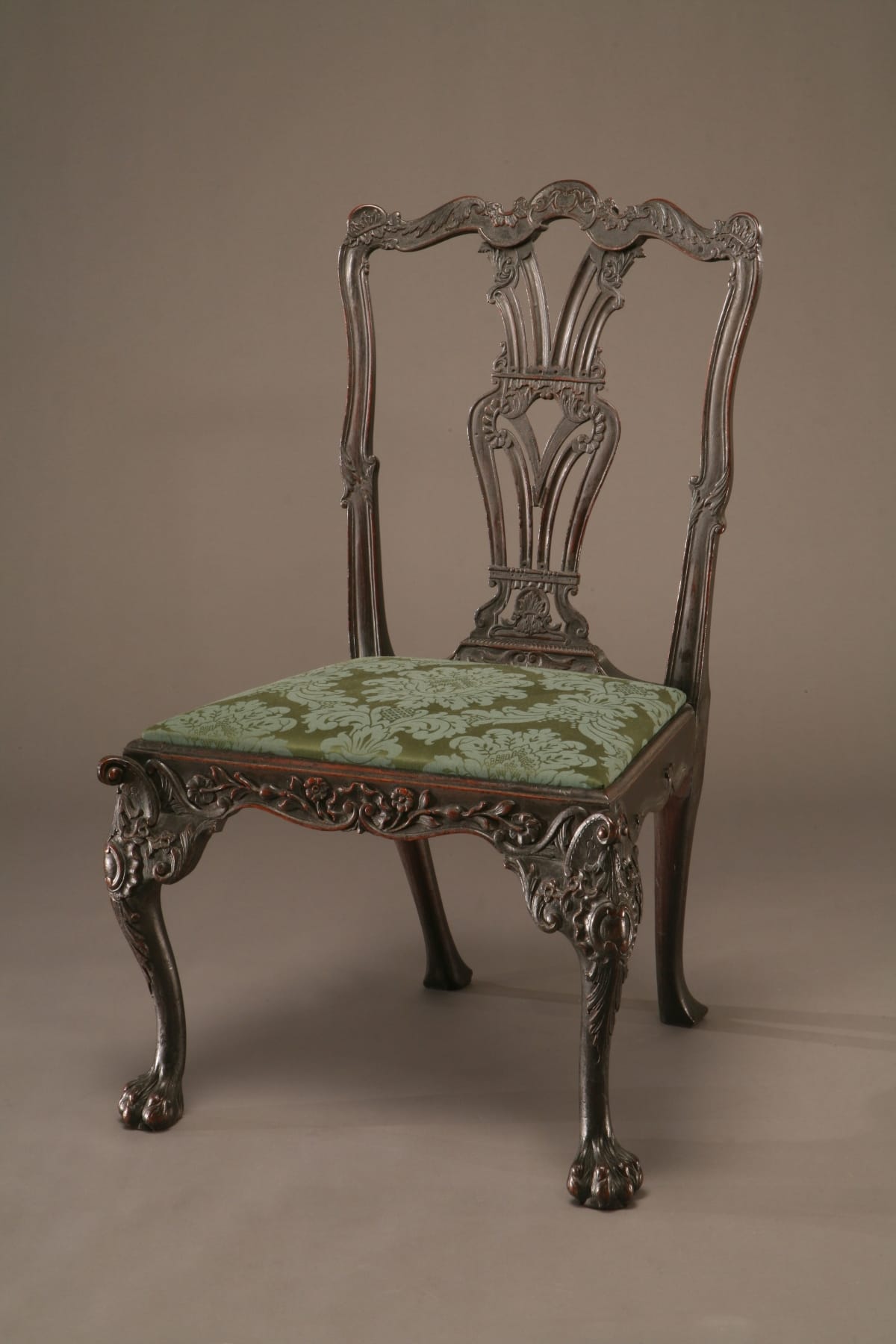
- Side Chair, Used at Drayton Hall, 1750-1770 - Drayton Hall, located just outside of Charleston, South Carolina, is one of the major early plantation houses in America, completed between 1737 and 1742. John Drayton, who likely designed the house from English pattern books, was a wealthy rice planter. The interior was furnished in fashionable English decorative arts, including this ornate side chair, one of four from the house that have survived.
- 1750-1770
- Collections - Artifact
Side Chair, Used at Drayton Hall, 1750-1770
Drayton Hall, located just outside of Charleston, South Carolina, is one of the major early plantation houses in America, completed between 1737 and 1742. John Drayton, who likely designed the house from English pattern books, was a wealthy rice planter. The interior was furnished in fashionable English decorative arts, including this ornate side chair, one of four from the house that have survived.