
Search
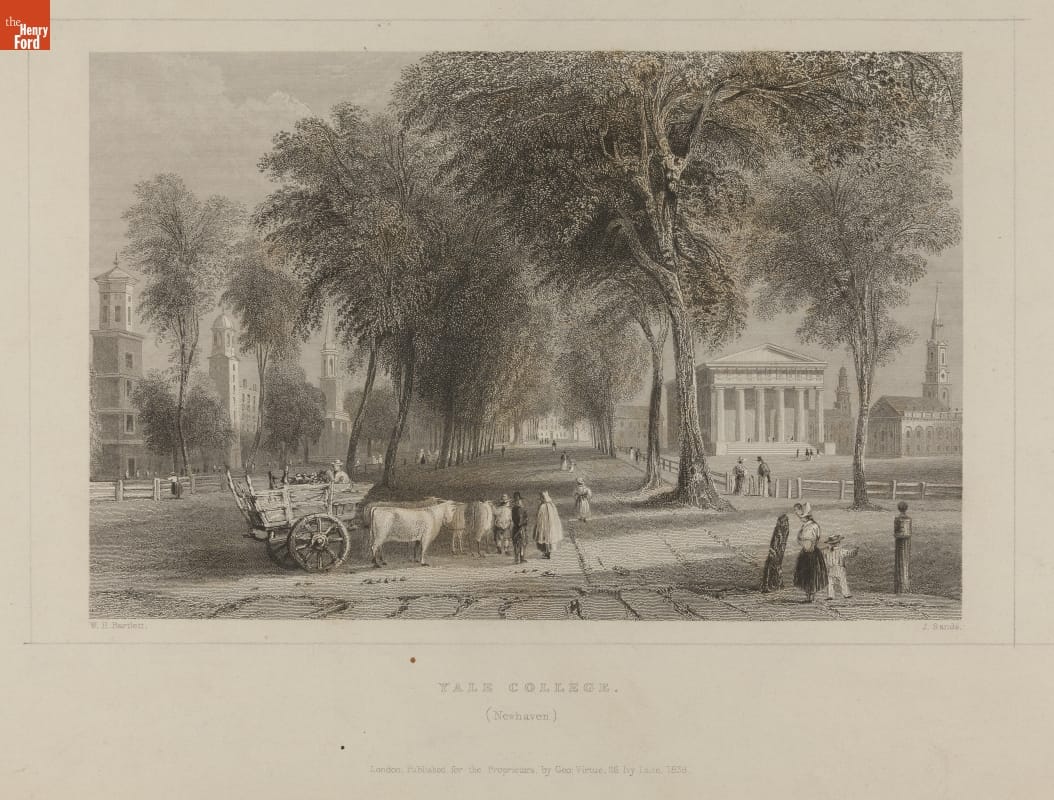
- Engraving, "Yale College, New Haven," 1838 - This 1838 engraving of New Haven, Connecticut, features a two-wheeled New England ox cart in the foreground. The picturesque print also features people strolling through town, with Yale College buildings in the background.
- 1838
- Collections - Artifact
Engraving, "Yale College, New Haven," 1838
This 1838 engraving of New Haven, Connecticut, features a two-wheeled New England ox cart in the foreground. The picturesque print also features people strolling through town, with Yale College buildings in the background.
- Portrait of Unidentified English Soldier Wearing Military Cap, circa 1870 -
- circa 1870
- Collections - Artifact
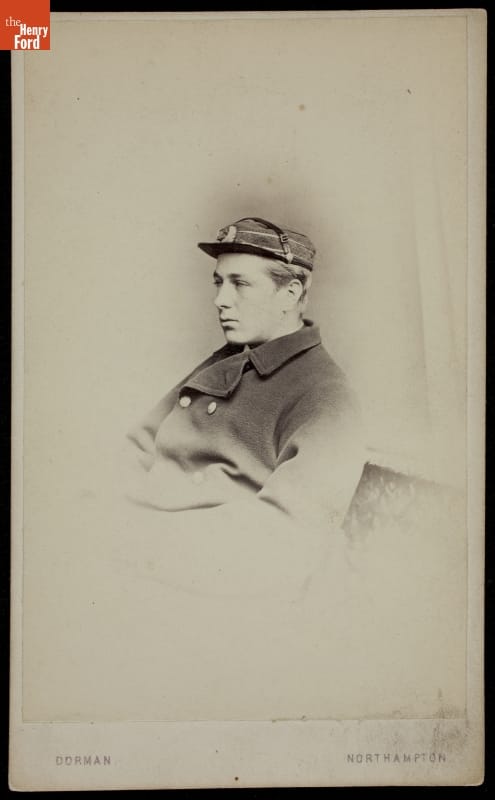
Portrait of Unidentified English Soldier Wearing Military Cap, circa 1870
- Henry Ford's Private Railroad Car "Fair Lane," 1921 - By 1920, Henry and Clara Ford found it increasingly difficult to travel with any degree of privacy. They purchased a private railcar and named it <EM>Fair Lane</EM>. The car had four private rooms, an observation lounge, a dining room, and a fully equipped kitchen. It could accommodate eight passengers. The couple made over 400 trips using <EM>Fair Lane</EM> before selling the passenger car in 1942.

- June 23, 1921
- Collections - Artifact
Henry Ford's Private Railroad Car "Fair Lane," 1921
By 1920, Henry and Clara Ford found it increasingly difficult to travel with any degree of privacy. They purchased a private railcar and named it Fair Lane. The car had four private rooms, an observation lounge, a dining room, and a fully equipped kitchen. It could accommodate eight passengers. The couple made over 400 trips using Fair Lane before selling the passenger car in 1942.
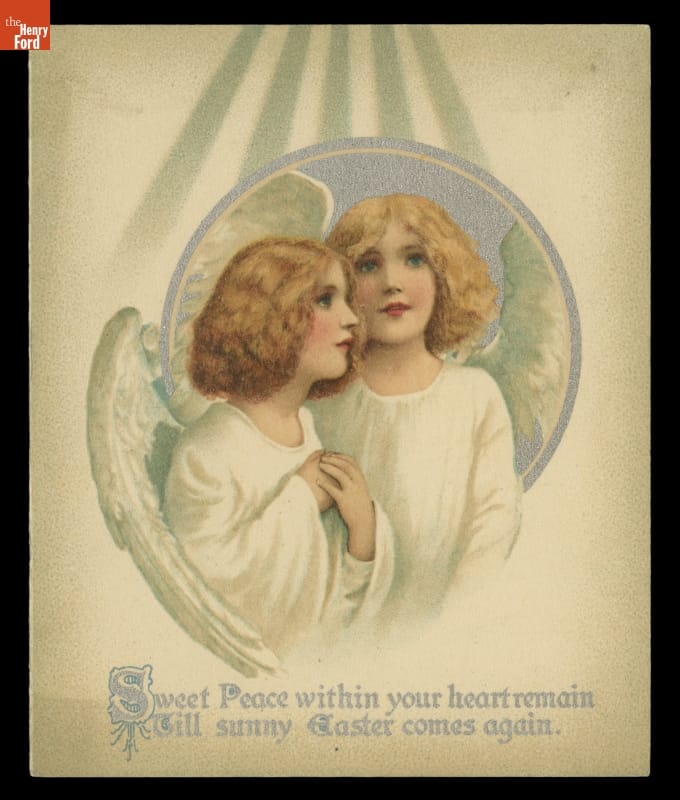
- Easter Greeting Card, "Sweet Peace Within Your Heart Remain Till Sunny Easter Comes Again," 1905 - Sending greeting cards and postcards for the Easter holiday became popular in the United States by the 1880s. Publishers made cards with themes of a religious nature as well as secular decorations to celebrate the arrival of spring. Artists working for these publishers illustrated the cards with images symbolic of the season, such as crosses, angels, flowers, eggs, children, birds, and rabbits.
- circa 1905
- Collections - Artifact
Easter Greeting Card, "Sweet Peace Within Your Heart Remain Till Sunny Easter Comes Again," 1905
Sending greeting cards and postcards for the Easter holiday became popular in the United States by the 1880s. Publishers made cards with themes of a religious nature as well as secular decorations to celebrate the arrival of spring. Artists working for these publishers illustrated the cards with images symbolic of the season, such as crosses, angels, flowers, eggs, children, birds, and rabbits.
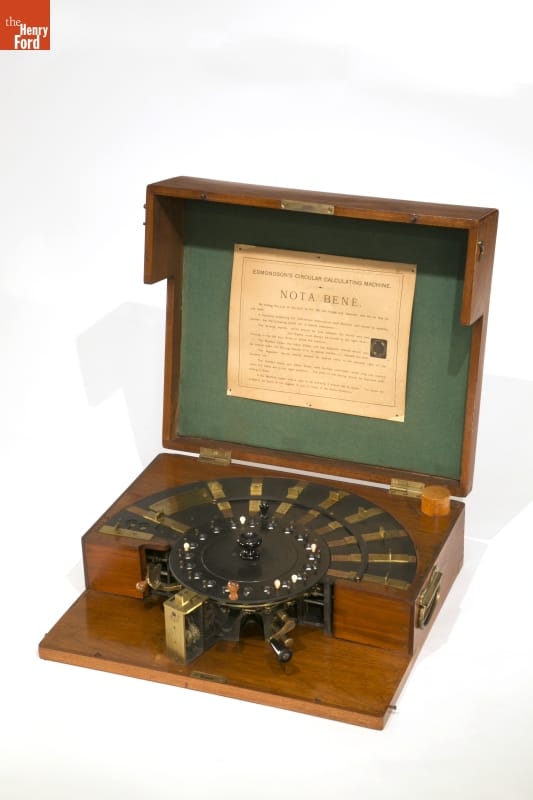
- Patent Model of Edmondson's Circular Calculating Machine, 1883 - Mechanical calculators used gears, cogs, levers, and rotating drums to solve mathematical problems indirectly. While Edmondson's Circular Calculator was rugged and reliable, its "stepped drum" system required people to slide plates and levers, making it difficult to master and time-consuming to operate. By the late 19th century, improved adding machines became popular, helping to reduce the common errors of human calculation.
- 1883
- Collections - Artifact
Patent Model of Edmondson's Circular Calculating Machine, 1883
Mechanical calculators used gears, cogs, levers, and rotating drums to solve mathematical problems indirectly. While Edmondson's Circular Calculator was rugged and reliable, its "stepped drum" system required people to slide plates and levers, making it difficult to master and time-consuming to operate. By the late 19th century, improved adding machines became popular, helping to reduce the common errors of human calculation.
- Pair of Silhouettes, 1791-1809 -
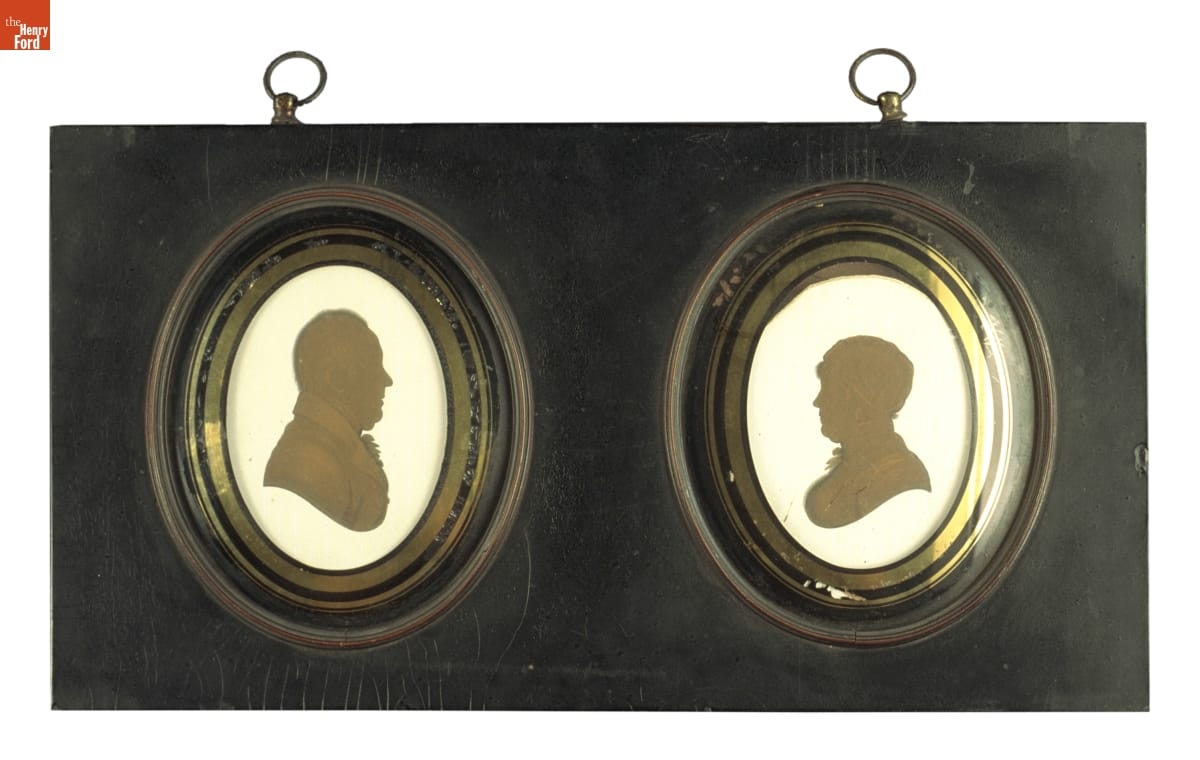
- 1791-1809
- Collections - Artifact
Pair of Silhouettes, 1791-1809
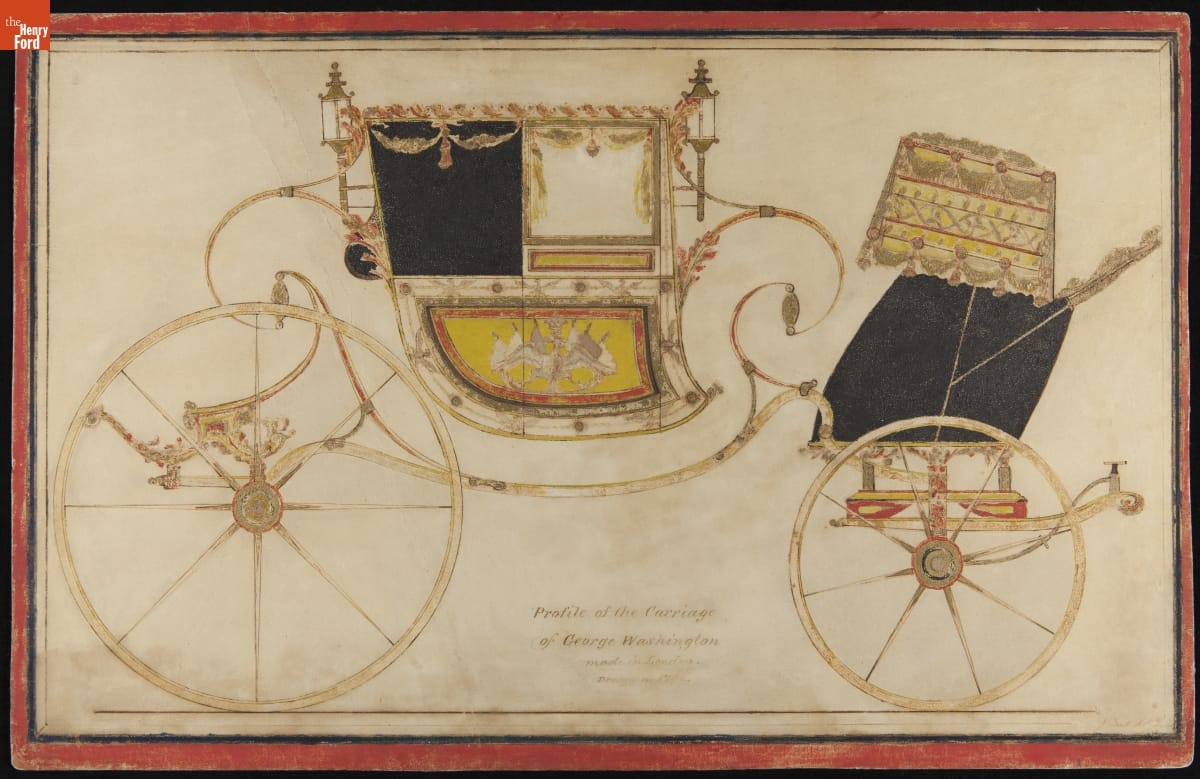
- "Profile of the Carriage of George Washington," 1792 - This elegant carriage, used by George Washington at one of his two presidential inaugurations, is quite different from the armored limousines used by the White House now. But, with its formal lines and stately appointments, the carriage appropriately reflects the power and the dignity of the American presidency -- something still required of presidential vehicles today.
- 1792
- Collections - Artifact
"Profile of the Carriage of George Washington," 1792
This elegant carriage, used by George Washington at one of his two presidential inaugurations, is quite different from the armored limousines used by the White House now. But, with its formal lines and stately appointments, the carriage appropriately reflects the power and the dignity of the American presidency -- something still required of presidential vehicles today.
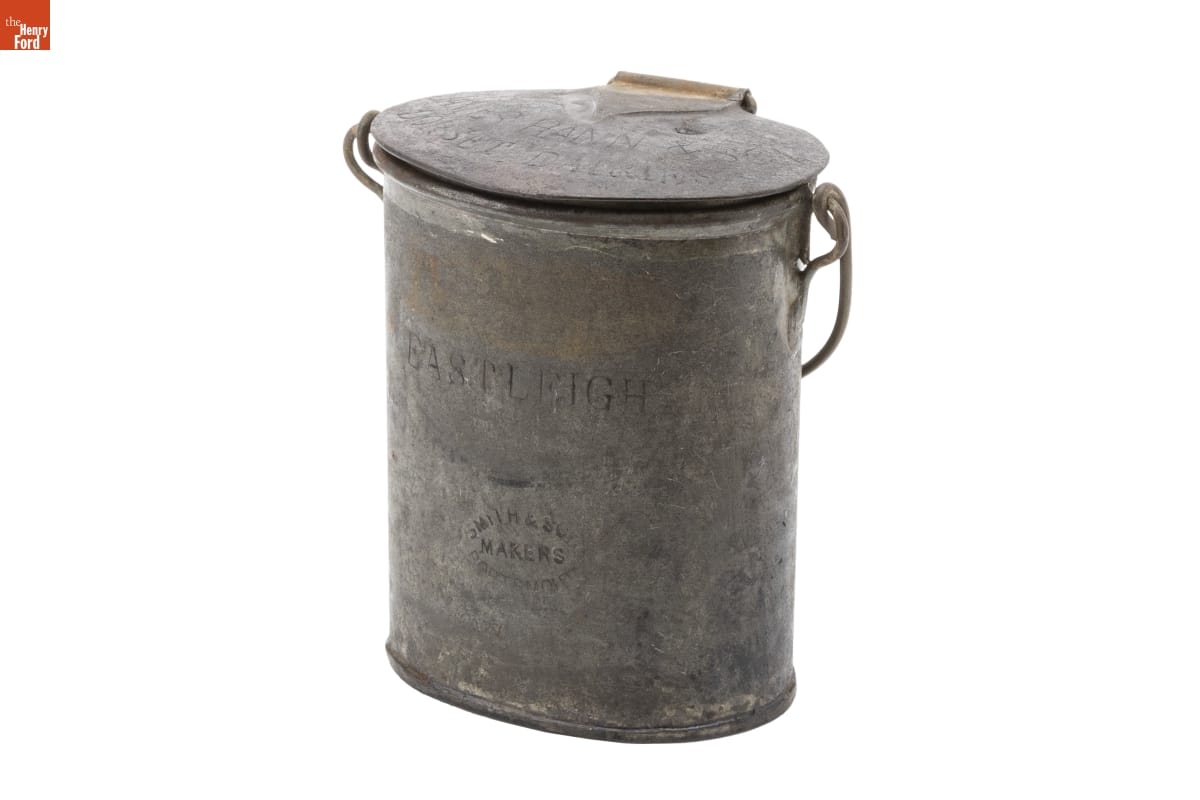
- Dorset Dairies Milk Measurement Can -
- Collections - Artifact
Dorset Dairies Milk Measurement Can
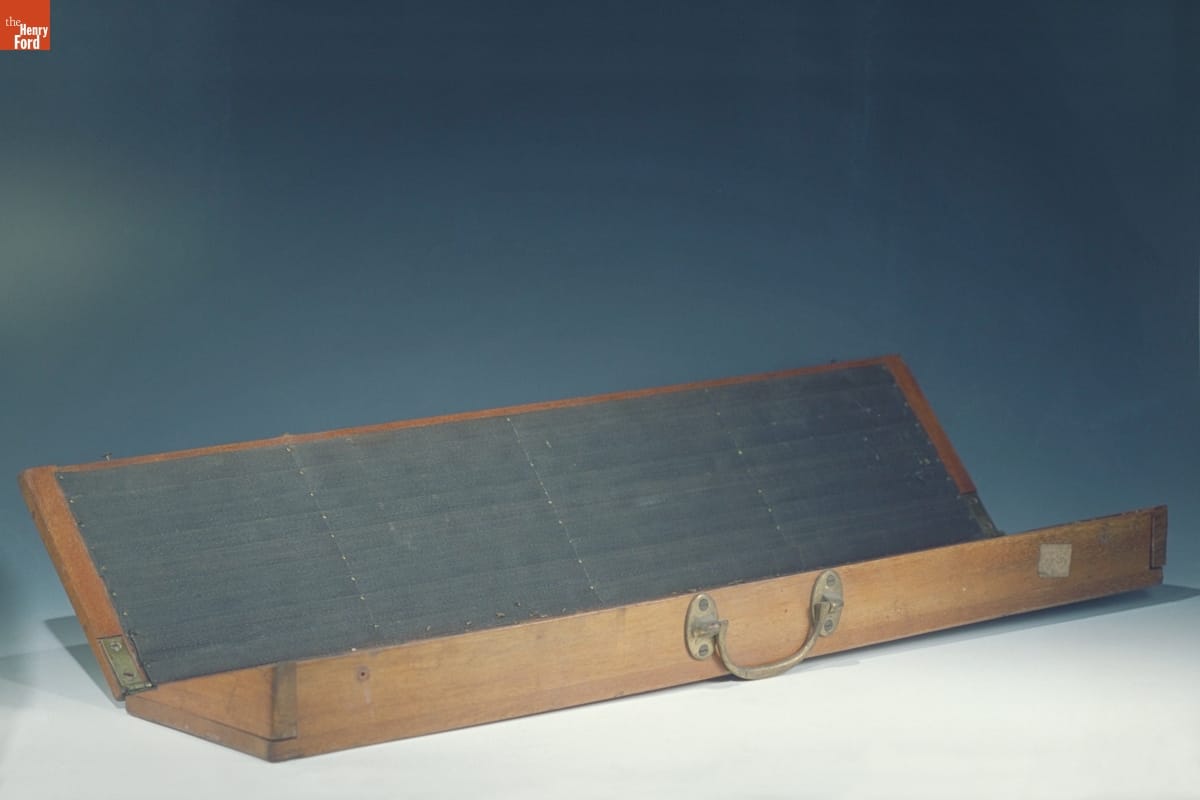
- Chastleton Patience Board, circa 1900 - This fold-out game board provides a solid surface for playing Patience -- a number of puzzle card games similar to Solitaire. Long fabric pockets secure cards in play, while wood slots provide storage. The board was designed by Mary Whitmore Jones who also authored works describing how to play the infinite varieties of the game.
- circa 1900
- Collections - Artifact
Chastleton Patience Board, circa 1900
This fold-out game board provides a solid surface for playing Patience -- a number of puzzle card games similar to Solitaire. Long fabric pockets secure cards in play, while wood slots provide storage. The board was designed by Mary Whitmore Jones who also authored works describing how to play the infinite varieties of the game.
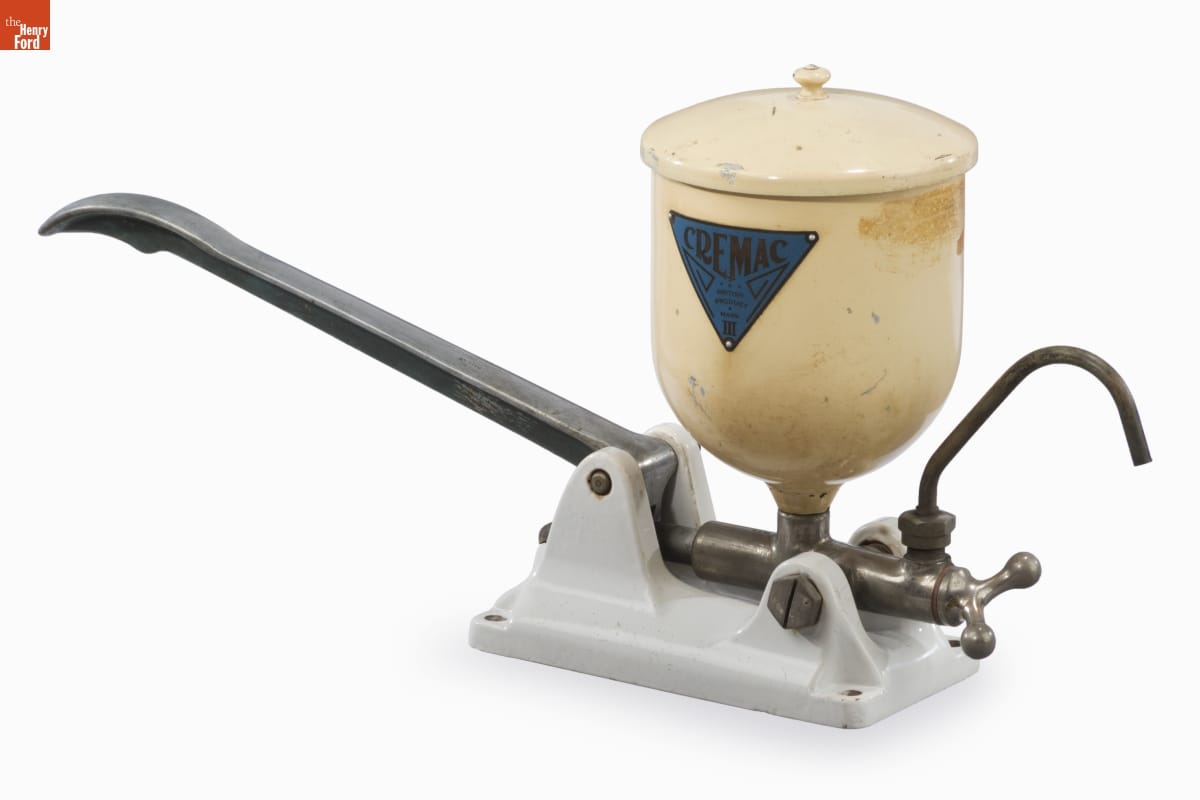
- Cremac Mark III Viscalizer, 1925 -
- 1925
- Collections - Artifact
Cremac Mark III Viscalizer, 1925