
Search
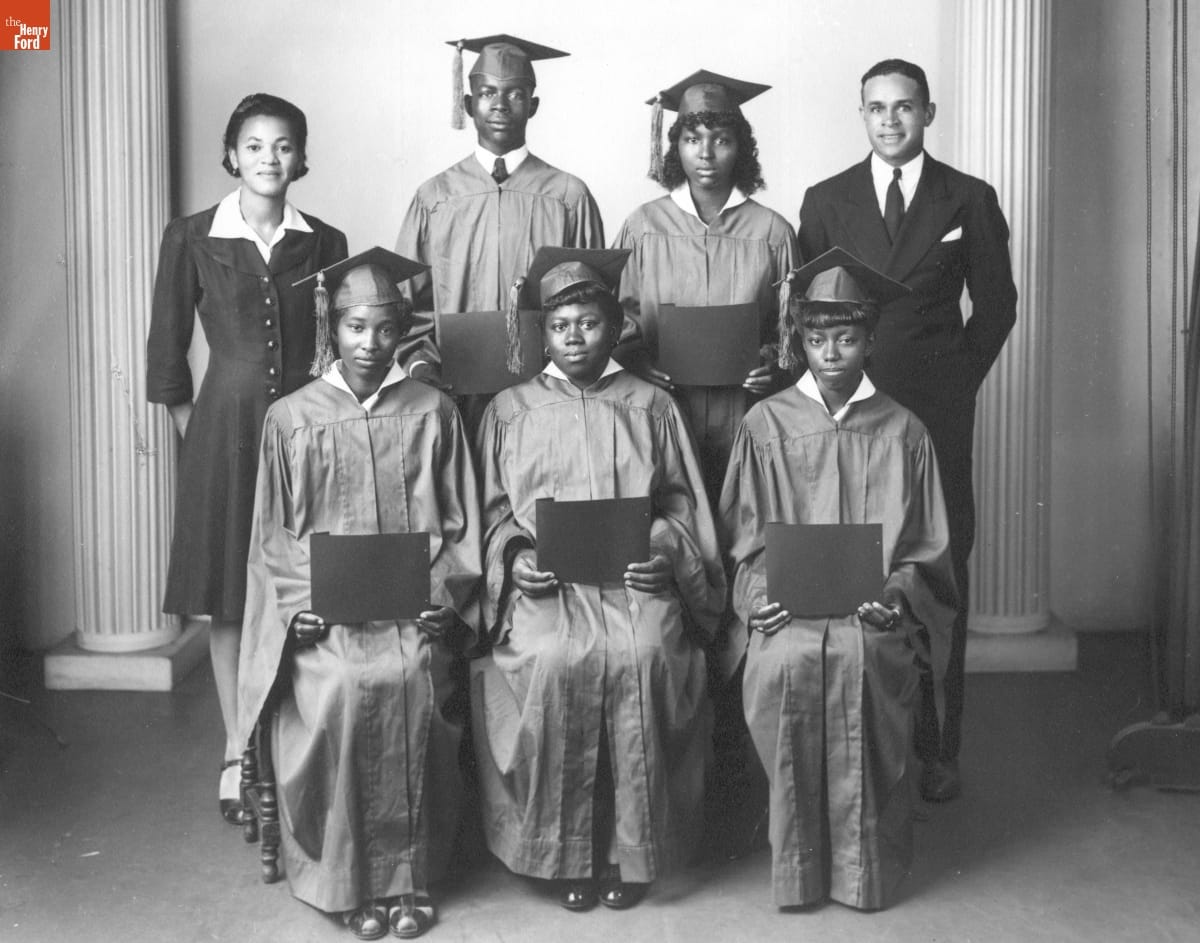
- Graduating Students and Teachers at George Washington Carver School, Richmond Hill, Georgia, 1945 - Henry Ford purchased vast amounts of land around present-day Richmond Hill, Georgia, beginning in the 1920s. After acquiring the property, Ford became interested in the economic and civic improvement of the area. He built schools, churches, and community centers. In 1939, Ford founded the George Washington Carver School. This image shows the 1945 graduating class and their teachers.
- June 01, 1945
- Collections - Artifact
Graduating Students and Teachers at George Washington Carver School, Richmond Hill, Georgia, 1945
Henry Ford purchased vast amounts of land around present-day Richmond Hill, Georgia, beginning in the 1920s. After acquiring the property, Ford became interested in the economic and civic improvement of the area. He built schools, churches, and community centers. In 1939, Ford founded the George Washington Carver School. This image shows the 1945 graduating class and their teachers.
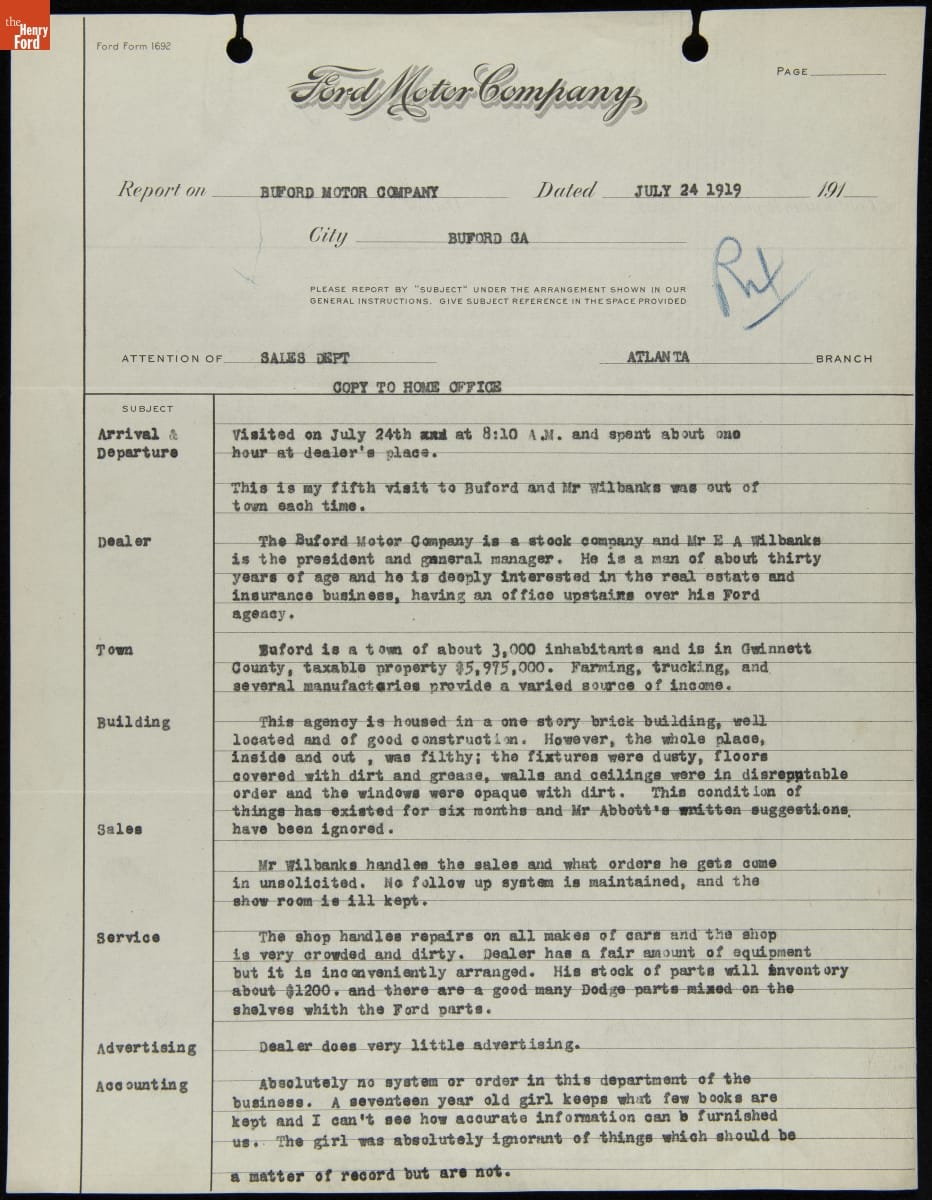
- Manager Report of Buford Motor Company, Buford, Georgia, July 24, 1919 - Though it operated some direct-sales offices in major cities, Ford Motor Company sold most of its Model T cars through franchise agreements with independent dealers. Each franchisee received the right to sell Ford cars within a specific territory. Ford encouraged dealers by offering discounts and rebates to high sellers. But low-selling dealers risked losing their territories.
- July 24, 1919
- Collections - Artifact
Manager Report of Buford Motor Company, Buford, Georgia, July 24, 1919
Though it operated some direct-sales offices in major cities, Ford Motor Company sold most of its Model T cars through franchise agreements with independent dealers. Each franchisee received the right to sell Ford cars within a specific territory. Ford encouraged dealers by offering discounts and rebates to high sellers. But low-selling dealers risked losing their territories.
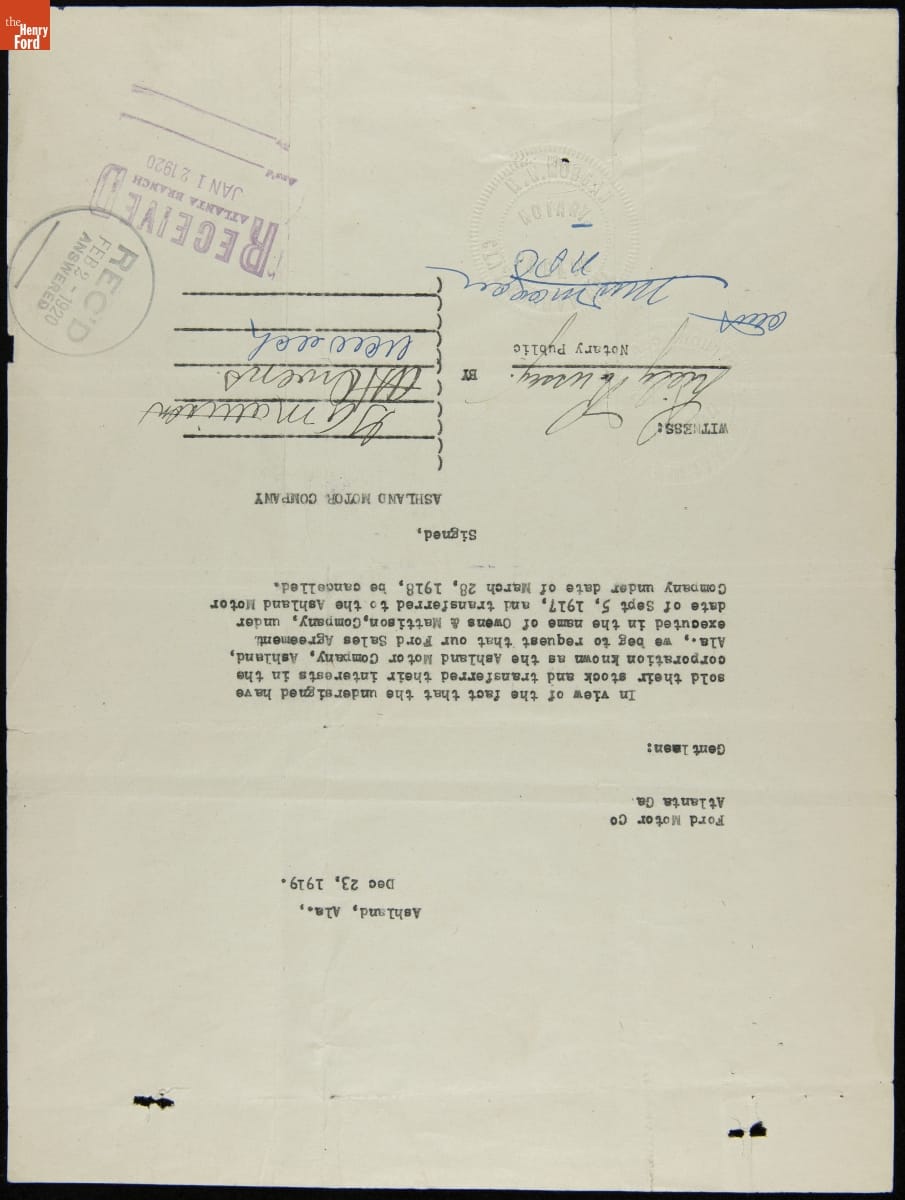
- Letter to Ford Motor Company Requesting Cancellation of Ashland Motor Company Contract, Ashland, Alabama, February 2, 1920 - Though it operated some direct-sales offices in major cities, Ford Motor Company sold most of its Model T cars through franchise agreements with independent dealers. Each franchisee received the right to sell Ford cars within a specific territory. Ford encouraged dealers by offering discounts and rebates to high sellers. But low-selling dealers risked losing their territories.
- February 02, 1920
- Collections - Artifact
Letter to Ford Motor Company Requesting Cancellation of Ashland Motor Company Contract, Ashland, Alabama, February 2, 1920
Though it operated some direct-sales offices in major cities, Ford Motor Company sold most of its Model T cars through franchise agreements with independent dealers. Each franchisee received the right to sell Ford cars within a specific territory. Ford encouraged dealers by offering discounts and rebates to high sellers. But low-selling dealers risked losing their territories.
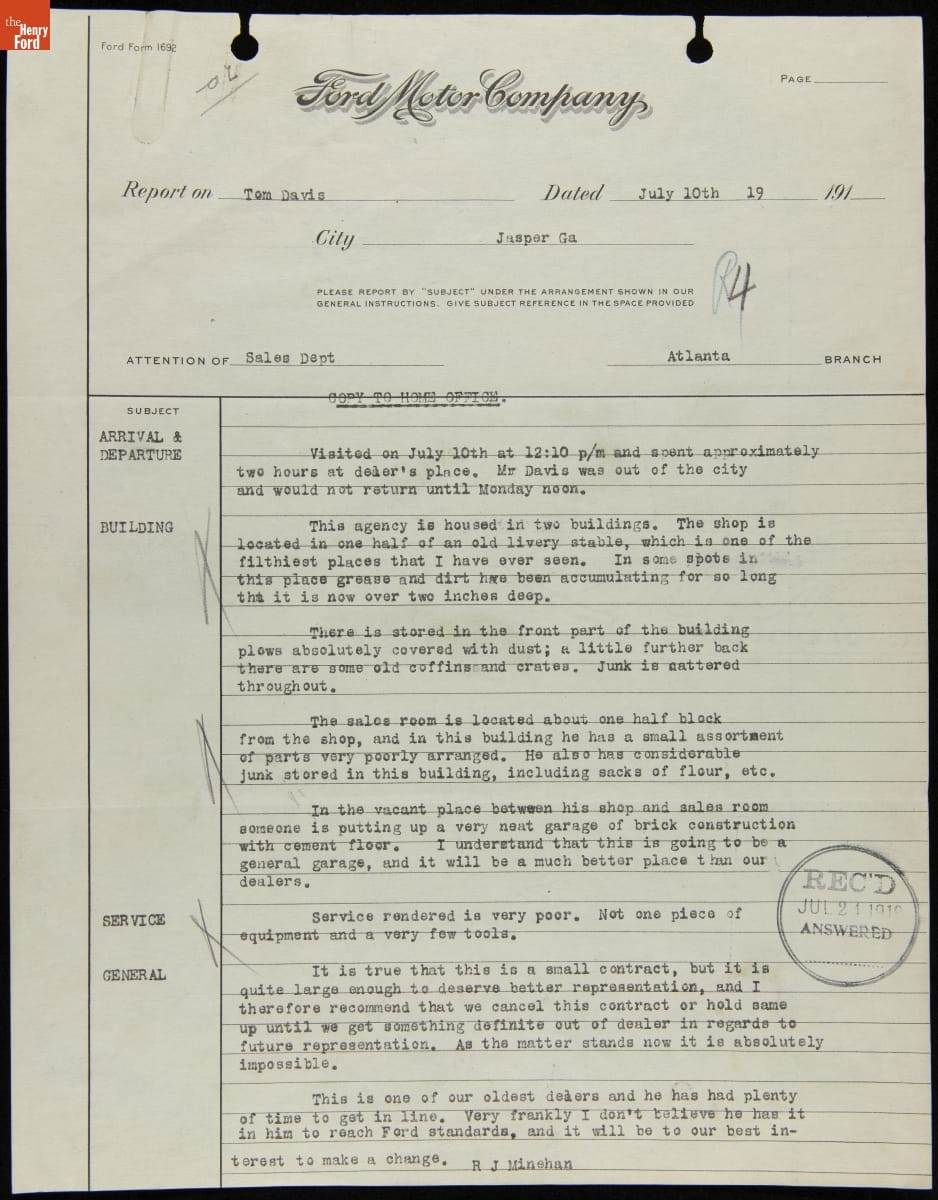
- Manager Report Recommending the Cancellation of Tom Davis Sales Contract, Jasper, Georgia, July 10, 1919 - Though it operated some direct-sales offices in major cities, Ford Motor Company sold most of its Model T cars through franchise agreements with independent dealers. Each franchisee received the right to sell Ford cars within a specific territory. Ford encouraged dealers by offering discounts and rebates to high sellers. But low-selling dealers risked losing their territories.
- July 10, 1919
- Collections - Artifact
Manager Report Recommending the Cancellation of Tom Davis Sales Contract, Jasper, Georgia, July 10, 1919
Though it operated some direct-sales offices in major cities, Ford Motor Company sold most of its Model T cars through franchise agreements with independent dealers. Each franchisee received the right to sell Ford cars within a specific territory. Ford encouraged dealers by offering discounts and rebates to high sellers. But low-selling dealers risked losing their territories.
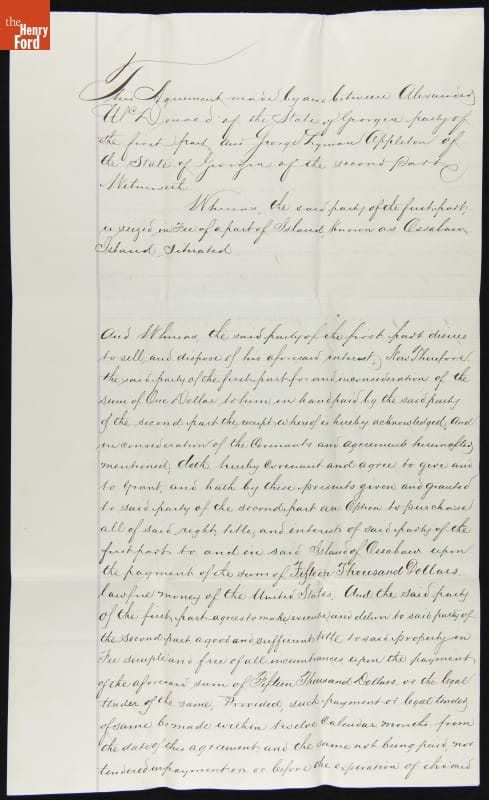
- Agreement for the Purchase of Ossabaw Island by George Appleton from Alexander McDonald, November 1, 1877 -
- November 01, 1877
- Collections - Artifact
Agreement for the Purchase of Ossabaw Island by George Appleton from Alexander McDonald, November 1, 1877
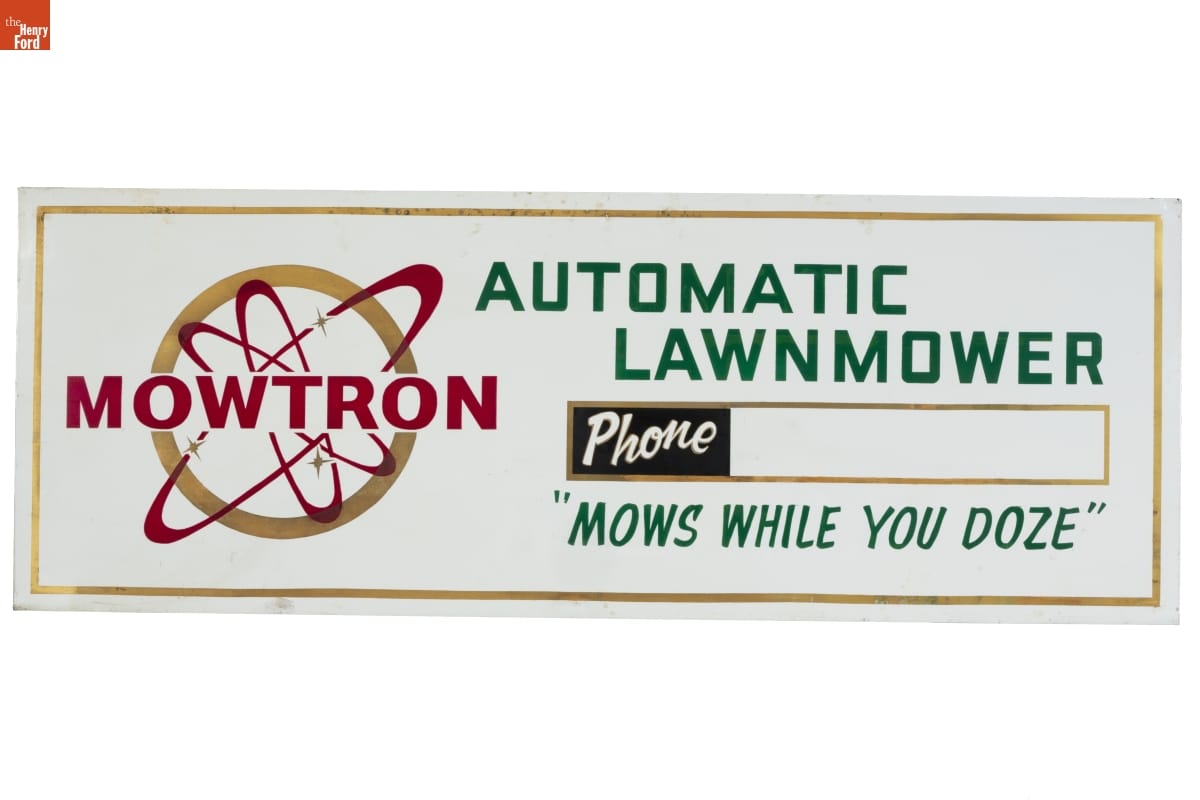
- "Mowtron Mower" Sign, 1974 - "Mowtron...Mows while you Doze!" The American Marketing and Sales Company stressed computerized operation to encourage adoption of its autonomous lawn mower. The machine followed signals emitted by a transistorized guidance system, eliminating the need for homeowners to dedicate valuable time to lawn care. Built-in features like sensitized bumpers eased safety concerns, though sales fell far short of the company's dreams.
- 1974
- Collections - Artifact
"Mowtron Mower" Sign, 1974
"Mowtron...Mows while you Doze!" The American Marketing and Sales Company stressed computerized operation to encourage adoption of its autonomous lawn mower. The machine followed signals emitted by a transistorized guidance system, eliminating the need for homeowners to dedicate valuable time to lawn care. Built-in features like sensitized bumpers eased safety concerns, though sales fell far short of the company's dreams.
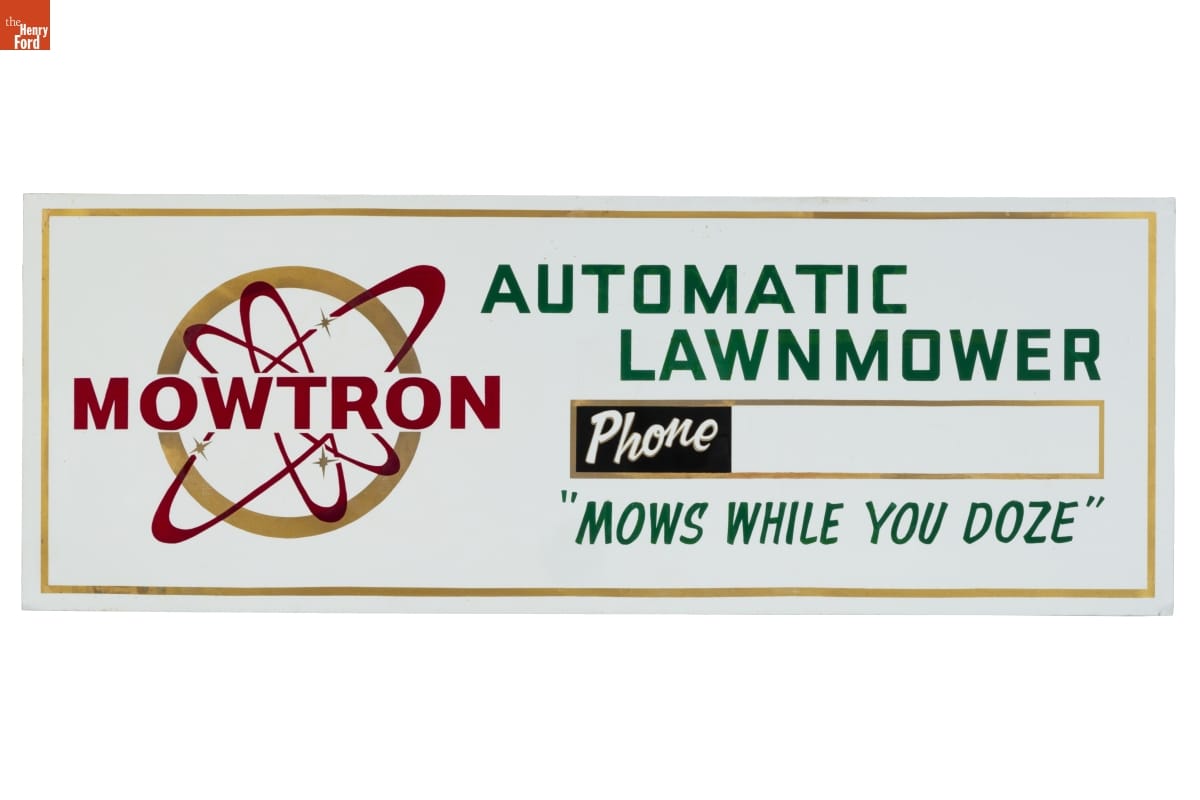
- "Mowtron Mower" Sign, 1974 - "Mowtron...Mows while you Doze!" The American Marketing and Sales Company stressed computerized operation to encourage adoption of its autonomous lawn mower. The machine followed signals emitted by a transistorized guidance system, eliminating the need for homeowners to dedicate valuable time to lawn care. Built-in features like sensitized bumpers eased safety concerns, though sales fell far short of the company's dreams.
- 1974
- Collections - Artifact
"Mowtron Mower" Sign, 1974
"Mowtron...Mows while you Doze!" The American Marketing and Sales Company stressed computerized operation to encourage adoption of its autonomous lawn mower. The machine followed signals emitted by a transistorized guidance system, eliminating the need for homeowners to dedicate valuable time to lawn care. Built-in features like sensitized bumpers eased safety concerns, though sales fell far short of the company's dreams.
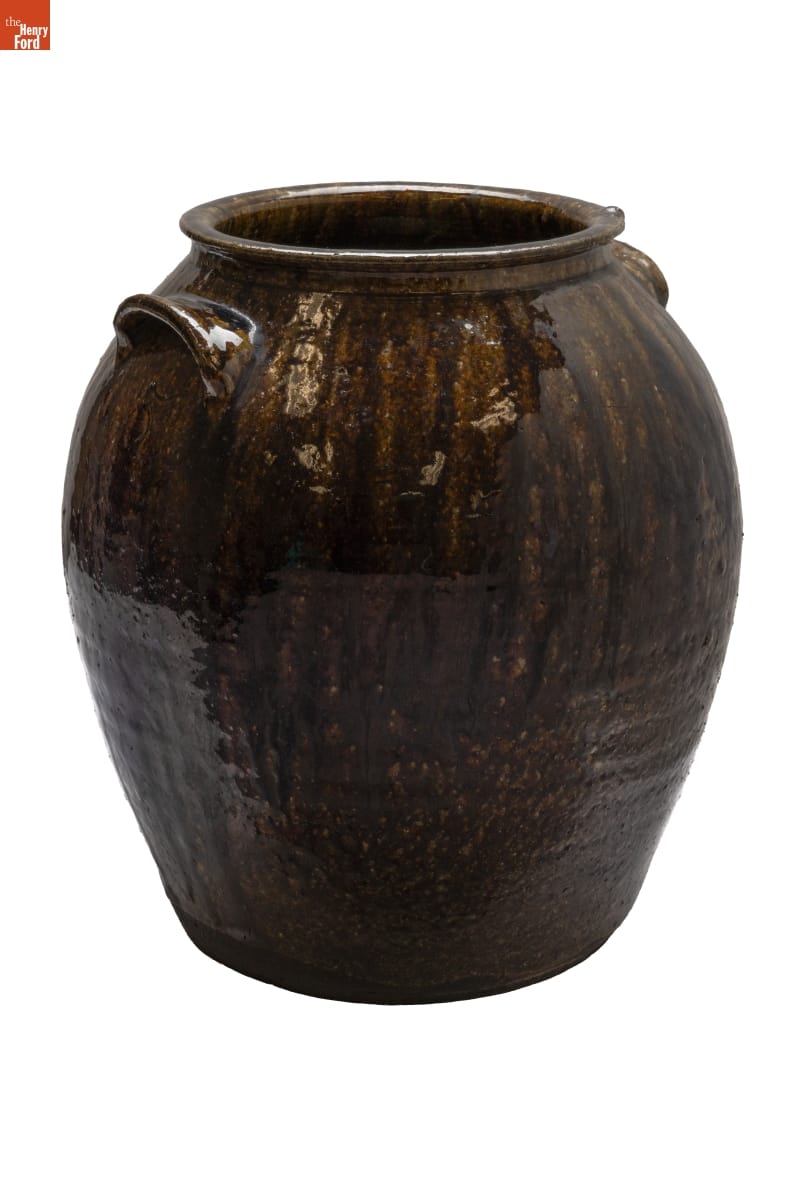
- Jar, 1870-1900 -
- 1870-1900
- Collections - Artifact
Jar, 1870-1900
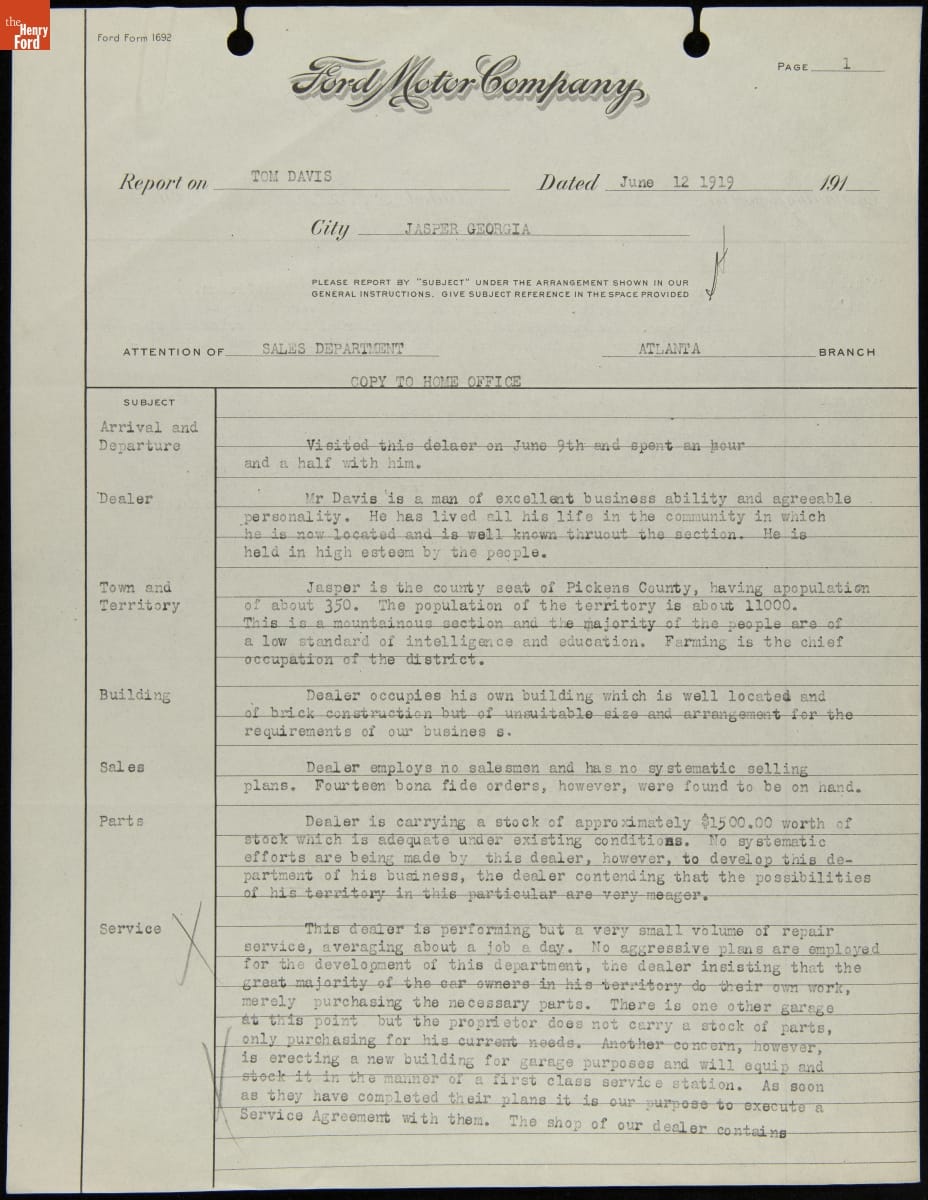
- Manager Report on Tom Davis, Jasper, Georgia, June 12, 1919 - Though it operated some direct-sales offices in major cities, Ford Motor Company sold most of its Model T cars through franchise agreements with independent dealers. Each franchisee received the right to sell Ford cars within a specific territory. Ford encouraged dealers by offering discounts and rebates to high sellers. But low-selling dealers risked losing their territories.
- June 12, 1919
- Collections - Artifact
Manager Report on Tom Davis, Jasper, Georgia, June 12, 1919
Though it operated some direct-sales offices in major cities, Ford Motor Company sold most of its Model T cars through franchise agreements with independent dealers. Each franchisee received the right to sell Ford cars within a specific territory. Ford encouraged dealers by offering discounts and rebates to high sellers. But low-selling dealers risked losing their territories.
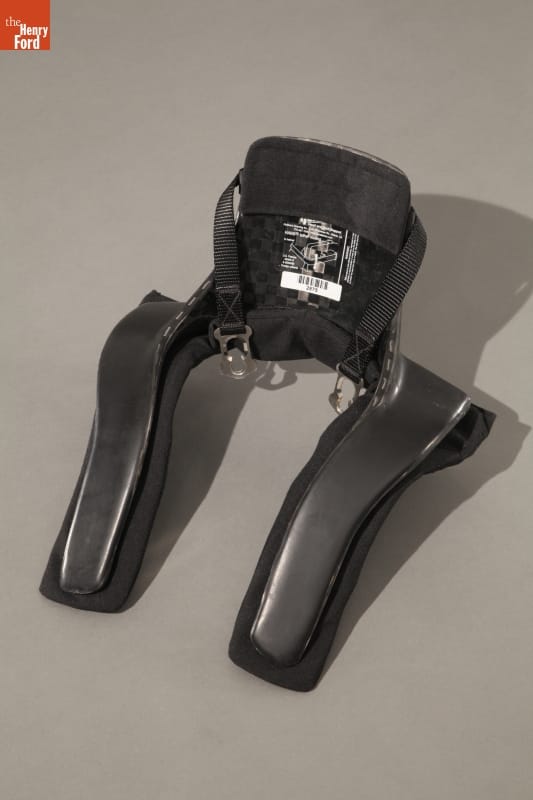
- Head and Neck Support Device from Lyn St. James' Race Car - The HANS (head and neck support) device is a compulsory safety item in many auto racing series. This tall, stiff collar -- secured with shoulder belts and tethers -- assures the driver's helmeted head moves in concert with the torso. Without this device, the head can whip violently during a crash causing severe injury or death. This HANS device belonged to Lyn St. James.
- 1991-2000
- Collections - Artifact
Head and Neck Support Device from Lyn St. James' Race Car
The HANS (head and neck support) device is a compulsory safety item in many auto racing series. This tall, stiff collar -- secured with shoulder belts and tethers -- assures the driver's helmeted head moves in concert with the torso. Without this device, the head can whip violently during a crash causing severe injury or death. This HANS device belonged to Lyn St. James.