
Search
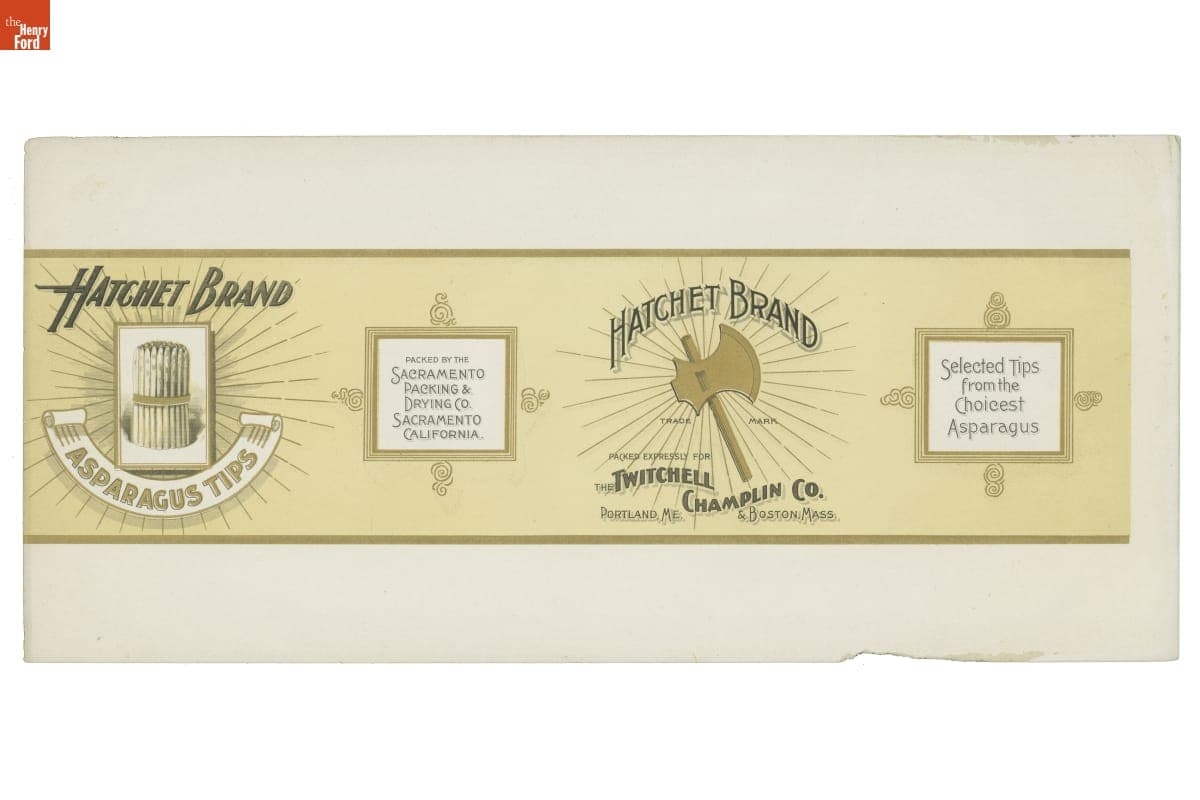
- Can Label, "Hatchet Brand Asparagus Tips," circa 1900 - Manufacturers of similar products sought ways to make their company's goods stand out on store shelves. Attractive labels, like this design for Hatchet Brand Asparagus Tips, helped catch the attention of potential customers, familiarize them with the brand image, and encourage them to purchase the company's product rather than that of a competitor.
- circa 1900
- Collections - Artifact
Can Label, "Hatchet Brand Asparagus Tips," circa 1900
Manufacturers of similar products sought ways to make their company's goods stand out on store shelves. Attractive labels, like this design for Hatchet Brand Asparagus Tips, helped catch the attention of potential customers, familiarize them with the brand image, and encourage them to purchase the company's product rather than that of a competitor.
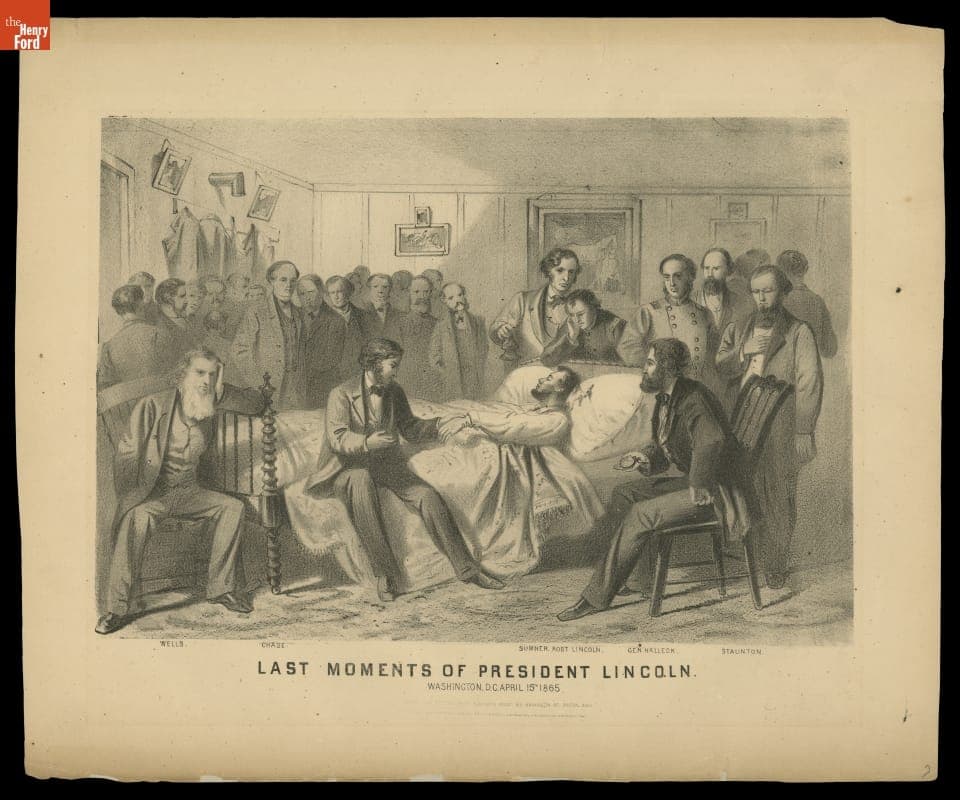
- Lithograph, "Last Moments of President LIncoln," 1865 - Abraham Lincoln's assassination in April 1865 plunged Americans into deep mourning. Before the existence of newspaper photos and television, lithographs helped people to understand the tragic event. This print depicts a room of the Petersen House, where the president died, across the street from Ford's Theatre in Washington, D.C. Not all of these people were actually in the room the morning Lincoln died.
- April 15, 1865
- Collections - Artifact
Lithograph, "Last Moments of President LIncoln," 1865
Abraham Lincoln's assassination in April 1865 plunged Americans into deep mourning. Before the existence of newspaper photos and television, lithographs helped people to understand the tragic event. This print depicts a room of the Petersen House, where the president died, across the street from Ford's Theatre in Washington, D.C. Not all of these people were actually in the room the morning Lincoln died.
- Advertising Poster, Cowdrey's Deviled Ham: "That's the Best," 1894 -
- 1894
- Collections - Artifact
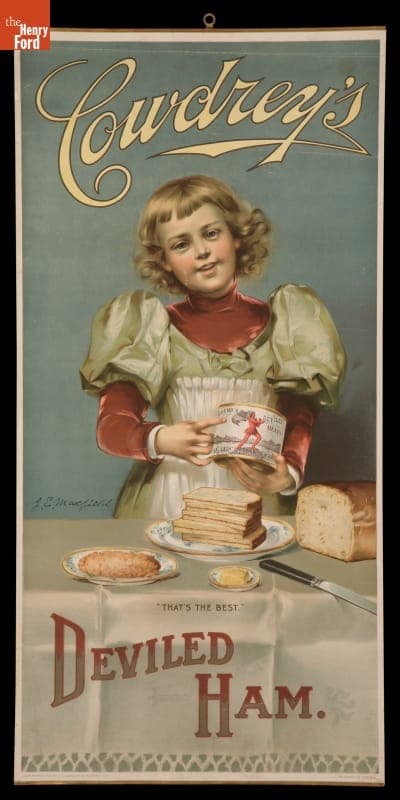
Advertising Poster, Cowdrey's Deviled Ham: "That's the Best," 1894
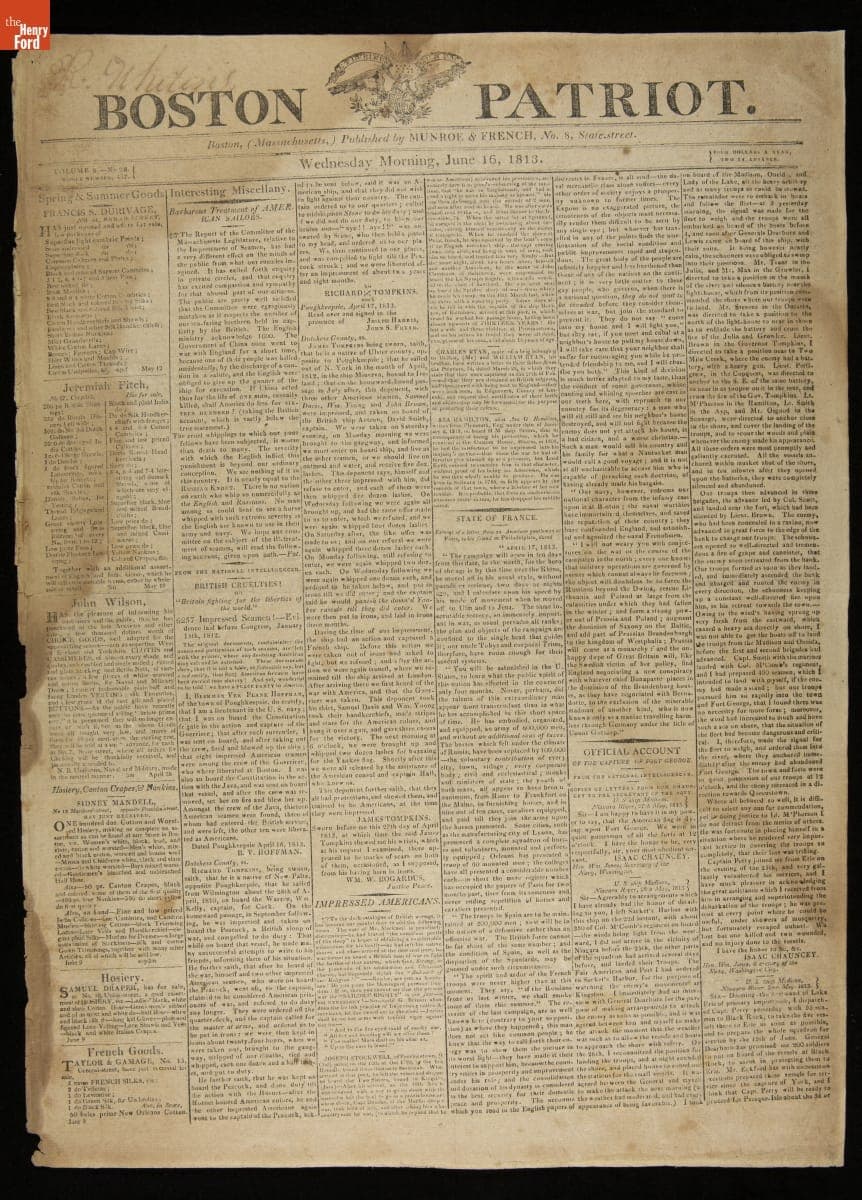
- Boston Patriot, Volume 9, No. 28, June 16, 1813 -
- June 16, 1813
- Collections - Artifact
Boston Patriot, Volume 9, No. 28, June 16, 1813
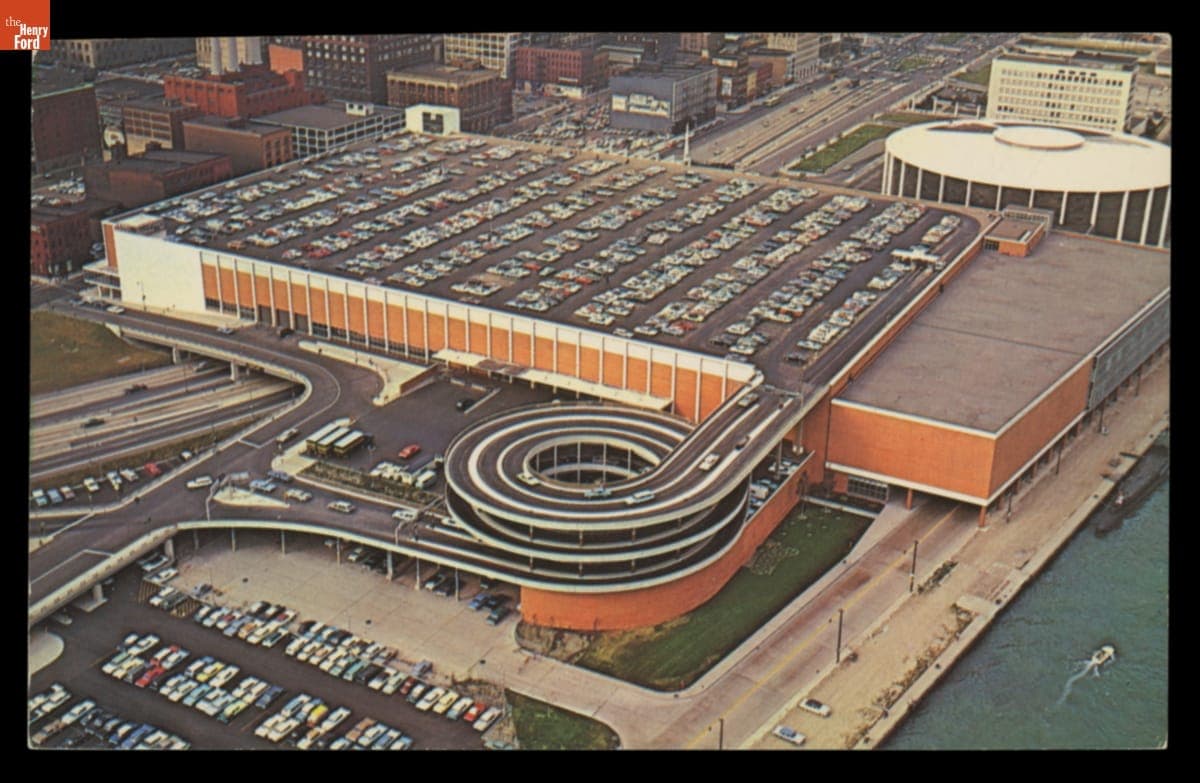
- Postcard, "Cobo Hall," circa 1960 - Cobo Hall opened in Detroit, Michigan, in 1960. Located on the Detroit River, the convention center and arena complex hosted meetings, concerts, sporting events, and other activities. Notably, it is the longtime home of the annual North American International Auto Show. The facility was renamed Huntington Place in 2021.
- circa 1960
- Collections - Artifact
Postcard, "Cobo Hall," circa 1960
Cobo Hall opened in Detroit, Michigan, in 1960. Located on the Detroit River, the convention center and arena complex hosted meetings, concerts, sporting events, and other activities. Notably, it is the longtime home of the annual North American International Auto Show. The facility was renamed Huntington Place in 2021.
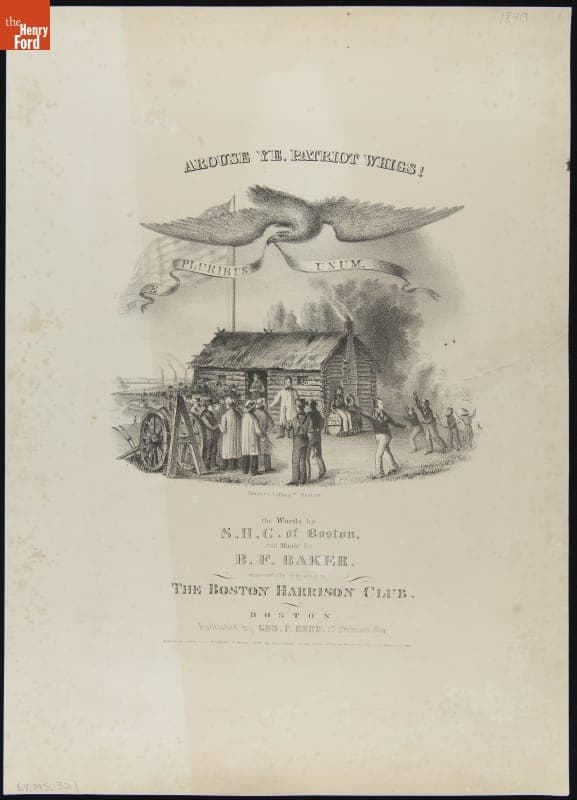
- Music Sheet Cover, "Arouse Ye, Patriot Whigs!," 1840 -
- 1840
- Collections - Artifact
Music Sheet Cover, "Arouse Ye, Patriot Whigs!," 1840
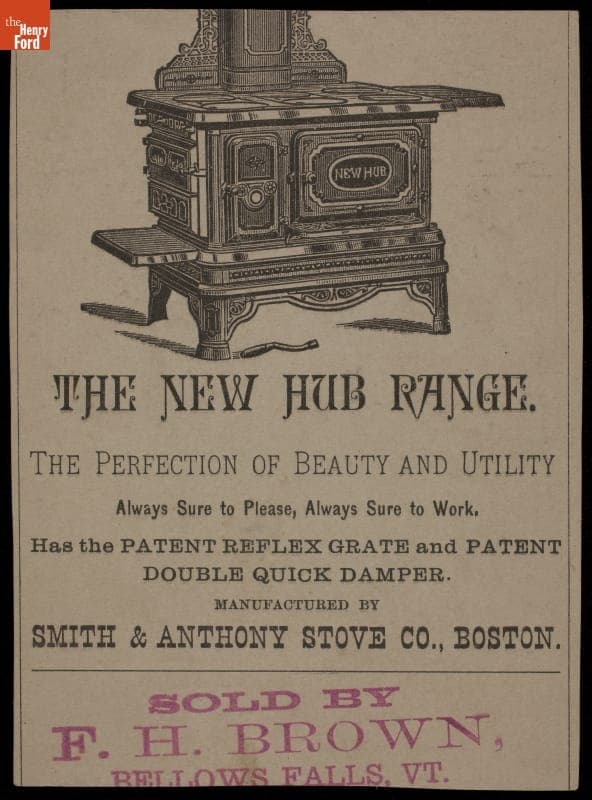
- Trade Card for the New Hub Range, Smith & Anthony Stove Co., 1870-1900 - In the last third of the nineteenth century, an unprecedented variety of consumer goods and services flooded the American market. Advertisers bombarded potential customers with trade cards. Americans enjoyed and saved the often illustrated little advertisements found in product packages or distributed by local merchants. Many survive as historical records of commercialism in the United States.
- 1870-1900
- Collections - Artifact
Trade Card for the New Hub Range, Smith & Anthony Stove Co., 1870-1900
In the last third of the nineteenth century, an unprecedented variety of consumer goods and services flooded the American market. Advertisers bombarded potential customers with trade cards. Americans enjoyed and saved the often illustrated little advertisements found in product packages or distributed by local merchants. Many survive as historical records of commercialism in the United States.
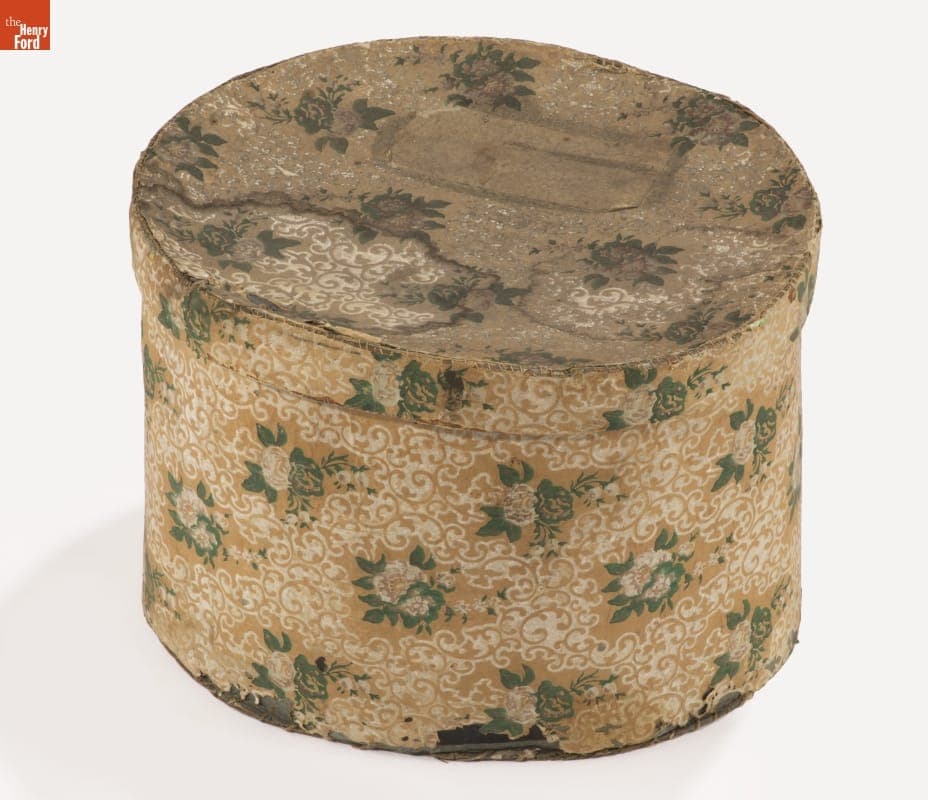
- Bandbox, 1825-1865 - In the early 1800s, Americans used bandboxes to store clothing, accessories, and other small items. Bandboxes were handy containers in the home, or when traveling by stage, boat, or rail. Manufacturers covered these inexpensive pasteboard or wooden boxes with colorful papers. Some bandboxes were covered with papers depicting animals, places or specific scenes. Others, such as this one, were covered with decorative wallpaper of the day.
- 1825-1865
- Collections - Artifact
Bandbox, 1825-1865
In the early 1800s, Americans used bandboxes to store clothing, accessories, and other small items. Bandboxes were handy containers in the home, or when traveling by stage, boat, or rail. Manufacturers covered these inexpensive pasteboard or wooden boxes with colorful papers. Some bandboxes were covered with papers depicting animals, places or specific scenes. Others, such as this one, were covered with decorative wallpaper of the day.
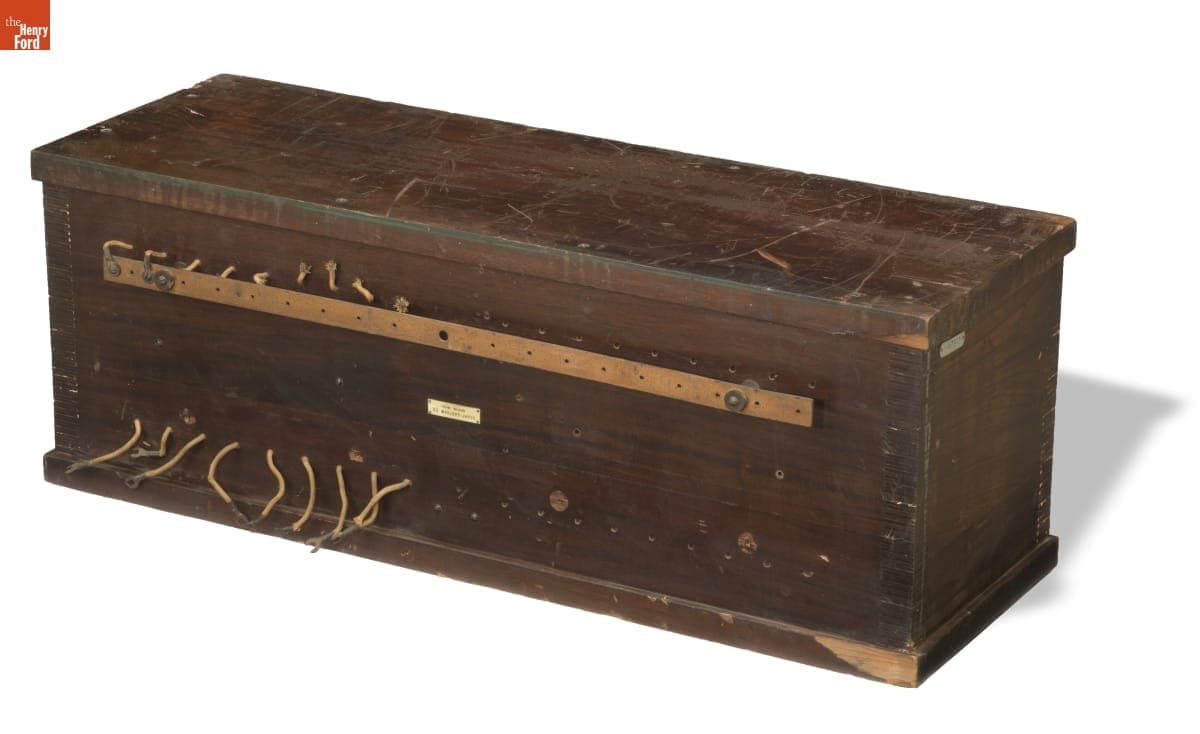
- Fixed Condenser, Used in the Hammond Radio Research Laboratory, circa 1911 - John Hays Hammond, Jr., was largely responsible for launching the field of radio control. In 1926, he built a medieval-inspired castle in Gloucester, Massachusetts. This site served as his home and research laboratory. With over 400 patents to his name, Hammond developed ideas for radio control, autopilot function, and targeted missile detonation. This device was used in Hammond's laboratory.
- circa 1911
- Collections - Artifact
Fixed Condenser, Used in the Hammond Radio Research Laboratory, circa 1911
John Hays Hammond, Jr., was largely responsible for launching the field of radio control. In 1926, he built a medieval-inspired castle in Gloucester, Massachusetts. This site served as his home and research laboratory. With over 400 patents to his name, Hammond developed ideas for radio control, autopilot function, and targeted missile detonation. This device was used in Hammond's laboratory.
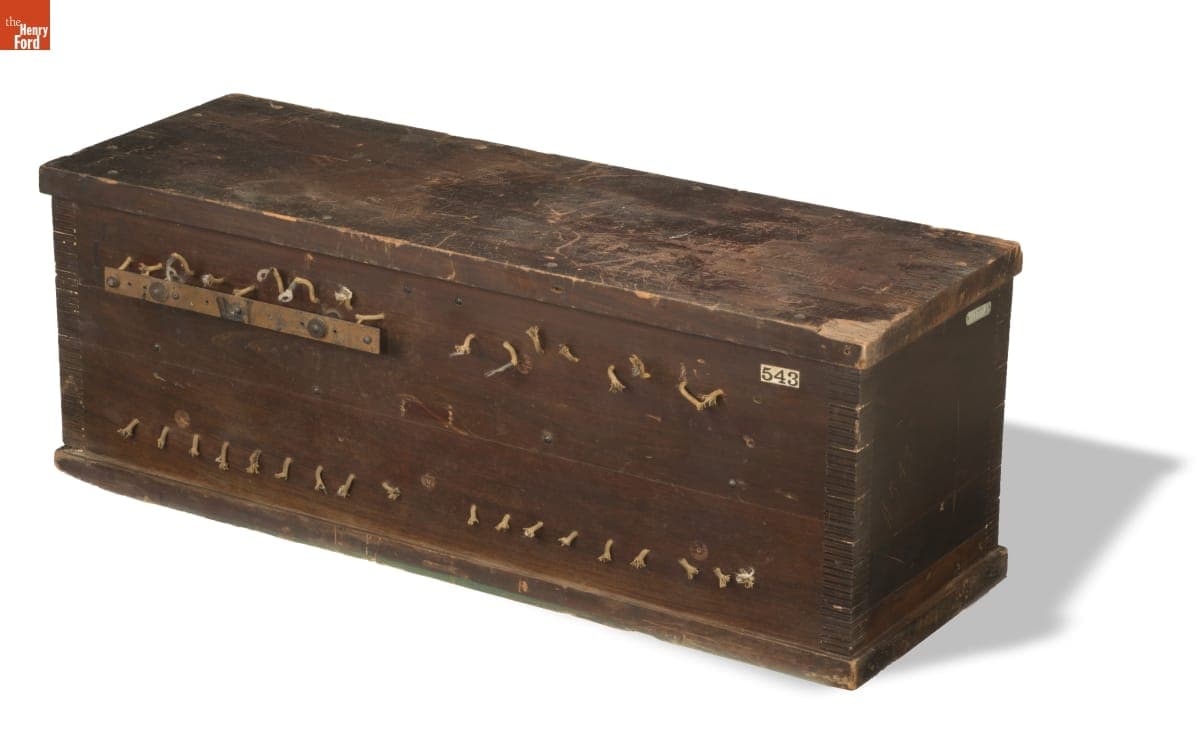
- Fixed Condenser, Used in the Hammond Radio Research Laboratory, circa 1911 - John Hays Hammond, Jr., was largely responsible for launching the field of radio control. In 1926, he built a medieval-inspired castle in Gloucester, Massachusetts. This site served as his home and research laboratory. With over 400 patents to his name, Hammond developed ideas for radio control, autopilot function, and targeted missile detonation. This device was used in Hammond's laboratory.
- circa 1911
- Collections - Artifact
Fixed Condenser, Used in the Hammond Radio Research Laboratory, circa 1911
John Hays Hammond, Jr., was largely responsible for launching the field of radio control. In 1926, he built a medieval-inspired castle in Gloucester, Massachusetts. This site served as his home and research laboratory. With over 400 patents to his name, Hammond developed ideas for radio control, autopilot function, and targeted missile detonation. This device was used in Hammond's laboratory.