
Search
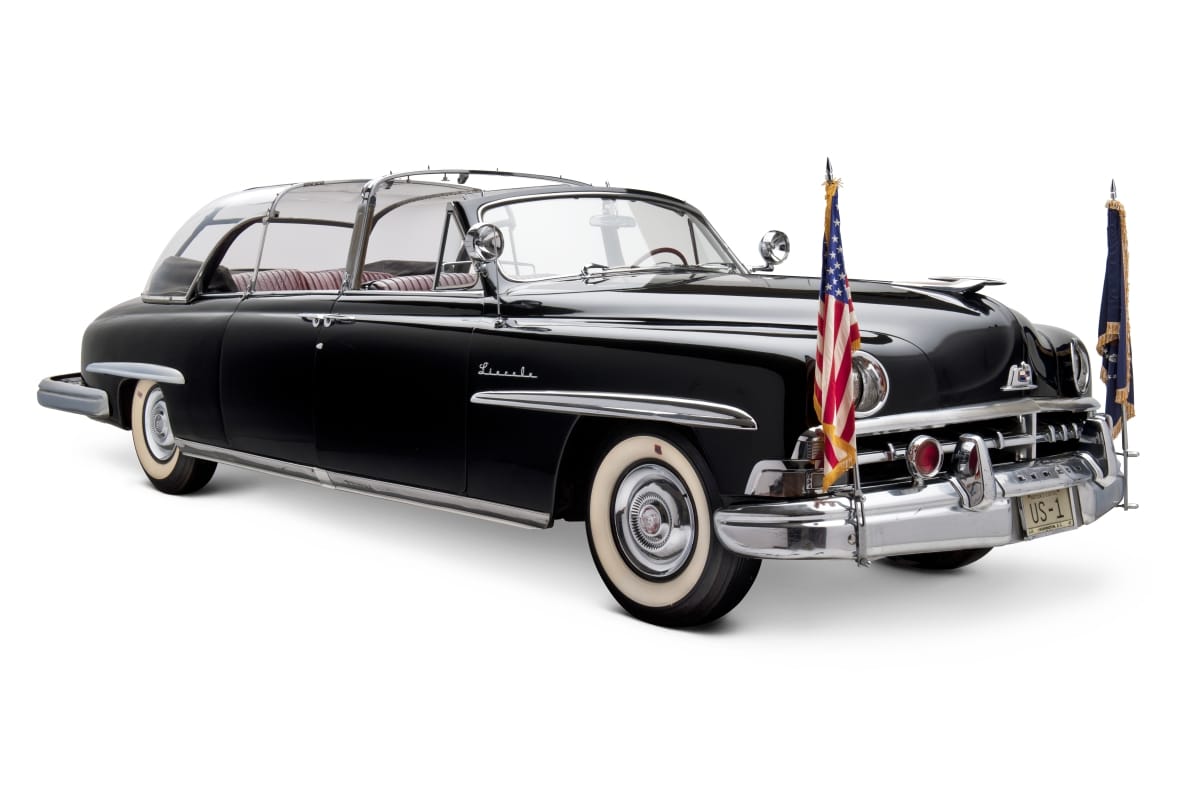
- 1950 Lincoln Presidential Limousine Used by Dwight D. Eisenhower - This massive convertible Lincoln was built for President Harry S Truman in 1950, but it is most associated with Truman's successor Dwight D. Eisenhower, who used the car from 1952 until 1960. Eisenhower added the distinctive plastic "bubble top." Presidents John F. Kennedy and Lyndon B. Johnson also used this car as a spare until its retirement in 1967.
- 1950-1967
- Collections - Artifact
1950 Lincoln Presidential Limousine Used by Dwight D. Eisenhower
This massive convertible Lincoln was built for President Harry S Truman in 1950, but it is most associated with Truman's successor Dwight D. Eisenhower, who used the car from 1952 until 1960. Eisenhower added the distinctive plastic "bubble top." Presidents John F. Kennedy and Lyndon B. Johnson also used this car as a spare until its retirement in 1967.
- Wedding Portrait, circa 1900 -
- circa 1900
- Collections - Artifact
Wedding Portrait, circa 1900
- Wedding Portrait, Bride Holding Bouquet, 1897-1902 -
- circa 1899
- Collections - Artifact
Wedding Portrait, Bride Holding Bouquet, 1897-1902
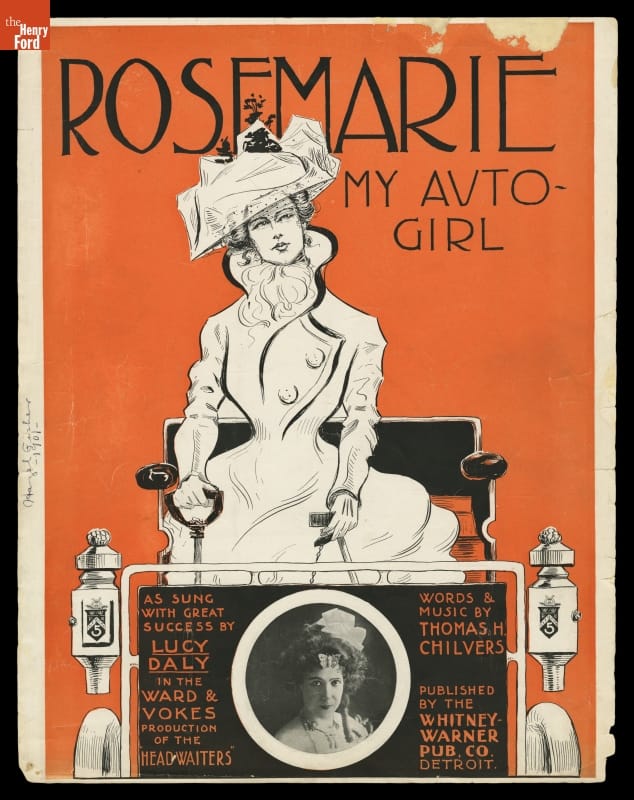
- Music Sheet, "Rosemarie, My Auto Girl," 1901 - In this comic song from 1901, a fearless young woman enjoys driving fast in her automobile. Women drivers were uncommon before the mid-1910s.
- 1901
- Collections - Artifact
Music Sheet, "Rosemarie, My Auto Girl," 1901
In this comic song from 1901, a fearless young woman enjoys driving fast in her automobile. Women drivers were uncommon before the mid-1910s.
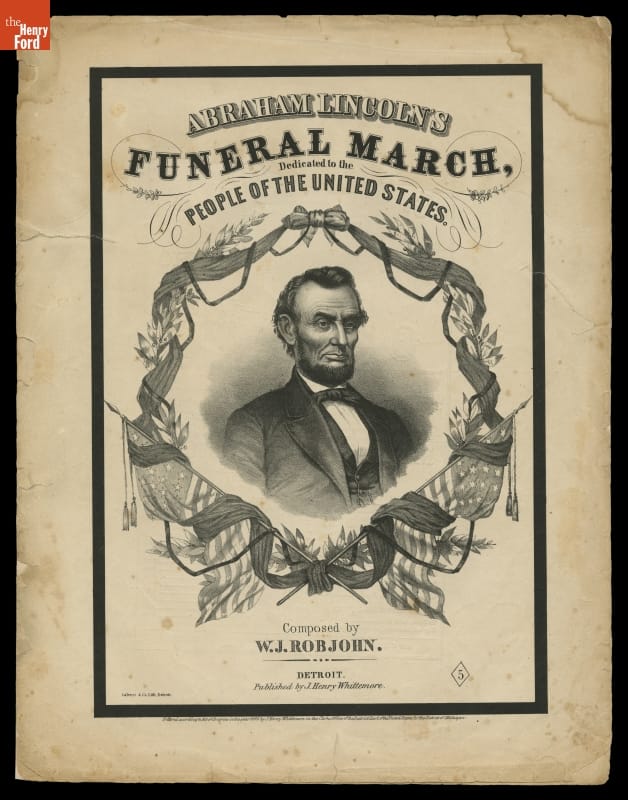
- Music Sheet, "Abraham Lincoln's Funeral March," 1865 - Abraham Lincoln's assassination on April 15, 1865 plunged Americans into deep mourning. This sheet music's somber composition and illustrated cover helped people to understand the tragic event. Printed in Detroit, it may have been used during that city's public mourning ceremony held April 25, 1865. The artist added a border depicting black cloth-draped U.S. flags and laurel leaves in the shape of a wreath around Lincoln's head.
- 1865
- Collections - Artifact
Music Sheet, "Abraham Lincoln's Funeral March," 1865
Abraham Lincoln's assassination on April 15, 1865 plunged Americans into deep mourning. This sheet music's somber composition and illustrated cover helped people to understand the tragic event. Printed in Detroit, it may have been used during that city's public mourning ceremony held April 25, 1865. The artist added a border depicting black cloth-draped U.S. flags and laurel leaves in the shape of a wreath around Lincoln's head.
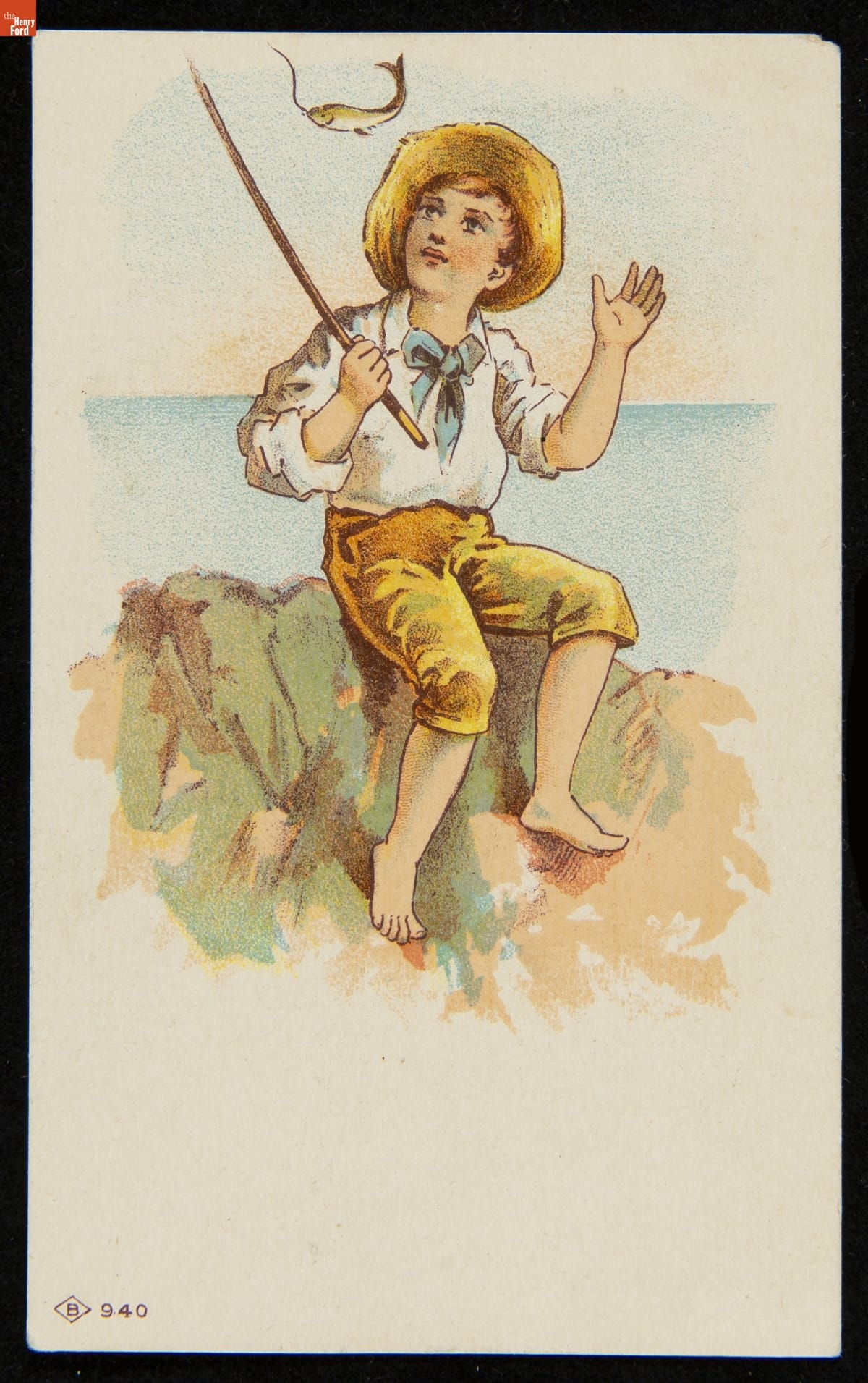
- Trade Card for Singer Sewing Machines, circa 1891 - As color printing gained momentum in the late 19th century, trade cards became a major means of advertising goods and services. The Singer Sewing Machine Company -- founded when Isaac Singer introduced the first practical sewing machine for home use in 1851 -- embraced this method of advertising. The Singer Company produced colorful trade cards, like this one, which informed customers about popular sewing machine.
- circa 1891
- Collections - Artifact
Trade Card for Singer Sewing Machines, circa 1891
As color printing gained momentum in the late 19th century, trade cards became a major means of advertising goods and services. The Singer Sewing Machine Company -- founded when Isaac Singer introduced the first practical sewing machine for home use in 1851 -- embraced this method of advertising. The Singer Company produced colorful trade cards, like this one, which informed customers about popular sewing machine.
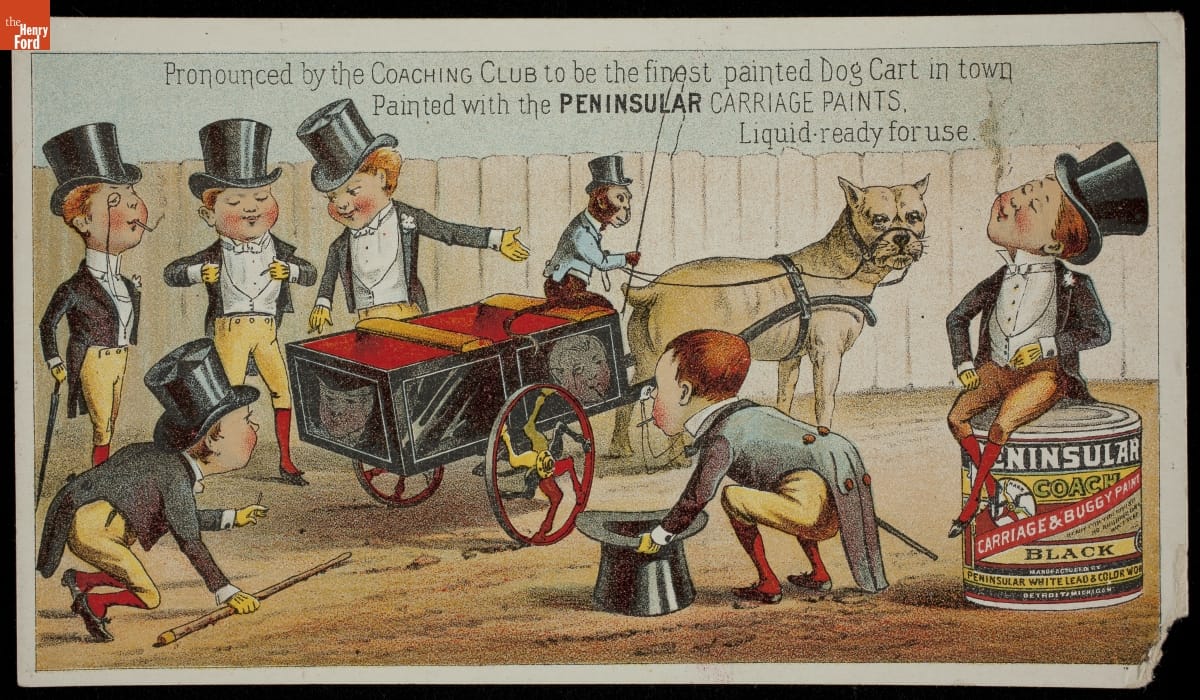
- Trade Card for Carriage & Buggy Paints, Peninsular White Lead & Color Works, 1880-1900 - In the last third of the nineteenth century, an unprecedented variety of consumer goods and services flooded the American market. Advertisers, armed with new methods of color printing, bombarded potential customers with trade cards. Americans enjoyed and often saved the vibrant little advertisements found in product packages or distributed by local merchants. Many survive as historical records of commercialism in the United States.
- 1880-1900
- Collections - Artifact
Trade Card for Carriage & Buggy Paints, Peninsular White Lead & Color Works, 1880-1900
In the last third of the nineteenth century, an unprecedented variety of consumer goods and services flooded the American market. Advertisers, armed with new methods of color printing, bombarded potential customers with trade cards. Americans enjoyed and often saved the vibrant little advertisements found in product packages or distributed by local merchants. Many survive as historical records of commercialism in the United States.
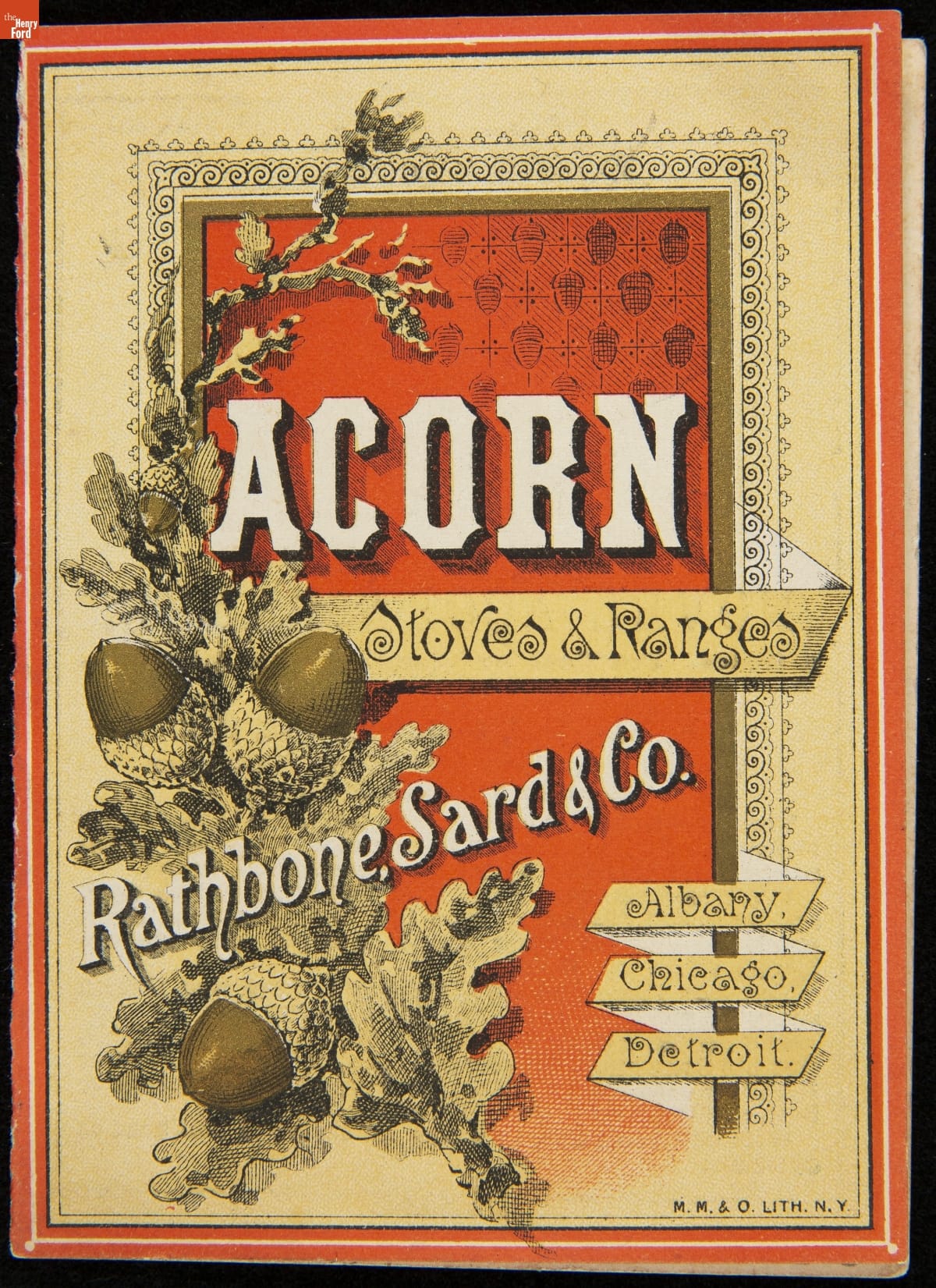
- Trade Card for Live Acorn Stoves and Ranges, Rathbone, Sard & Co., 1875-1885 - In the last third of the nineteenth century, an unprecedented variety of consumer goods and services flooded the American market. Advertisers, armed with new methods of color printing, bombarded potential customers with trade cards. Americans enjoyed and often saved the vibrant little advertisements found in product packages or distributed by local merchants. Many survive as historical records of commercialism in the United States.
- 1875-1885
- Collections - Artifact
Trade Card for Live Acorn Stoves and Ranges, Rathbone, Sard & Co., 1875-1885
In the last third of the nineteenth century, an unprecedented variety of consumer goods and services flooded the American market. Advertisers, armed with new methods of color printing, bombarded potential customers with trade cards. Americans enjoyed and often saved the vibrant little advertisements found in product packages or distributed by local merchants. Many survive as historical records of commercialism in the United States.
- "Guide Map of Detroit," 1878 -
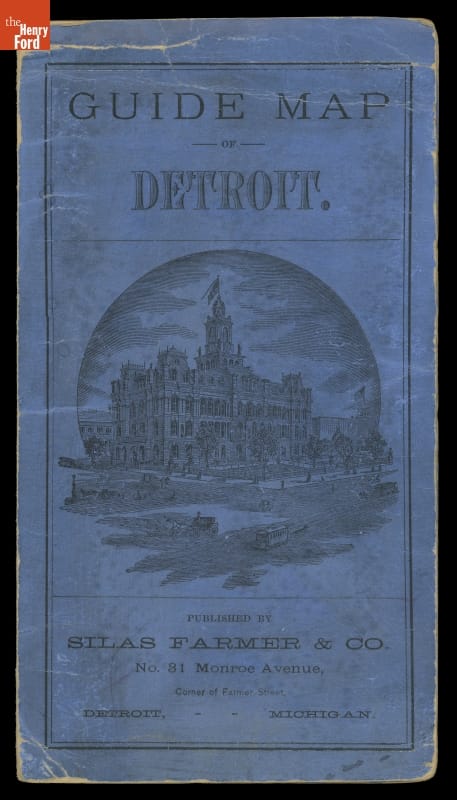
- 1878
- Collections - Artifact
"Guide Map of Detroit," 1878
- "Exciting Northland," circa 1960 - Northland Center, completed in 1954 and the world's largest shopping center at the time, was the first of four planned malls to encircle Detroit's inner ring of suburbs. Northland Center both responded to and encouraged Detroit's growing suburban population.
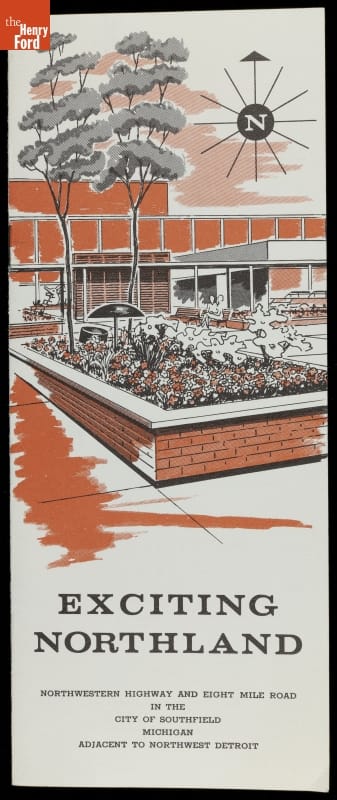
- circa 1960
- Collections - Artifact
"Exciting Northland," circa 1960
Northland Center, completed in 1954 and the world's largest shopping center at the time, was the first of four planned malls to encircle Detroit's inner ring of suburbs. Northland Center both responded to and encouraged Detroit's growing suburban population.