
Search
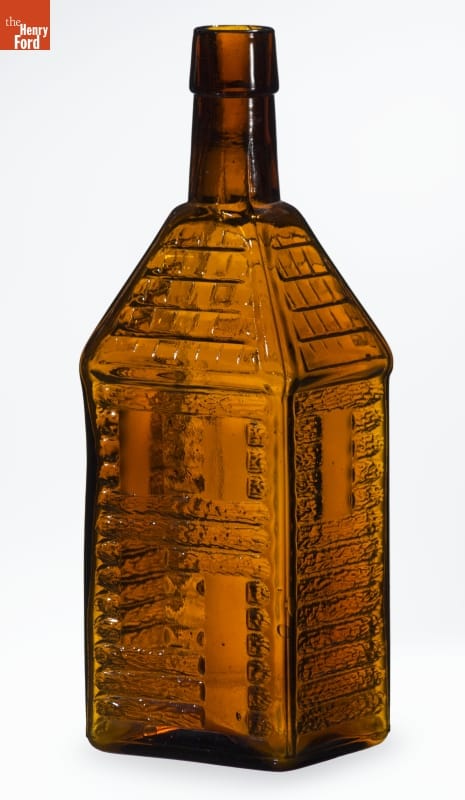
- Holtzerman's Patent Stomach Bitters, 1862-1890 - Bitters is an herb-infused alcoholic mixture. Named for its bitter taste, the liquid was originally developed as a medicinal tonic to help soothe stomach complaints or other digestive disorders. During the late 19th and early 20th centuries, patent-medicine dealers bottled and sold the elixir. Americans purchased bitters in simple mold-blown bottles or ones shaped like drums, barrels, or cabins.
- 1862-1890
- Collections - Artifact
Holtzerman's Patent Stomach Bitters, 1862-1890
Bitters is an herb-infused alcoholic mixture. Named for its bitter taste, the liquid was originally developed as a medicinal tonic to help soothe stomach complaints or other digestive disorders. During the late 19th and early 20th centuries, patent-medicine dealers bottled and sold the elixir. Americans purchased bitters in simple mold-blown bottles or ones shaped like drums, barrels, or cabins.
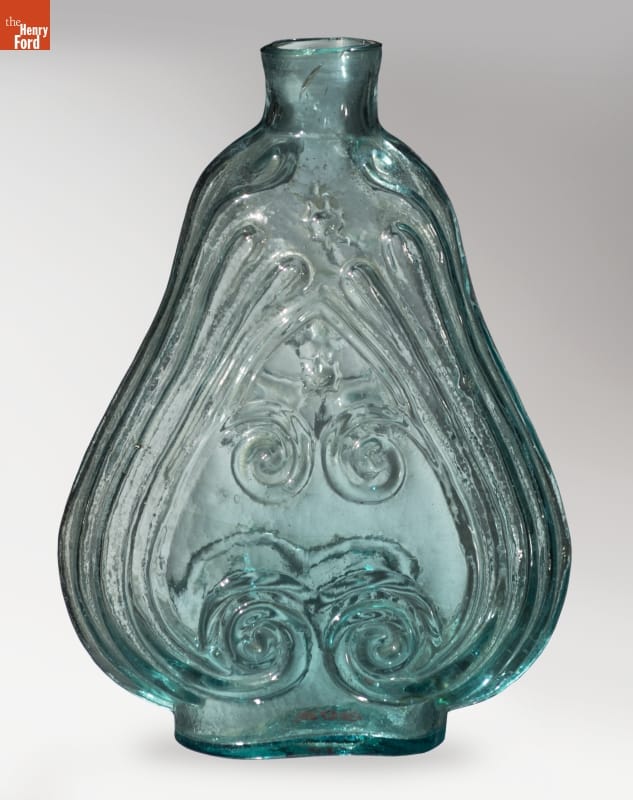
- Flask, 1840-1855 - Glass factories in America began producing inexpensive, mold-formed flasks in the early 1800s. These figured flasks appealed to America's common man. Many of these flasks contained symbols of national pride or political or cultural affiliation. Embellishments on other flasks, like this one, were purely decorative.
- 1840-1855
- Collections - Artifact
Flask, 1840-1855
Glass factories in America began producing inexpensive, mold-formed flasks in the early 1800s. These figured flasks appealed to America's common man. Many of these flasks contained symbols of national pride or political or cultural affiliation. Embellishments on other flasks, like this one, were purely decorative.
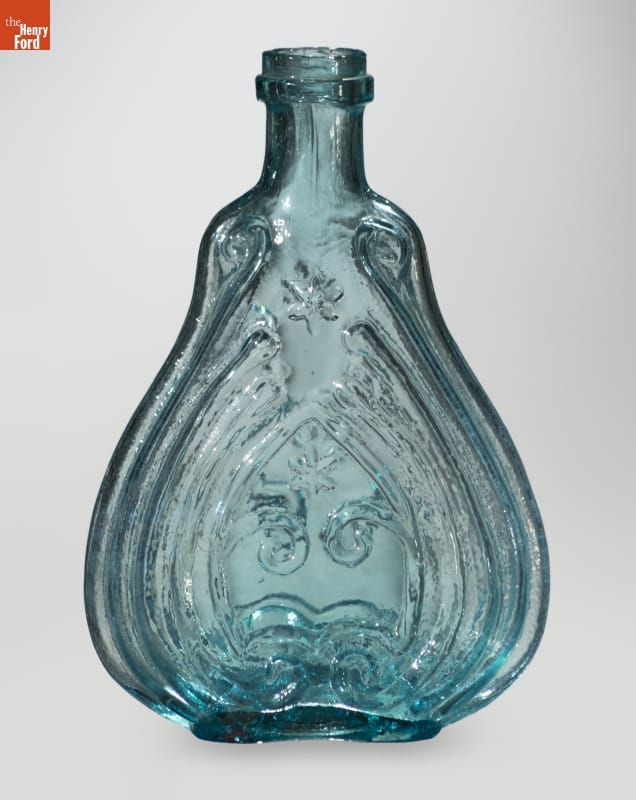
- Flask, 1840-1855 - Glass factories in America began producing inexpensive, mold-formed flasks in the early 1800s. These figured flasks appealed to America's common man. Many of these flasks contained symbols of national pride or political or cultural affiliation. Embellishments on other flasks, like this one, were purely decorative.
- 1840-1855
- Collections - Artifact
Flask, 1840-1855
Glass factories in America began producing inexpensive, mold-formed flasks in the early 1800s. These figured flasks appealed to America's common man. Many of these flasks contained symbols of national pride or political or cultural affiliation. Embellishments on other flasks, like this one, were purely decorative.
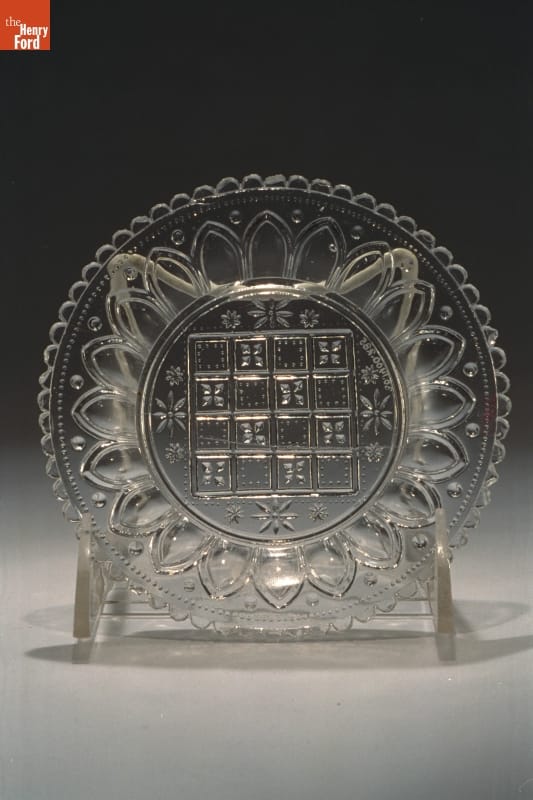
- Plate, 1840-1860 - Nineteenth-century American glassmakers experimented with new methods to create products for a growing consumer market. In the 1820s, pressing glass into metal molds by machine was perfected, and by the mid-1800s, manufacturers were creating a variety of inexpensive pressed glass housewares. America's middle-class consumers could now decorate their homes with attractive glass bowls, creamers, dishes, plates, vases, and other tableware.
- 1840-1860
- Collections - Artifact
Plate, 1840-1860
Nineteenth-century American glassmakers experimented with new methods to create products for a growing consumer market. In the 1820s, pressing glass into metal molds by machine was perfected, and by the mid-1800s, manufacturers were creating a variety of inexpensive pressed glass housewares. America's middle-class consumers could now decorate their homes with attractive glass bowls, creamers, dishes, plates, vases, and other tableware.
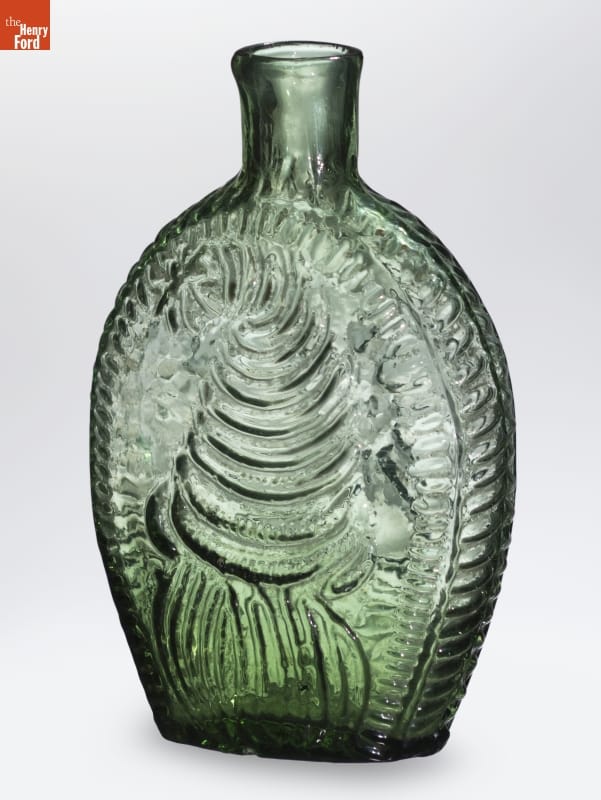
- Flask, 1825-1835 - Glass factories in America began producing inexpensive, mold-formed flasks in the early 1800s. These figured flasks, often decorated with symbols of national pride or political or cultural affiliation, appealed to America's common man. The inverted cornucopia found on the front of this flask alludes to America's bounty. The other side has a decorative star-shape design.
- 1825-1835
- Collections - Artifact
Flask, 1825-1835
Glass factories in America began producing inexpensive, mold-formed flasks in the early 1800s. These figured flasks, often decorated with symbols of national pride or political or cultural affiliation, appealed to America's common man. The inverted cornucopia found on the front of this flask alludes to America's bounty. The other side has a decorative star-shape design.
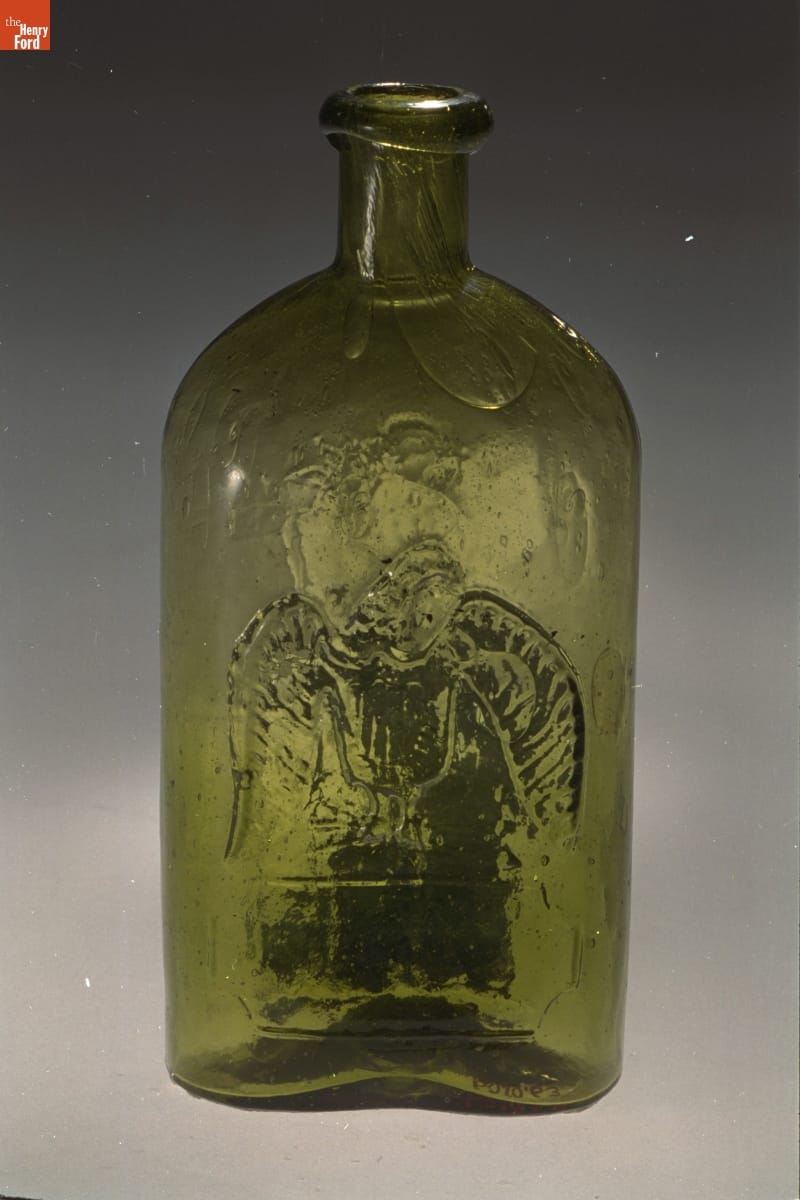
- Flask, 1859-1875 - Glass factories in America began producing inexpensive, mold-formed flasks in the early 1800s. These figured flasks, often decorated with symbols of national pride or political or cultural affiliation, appealed to America's common man. This flask contains images of an eagle and a prospector. This "prospector" however appears to be more interested in drinking from his bottle than in striking it rich.
- 1859-1875
- Collections - Artifact
Flask, 1859-1875
Glass factories in America began producing inexpensive, mold-formed flasks in the early 1800s. These figured flasks, often decorated with symbols of national pride or political or cultural affiliation, appealed to America's common man. This flask contains images of an eagle and a prospector. This "prospector" however appears to be more interested in drinking from his bottle than in striking it rich.
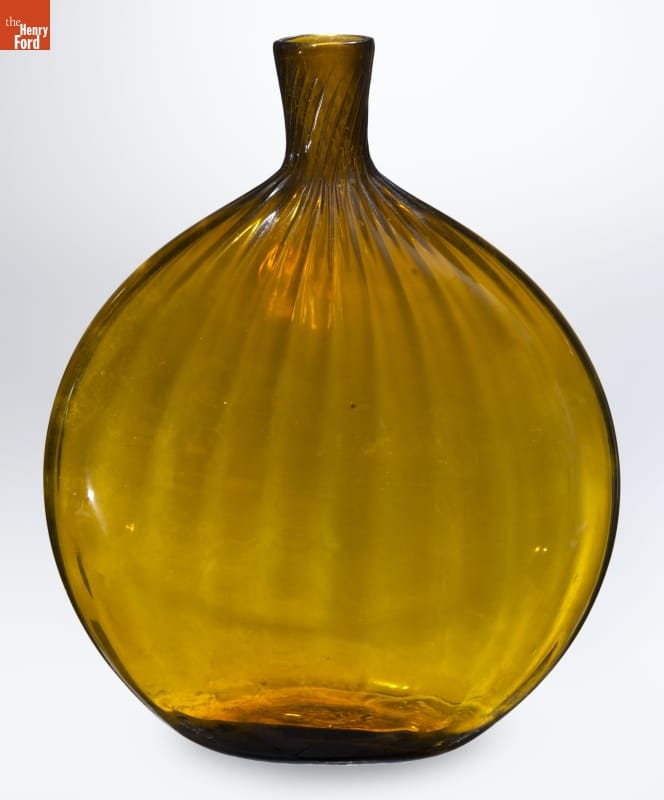
- Flask, 1800-1840 - American glass factories produced flasks, like this one, from the late 1700s well into the mid-1800s. The pint-sized flask could hold water but more likely contained alcoholic beverages. Its textured decorative exterior -- formed when the hot glass was dipped into a pattern mold before it was blown -- made the flask easier to grasp. And its flattened shape fit nicely into pockets providing ready access to the liquid refreshment.
- 1800-1840
- Collections - Artifact
Flask, 1800-1840
American glass factories produced flasks, like this one, from the late 1700s well into the mid-1800s. The pint-sized flask could hold water but more likely contained alcoholic beverages. Its textured decorative exterior -- formed when the hot glass was dipped into a pattern mold before it was blown -- made the flask easier to grasp. And its flattened shape fit nicely into pockets providing ready access to the liquid refreshment.
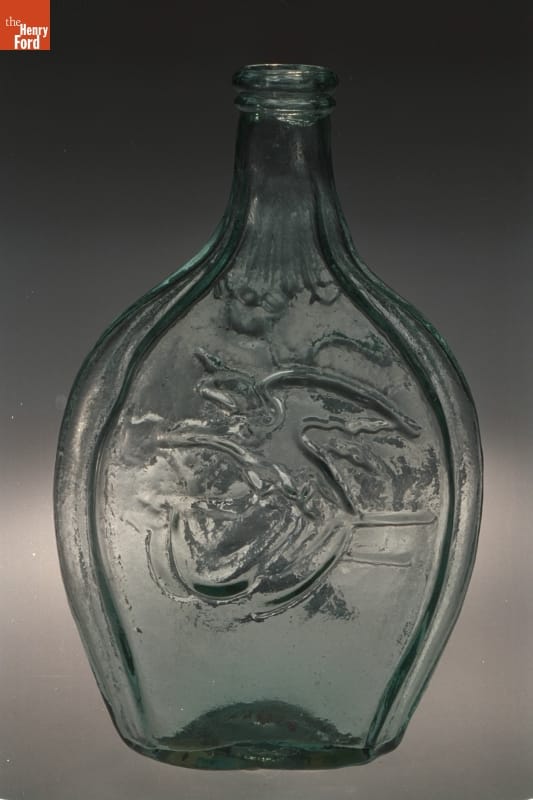
- Flask, 1840-1855 - Glass factories in America began producing inexpensive, mold-formed flasks in the early 1800s. These figured flasks, often decorated with symbols of national pride or political or cultural affiliation, appealed to America's common man. Many flasks, like this one, contain images of an eagle -- a traditional symbol for America.
- 1840-1855
- Collections - Artifact
Flask, 1840-1855
Glass factories in America began producing inexpensive, mold-formed flasks in the early 1800s. These figured flasks, often decorated with symbols of national pride or political or cultural affiliation, appealed to America's common man. Many flasks, like this one, contain images of an eagle -- a traditional symbol for America.
- Bottle, 1815-1835 -
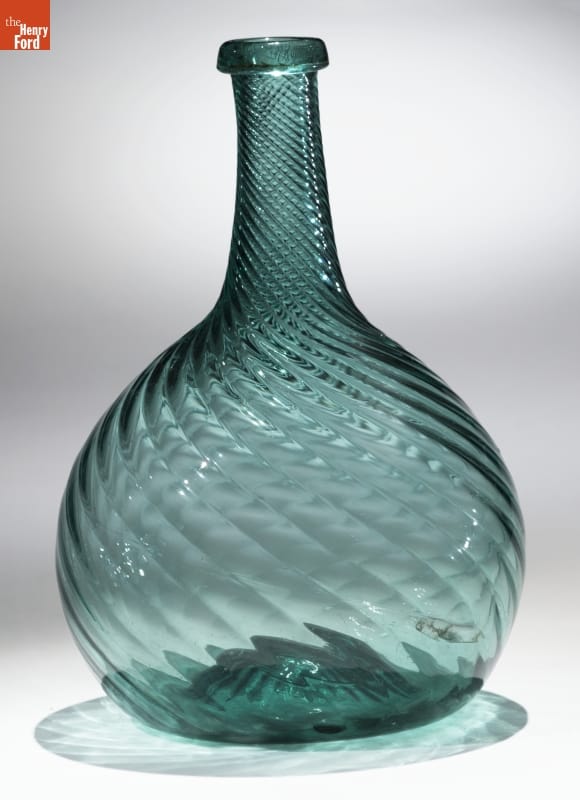
- 1815-1835
- Collections - Artifact
Bottle, 1815-1835
- Bottle, 1815-1835 -
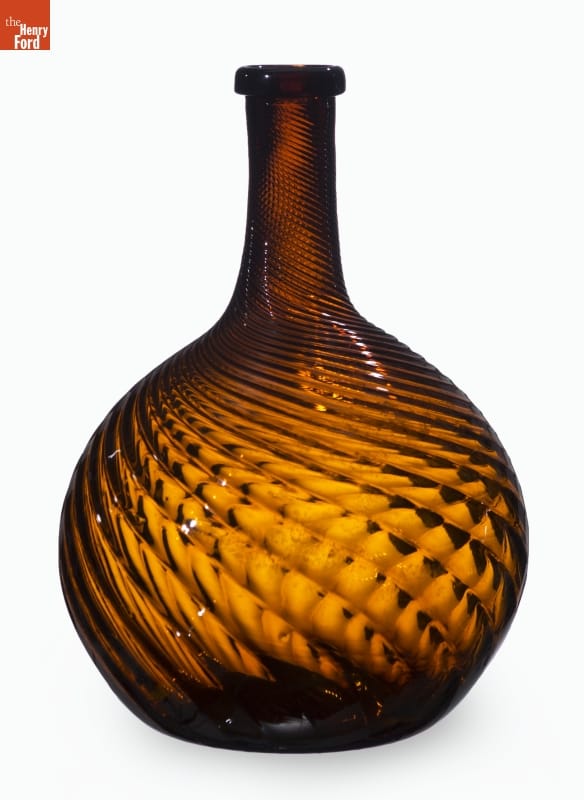
- 1815-1835
- Collections - Artifact
Bottle, 1815-1835