
Search
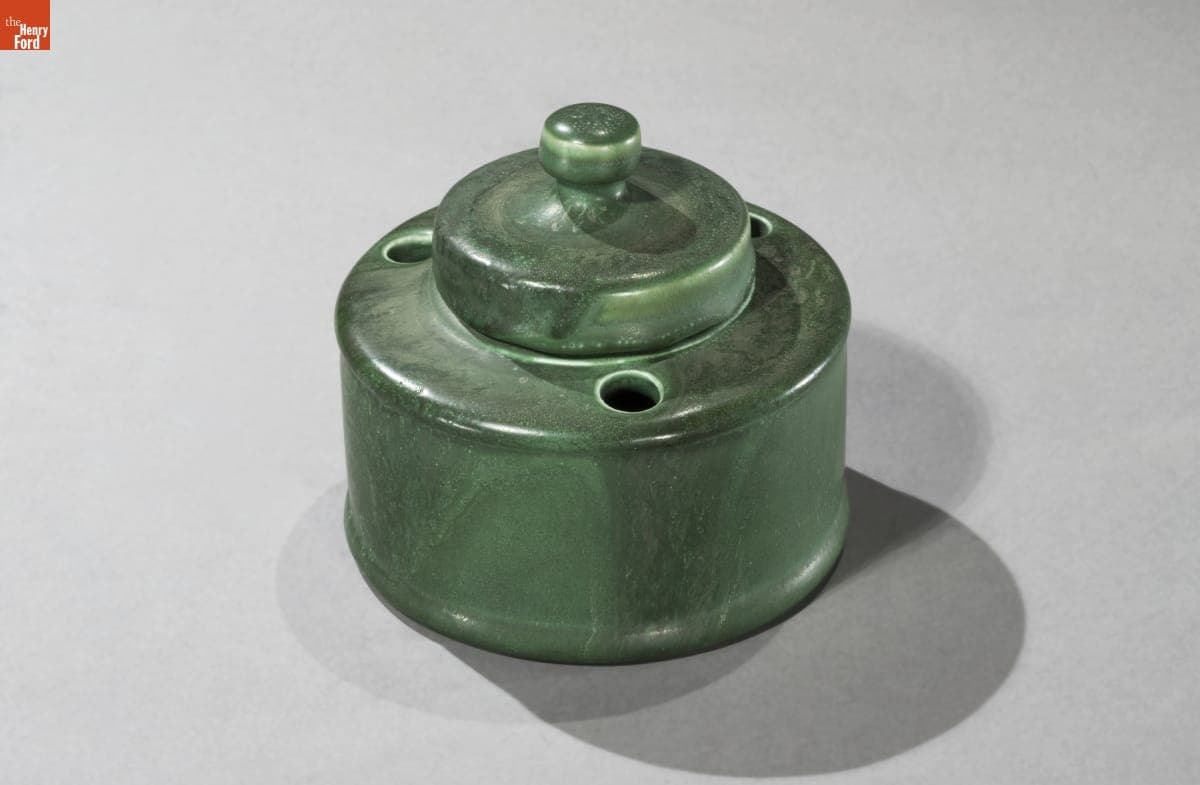
- Inkwell, 1904-1917 - Cadman Robertson joined Hampshire Pottery in 1904 and began developing decorative household items covered with an attractive thick brown, red, blue, or green glaze. The Keene, New Hampshire, company continued to produce similar wares for a few years after Robertson's sudden death in 1914. The company was sold in 1917 and focused on making commercial China for restaurants and hotels. The factory closed in 1923.
- 1904-1917
- Collections - Artifact
Inkwell, 1904-1917
Cadman Robertson joined Hampshire Pottery in 1904 and began developing decorative household items covered with an attractive thick brown, red, blue, or green glaze. The Keene, New Hampshire, company continued to produce similar wares for a few years after Robertson's sudden death in 1914. The company was sold in 1917 and focused on making commercial China for restaurants and hotels. The factory closed in 1923.
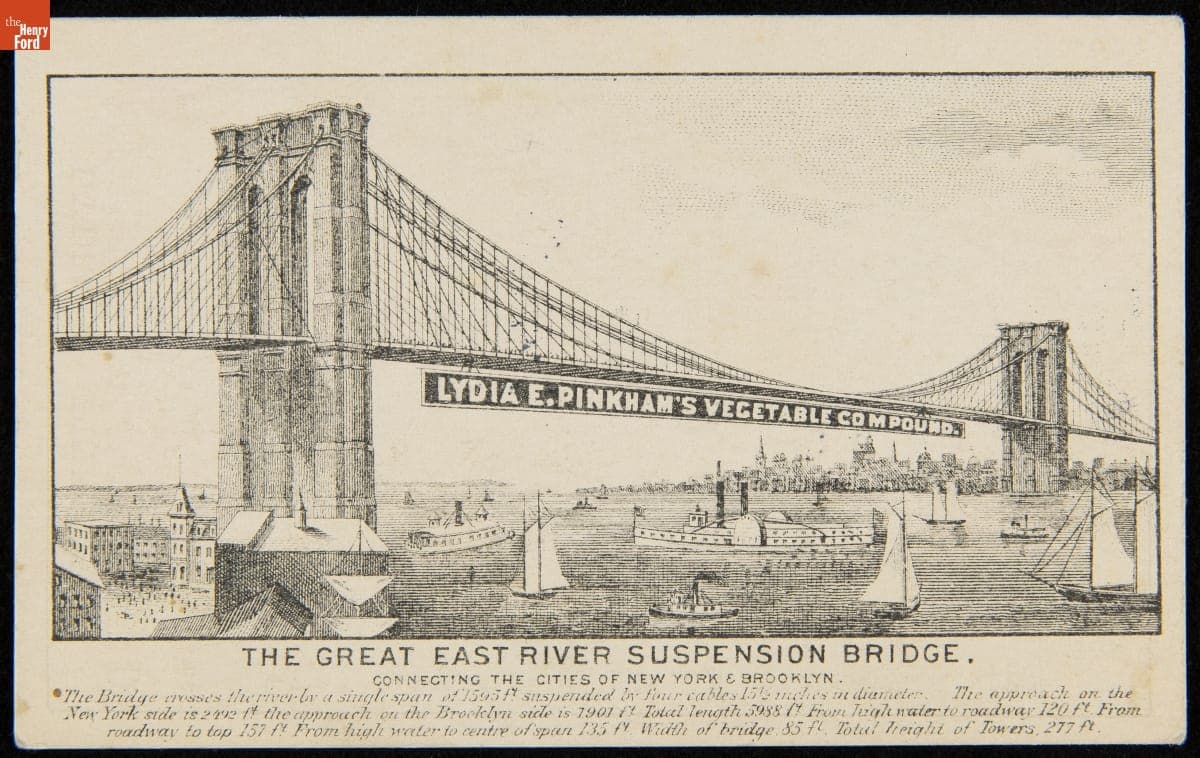
- Trade Card for Lydia E. Pinkham's Vegetable Compound, 1885-1900 - In 1873, Lydia E. Pinkham created "Pinkham's Vegetable Compound," a mixture of roots, herbs, and alcohol that she claimed would treat a variety of "female complaints." A few years later, Pinkham established a patent medicine company and began marketing and selling her product. Pinkham publicized the herbal remedy through pamphlets, magazine and newspaper advertisements, and small trade cards like this one.
- 1883-1900
- Collections - Artifact
Trade Card for Lydia E. Pinkham's Vegetable Compound, 1885-1900
In 1873, Lydia E. Pinkham created "Pinkham's Vegetable Compound," a mixture of roots, herbs, and alcohol that she claimed would treat a variety of "female complaints." A few years later, Pinkham established a patent medicine company and began marketing and selling her product. Pinkham publicized the herbal remedy through pamphlets, magazine and newspaper advertisements, and small trade cards like this one.
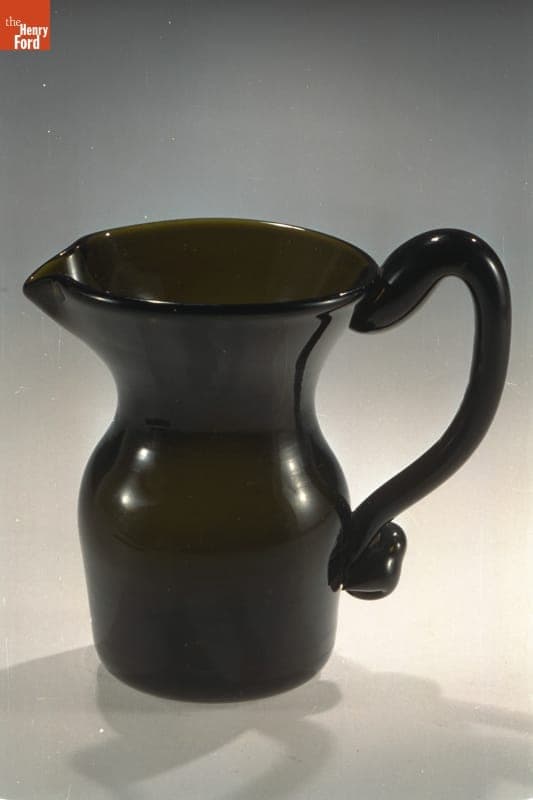
- Creamer, 1815-1825 - American glass factories made a variety of glass products for the early-nineteenth-century consumer. Glassblowers turned out bottles, flasks, tableware and other household items. Earlier products were affordable only to the well-to-do. But by the second quarter of the 19th century, a growing number of manufacturers made reasonably priced blown-glass items available to the expanding middle class.
- 1815-1825
- Collections - Artifact
Creamer, 1815-1825
American glass factories made a variety of glass products for the early-nineteenth-century consumer. Glassblowers turned out bottles, flasks, tableware and other household items. Earlier products were affordable only to the well-to-do. But by the second quarter of the 19th century, a growing number of manufacturers made reasonably priced blown-glass items available to the expanding middle class.
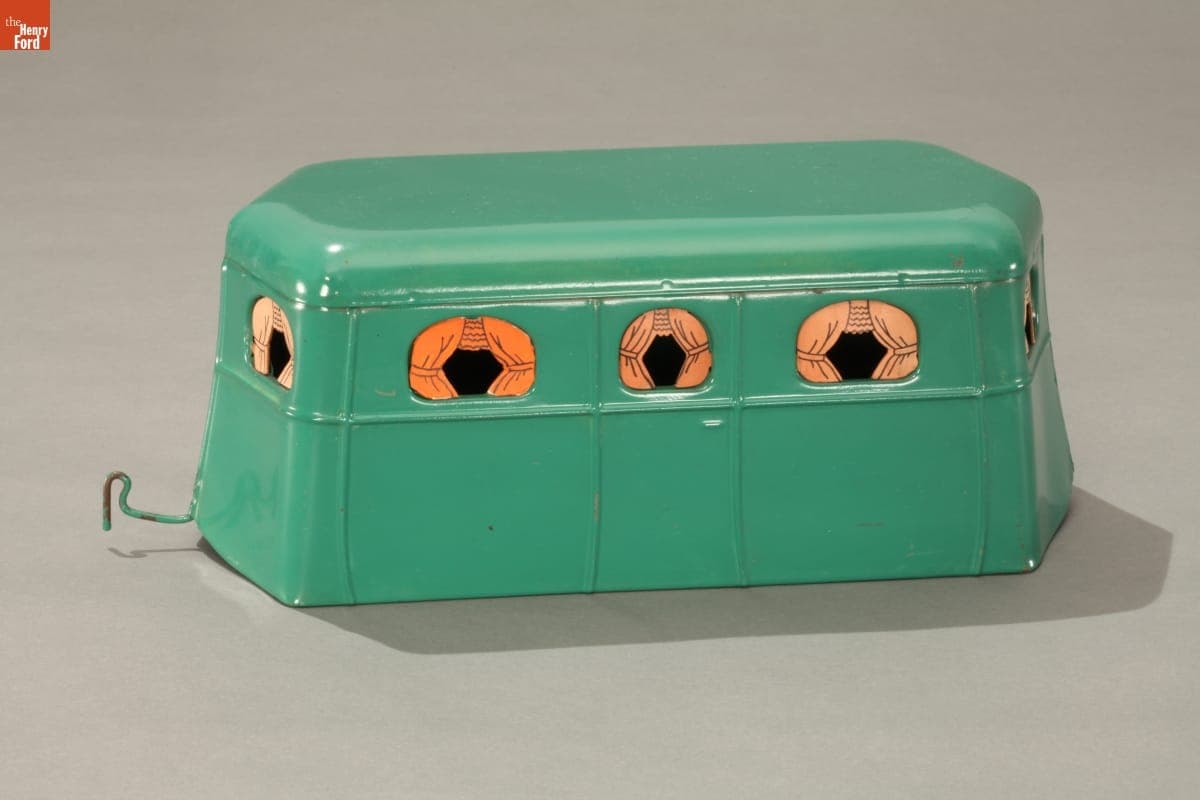
- Toy Trailer, 1935-1941 - During the Great Depression, camping trailers became a nationwide sensation. They promised family togetherness in a stylish, fully equipped unit that could be conveniently detached from the car. This toy trailer's miniature paper curtains represent the home comforts -- such as awnings, storage space, and compact kitchens -- and privacy that life-size units brought to road trips.
- 1935-1941
- Collections - Artifact
Toy Trailer, 1935-1941
During the Great Depression, camping trailers became a nationwide sensation. They promised family togetherness in a stylish, fully equipped unit that could be conveniently detached from the car. This toy trailer's miniature paper curtains represent the home comforts -- such as awnings, storage space, and compact kitchens -- and privacy that life-size units brought to road trips.
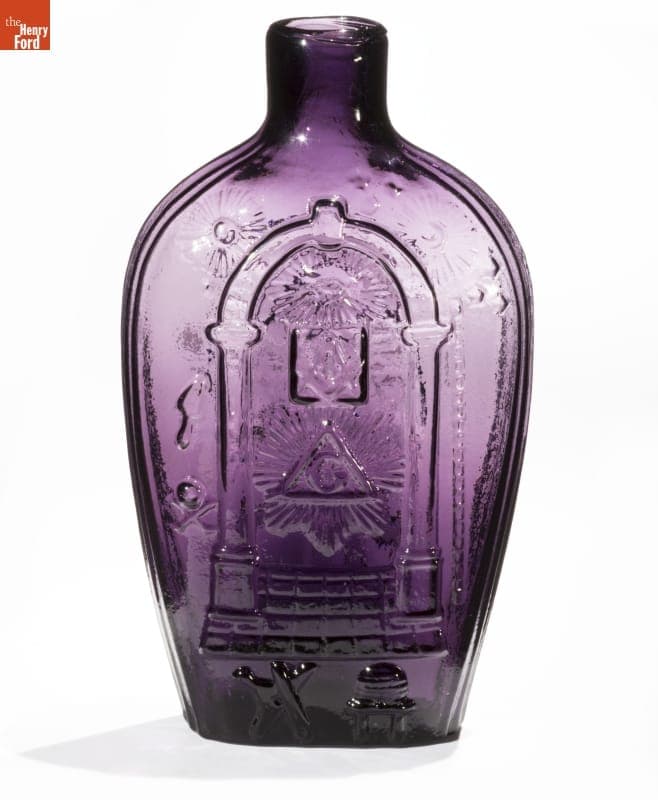
- Flask, 1815-1817 - Glass factories in America began producing inexpensive, mold-formed flasks in the early 1800s. These figured flasks, often decorated with symbols of national pride or political or cultural affiliation, appealed to America's common man. Membership in the Freemasons grew in the early decades of the 1800s. Supporters of the Masonic order would recognize the ritualistic symbols on this and other similar flasks.
- 1815-1817
- Collections - Artifact
Flask, 1815-1817
Glass factories in America began producing inexpensive, mold-formed flasks in the early 1800s. These figured flasks, often decorated with symbols of national pride or political or cultural affiliation, appealed to America's common man. Membership in the Freemasons grew in the early decades of the 1800s. Supporters of the Masonic order would recognize the ritualistic symbols on this and other similar flasks.
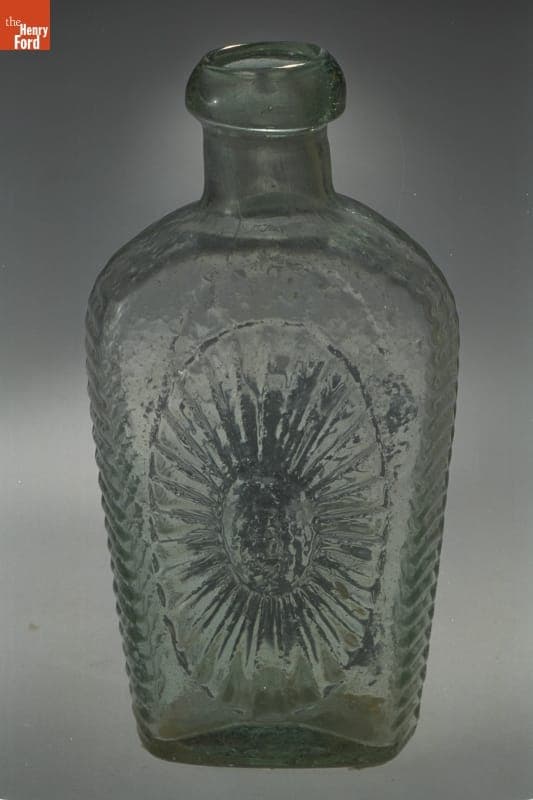
- Flask, 1822-1835 - Glass factories in America began producing inexpensive, mold-formed flasks in the early 1800s. These figured flasks, often embellished with symbols of national pride or political or cultural affiliation, appealed to America's common man. Purely decorative flasks, however, were another option. These flasks -- like this sunburst-pattern one -- held alcohol just as well as those with images of great men or patriotic emblems.
- 1822-1835
- Collections - Artifact
Flask, 1822-1835
Glass factories in America began producing inexpensive, mold-formed flasks in the early 1800s. These figured flasks, often embellished with symbols of national pride or political or cultural affiliation, appealed to America's common man. Purely decorative flasks, however, were another option. These flasks -- like this sunburst-pattern one -- held alcohol just as well as those with images of great men or patriotic emblems.
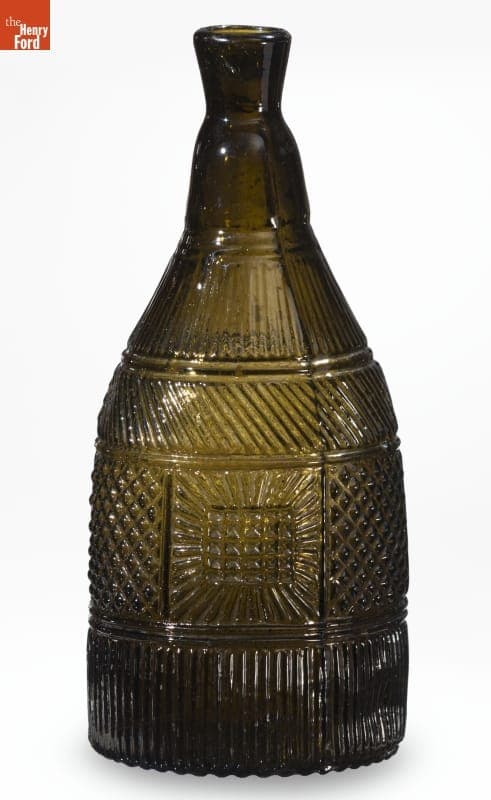
- Decanter, 1815-1835 -
- 1815-1835
- Collections - Artifact
Decanter, 1815-1835
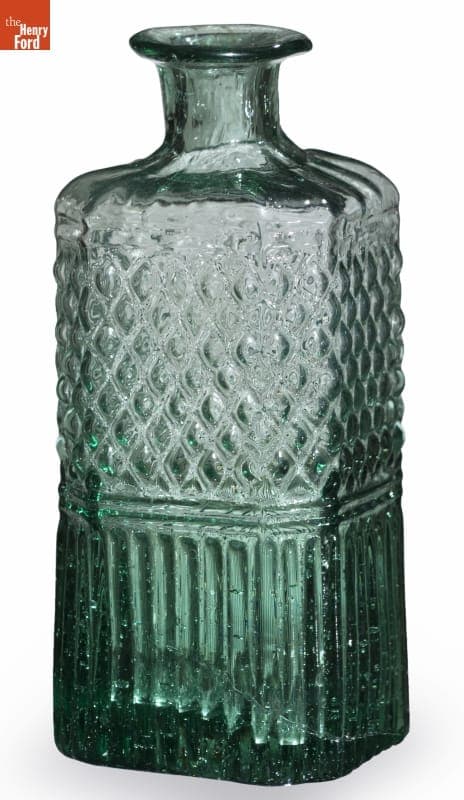
- Bottle, 1815-1850 -
- 1815-1850
- Collections - Artifact
Bottle, 1815-1850
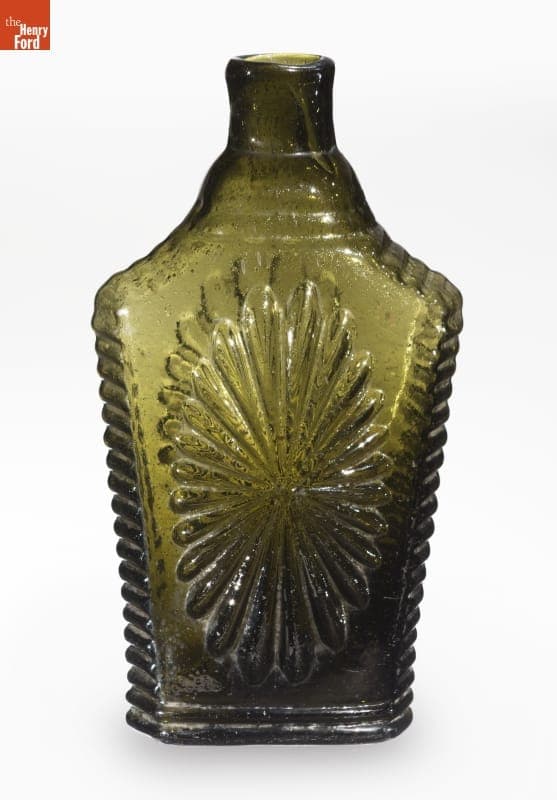
- Flask, 1820-1830 - Glass factories in America began producing inexpensive, mold-formed flasks in the early 1800s. These figured flasks, often embellished with symbols of national pride or political or cultural affiliation, appealed to America's common man. Purely decorative flasks, however, were another option. These flasks -- like this sunburst-pattern one -- held alcohol just as well as those with images of great men or patriotic emblems.
- 1820-1830
- Collections - Artifact
Flask, 1820-1830
Glass factories in America began producing inexpensive, mold-formed flasks in the early 1800s. These figured flasks, often embellished with symbols of national pride or political or cultural affiliation, appealed to America's common man. Purely decorative flasks, however, were another option. These flasks -- like this sunburst-pattern one -- held alcohol just as well as those with images of great men or patriotic emblems.
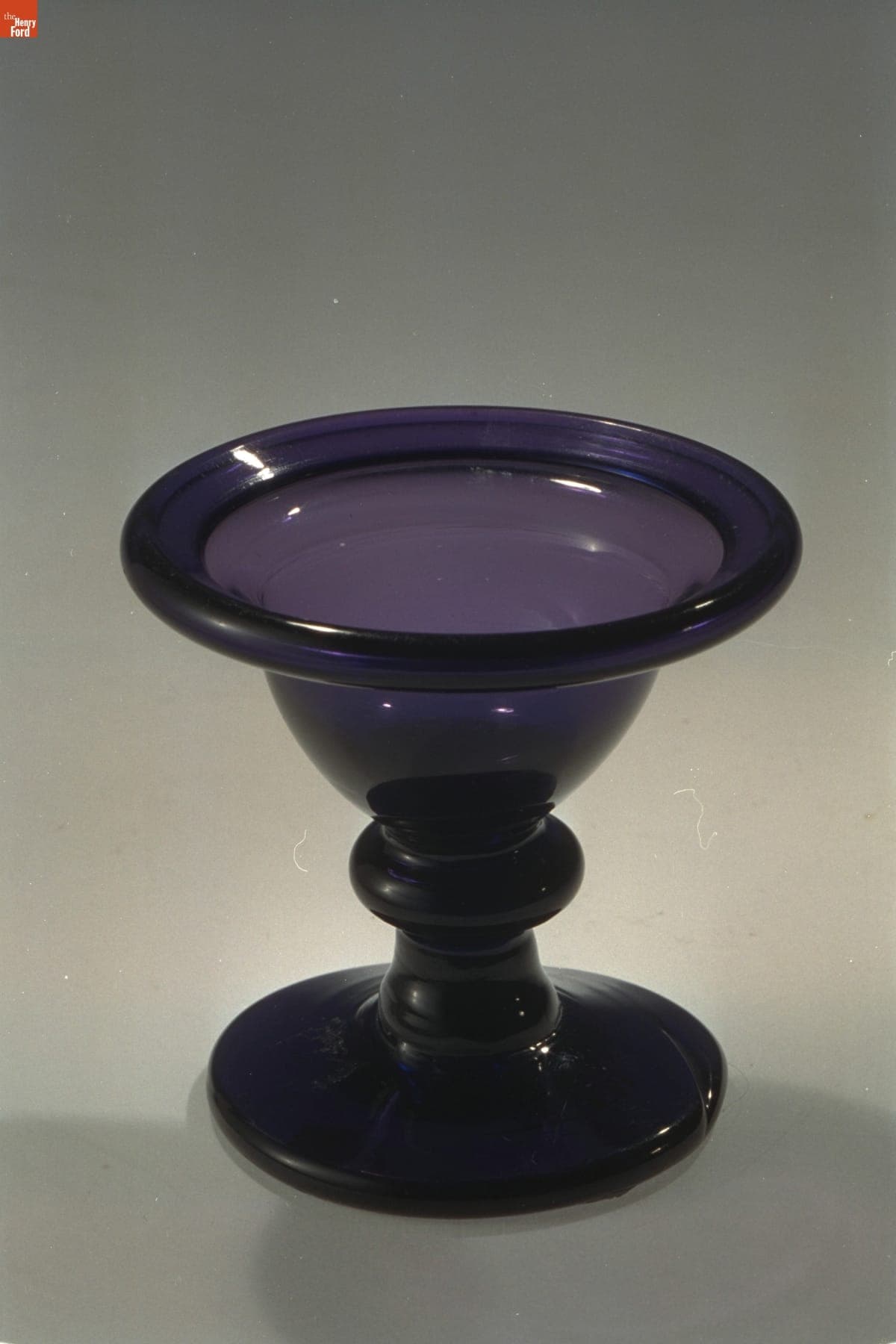
- Salt, 1815-1825 - Prior to the early 20th century, Americans would have put several small, open dishes filled with salt on their dining tables. These "salts" placed the necessary seasoning within easy reach of family and guests. In the early 1800s, pattern-molded or hand-blown "salts" became affordable to the general public from a growing number of regional American glass factories.
- 1815-1825
- Collections - Artifact
Salt, 1815-1825
Prior to the early 20th century, Americans would have put several small, open dishes filled with salt on their dining tables. These "salts" placed the necessary seasoning within easy reach of family and guests. In the early 1800s, pattern-molded or hand-blown "salts" became affordable to the general public from a growing number of regional American glass factories.