
Search
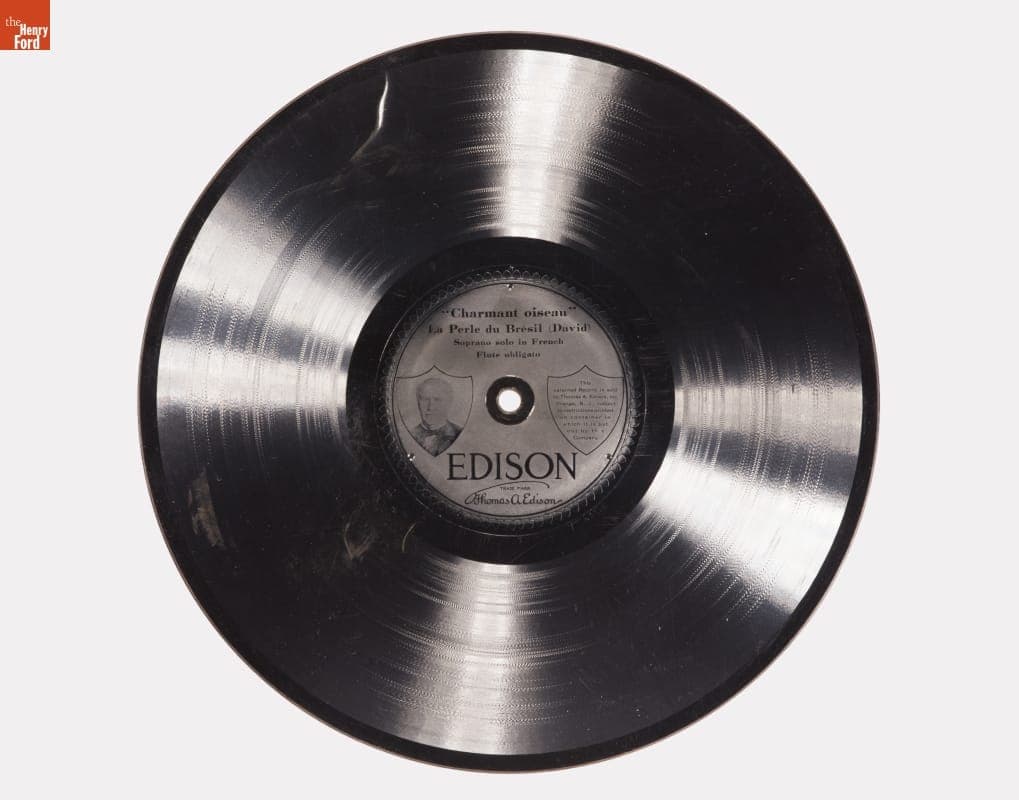
- Edison Diamond Disc Record, "Charmant Oiseau (from La Perle de Brasil)" and a Message for Thomas Edison, 1915 - This rare recording was the brainchild of Thomas Edison's Chief Engineer Miller R. Hutchison. A group of Edison's friends and business associates gathered at Edison's West Orange, New Jersey, laboratory as this pre-recorded speech was played during a telephone call made to Edison over the newly completed transcontinental telephone line. Edison was visiting the 1915 Pan-American Exhibition in San Francisco on the opposite coast. This recording was never sold commercially.
- October 21, 1915
- Collections - Artifact
Edison Diamond Disc Record, "Charmant Oiseau (from La Perle de Brasil)" and a Message for Thomas Edison, 1915
This rare recording was the brainchild of Thomas Edison's Chief Engineer Miller R. Hutchison. A group of Edison's friends and business associates gathered at Edison's West Orange, New Jersey, laboratory as this pre-recorded speech was played during a telephone call made to Edison over the newly completed transcontinental telephone line. Edison was visiting the 1915 Pan-American Exhibition in San Francisco on the opposite coast. This recording was never sold commercially.
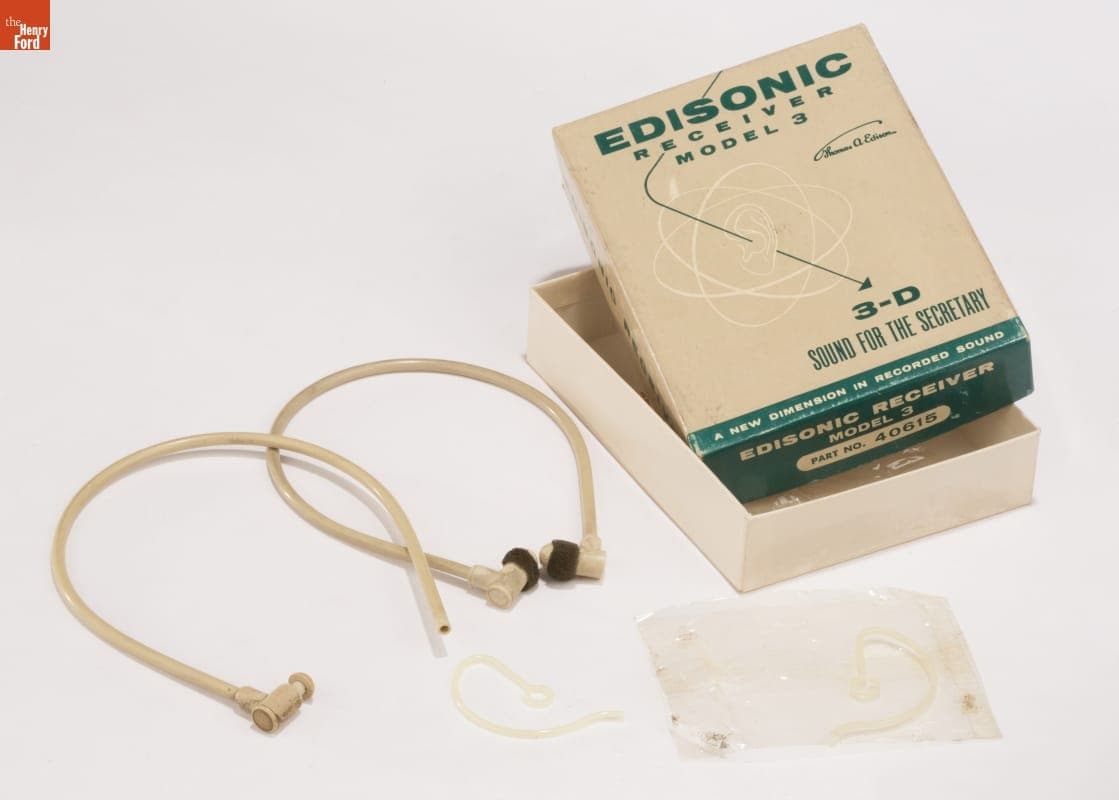
- Edisonic Voicewriter Headphones, Model 3, circa 1960 -
- circa 1960
- Collections - Artifact
Edisonic Voicewriter Headphones, Model 3, circa 1960
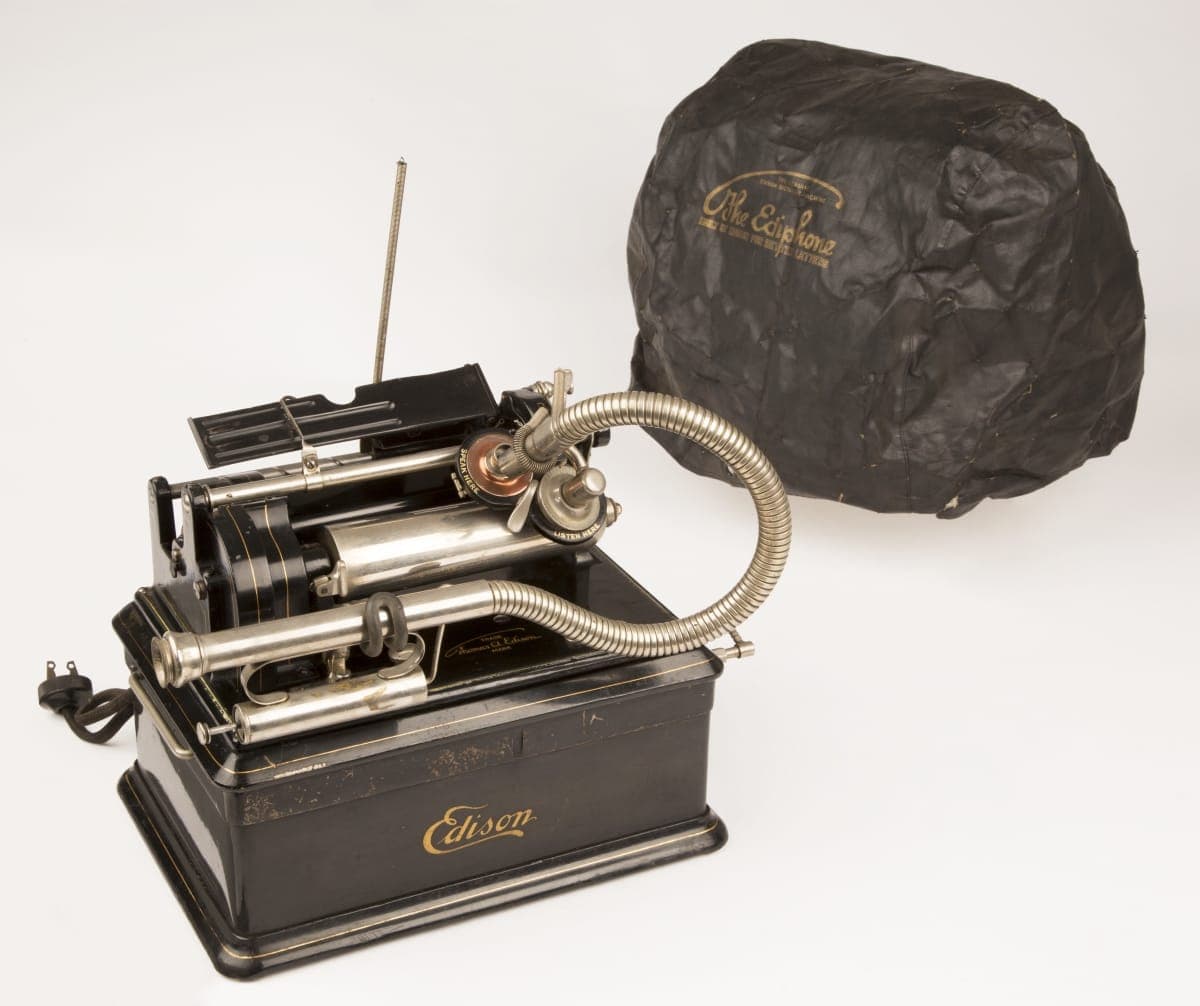
- Ediphone, Model E, 1913-1915 - Dictaphones and Ediphones were sound recording devices used for efficient oral dictation in business settings. When Edison invented the phonograph, one proposed use was "dictation without the aid of stenographers." Its tinfoil playback medium lacked quality, however. Alexander Graham Bell's Graphophone (later, Dictaphone) improved the phonograph by using wax cylinders for superior playback; cylinders were also used in the competing Ediphone.
- 1913-1915
- Collections - Artifact
Ediphone, Model E, 1913-1915
Dictaphones and Ediphones were sound recording devices used for efficient oral dictation in business settings. When Edison invented the phonograph, one proposed use was "dictation without the aid of stenographers." Its tinfoil playback medium lacked quality, however. Alexander Graham Bell's Graphophone (later, Dictaphone) improved the phonograph by using wax cylinders for superior playback; cylinders were also used in the competing Ediphone.
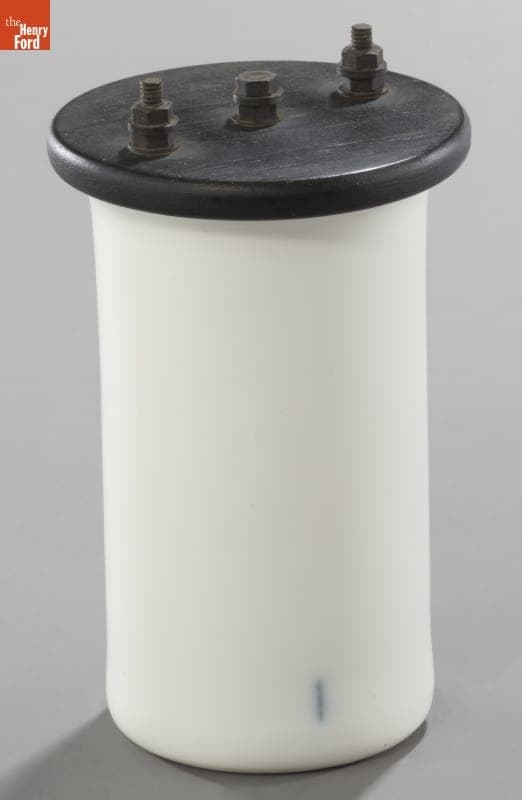
- Edison Type S Primary Battery, 1916-1929 - A chemical reaction hidden within this battery's white porcelain jar creates electricity. Thomas Edison developed this battery from an earlier design by Felix Lalande and Georges Chaperon. Batteries like this Type S powered fans, phonographs, telephones, and a variety of other devices for years in places where the electric grid did not reach, or electric generators were impractical.
- 1916-1929
- Collections - Artifact
Edison Type S Primary Battery, 1916-1929
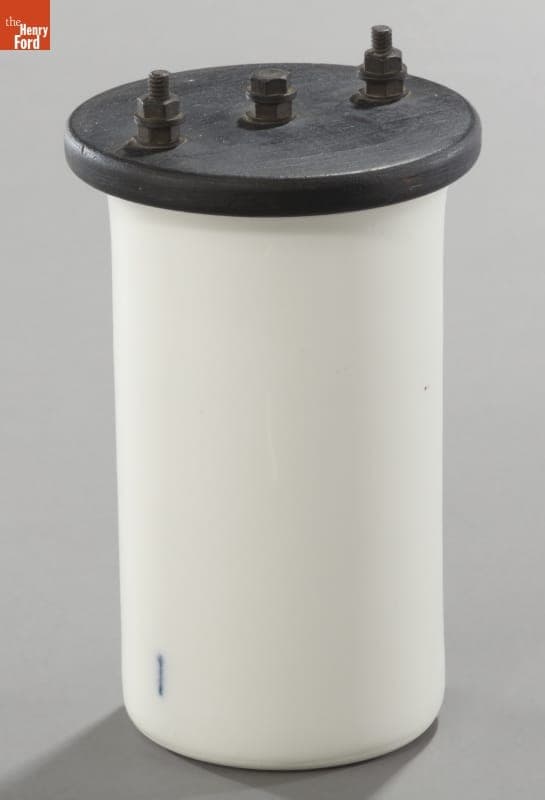
A chemical reaction hidden within this battery's white porcelain jar creates electricity. Thomas Edison developed this battery from an earlier design by Felix Lalande and Georges Chaperon. Batteries like this Type S powered fans, phonographs, telephones, and a variety of other devices for years in places where the electric grid did not reach, or electric generators were impractical.
- Edison Type S Primary Battery, 1916-1929 - A chemical reaction hidden within this battery's white porcelain jar creates electricity. Thomas Edison developed this battery from an earlier design by Felix Lalande and Georges Chaperon. Batteries like this Type S powered fans, phonographs, telephones, and a variety of other devices for years in places where the electric grid did not reach, or electric generators were impractical.
- 1916-1929
- Collections - Artifact
Edison Type S Primary Battery, 1916-1929
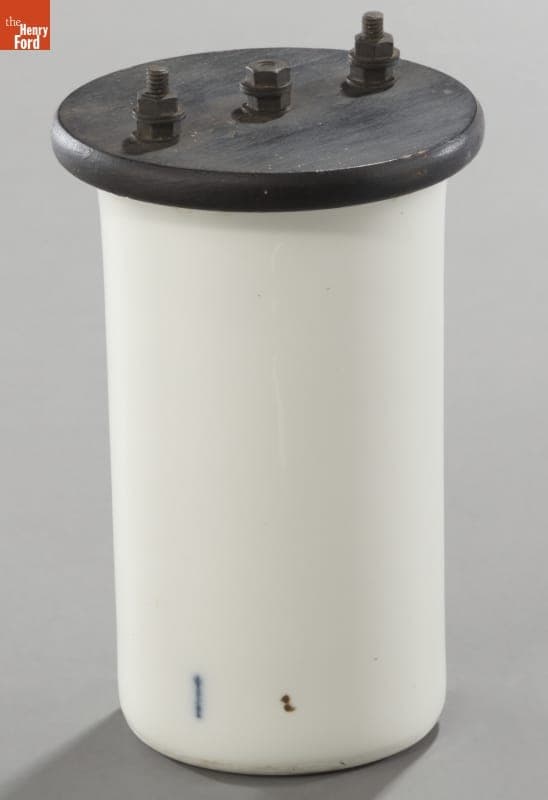
A chemical reaction hidden within this battery's white porcelain jar creates electricity. Thomas Edison developed this battery from an earlier design by Felix Lalande and Georges Chaperon. Batteries like this Type S powered fans, phonographs, telephones, and a variety of other devices for years in places where the electric grid did not reach, or electric generators were impractical.
- Edison Type S Primary Battery, 1916-1929 - A chemical reaction hidden within this battery's white porcelain jar creates electricity. Thomas Edison developed this battery from an earlier design by Felix Lalande and Georges Chaperon. Batteries like this Type S powered fans, phonographs, telephones, and a variety of other devices for years in places where the electric grid did not reach, or electric generators were impractical.
- 1916-1929
- Collections - Artifact
Edison Type S Primary Battery, 1916-1929
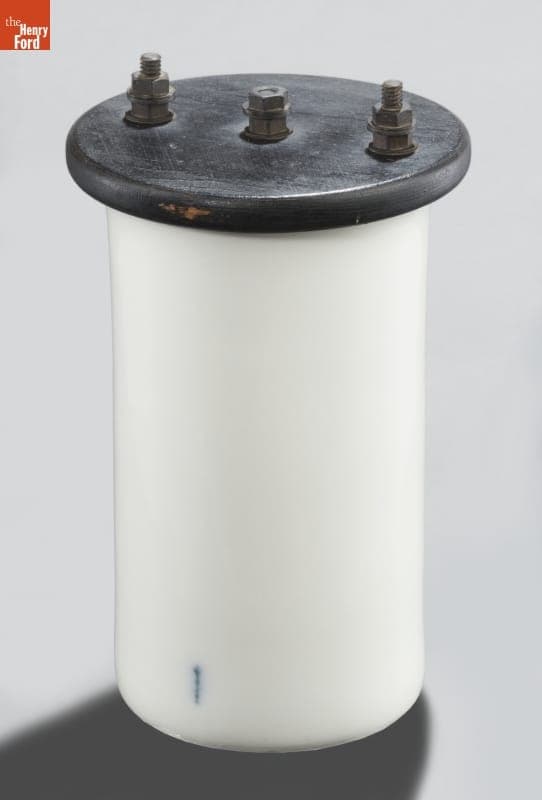
A chemical reaction hidden within this battery's white porcelain jar creates electricity. Thomas Edison developed this battery from an earlier design by Felix Lalande and Georges Chaperon. Batteries like this Type S powered fans, phonographs, telephones, and a variety of other devices for years in places where the electric grid did not reach, or electric generators were impractical.
- Edison Type S Primary Battery, 1916-1929 - A chemical reaction hidden within this battery's white porcelain jar creates electricity. Thomas Edison developed this battery from an earlier design by Felix Lalande and Georges Chaperon. Batteries like this Type S powered fans, phonographs, telephones, and a variety of other devices for years in places where the electric grid did not reach, or electric generators were impractical.
- 1916-1929
- Collections - Artifact
Edison Type S Primary Battery, 1916-1929
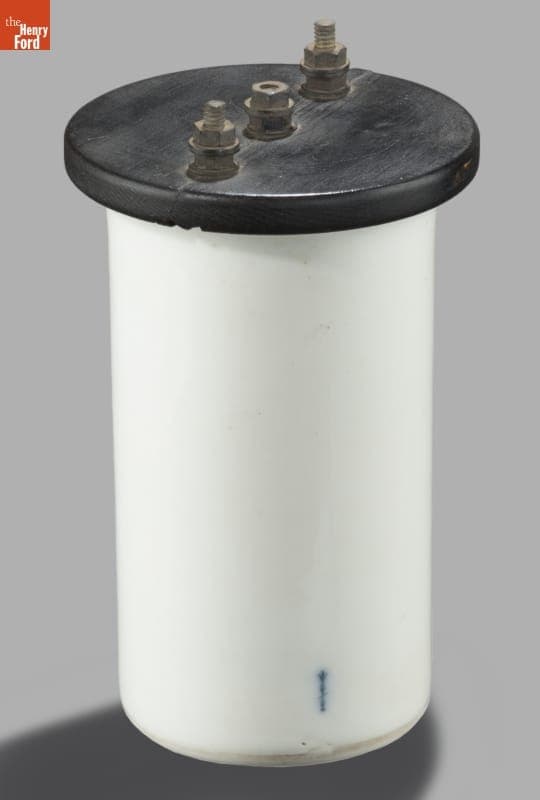
A chemical reaction hidden within this battery's white porcelain jar creates electricity. Thomas Edison developed this battery from an earlier design by Felix Lalande and Georges Chaperon. Batteries like this Type S powered fans, phonographs, telephones, and a variety of other devices for years in places where the electric grid did not reach, or electric generators were impractical.
- Edison Type S Primary Battery, 1916-1929 - A chemical reaction hidden within this battery's white porcelain jar creates electricity. Thomas Edison developed this battery from an earlier design by Felix Lalande and Georges Chaperon. Batteries like this Type S powered fans, phonographs, telephones, and a variety of other devices for years in places where the electric grid did not reach, or electric generators were impractical.
- 1916-1929
- Collections - Artifact
Edison Type S Primary Battery, 1916-1929
A chemical reaction hidden within this battery's white porcelain jar creates electricity. Thomas Edison developed this battery from an earlier design by Felix Lalande and Georges Chaperon. Batteries like this Type S powered fans, phonographs, telephones, and a variety of other devices for years in places where the electric grid did not reach, or electric generators were impractical.
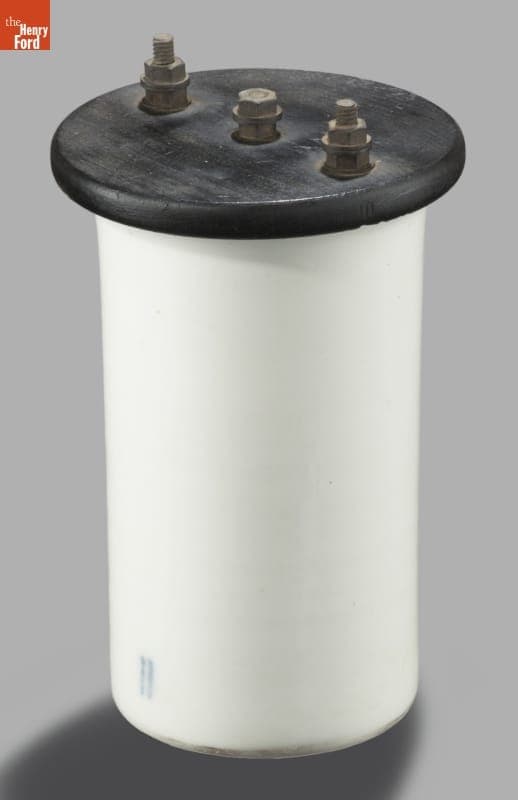
- Edison Type S Primary Battery, 1916-1929 - A chemical reaction hidden within this battery's white porcelain jar creates electricity. Thomas Edison developed this battery from an earlier design by Felix Lalande and Georges Chaperon. Batteries like this Type S powered fans, phonographs, telephones, and a variety of other devices for years in places where the electric grid did not reach, or electric generators were impractical.
- 1916-1929
- Collections - Artifact
Edison Type S Primary Battery, 1916-1929
A chemical reaction hidden within this battery's white porcelain jar creates electricity. Thomas Edison developed this battery from an earlier design by Felix Lalande and Georges Chaperon. Batteries like this Type S powered fans, phonographs, telephones, and a variety of other devices for years in places where the electric grid did not reach, or electric generators were impractical.
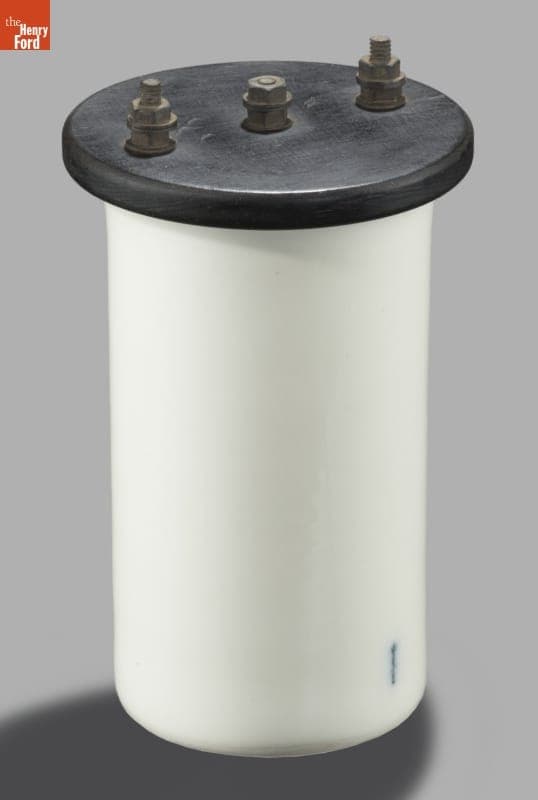
- Edison Type S Primary Battery, 1916-1929 - A chemical reaction hidden within this battery's white porcelain jar creates electricity. Thomas Edison developed this battery from an earlier design by Felix Lalande and Georges Chaperon. Batteries like this Type S powered fans, phonographs, telephones, and a variety of other devices for years in places where the electric grid did not reach, or electric generators were impractical.
- 1916-1929
- Collections - Artifact
Edison Type S Primary Battery, 1916-1929
A chemical reaction hidden within this battery's white porcelain jar creates electricity. Thomas Edison developed this battery from an earlier design by Felix Lalande and Georges Chaperon. Batteries like this Type S powered fans, phonographs, telephones, and a variety of other devices for years in places where the electric grid did not reach, or electric generators were impractical.