
Search
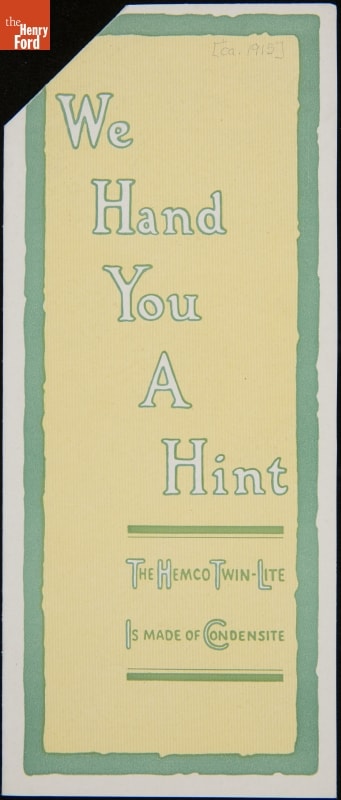
- We Hand You a Hint: The Hemco Twin-Lite is Made of Condensite, circa 1915 - Chemically synthetic plastics were developed in the early 1900s to replace shellac and hard rubber -- naturally derived substances increasingly in demand for various industrial applications. The Condensite Company of America formed in 1910 to sell a new material first developed at Thomas Edison's West Orange laboratory for phonograph records. Durable and nonconductive, Condensite was well suited for electrical products.
- circa 1915
- Collections - Artifact
We Hand You a Hint: The Hemco Twin-Lite is Made of Condensite, circa 1915
Chemically synthetic plastics were developed in the early 1900s to replace shellac and hard rubber -- naturally derived substances increasingly in demand for various industrial applications. The Condensite Company of America formed in 1910 to sell a new material first developed at Thomas Edison's West Orange laboratory for phonograph records. Durable and nonconductive, Condensite was well suited for electrical products.
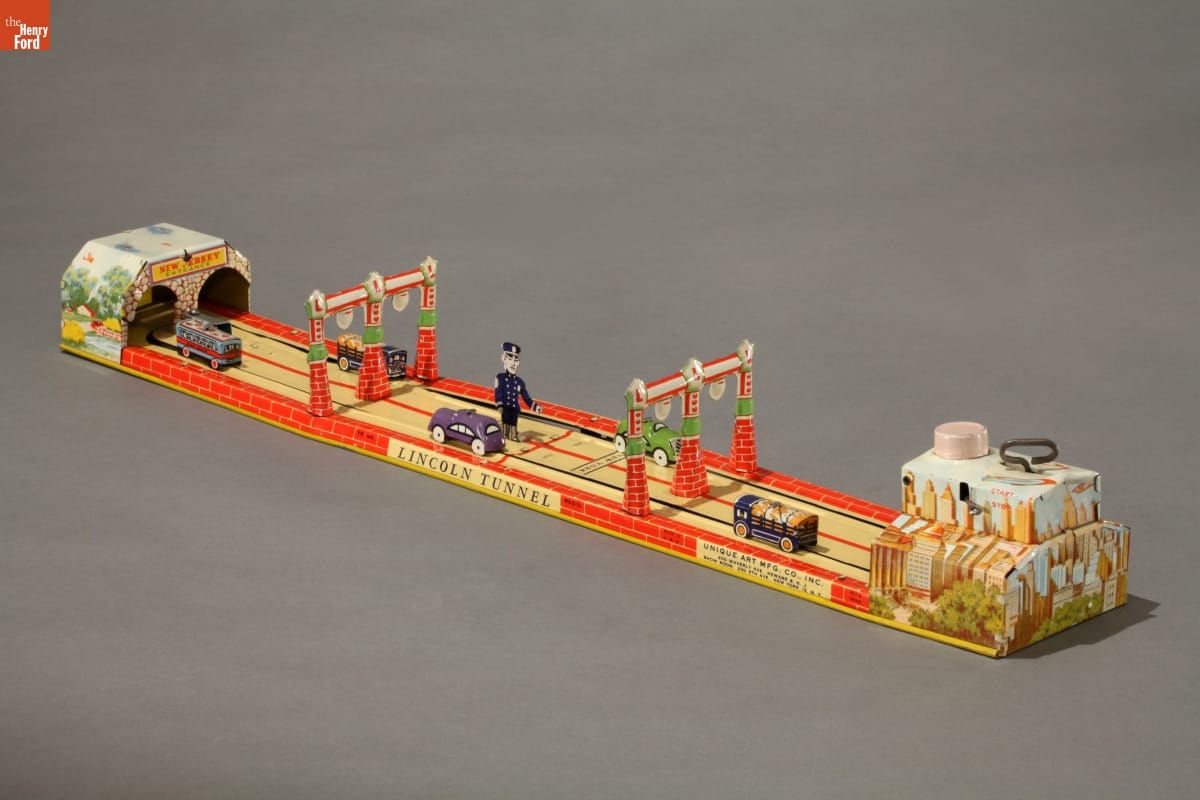
- Lincoln Tunnel Mechanical Toy, 1925-1940 - This lithographed, pressed metal toy by Unique Art Manufacturing Company, Inc., has vehicles traveling in and out of the Lincoln Tunnel. Cars enter either through rural New Jersey or urban New York. The Lincoln Tunnel opened in 1937 and runs under the Hudson River between New Jersey and Manhattan.
- 1925-1940
- Collections - Artifact
Lincoln Tunnel Mechanical Toy, 1925-1940
This lithographed, pressed metal toy by Unique Art Manufacturing Company, Inc., has vehicles traveling in and out of the Lincoln Tunnel. Cars enter either through rural New Jersey or urban New York. The Lincoln Tunnel opened in 1937 and runs under the Hudson River between New Jersey and Manhattan.
- Edison Type A-6 Storage Battery, 1908-1928 -
- 1908-1928
- Collections - Artifact
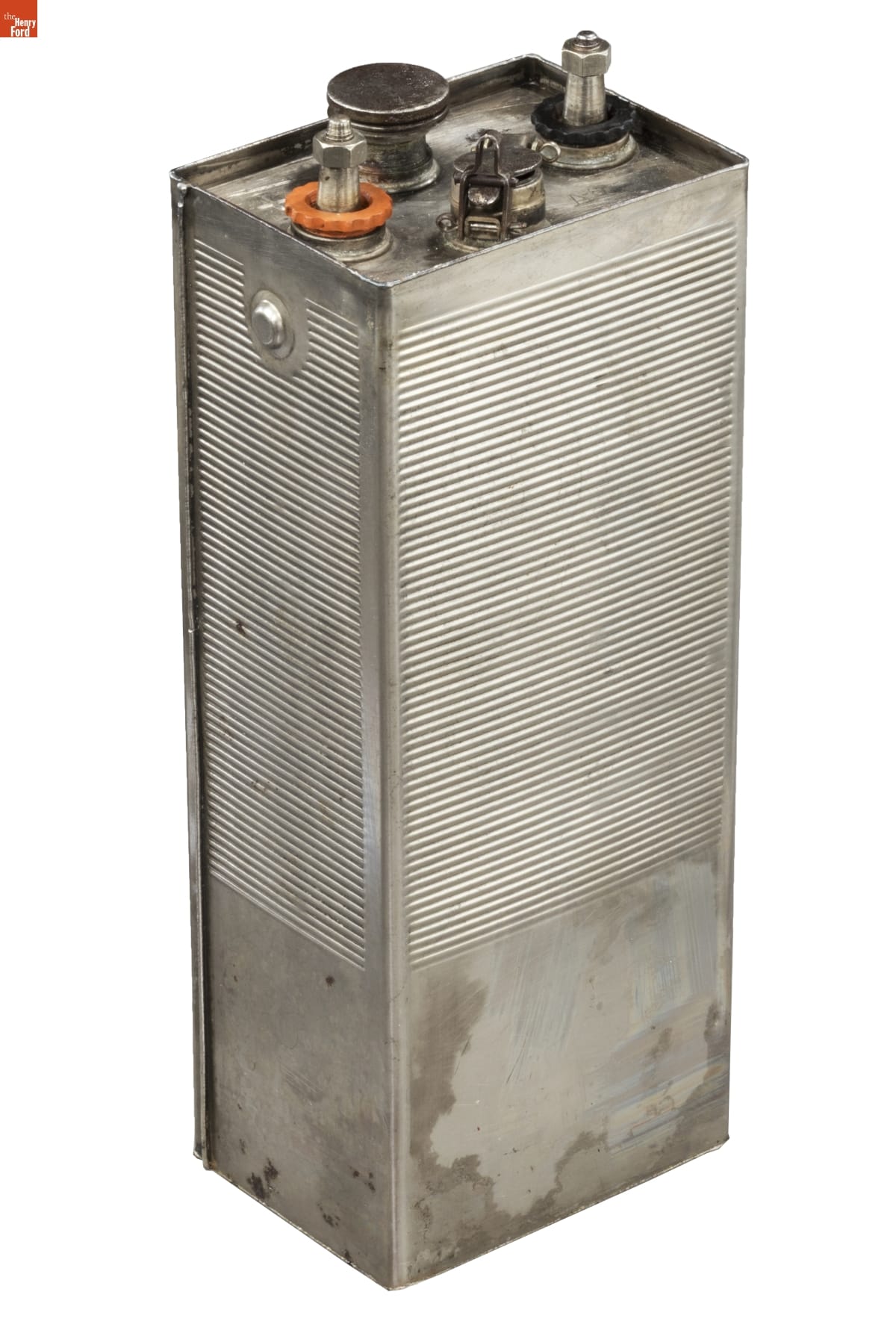
Edison Type A-6 Storage Battery, 1908-1928
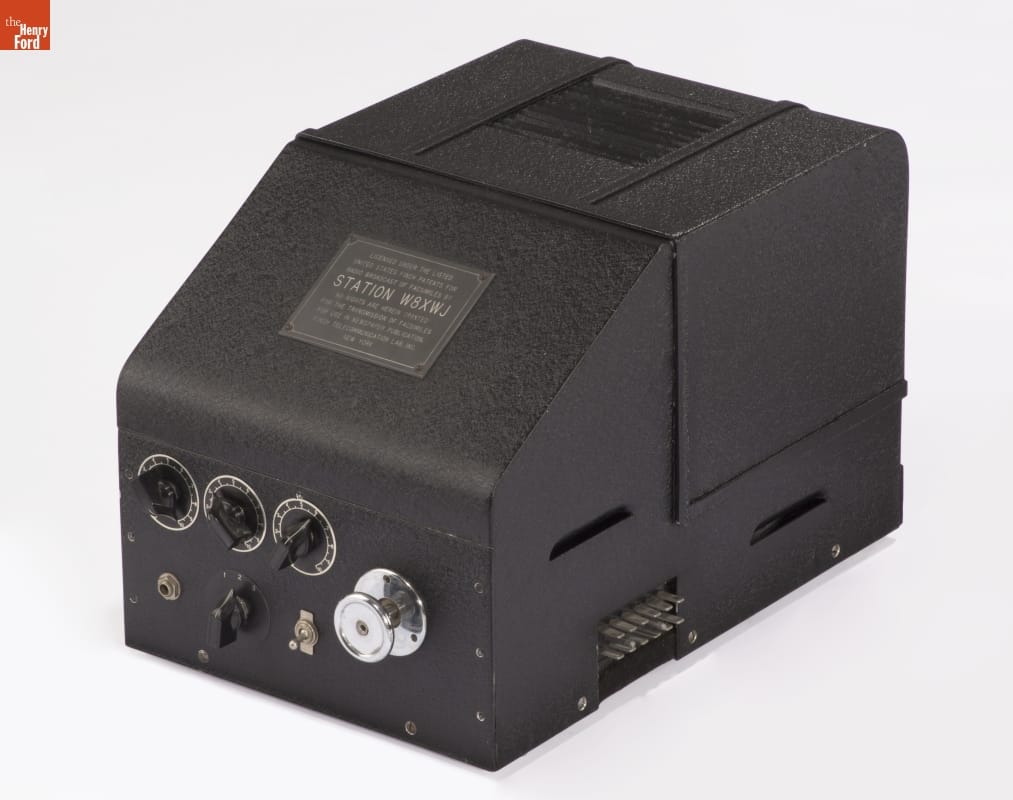
- Finch Facsimile Transmitter, 1938-1940 - From 1938-1940, the <EM>Detroit News</EM> experimented with a domestic radio-facsimile subscription service. This transmitter converted images and text into electrical impulses, sent over the radio waves--reassembled by receivers in the homes of customers. The idea was revolutionary, however, the process was slow and signal reception was unreliable beyond a mile or two of the transmission tower.
- 1938-1940
- Collections - Artifact
Finch Facsimile Transmitter, 1938-1940
From 1938-1940, the Detroit News experimented with a domestic radio-facsimile subscription service. This transmitter converted images and text into electrical impulses, sent over the radio waves--reassembled by receivers in the homes of customers. The idea was revolutionary, however, the process was slow and signal reception was unreliable beyond a mile or two of the transmission tower.
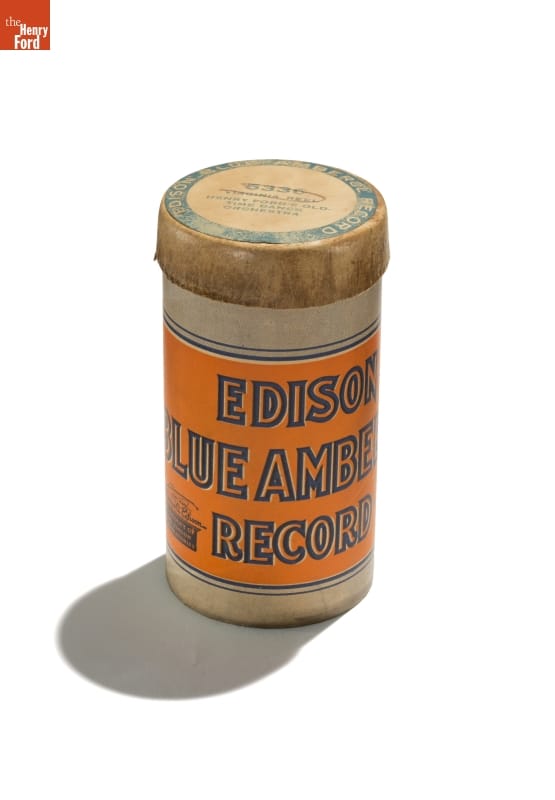
- Blue Amberol Cylinder Record, "Virginia Reel," 1927 - During the 1920s, Henry Ford organized an "Old Time Orchestra" to play at dances Ford hosted to teach his friends and business associates the dances of Ford's rural youth. In 1925, Thomas Edison's staff traveled to Dearborn, Michigan, to record Ford's orchestra. For this recording, they set up their equipment at Fair Lane, Ford's home, capturing the orchestra playing this American country dance.
- 1927
- Collections - Artifact
Blue Amberol Cylinder Record, "Virginia Reel," 1927
During the 1920s, Henry Ford organized an "Old Time Orchestra" to play at dances Ford hosted to teach his friends and business associates the dances of Ford's rural youth. In 1925, Thomas Edison's staff traveled to Dearborn, Michigan, to record Ford's orchestra. For this recording, they set up their equipment at Fair Lane, Ford's home, capturing the orchestra playing this American country dance.
- Weston Model 156 Voltmeter, circa 1914 -
- circa 1914
- Collections - Artifact
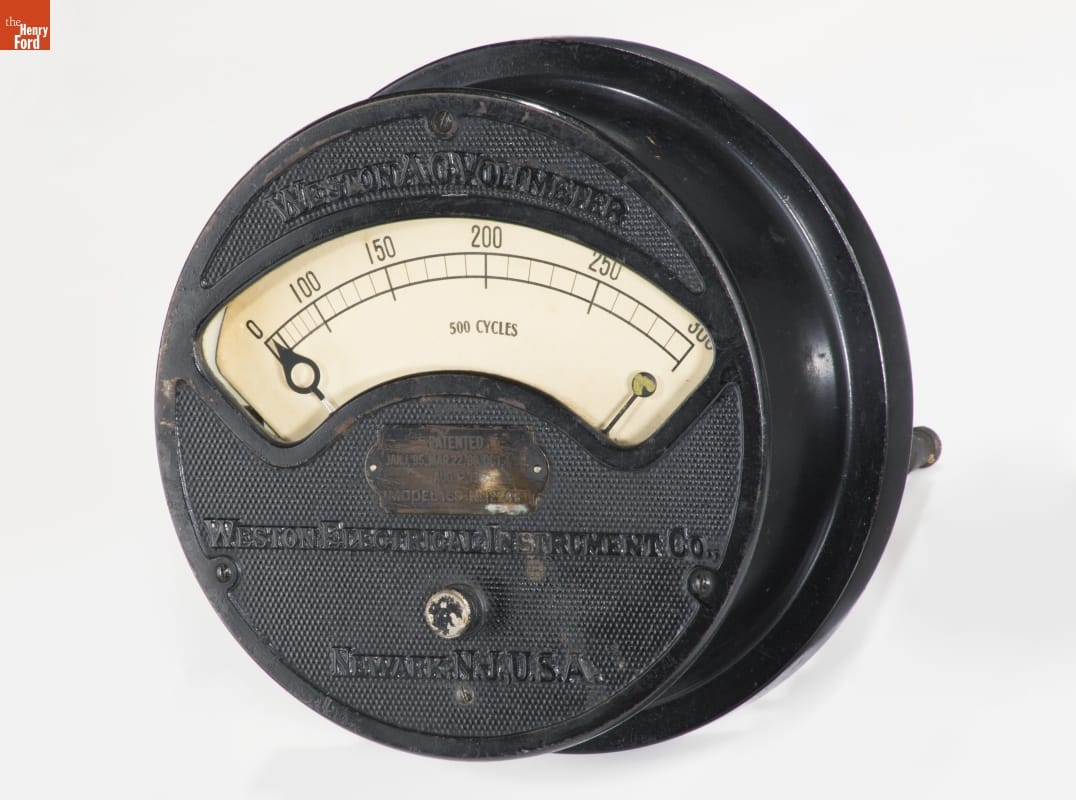
Weston Model 156 Voltmeter, circa 1914
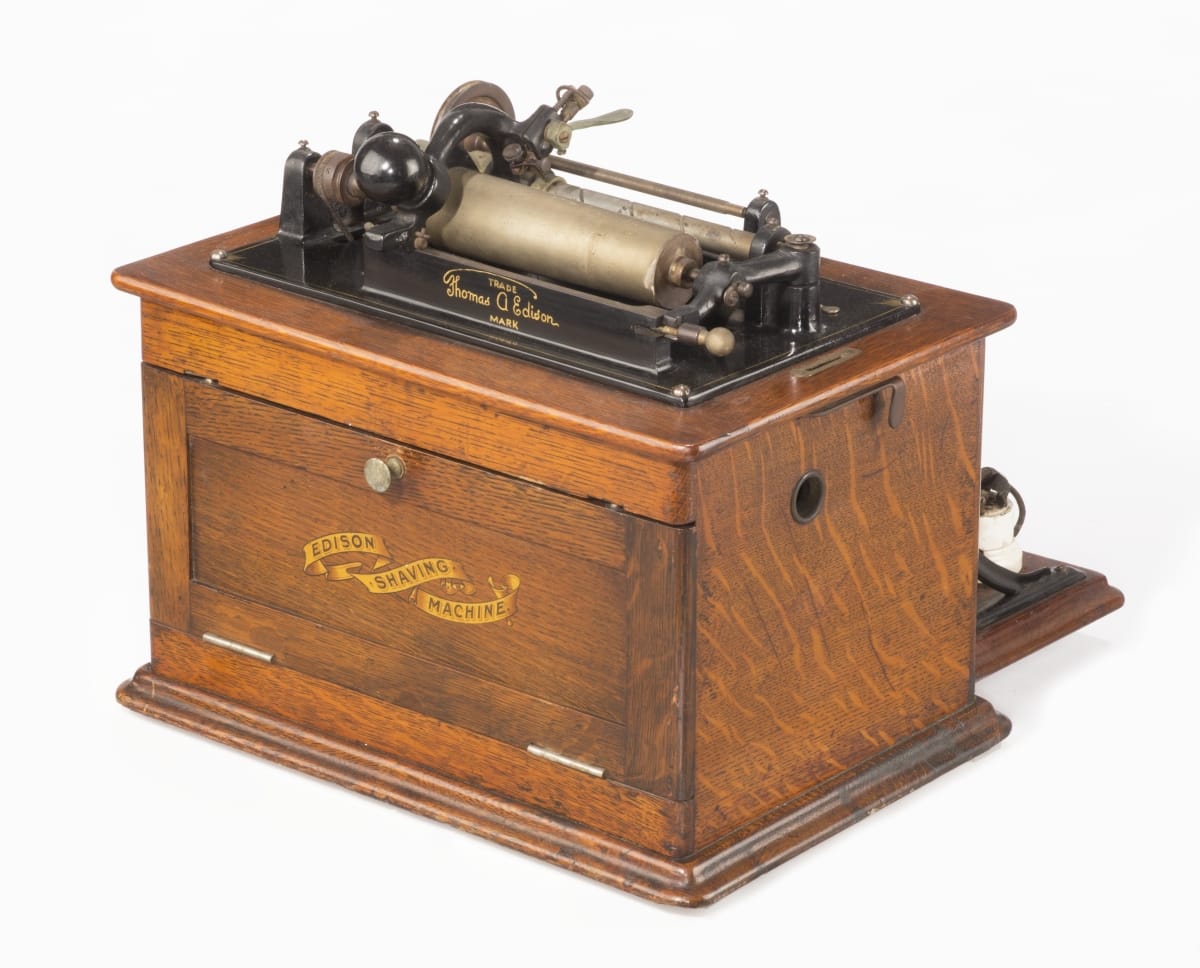
- Cylinder Shaving Machine, circa 1907 - Dictaphones and Ediphones were sound recording devices largely used for oral dictation in business settings. In this scenario, wax cylinder recordings were passed to a secretary, who listened to the recording with a playback-only transcriber and then typed up notes. A shaving machine, such as this one, scraped the previously inscribed layer away allowing a wax cylinder to be reused over 100 times.
- circa 1907
- Collections - Artifact
Cylinder Shaving Machine, circa 1907
Dictaphones and Ediphones were sound recording devices largely used for oral dictation in business settings. In this scenario, wax cylinder recordings were passed to a secretary, who listened to the recording with a playback-only transcriber and then typed up notes. A shaving machine, such as this one, scraped the previously inscribed layer away allowing a wax cylinder to be reused over 100 times.
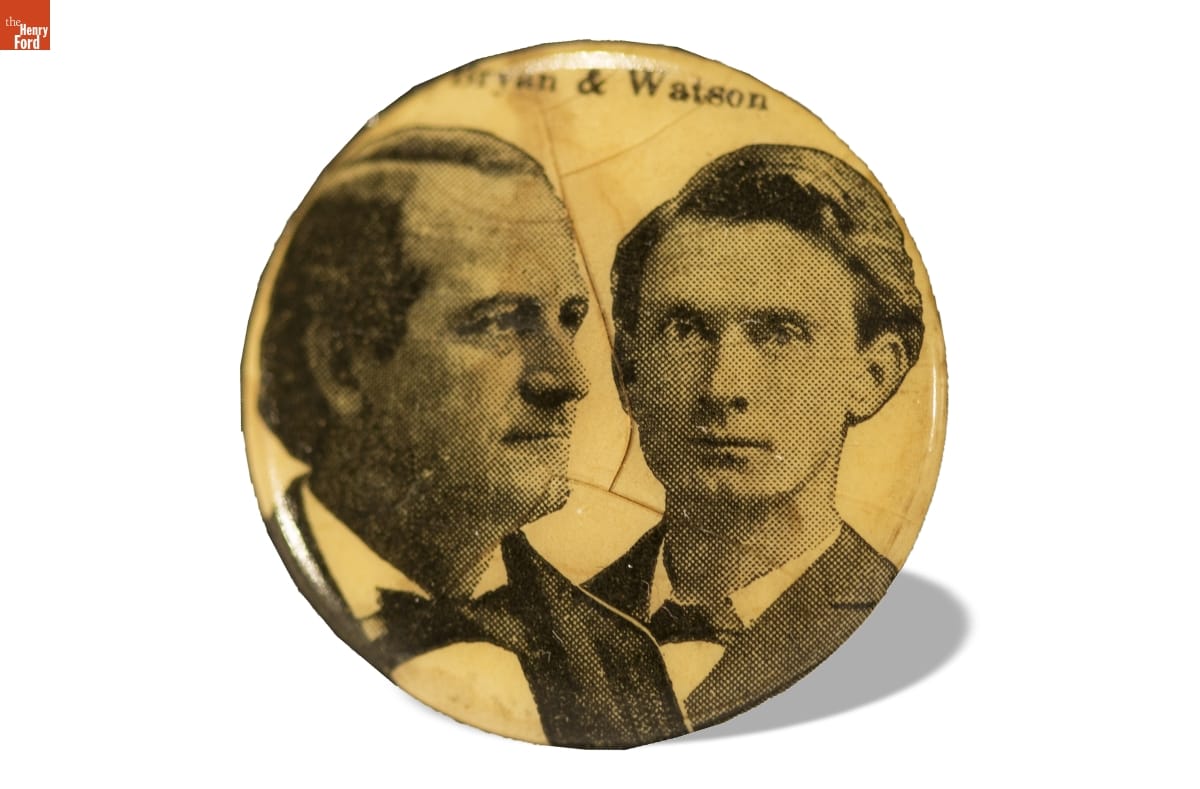
- Bryan-Watson Campaign Button, 1896 - In 1896, William Jennings Bryan captured both the Democratic and Populist Party's presidential nominations. Each party, however, nominated their own vice presidential candidates. The Democrats chose Arthur Sewall. The Populists chose Thomas E. Watson--pictured with Bryan on this campaign button. Neither ticket won. Bryan lost to the Republican nominee, William McKinley.
- 1896
- Collections - Artifact
Bryan-Watson Campaign Button, 1896
In 1896, William Jennings Bryan captured both the Democratic and Populist Party's presidential nominations. Each party, however, nominated their own vice presidential candidates. The Democrats chose Arthur Sewall. The Populists chose Thomas E. Watson--pictured with Bryan on this campaign button. Neither ticket won. Bryan lost to the Republican nominee, William McKinley.
- William Bryan Campaign Button, 1908 - William Jennings Bryan made his third and last attempt to become president in 1908. Bryan and his running mate, Indiana Senator John Kern, tried to distinguish themselves from their Republican opponents by championing a variety of domestic reforms. It didn't work. Voters chose the safe, well-qualified William Howard Taft -- President Roosevelt's hand-picked successor.
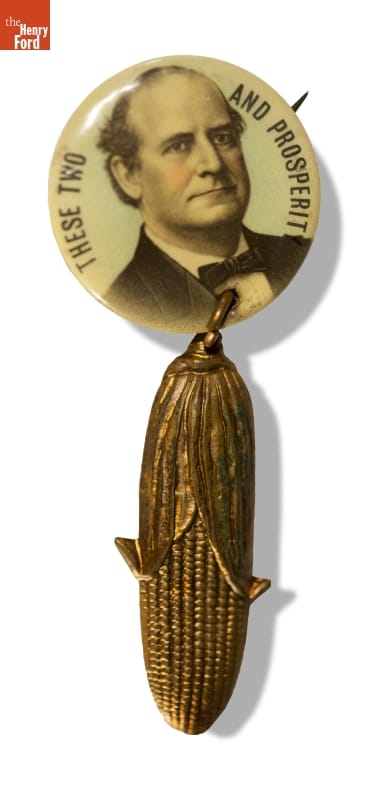
- 1908
- Collections - Artifact
William Bryan Campaign Button, 1908
William Jennings Bryan made his third and last attempt to become president in 1908. Bryan and his running mate, Indiana Senator John Kern, tried to distinguish themselves from their Republican opponents by championing a variety of domestic reforms. It didn't work. Voters chose the safe, well-qualified William Howard Taft -- President Roosevelt's hand-picked successor.
- William Linton Campaign Button, 1896 -
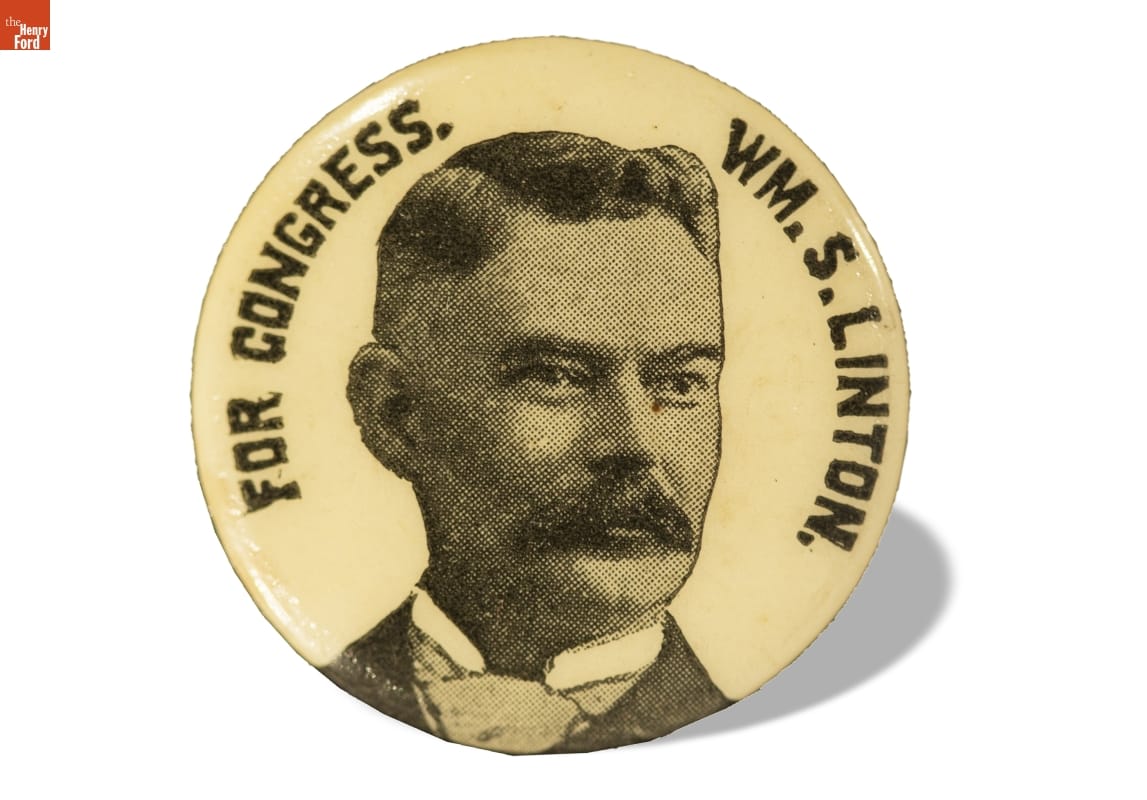
- 1896
- Collections - Artifact
William Linton Campaign Button, 1896