
Search
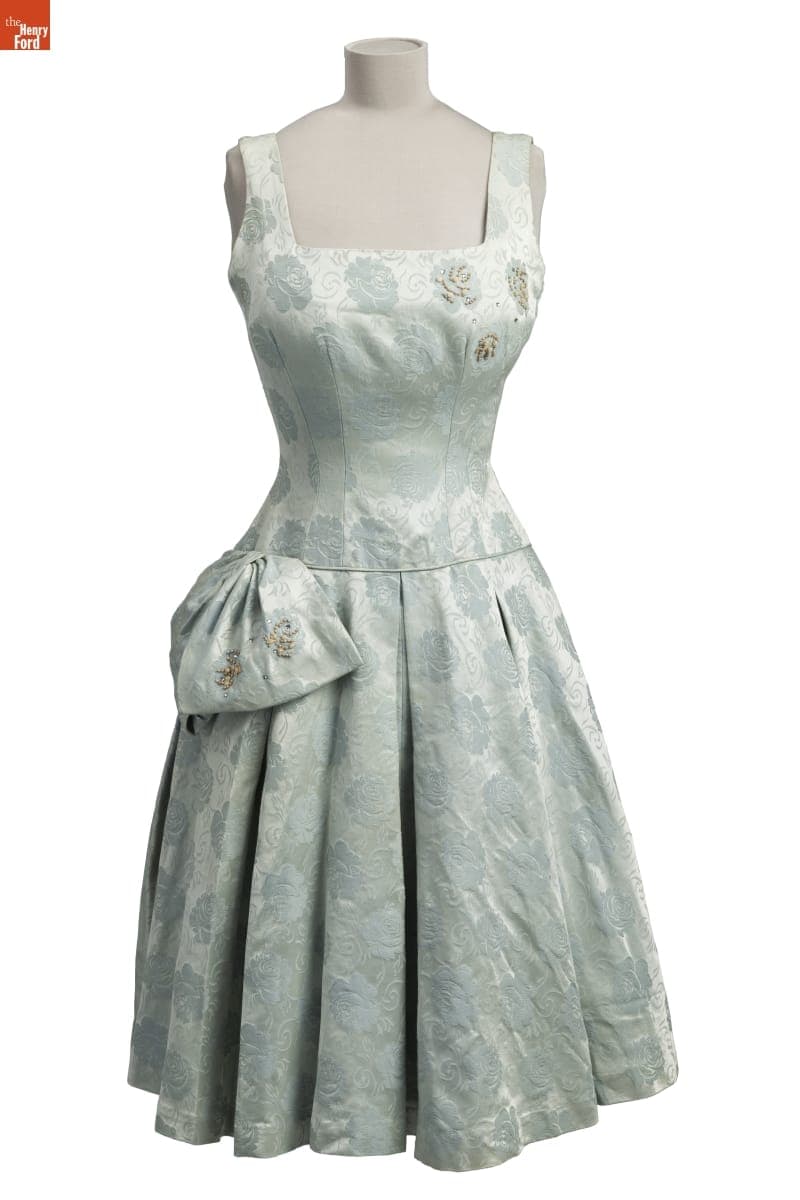
- Dress, Worn by Kay Sempliner, 1956 -
- 1956
- Collections - Artifact
Dress, Worn by Kay Sempliner, 1956
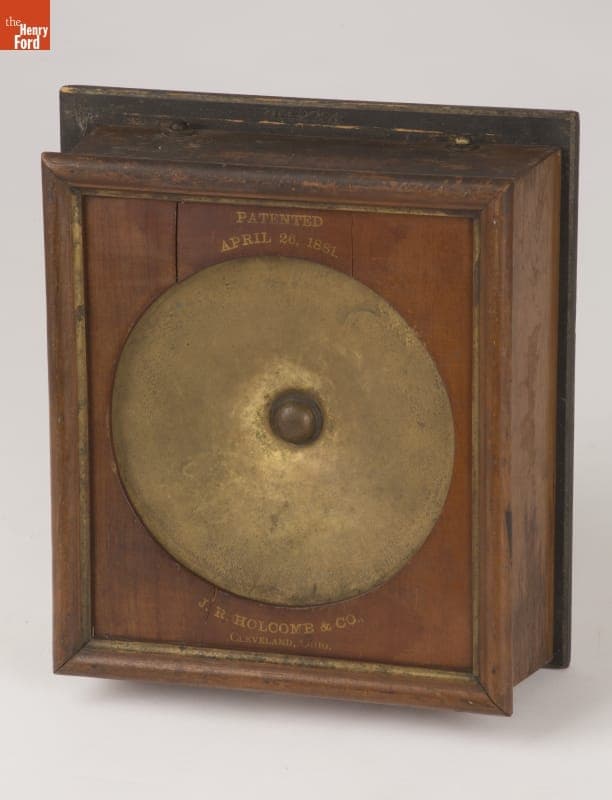
- Holcomb's Acoustic Telephone, 1881-1898 -
- 1881-1898
- Collections - Artifact
Holcomb's Acoustic Telephone, 1881-1898
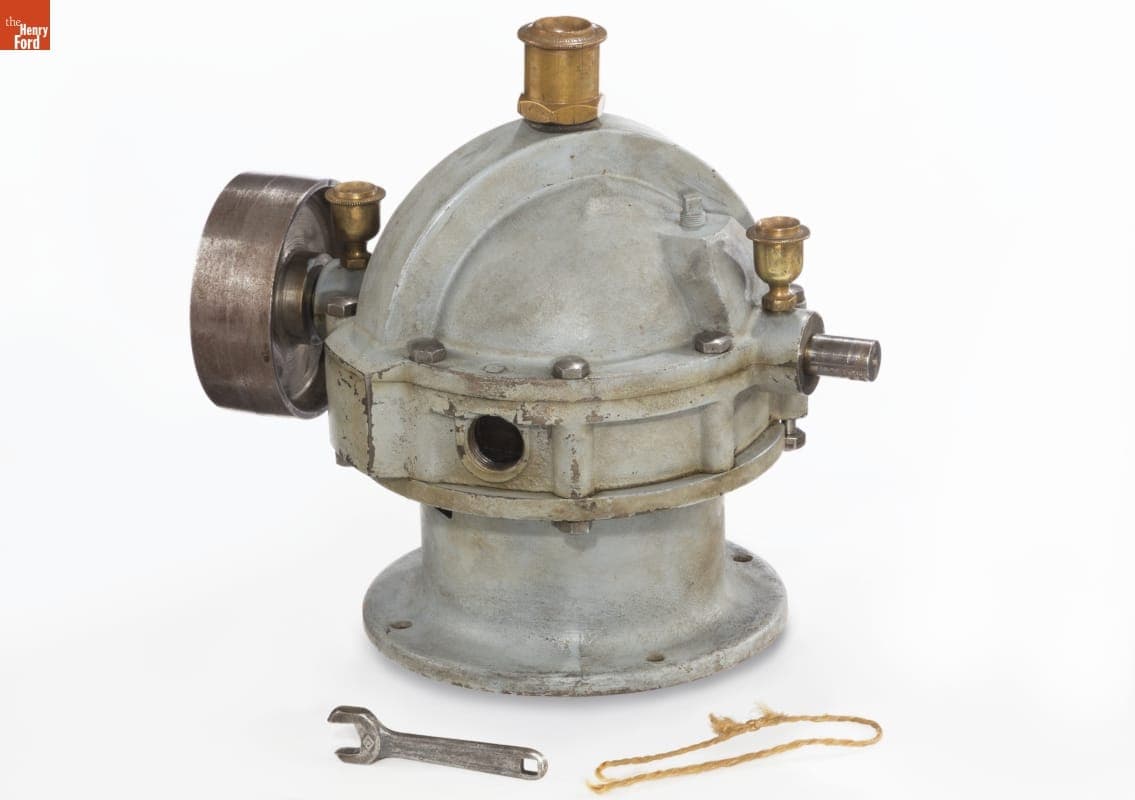
- Spherical Steam Engine, circa 1908 -
- circa 1908
- Collections - Artifact
Spherical Steam Engine, circa 1908
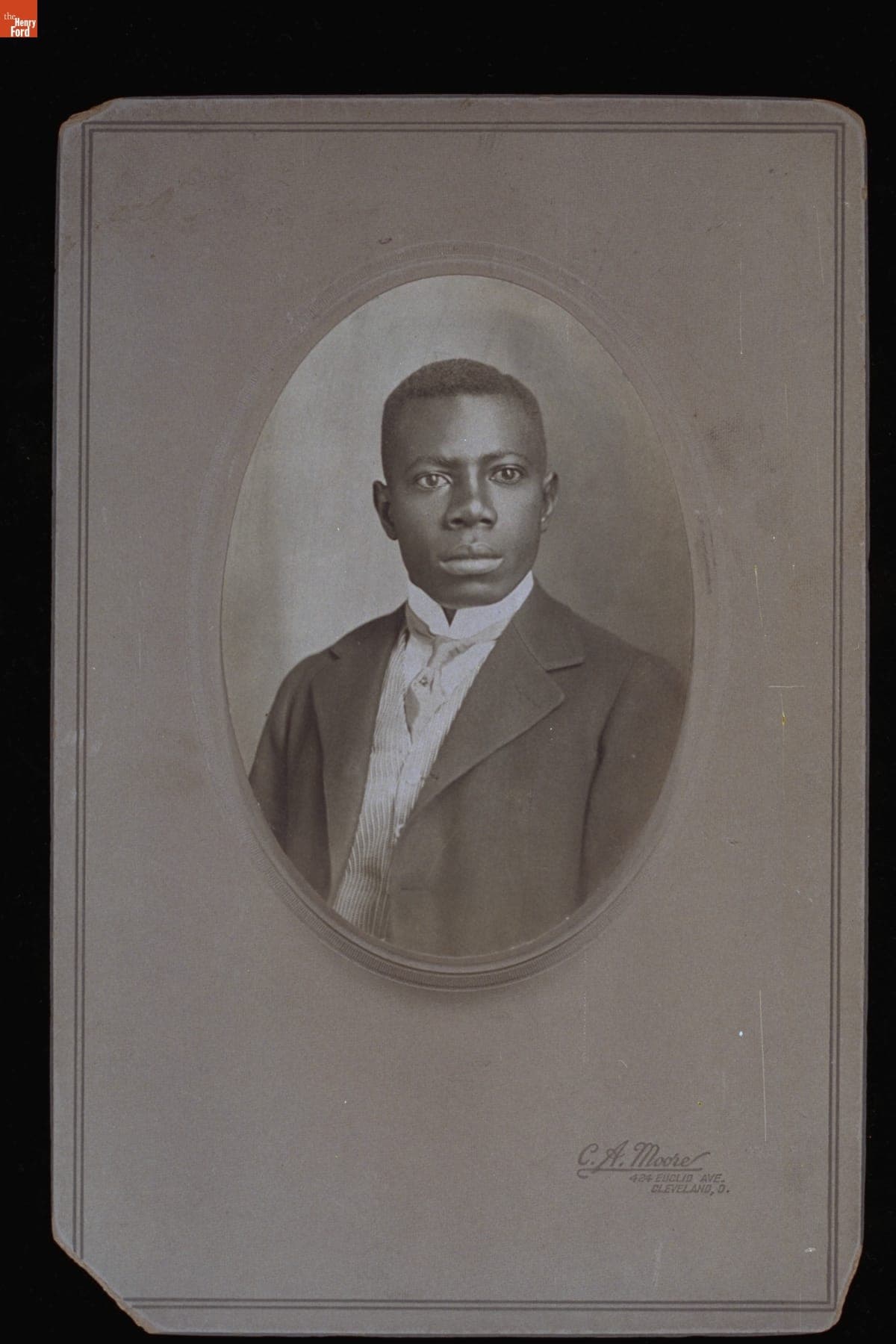
- Young Man Wearing a Striped Vest, circa 1910 -
- circa 1910
- Collections - Artifact
Young Man Wearing a Striped Vest, circa 1910
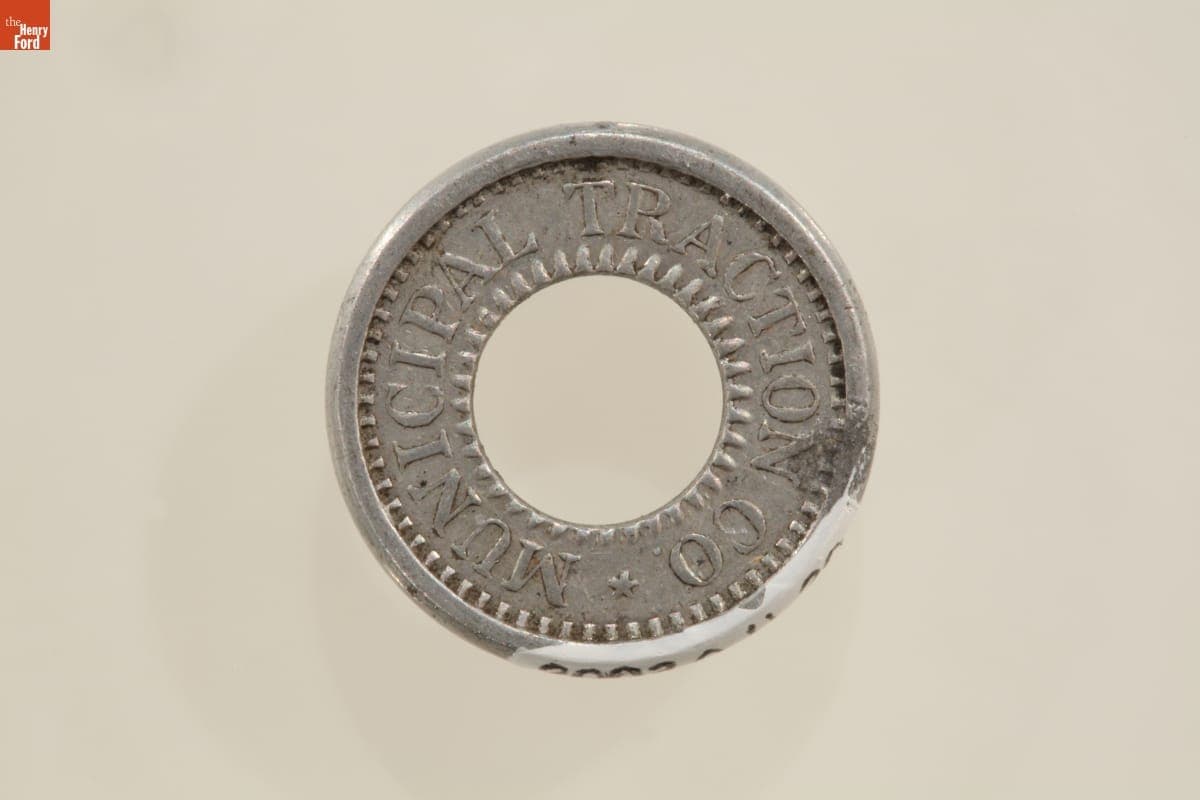
- Cleveland Municipal Transit Token, 1908 - Operating and financing a streetcar business was complicated. This token from Cleveland dates from a turbulent period where a privately owned streetcar company was in the process of transferring its operations to the city, further complicated by a transit strike. For riders, the immediate effect of the merger agreement was an affordable 3-cent fare.
- 1908
- Collections - Artifact
Cleveland Municipal Transit Token, 1908
Operating and financing a streetcar business was complicated. This token from Cleveland dates from a turbulent period where a privately owned streetcar company was in the process of transferring its operations to the city, further complicated by a transit strike. For riders, the immediate effect of the merger agreement was an affordable 3-cent fare.
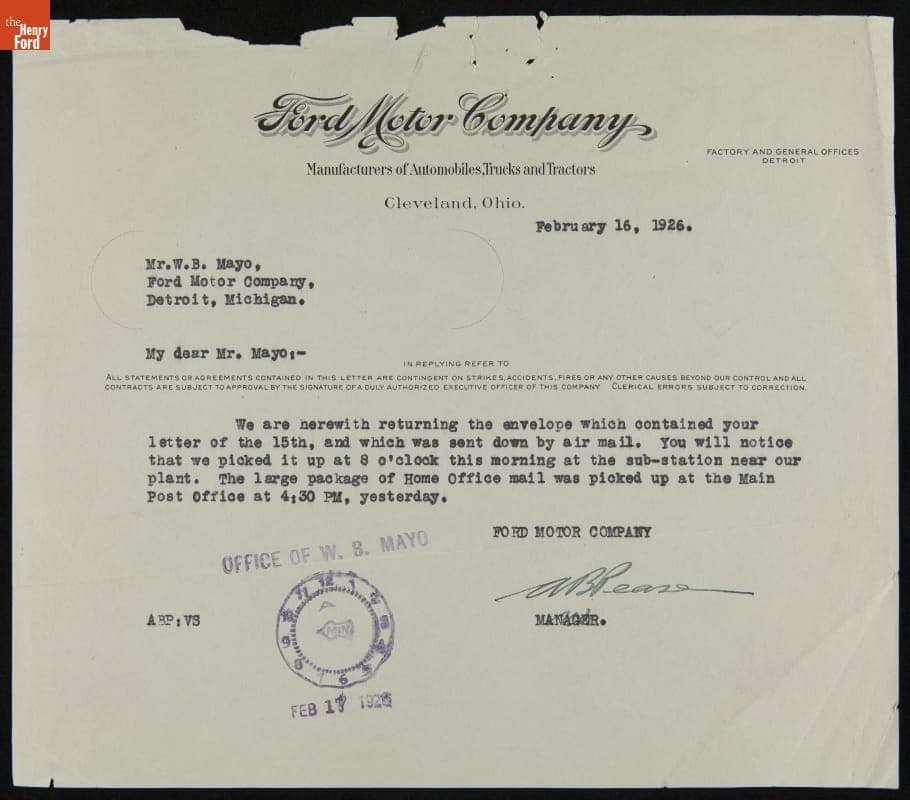
- Letter from Ford Motor Company Cleveland Branch Manager A.B. Pease regarding the First Commercial Air Mail Flight (CAM-6), February 1926 - After operating air mail flights itself for eight years, the U.S. Post Office Department contracted with commercial air carriers in 1926. The first two contract routes, connecting Detroit with Cleveland and Chicago, were awarded to Ford Air Transport, Ford Motor Company's airline subsidiary. Ford planes carried more than 32,000 pounds of mail before the contract ended in July 1928.
- February 15, 1925
- Collections - Artifact
Letter from Ford Motor Company Cleveland Branch Manager A.B. Pease regarding the First Commercial Air Mail Flight (CAM-6), February 1926
After operating air mail flights itself for eight years, the U.S. Post Office Department contracted with commercial air carriers in 1926. The first two contract routes, connecting Detroit with Cleveland and Chicago, were awarded to Ford Air Transport, Ford Motor Company's airline subsidiary. Ford planes carried more than 32,000 pounds of mail before the contract ended in July 1928.
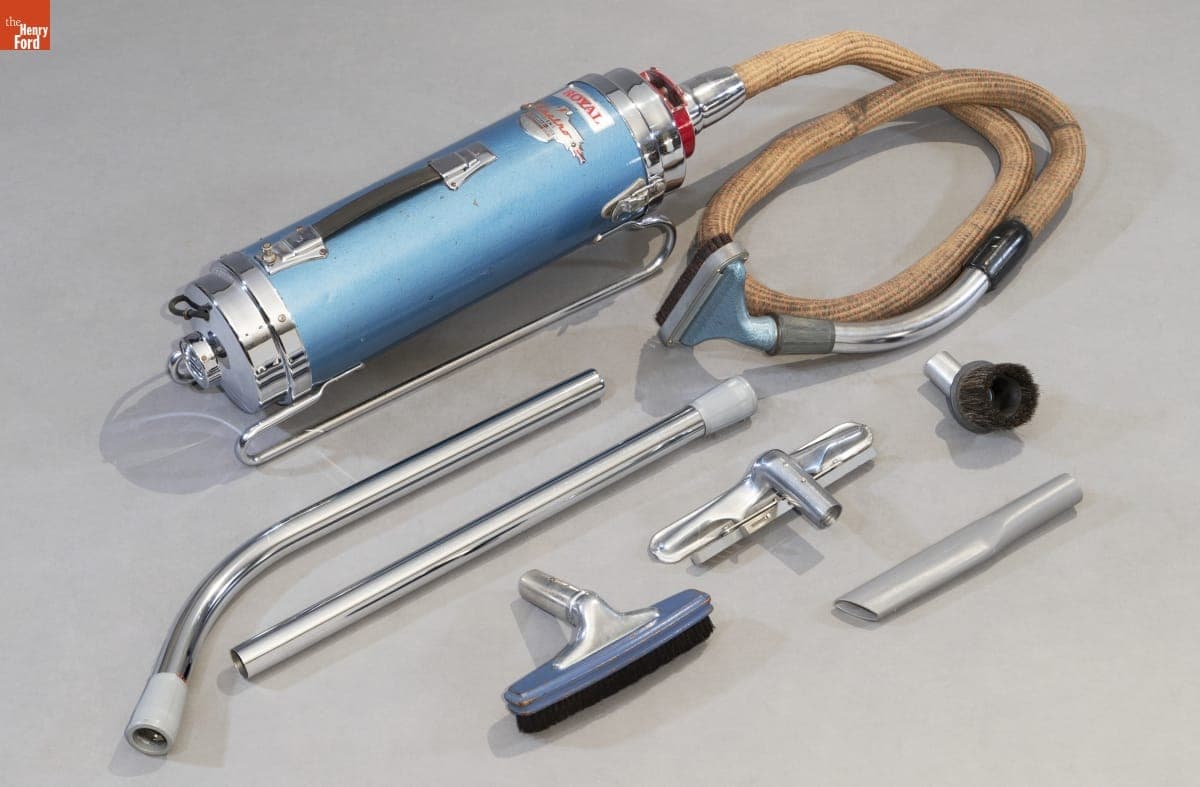
- P.A. Geier Company "Royal" Tank Vacuum Cleaner, circa 1950 -
- circa 1950
- Collections - Artifact
P.A. Geier Company "Royal" Tank Vacuum Cleaner, circa 1950
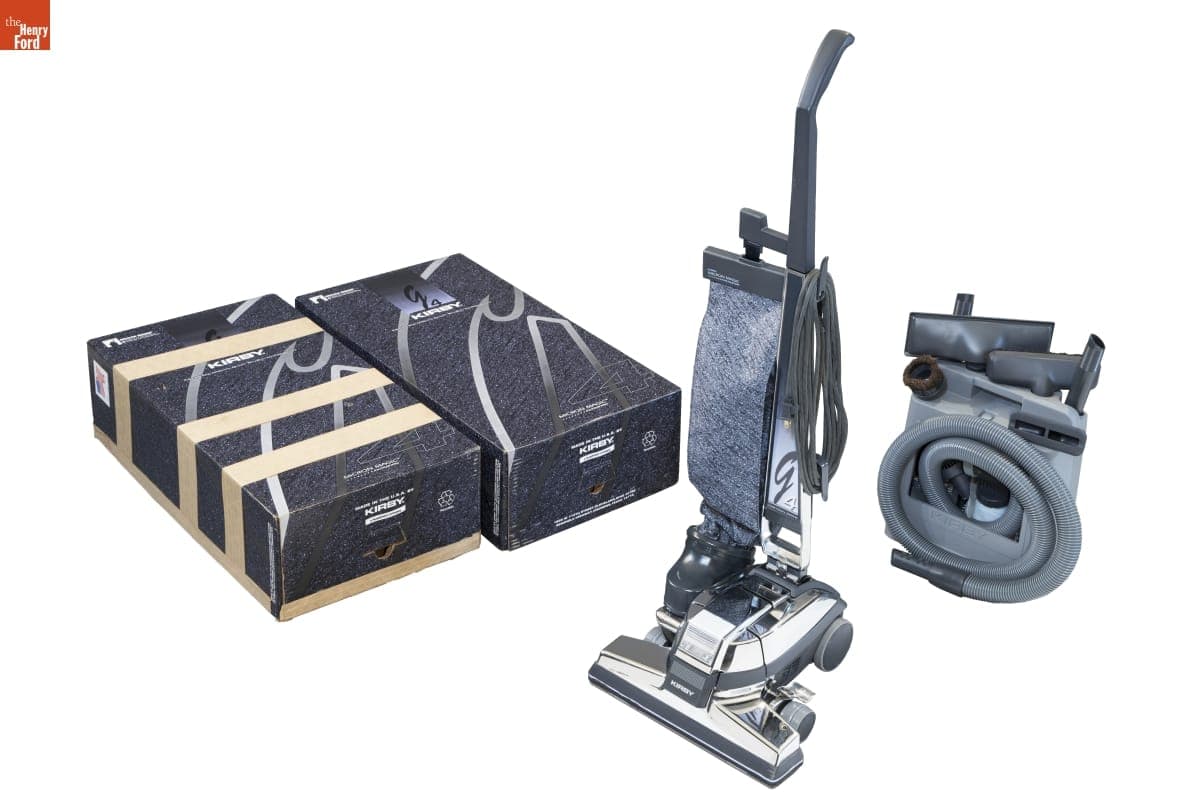
- Scott & Fetzer Company "Kirby G4" Vacuum Cleaner, 1995 -
- 1995
- Collections - Artifact
Scott & Fetzer Company "Kirby G4" Vacuum Cleaner, 1995
- National Carbon Company Plain Forced Arc Light Carbons, 1886-1900 - Carbon rods, like these, were used in arc lamps, the first widely used form of electric light in the late 1800s. The lamp's brilliant light, created by an electric arc between precisely spaced rods, effectively illuminated city streets, factories, and other large areas--though falling sparks could prove hazardous. Eventually, improvements in other types of arc discharge lamps made carbon rods virtually obsolete.
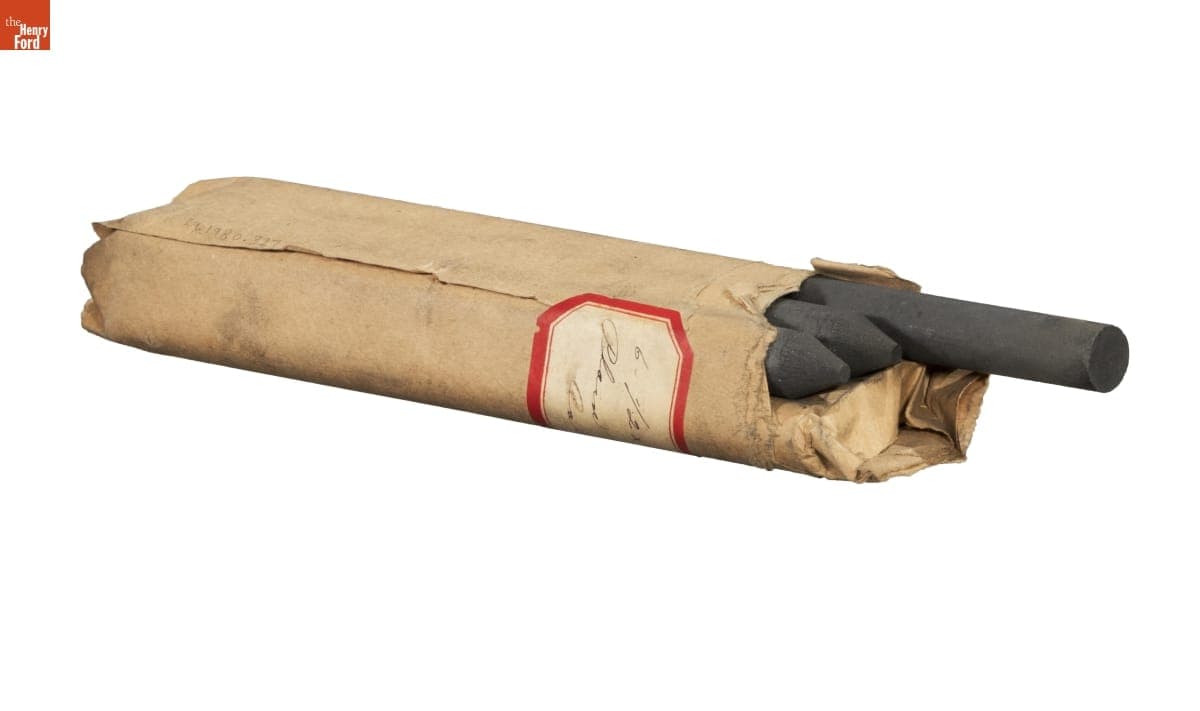
- 1886-1900
- Collections - Artifact
National Carbon Company Plain Forced Arc Light Carbons, 1886-1900
Carbon rods, like these, were used in arc lamps, the first widely used form of electric light in the late 1800s. The lamp's brilliant light, created by an electric arc between precisely spaced rods, effectively illuminated city streets, factories, and other large areas--though falling sparks could prove hazardous. Eventually, improvements in other types of arc discharge lamps made carbon rods virtually obsolete.
- National Carbon Company Philadelphia Arc Light Carbon, 1886-1900 - Carbon plates, like these, were used in arc lamps, the first widely used form of electric light in the late 1800s. The lamp's brilliant light, created by an electric arc between precisely spaced plates, effectively illuminated city streets, factories, and other large areas--though falling sparks could prove hazardous. Eventually, improvements in other types of arc discharge lamps made carbon plates virtually obsolete.

- 1886-1900
- Collections - Artifact
National Carbon Company Philadelphia Arc Light Carbon, 1886-1900
Carbon plates, like these, were used in arc lamps, the first widely used form of electric light in the late 1800s. The lamp's brilliant light, created by an electric arc between precisely spaced plates, effectively illuminated city streets, factories, and other large areas--though falling sparks could prove hazardous. Eventually, improvements in other types of arc discharge lamps made carbon plates virtually obsolete.