
Search
- Covered Compote, 1875-1890 - Compotes are all-purpose serving dishes. These usually footed bowls -- with or without lids or covers -- held special desserts, fruits, candies or sauces, jellies and other foods. Blown or pressed glass compotes provided a culinary presentation method suitable to 19th-century middle-class households.
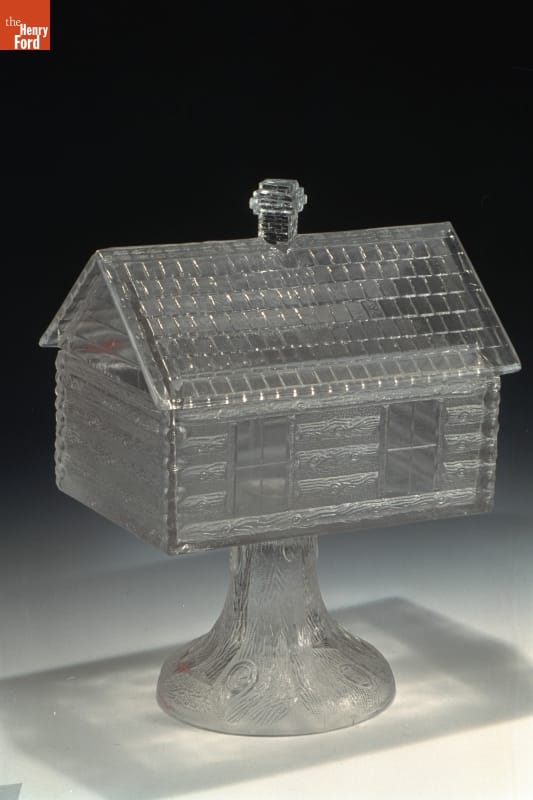
- 1875-1890
- Collections - Artifact
Covered Compote, 1875-1890
Compotes are all-purpose serving dishes. These usually footed bowls -- with or without lids or covers -- held special desserts, fruits, candies or sauces, jellies and other foods. Blown or pressed glass compotes provided a culinary presentation method suitable to 19th-century middle-class households.
- Tumbler, circa 1955 - From the late 1930s through the 1960s, glass manufacturers designed "hostess sets" for every taste and budget. Often presented as wedding or housewarming gifts, these sets became features of the popular cocktail and patio parties of the time. Tumblers embellished with stylized "boomerangs" -- a symbol of the 1950s modern aesthetic -- showed guests the up-to-date style of the mid-20th century hostess.
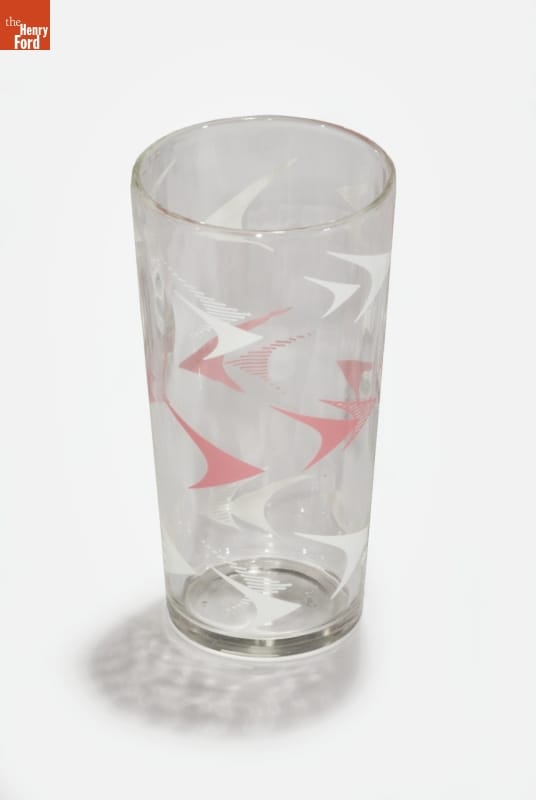
- circa 1955
- Collections - Artifact
Tumbler, circa 1955
From the late 1930s through the 1960s, glass manufacturers designed "hostess sets" for every taste and budget. Often presented as wedding or housewarming gifts, these sets became features of the popular cocktail and patio parties of the time. Tumblers embellished with stylized "boomerangs" -- a symbol of the 1950s modern aesthetic -- showed guests the up-to-date style of the mid-20th century hostess.
- Luncheon Plate, 1923 - Henry Ford, Thomas Edison, Harvey Firestone and naturalist John Burroughs embarked on a series of camping trips between 1916 and 1924. These self-proclaimed Vagabonds loved to explore nature and the pre-industrial landscape, but they also camped in style. This group of well-to-do adventurers brought along service staff and all needed amenities including a set of durable, Art and Crafts-patterned china.
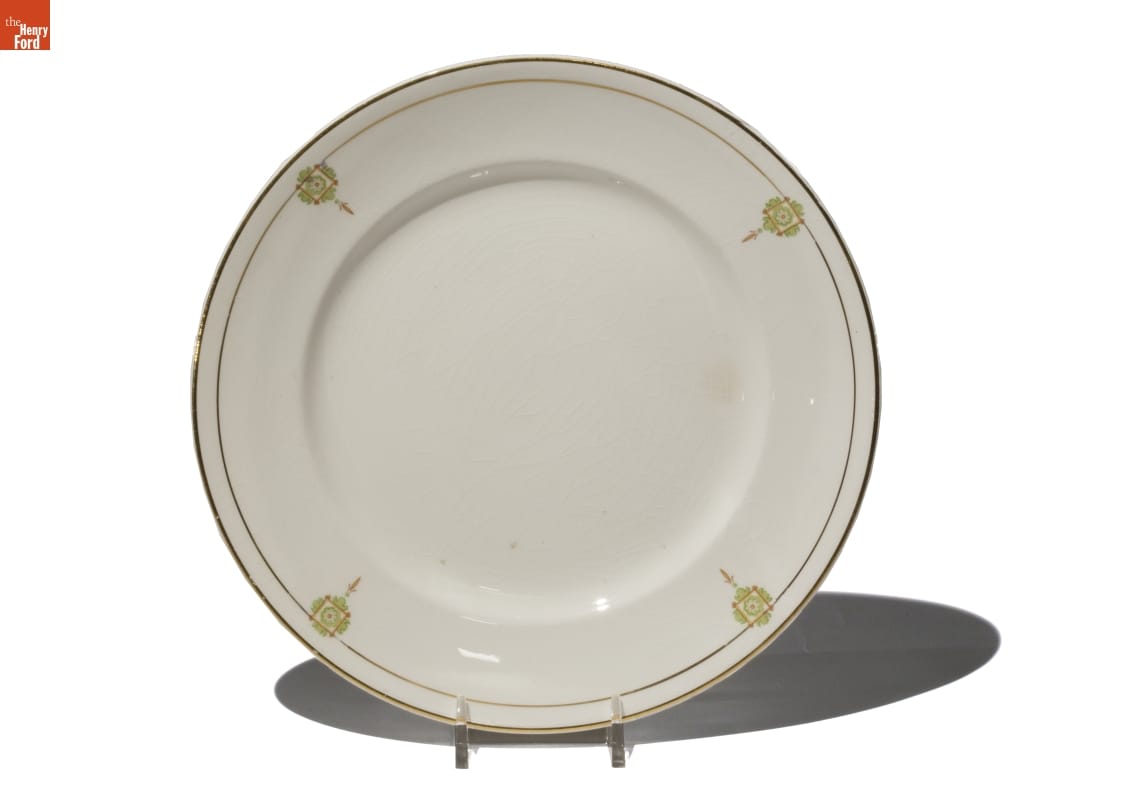
- 1923
- Collections - Artifact
Luncheon Plate, 1923
Henry Ford, Thomas Edison, Harvey Firestone and naturalist John Burroughs embarked on a series of camping trips between 1916 and 1924. These self-proclaimed Vagabonds loved to explore nature and the pre-industrial landscape, but they also camped in style. This group of well-to-do adventurers brought along service staff and all needed amenities including a set of durable, Art and Crafts-patterned china.
- Jewelry Box, 1895-1915 -
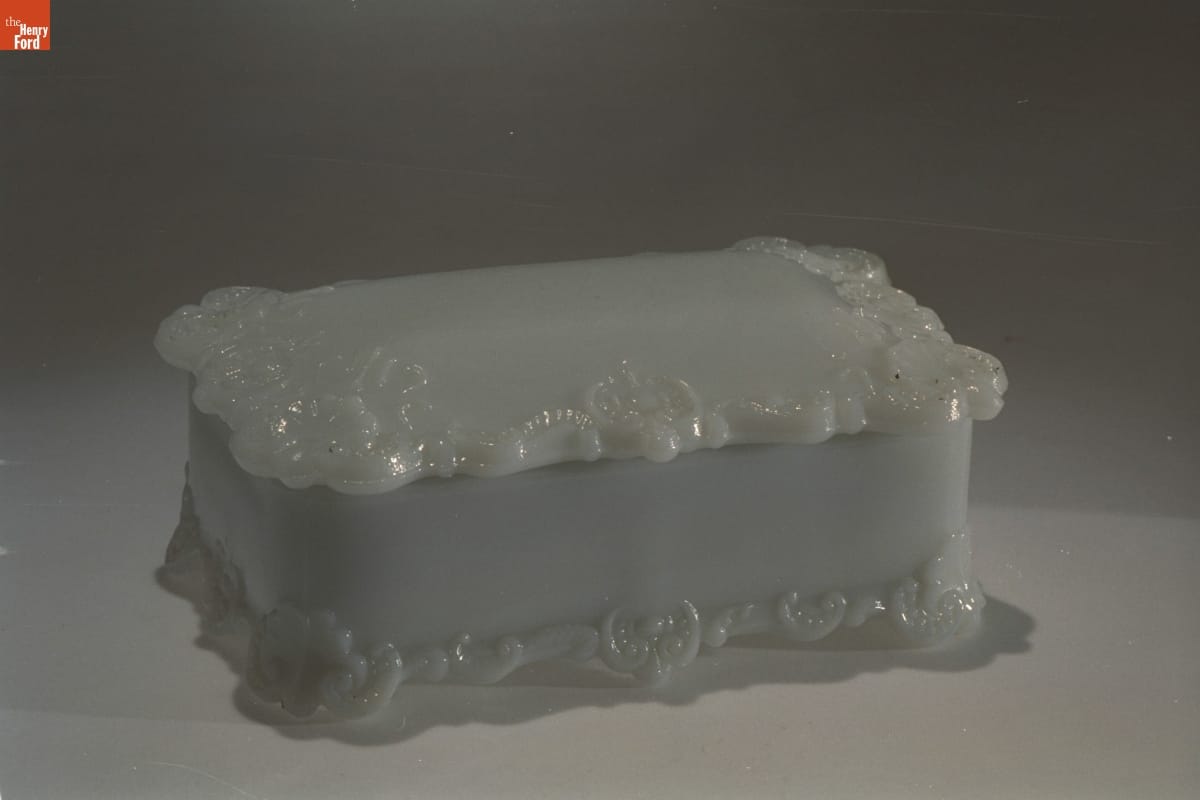
- 1895-1915
- Collections - Artifact
Jewelry Box, 1895-1915
- Covered Dish, 1894-1903 - Nineteenth-century American glassmakers experimented with new methods to create products for a growing consumer market. In the 1820s, pressing glass into metal molds by machine was perfected, and by the mid-1800s, manufacturers were creating a variety of inexpensive pressed glass housewares. America's middle-class consumers could now decorate their homes with attractive glass bowls, creamers, dishes, plates, vases, and other tableware.
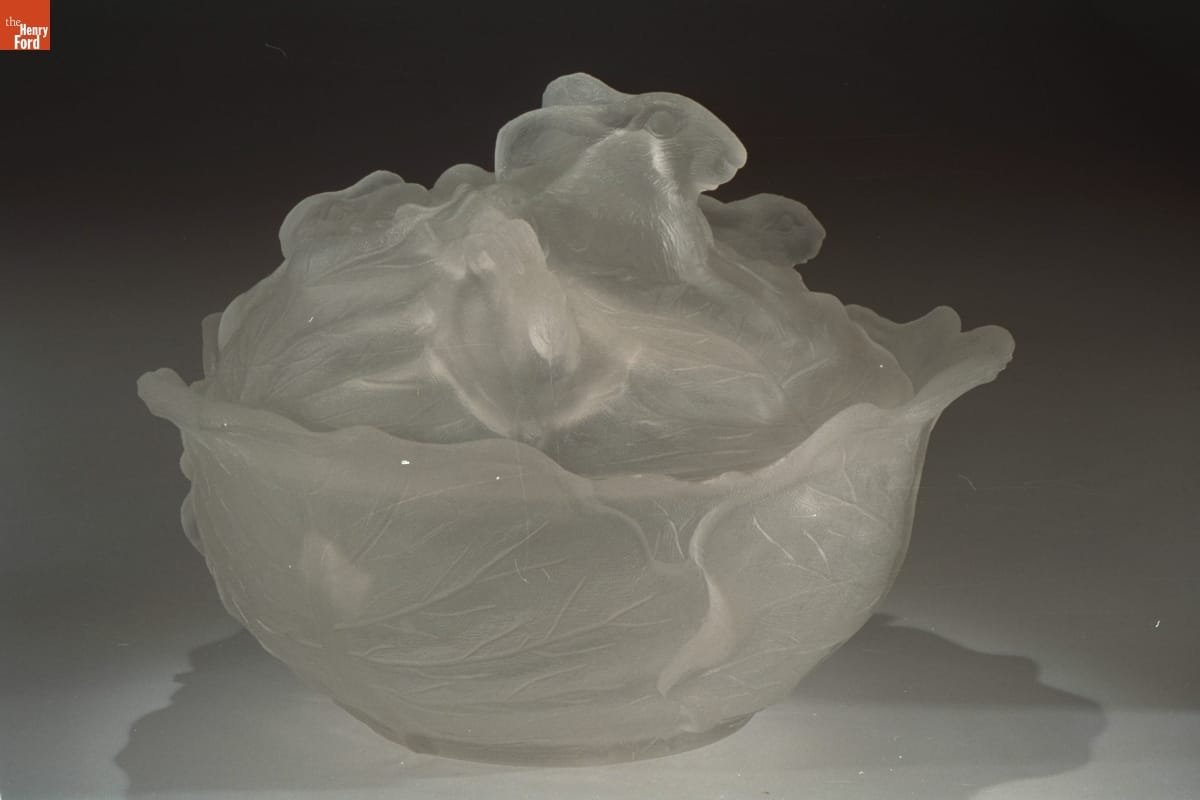
- 1880-1900
- Collections - Artifact
Covered Dish, 1894-1903
Nineteenth-century American glassmakers experimented with new methods to create products for a growing consumer market. In the 1820s, pressing glass into metal molds by machine was perfected, and by the mid-1800s, manufacturers were creating a variety of inexpensive pressed glass housewares. America's middle-class consumers could now decorate their homes with attractive glass bowls, creamers, dishes, plates, vases, and other tableware.
- Fairy Lamp, circa 1900 - Fairy lamps became popular in the late 19th century for use in a hallway or bedroom. Sold in three pieces, a burner, saucer, and dome-shaped cap, the buyer could choose to use either a candle or kerosene as fuel. The cap contained the flame, allowing it to burn throughout the night.
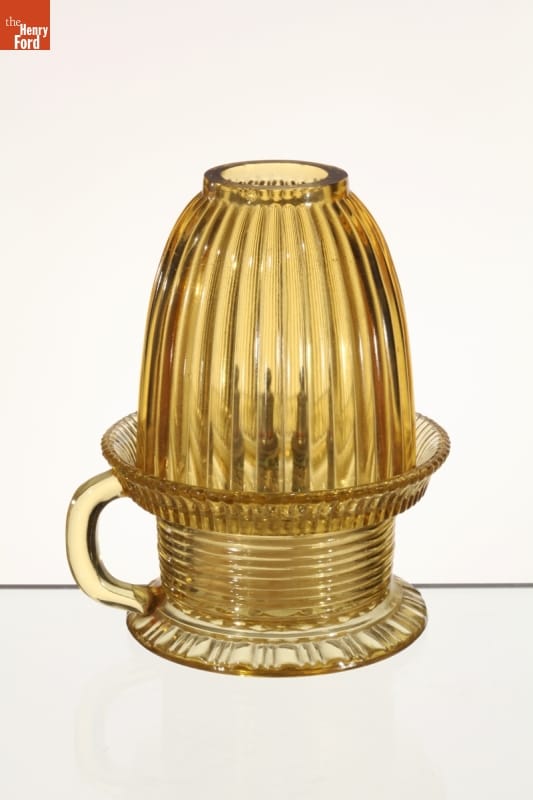
- circa 1900
- Collections - Artifact
Fairy Lamp, circa 1900
Fairy lamps became popular in the late 19th century for use in a hallway or bedroom. Sold in three pieces, a burner, saucer, and dome-shaped cap, the buyer could choose to use either a candle or kerosene as fuel. The cap contained the flame, allowing it to burn throughout the night.
- Tumblers Designed by Russel Wright, 1940-1960 -
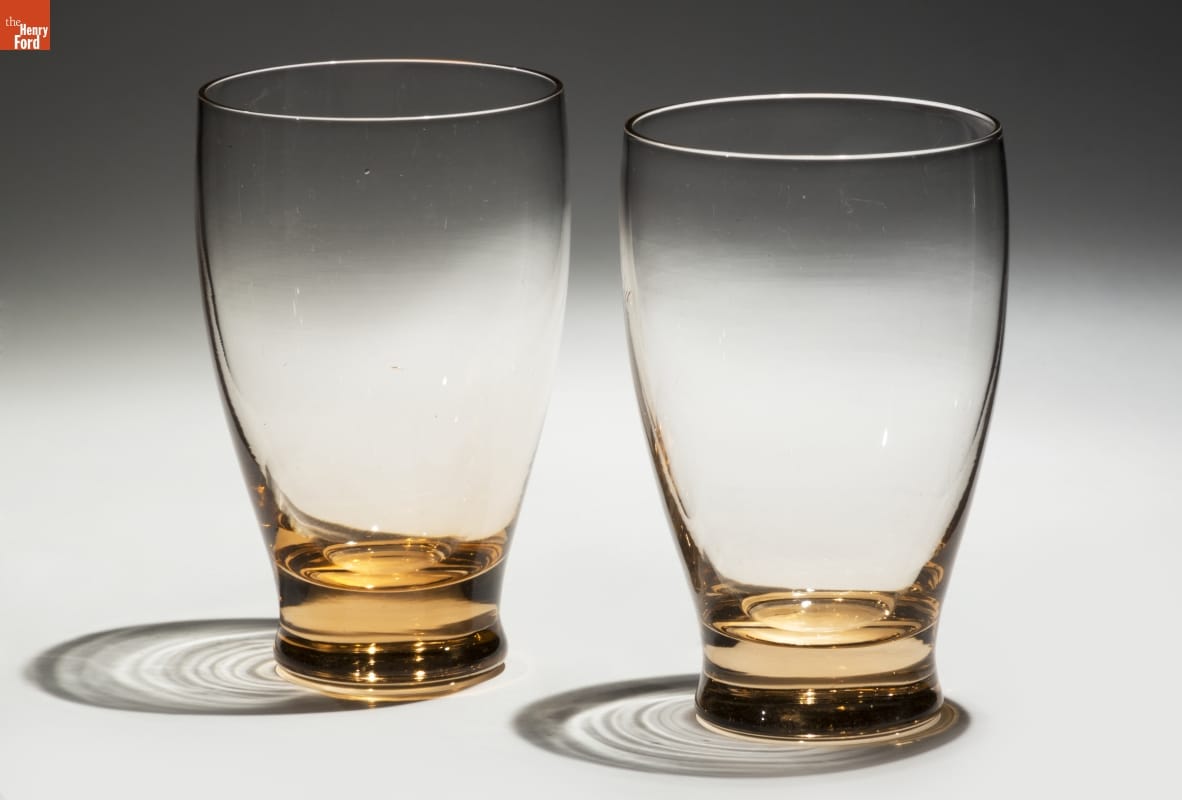
- 1940-1960
- Collections - Artifact
Tumblers Designed by Russel Wright, 1940-1960
- Tumbler Designed by Russel Wright, 1940-1960 -
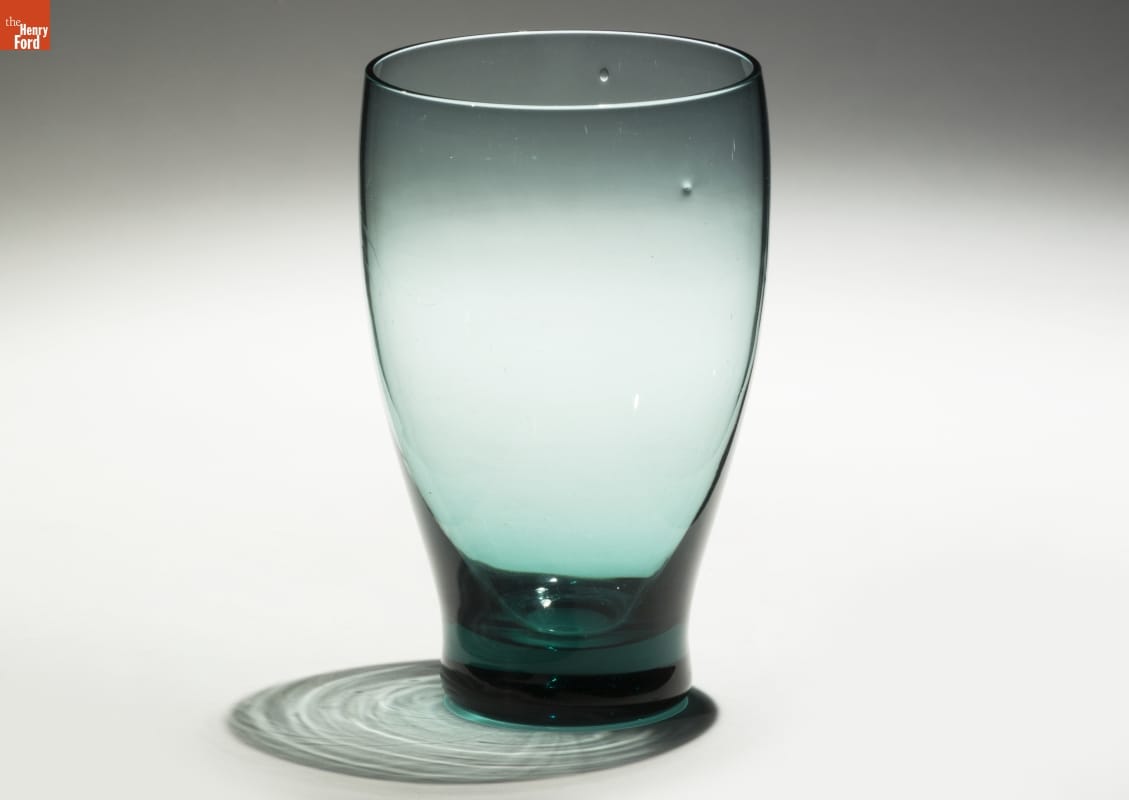
- 1940-1960
- Collections - Artifact
Tumbler Designed by Russel Wright, 1940-1960
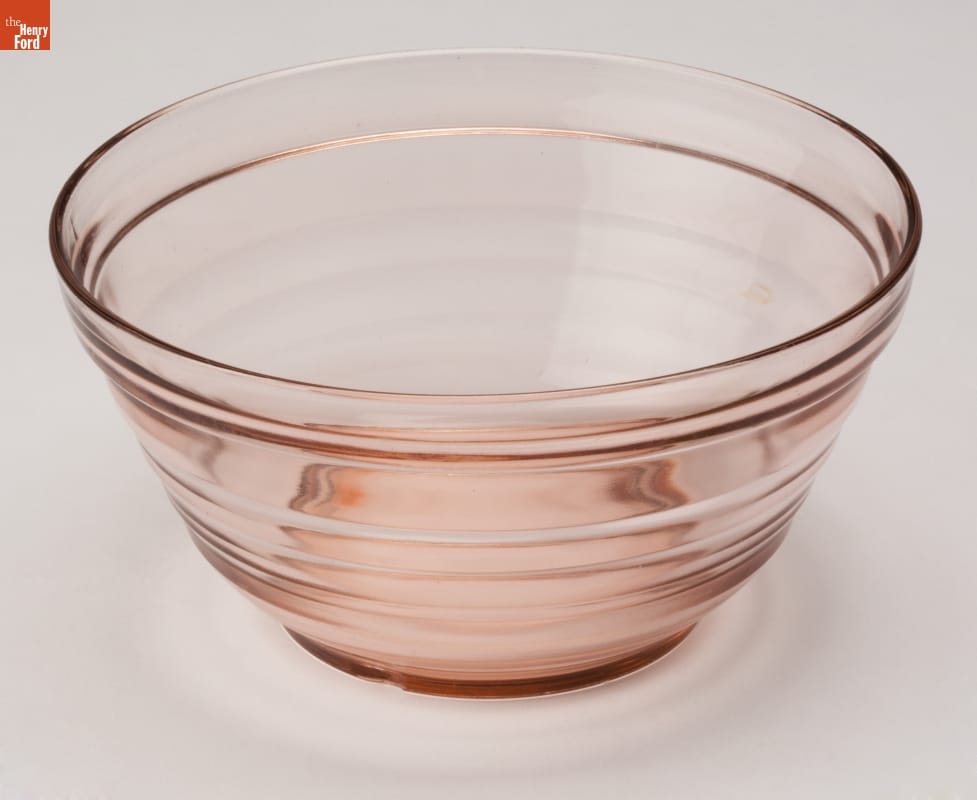
- Serving Bowl, 1934-1952 - During the 1930s, some American glass manufacturers produced inexpensive, pressed glass serving ware. The glassware, which came in a variety of colors and scores of distinct patterns, could be bought at many lower-end retailers as well as through catalogue merchants. Movie theaters and other businesses also gave it away -- intending to lure the cash-strapped Depression-era public inside.
- 1934-1952
- Collections - Artifact
Serving Bowl, 1934-1952
During the 1930s, some American glass manufacturers produced inexpensive, pressed glass serving ware. The glassware, which came in a variety of colors and scores of distinct patterns, could be bought at many lower-end retailers as well as through catalogue merchants. Movie theaters and other businesses also gave it away -- intending to lure the cash-strapped Depression-era public inside.
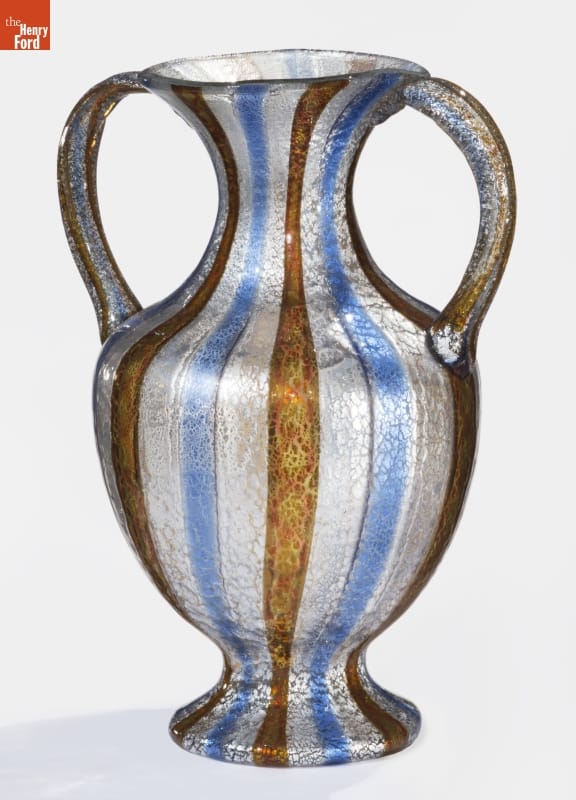
- Vase, 1880-1890 - Art Glass is ornamental and decorative glass dating from the mid-to-late 19th century through the early 20th century. Makers of Art Glass employed newly developed technologies for producing vibrant colors and surface textures. This is most famously seen in the iridescent surfaces of Louis Comfort Tiffany and his contemporaries, although Art Glass took many shapes and forms.
- 1880-1890
- Collections - Artifact
Vase, 1880-1890
Art Glass is ornamental and decorative glass dating from the mid-to-late 19th century through the early 20th century. Makers of Art Glass employed newly developed technologies for producing vibrant colors and surface textures. This is most famously seen in the iridescent surfaces of Louis Comfort Tiffany and his contemporaries, although Art Glass took many shapes and forms.