
Search
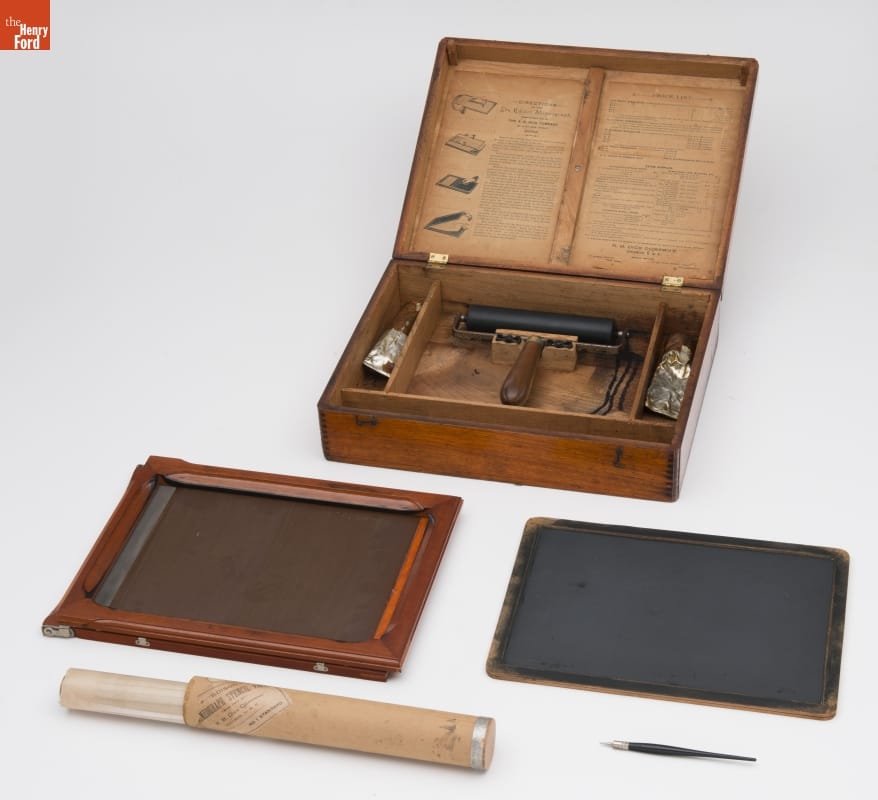
- Edison No. 1 Mimeograph, 1887 - Thomas Edison received a patent in 1876 for "Autographic Printing," covering the electric pen and flatbed press; a patent for "Autographic Stencils" followed in 1880. The mimeograph was invented by Albert Blake Dick in 1887, who licensed and refined Edison's patents. This low-cost, stencil-based printing technology was popular until displaced by photocopying machines and offset printing in the 1960s.
- 1887
- Collections - Artifact
Edison No. 1 Mimeograph, 1887
Thomas Edison received a patent in 1876 for "Autographic Printing," covering the electric pen and flatbed press; a patent for "Autographic Stencils" followed in 1880. The mimeograph was invented by Albert Blake Dick in 1887, who licensed and refined Edison's patents. This low-cost, stencil-based printing technology was popular until displaced by photocopying machines and offset printing in the 1960s.
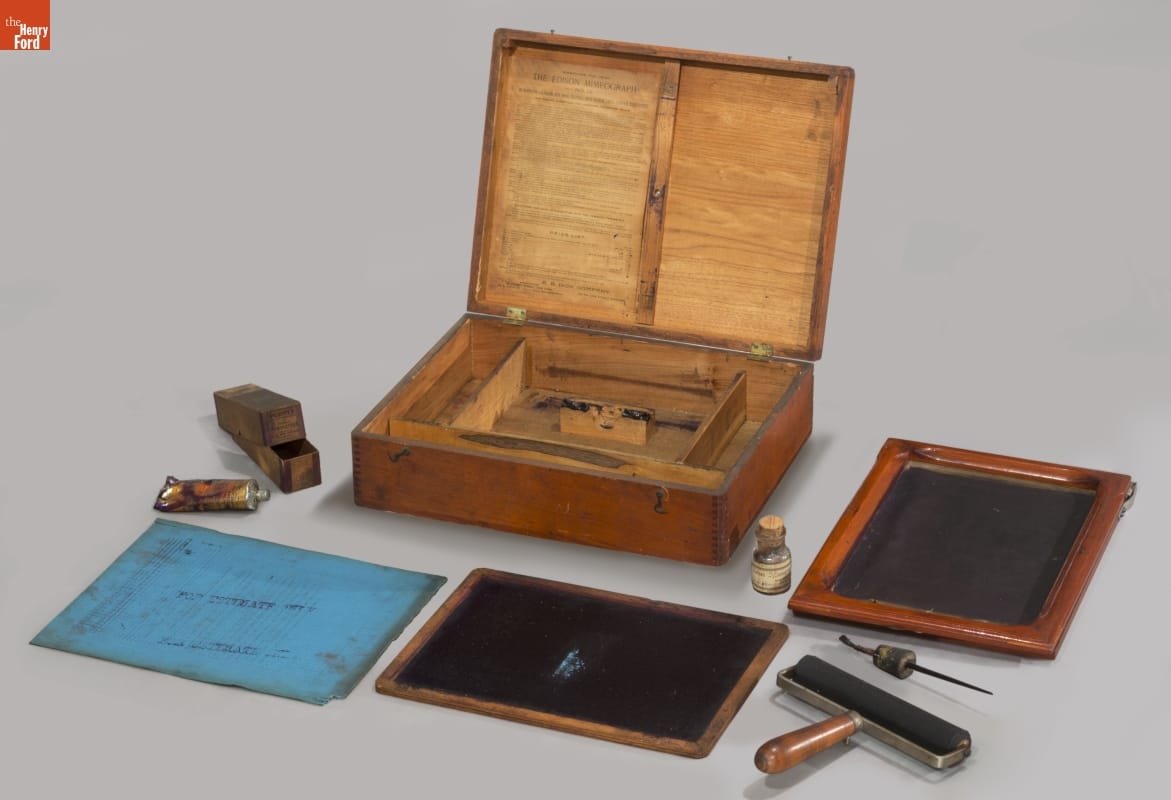
- A.B. Dick Co. Edison Mimeograph No. 12, 1895-1915 -
- 1895-1915
- Collections - Artifact
A.B. Dick Co. Edison Mimeograph No. 12, 1895-1915
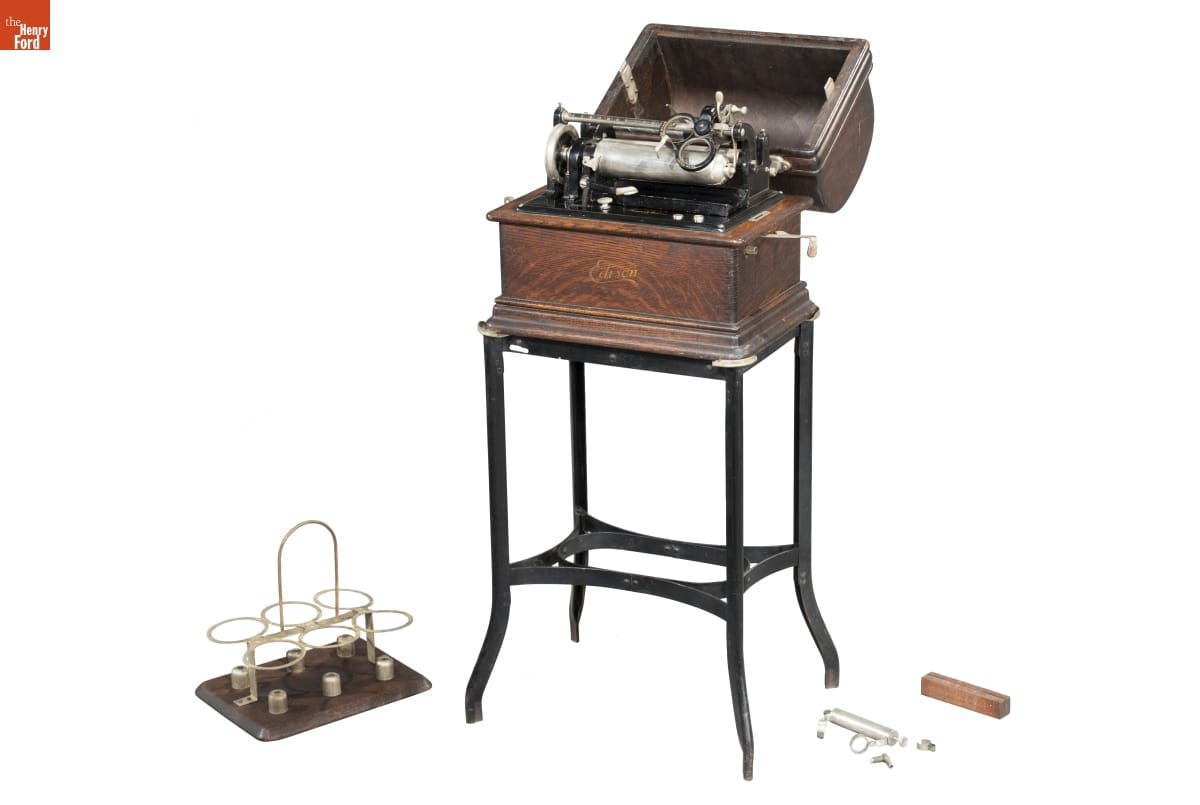
- Ediphone, Model D - Dictaphones and Ediphones were sound recording devices used for efficient oral dictation in business settings. When Edison invented the phonograph, one proposed use was "dictation without the aid of stenographers." Its tinfoil playback medium lacked quality, however. Alexander Graham Bell's Graphophone (later, Dictaphone) improved the phonograph by using wax cylinders for superior playback; cylinders were also used in the competing Ediphone.
- Collections - Artifact
Ediphone, Model D
Dictaphones and Ediphones were sound recording devices used for efficient oral dictation in business settings. When Edison invented the phonograph, one proposed use was "dictation without the aid of stenographers." Its tinfoil playback medium lacked quality, however. Alexander Graham Bell's Graphophone (later, Dictaphone) improved the phonograph by using wax cylinders for superior playback; cylinders were also used in the competing Ediphone.
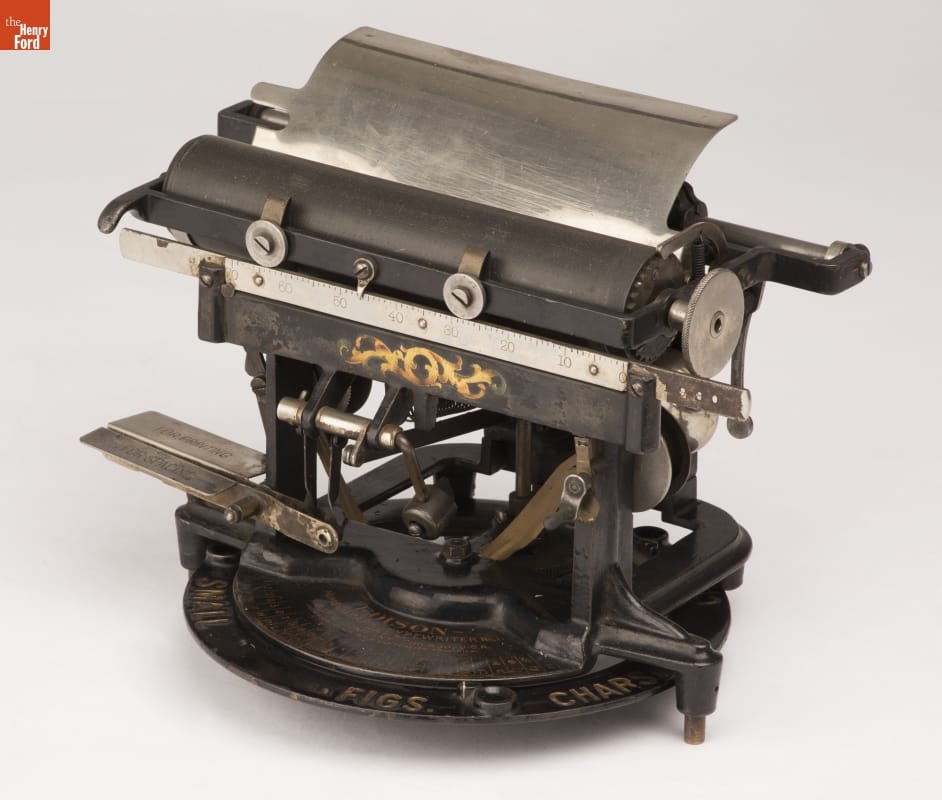
- Edison Mimeograph Typewriter No.1, 1895-1897 - Thomas Edison received a patent in 1876 for "Autographic Printing," covering the electric pen and flatbed press; a patent for "Autographic Stencils" followed in 1880. The mimeograph was invented by Albert Blake Dick in 1887, who licensed and refined Edison's patents. This low-cost, stencil-based printing technology was popular until displaced by photocopying machines and offset printing in the 1960s.
- 1895-1897
- Collections - Artifact
Edison Mimeograph Typewriter No.1, 1895-1897
Thomas Edison received a patent in 1876 for "Autographic Printing," covering the electric pen and flatbed press; a patent for "Autographic Stencils" followed in 1880. The mimeograph was invented by Albert Blake Dick in 1887, who licensed and refined Edison's patents. This low-cost, stencil-based printing technology was popular until displaced by photocopying machines and offset printing in the 1960s.
- Edison Rotary Mimeograph, No. 75, 1906-1930 - Thomas Edison received a patent in 1876 for "Autographic Printing," covering the electric pen and flatbed press; a patent for "Autographic Stencils" followed in 1880. The mimeograph was invented by Albert Blake Dick in 1887, who licensed and refined Edison's patents. This low-cost, stencil-based printing technology was popular until displaced by photocopying machines and offset printing in the 1960s.
- 1906-1930
- Collections - Artifact
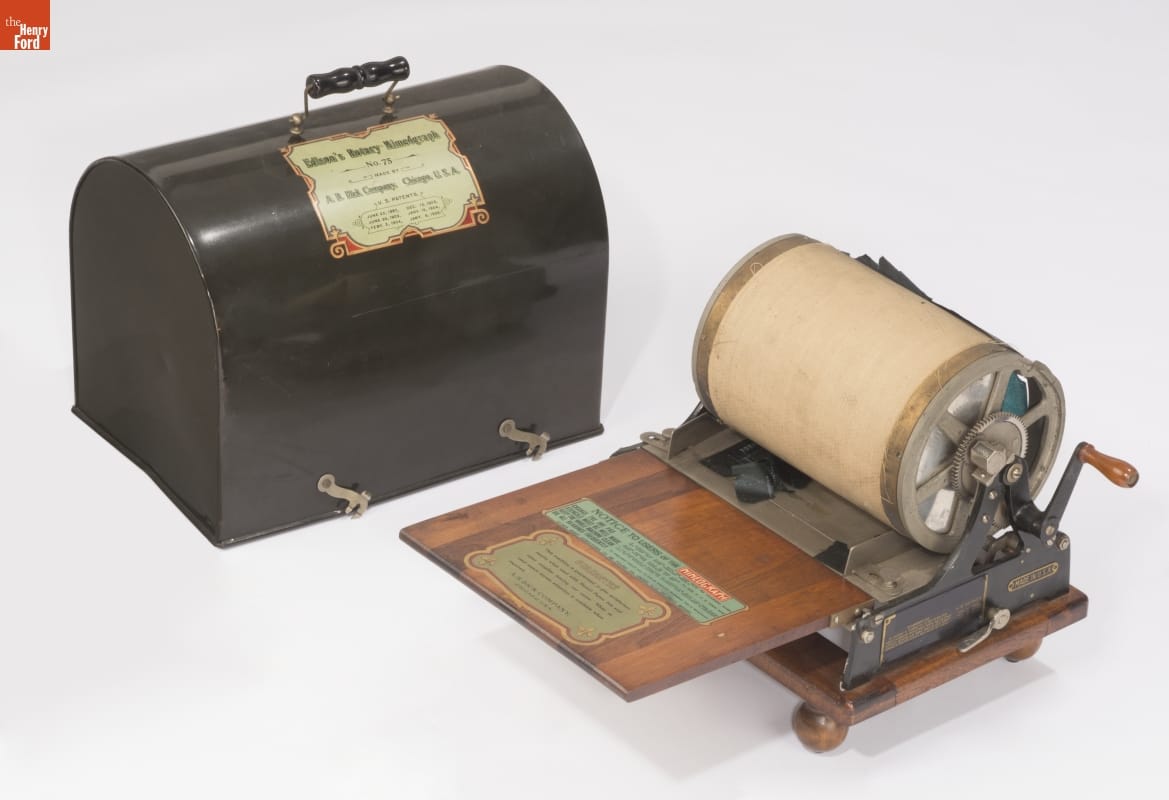
Edison Rotary Mimeograph, No. 75, 1906-1930
Thomas Edison received a patent in 1876 for "Autographic Printing," covering the electric pen and flatbed press; a patent for "Autographic Stencils" followed in 1880. The mimeograph was invented by Albert Blake Dick in 1887, who licensed and refined Edison's patents. This low-cost, stencil-based printing technology was popular until displaced by photocopying machines and offset printing in the 1960s.
- "New Simplified Mimeograph for Every Office. No Expert Needed to Produce Superior Copies," 1960 -
- 1960
- Collections - Artifact
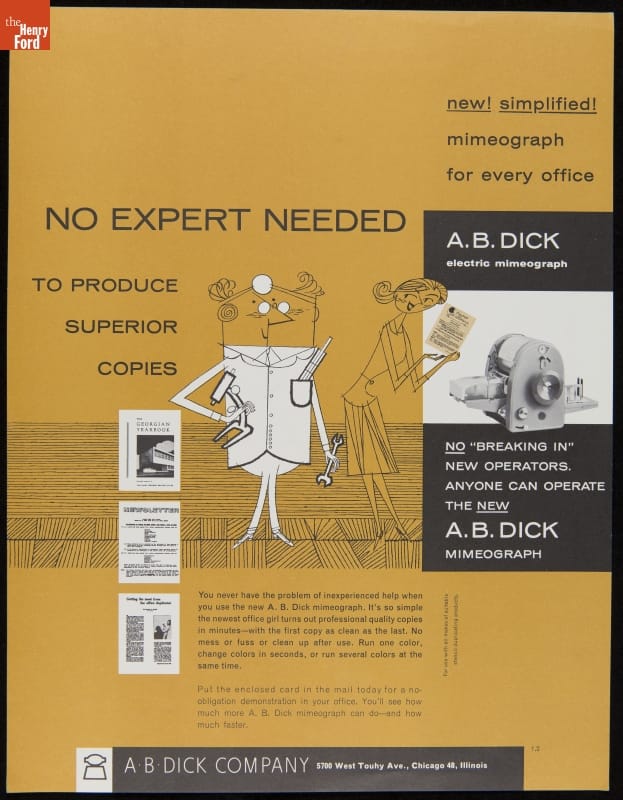
"New Simplified Mimeograph for Every Office. No Expert Needed to Produce Superior Copies," 1960
- Ediphone - Dictaphones and Ediphones were sound recording devices used for efficient oral dictation in business settings. When Edison invented the phonograph, one proposed use was "dictation without the aid of stenographers." Its tinfoil playback medium lacked quality, however. Alexander Graham Bell's Graphophone (later, Dictaphone) improved the phonograph by using wax cylinders for superior playback; cylinders were also used in the competing Ediphone.
- Collections - Artifact
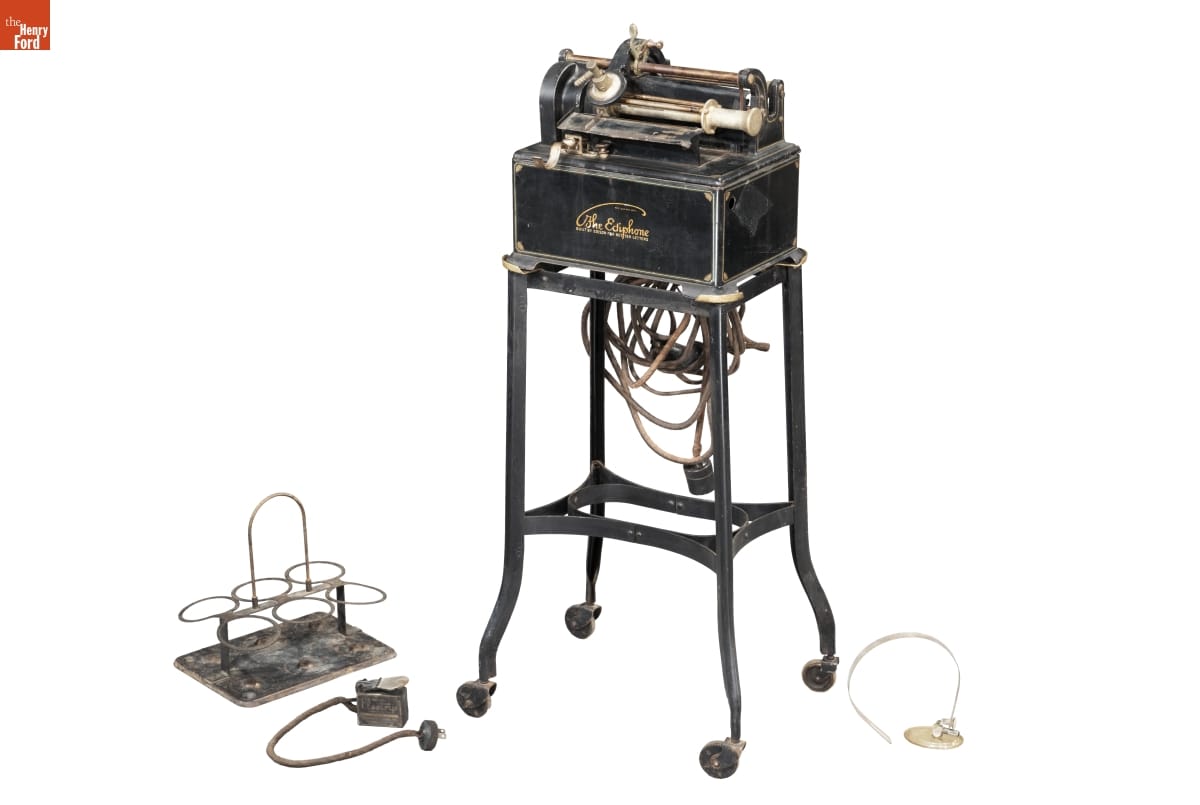
Ediphone
Dictaphones and Ediphones were sound recording devices used for efficient oral dictation in business settings. When Edison invented the phonograph, one proposed use was "dictation without the aid of stenographers." Its tinfoil playback medium lacked quality, however. Alexander Graham Bell's Graphophone (later, Dictaphone) improved the phonograph by using wax cylinders for superior playback; cylinders were also used in the competing Ediphone.
- Edison-Dick Mimeograph Print Recorder No. 78, 1925-1930 - Thomas Edison received a patent in 1876 for "Autographic Printing," covering the electric pen and flatbed press; a patent for "Autographic Stencils" followed in 1880. The mimeograph was invented by Albert Blake Dick in 1887, who licensed and refined Edison's patents. This low-cost, stencil-based printing technology was popular until displaced by photocopying machines and offset printing in the 1960s.
- 1925-1930
- Collections - Artifact
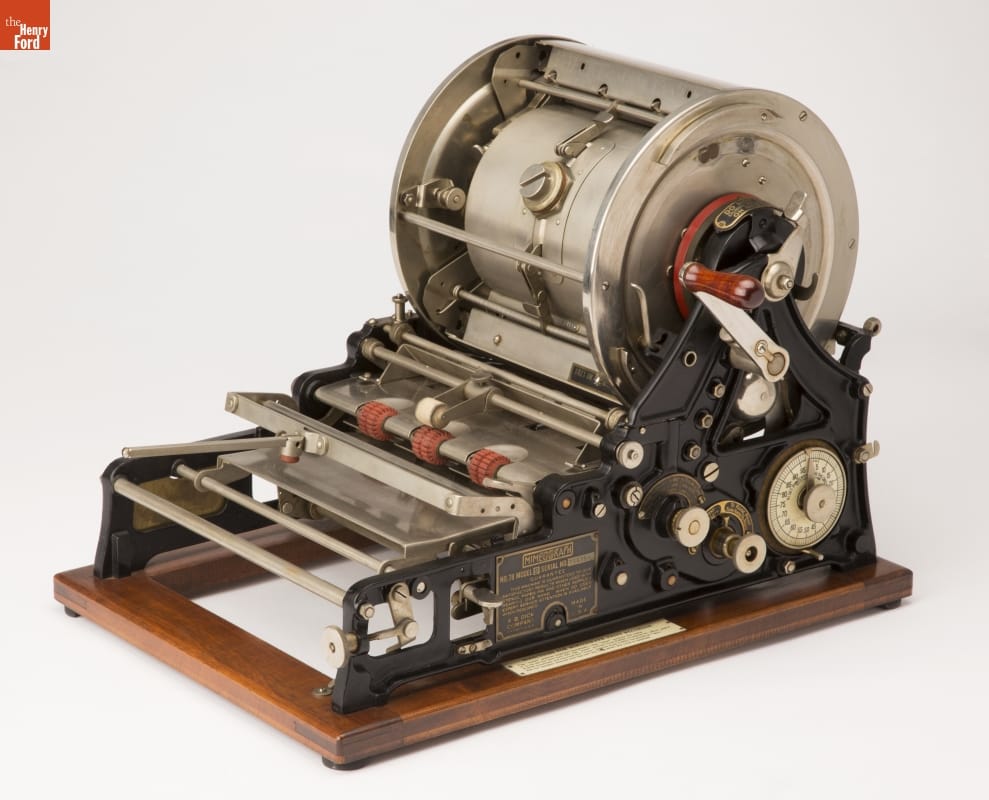
Edison-Dick Mimeograph Print Recorder No. 78, 1925-1930
Thomas Edison received a patent in 1876 for "Autographic Printing," covering the electric pen and flatbed press; a patent for "Autographic Stencils" followed in 1880. The mimeograph was invented by Albert Blake Dick in 1887, who licensed and refined Edison's patents. This low-cost, stencil-based printing technology was popular until displaced by photocopying machines and offset printing in the 1960s.
- Edison No.3 Mimeograph, 1887 - Thomas Edison received a patent in 1876 for "Autographic Printing," covering the electric pen and flatbed press; a patent for "Autographic Stencils" followed in 1880. The mimeograph was invented by Albert Blake Dick in 1887, who licensed and refined Edison's patents. This low-cost, stencil-based printing technology was popular until displaced by photocopying machines and offset printing in the 1960s.
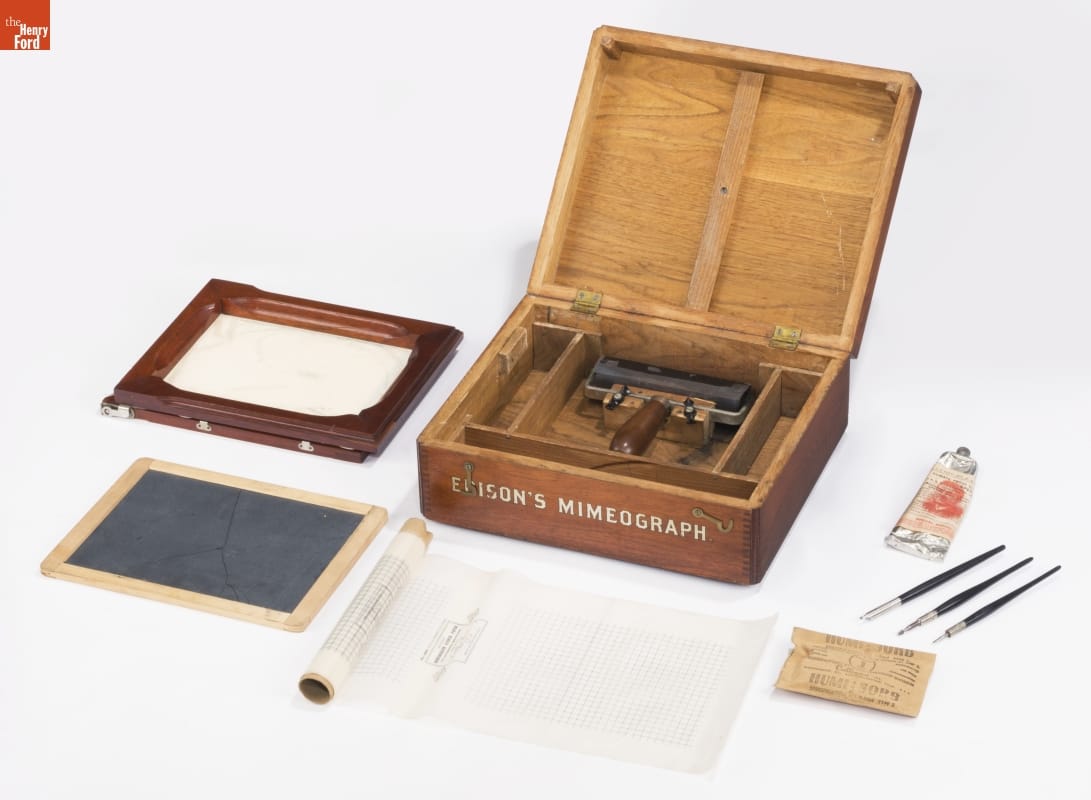
- 1887
- Collections - Artifact
Edison No.3 Mimeograph, 1887
Thomas Edison received a patent in 1876 for "Autographic Printing," covering the electric pen and flatbed press; a patent for "Autographic Stencils" followed in 1880. The mimeograph was invented by Albert Blake Dick in 1887, who licensed and refined Edison's patents. This low-cost, stencil-based printing technology was popular until displaced by photocopying machines and offset printing in the 1960s.
- Edison Mimeograph Typewriter No.1, 1895-1897 - Thomas Edison received a patent in 1876 for "Autographic Printing," covering the electric pen and flatbed press; a patent for "Autographic Stencils" followed in 1880. The mimeograph was invented by Albert Blake Dick in 1887, who licensed and refined Edison's patents. This low-cost, stencil-based printing technology was popular until displaced by photocopying machines and offset printing in the 1960s.
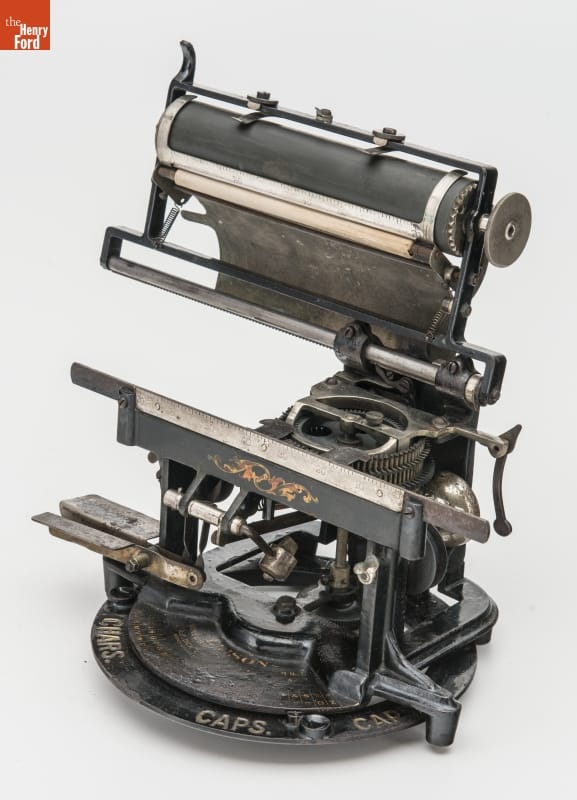
- 1895-1897
- Collections - Artifact
Edison Mimeograph Typewriter No.1, 1895-1897
Thomas Edison received a patent in 1876 for "Autographic Printing," covering the electric pen and flatbed press; a patent for "Autographic Stencils" followed in 1880. The mimeograph was invented by Albert Blake Dick in 1887, who licensed and refined Edison's patents. This low-cost, stencil-based printing technology was popular until displaced by photocopying machines and offset printing in the 1960s.