
Search
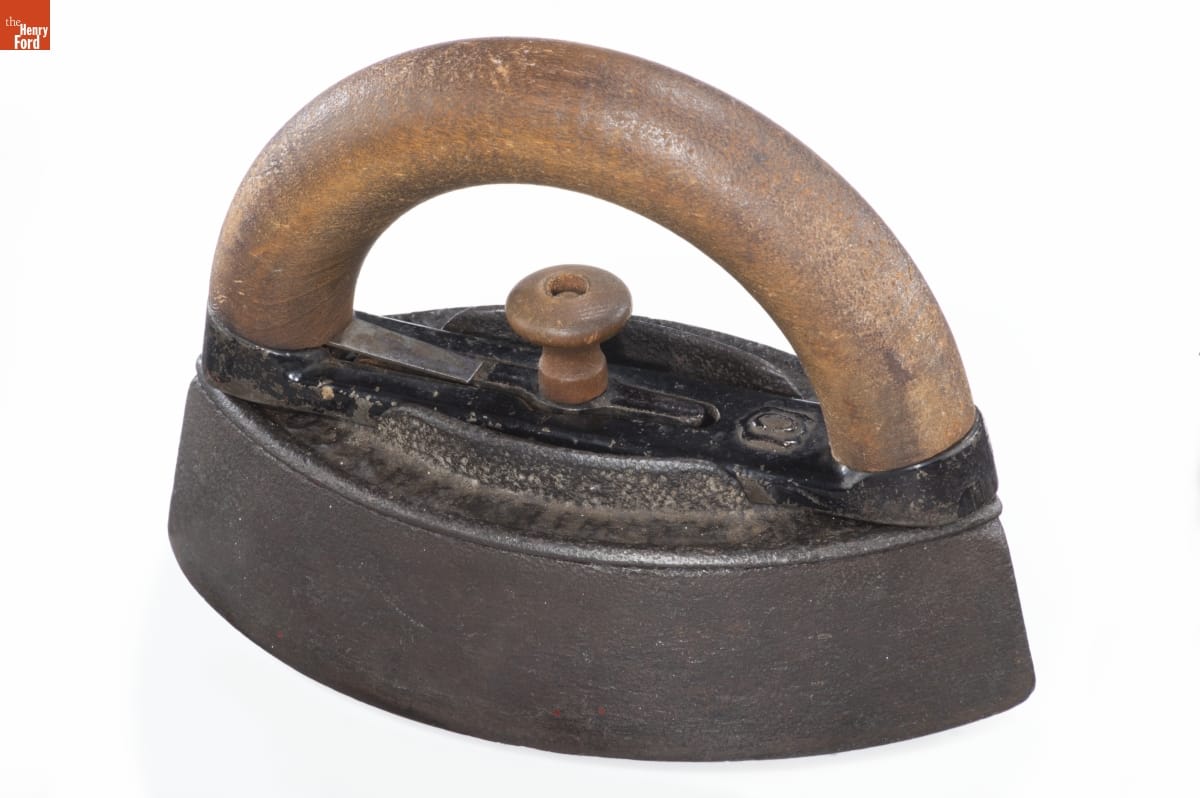
- Flatiron, 1893-1910 - In the 1870s, Mary Florence Potts made ironing easier. Conventional single-piece, cast iron flatirons were heated on stoves -- and the handle got hot! Mrs. Potts invented and patented a detachable wood handle that stayed cool and could be switched between her irons. The irons also featured two pointed ends that allowed users to work in either direction. Mrs. Potts' irons remained popular into the 20th century.
- 1893-1910
- Collections - Artifact
Flatiron, 1893-1910
In the 1870s, Mary Florence Potts made ironing easier. Conventional single-piece, cast iron flatirons were heated on stoves -- and the handle got hot! Mrs. Potts invented and patented a detachable wood handle that stayed cool and could be switched between her irons. The irons also featured two pointed ends that allowed users to work in either direction. Mrs. Potts' irons remained popular into the 20th century.
- House Bank, 1900-1930 - In the late-19th and early-20th centuries, several manufacturers marketed cast-iron toy banks to parents as a way to encourage thrift in children. Some banks used mechanical actions to deposit a coin, while others, like this one, just had a slot where the coin was dropped. These simple banks came in a variety of shapes that delighted children of all ages.
- 1900-1930
- Collections - Artifact
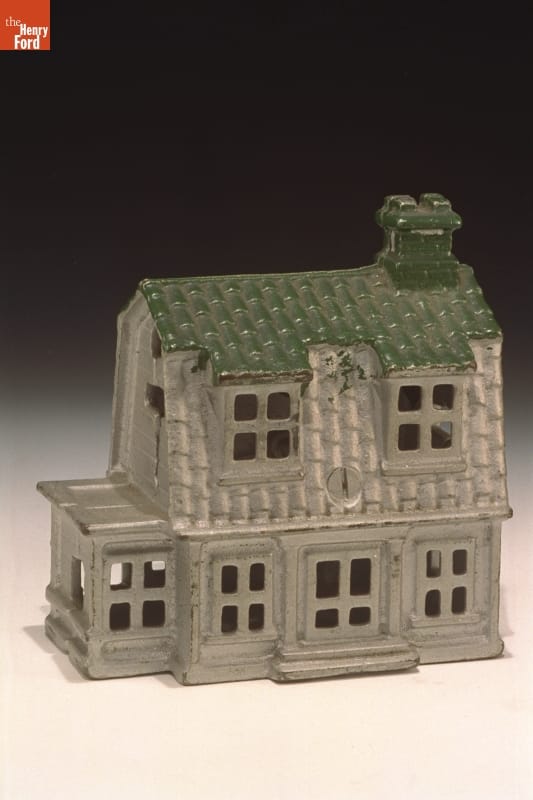
House Bank, 1900-1930
In the late-19th and early-20th centuries, several manufacturers marketed cast-iron toy banks to parents as a way to encourage thrift in children. Some banks used mechanical actions to deposit a coin, while others, like this one, just had a slot where the coin was dropped. These simple banks came in a variety of shapes that delighted children of all ages.
- Lion Bank, 1910-1930 - In the late-19th and early-20th centuries, several manufacturers marketed cast-iron toy banks to parents as a way to encourage thrift in children. Some banks used mechanical actions to deposit a coin, while others, like this one, just had a slot where the coin was dropped. These simple banks came in a variety of shapes that delighted children of all ages.
- 1910-1930
- Collections - Artifact
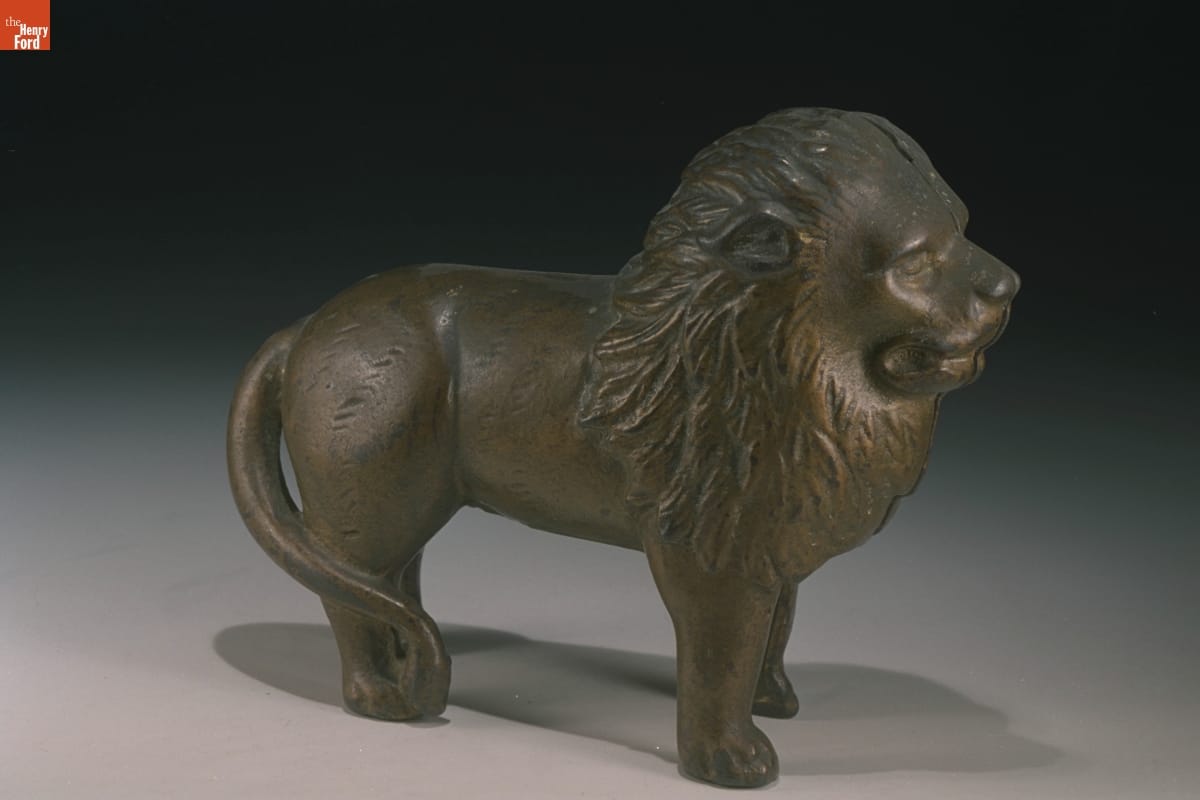
Lion Bank, 1910-1930
In the late-19th and early-20th centuries, several manufacturers marketed cast-iron toy banks to parents as a way to encourage thrift in children. Some banks used mechanical actions to deposit a coin, while others, like this one, just had a slot where the coin was dropped. These simple banks came in a variety of shapes that delighted children of all ages.