
Search
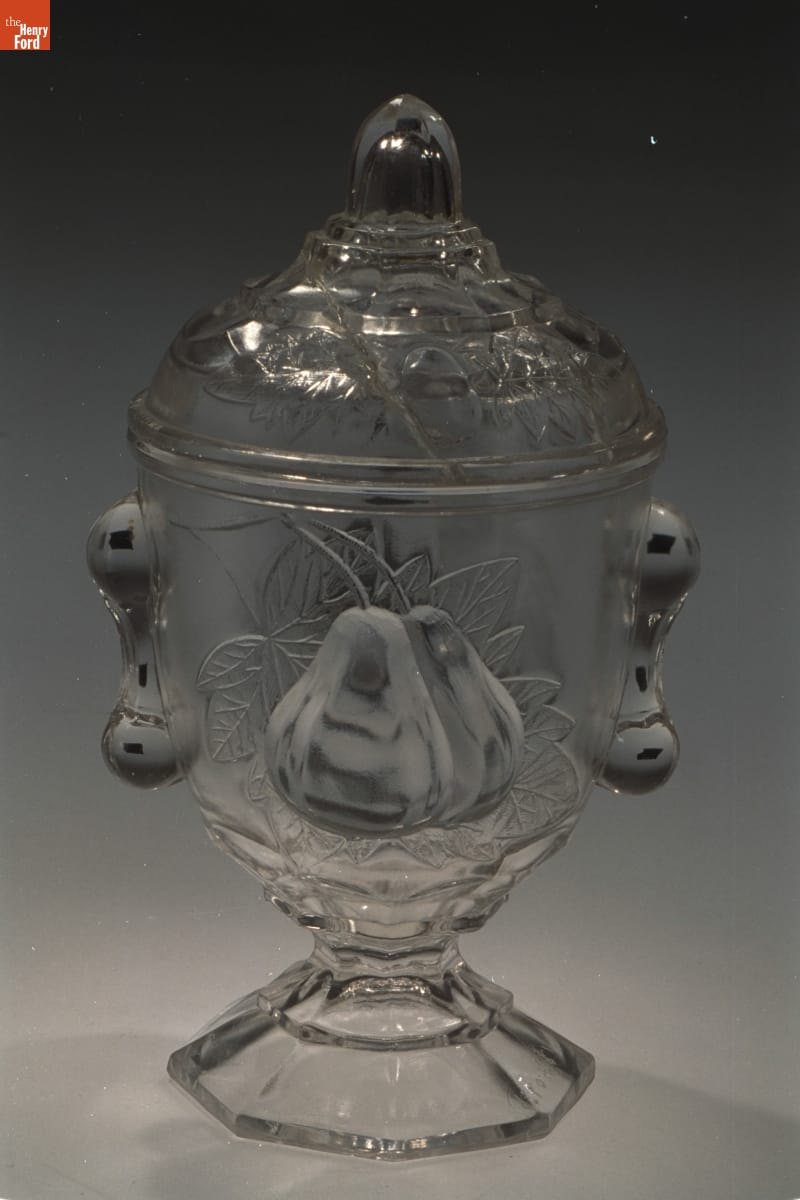
- Covered Sugar Bowl, 1874-1895 - Middle-class Americans in the late 19th century arrayed their dining tables with affordable pressed-glass tableware. These items, usually sold in sets, came in a wide variety of patterns, colors and styles. These decorative pieces -- like this sugar bowl -- communicated a family's status and taste to visitors and guests.
- 1874-1895
- Collections - Artifact
Covered Sugar Bowl, 1874-1895
Middle-class Americans in the late 19th century arrayed their dining tables with affordable pressed-glass tableware. These items, usually sold in sets, came in a wide variety of patterns, colors and styles. These decorative pieces -- like this sugar bowl -- communicated a family's status and taste to visitors and guests.
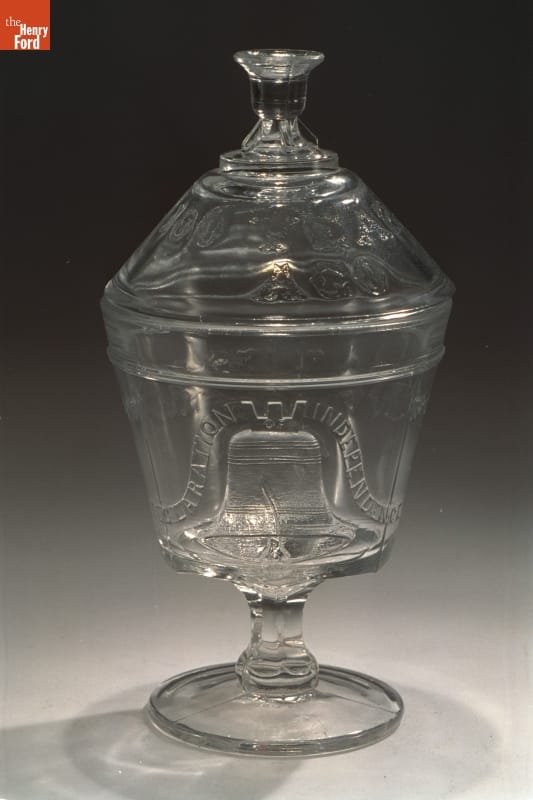
- Covered Sugar Bowl, 1875-1880 - The United States celebrated the 100th anniversary of its independence in 1876. To mark the event, glass manufacturers created plates, goblets, vases and sugar bowls decorated with symbols of American Independence. Proud citizens purchased these commemorative items to use and display in their houses and on their tables for years to come.
- 1875-1880
- Collections - Artifact
Covered Sugar Bowl, 1875-1880
The United States celebrated the 100th anniversary of its independence in 1876. To mark the event, glass manufacturers created plates, goblets, vases and sugar bowls decorated with symbols of American Independence. Proud citizens purchased these commemorative items to use and display in their houses and on their tables for years to come.
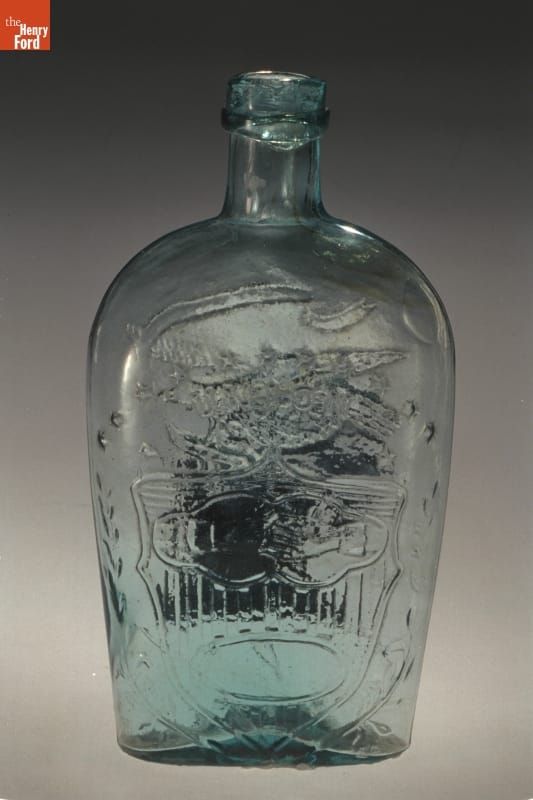
- Flask, 1865-1875 - Glass factories in America began producing inexpensive, mold-formed flasks in the early 1800s. These figured flasks, often decorated with symbols of national pride or political or cultural affiliation, appealed to America's common man. The clasping hands, shield and eagle represent the Union -- a cause many Americans fought to uphold during the Civil War.
- 1865-1875
- Collections - Artifact
Flask, 1865-1875
Glass factories in America began producing inexpensive, mold-formed flasks in the early 1800s. These figured flasks, often decorated with symbols of national pride or political or cultural affiliation, appealed to America's common man. The clasping hands, shield and eagle represent the Union -- a cause many Americans fought to uphold during the Civil War.
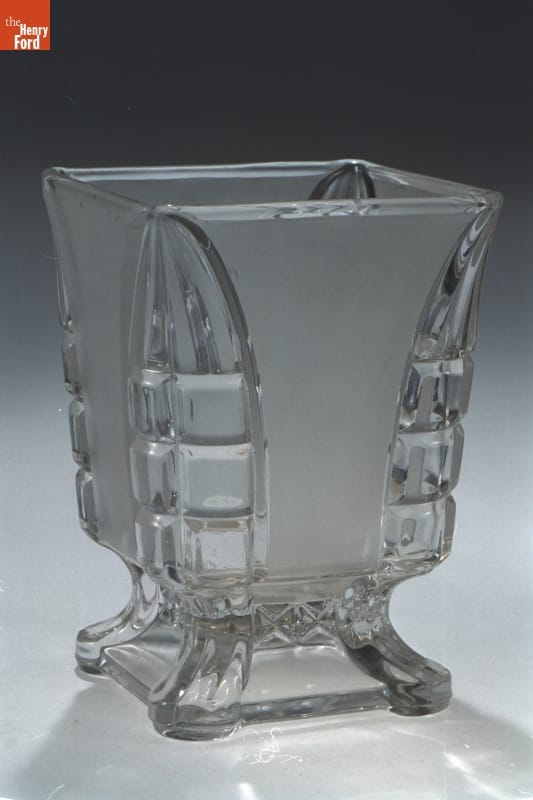
- Sugar Bowl, 1880-1900 - Middle-class Americans in the late 19th century arrayed their dining tables with affordable pressed-glass tableware. These items, usually sold in sets, came in a wide variety of patterns, colors and styles. These decorative pieces -- like this sugar bowl -- communicated a family's status and taste to visitors and guests.
- 1880-1900
- Collections - Artifact
Sugar Bowl, 1880-1900
Middle-class Americans in the late 19th century arrayed their dining tables with affordable pressed-glass tableware. These items, usually sold in sets, came in a wide variety of patterns, colors and styles. These decorative pieces -- like this sugar bowl -- communicated a family's status and taste to visitors and guests.
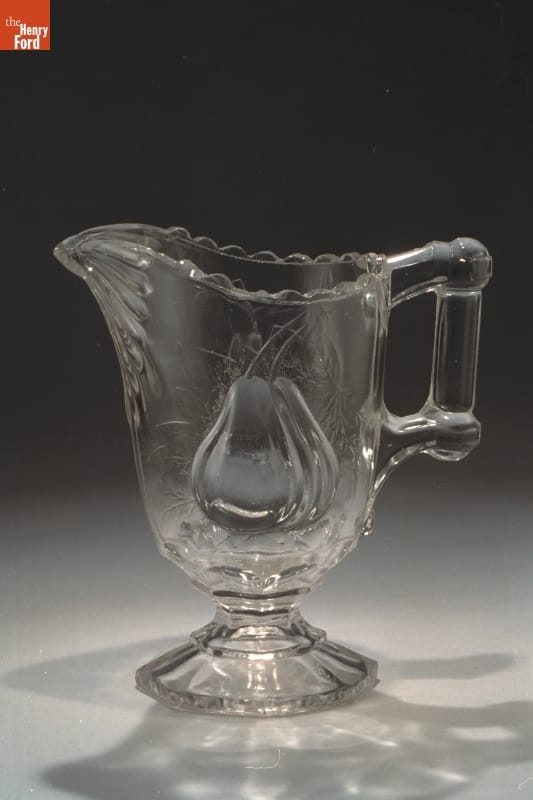
- Cream Pitcher, 1874-1895 - Middle-class Americans in the late 19th century arrayed their dining tables with affordable pressed-glass tableware. These items, usually sold in sets, came in a wide variety of patterns, colors, and styles. These decorative pieces -- like this cream pitcher -- communicated a family's status and taste to visitors and guests.
- 1874-1895
- Collections - Artifact
Cream Pitcher, 1874-1895
Middle-class Americans in the late 19th century arrayed their dining tables with affordable pressed-glass tableware. These items, usually sold in sets, came in a wide variety of patterns, colors, and styles. These decorative pieces -- like this cream pitcher -- communicated a family's status and taste to visitors and guests.
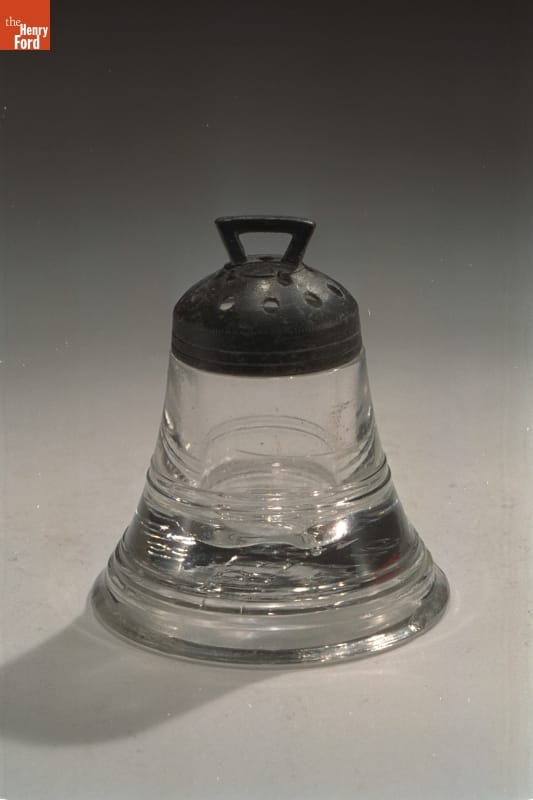
- Saltshaker, 1875-1880 - Glassmakers from around the world, including forty-seven American firms, mounted exhibitions at the 1876 Centennial Exposition in Philadelphia. Gillinder and Sons of Philadelphia constructed an entire working factory. Visitors could watch Gillinder craftsmen blow, press, engrave, and cut glass souvenirs celebrating the 100th anniversary of American independence. This salt shaker embodies an icon of national freedom, the Liberty Bell.
- 1875-1880
- Collections - Artifact
Saltshaker, 1875-1880
Glassmakers from around the world, including forty-seven American firms, mounted exhibitions at the 1876 Centennial Exposition in Philadelphia. Gillinder and Sons of Philadelphia constructed an entire working factory. Visitors could watch Gillinder craftsmen blow, press, engrave, and cut glass souvenirs celebrating the 100th anniversary of American independence. This salt shaker embodies an icon of national freedom, the Liberty Bell.
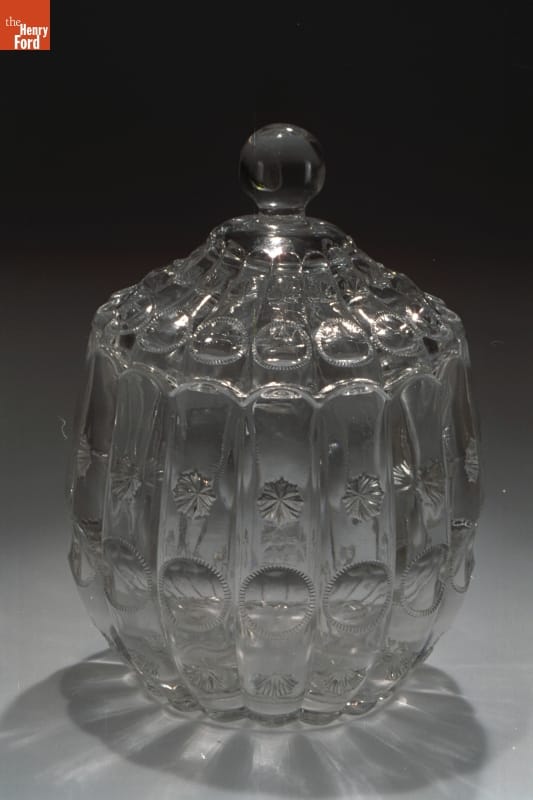
- Covered Sugar Bowl, 1874-1890 - Middle-class Americans in the late 19th century arrayed their dining tables with affordable pressed-glass tableware. These items, usually sold in sets, came in a wide variety of patterns, colors and styles. These decorative pieces -- like this sugar bowl -- communicated a family's status and taste to visitors and guests.
- 1874-1890
- Collections - Artifact
Covered Sugar Bowl, 1874-1890
Middle-class Americans in the late 19th century arrayed their dining tables with affordable pressed-glass tableware. These items, usually sold in sets, came in a wide variety of patterns, colors and styles. These decorative pieces -- like this sugar bowl -- communicated a family's status and taste to visitors and guests.
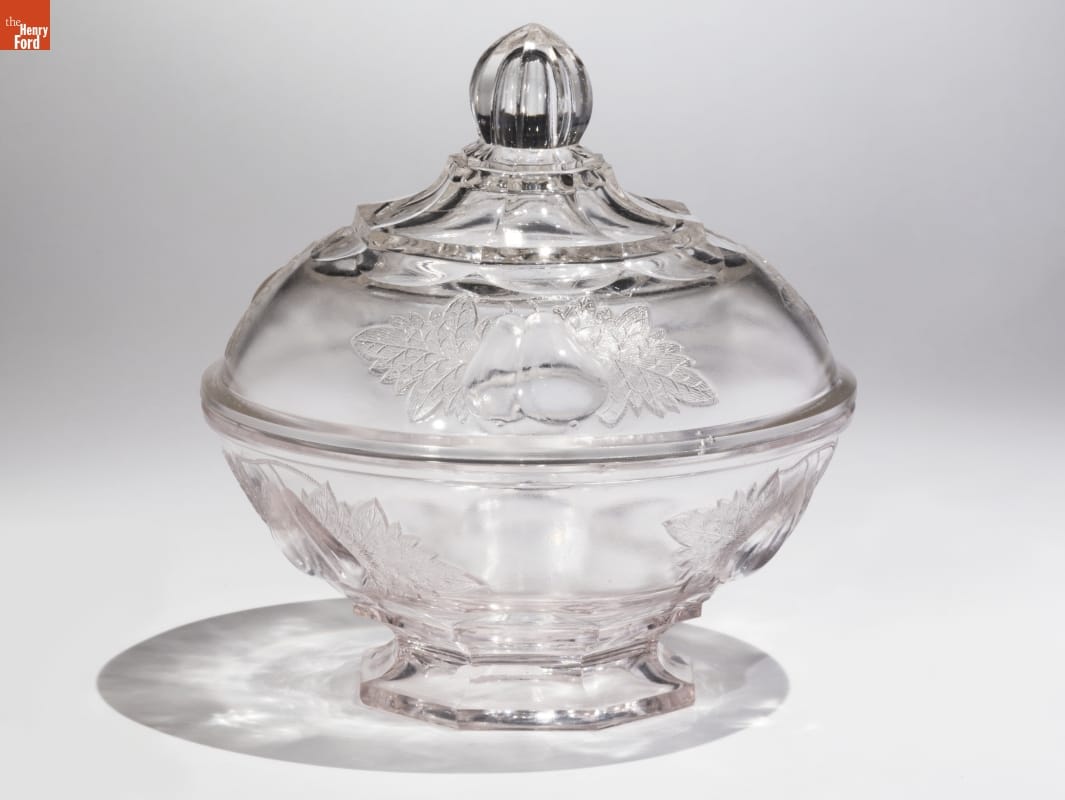
- Compote, 1874-1891 - Compotes are all-purpose serving dishes. These usually footed bowls -- with or without lids or covers -- held special desserts, fruits, candies or sauces, jellies and other foods. Blown or pressed glass compotes provided a culinary presentation method suitable to 19th-century middle-class households.
- 1874-1891
- Collections - Artifact
Compote, 1874-1891
Compotes are all-purpose serving dishes. These usually footed bowls -- with or without lids or covers -- held special desserts, fruits, candies or sauces, jellies and other foods. Blown or pressed glass compotes provided a culinary presentation method suitable to 19th-century middle-class households.
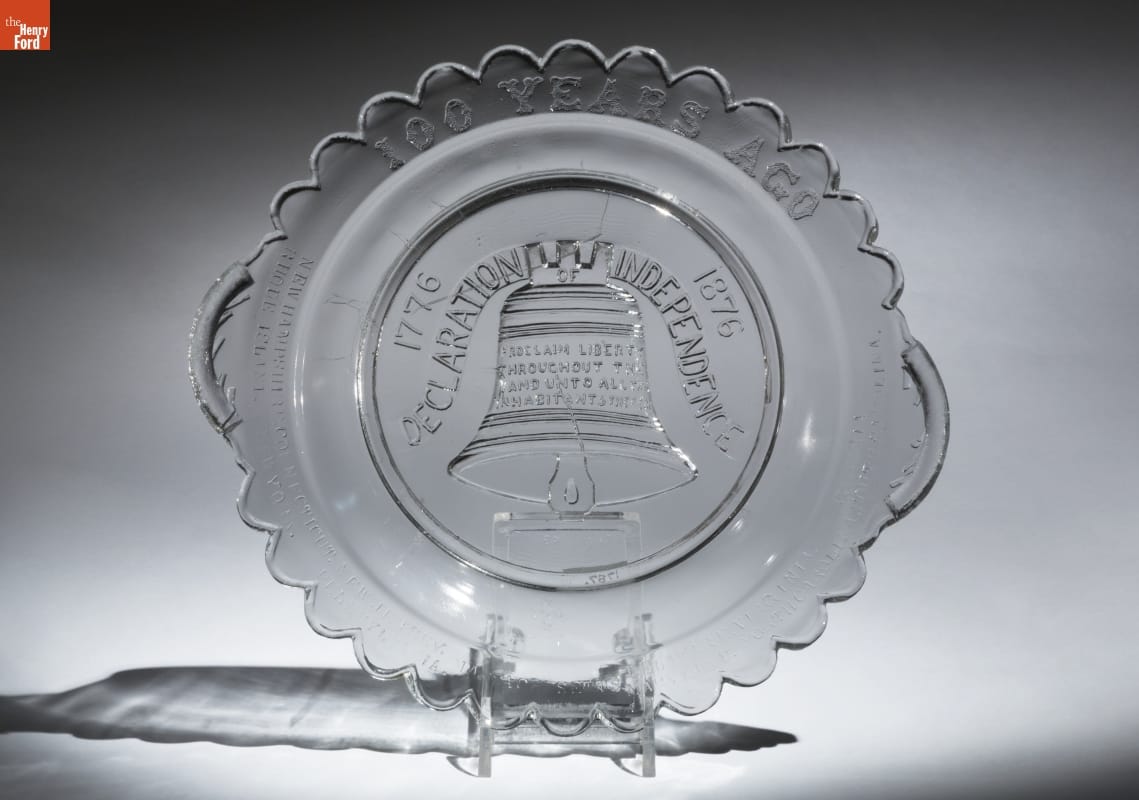
- Plate, 1875-1880 - Nineteenth-century American glassmakers experimented with new methods to create products for a growing consumer market. In the 1820s, pressing glass into metal molds by machine was perfected, and by the mid-1800s, manufacturers were creating a variety of inexpensive pressed glass housewares. America's middle-class consumers could now decorate their homes with attractive glass bowls, creamers, dishes, plates, vases, and other tableware.
- 1875-1880
- Collections - Artifact
Plate, 1875-1880
Nineteenth-century American glassmakers experimented with new methods to create products for a growing consumer market. In the 1820s, pressing glass into metal molds by machine was perfected, and by the mid-1800s, manufacturers were creating a variety of inexpensive pressed glass housewares. America's middle-class consumers could now decorate their homes with attractive glass bowls, creamers, dishes, plates, vases, and other tableware.
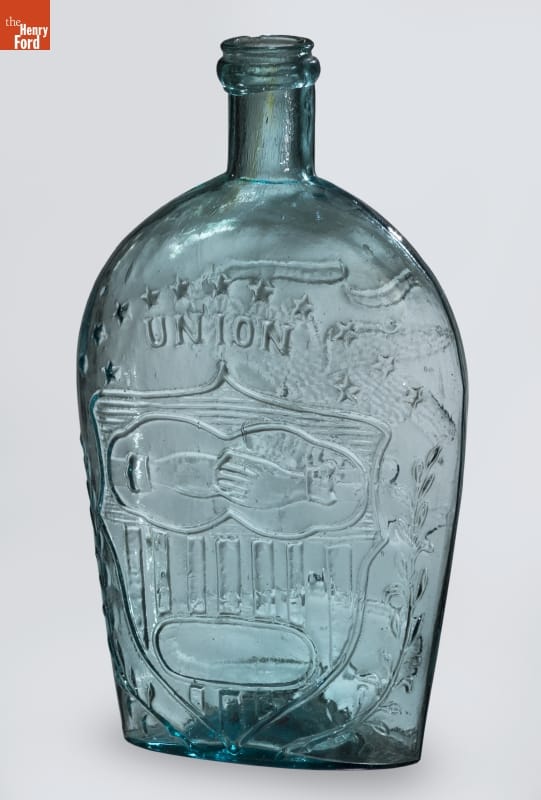
- Flask, 1865-1875 - Glass factories in America began producing inexpensive, mold-formed flasks in the early 1800s. These figured flasks, often decorated with symbols of national pride or political or cultural affiliation, appealed to America's common man. The clasping hands, shield and eagle represent the Union -- a cause many Americans fought to uphold during the Civil War.
- 1865-1875
- Collections - Artifact
Flask, 1865-1875
Glass factories in America began producing inexpensive, mold-formed flasks in the early 1800s. These figured flasks, often decorated with symbols of national pride or political or cultural affiliation, appealed to America's common man. The clasping hands, shield and eagle represent the Union -- a cause many Americans fought to uphold during the Civil War.