
Search
- Allis' Buckthorn Barbed Wire, 1881-1900 - Inventors received hundreds of patents for barbed wire during the late 1800s. Some innovators created strands of fencing with sharp metal points cut into the wire; others incorporated small wire spurs twisted and attached to the wire to create a painful barrier. Each inventor believed their variation made the best fencing to keep livestock out of crop fields or confine them to pastures.
- 1881-1900
- Collections - Artifact
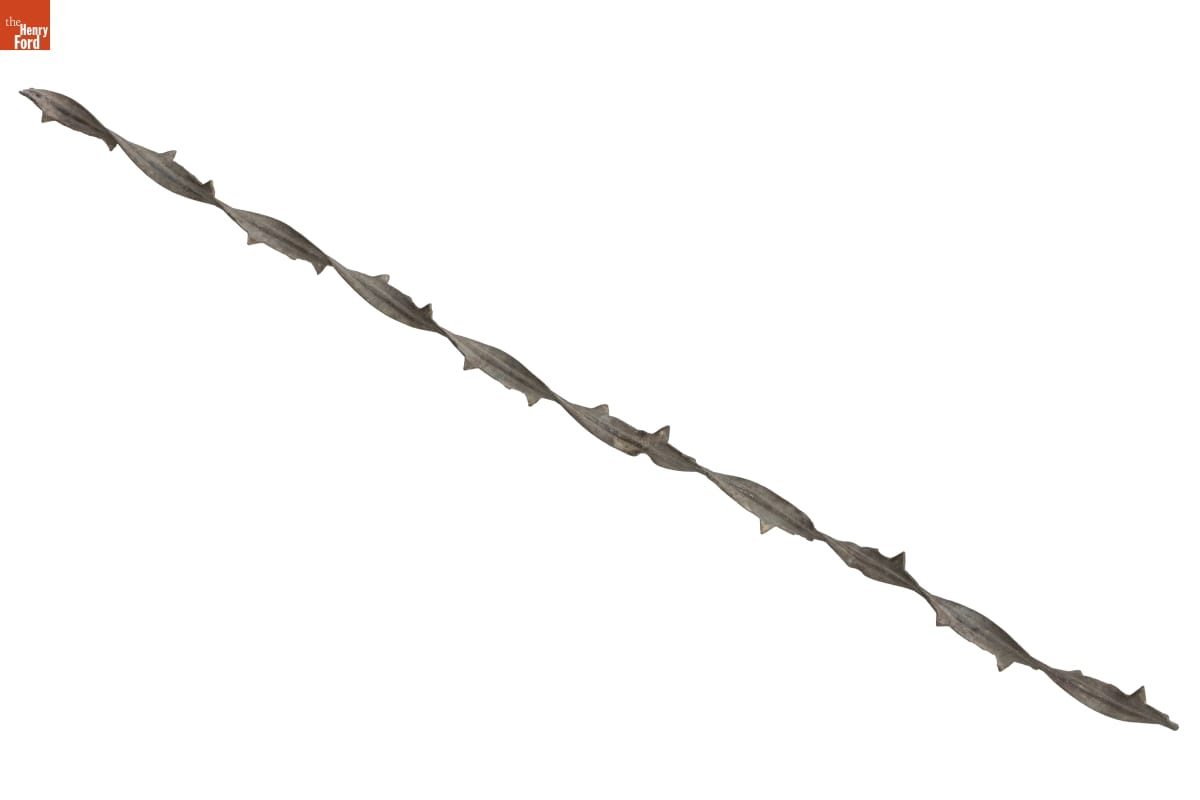
Allis' Buckthorn Barbed Wire, 1881-1900
Inventors received hundreds of patents for barbed wire during the late 1800s. Some innovators created strands of fencing with sharp metal points cut into the wire; others incorporated small wire spurs twisted and attached to the wire to create a painful barrier. Each inventor believed their variation made the best fencing to keep livestock out of crop fields or confine them to pastures.
- Barbed Wire Collection Display, Patents 1876-1881 - Inventors received hundreds of patents for barbed wire during the late 1800s. Some innovators created strands of fencing with sharp metal points cut into the wire; others incorporated small wire spurs twisted and attached to the wire to create a painful barrier. Each inventor believed their variation made the best fencing to keep livestock out of crop fields or confine them to pastures.
- 1876-1881
- Collections - Artifact
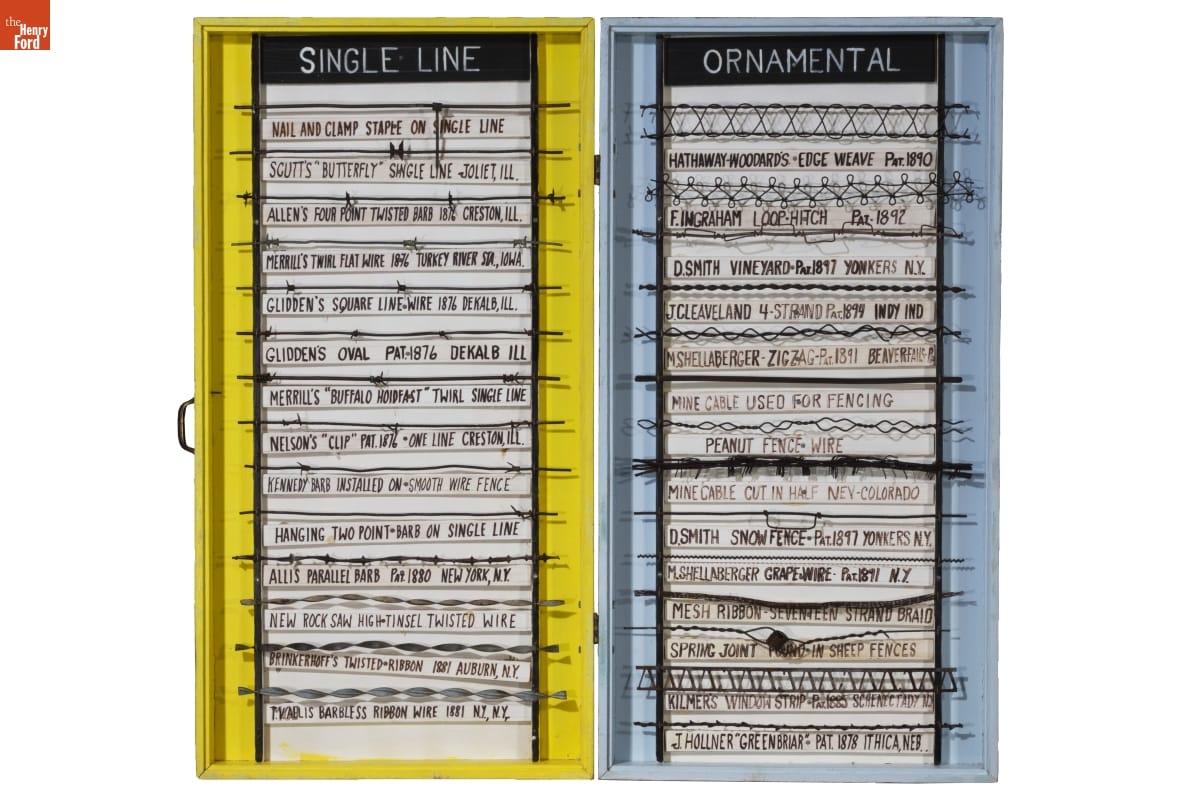
Barbed Wire Collection Display, Patents 1876-1881
Inventors received hundreds of patents for barbed wire during the late 1800s. Some innovators created strands of fencing with sharp metal points cut into the wire; others incorporated small wire spurs twisted and attached to the wire to create a painful barrier. Each inventor believed their variation made the best fencing to keep livestock out of crop fields or confine them to pastures.
- "Wire That Fenced The West" Barbed Wire Display Board, Patented 1868 - 1885 - Inventors received hundreds of patents for barbed wire during the late 1800s. Some innovators created strands of fencing with sharp metal points cut into the wire; others incorporated small wire spurs twisted and attached to the wire to create a painful barrier. Each inventor believed their variation made the best fencing to keep livestock out of crop fields or confine them to pastures.
- 1868-1885
- Collections - Artifact
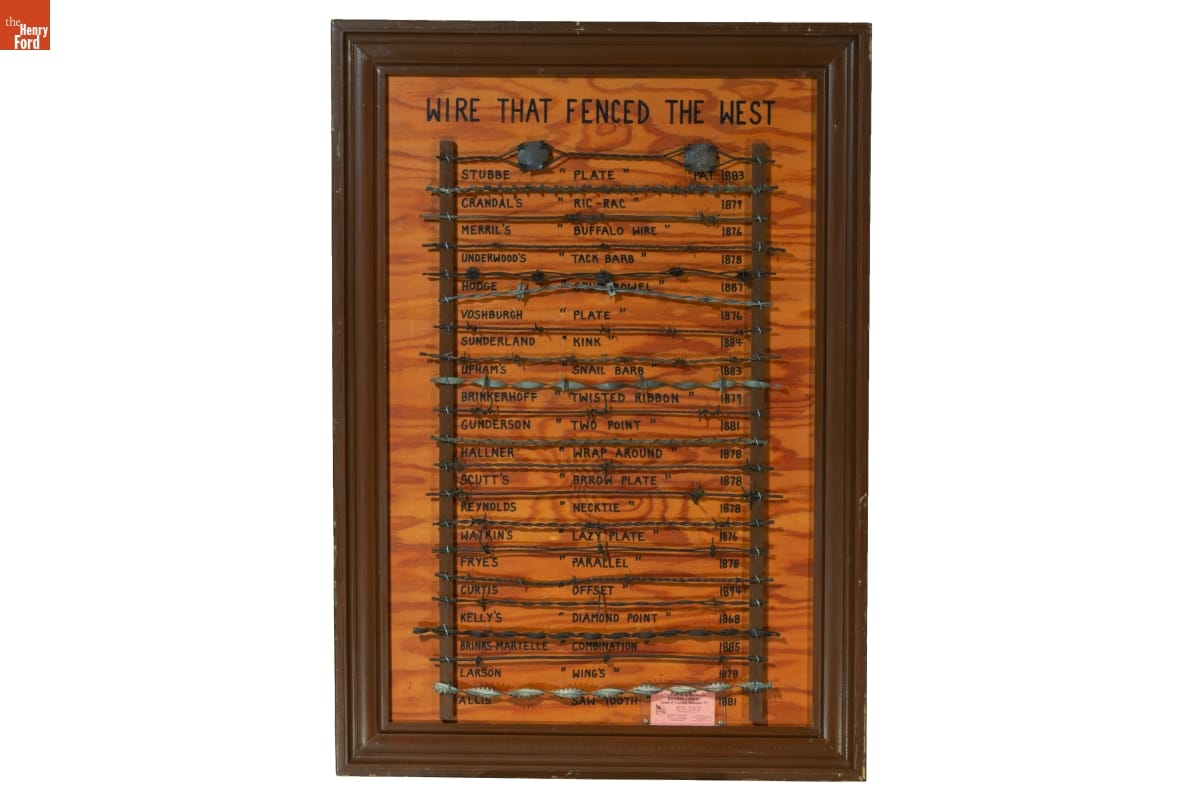
"Wire That Fenced The West" Barbed Wire Display Board, Patented 1868 - 1885
Inventors received hundreds of patents for barbed wire during the late 1800s. Some innovators created strands of fencing with sharp metal points cut into the wire; others incorporated small wire spurs twisted and attached to the wire to create a painful barrier. Each inventor believed their variation made the best fencing to keep livestock out of crop fields or confine them to pastures.
- Barbed Wire Collection Display, Patented 1868 - 1894 - Inventors received hundreds of patents for barbed wire during the late 1800s. Some innovators created strands of fencing with sharp metal points cut into the wire; others incorporated small wire spurs twisted and attached to the wire to create a painful barrier. Each inventor believed their variation made the best fencing to keep livestock out of crop fields or confine them to pastures.
- 1876-1881
- Collections - Artifact
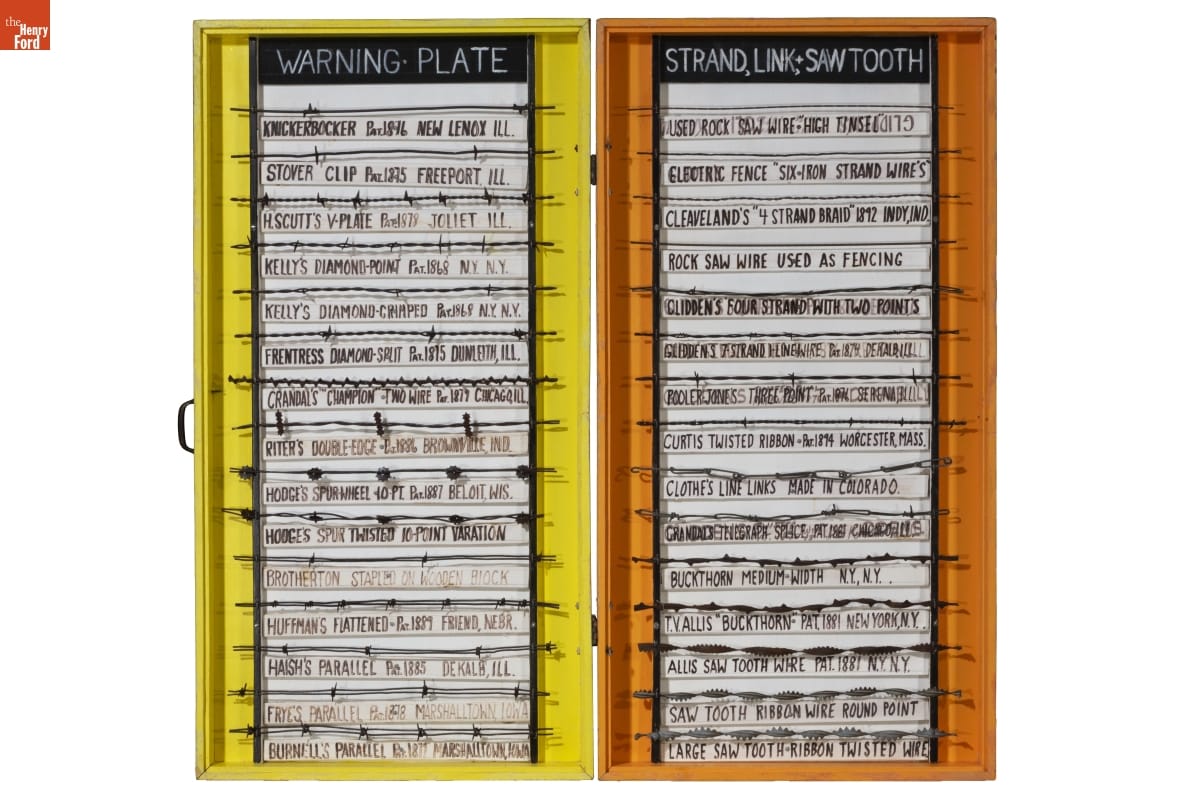
Barbed Wire Collection Display, Patented 1868 - 1894
Inventors received hundreds of patents for barbed wire during the late 1800s. Some innovators created strands of fencing with sharp metal points cut into the wire; others incorporated small wire spurs twisted and attached to the wire to create a painful barrier. Each inventor believed their variation made the best fencing to keep livestock out of crop fields or confine them to pastures.