
Search
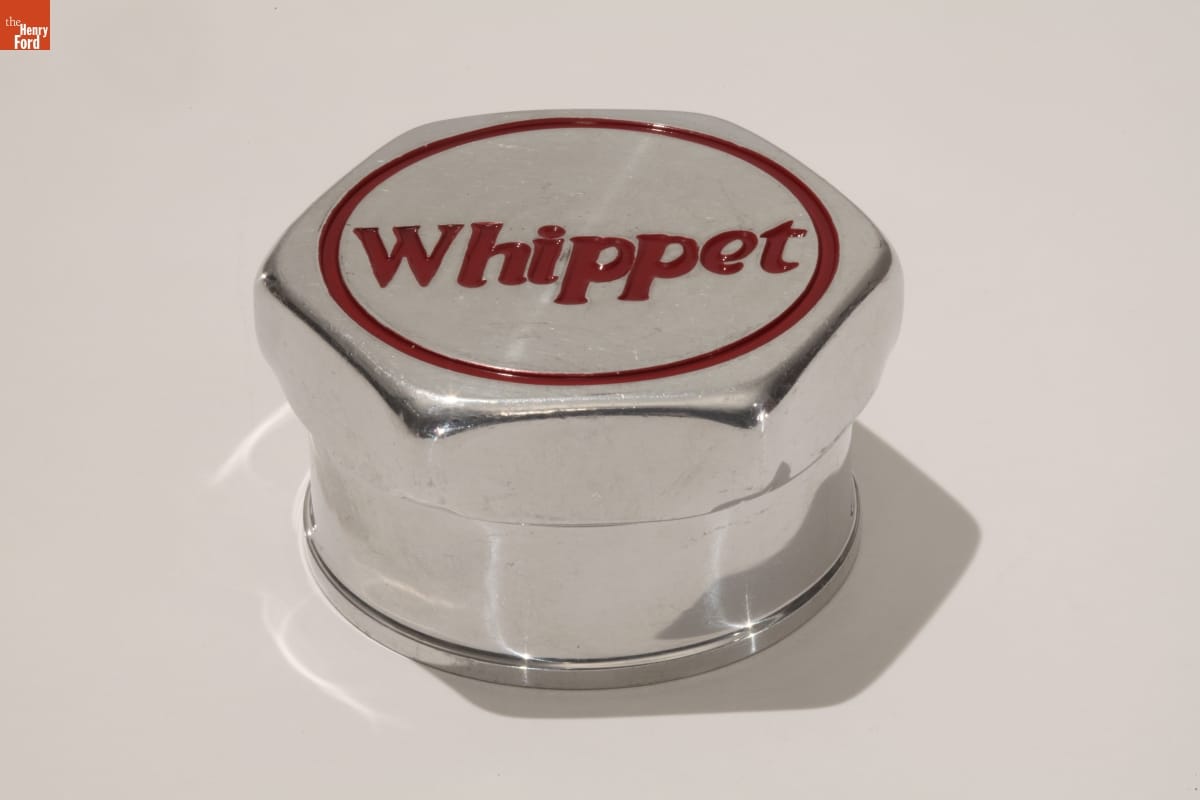
- Whippet Hubcap, circa 1928 - Willys-Overland of Toledo, Ohio, introduced its low-priced Whippet car for 1926. Generally marketed as its own make, the Whippet was slim but quick -- like the breed of dogs for which it was named. The car boasted four-wheel brakes and full-pressure lubrication, and prices started around $525. The Great Depression ended Whippet production in 1931.
- circa 1928
- Collections - Artifact
Whippet Hubcap, circa 1928
Willys-Overland of Toledo, Ohio, introduced its low-priced Whippet car for 1926. Generally marketed as its own make, the Whippet was slim but quick -- like the breed of dogs for which it was named. The car boasted four-wheel brakes and full-pressure lubrication, and prices started around $525. The Great Depression ended Whippet production in 1931.
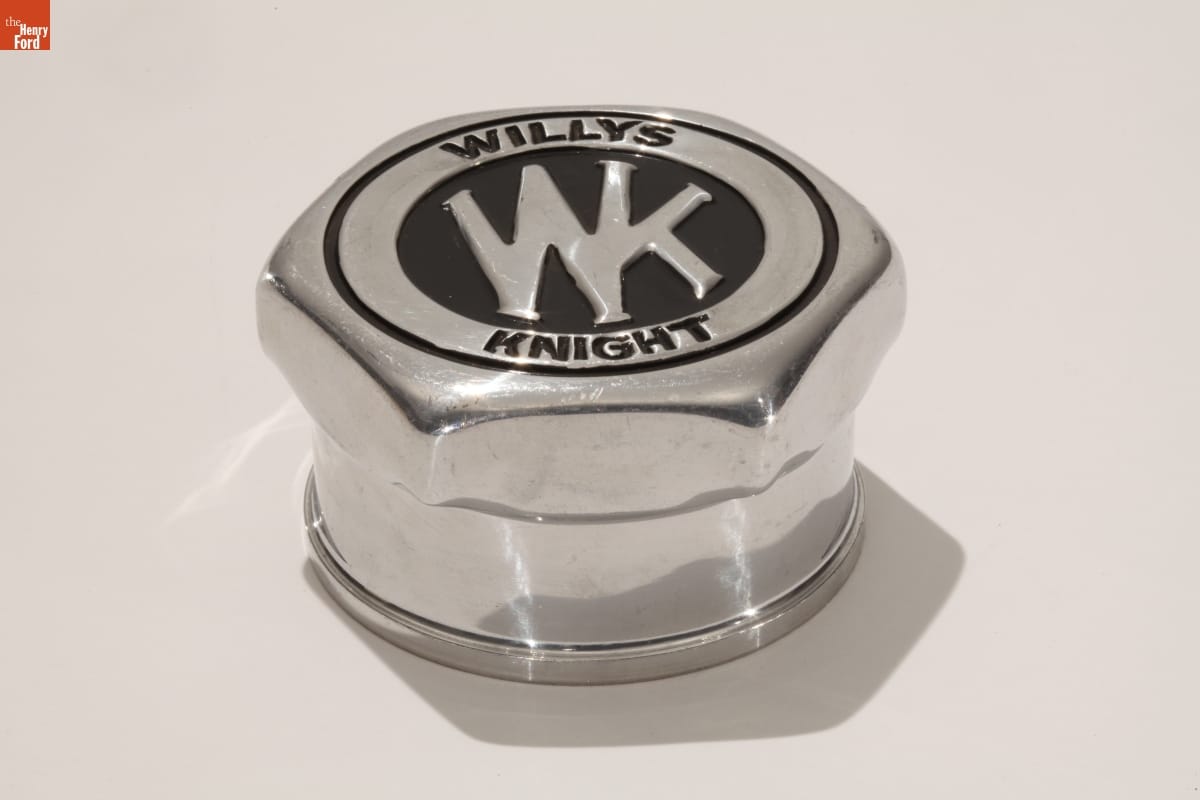
- Willys-Knight Hubcap, 1923-1928 - Willys-Overland introduced the mid-priced Willys-Knight for 1914. Willys-Knight cars used sleeve-valve engines throughout their 19-year production run. Unlike common poppet valves operated by cams and springs, sleeve valves sit inside the cylinders -- forming "sleeves" around the pistons -- and work via sliding or rotating motion. They make for a quieter engine, but they consume more oil.
- 1923-1928
- Collections - Artifact
Willys-Knight Hubcap, 1923-1928
Willys-Overland introduced the mid-priced Willys-Knight for 1914. Willys-Knight cars used sleeve-valve engines throughout their 19-year production run. Unlike common poppet valves operated by cams and springs, sleeve valves sit inside the cylinders -- forming "sleeves" around the pistons -- and work via sliding or rotating motion. They make for a quieter engine, but they consume more oil.
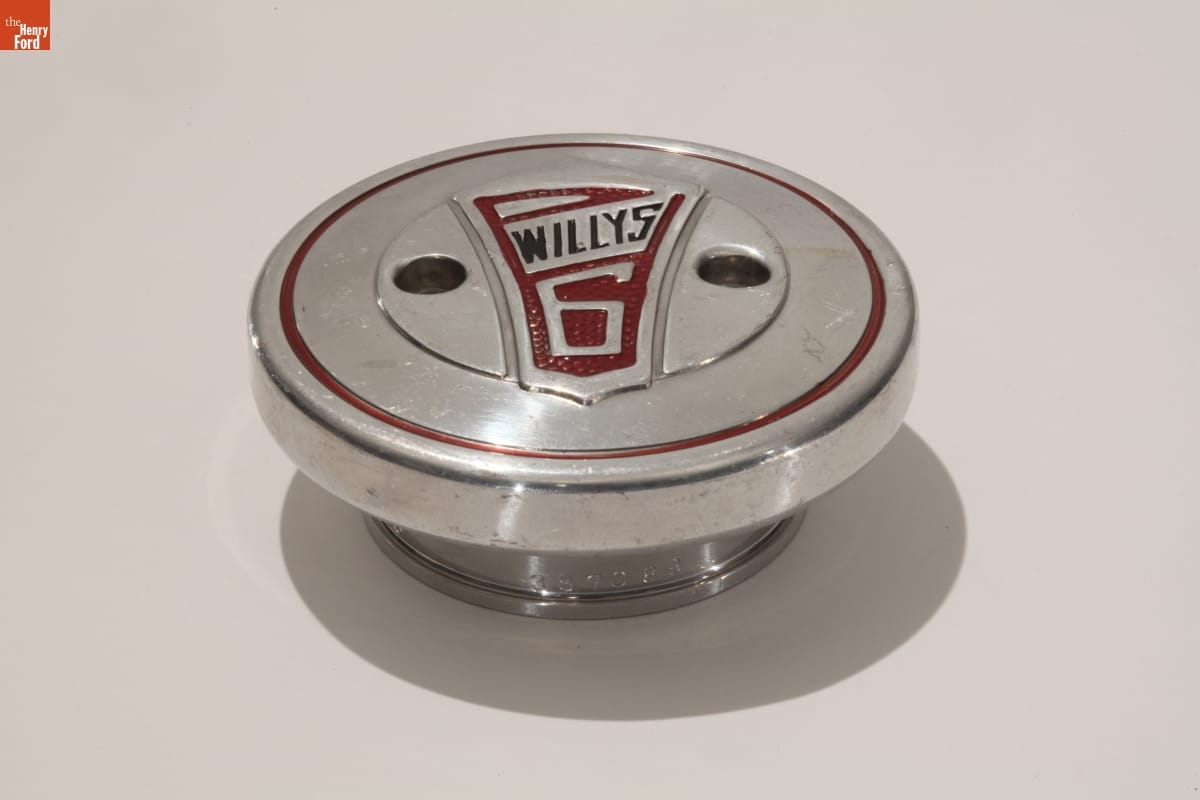
- Willys Six Hubcap, circa 1931 - Willys-Overland of Toledo, Ohio, simplified its product lineup as the company struggled during the Great Depression. Its low-priced Whippet was discontinued in 1931 and replaced by the Willys Six and the Willys Eight -- with each model named for its engine cylinder count. The Six and Eight, in turn, were replaced by the four-cylinder Willys 77 for 1934.
- circa 1931
- Collections - Artifact
Willys Six Hubcap, circa 1931
Willys-Overland of Toledo, Ohio, simplified its product lineup as the company struggled during the Great Depression. Its low-priced Whippet was discontinued in 1931 and replaced by the Willys Six and the Willys Eight -- with each model named for its engine cylinder count. The Six and Eight, in turn, were replaced by the four-cylinder Willys 77 for 1934.
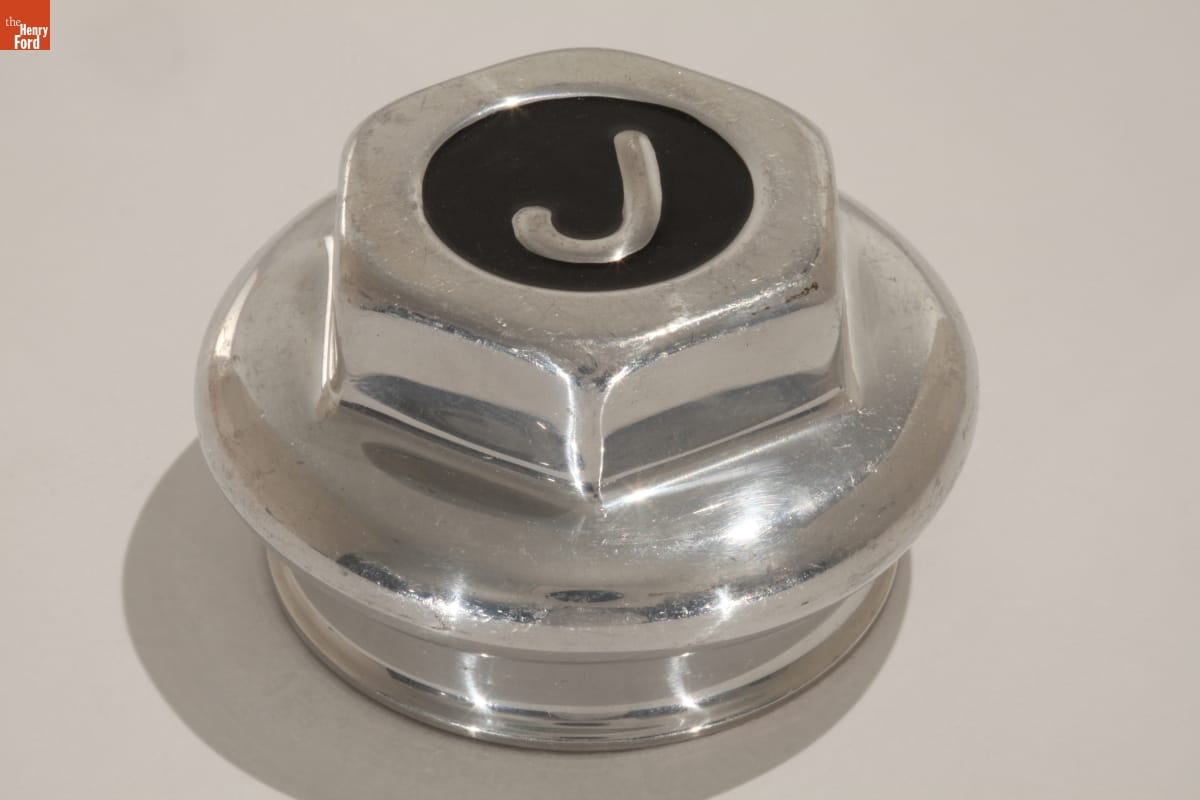
- Jewett Hubcap, 1922-1927 - Jewett Motors, Incorporated, a subsidiary of the Paige-Detroit Motor Car Company, introduced its six-cylinder vehicle in 1922. Jewett, named after Paige-Detroit president Harry Jewett, was a lower-priced companion car to the Paige. Harry Jewett sold his interest in the company in January 1927 to the Graham Brothers. With new owners, the Jewett name was discontinued.
- 1922-1927
- Collections - Artifact
Jewett Hubcap, 1922-1927
Jewett Motors, Incorporated, a subsidiary of the Paige-Detroit Motor Car Company, introduced its six-cylinder vehicle in 1922. Jewett, named after Paige-Detroit president Harry Jewett, was a lower-priced companion car to the Paige. Harry Jewett sold his interest in the company in January 1927 to the Graham Brothers. With new owners, the Jewett name was discontinued.
- Willys-Knight Hubcap, 1923-1928 - Willys-Overland introduced the mid-priced Willys-Knight for 1914. Willys-Knight cars used sleeve-valve engines throughout their 19-year production run. Unlike common poppet valves operated by cams and springs, sleeve valves sit inside the cylinders -- forming "sleeves" around the pistons -- and work via sliding or rotating motion. They make for a quieter engine, but they consume more oil.
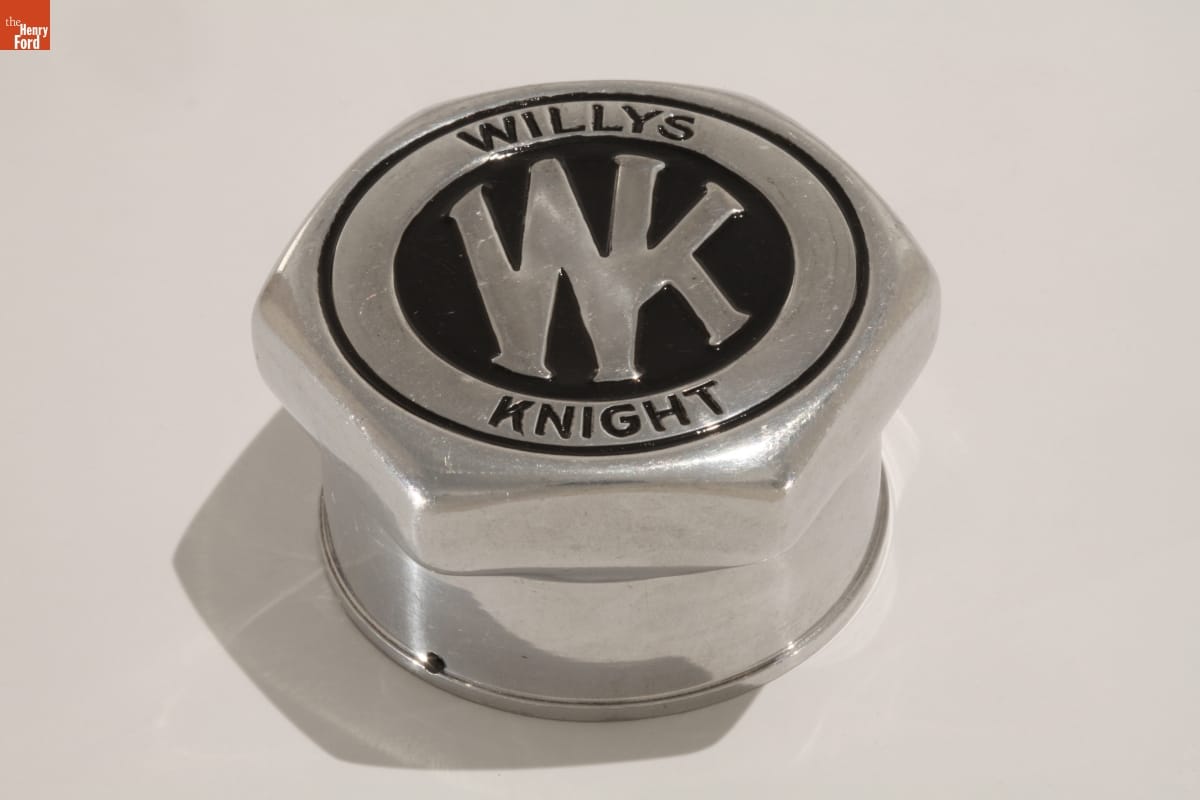
- 1923-1928
- Collections - Artifact
Willys-Knight Hubcap, 1923-1928
Willys-Overland introduced the mid-priced Willys-Knight for 1914. Willys-Knight cars used sleeve-valve engines throughout their 19-year production run. Unlike common poppet valves operated by cams and springs, sleeve valves sit inside the cylinders -- forming "sleeves" around the pistons -- and work via sliding or rotating motion. They make for a quieter engine, but they consume more oil.
- Willys-Knight Hubcap, circa 1930 - Willys-Overland introduced the mid-priced Willys-Knight for 1914. Willys-Knight cars used sleeve-valve engines throughout their 19-year production run. Unlike common poppet valves operated by cams and springs, sleeve valves sit inside the cylinders -- forming "sleeves" around the pistons -- and work via sliding or rotating motion. They make for a quieter engine, but they consume more oil.
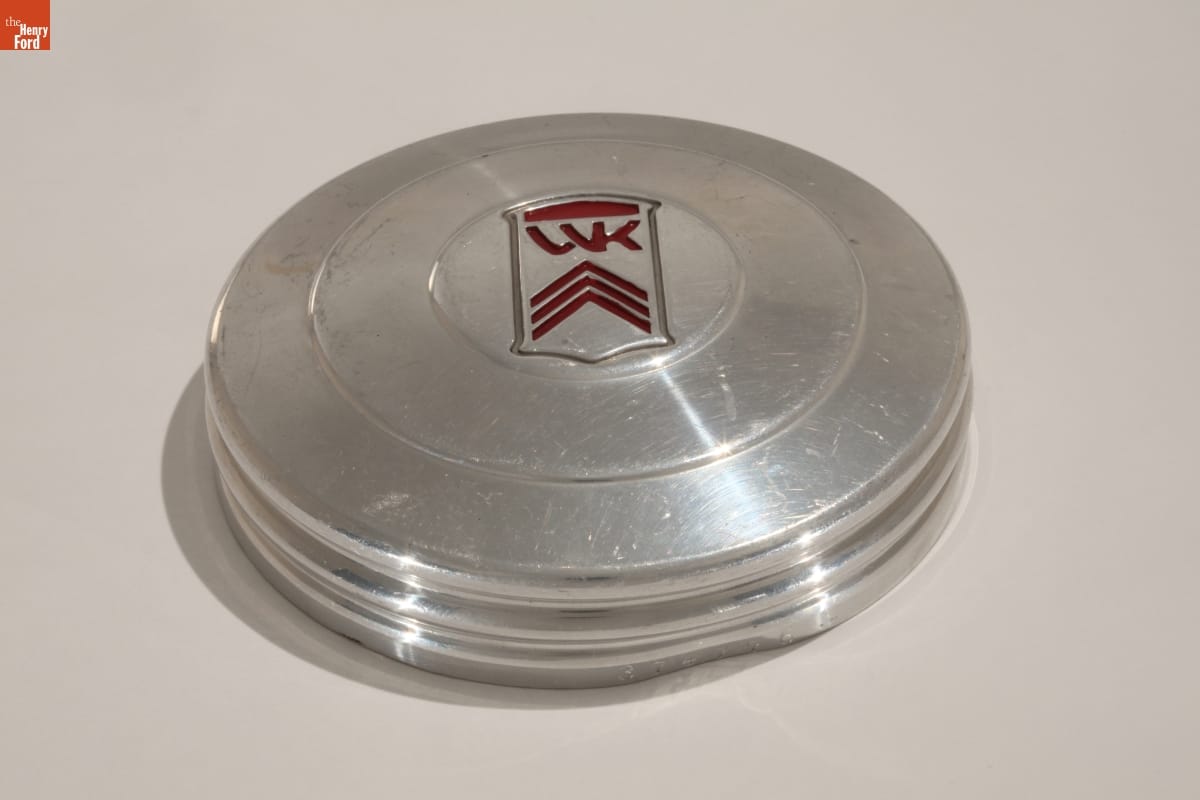
- circa 1930
- Collections - Artifact
Willys-Knight Hubcap, circa 1930
Willys-Overland introduced the mid-priced Willys-Knight for 1914. Willys-Knight cars used sleeve-valve engines throughout their 19-year production run. Unlike common poppet valves operated by cams and springs, sleeve valves sit inside the cylinders -- forming "sleeves" around the pistons -- and work via sliding or rotating motion. They make for a quieter engine, but they consume more oil.
- Graham Brothers Hubcap, circa 1930 - Joseph, Robert and Ray Graham formed Graham Brothers in 1919 to manufacture kits for converting Ford Model Ts into trucks. Soon they began producing their own medium- and heavy-duty trucks. In 1921, Graham Brothers contracted with Dodge Brothers to use Dodge engines and transmissions, and to sell their trucks exclusively through Dodge dealers. Dodge Brothers acquired Graham Brothers in 1925.
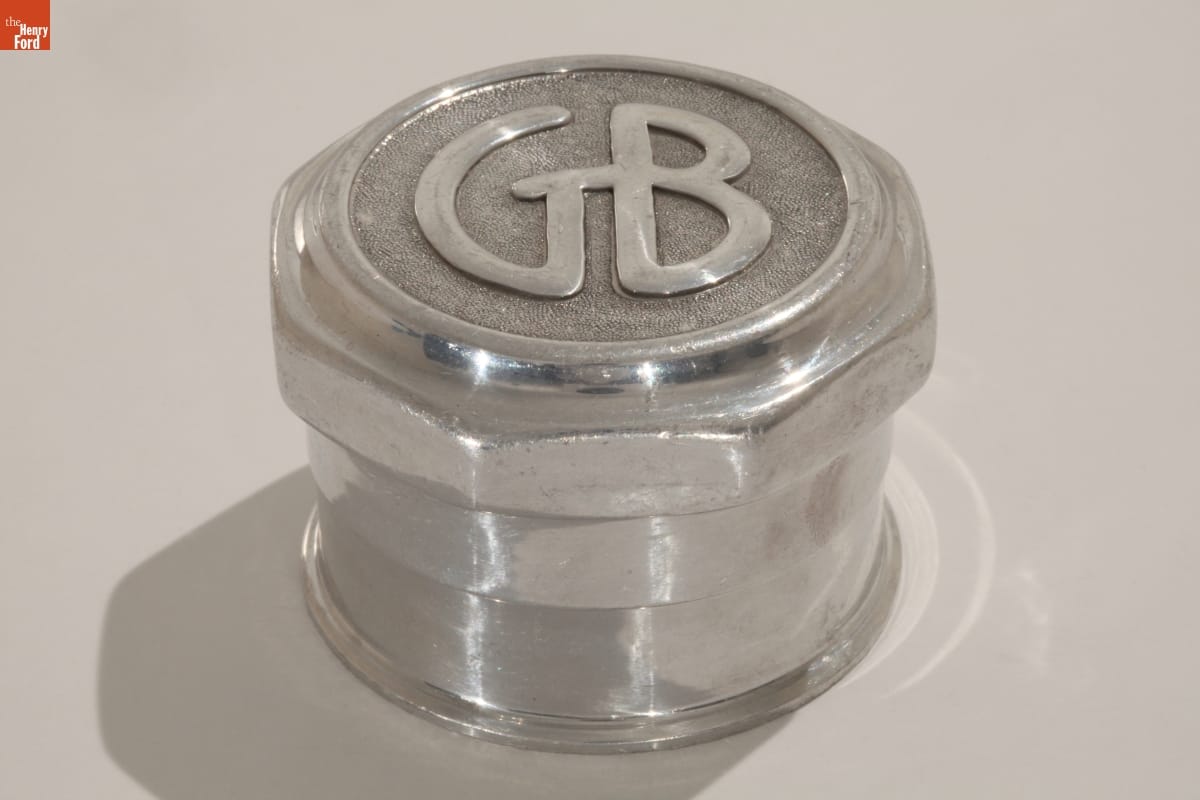
- circa 1930
- Collections - Artifact
Graham Brothers Hubcap, circa 1930
Joseph, Robert and Ray Graham formed Graham Brothers in 1919 to manufacture kits for converting Ford Model Ts into trucks. Soon they began producing their own medium- and heavy-duty trucks. In 1921, Graham Brothers contracted with Dodge Brothers to use Dodge engines and transmissions, and to sell their trucks exclusively through Dodge dealers. Dodge Brothers acquired Graham Brothers in 1925.
- Graham-Paige Hubcap, 1928-1930 - Truck-building brothers Joseph, Robert and Ray Graham purchased Paige-Detroit Motor Car Company in 1927 and rebranded it Graham-Paige. The brothers' new automobile, introduced in January 1928, sold more than 73,000 units in its first year. But the Great Depression devastated Graham-Paige. The company's last cars appeared in 1940, and its assets went to Kaiser-Frazer in 1947.
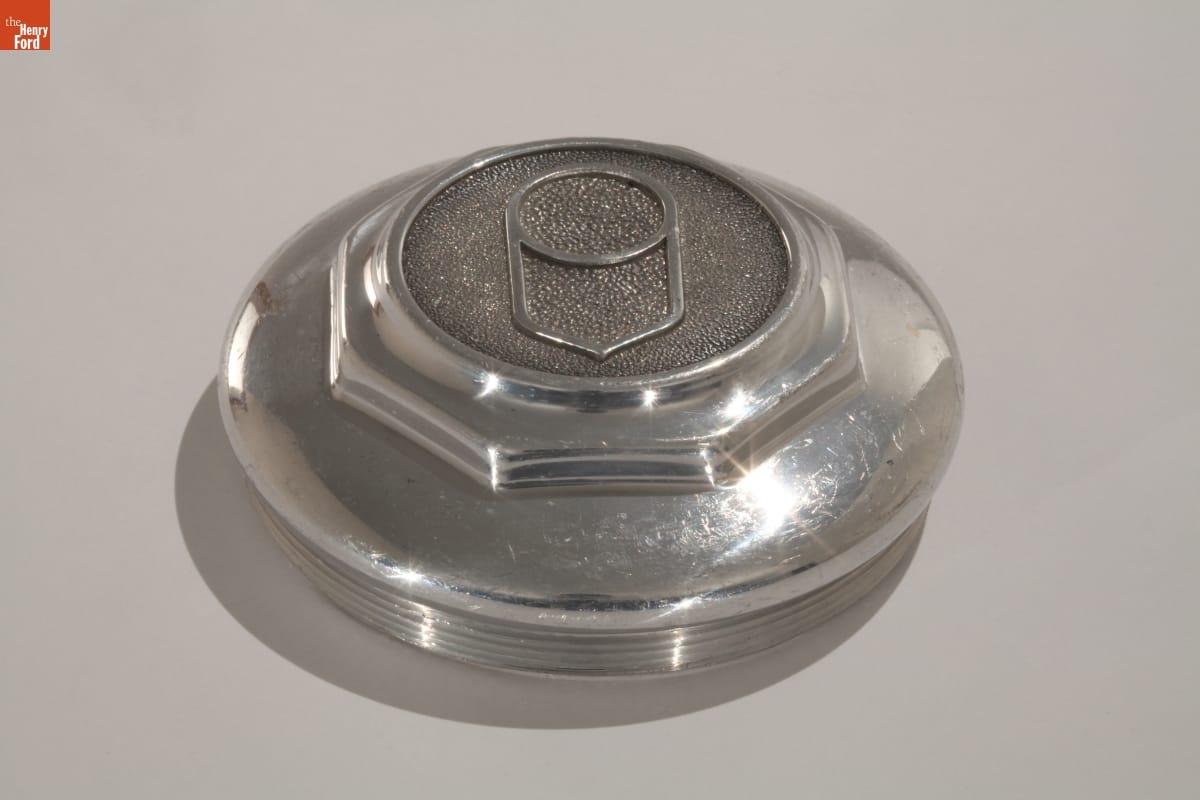
- 1928-1930
- Collections - Artifact
Graham-Paige Hubcap, 1928-1930
Truck-building brothers Joseph, Robert and Ray Graham purchased Paige-Detroit Motor Car Company in 1927 and rebranded it Graham-Paige. The brothers' new automobile, introduced in January 1928, sold more than 73,000 units in its first year. But the Great Depression devastated Graham-Paige. The company's last cars appeared in 1940, and its assets went to Kaiser-Frazer in 1947.
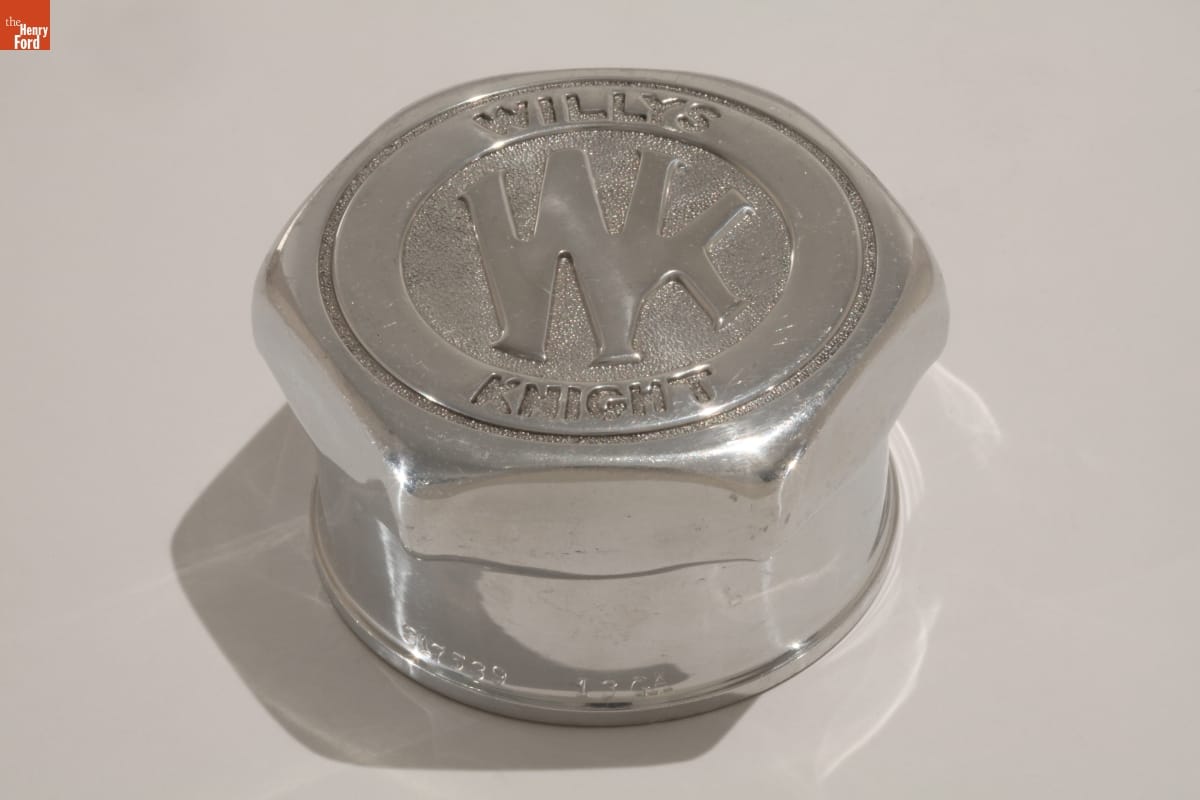
- Willys-Knight Hubcap, 1923-1928 - Willys-Overland introduced the mid-priced Willys-Knight for 1914. Willys-Knight cars used sleeve-valve engines throughout their 19-year production run. Unlike common poppet valves operated by cams and springs, sleeve valves sit inside the cylinders -- forming "sleeves" around the pistons -- and work via sliding or rotating motion. They make for a quieter engine, but they consume more oil.
- 1923-1928
- Collections - Artifact
Willys-Knight Hubcap, 1923-1928
Willys-Overland introduced the mid-priced Willys-Knight for 1914. Willys-Knight cars used sleeve-valve engines throughout their 19-year production run. Unlike common poppet valves operated by cams and springs, sleeve valves sit inside the cylinders -- forming "sleeves" around the pistons -- and work via sliding or rotating motion. They make for a quieter engine, but they consume more oil.
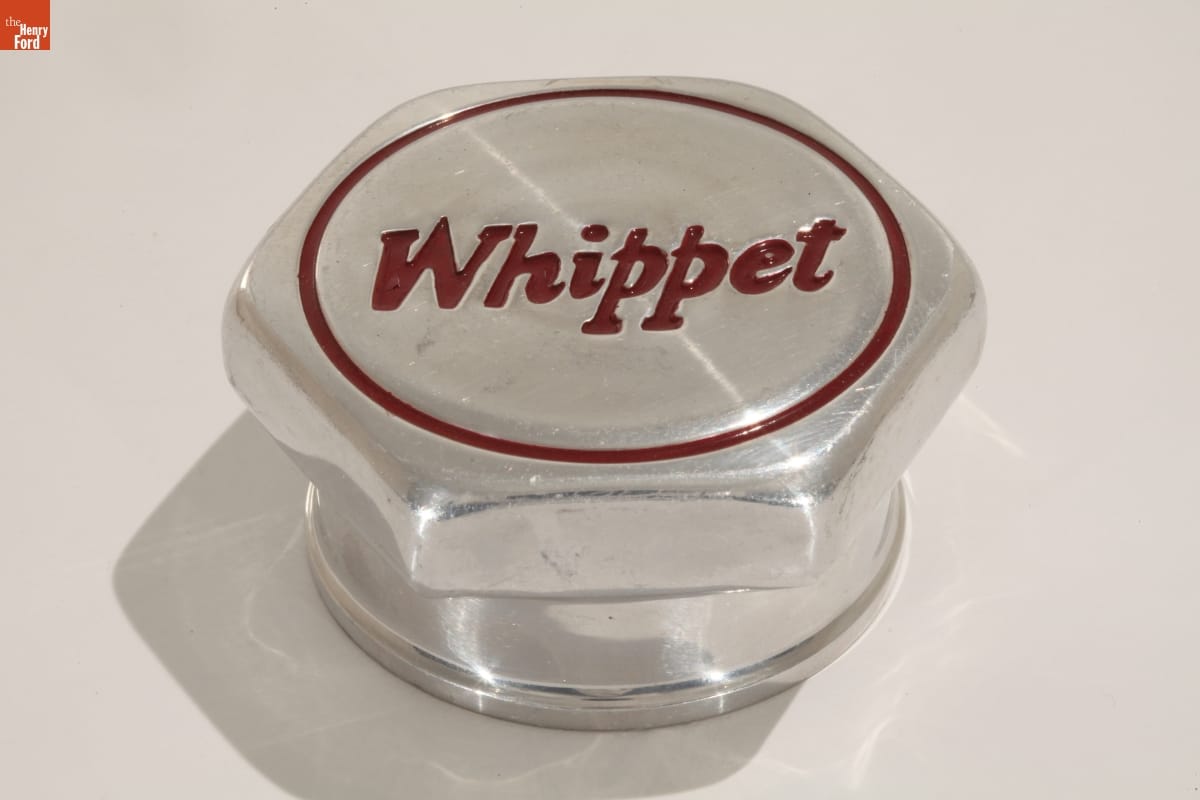
- Whippet Hubcap, circa 1928 - Willys-Overland of Toledo, Ohio, introduced its low-priced Whippet car for 1926. Generally marketed as its own make, the Whippet was slim but quick -- like the breed of dogs for which it was named. The car boasted four-wheel brakes and full-pressure lubrication, and prices started around $525. The Great Depression ended Whippet production in 1931.
- circa 1928
- Collections - Artifact
Whippet Hubcap, circa 1928
Willys-Overland of Toledo, Ohio, introduced its low-priced Whippet car for 1926. Generally marketed as its own make, the Whippet was slim but quick -- like the breed of dogs for which it was named. The car boasted four-wheel brakes and full-pressure lubrication, and prices started around $525. The Great Depression ended Whippet production in 1931.