
Search
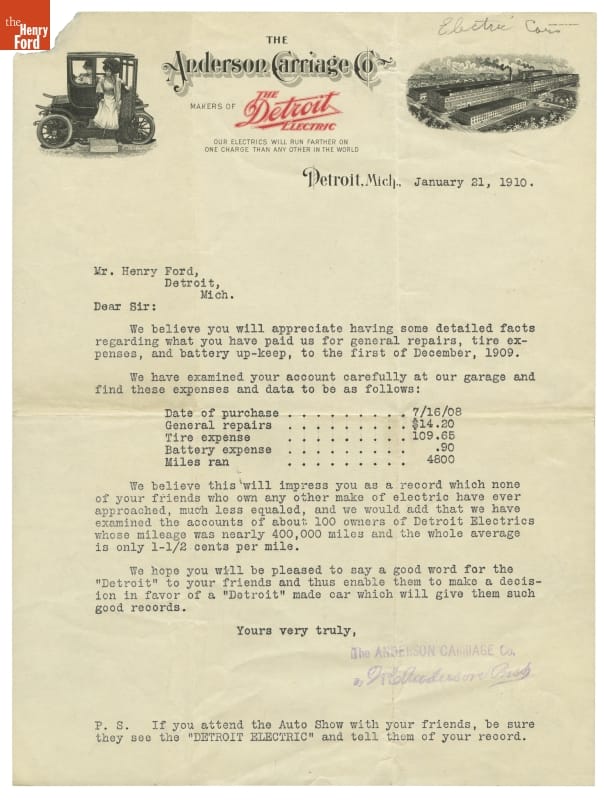
- Anderson Carriage Company Letter to Customer Henry Ford about His Detroit Electric Car, 1910 - Anderson Carriage Company sent this letter to Henry Ford summarizing the operating costs of his Detroit Electric for the year 1909. Henry Ford purchased three Detroit Electrics, the first in 1908.
- January 21, 1910
- Collections - Artifact
Anderson Carriage Company Letter to Customer Henry Ford about His Detroit Electric Car, 1910
Anderson Carriage Company sent this letter to Henry Ford summarizing the operating costs of his Detroit Electric for the year 1909. Henry Ford purchased three Detroit Electrics, the first in 1908.
- Advertisement from LIFE Magazine for 1910 Detroit Electric Car, "This Battery Will Outwear Your Car" - Detroit Electrics used Edison batteries. Many advertisements, like this one from 1910, used the famous inventor's image and reputation to boost confidence in the car's reliability.

- June 16, 1910
- Collections - Artifact
Advertisement from LIFE Magazine for 1910 Detroit Electric Car, "This Battery Will Outwear Your Car"
Detroit Electrics used Edison batteries. Many advertisements, like this one from 1910, used the famous inventor's image and reputation to boost confidence in the car's reliability.
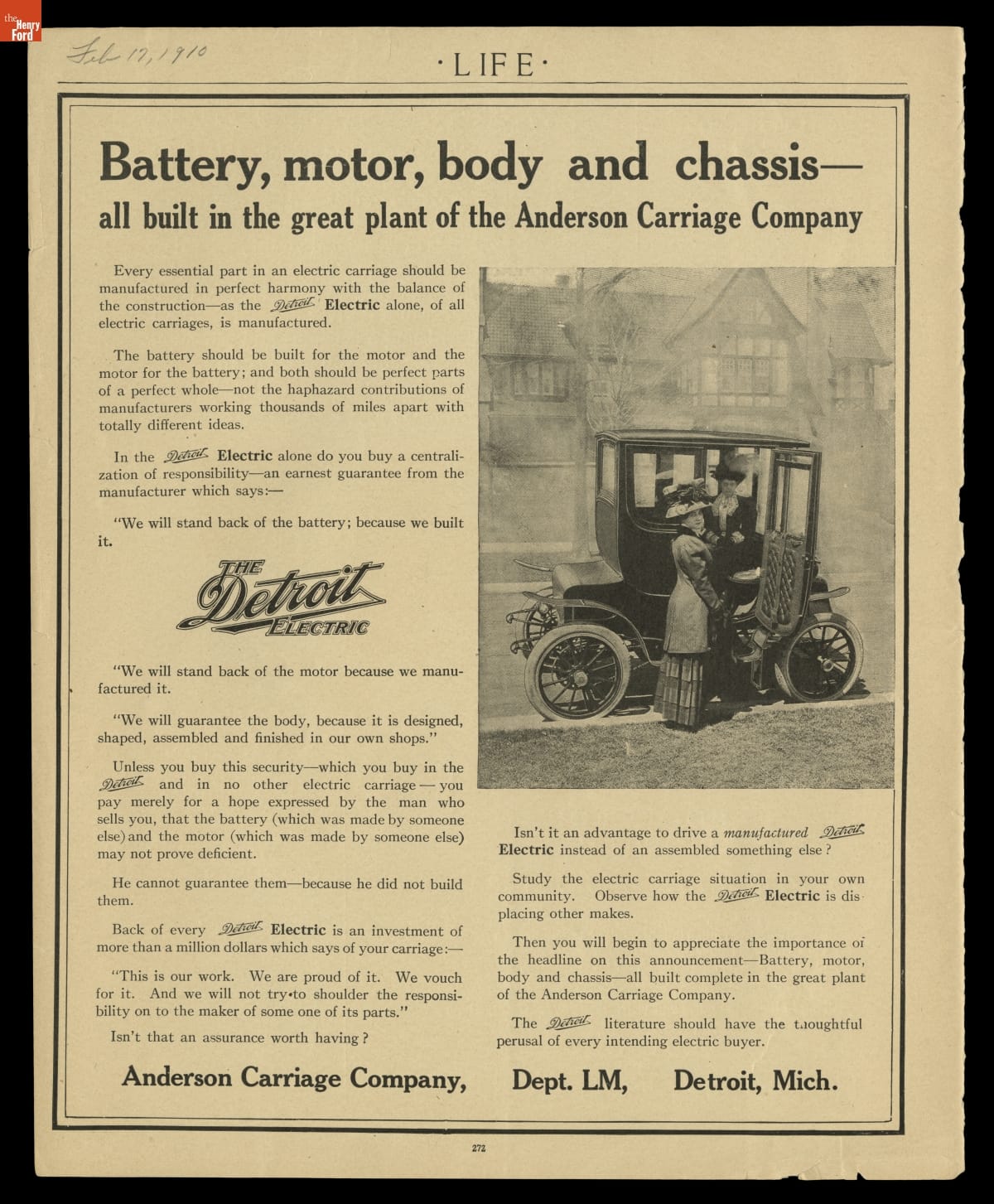
- Advertisement for Anderson Carriage Company, Detroit Electric Automobiles, February 17, 1910 - Detroit Electric was the best-known and longest-lived American electric car company. The firm built its first electric vehicles in 1907, promoting them for use in cities where electricity was readily available and range generally wasn't an issue. Detroit Electric moved away from passenger cars in the 1920s to focus on commercial vehicles. The company ended all production in 1939.
- February 17, 1910
- Collections - Artifact
Advertisement for Anderson Carriage Company, Detroit Electric Automobiles, February 17, 1910
Detroit Electric was the best-known and longest-lived American electric car company. The firm built its first electric vehicles in 1907, promoting them for use in cities where electricity was readily available and range generally wasn't an issue. Detroit Electric moved away from passenger cars in the 1920s to focus on commercial vehicles. The company ended all production in 1939.