
Search
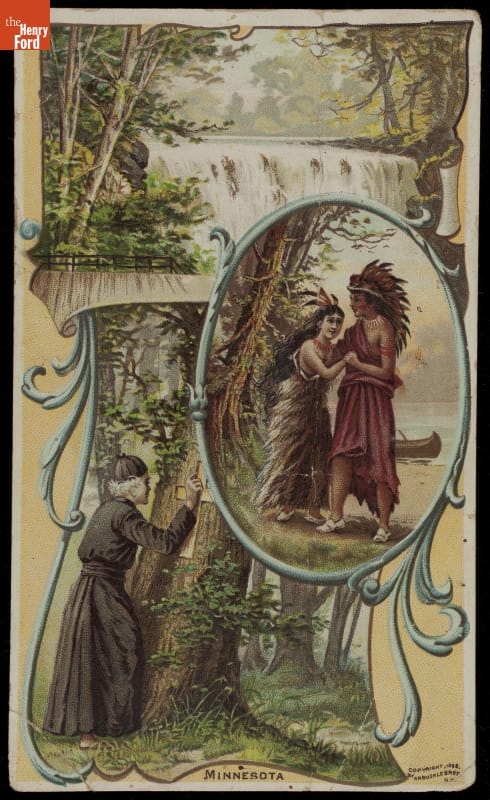
- Trade Card for Ariosa Coffee, Arbuckle Bros., "Minnesota," 1892 - As color printing gained momentum in the late 19th century, trade cards were a major means of advertising goods and services. Americans enjoyed and often saved the vibrant little advertisements found in product packages or distributed by local merchants. This trade card for Arbuckle Bros. Coffee Company provides information about its Ariosa coffee and features a colorful image in a series depicting the United States and its territories.
- 1892
- Collections - Artifact
Trade Card for Ariosa Coffee, Arbuckle Bros., "Minnesota," 1892
As color printing gained momentum in the late 19th century, trade cards were a major means of advertising goods and services. Americans enjoyed and often saved the vibrant little advertisements found in product packages or distributed by local merchants. This trade card for Arbuckle Bros. Coffee Company provides information about its Ariosa coffee and features a colorful image in a series depicting the United States and its territories.
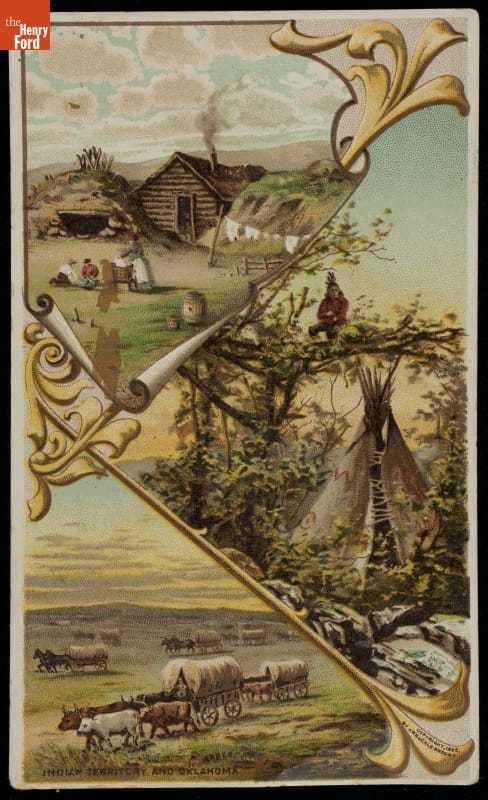
- Trade Card for Ariosa Coffee, Arbuckle Bros., "Indian Territory and Oklahoma," 1892 - As color printing gained momentum in the late 19th century, trade cards were a major means of advertising goods and services. Americans enjoyed and often saved the vibrant little advertisements found in product packages or distributed by local merchants. This trade card for Arbuckle Bros. Coffee Company provides information about its Ariosa coffee and features a colorful image in a series depicting the United States and its territories.
- 1892
- Collections - Artifact
Trade Card for Ariosa Coffee, Arbuckle Bros., "Indian Territory and Oklahoma," 1892
As color printing gained momentum in the late 19th century, trade cards were a major means of advertising goods and services. Americans enjoyed and often saved the vibrant little advertisements found in product packages or distributed by local merchants. This trade card for Arbuckle Bros. Coffee Company provides information about its Ariosa coffee and features a colorful image in a series depicting the United States and its territories.
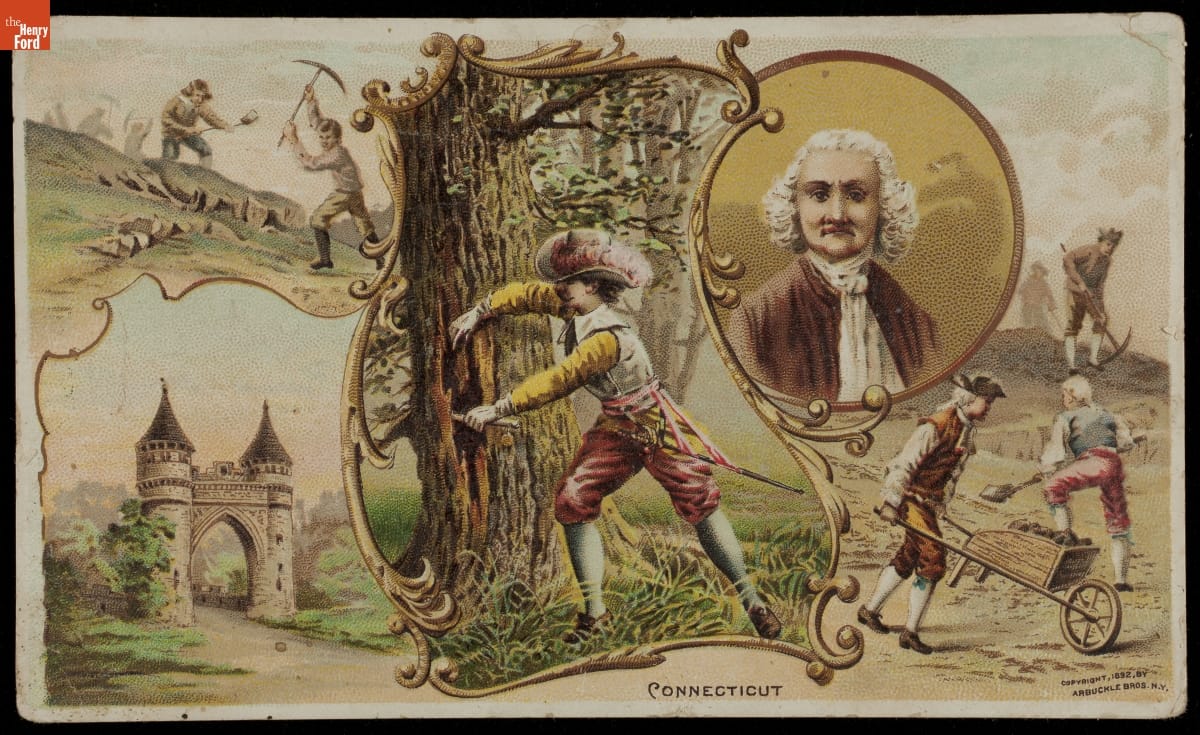
- Trade Card for Ariosa Coffee, Arbuckle Bros., "Connecticut," 1892 - As color printing gained momentum in the late 19th century, trade cards were a major means of advertising goods and services. Americans enjoyed and often saved the vibrant little advertisements found in product packages or distributed by local merchants. This trade card for Arbuckle Bros. Coffee Company provides information about its Ariosa coffee and features a colorful image in a series depicting the United States and its territories.
- 1892
- Collections - Artifact
Trade Card for Ariosa Coffee, Arbuckle Bros., "Connecticut," 1892
As color printing gained momentum in the late 19th century, trade cards were a major means of advertising goods and services. Americans enjoyed and often saved the vibrant little advertisements found in product packages or distributed by local merchants. This trade card for Arbuckle Bros. Coffee Company provides information about its Ariosa coffee and features a colorful image in a series depicting the United States and its territories.
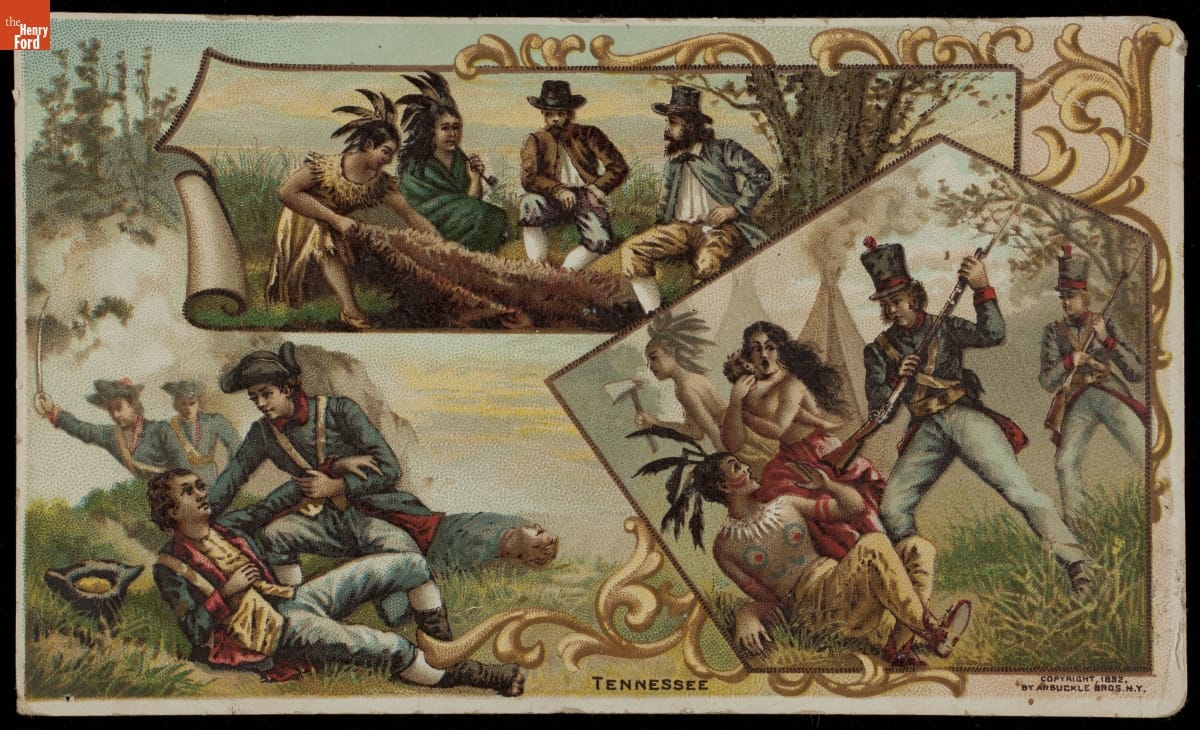
- Trade Card for Ariosa Coffee, Arbuckle Bros., "Tennessee," 1892 - Late-nineteenth-century manufacturers used trade cards to promote and sell their products. These colorful advertisements also reflected the prejudices of the time. Illustrators often depicted Indigenous people as "savages" hindering the progress of "civilized" European-Americans. This depiction supported the view of many white, middle-class Americans, especially near the end of the American Indian Wars in the West.
- 1892
- Collections - Artifact
Trade Card for Ariosa Coffee, Arbuckle Bros., "Tennessee," 1892
Late-nineteenth-century manufacturers used trade cards to promote and sell their products. These colorful advertisements also reflected the prejudices of the time. Illustrators often depicted Indigenous people as "savages" hindering the progress of "civilized" European-Americans. This depiction supported the view of many white, middle-class Americans, especially near the end of the American Indian Wars in the West.