
Search
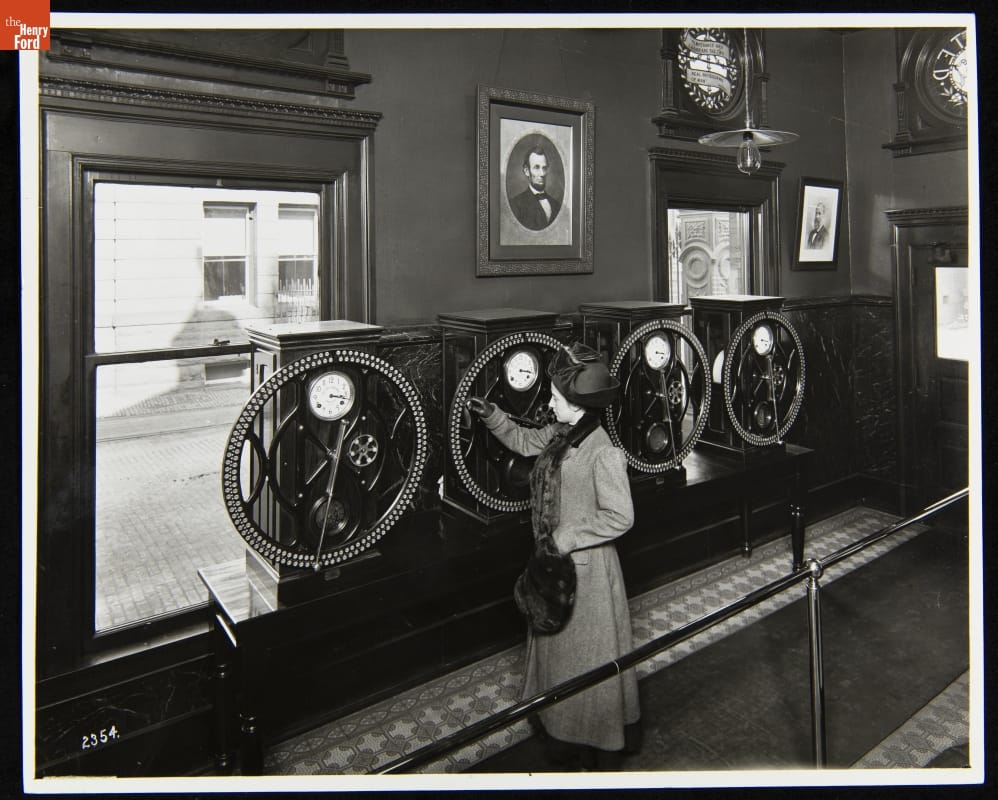
- Woman Using Time Clock at the Main Plant, H. J. Heinz Company, Pittsburgh, Pennsylvania, 1911 - Employees at the H.J. Heinz Company main plant in Pittsburgh, Pennsylvania, began and ended their workdays in the Time Office. Henry Heinz himself worked to design and construct this building, referred to by the company as "a combination of elegance, splendor and beauty." Here you can see the row of time clocks where employees would check in and out for work each day.
- 1911
- Collections - Artifact
Woman Using Time Clock at the Main Plant, H. J. Heinz Company, Pittsburgh, Pennsylvania, 1911
Employees at the H.J. Heinz Company main plant in Pittsburgh, Pennsylvania, began and ended their workdays in the Time Office. Henry Heinz himself worked to design and construct this building, referred to by the company as "a combination of elegance, splendor and beauty." Here you can see the row of time clocks where employees would check in and out for work each day.
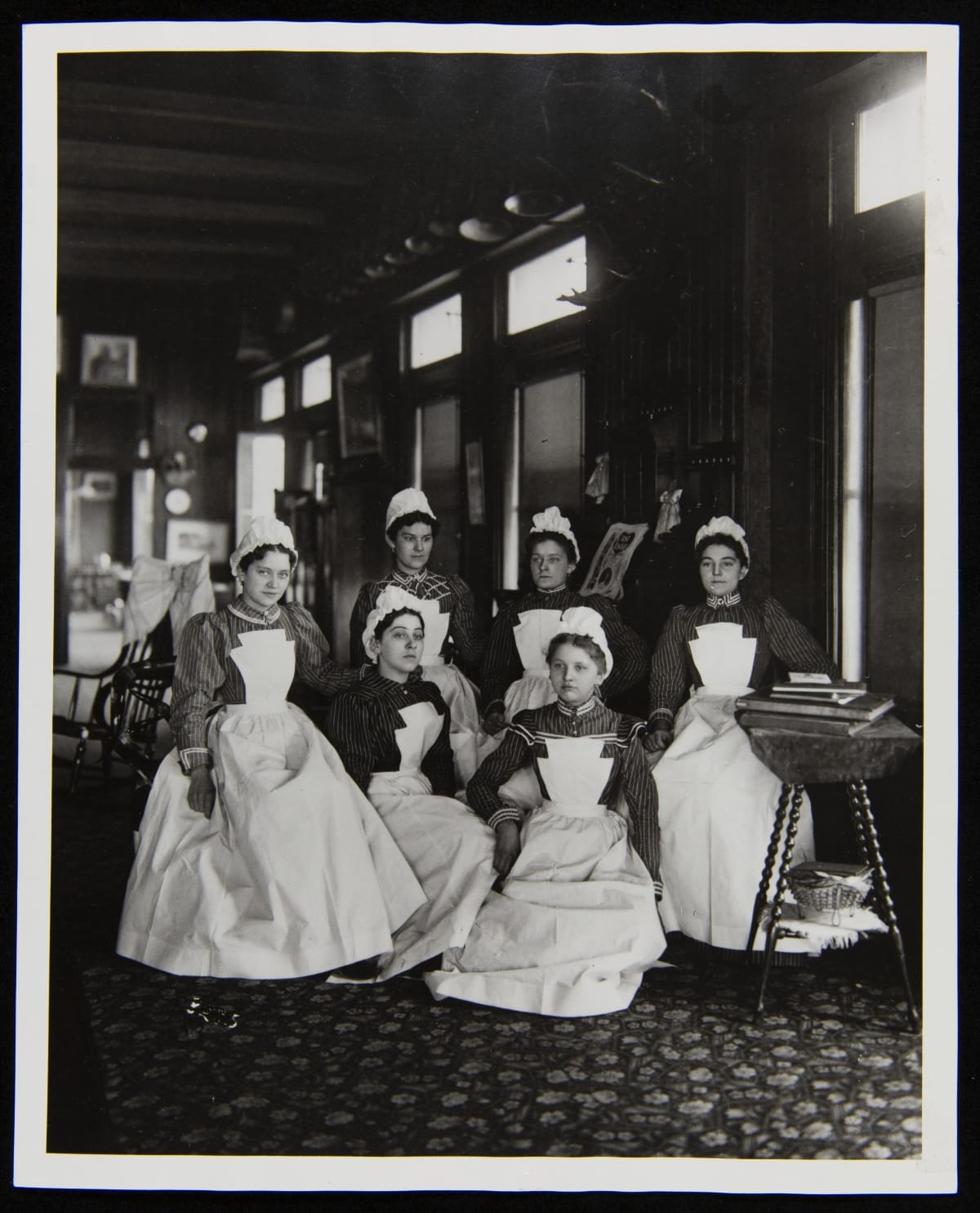
- H. J. Heinz Company Employee Sewing Class, 1904 - The H.J. Heinz Company was at the forefront of employee welfare during the late 19th and early 20th centuries. Exemplary employee amenities such as a gymnasium, swimming pool, and large dining rooms supported a strong company culture. Employees were also encouraged to participate in self-improvement classes, such as weaving, cooking, and sewing (seen here).
- 1904
- Collections - Artifact
H. J. Heinz Company Employee Sewing Class, 1904
The H.J. Heinz Company was at the forefront of employee welfare during the late 19th and early 20th centuries. Exemplary employee amenities such as a gymnasium, swimming pool, and large dining rooms supported a strong company culture. Employees were also encouraged to participate in self-improvement classes, such as weaving, cooking, and sewing (seen here).
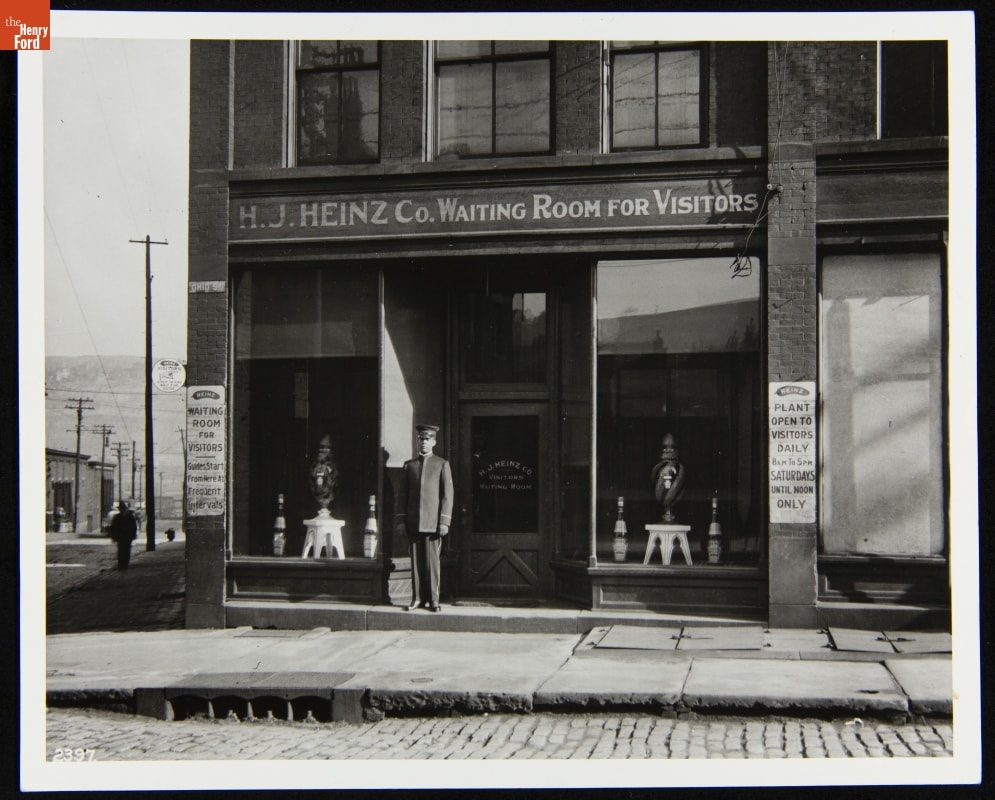
- Entrance to Visitor Waiting Room with Doorman, H. J. Heinz Company, Pittsburgh, Pennsylvania, 1909 - H.J. Heinz was the first in the industry to open his factory for public tours. Thousands of people each year came to see the pristine kitchens, witness the manufacturing of their favorite products, and taste freshly made samples of some of the "57 Varieties." Before touring the factory, visitors entered the waiting room through this building's entrance.
- 1909
- Collections - Artifact
Entrance to Visitor Waiting Room with Doorman, H. J. Heinz Company, Pittsburgh, Pennsylvania, 1909
H.J. Heinz was the first in the industry to open his factory for public tours. Thousands of people each year came to see the pristine kitchens, witness the manufacturing of their favorite products, and taste freshly made samples of some of the "57 Varieties." Before touring the factory, visitors entered the waiting room through this building's entrance.
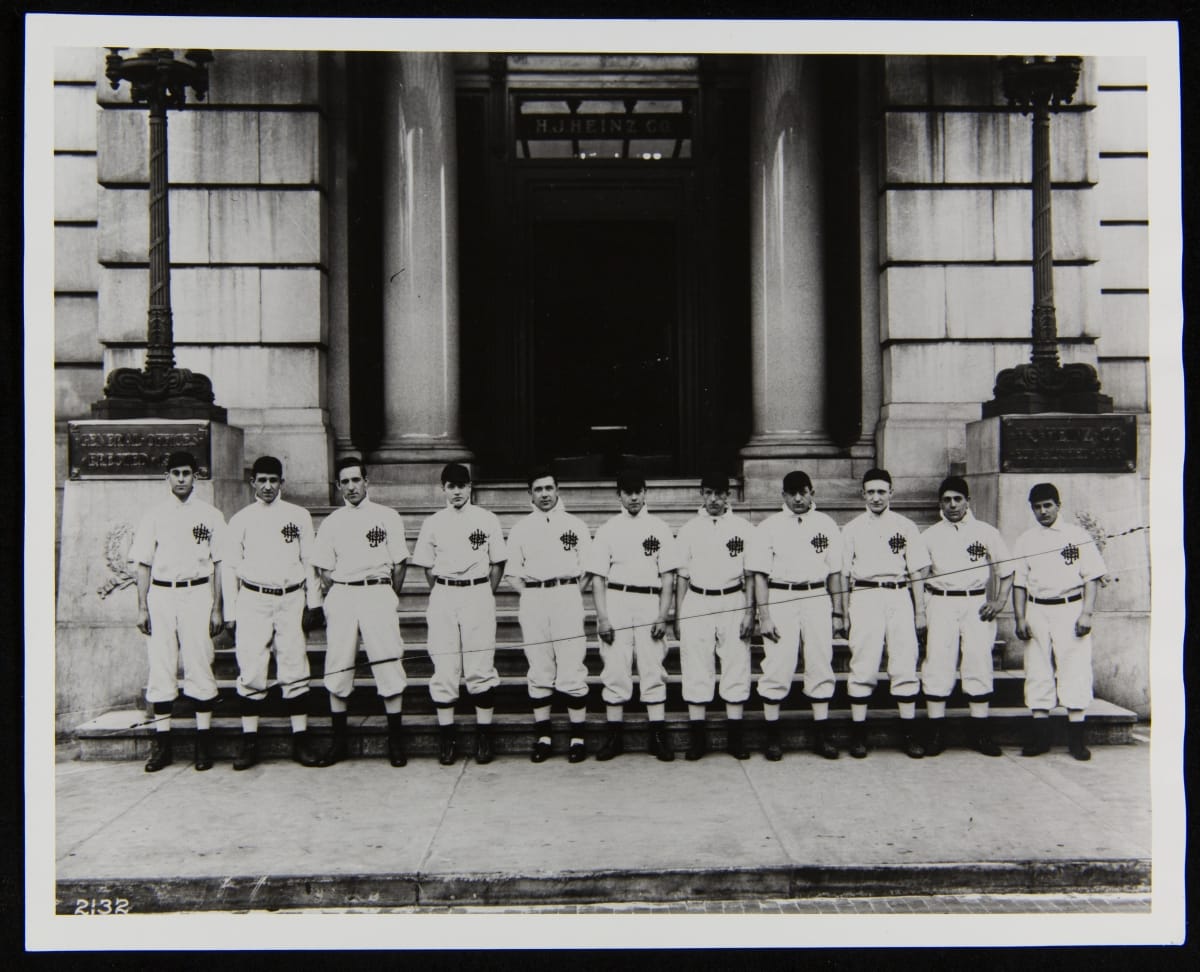
- H. J. Heinz Company Employee Baseball Team, 1910 - The H.J. Heinz Company was at the forefront of employee welfare during the late 19th and early 20th centuries. Exemplary employee amenities such as a gymnasium, swimming pool, self-improvement classes, and large dining rooms supported a strong company culture. An additional recreational activity included the company baseball team, comprised of its employees.
- 1910
- Collections - Artifact
H. J. Heinz Company Employee Baseball Team, 1910
The H.J. Heinz Company was at the forefront of employee welfare during the late 19th and early 20th centuries. Exemplary employee amenities such as a gymnasium, swimming pool, self-improvement classes, and large dining rooms supported a strong company culture. An additional recreational activity included the company baseball team, comprised of its employees.
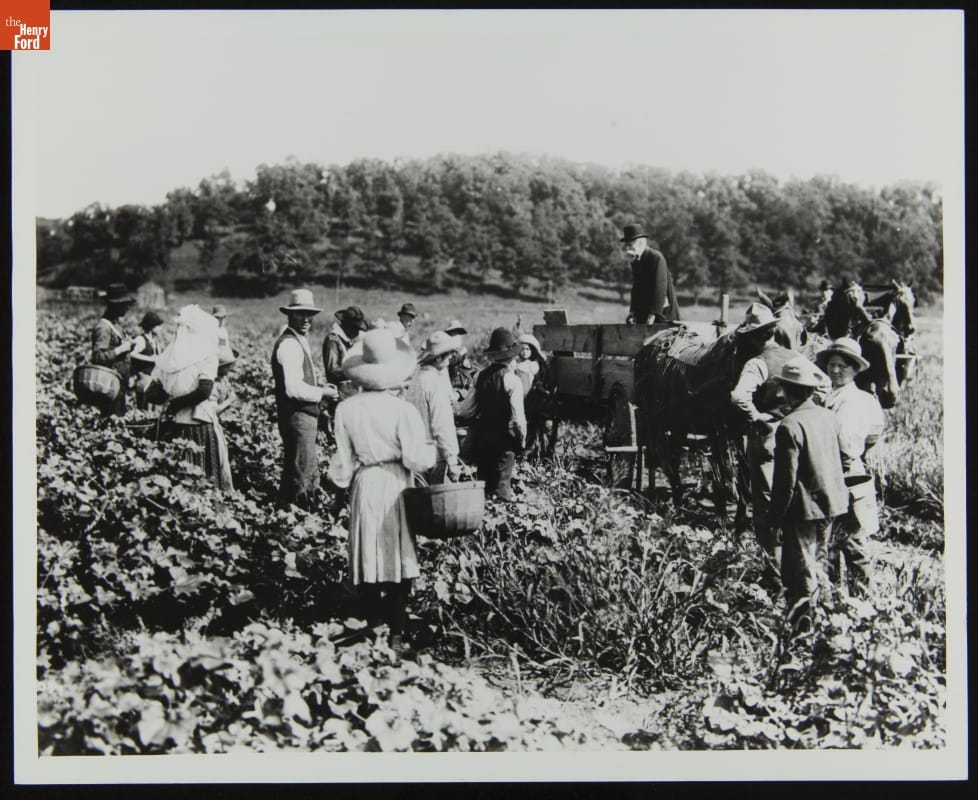
- H. J. Heinz Talking to Workers in a Cucumber Field, 1904 - Henry J. Heinz transformed the eating habits of late 19th-- and early 20th--century America. He was passionate about providing a quality product and supported a strong working relationship with his employees. Here Heinz is in a cucumber field encouraging and motivating his workers.
- 1904
- Collections - Artifact
H. J. Heinz Talking to Workers in a Cucumber Field, 1904
Henry J. Heinz transformed the eating habits of late 19th-- and early 20th--century America. He was passionate about providing a quality product and supported a strong working relationship with his employees. Here Heinz is in a cucumber field encouraging and motivating his workers.
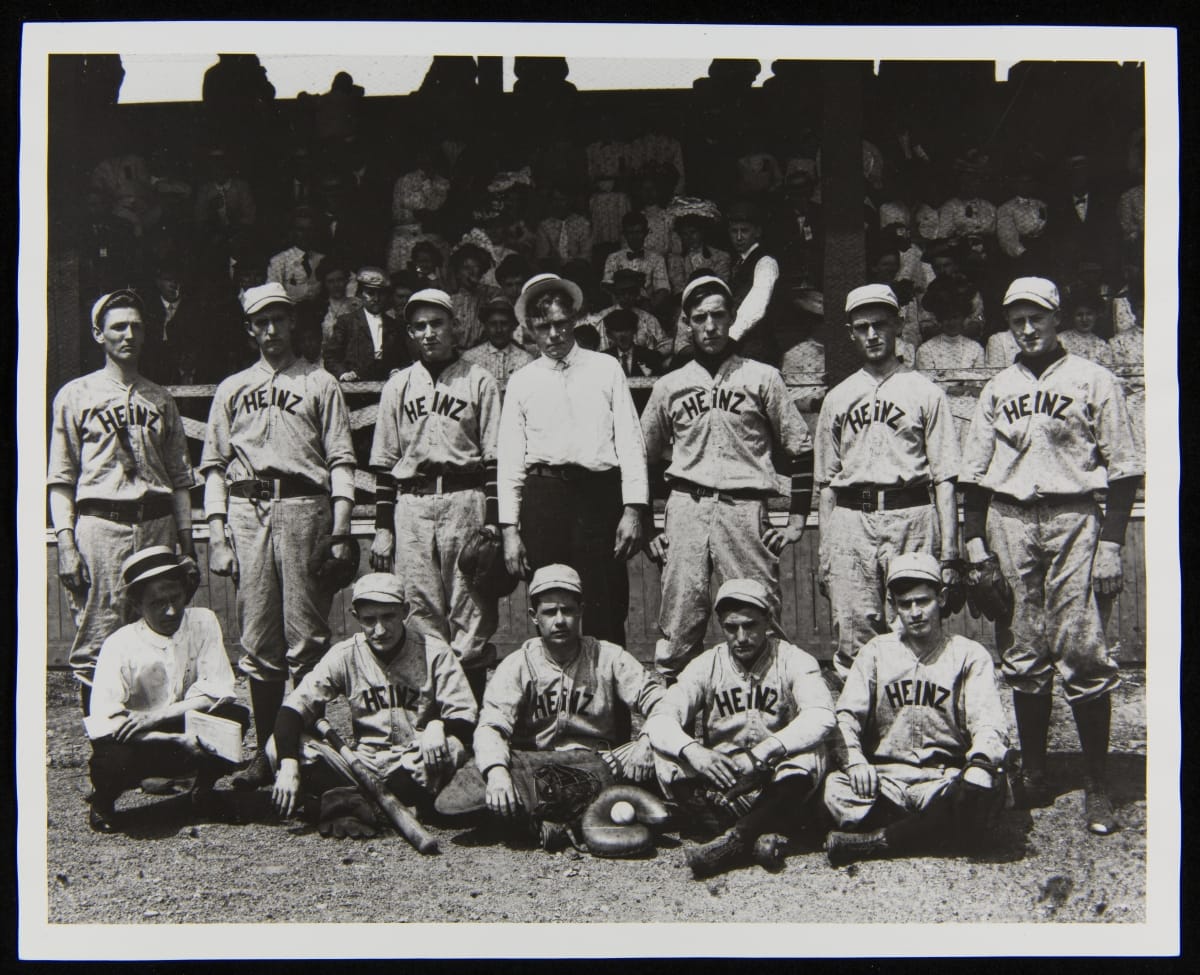
- H. J. Heinz Company Employee Baseball Team, 1907 - The H.J. Heinz Company was at the forefront of employee welfare during the late 19th and early 20th centuries. Exemplary employee amenities such as a gymnasium, swimming pool, self-improvement classes, and large dining rooms supported a strong company culture. An additional recreational activity included the company baseball team, comprised of its employees.
- 1907
- Collections - Artifact
H. J. Heinz Company Employee Baseball Team, 1907
The H.J. Heinz Company was at the forefront of employee welfare during the late 19th and early 20th centuries. Exemplary employee amenities such as a gymnasium, swimming pool, self-improvement classes, and large dining rooms supported a strong company culture. An additional recreational activity included the company baseball team, comprised of its employees.
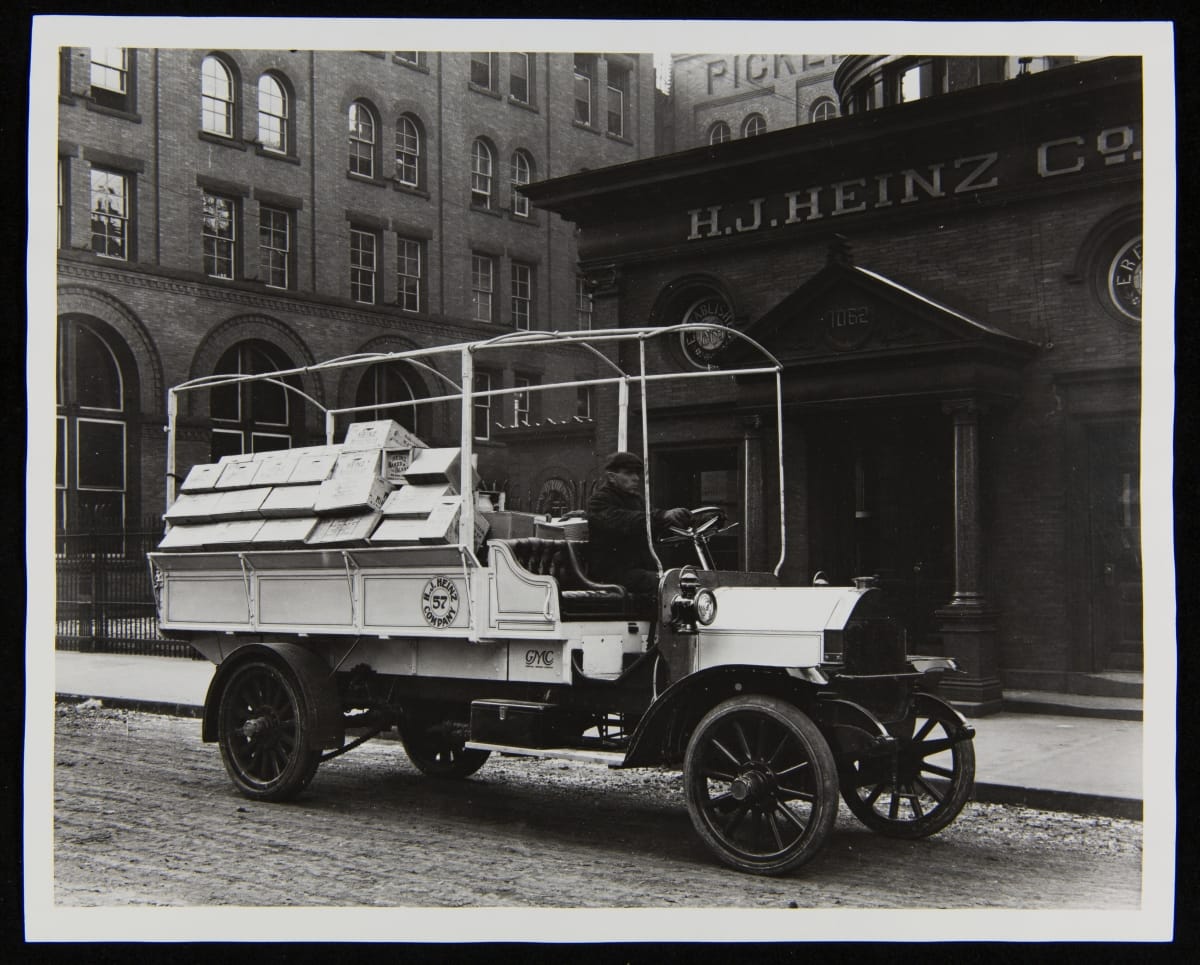
- Heinz Truck and Driver outside Main Plant's Time Office, Pittsburgh, Pennsylvania, 1911 - The H.J. Heinz Company had many transportation methods to transport its "57 Varieties." Cross-country shipments between factories were made by rail while local deliveries were made by teams of horses and later by automobile. In 1910, the company purchased its first gasoline-powered vehicles for deliveries, which would go on to replace all horse-drawn wagon teams by the 1920s.
- 1911
- Collections - Artifact
Heinz Truck and Driver outside Main Plant's Time Office, Pittsburgh, Pennsylvania, 1911
The H.J. Heinz Company had many transportation methods to transport its "57 Varieties." Cross-country shipments between factories were made by rail while local deliveries were made by teams of horses and later by automobile. In 1910, the company purchased its first gasoline-powered vehicles for deliveries, which would go on to replace all horse-drawn wagon teams by the 1920s.