
Search
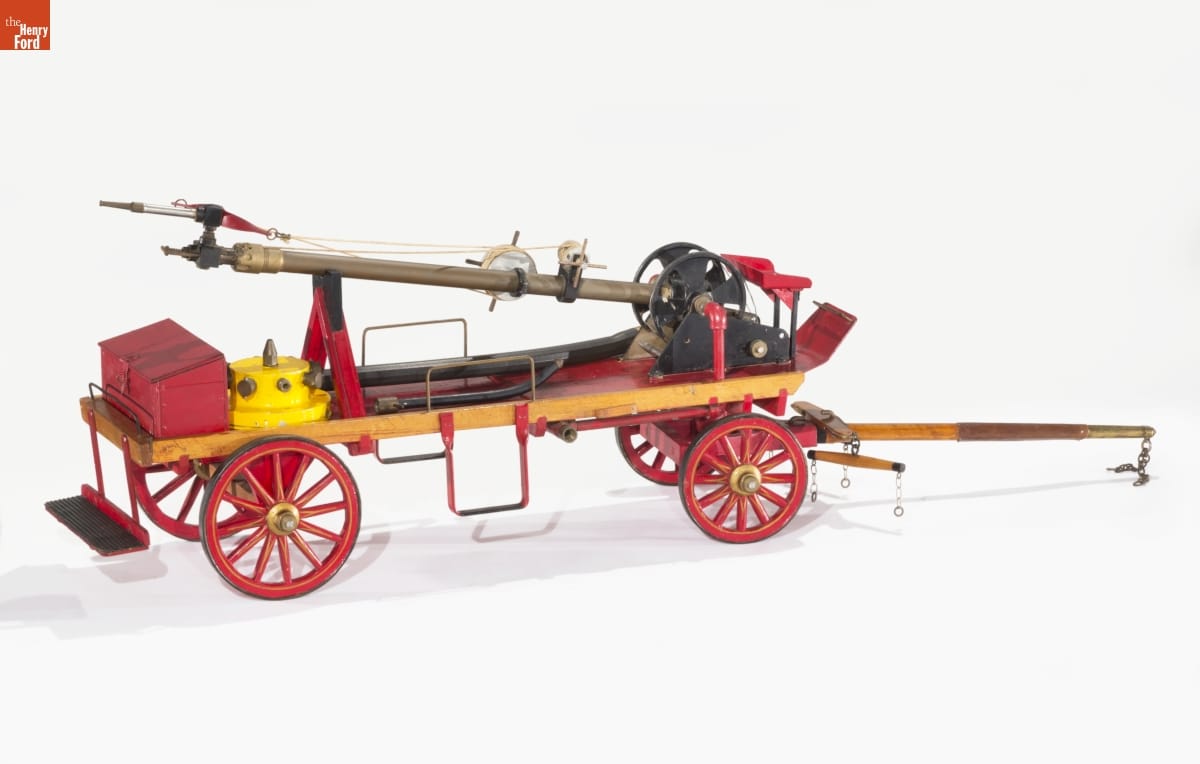
- Model of a Firefighter's Water Tower, circa 1900 - Water is the primary tool for fighting most fires. Water vaporizes when it contacts fire, and that process robs the fire of oxygen. Vaporization also absorbs heat from the fire and from potential fuel sources. This model illustrates a mobile tower, from about 1900, that firefighters used to elevate their spray nozzles and direct water where it was needed most.
- circa 1900
- Collections - Artifact
Model of a Firefighter's Water Tower, circa 1900
Water is the primary tool for fighting most fires. Water vaporizes when it contacts fire, and that process robs the fire of oxygen. Vaporization also absorbs heat from the fire and from potential fuel sources. This model illustrates a mobile tower, from about 1900, that firefighters used to elevate their spray nozzles and direct water where it was needed most.
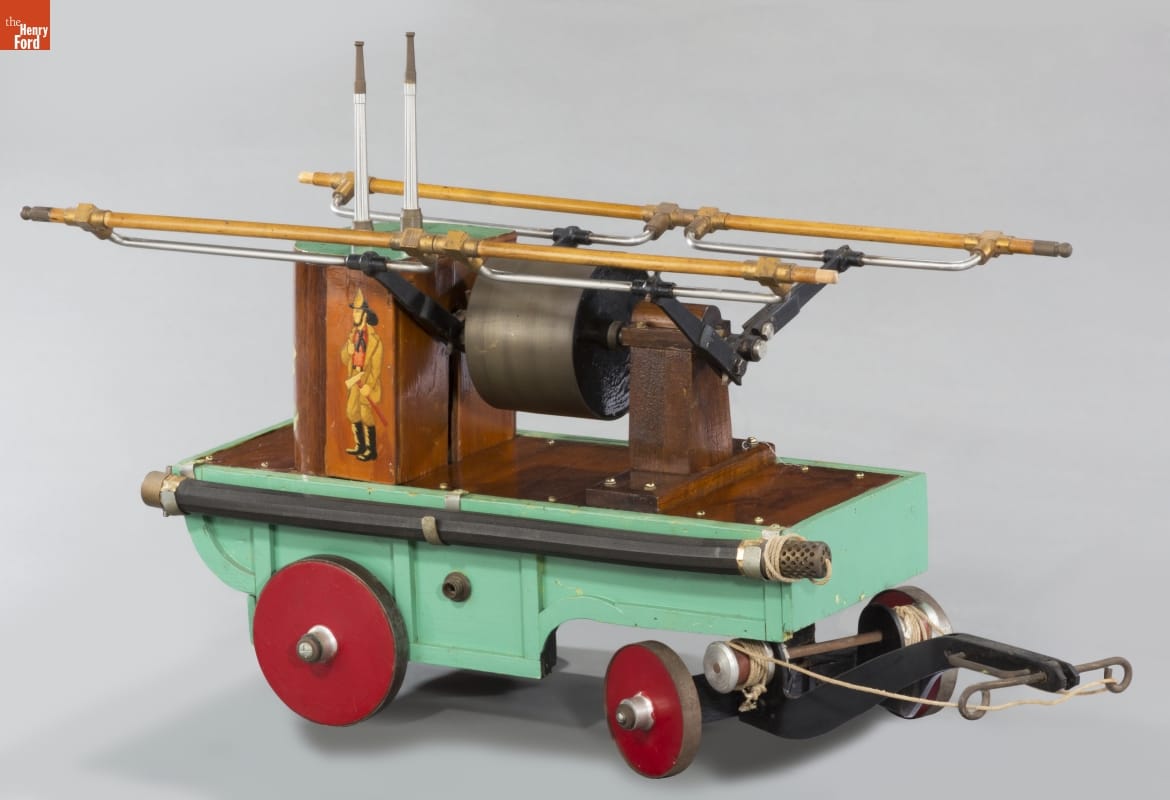
- Model of a Hand Pumper Fire Engine, circa 1900 - Mobile, hand-operated water pumps were first used to combat fires in the mid-17th century. Teams of firefighters pushed up and down on long bars -- called brakes -- to power the pump. This model represents a hand pumper from about 1900. Under ideal conditions, a full-size engine like this might have pumped more than 75 gallons of water per minute.
- circa 1900
- Collections - Artifact
Model of a Hand Pumper Fire Engine, circa 1900
Mobile, hand-operated water pumps were first used to combat fires in the mid-17th century. Teams of firefighters pushed up and down on long bars -- called brakes -- to power the pump. This model represents a hand pumper from about 1900. Under ideal conditions, a full-size engine like this might have pumped more than 75 gallons of water per minute.
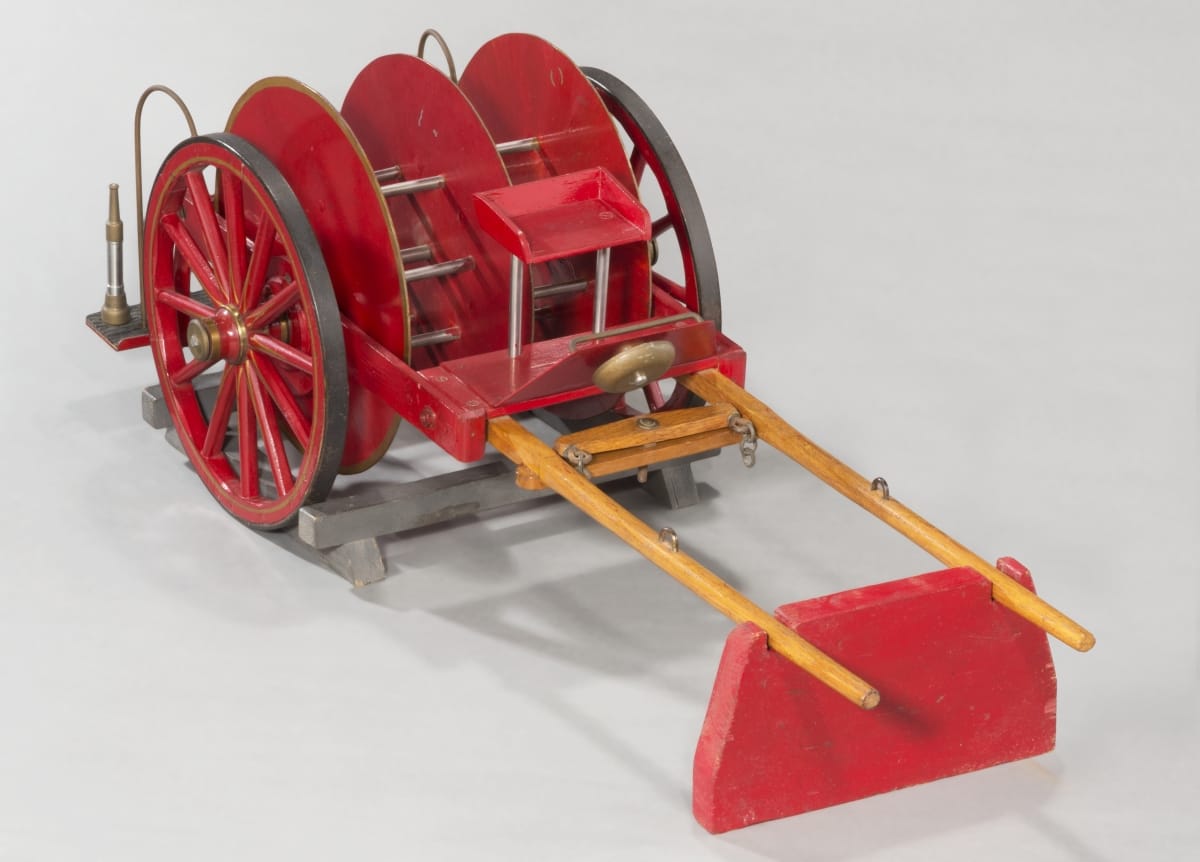
- Model of a Firefighter's Hose Cart, circa 1900 - Effective firefighting depended on hoses to carry water from a source to a pumper, and from the pumper to the fire. Hand- or horse-drawn hose carts transported hoses to the scene of a fire. Larger reels might hold several hundred feet of leather, cotton or rubber hoses.
- circa 1900
- Collections - Artifact
Model of a Firefighter's Hose Cart, circa 1900
Effective firefighting depended on hoses to carry water from a source to a pumper, and from the pumper to the fire. Hand- or horse-drawn hose carts transported hoses to the scene of a fire. Larger reels might hold several hundred feet of leather, cotton or rubber hoses.
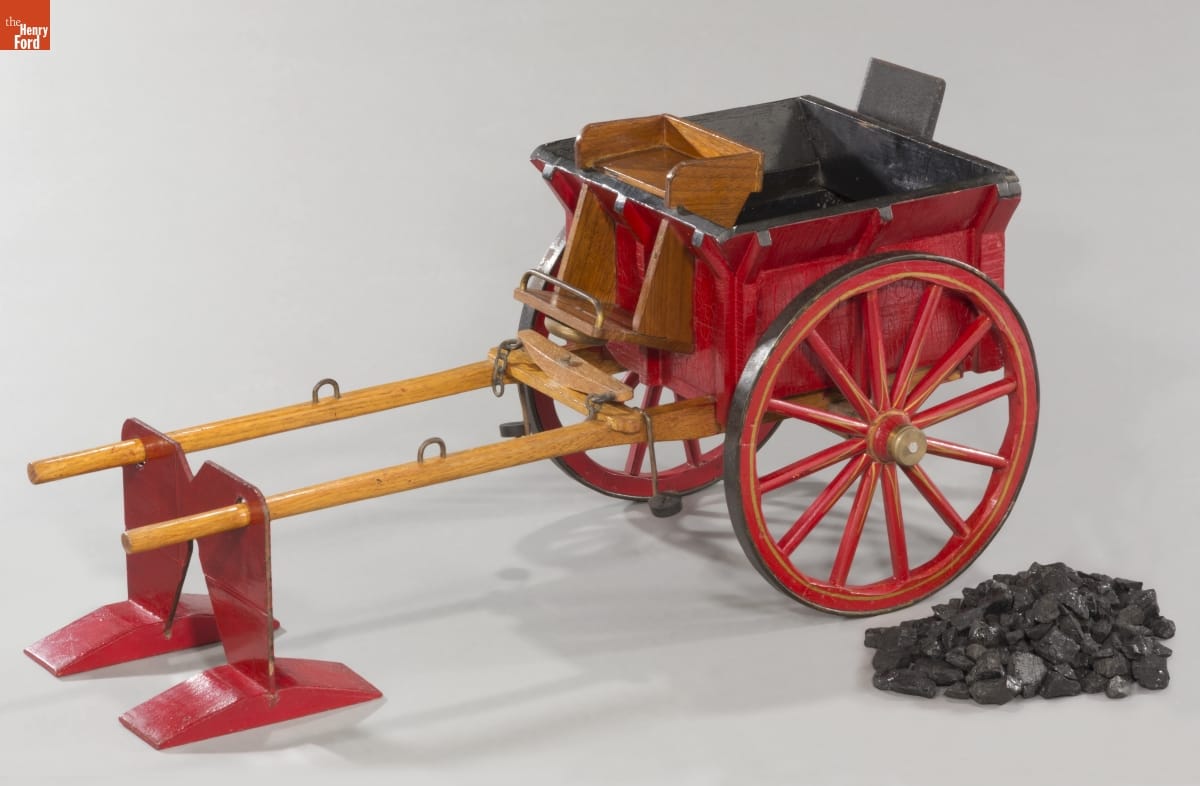
- Model of a Firefighter's Coal Cart, circa 1900 - American firefighters began using steam-powered water pumps to combat fires in the 1840s. These steam engines were more efficient and more effective than the hand-powered pumps they replaced. Firefighters needed a ready supply of coal to keep boilers operating. This model represents a coal cart that would have been used with a steam fire engine.
- circa 1900
- Collections - Artifact
Model of a Firefighter's Coal Cart, circa 1900
American firefighters began using steam-powered water pumps to combat fires in the 1840s. These steam engines were more efficient and more effective than the hand-powered pumps they replaced. Firefighters needed a ready supply of coal to keep boilers operating. This model represents a coal cart that would have been used with a steam fire engine.
- Model of a Hook and Ladder Truck, circa 1900 - Hook-and-ladder fire trucks like the one represented by this model featured fifth-wheel hitches. This allowed the trucks to make tight turns despite their length. Ladders are essential tools in battling fires. They help firefighters reach people trapped on upper floors, and they elevate hoses and spray nozzles to direct water where it's needed most.
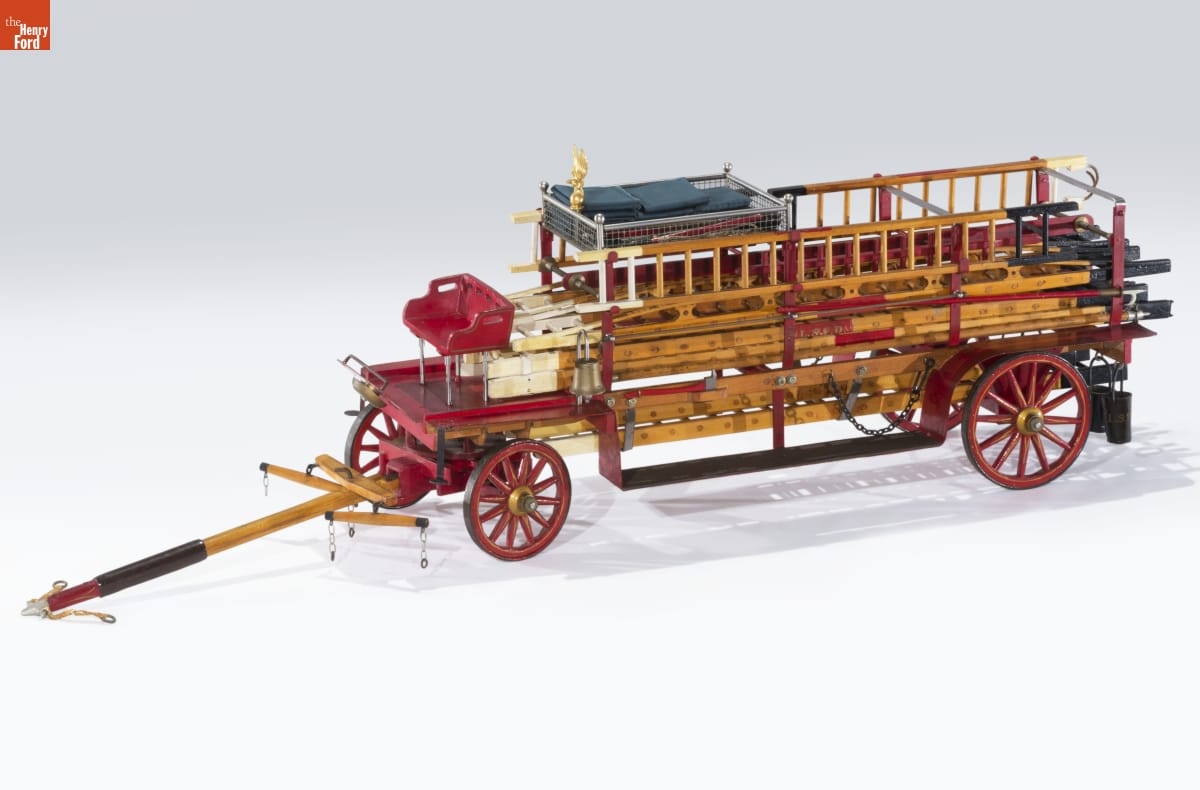
- circa 1900
- Collections - Artifact
Model of a Hook and Ladder Truck, circa 1900
Hook-and-ladder fire trucks like the one represented by this model featured fifth-wheel hitches. This allowed the trucks to make tight turns despite their length. Ladders are essential tools in battling fires. They help firefighters reach people trapped on upper floors, and they elevate hoses and spray nozzles to direct water where it's needed most.