
Search
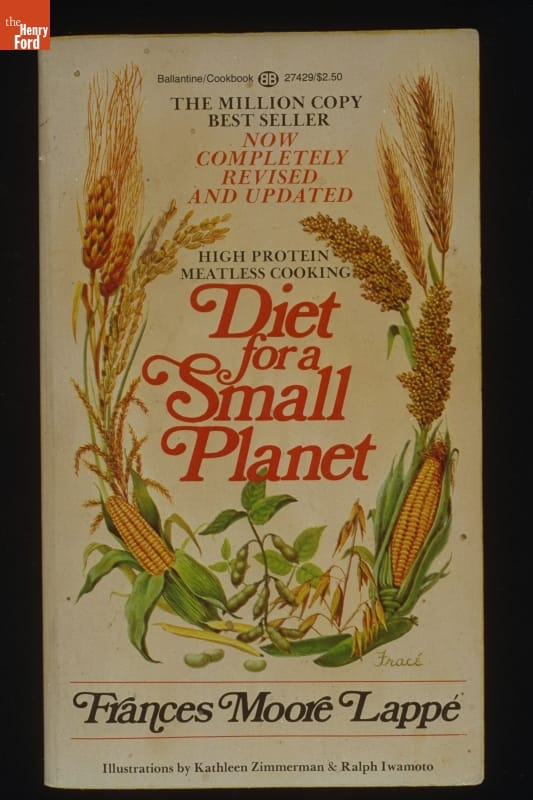
- Book, "Diet for a Small Planet," 1975 - Hippie lifestyles of the 1960s encouraged Americans to think vegetarian in the late 20th century. This cookbook, first published in 1971, gave tips for cooking with non-meat protein rich foods like grains, beans and peanuts rather than meat.
- 1975
- Collections - Artifact
Book, "Diet for a Small Planet," 1975
Hippie lifestyles of the 1960s encouraged Americans to think vegetarian in the late 20th century. This cookbook, first published in 1971, gave tips for cooking with non-meat protein rich foods like grains, beans and peanuts rather than meat.
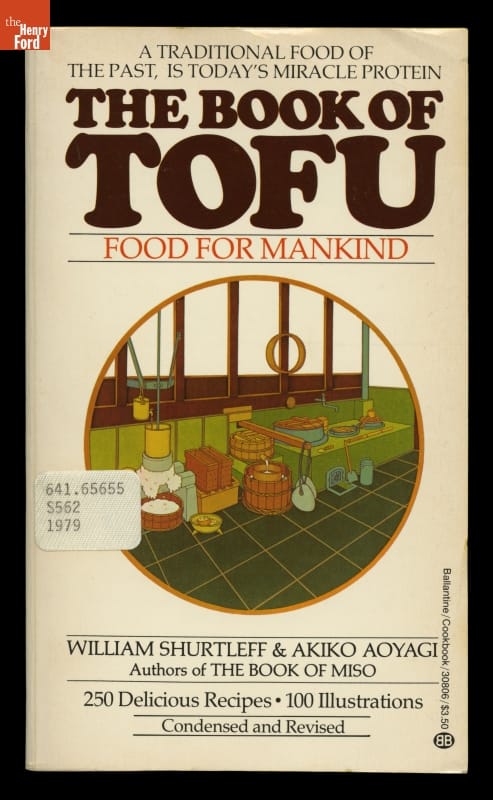
- Cookbook, "The Book of Tofu: Food for Mankind," 1979 - In the 1970s, scientific research linked diets high in animal protein to health problems including heart disease and cancer. Publications helped popularize soybeans as a nutritious meatless alternative that provided quality protein with no cholesterol and less saturated fat than meat. This book included historical information, preparation instructions, and recipes incorporating tofu, a versatile curd made from soybeans.
- 1979
- Collections - Artifact
Cookbook, "The Book of Tofu: Food for Mankind," 1979
In the 1970s, scientific research linked diets high in animal protein to health problems including heart disease and cancer. Publications helped popularize soybeans as a nutritious meatless alternative that provided quality protein with no cholesterol and less saturated fat than meat. This book included historical information, preparation instructions, and recipes incorporating tofu, a versatile curd made from soybeans.
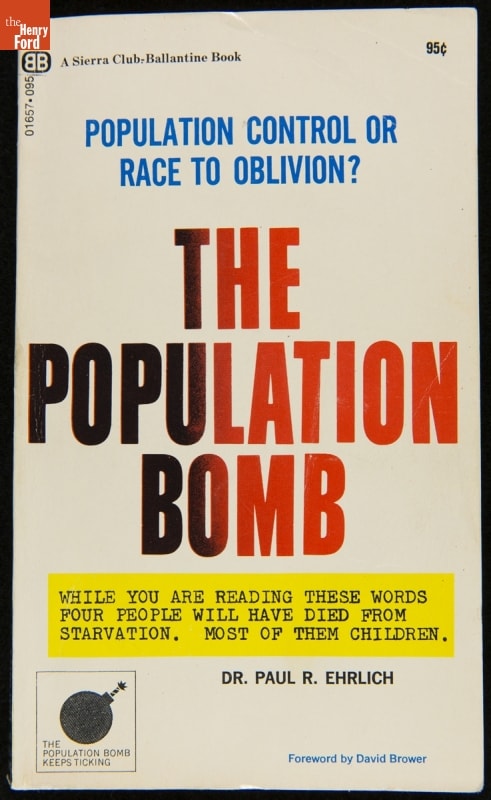
- "The Population Bomb," 1968 - Paul Ehrlich, an entomologist, and his wife, Anne Howland, who studied population biology, agreed that population-growth threatened human survival by outstripping available food supplies. They wrote <em>The Population Bomb</em> during the 1968 presidential campaign to stress the proactive steps necessary to reduce overpopulation. The topic exploded in February 1970, when Johnny Carson interviewed Ehrlich on <em>The Tonight Show</em>.
- 1968
- Collections - Artifact
"The Population Bomb," 1968
Paul Ehrlich, an entomologist, and his wife, Anne Howland, who studied population biology, agreed that population-growth threatened human survival by outstripping available food supplies. They wrote The Population Bomb during the 1968 presidential campaign to stress the proactive steps necessary to reduce overpopulation. The topic exploded in February 1970, when Johnny Carson interviewed Ehrlich on The Tonight Show.
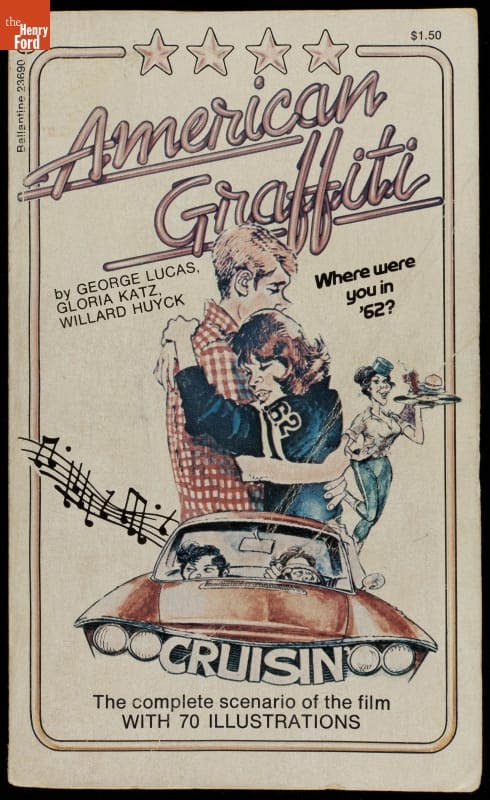
- "American Graffiti," 1973 - Hot rods, rock and roll, and a generation coming of age cruise down the streets of Modesto, California, in <EM>American Graffiti.</EM> This 1973 George Lucas film follows a group of teenagers on the last night of summer cruising in 1962 -- before college, work, growing up, and the loss of innocence. The screenplay was adapted into this book.
- 1962
- Collections - Artifact
"American Graffiti," 1973
Hot rods, rock and roll, and a generation coming of age cruise down the streets of Modesto, California, in American Graffiti. This 1973 George Lucas film follows a group of teenagers on the last night of summer cruising in 1962 -- before college, work, growing up, and the loss of innocence. The screenplay was adapted into this book.
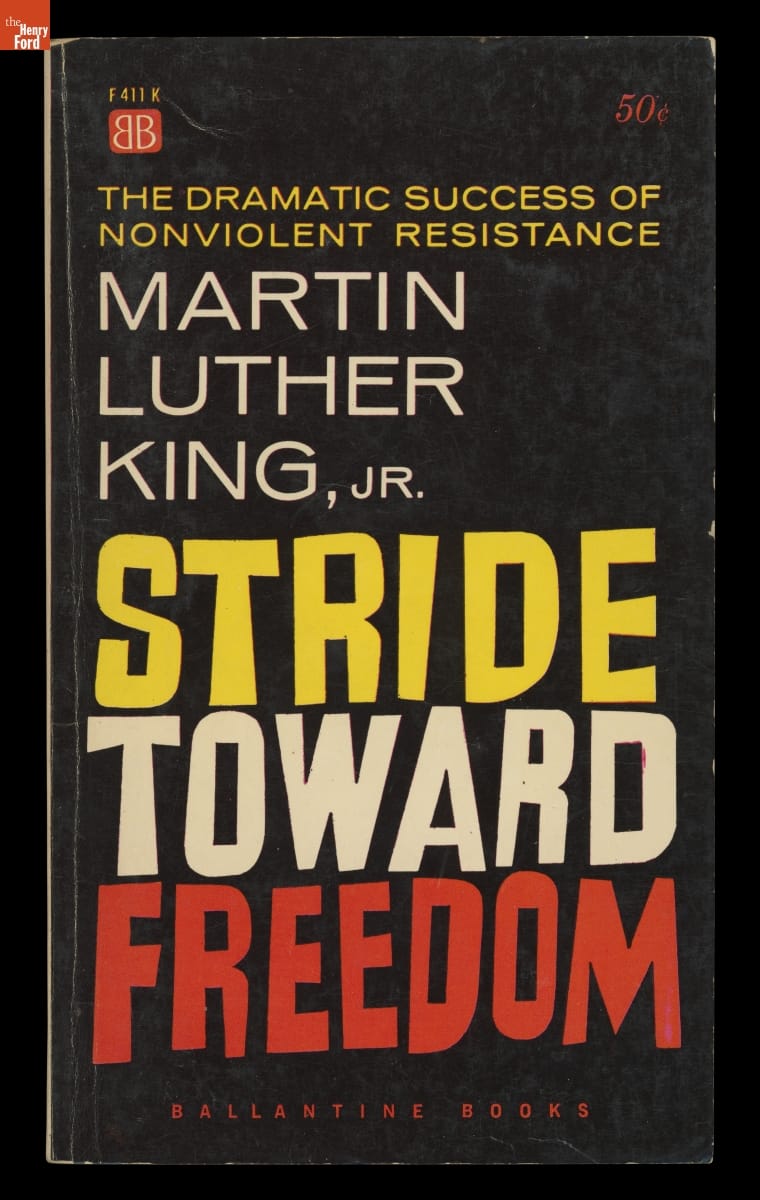
- Stride Toward Freedom, 1958 -
- 1958
- Collections - Artifact
Stride Toward Freedom, 1958