
Search
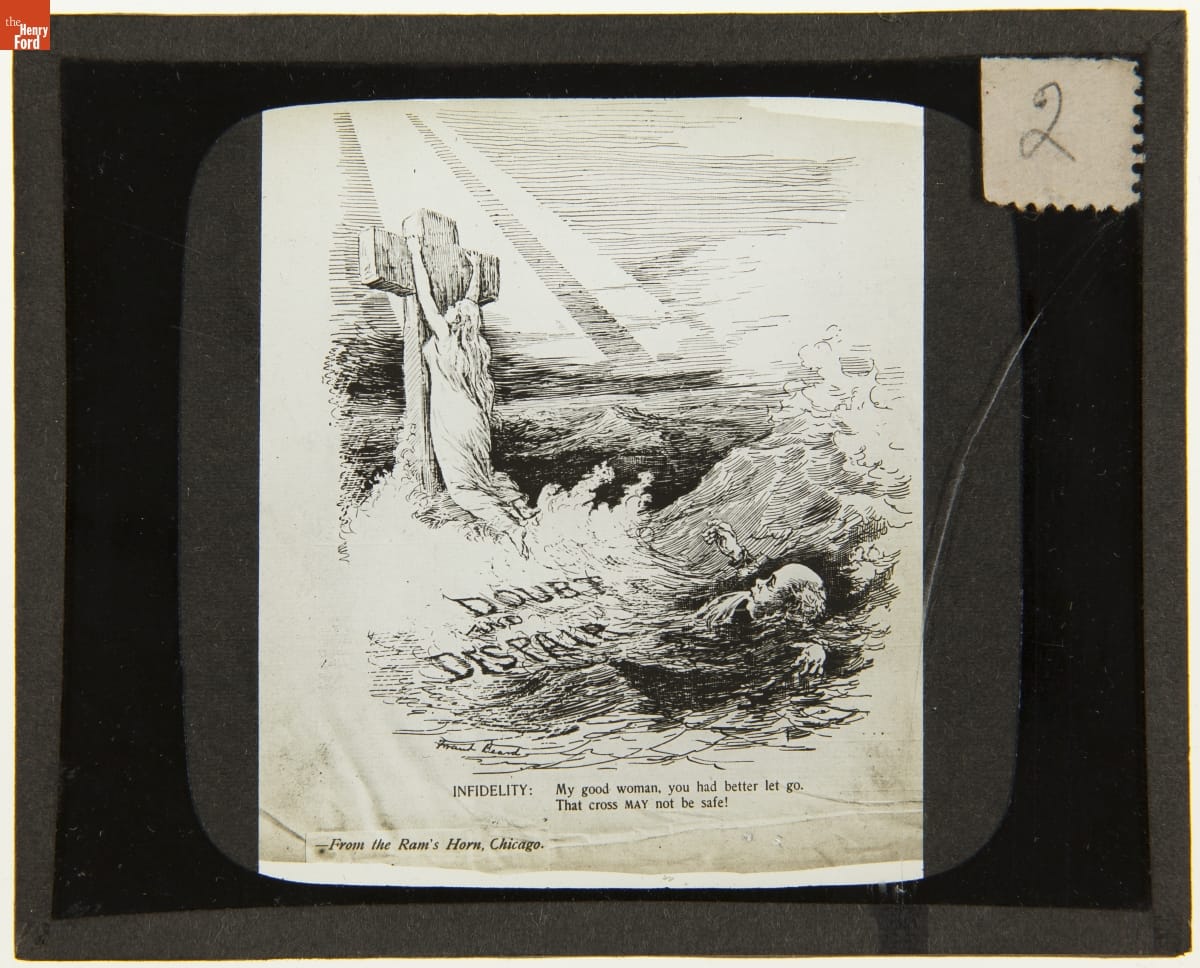
- Lantern Slide, "Doubt and Despair" Cartoon from the Ram's Horn Magazine, 1890-1910 - Frank Beard (1842-1905), an illustrator, caricaturist, and cartoonist, began his career by sketching scenes of military life for popular publications--such as <em>Harper's Weekly</em>--during the Civil War. His later works promoted Christianity, warned against secularism, and targeted the social ills of the Gilded Age. This slide shows one of his illustrations from <em>The Ram's Horn</em>, a non-denominational Christian periodical.
- 1890-1910
- Collections - Artifact
Lantern Slide, "Doubt and Despair" Cartoon from the Ram's Horn Magazine, 1890-1910
Frank Beard (1842-1905), an illustrator, caricaturist, and cartoonist, began his career by sketching scenes of military life for popular publications--such as Harper's Weekly--during the Civil War. His later works promoted Christianity, warned against secularism, and targeted the social ills of the Gilded Age. This slide shows one of his illustrations from The Ram's Horn, a non-denominational Christian periodical.
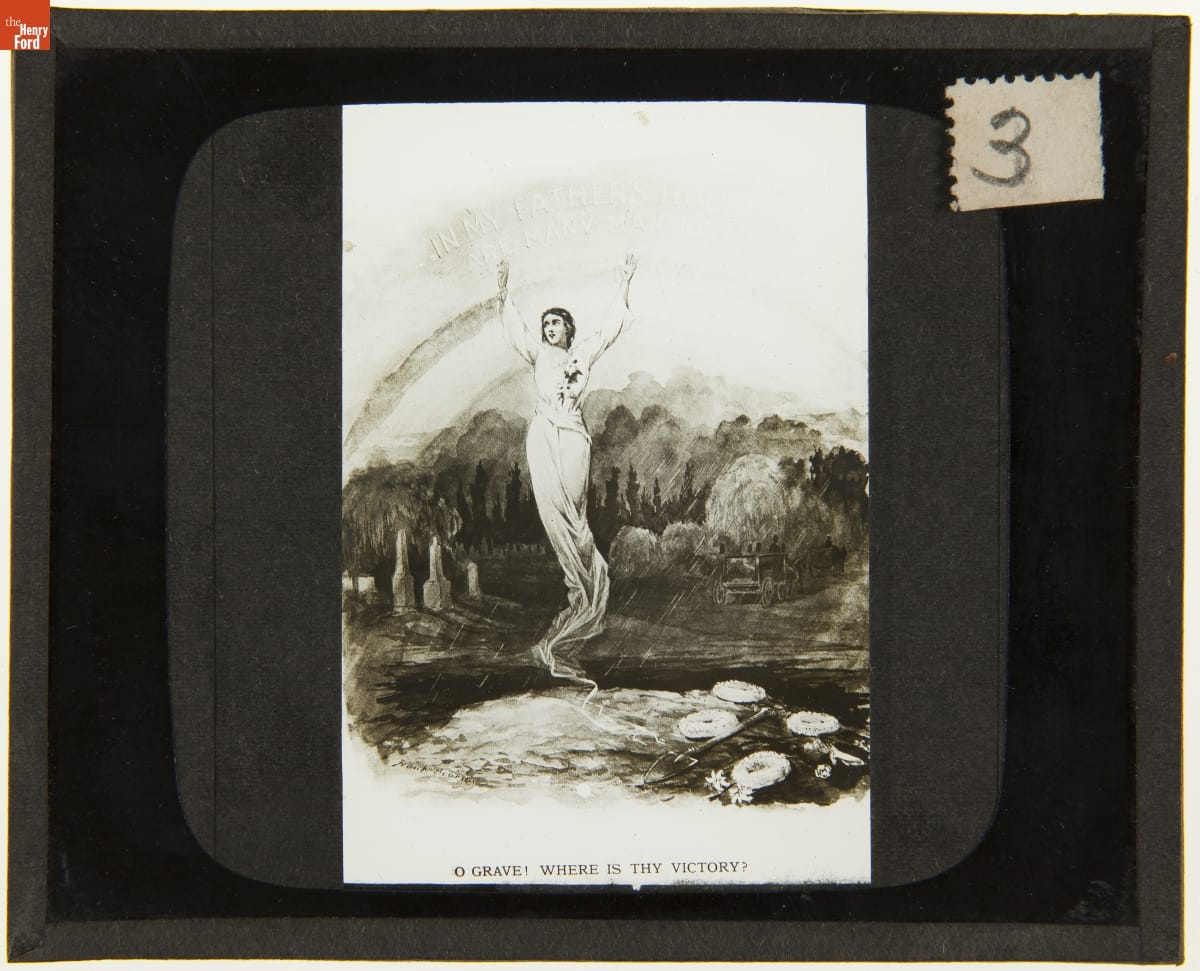
- Lantern Slide, "O Grave! Where is Thy Victory?" Cartoon, 1895 - Frank Beard (1842-1905), an illustrator, caricaturist, and cartoonist, began his career by sketching scenes of military life for popular publications--such as <em>Harper's Weekly</em>--during the Civil War. His later works promoted Christianity, warned against secularism, and targeted the social ills of the Gilded Age. This slide shows one of his illustrations from <em>The Ram's Horn</em>, a non-denominational Christian periodical.
- 1895
- Collections - Artifact
Lantern Slide, "O Grave! Where is Thy Victory?" Cartoon, 1895
Frank Beard (1842-1905), an illustrator, caricaturist, and cartoonist, began his career by sketching scenes of military life for popular publications--such as Harper's Weekly--during the Civil War. His later works promoted Christianity, warned against secularism, and targeted the social ills of the Gilded Age. This slide shows one of his illustrations from The Ram's Horn, a non-denominational Christian periodical.
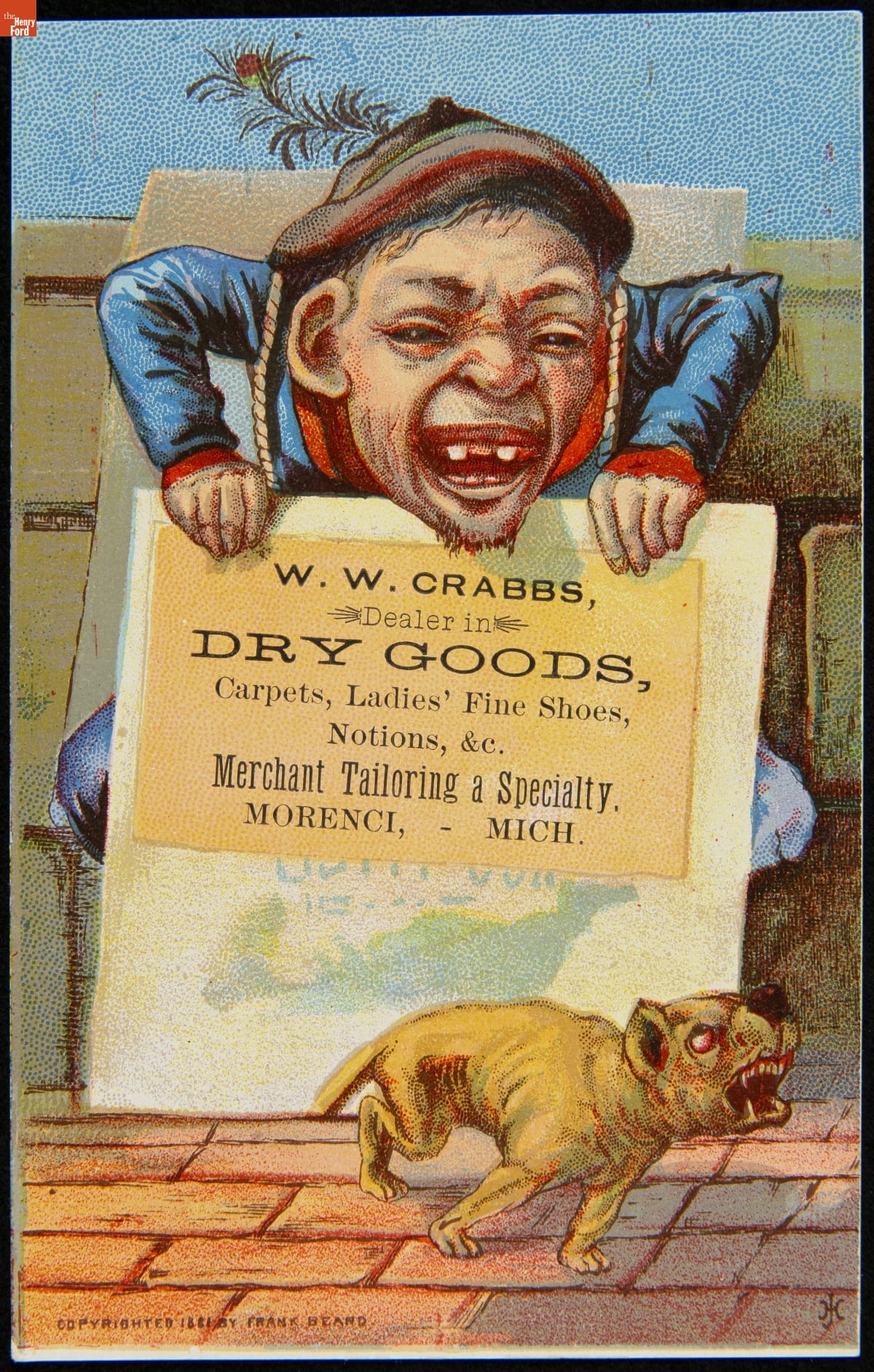
- Trade Card for Dry Goods, W.W. Crabbs, 1881 - In the last third of the nineteenth century, an unprecedented variety of consumer goods and services flooded the American market. Advertisers, armed with new methods of color printing, bombarded potential customers with trade cards. Americans enjoyed and often saved the vibrant little advertisements found in product packages or distributed by local merchants. Many survive as historical records of commercialism in the United States.
- 1881
- Collections - Artifact
Trade Card for Dry Goods, W.W. Crabbs, 1881
In the last third of the nineteenth century, an unprecedented variety of consumer goods and services flooded the American market. Advertisers, armed with new methods of color printing, bombarded potential customers with trade cards. Americans enjoyed and often saved the vibrant little advertisements found in product packages or distributed by local merchants. Many survive as historical records of commercialism in the United States.
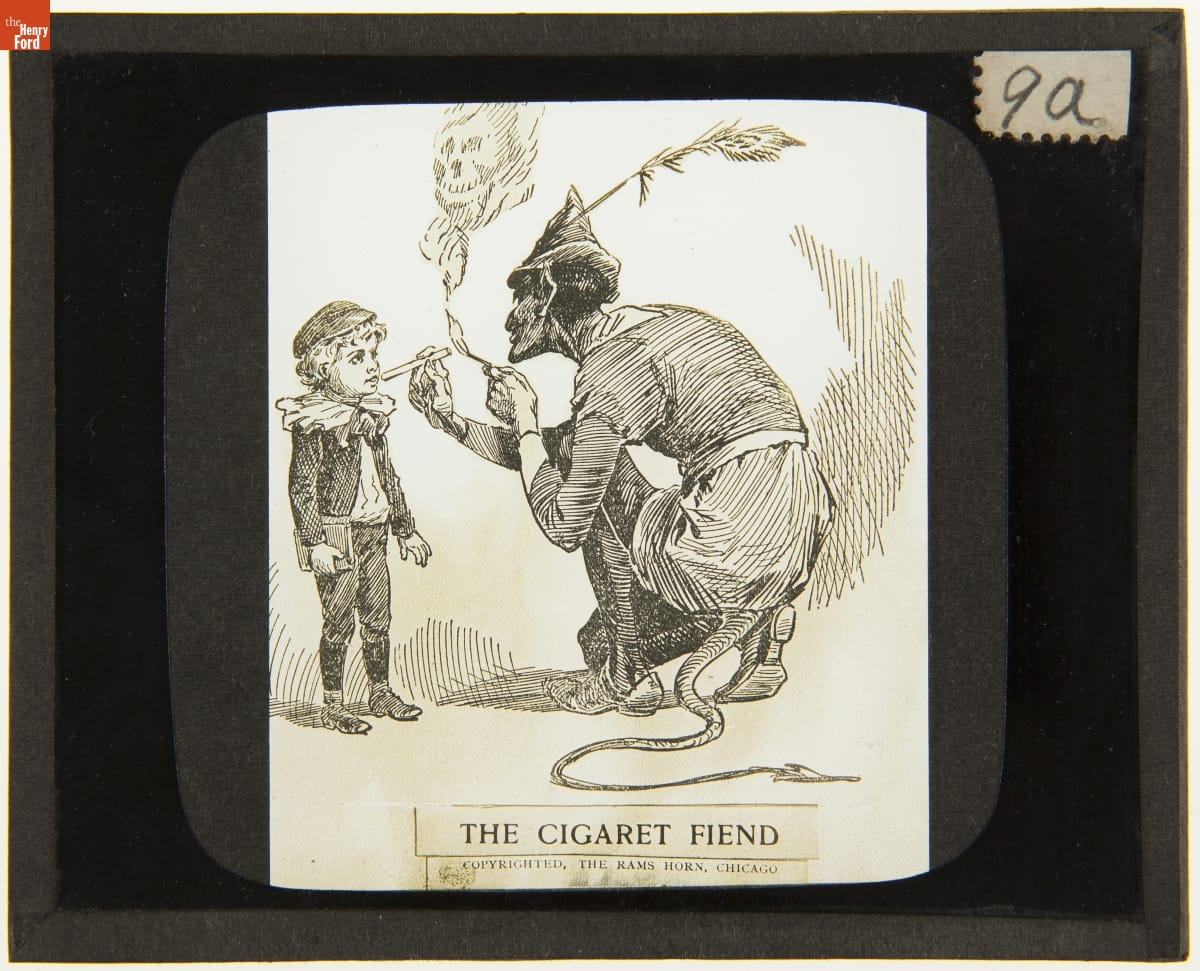
- Lantern Slide, "The Cigaret Fiend" Cartoon, 1890-1910 - Frank Beard (1842-1905), an illustrator, caricaturist, and cartoonist, began his career by sketching scenes of military life for popular publications--such as <em>Harper's Weekly</em>--during the Civil War. His later works promoted Christianity, warned against secularism, and targeted the social ills of the Gilded Age. This slide shows one of his illustrations from <em>The Ram's Horn</em>, a non-denominational Christian periodical.
- 1890-1910
- Collections - Artifact
Lantern Slide, "The Cigaret Fiend" Cartoon, 1890-1910
Frank Beard (1842-1905), an illustrator, caricaturist, and cartoonist, began his career by sketching scenes of military life for popular publications--such as Harper's Weekly--during the Civil War. His later works promoted Christianity, warned against secularism, and targeted the social ills of the Gilded Age. This slide shows one of his illustrations from The Ram's Horn, a non-denominational Christian periodical.
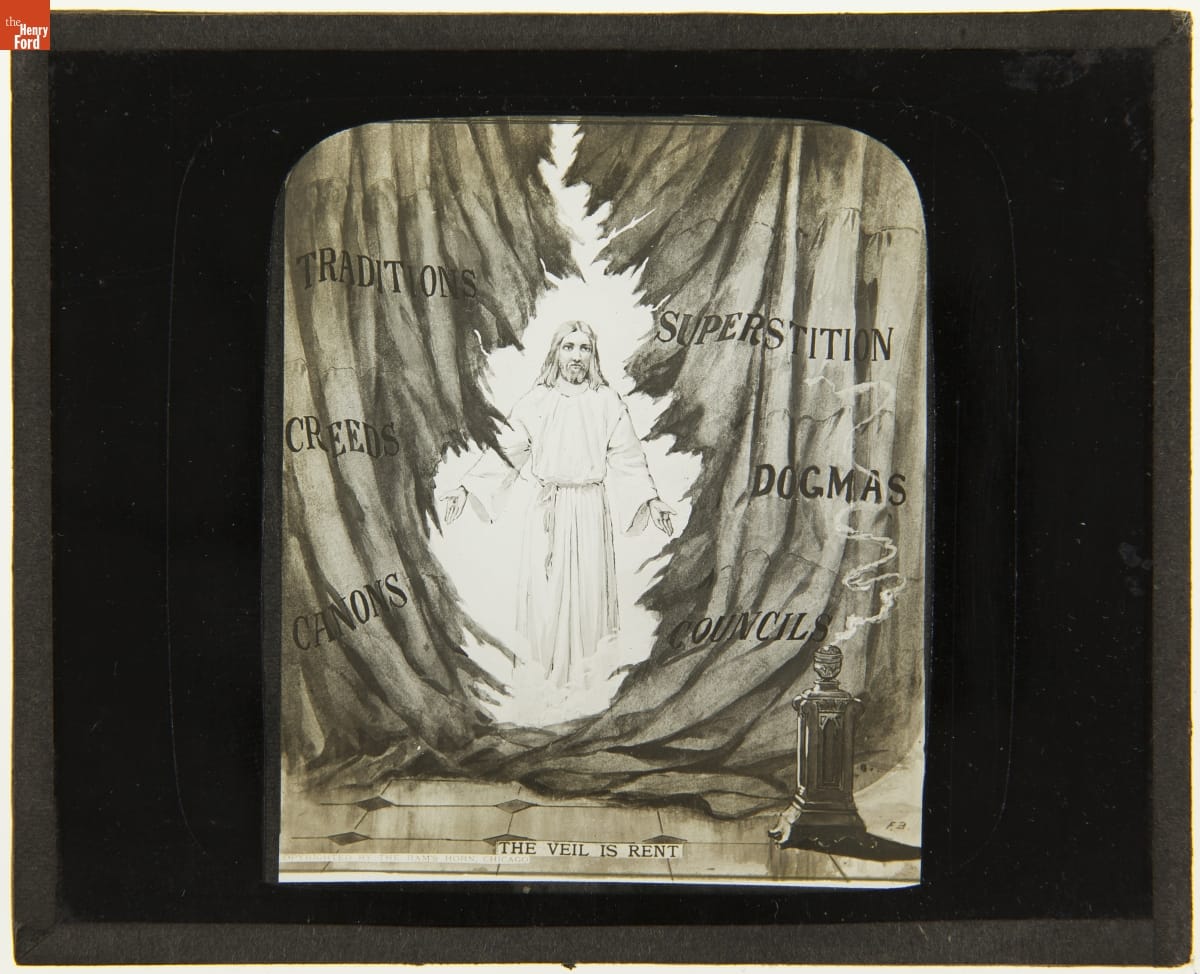
- "The Veil is Rent" Cartoon, 1890-1910 - Frank Beard (1842-1905), an illustrator, caricaturist, and cartoonist, began his career by sketching scenes of military life for popular publications--such as <em>Harper's Weekly</em>--during the Civil War. His later works promoted Christianity, warned against secularism, and targeted the social ills of the Gilded Age. This slide shows one of his illustrations from <em>The Ram's Horn</em>, a non-denominational Christian periodical.
- 1890-1910
- Collections - Artifact
"The Veil is Rent" Cartoon, 1890-1910
Frank Beard (1842-1905), an illustrator, caricaturist, and cartoonist, began his career by sketching scenes of military life for popular publications--such as Harper's Weekly--during the Civil War. His later works promoted Christianity, warned against secularism, and targeted the social ills of the Gilded Age. This slide shows one of his illustrations from The Ram's Horn, a non-denominational Christian periodical.
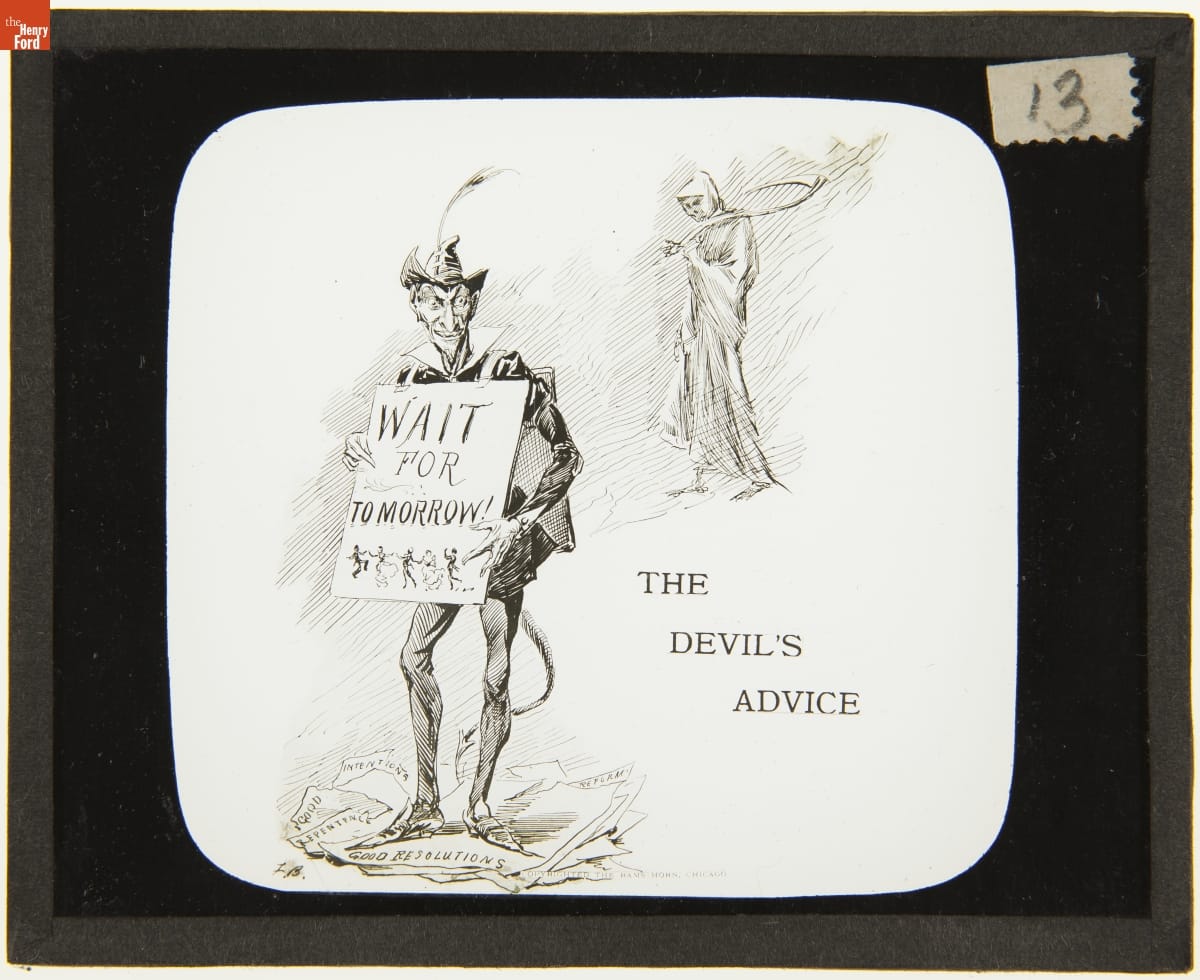
- Lantern Slide, "The Devil's Advice" Cartoon, 1890-1910 - Frank Beard (1842-1905), an illustrator, caricaturist, and cartoonist, began his career by sketching scenes of military life for popular publications--such as <em>Harper's Weekly</em>--during the Civil War. His later works promoted Christianity, warned against secularism, and targeted the social ills of the Gilded Age. This slide shows one of his illustrations from <em>The Ram's Horn</em>, a non-denominational Christian periodical.
- 1890-1910
- Collections - Artifact
Lantern Slide, "The Devil's Advice" Cartoon, 1890-1910
Frank Beard (1842-1905), an illustrator, caricaturist, and cartoonist, began his career by sketching scenes of military life for popular publications--such as Harper's Weekly--during the Civil War. His later works promoted Christianity, warned against secularism, and targeted the social ills of the Gilded Age. This slide shows one of his illustrations from The Ram's Horn, a non-denominational Christian periodical.
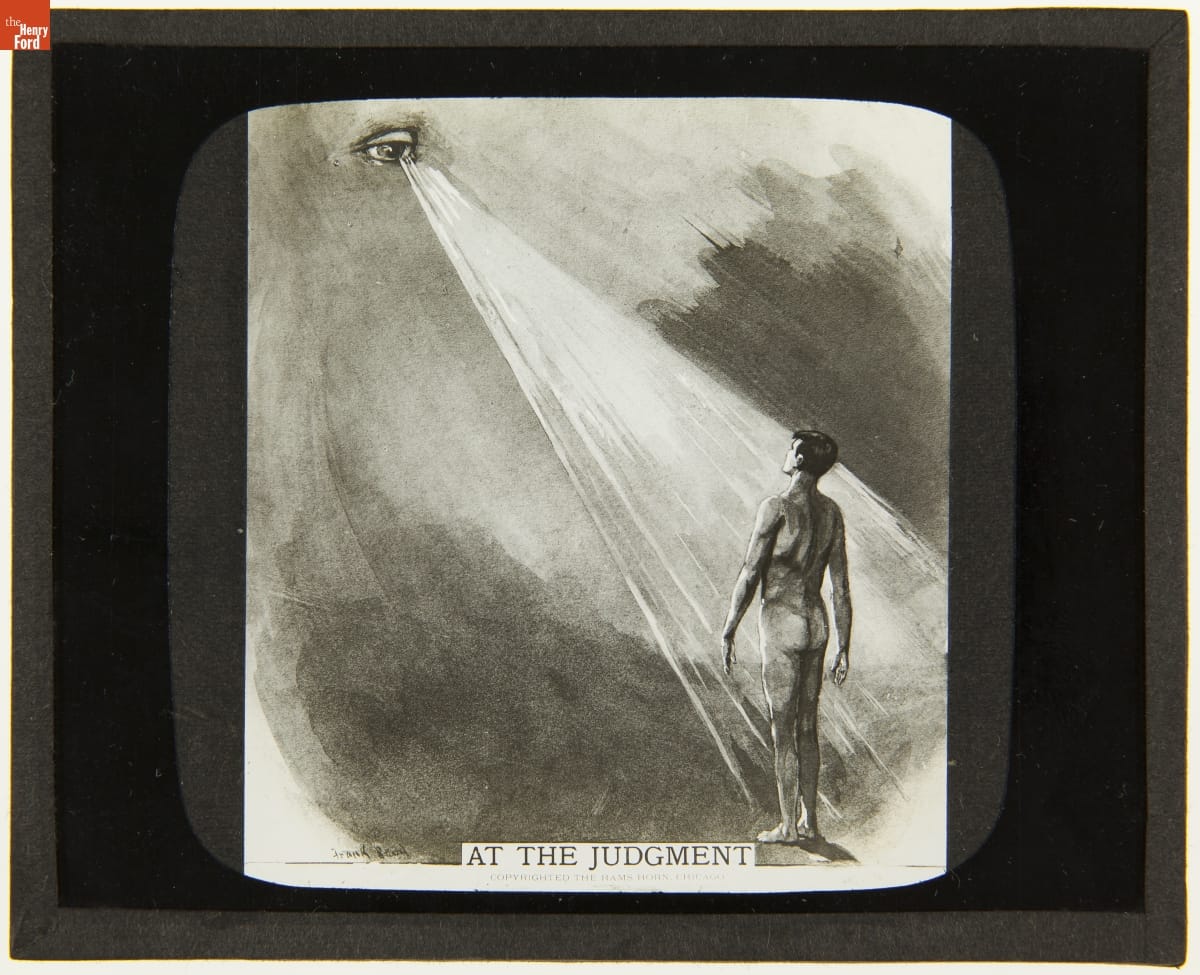
- Lantern Slide, "At the Judgment" Cartoon, 1890-1910 - Frank Beard (1842-1905), an illustrator, caricaturist, and cartoonist, began his career by sketching scenes of military life for popular publications--such as <em>Harper's Weekly</em>--during the Civil War. His later works promoted Christianity, warned against secularism, and targeted the social ills of the Gilded Age. This slide shows one of his illustrations from <em>The Ram's Horn</em>, a non-denominational Christian periodical.
- 1890-1910
- Collections - Artifact
Lantern Slide, "At the Judgment" Cartoon, 1890-1910
Frank Beard (1842-1905), an illustrator, caricaturist, and cartoonist, began his career by sketching scenes of military life for popular publications--such as Harper's Weekly--during the Civil War. His later works promoted Christianity, warned against secularism, and targeted the social ills of the Gilded Age. This slide shows one of his illustrations from The Ram's Horn, a non-denominational Christian periodical.
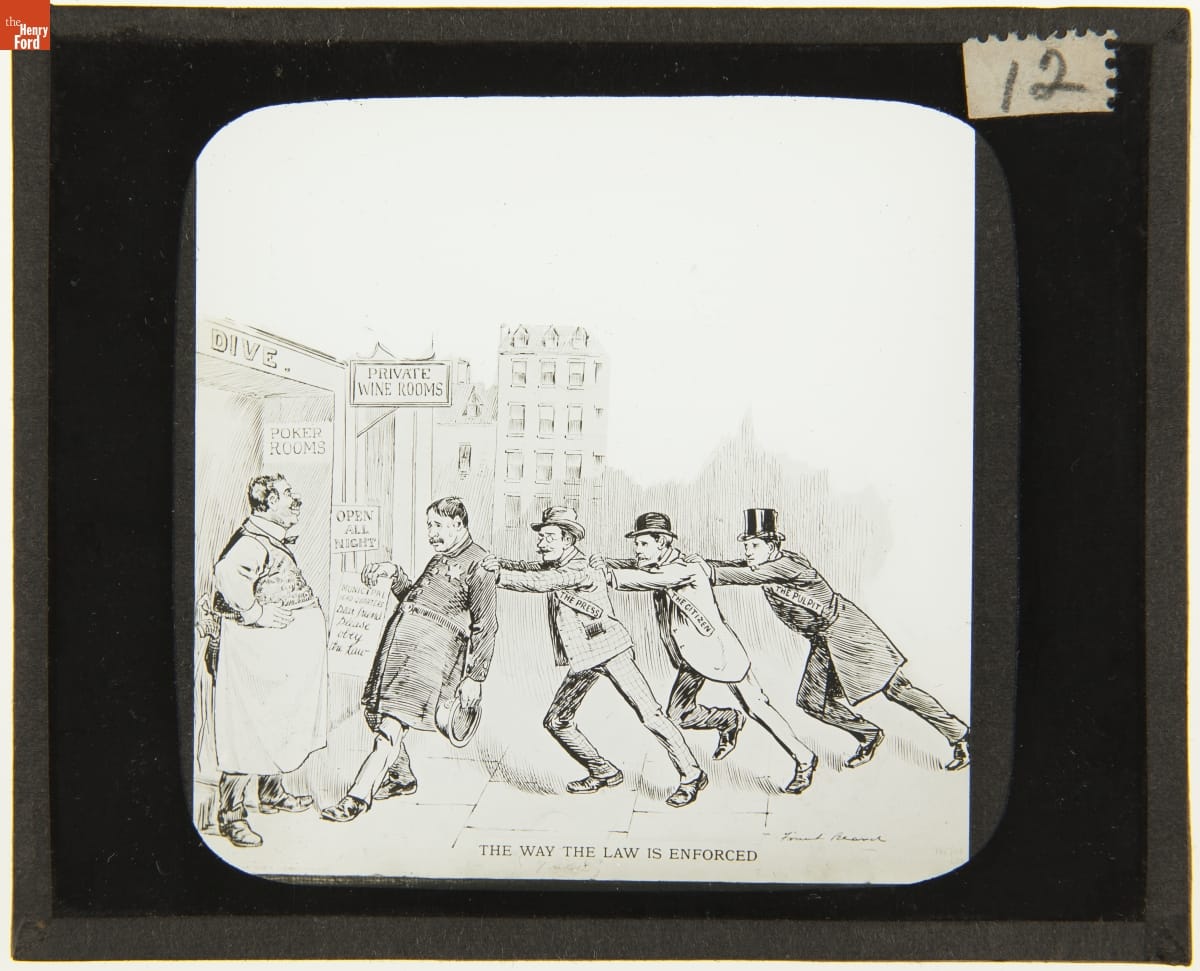
- Lantern Slide, "The Way the Law is Enforced" Cartoon, 1890-1910 - Frank Beard (1842-1905), an illustrator, caricaturist, and cartoonist, began his career by sketching scenes of military life for popular publications--such as <em>Harper's Weekly</em>--during the Civil War. His later works promoted Christianity, warned against secularism, and targeted the social ills of the Gilded Age. Beard backed efforts to limit alcohol consumption, this cartoon depicts the determination needed to enforce liquor laws.
- 1890-1910
- Collections - Artifact
Lantern Slide, "The Way the Law is Enforced" Cartoon, 1890-1910
Frank Beard (1842-1905), an illustrator, caricaturist, and cartoonist, began his career by sketching scenes of military life for popular publications--such as Harper's Weekly--during the Civil War. His later works promoted Christianity, warned against secularism, and targeted the social ills of the Gilded Age. Beard backed efforts to limit alcohol consumption, this cartoon depicts the determination needed to enforce liquor laws.
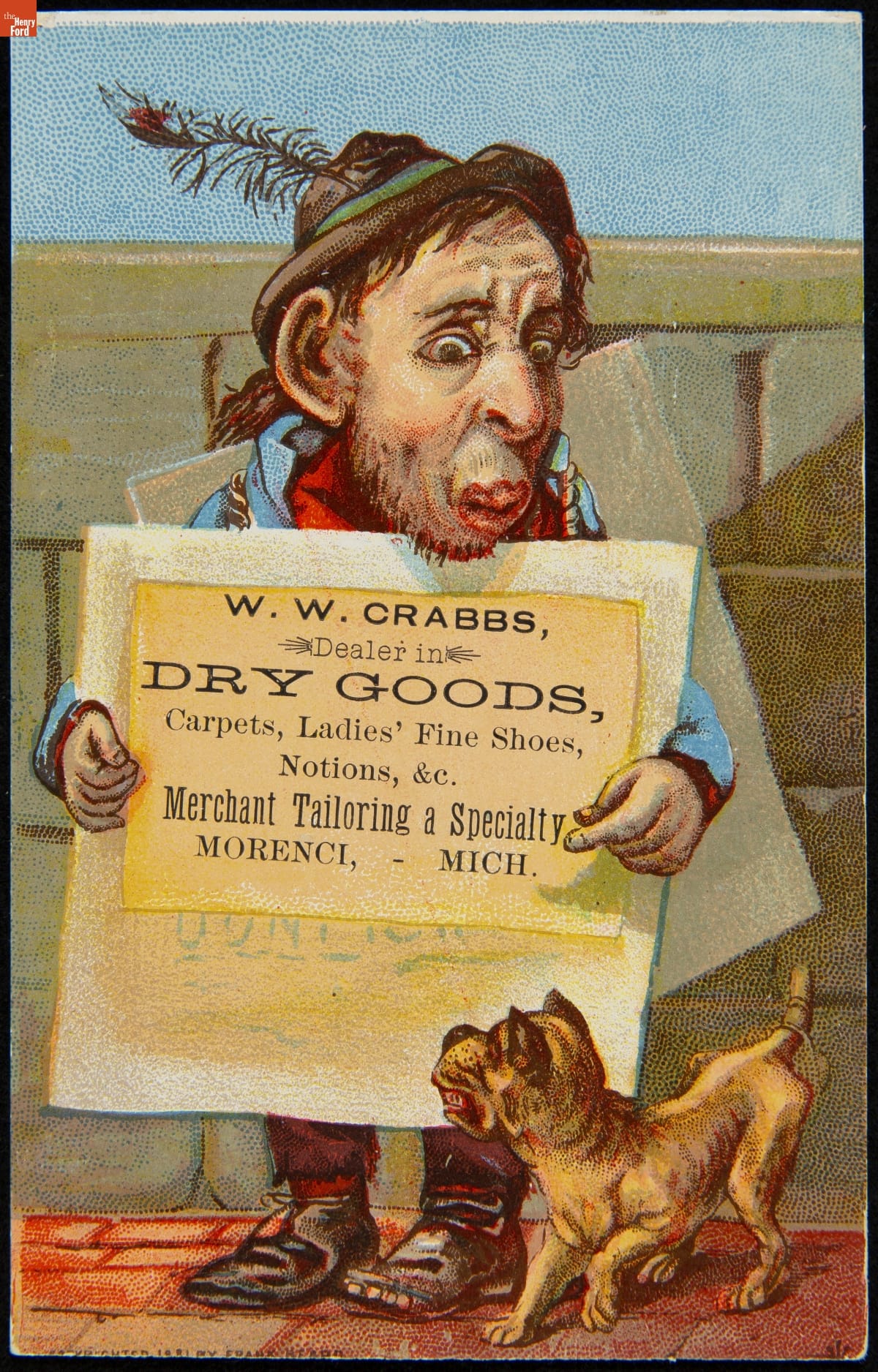
- Trade Card for Dry Goods, W.W. Crabbs, 1881 - In the last third of the nineteenth century, an unprecedented variety of consumer goods and services flooded the American market. Advertisers, armed with new methods of color printing, bombarded potential customers with trade cards. Americans enjoyed and often saved the vibrant little advertisements found in product packages or distributed by local merchants. Many survive as historical records of commercialism in the United States.
- 1881
- Collections - Artifact
Trade Card for Dry Goods, W.W. Crabbs, 1881
In the last third of the nineteenth century, an unprecedented variety of consumer goods and services flooded the American market. Advertisers, armed with new methods of color printing, bombarded potential customers with trade cards. Americans enjoyed and often saved the vibrant little advertisements found in product packages or distributed by local merchants. Many survive as historical records of commercialism in the United States.
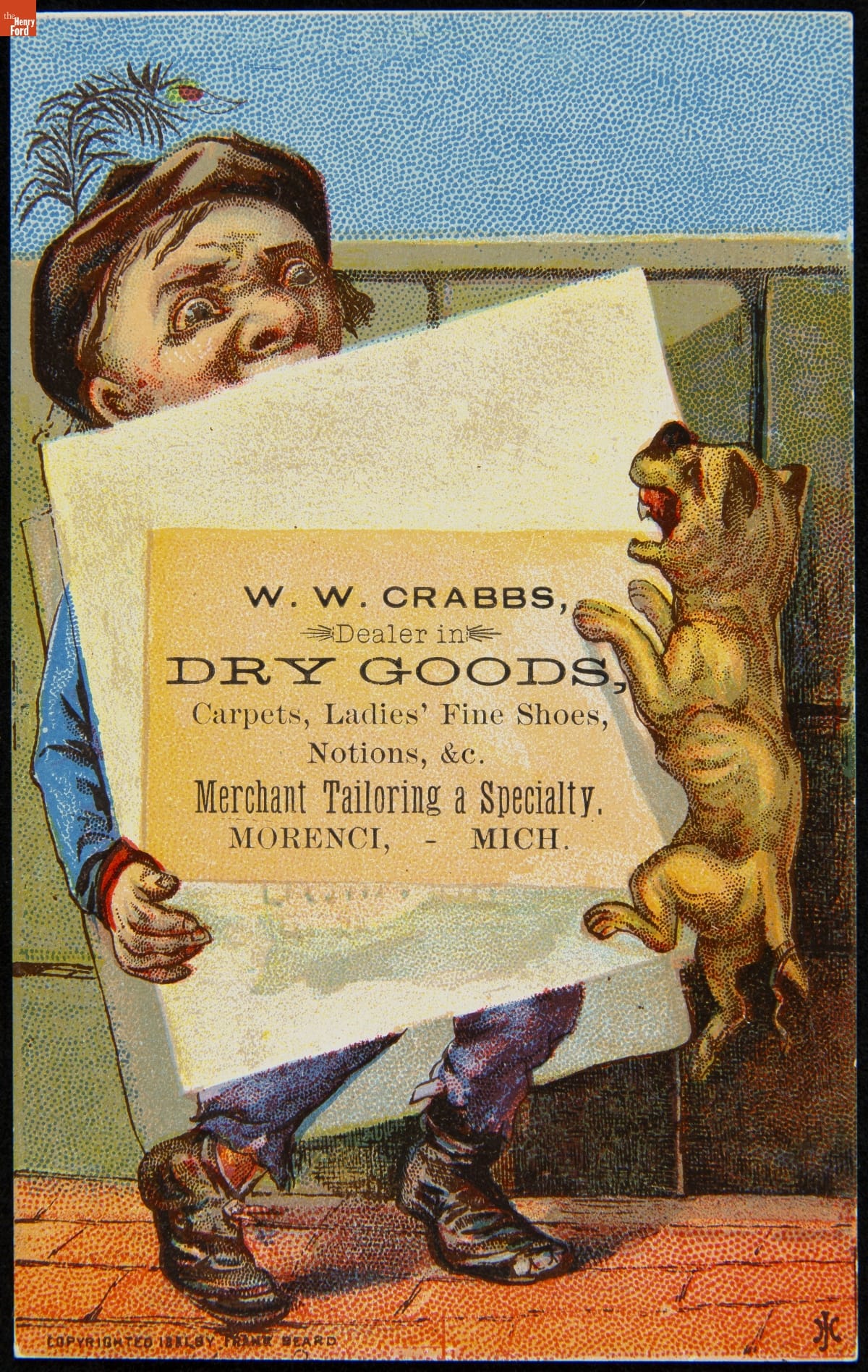
- Trade Card for Dry Goods, W.W. Crabbs, 1881 - In the last third of the nineteenth century, an unprecedented variety of consumer goods and services flooded the American market. Advertisers, armed with new methods of color printing, bombarded potential customers with trade cards. Americans enjoyed and often saved the vibrant little advertisements found in product packages or distributed by local merchants. Many survive as historical records of commercialism in the United States.
- 1881
- Collections - Artifact
Trade Card for Dry Goods, W.W. Crabbs, 1881
In the last third of the nineteenth century, an unprecedented variety of consumer goods and services flooded the American market. Advertisers, armed with new methods of color printing, bombarded potential customers with trade cards. Americans enjoyed and often saved the vibrant little advertisements found in product packages or distributed by local merchants. Many survive as historical records of commercialism in the United States.