
Search
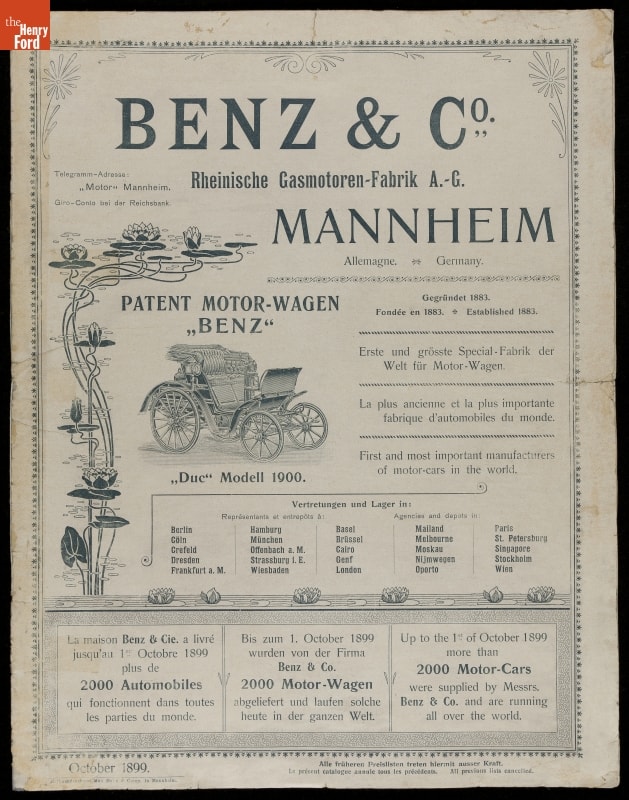
- Sales Brochure for the Patent Motor-Wagen "Benz," Benz & Company, 1899 - German engineer Karl Benz built his original Patent-Motorwagen in 1885, widely regarded as the first self-propelled vehicle designed around the internal combustion engine. Benz's design became the basis for the world's first production automobile in 1888. By the end of the 19th century, Benz's company was building more than 500 automobiles a year. Benz merged with Daimler Motors in 1926.
- October 01, 1899
- Collections - Artifact
Sales Brochure for the Patent Motor-Wagen "Benz," Benz & Company, 1899
German engineer Karl Benz built his original Patent-Motorwagen in 1885, widely regarded as the first self-propelled vehicle designed around the internal combustion engine. Benz's design became the basis for the world's first production automobile in 1888. By the end of the 19th century, Benz's company was building more than 500 automobiles a year. Benz merged with Daimler Motors in 1926.
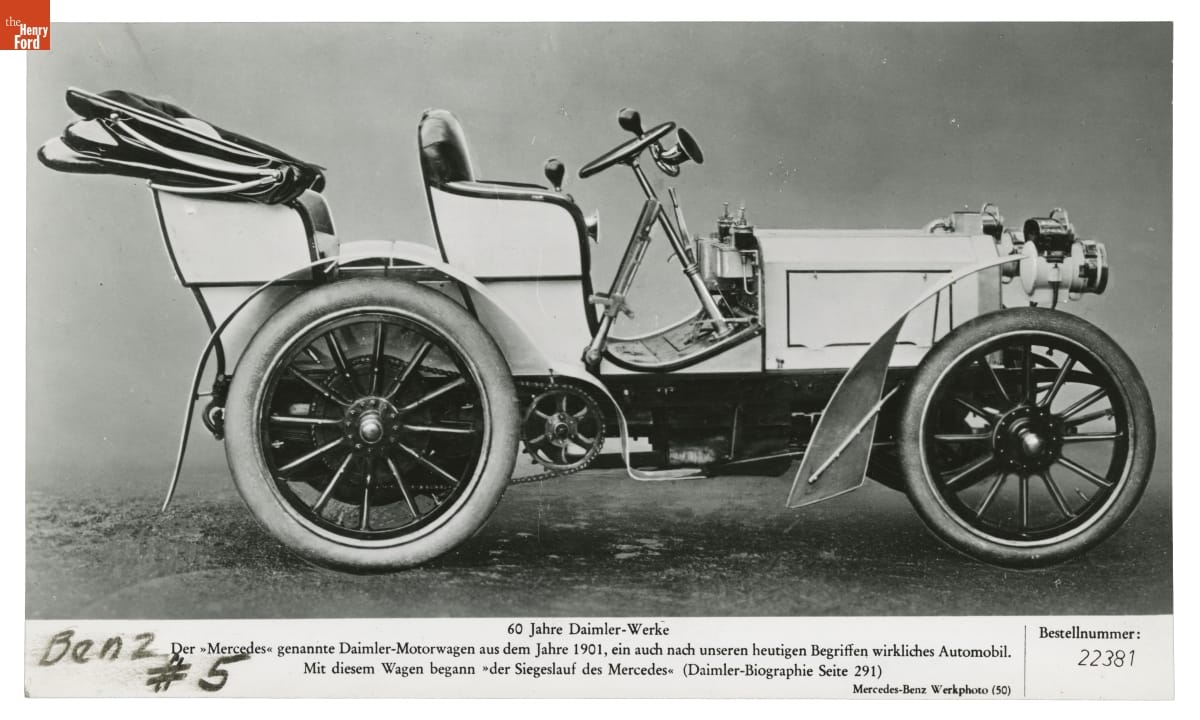
- 1901 Mercedes-Benz Number 5, circa 1955 - The 1901 Mercedes, built by the German firm Daimler, was one of the first automobiles with the engine up front rather than under the seat. That gave more room for bigger engines and also allowed the chassis to be lowered for easier entry and better road holding. It set the pattern for future cars.
- 1901
- Collections - Artifact
1901 Mercedes-Benz Number 5, circa 1955
The 1901 Mercedes, built by the German firm Daimler, was one of the first automobiles with the engine up front rather than under the seat. That gave more room for bigger engines and also allowed the chassis to be lowered for easier entry and better road holding. It set the pattern for future cars.
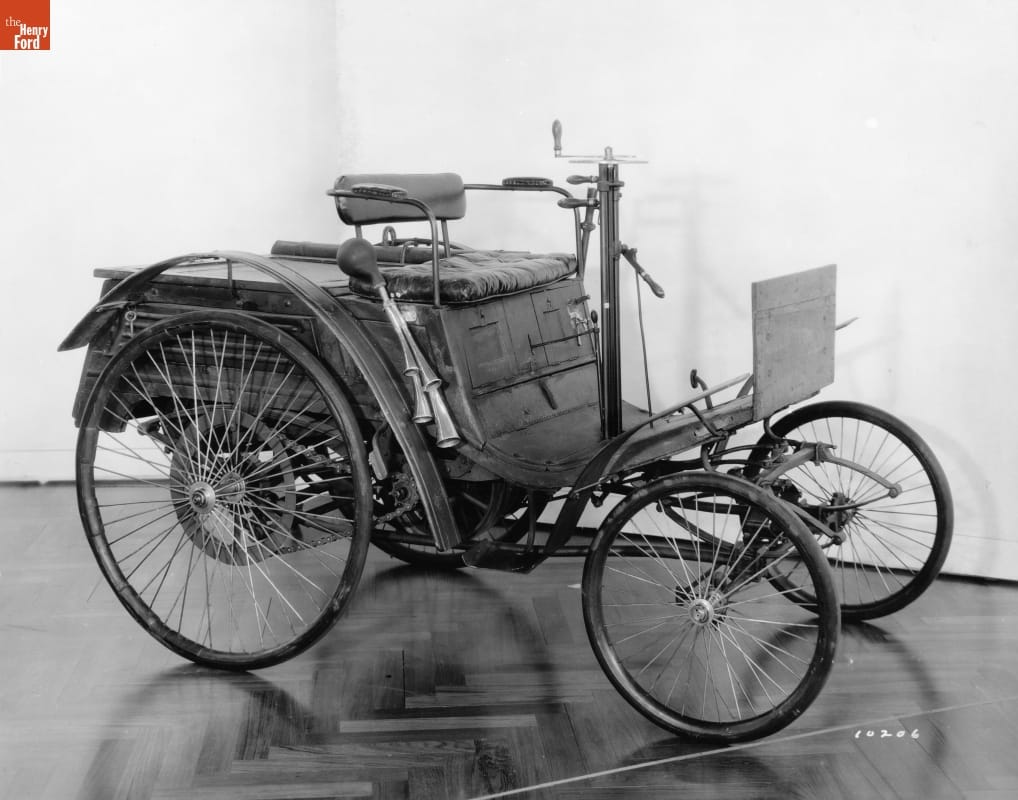
- 1893 Benz Velocipede - Karl Benz exhibited his Velocipede at the 1893 World's Columbian Exposition in Chicago, Illinois. His automobile incorporated several impressive features for its time like a water-cooled engine, a carburetor, a gearbox, and a rear-axle differential. Benz manufactured more than 1,200 Velocipedes between 1894 and 1902, and many historians describe his "Velo" as the first production car.
- 1893
- Collections - Artifact
1893 Benz Velocipede
Karl Benz exhibited his Velocipede at the 1893 World's Columbian Exposition in Chicago, Illinois. His automobile incorporated several impressive features for its time like a water-cooled engine, a carburetor, a gearbox, and a rear-axle differential. Benz manufactured more than 1,200 Velocipedes between 1894 and 1902, and many historians describe his "Velo" as the first production car.
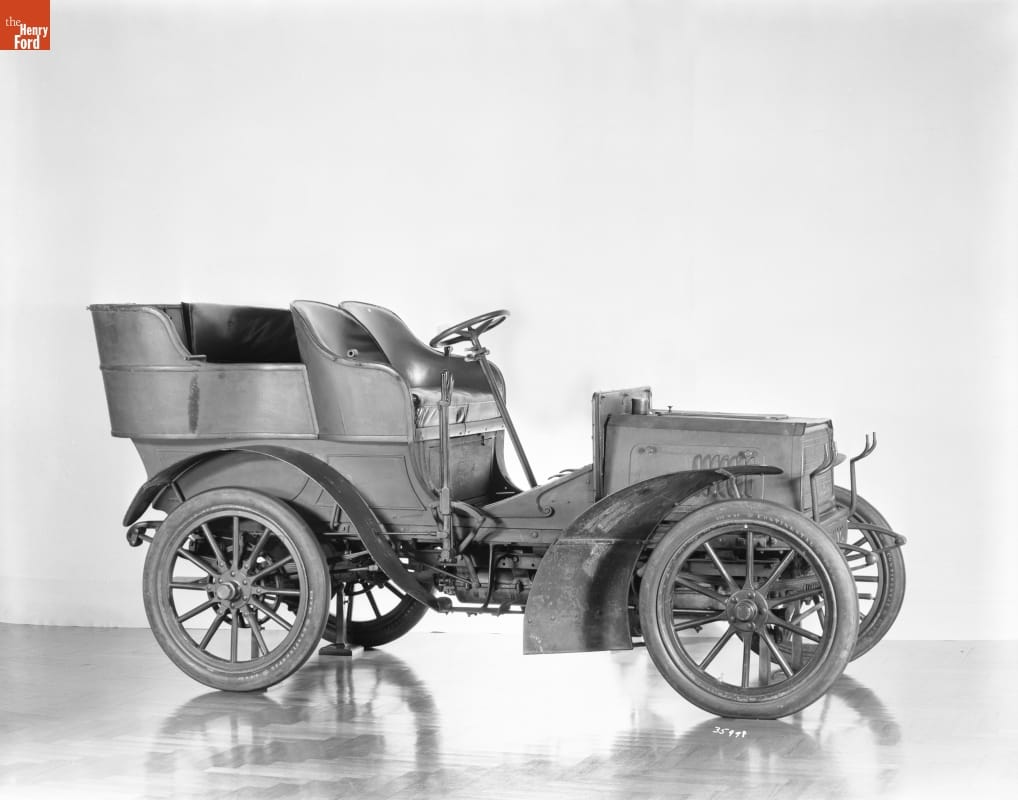
- 1903 Benz Parsifal Touring Car - Karl Benz's Parsifal signaled the transition from the concept of a motorized carriage to a modern automobile. Unlike a motorized carriage, Benz positioned the engine in the front of the vehicle as opposed to under the seat. This allowed the car to be built closer to the ground, which provided better handling for drivers and easier accessibility.
- 1903
- Collections - Artifact
1903 Benz Parsifal Touring Car
Karl Benz's Parsifal signaled the transition from the concept of a motorized carriage to a modern automobile. Unlike a motorized carriage, Benz positioned the engine in the front of the vehicle as opposed to under the seat. This allowed the car to be built closer to the ground, which provided better handling for drivers and easier accessibility.
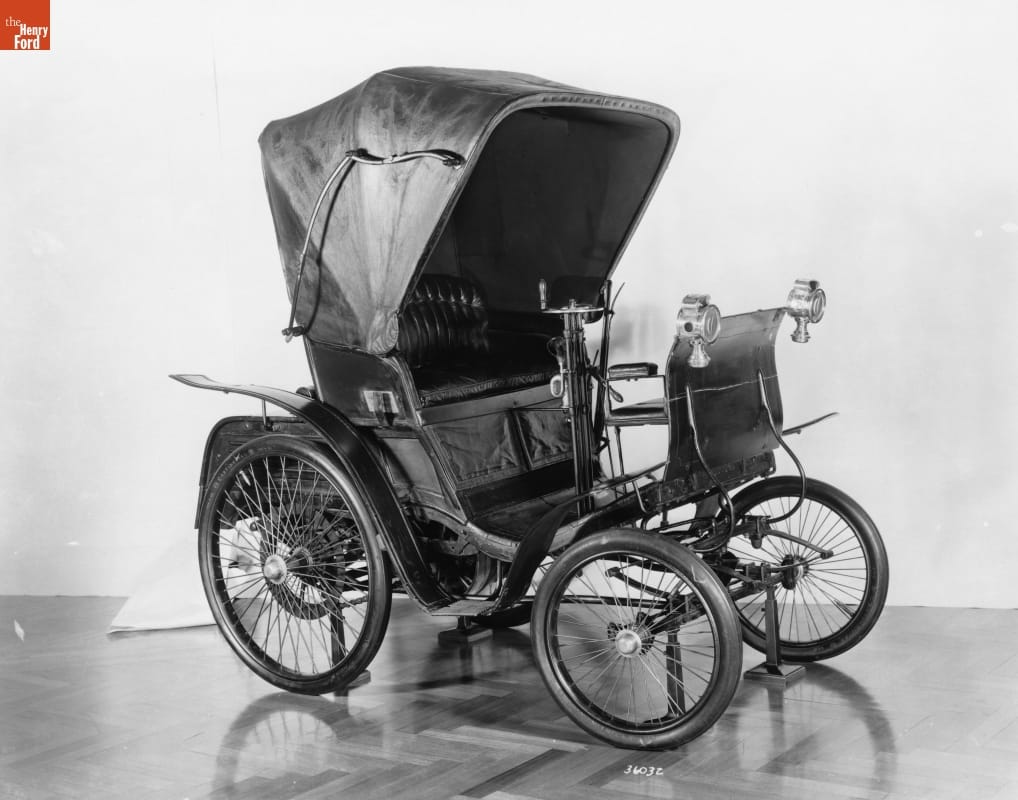
- Benz Comfortable Runabout, circa 1897 - Benz & Company's Comfortable, built by the German automaker from 1896 to 1899, received its unusual name because of its key innovation. It was the first Benz fitted with pneumatic tires. The air-filled tires produced a much softer ride than solid rubber. Pneumatic tires, along with chain drives and steel-tube frames, were adopted by early carmakers from the bicycle industry.
- circa 1897
- Collections - Artifact
Benz Comfortable Runabout, circa 1897
Benz & Company's Comfortable, built by the German automaker from 1896 to 1899, received its unusual name because of its key innovation. It was the first Benz fitted with pneumatic tires. The air-filled tires produced a much softer ride than solid rubber. Pneumatic tires, along with chain drives and steel-tube frames, were adopted by early carmakers from the bicycle industry.