
Search
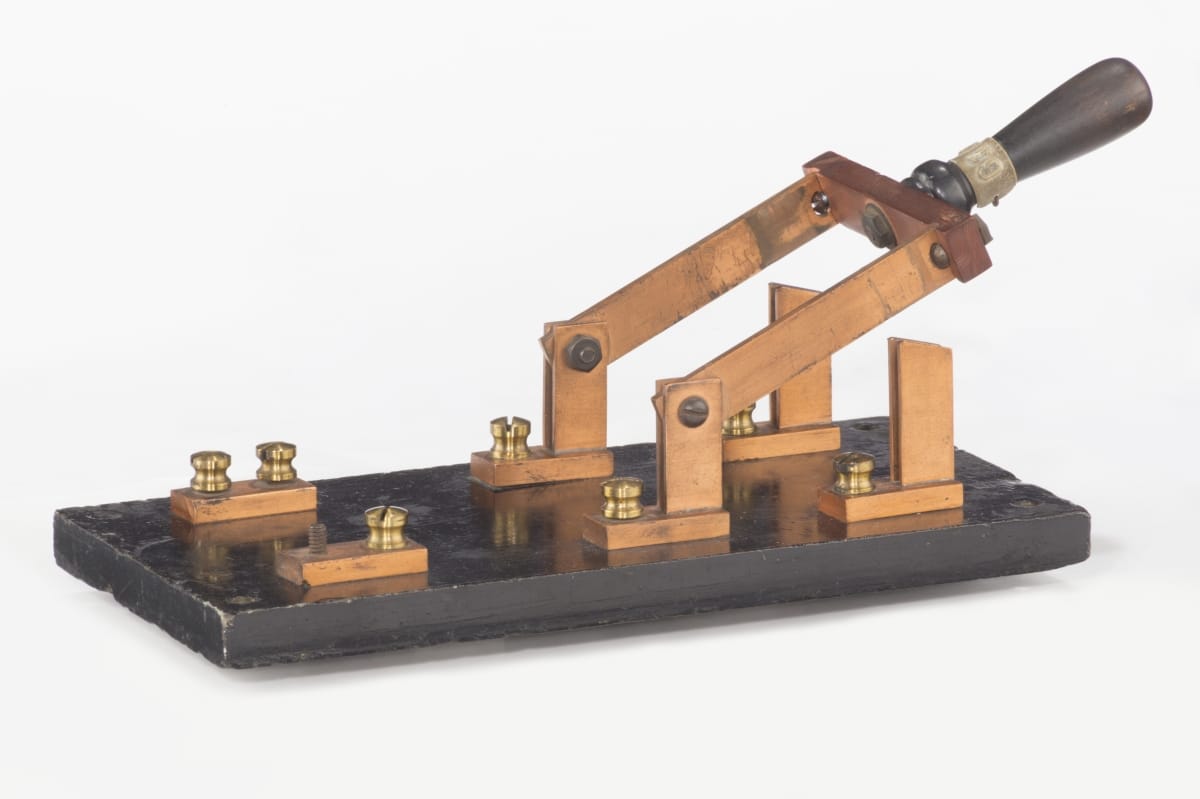
- Bergmann & Company Switch, 1884 - Switches open or close an electrical circuit to turn things off or on. In the late 1800s and early 1900s, knife switches were commonly found in engine or generating rooms, connected to factory motors, or mounted on a building's power and lighting switchboard. Operators pushed the hinged, metal blades into the switch's jaws to send electricity to where it was needed.
- 1884
- Collections - Artifact
Bergmann & Company Switch, 1884
Switches open or close an electrical circuit to turn things off or on. In the late 1800s and early 1900s, knife switches were commonly found in engine or generating rooms, connected to factory motors, or mounted on a building's power and lighting switchboard. Operators pushed the hinged, metal blades into the switch's jaws to send electricity to where it was needed.
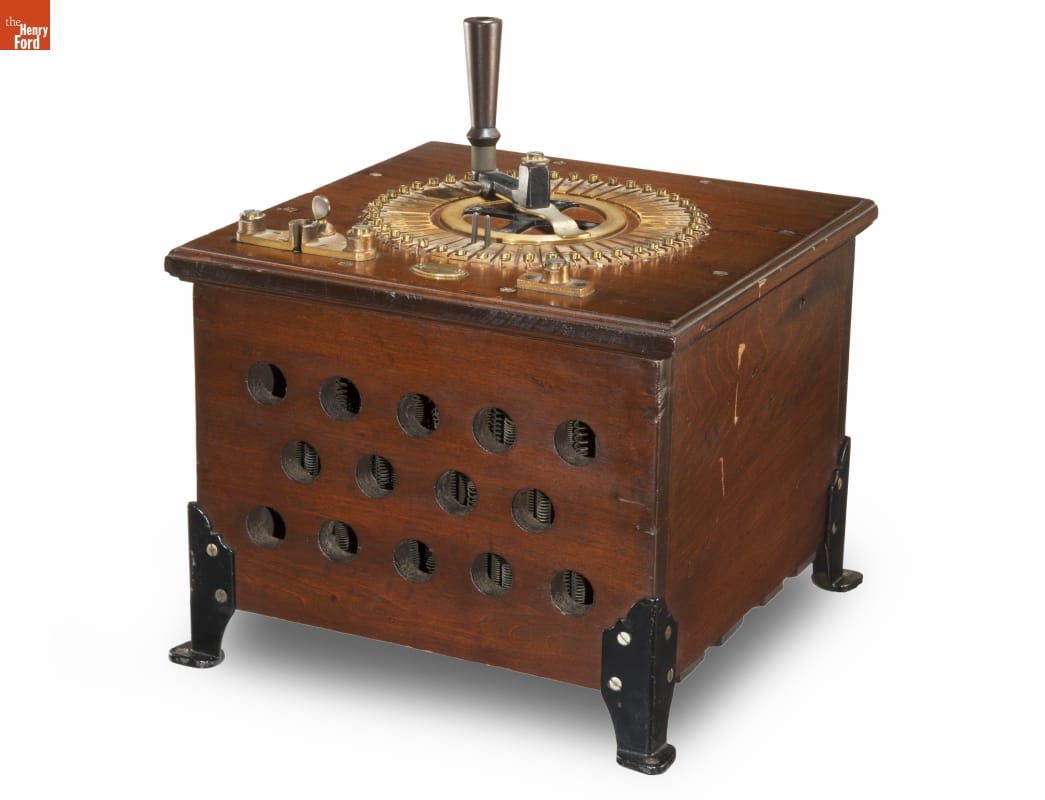
- Bergmann & Company Edison Number 4 Rheostat, circa 1883 - Rheostats vary the amount of electrical resistance in a circuit. They proved beneficial as the use of electrical power expanded in the late 1800s. Among their many applications, rheostats helped motors start safely, controlled motor speed, maintained a constant current in battery chargers, and adjusted volume and light levels.
- circa 1883
- Collections - Artifact
Bergmann & Company Edison Number 4 Rheostat, circa 1883
Rheostats vary the amount of electrical resistance in a circuit. They proved beneficial as the use of electrical power expanded in the late 1800s. Among their many applications, rheostats helped motors start safely, controlled motor speed, maintained a constant current in battery chargers, and adjusted volume and light levels.
- Elbow Connection, 1887 -
- 1887
- Collections - Artifact
Elbow Connection, 1887
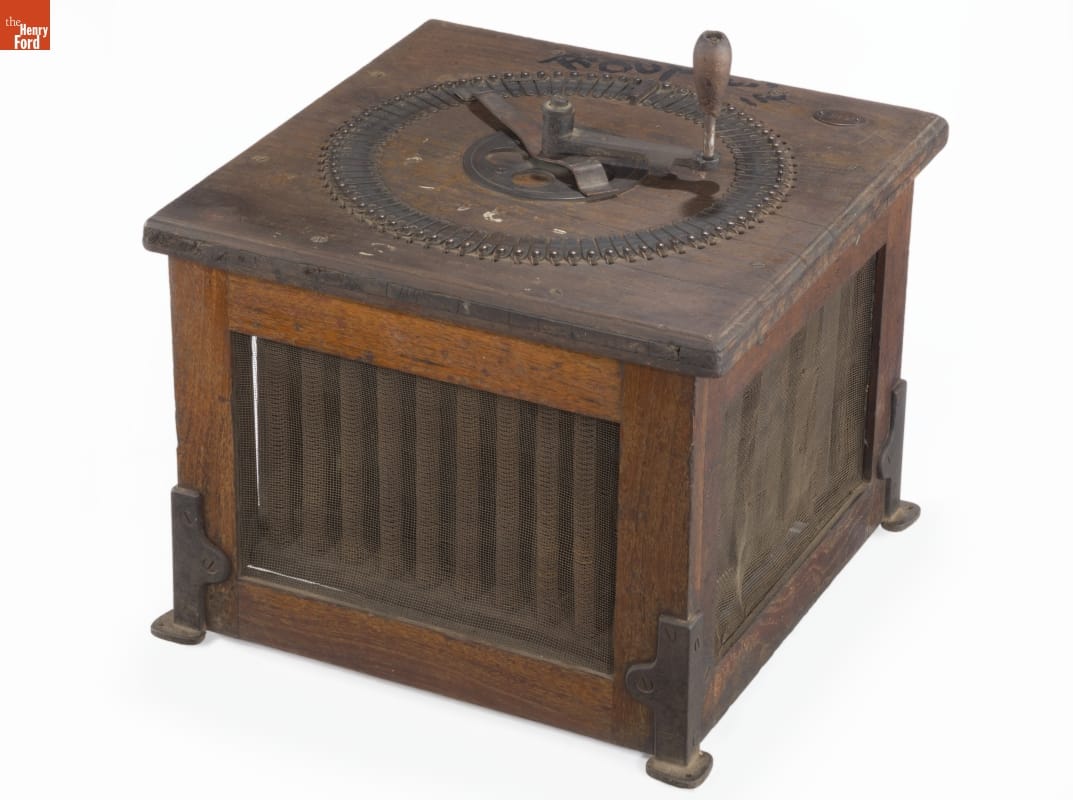
- Bergmann & Company Resistance Box, 1881-1889 - Rheostats vary the amount of electrical resistance in a circuit. They proved beneficial as the use of electrical power expanded in the late 1800s. Among their many applications, rheostats helped motors start safely, controlled motor speed, maintained a constant current in battery chargers, and adjusted volume and light levels.
- 1881-1889
- Collections - Artifact
Bergmann & Company Resistance Box, 1881-1889
Rheostats vary the amount of electrical resistance in a circuit. They proved beneficial as the use of electrical power expanded in the late 1800s. Among their many applications, rheostats helped motors start safely, controlled motor speed, maintained a constant current in battery chargers, and adjusted volume and light levels.
- Bergmann & Company Edison Chemical Meter, 1881-1889 -
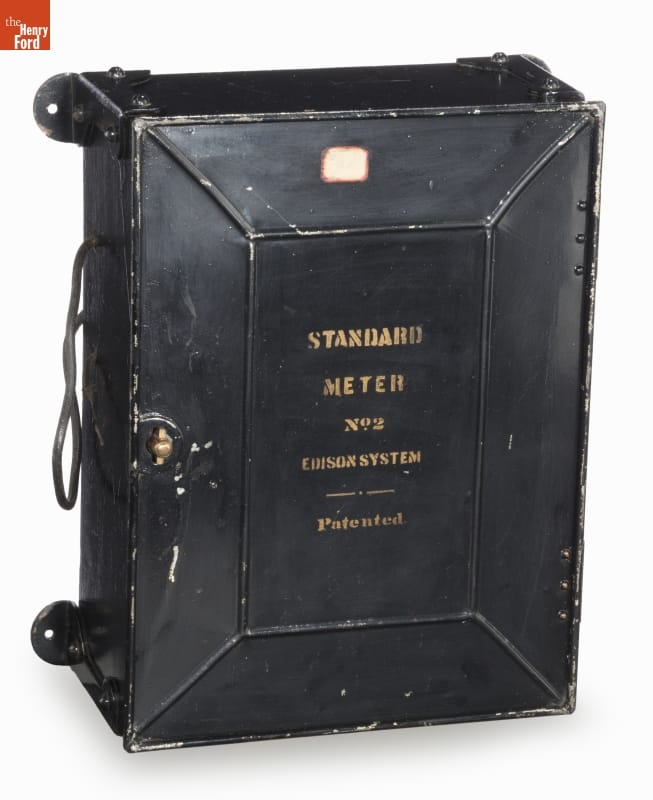
- 1881-1889
- Collections - Artifact
Bergmann & Company Edison Chemical Meter, 1881-1889
- Bergmann & Company Voltage Regulator, 1882 -
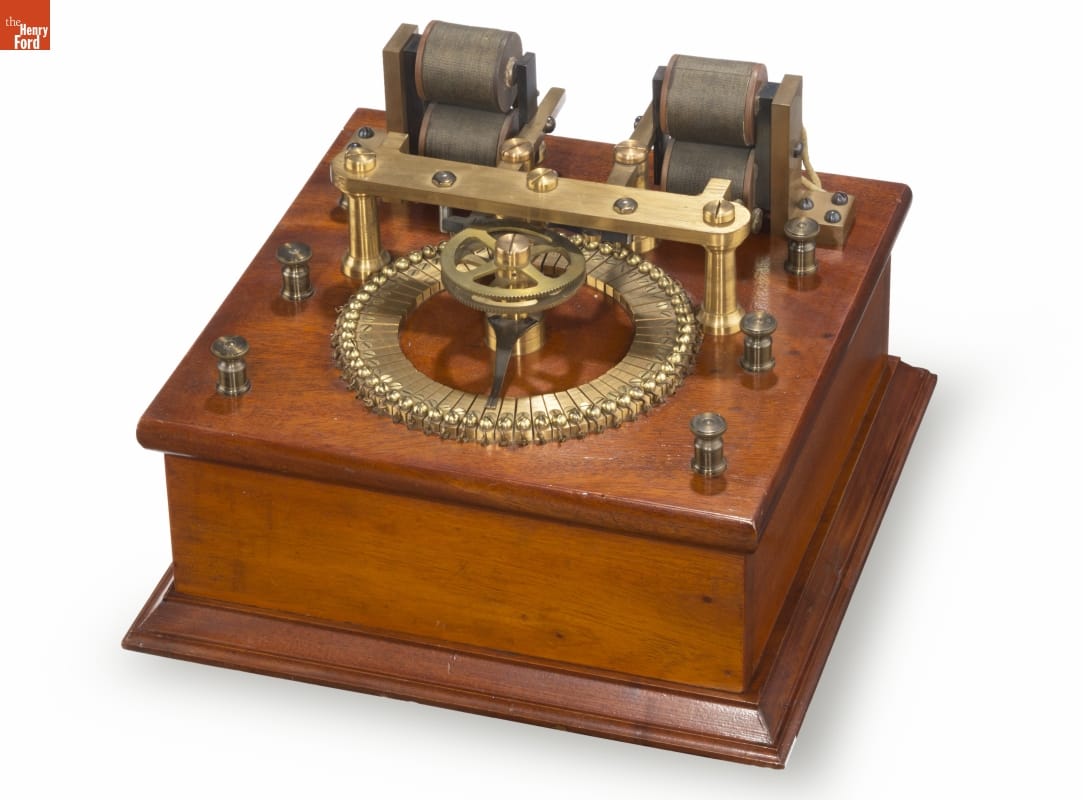
- 1882
- Collections - Artifact
Bergmann & Company Voltage Regulator, 1882
- Wooden Fixture Cut-Out, 1886 - Short circuits and current overloads can overheat wires within electrical power and lighting systems, causing damage and possibly starting a fire. In the late 19th century, a cutout with a fuse or fuse-wire protected these systems--the fuse would burn out and break the electric circuit if a surge or overload occurred. Replacing the fuse returned the circuit to working order.
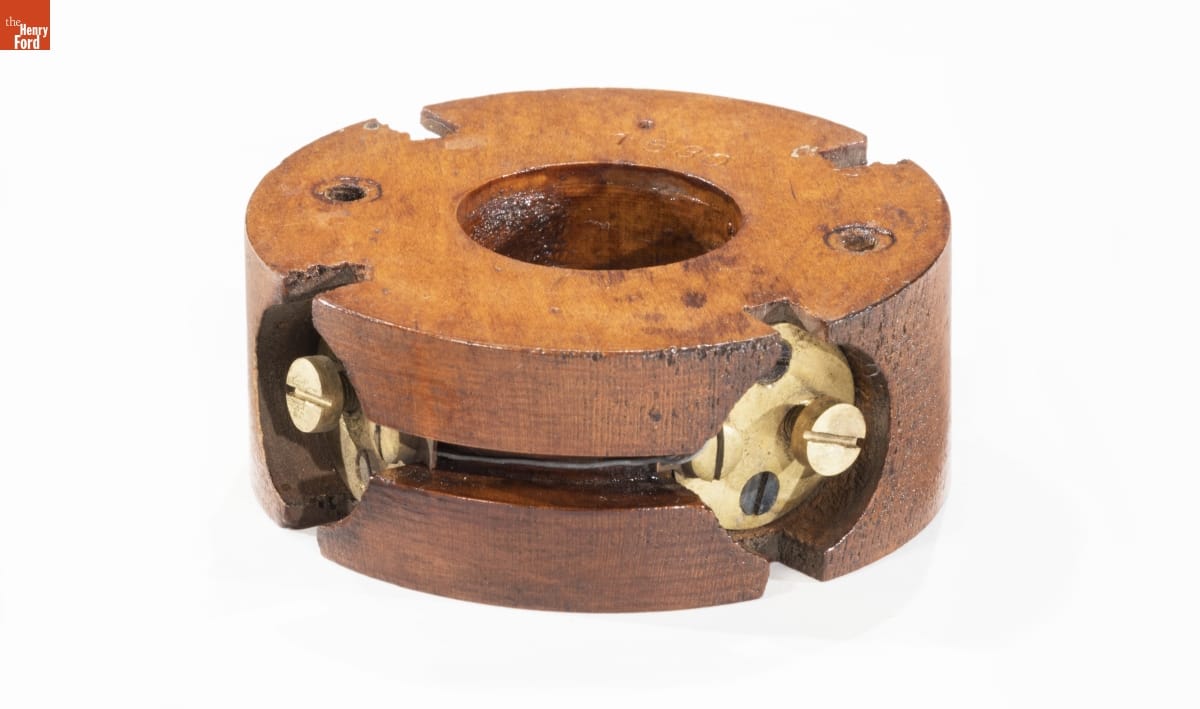
- 1886
- Collections - Artifact
Wooden Fixture Cut-Out, 1886
Short circuits and current overloads can overheat wires within electrical power and lighting systems, causing damage and possibly starting a fire. In the late 19th century, a cutout with a fuse or fuse-wire protected these systems--the fuse would burn out and break the electric circuit if a surge or overload occurred. Replacing the fuse returned the circuit to working order.
- Bergmann & Company Light Socket Used at Boone Electric Light Company, 1885 - A light socket provides a secure connection between an incandescent electric lamp and the electrical circuit. In the late 19th century, companies created lamp bulb bases with unique styles and sizes which would only fit sockets that they made. By 1910 the Edison screw-type base had become so popular it was virtually an industry standard, and consumers no longer had to buy lamps and sockets from the same manufacturer.
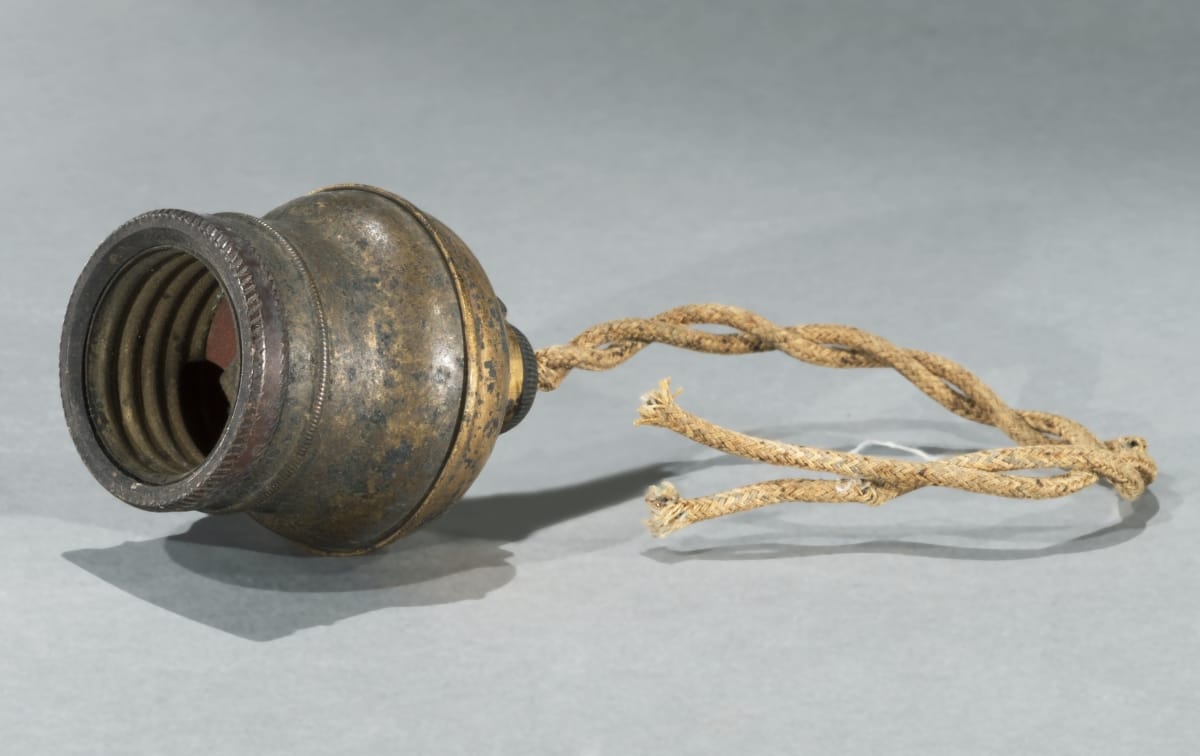
- 1885
- Collections - Artifact
Bergmann & Company Light Socket Used at Boone Electric Light Company, 1885
A light socket provides a secure connection between an incandescent electric lamp and the electrical circuit. In the late 19th century, companies created lamp bulb bases with unique styles and sizes which would only fit sockets that they made. By 1910 the Edison screw-type base had become so popular it was virtually an industry standard, and consumers no longer had to buy lamps and sockets from the same manufacturer.
- Bergmann & Company Electrical Switch, 1884 -
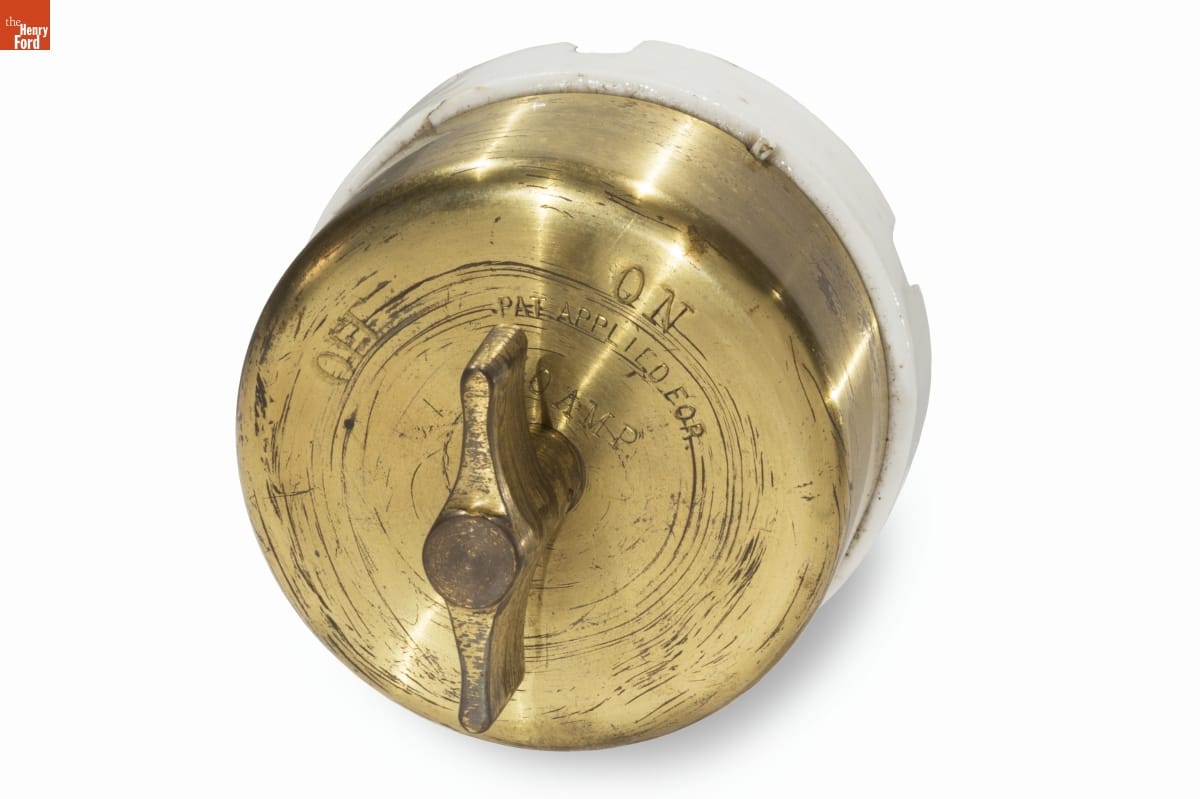
- 1884
- Collections - Artifact
Bergmann & Company Electrical Switch, 1884
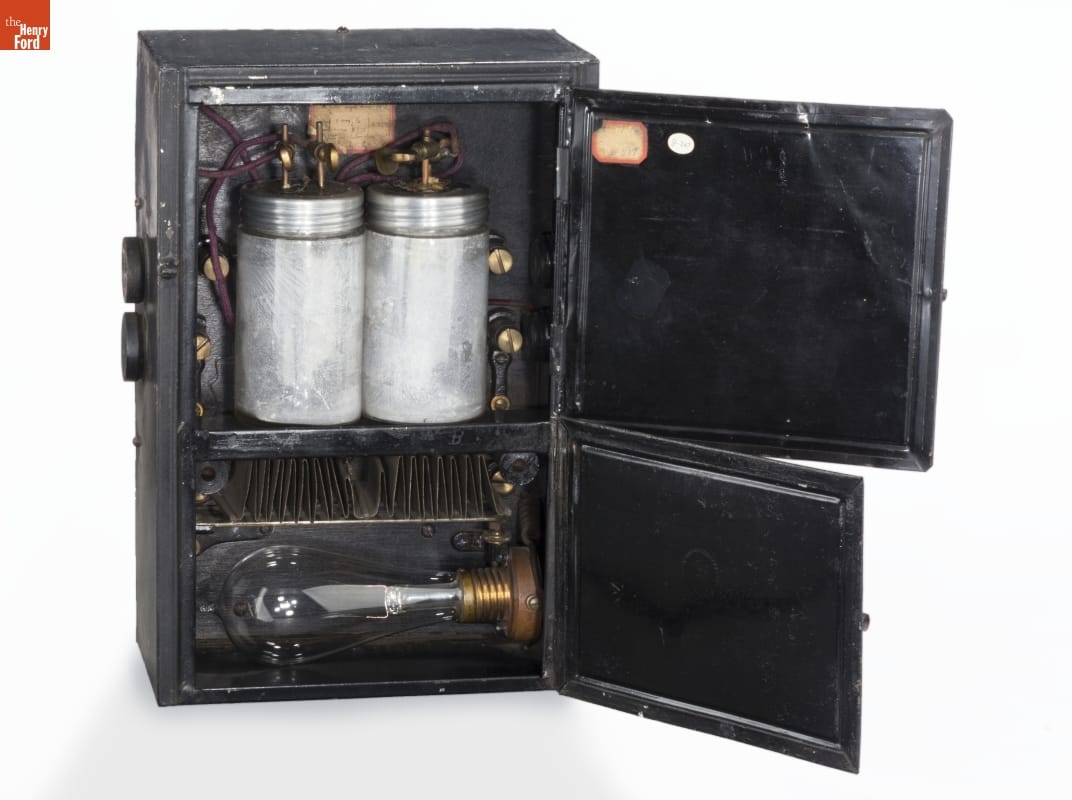
- Edison Chemical Meter, circa 1883 - To make money selling electricity, Thomas Edison had to know how much his customers used. This meter used electricity to plate zinc onto electrodes. By weighing the electrodes to see how much zinc had accumulated, Edison's company could calculate how much electricity was being used. Meters like this remained in service in some installations well into the 1890s.
- circa 1883
- Collections - Artifact
Edison Chemical Meter, circa 1883
To make money selling electricity, Thomas Edison had to know how much his customers used. This meter used electricity to plate zinc onto electrodes. By weighing the electrodes to see how much zinc had accumulated, Edison's company could calculate how much electricity was being used. Meters like this remained in service in some installations well into the 1890s.