
Search
- Five Confederate Generals in Mexico, 1865 -
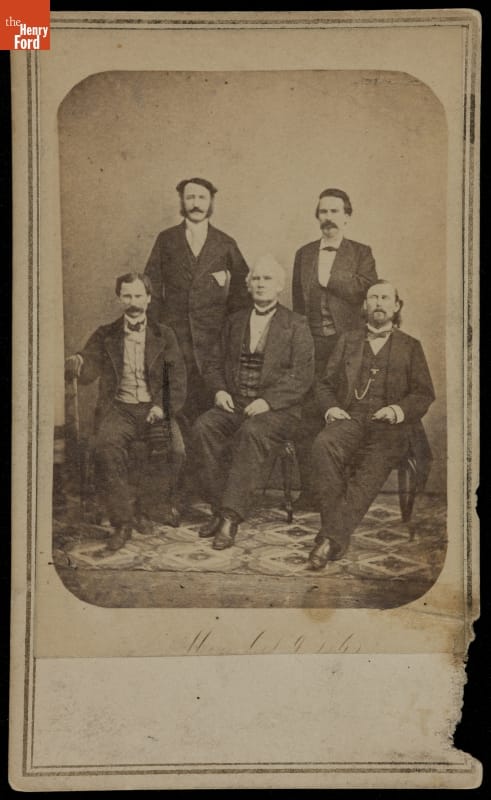
- October 09, 1865
- Collections - Artifact
Five Confederate Generals in Mexico, 1865
- General William Starke Rosecrans, circa 1861-1865 - Cartes-de-visite, small, professionally made photographs on cardboard stock, remained popular in the United States from the Civil War in the 1860s through the 1880s. Many were given to friends and loved ones, but enterprising photographers also produced images of famous individuals to sell to the collecting-crazed public. Admired politicians or military officers, such as General William Rosencrans, were popular subjects.
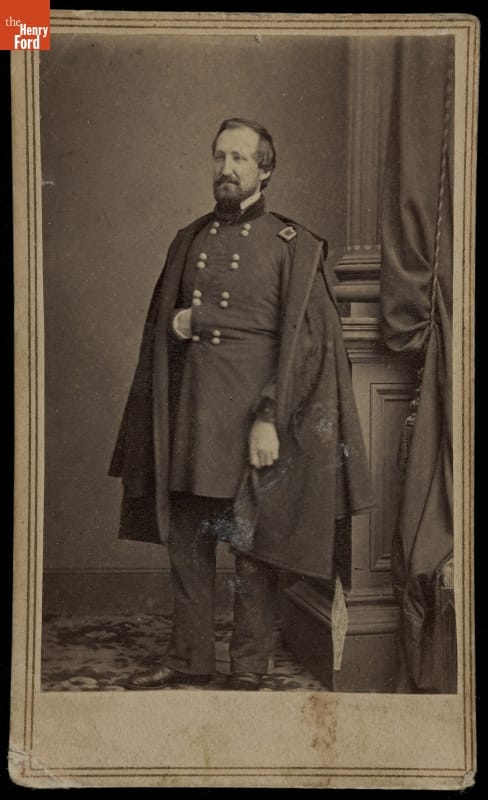
- 1861-1865
- Collections - Artifact
General William Starke Rosecrans, circa 1861-1865
Cartes-de-visite, small, professionally made photographs on cardboard stock, remained popular in the United States from the Civil War in the 1860s through the 1880s. Many were given to friends and loved ones, but enterprising photographers also produced images of famous individuals to sell to the collecting-crazed public. Admired politicians or military officers, such as General William Rosencrans, were popular subjects.
- Union Army Major General John Alexander McClernand, 1862 - Cartes-de-visite, small, professionally made photographs on cardboard stock, remained popular in the United States from the Civil War in the 1860s through the 1880s. Many were given to friends and loved ones, but enterprising photographers also produced images of famous individuals to sell to the collecting-crazed public. Admired politicians or military officers, such as General John Alexander McClernand, were popular subjects.
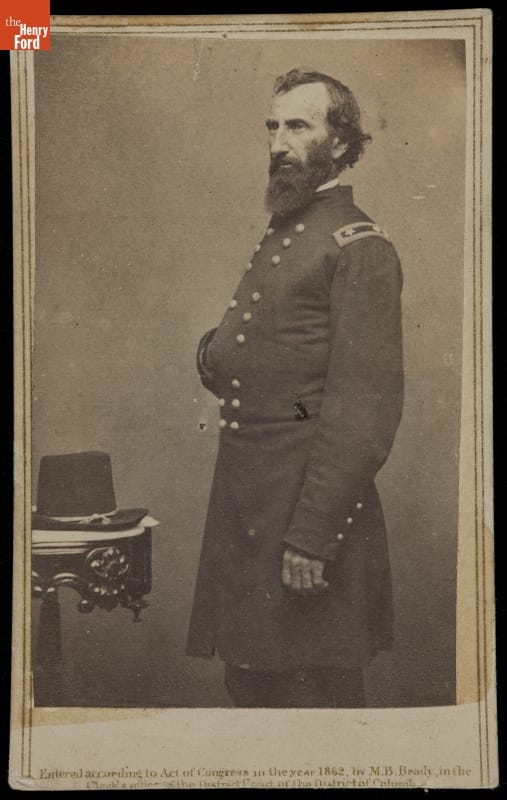
- 1862
- Collections - Artifact
Union Army Major General John Alexander McClernand, 1862
Cartes-de-visite, small, professionally made photographs on cardboard stock, remained popular in the United States from the Civil War in the 1860s through the 1880s. Many were given to friends and loved ones, but enterprising photographers also produced images of famous individuals to sell to the collecting-crazed public. Admired politicians or military officers, such as General John Alexander McClernand, were popular subjects.
- Union Army 1st Lieutenant, 1861-1865 - This carte-de-visite taken at Brady's National Photographic Portrait Galleries in Washington, D.C., shows an unidentified Union Army officer. Carte-de-visite was a small photographic print on cardboard stock made by professional photographers. Popular in the United States during the Civil War, soldiers often gave these inexpensive images to friends and family members as a reminder of their loved ones in service.
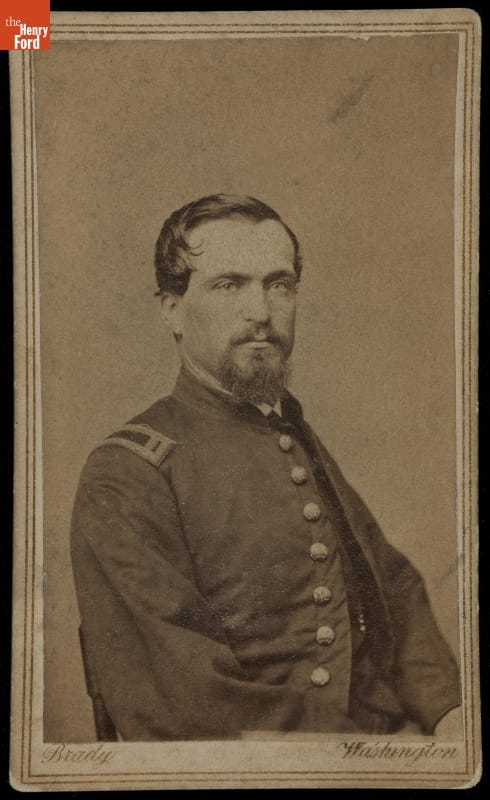
- 1861-1865
- Collections - Artifact
Union Army 1st Lieutenant, 1861-1865
This carte-de-visite taken at Brady's National Photographic Portrait Galleries in Washington, D.C., shows an unidentified Union Army officer. Carte-de-visite was a small photographic print on cardboard stock made by professional photographers. Popular in the United States during the Civil War, soldiers often gave these inexpensive images to friends and family members as a reminder of their loved ones in service.
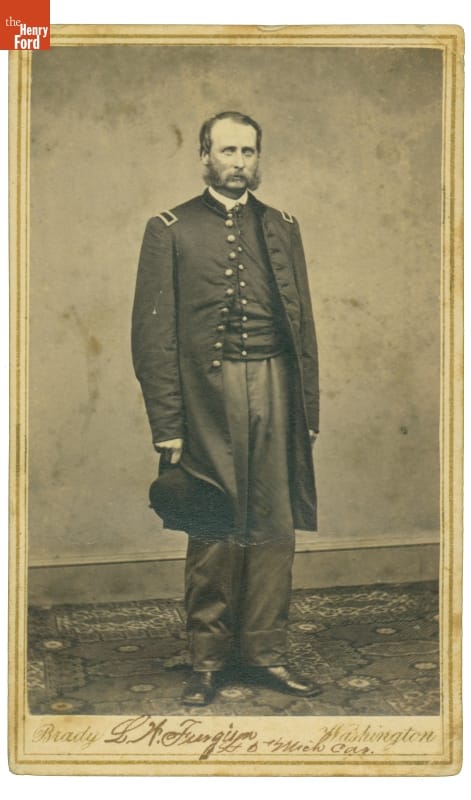
- Portrait of 2nd Lieutenant Leander W. Ferguson, 5th Michigan Cavalry, Company D, 1864 - Leander W. Ferguson, a Wyandotte saloonkeeper, enlisted in the 5th Michigan Cavalry during the Civil War. Ferguson's regiment served in the defense of Washington, D.C., fought at the Battle of Gettysburg in 1863, and saw action at the Appomattox campaign in 1865, which ended in the surrender of the Confederate Army. After the war, Ferguson worked in a Wyandotte foundry.
- 1864
- Collections - Artifact
Portrait of 2nd Lieutenant Leander W. Ferguson, 5th Michigan Cavalry, Company D, 1864
Leander W. Ferguson, a Wyandotte saloonkeeper, enlisted in the 5th Michigan Cavalry during the Civil War. Ferguson's regiment served in the defense of Washington, D.C., fought at the Battle of Gettysburg in 1863, and saw action at the Appomattox campaign in 1865, which ended in the surrender of the Confederate Army. After the war, Ferguson worked in a Wyandotte foundry.
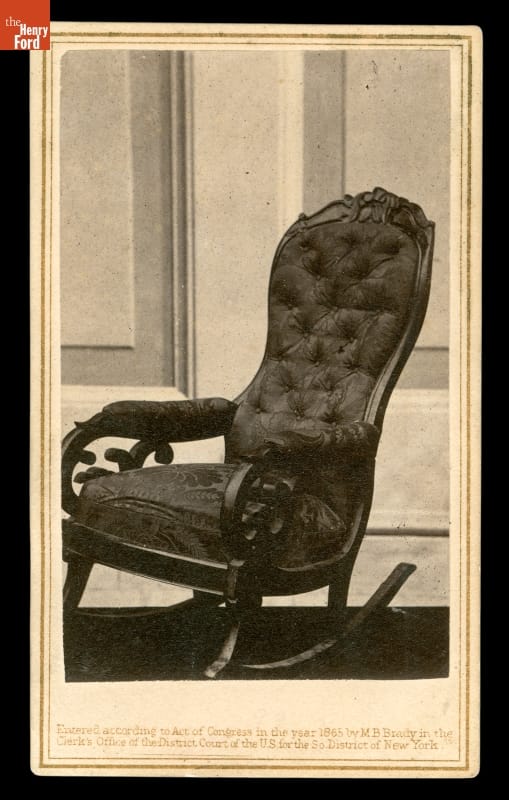
- The Chair in Which Abraham Lincoln was Shot, Photographed in 1865 - President Abraham Lincoln happened to be sitting in this rocking chair when he was mortally wounded at Ford's Theatre in Washington, D.C., on the evening of April 14, 1865. Mathew B. Brady made the photograph for his Brady's National Portrait Gallery. At a time before television and internet news, this carte-de-visite helped people visualize events surrounding President Lincoln's death.
- 1865
- Collections - Artifact
The Chair in Which Abraham Lincoln was Shot, Photographed in 1865
President Abraham Lincoln happened to be sitting in this rocking chair when he was mortally wounded at Ford's Theatre in Washington, D.C., on the evening of April 14, 1865. Mathew B. Brady made the photograph for his Brady's National Portrait Gallery. At a time before television and internet news, this carte-de-visite helped people visualize events surrounding President Lincoln's death.
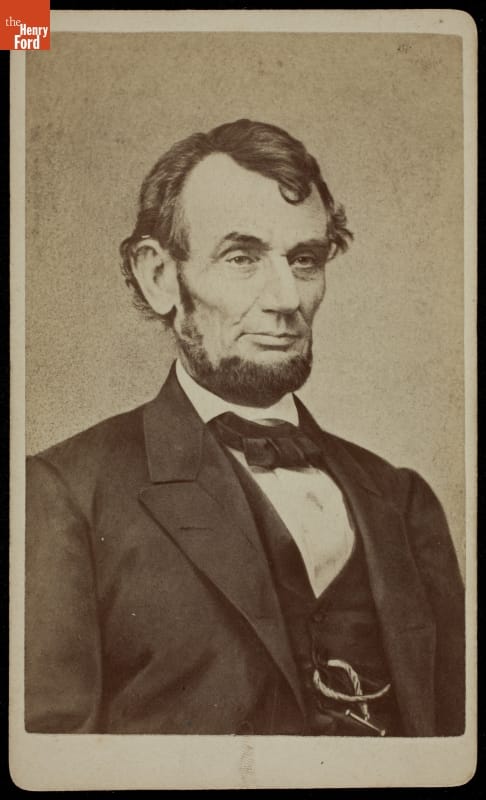
- Portrait of Abraham Lincoln Taken on February 9, 1864 - President Abraham Lincoln made himself readily available to many photographers of the era, leaving a large and varied photo legacy. This photograph is one in a series made on February 9, 1864, by Anthony Berger at Mathew Brady's Washington, D.C., gallery. Starting in the 1860s people exchanged and collected card photographs like this to help them remember family and celebrities.
- February 09, 1864
- Collections - Artifact
Portrait of Abraham Lincoln Taken on February 9, 1864
President Abraham Lincoln made himself readily available to many photographers of the era, leaving a large and varied photo legacy. This photograph is one in a series made on February 9, 1864, by Anthony Berger at Mathew Brady's Washington, D.C., gallery. Starting in the 1860s people exchanged and collected card photographs like this to help them remember family and celebrities.
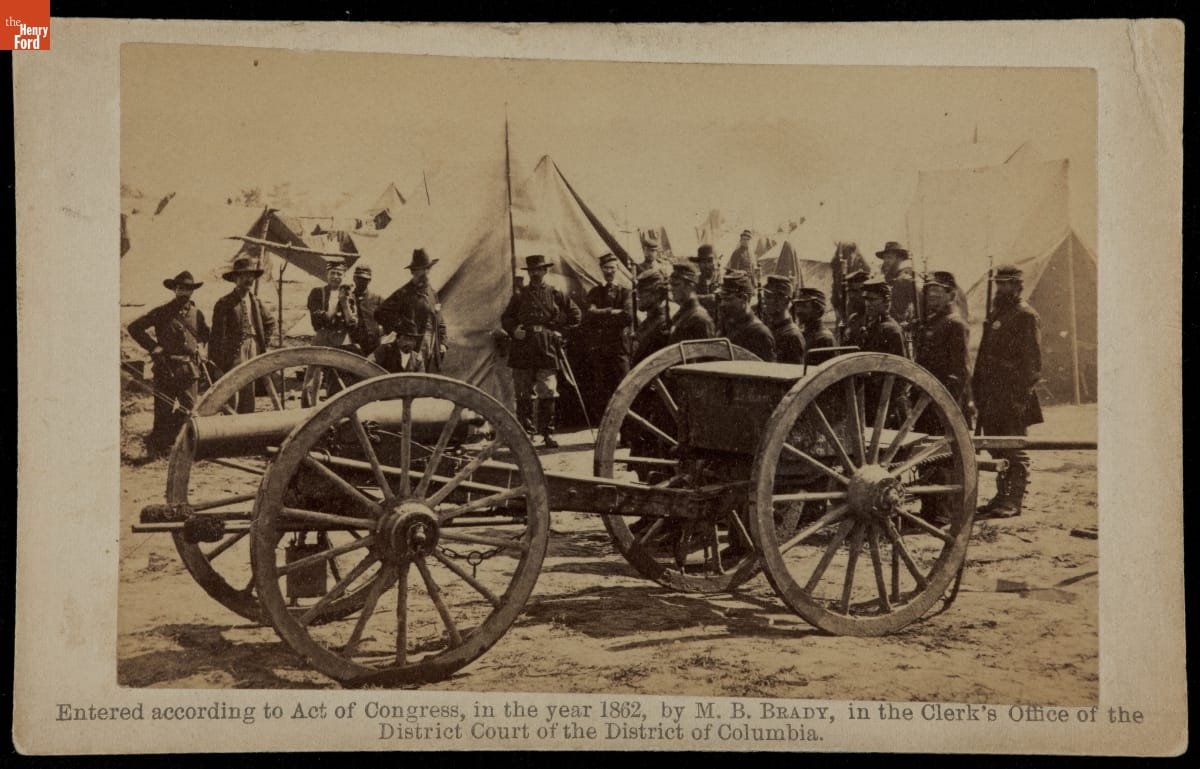
- 12-Pound Howitzer Captured by the 17th Regiment, New York Volunteers, Hanover, Virginia, 1862 - Mathew Brady provided extraordinary documentation of the American Civil War by bringing photographers and a portable photographic studio right to the battlefields. Many of these images were reproduced and sold as carte-de-visite photographs or stereographs (which appeared three-dimensional when viewed through a stereoscope), bringing--for the first time--scenes of war and its harsh realities directly into American homes.
- May 27, 1862
- Collections - Artifact
12-Pound Howitzer Captured by the 17th Regiment, New York Volunteers, Hanover, Virginia, 1862
Mathew Brady provided extraordinary documentation of the American Civil War by bringing photographers and a portable photographic studio right to the battlefields. Many of these images were reproduced and sold as carte-de-visite photographs or stereographs (which appeared three-dimensional when viewed through a stereoscope), bringing--for the first time--scenes of war and its harsh realities directly into American homes.
- Union Army Brigadier General Silas Casey, 1861-1865 - Cartes-de-visite, small, professionally made photographs on cardboard stock, remained popular in the United States from the Civil War in the 1860s through the 1880s. Many were given to friends and loved ones, but enterprising photographers also produced images of famous individuals to sell to the collecting-crazed public. Admired politicians or military officers, such as General Silas Casey, were popular subjects.
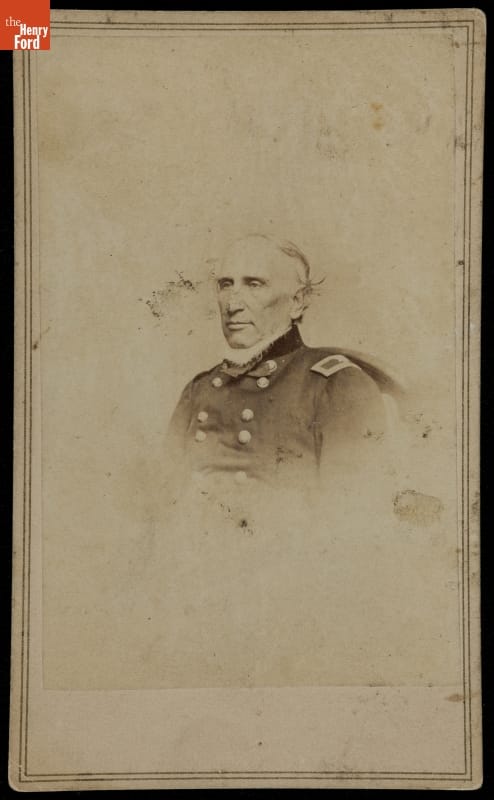
- 1861-1865
- Collections - Artifact
Union Army Brigadier General Silas Casey, 1861-1865
Cartes-de-visite, small, professionally made photographs on cardboard stock, remained popular in the United States from the Civil War in the 1860s through the 1880s. Many were given to friends and loved ones, but enterprising photographers also produced images of famous individuals to sell to the collecting-crazed public. Admired politicians or military officers, such as General Silas Casey, were popular subjects.
- Union Army General George Gordon Meade, 1861-1865 - Cartes-de-visite, small, professionally made photographs on cardboard stock, remained popular in the United States from the Civil War in the 1860s through the 1880s. Many were given to friends and loved ones, but enterprising photographers also produced images of famous individuals to sell to the collecting-crazed public. Admired politicians or military officers, such as General George Meade, were popular subjects.
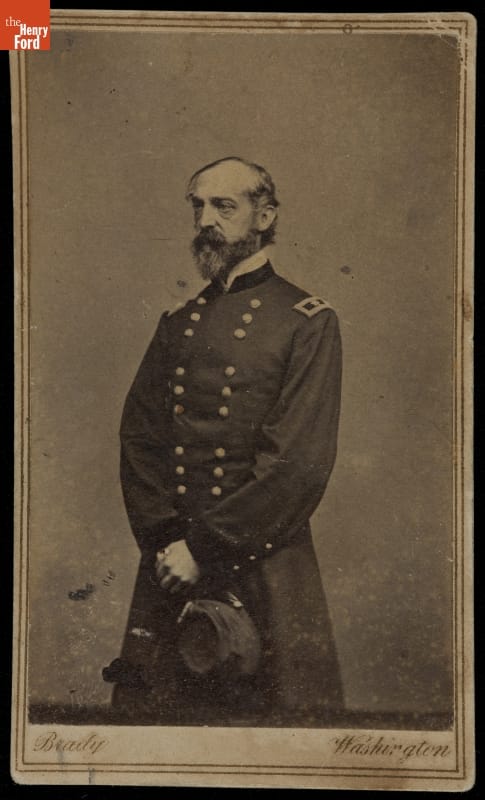
- 1861-1865
- Collections - Artifact
Union Army General George Gordon Meade, 1861-1865
Cartes-de-visite, small, professionally made photographs on cardboard stock, remained popular in the United States from the Civil War in the 1860s through the 1880s. Many were given to friends and loved ones, but enterprising photographers also produced images of famous individuals to sell to the collecting-crazed public. Admired politicians or military officers, such as General George Meade, were popular subjects.