
Search
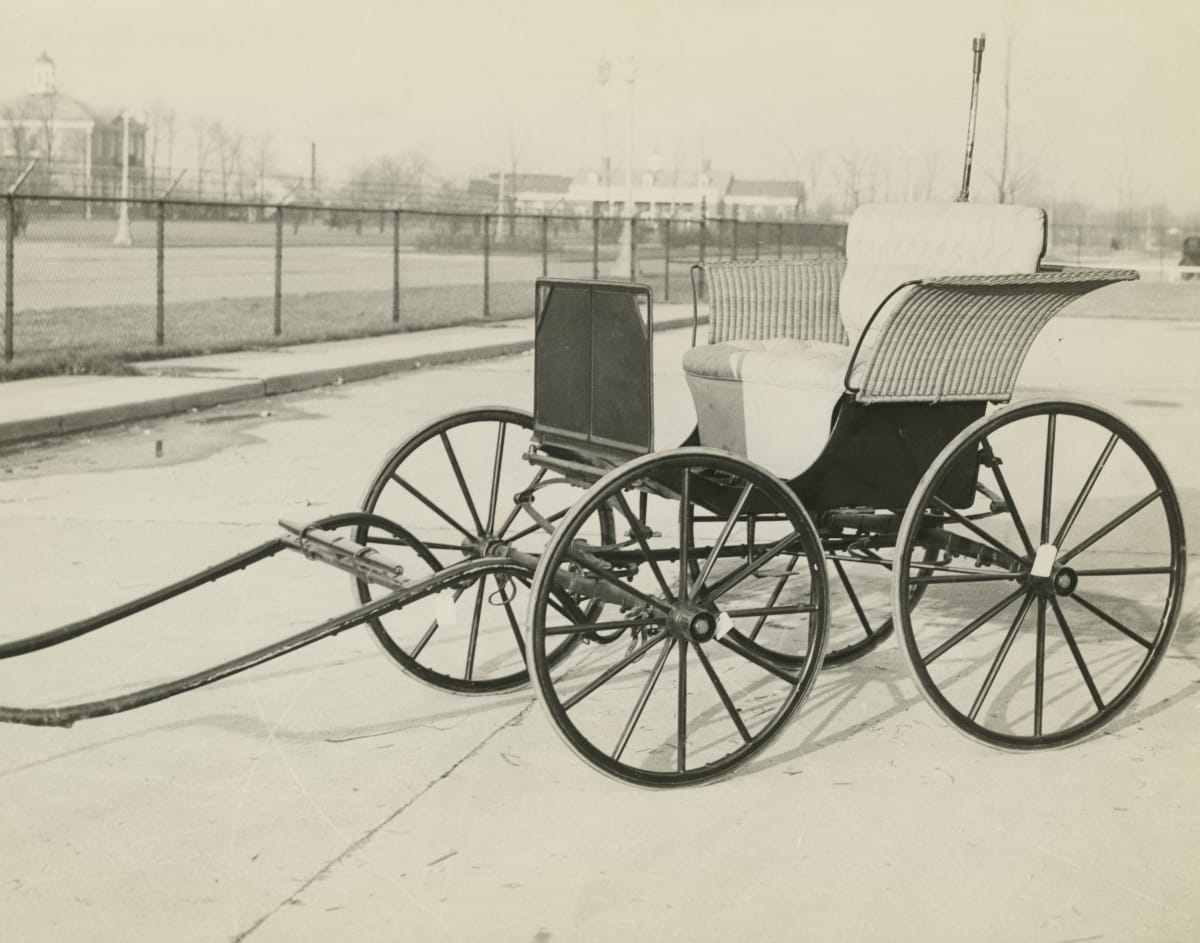
- Basket Phaeton, circa 1895 - Mary Kellogg Hopkins of San Francisco, California, whose husband made his fortune in the railroad industry, used this Ladies' Phaeton, sometimes called a Basket Phaeton or Morning Phaeton. These light, fashionable vehicles, driven almost exclusively by women, were popular at resorts, parks or beaches. The ample foot bay allowed women to display their sweeping skirts.
- circa 1895
- Collections - Artifact
Basket Phaeton, circa 1895
Mary Kellogg Hopkins of San Francisco, California, whose husband made his fortune in the railroad industry, used this Ladies' Phaeton, sometimes called a Basket Phaeton or Morning Phaeton. These light, fashionable vehicles, driven almost exclusively by women, were popular at resorts, parks or beaches. The ample foot bay allowed women to display their sweeping skirts.
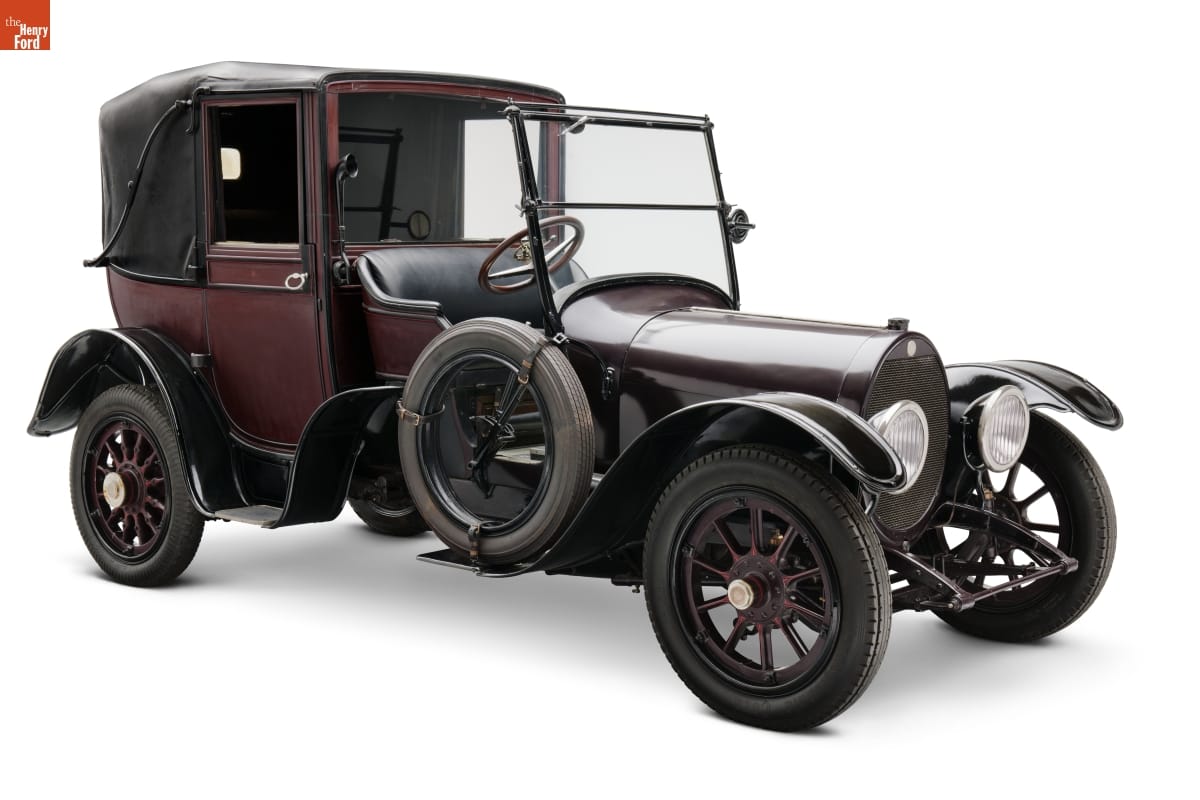
- 1915 Brewster Town Landaulet - Brewster & Company had built elegant horse-drawn carriages since the early 1800s. When Brewster finally began building automobiles in 1915, they looked like carriages. Chauffeurs dealt with the 20th-century auto technology -- a quiet 55-horsepower engine, an electric starter, and electric lights -- while owners rode in 19th-century carriage comfort. Tradition eventually lost out to the rush of modernity, and Brewsters began to look like cars.
- 1915
- Collections - Artifact
1915 Brewster Town Landaulet
Brewster & Company had built elegant horse-drawn carriages since the early 1800s. When Brewster finally began building automobiles in 1915, they looked like carriages. Chauffeurs dealt with the 20th-century auto technology -- a quiet 55-horsepower engine, an electric starter, and electric lights -- while owners rode in 19th-century carriage comfort. Tradition eventually lost out to the rush of modernity, and Brewsters began to look like cars.
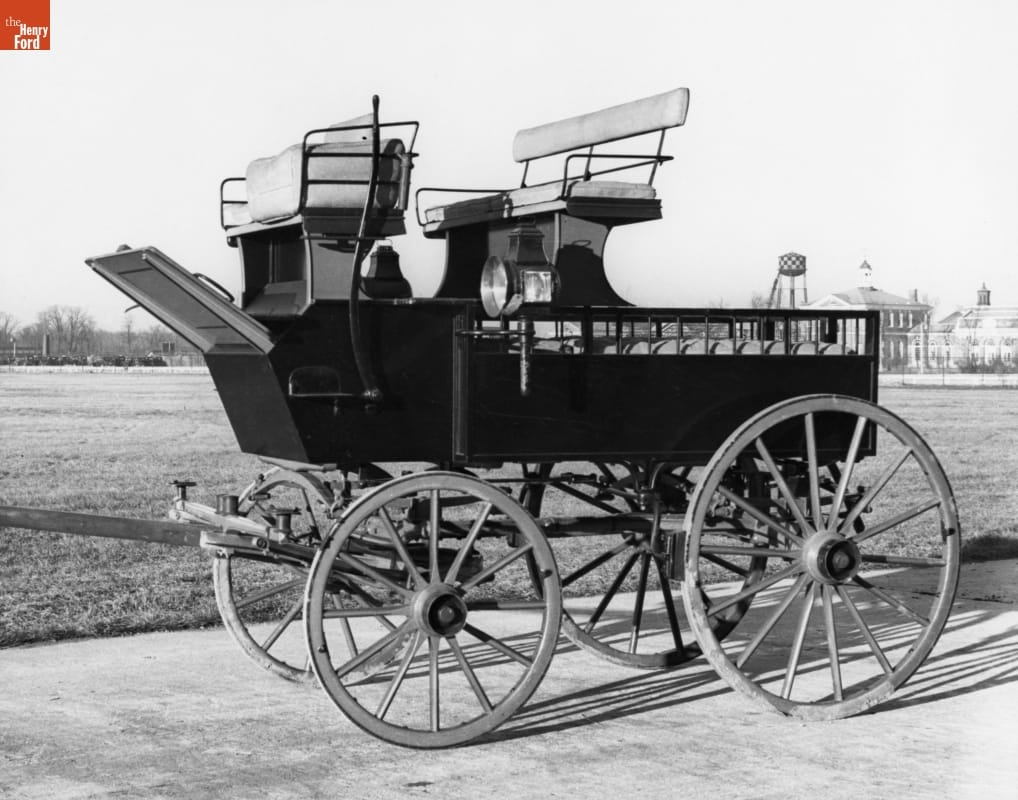
- Wagonette Break, 1896 - This vehicle combines elements of the wagonette (a wagon with a rear entrance and longitudinal seats) and the break (a carriage used to train horses for draft work). This wagonette break's large seating capacity and rugged springs made it ideal for carrying wealthy families and their friends on informal outings and excursions.
- 1896
- Collections - Artifact
Wagonette Break, 1896
This vehicle combines elements of the wagonette (a wagon with a rear entrance and longitudinal seats) and the break (a carriage used to train horses for draft work). This wagonette break's large seating capacity and rugged springs made it ideal for carrying wealthy families and their friends on informal outings and excursions.
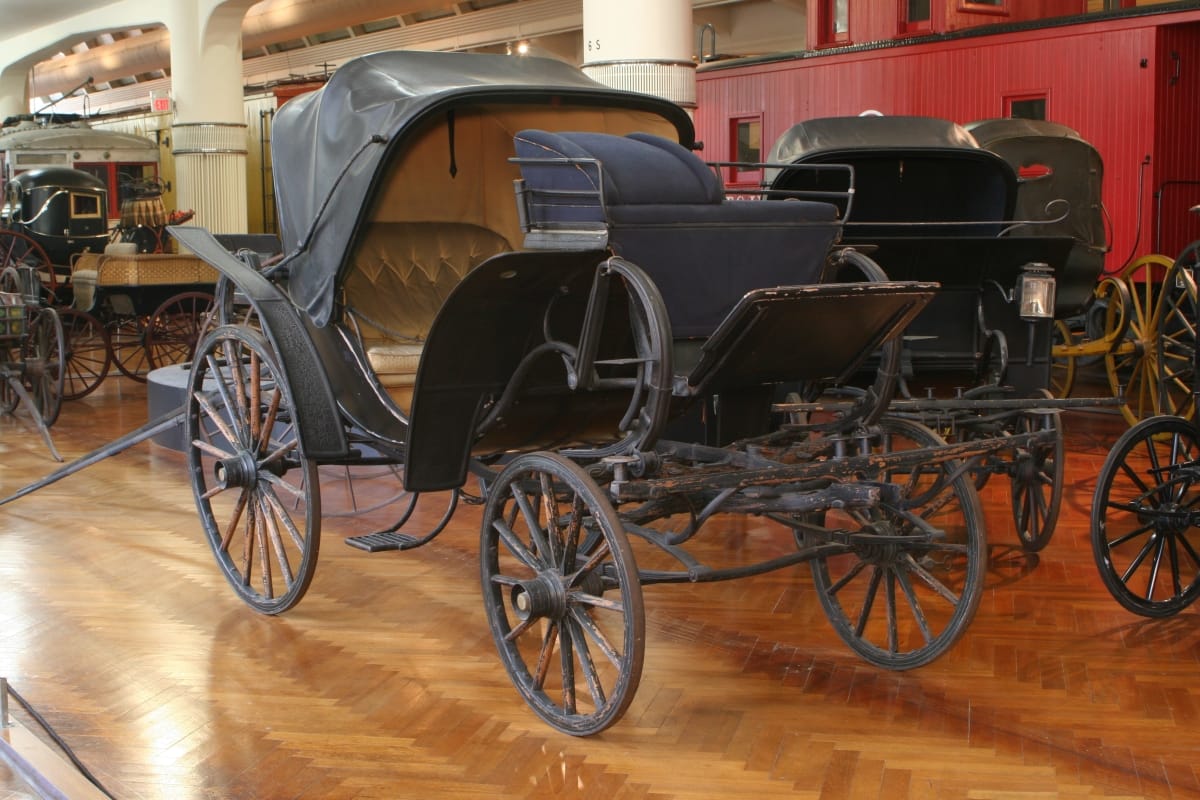
- Victoria Carriage, circa 1885 - The French popularized the victoria carriage, though they named it for the British monarch Queen Victoria. The elegant design was a favorite of wealthy families in Europe and the United States. The victoria often was used for rides through a park, where its open sides allowed passengers to see and be seen. Brewster & Company of New York built this example.
- circa 1885
- Collections - Artifact
Victoria Carriage, circa 1885
The French popularized the victoria carriage, though they named it for the British monarch Queen Victoria. The elegant design was a favorite of wealthy families in Europe and the United States. The victoria often was used for rides through a park, where its open sides allowed passengers to see and be seen. Brewster & Company of New York built this example.
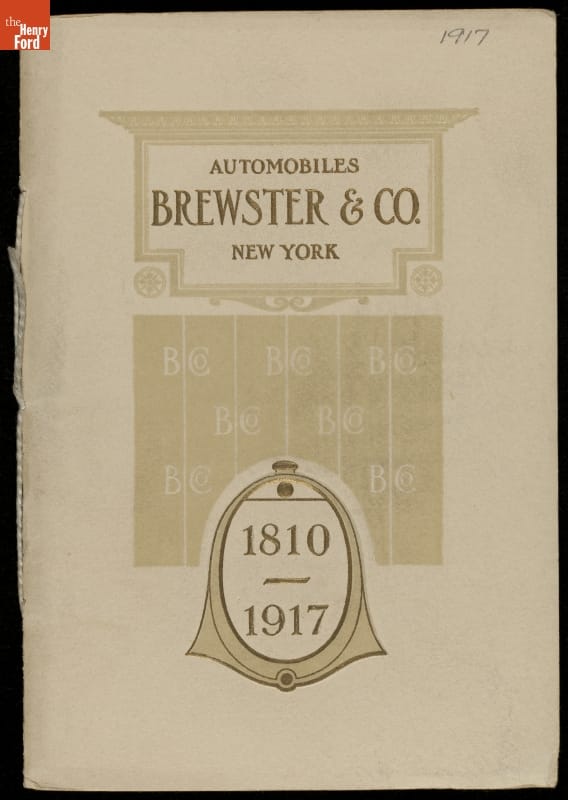
- Sales Catalog for 1917 Brewster & Co. Automobiles - This 1917 Brewster and Company sales catalog features the Town Landaulet. "Landaulet" is a car body style with separate compartments for passengers and driver. The passenger compartment is usually convertible, while the driver's compartment can be either enclosed or open.
- 1917
- Collections - Artifact
Sales Catalog for 1917 Brewster & Co. Automobiles
This 1917 Brewster and Company sales catalog features the Town Landaulet. "Landaulet" is a car body style with separate compartments for passengers and driver. The passenger compartment is usually convertible, while the driver's compartment can be either enclosed or open.
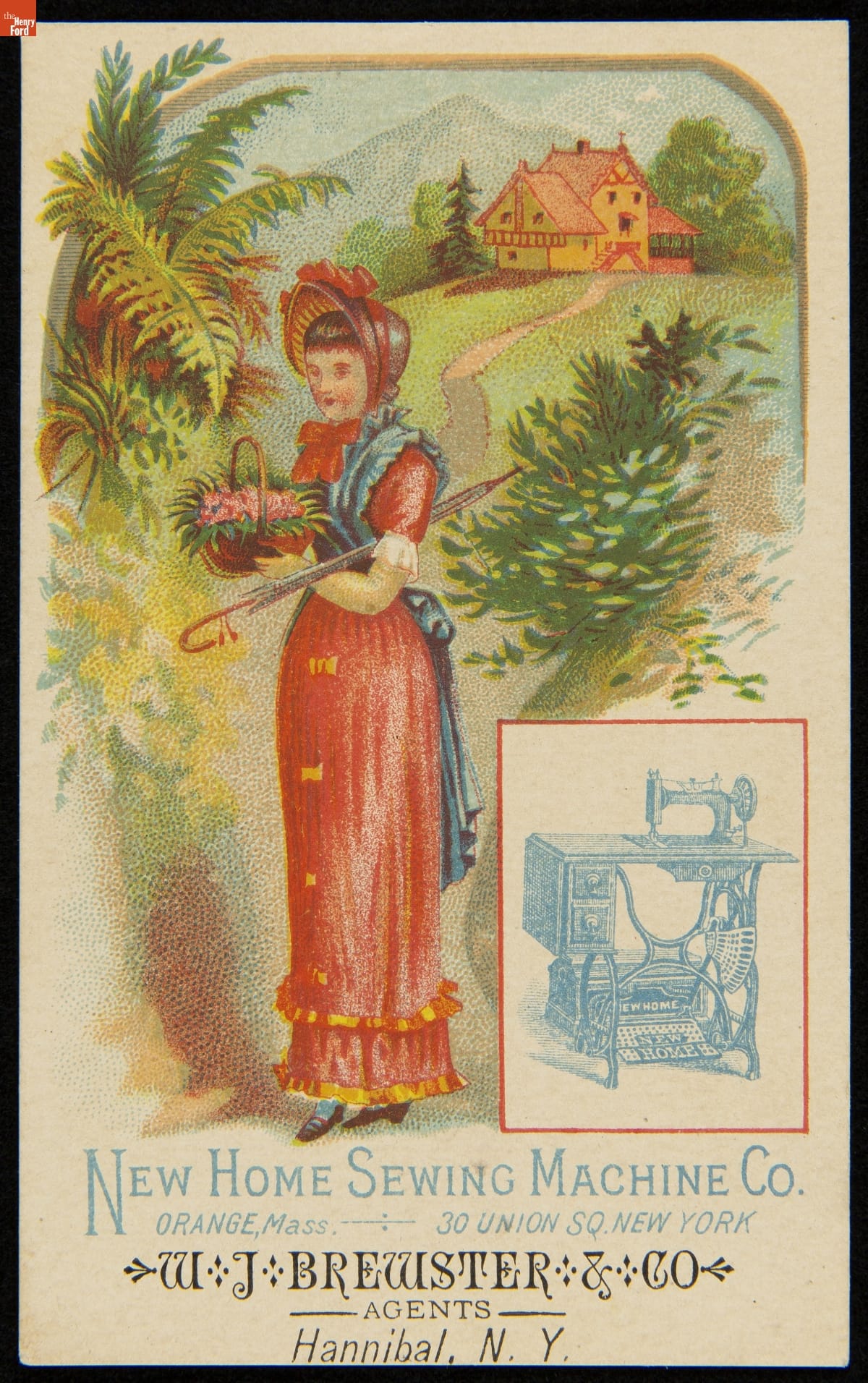
- Trade Card for a Treadle Sewing Machine, New Home Sewing Machine Co., 1890-1900 - In the last third of the nineteenth century, an unprecedented variety of consumer goods and services flooded the American market. Advertisers, armed with new methods of color printing, bombarded potential customers with trade cards. Americans enjoyed and often saved the vibrant little advertisements found in product packages or distributed by local merchants. Many survive as historical records of commercialism in the United States.
- 1890-1900
- Collections - Artifact
Trade Card for a Treadle Sewing Machine, New Home Sewing Machine Co., 1890-1900
In the last third of the nineteenth century, an unprecedented variety of consumer goods and services flooded the American market. Advertisers, armed with new methods of color printing, bombarded potential customers with trade cards. Americans enjoyed and often saved the vibrant little advertisements found in product packages or distributed by local merchants. Many survive as historical records of commercialism in the United States.
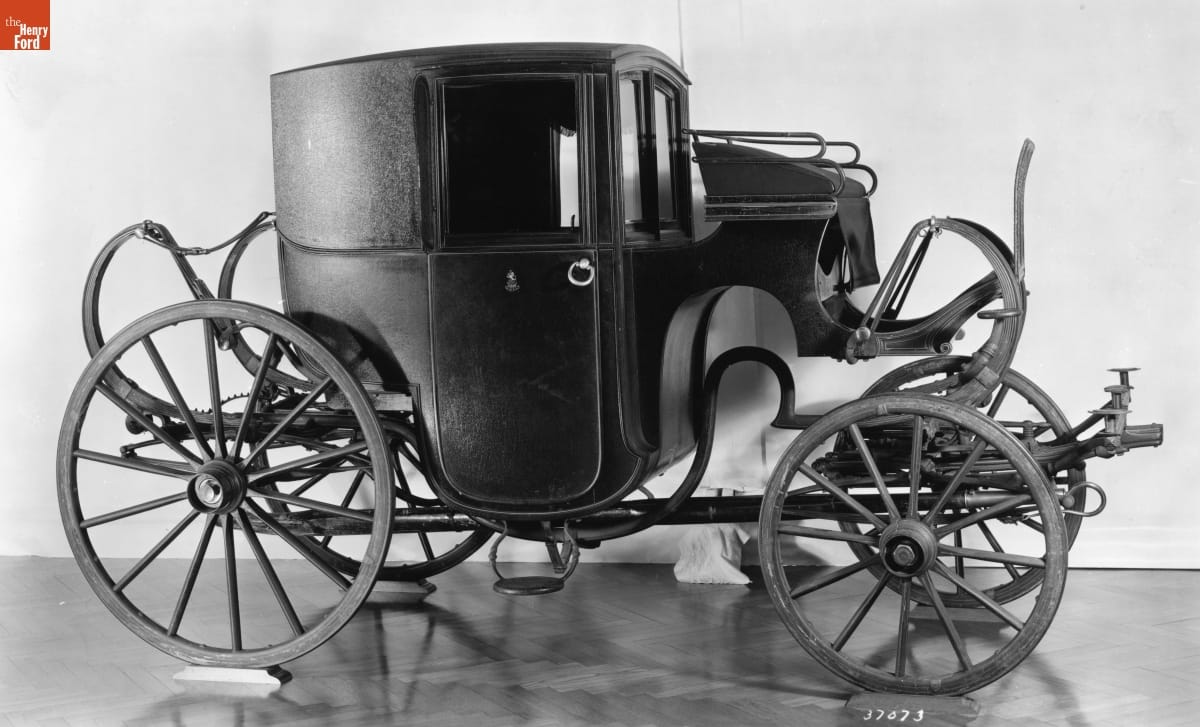
- Brougham Built for Exhibition at the World's Columbian Exposition in Chicago, 1893 - New York City's Brewster & Company built this brougham for the 1893 World's Columbian Exposition in Chicago. Manufacturers sent their best products to the fair to be admired by millions of attendees. This brougham won first prize in the fair's carriage competition, besting entries from other American and European makers. The coachman-driven brougham style was popular with urban professionals.
- 1893
- Collections - Artifact
Brougham Built for Exhibition at the World's Columbian Exposition in Chicago, 1893
New York City's Brewster & Company built this brougham for the 1893 World's Columbian Exposition in Chicago. Manufacturers sent their best products to the fair to be admired by millions of attendees. This brougham won first prize in the fair's carriage competition, besting entries from other American and European makers. The coachman-driven brougham style was popular with urban professionals.
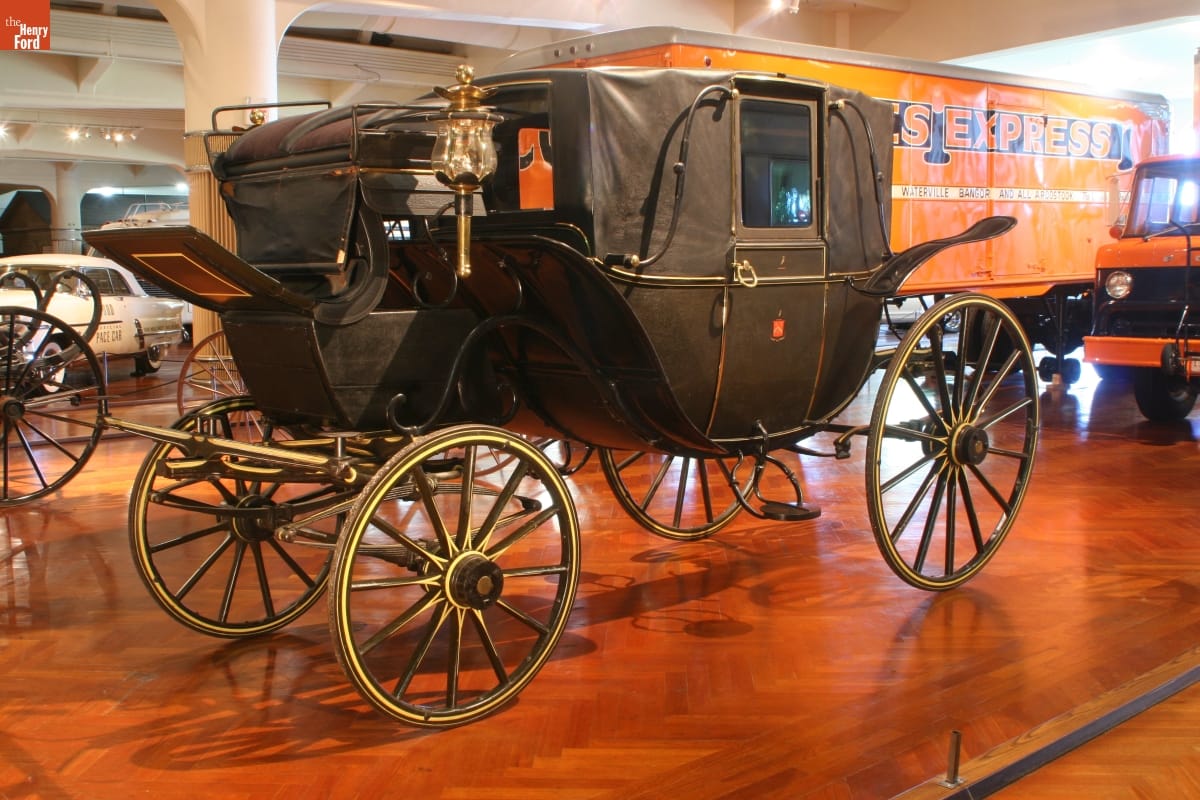
- Landau, Made for Abram and Sarah Hewitt of New York, 1890 - Popular with wealthy Americans, the landau carriage featured a falling top that divided in the middle to convert it from a closed coach to an open vehicle. Sarah Cooper Hewitt, wife of industrialist and politician Abram Hewitt, ordered this landau from prominent coachbuilder Brewster and Company in May 1890. The Hewitt family crest is painted on its doors.
- 1890
- Collections - Artifact
Landau, Made for Abram and Sarah Hewitt of New York, 1890
Popular with wealthy Americans, the landau carriage featured a falling top that divided in the middle to convert it from a closed coach to an open vehicle. Sarah Cooper Hewitt, wife of industrialist and politician Abram Hewitt, ordered this landau from prominent coachbuilder Brewster and Company in May 1890. The Hewitt family crest is painted on its doors.
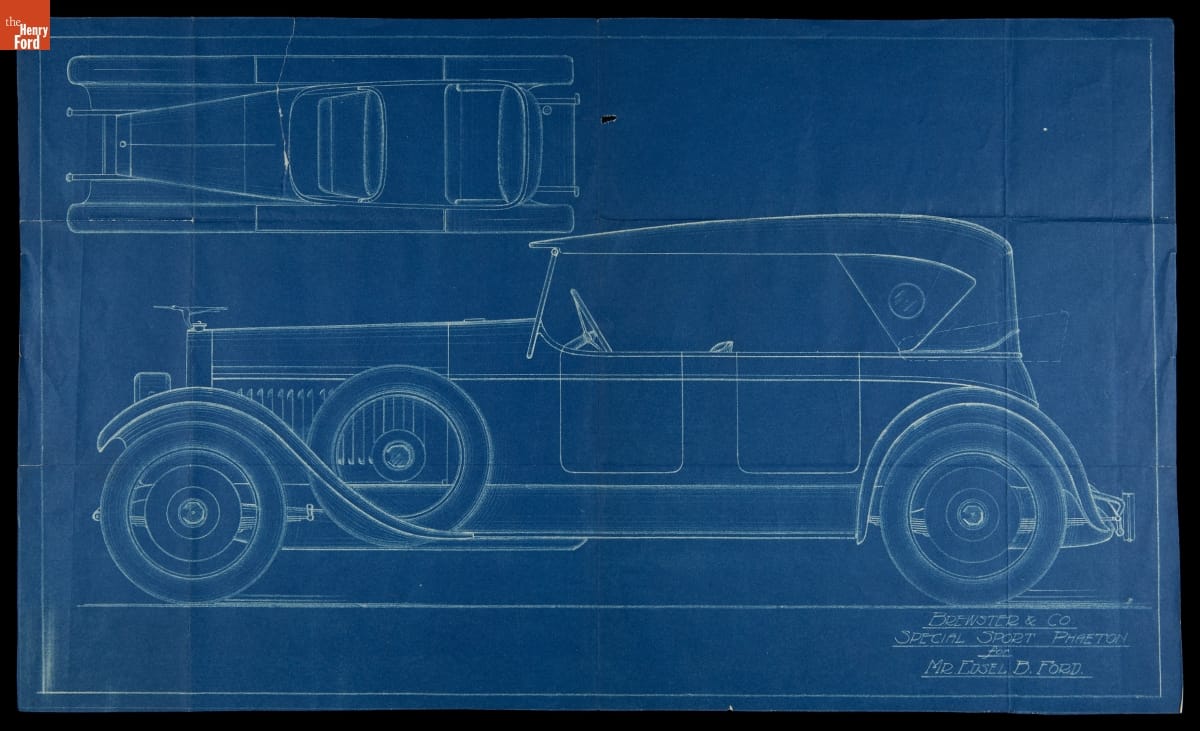
- Drawing, "Brewster & Co. Special Sport Phaeton for Mr. Edsel B. Ford," circa 1924 -
- circa 1924
- Collections - Artifact
Drawing, "Brewster & Co. Special Sport Phaeton for Mr. Edsel B. Ford," circa 1924
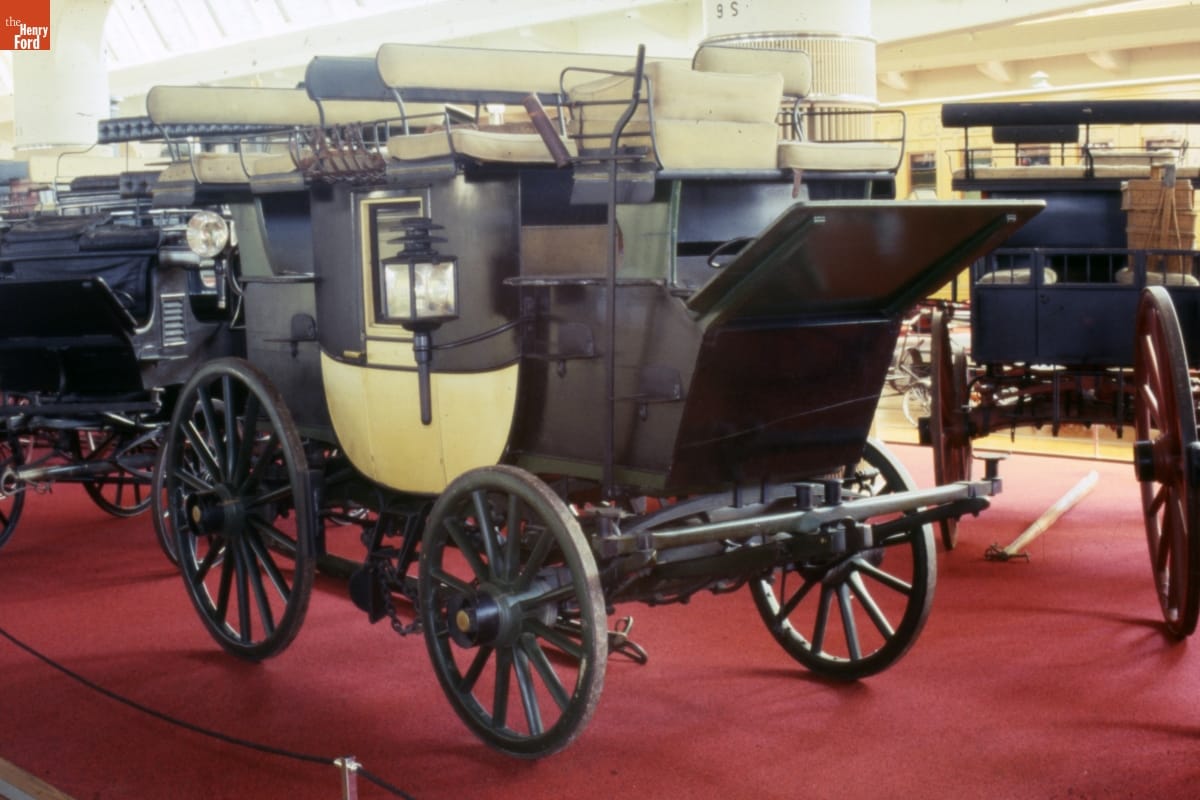
- Private Road Coach, 1906 - "Coaching" was popular sport for wealthy Americans in the late 19th and early 20th centuries. Enthusiasts savored the challenge of handling four spirited horses while driving heavy, custom-made coaches like this one. Patrick A. Valentine, a partner at Chicago meatpacker Armour & Company, purchased this coach in 1906 and used it at his lakeside estate in fashionable Oconomowoc, Wisconsin.
- 1906
- Collections - Artifact
Private Road Coach, 1906
"Coaching" was popular sport for wealthy Americans in the late 19th and early 20th centuries. Enthusiasts savored the challenge of handling four spirited horses while driving heavy, custom-made coaches like this one. Patrick A. Valentine, a partner at Chicago meatpacker Armour & Company, purchased this coach in 1906 and used it at his lakeside estate in fashionable Oconomowoc, Wisconsin.