
Search
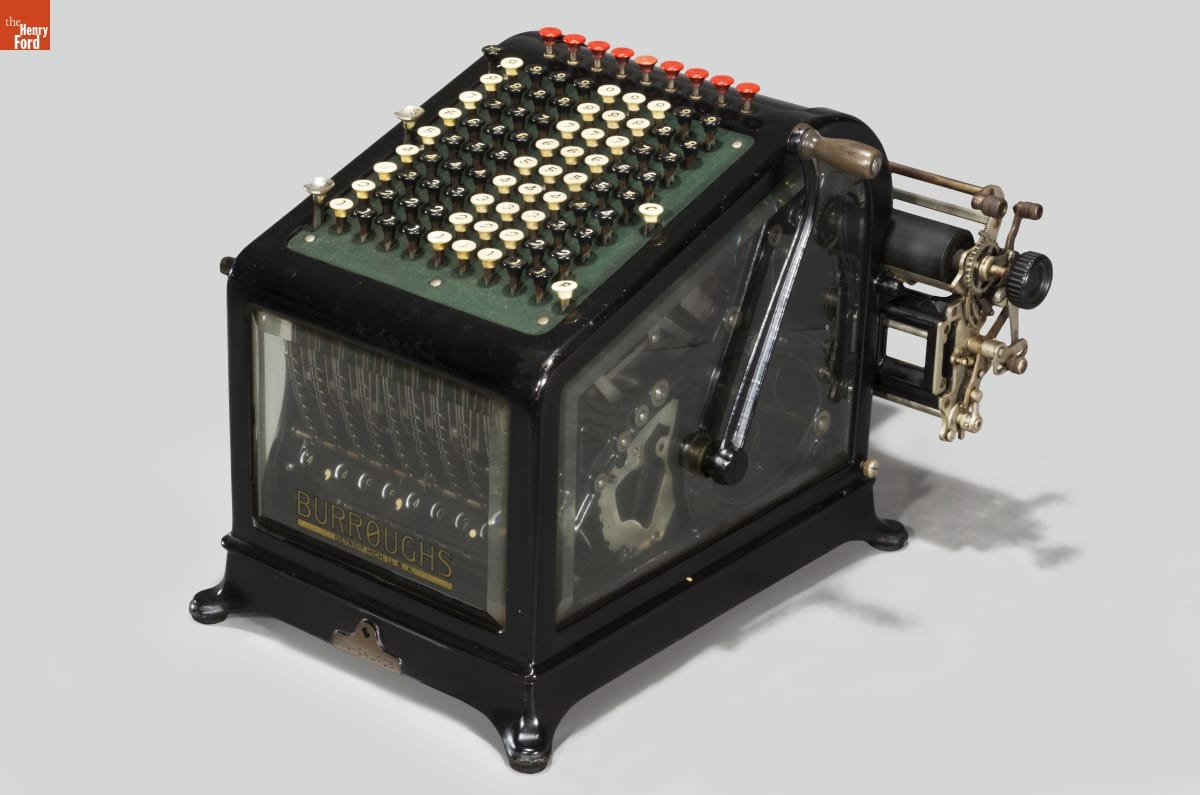
- Burroughs Class I / Model 9 Adding Machine, 1910 - Mechanical adding machines were indispensable office equipment used before the computer era. These devices were perfected by the American Arithmometer Company in 1886, spurred on by William Seward Burrough's desire to reduce drudgery in clerical arithmetic work. Transistors and electronic desktop calculators displaced adding machines in the 1950s; by the 1970s, microchips reduced calculators to the size of a shirt pocket.
- 1910
- Collections - Artifact
Burroughs Class I / Model 9 Adding Machine, 1910
Mechanical adding machines were indispensable office equipment used before the computer era. These devices were perfected by the American Arithmometer Company in 1886, spurred on by William Seward Burrough's desire to reduce drudgery in clerical arithmetic work. Transistors and electronic desktop calculators displaced adding machines in the 1950s; by the 1970s, microchips reduced calculators to the size of a shirt pocket.
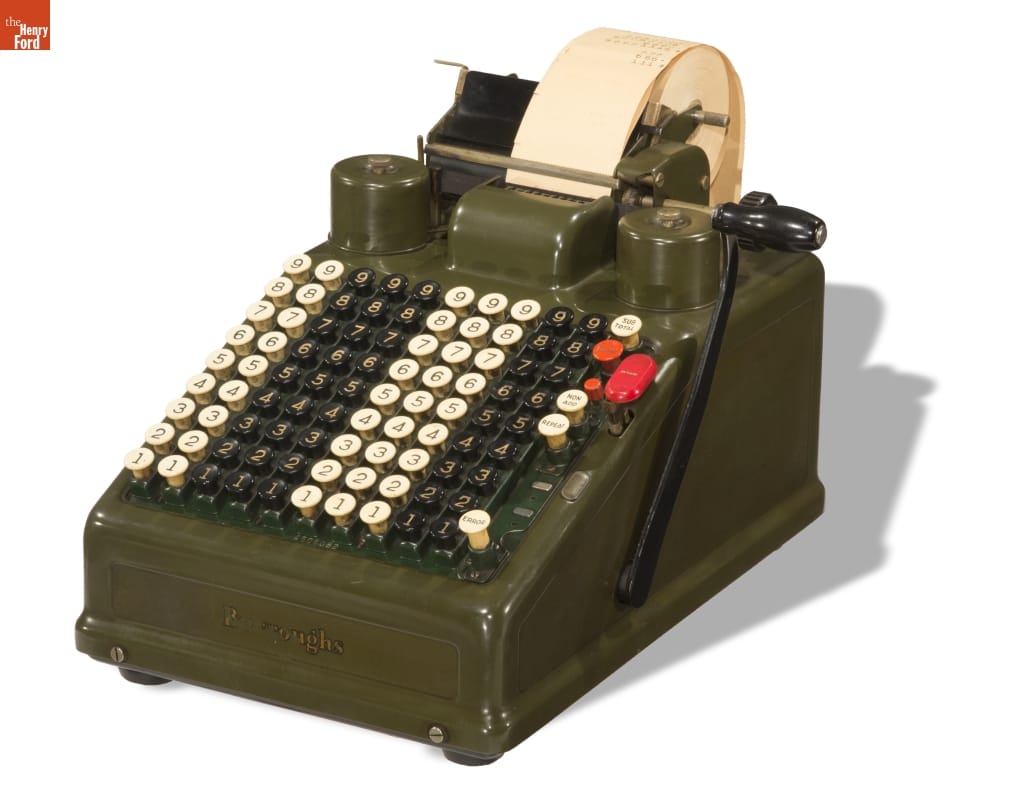
- Burroughs Calculating Machine, 1925-1935 - Mechanical adding machines were indispensable office equipment used before the computer era. These devices were perfected by the American Arithmometer Company in 1886, spurred on by William Seward Burrough's desire to reduce drudgery in clerical arithmetic work. Transistors and electronic desktop calculators displaced adding machines in the 1950s; by the 1970s, microchips reduced calculators to the size of a shirt pocket.
- 1925-1935
- Collections - Artifact
Burroughs Calculating Machine, 1925-1935
Mechanical adding machines were indispensable office equipment used before the computer era. These devices were perfected by the American Arithmometer Company in 1886, spurred on by William Seward Burrough's desire to reduce drudgery in clerical arithmetic work. Transistors and electronic desktop calculators displaced adding machines in the 1950s; by the 1970s, microchips reduced calculators to the size of a shirt pocket.
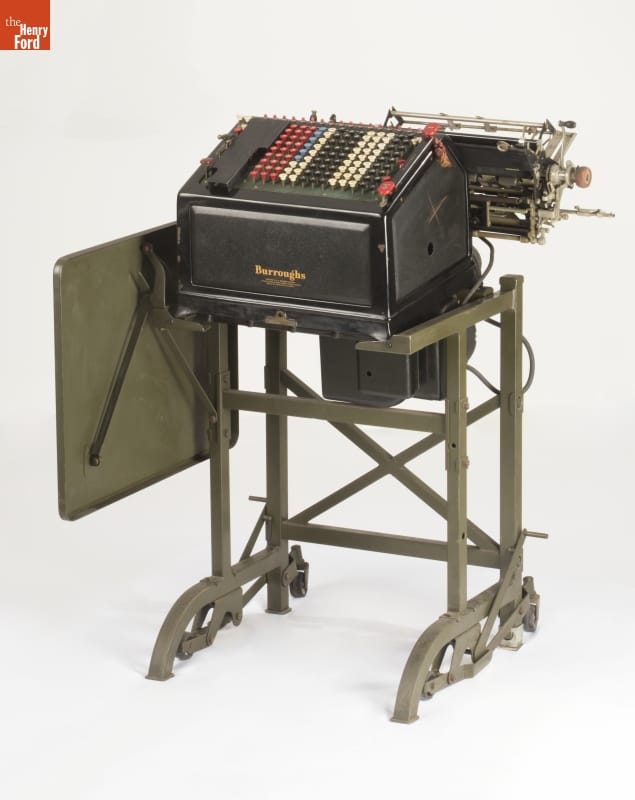
- Burroughs Bookkeeping Machine, circa 1928 - Bookkeeping machines were the precursors to the computer -- they processed and moved complex numeric and alphabetic data. Combining elements of typewriters, adding machines, and calculators, bookkeeping machines processed payroll, taxes, and recorded payments and billing. Efficient and reliable, these devices eased the workload of office workers. They were also used as vote tabulators and for complex calculation of scientific data.
- circa 1928
- Collections - Artifact
Burroughs Bookkeeping Machine, circa 1928
Bookkeeping machines were the precursors to the computer -- they processed and moved complex numeric and alphabetic data. Combining elements of typewriters, adding machines, and calculators, bookkeeping machines processed payroll, taxes, and recorded payments and billing. Efficient and reliable, these devices eased the workload of office workers. They were also used as vote tabulators and for complex calculation of scientific data.
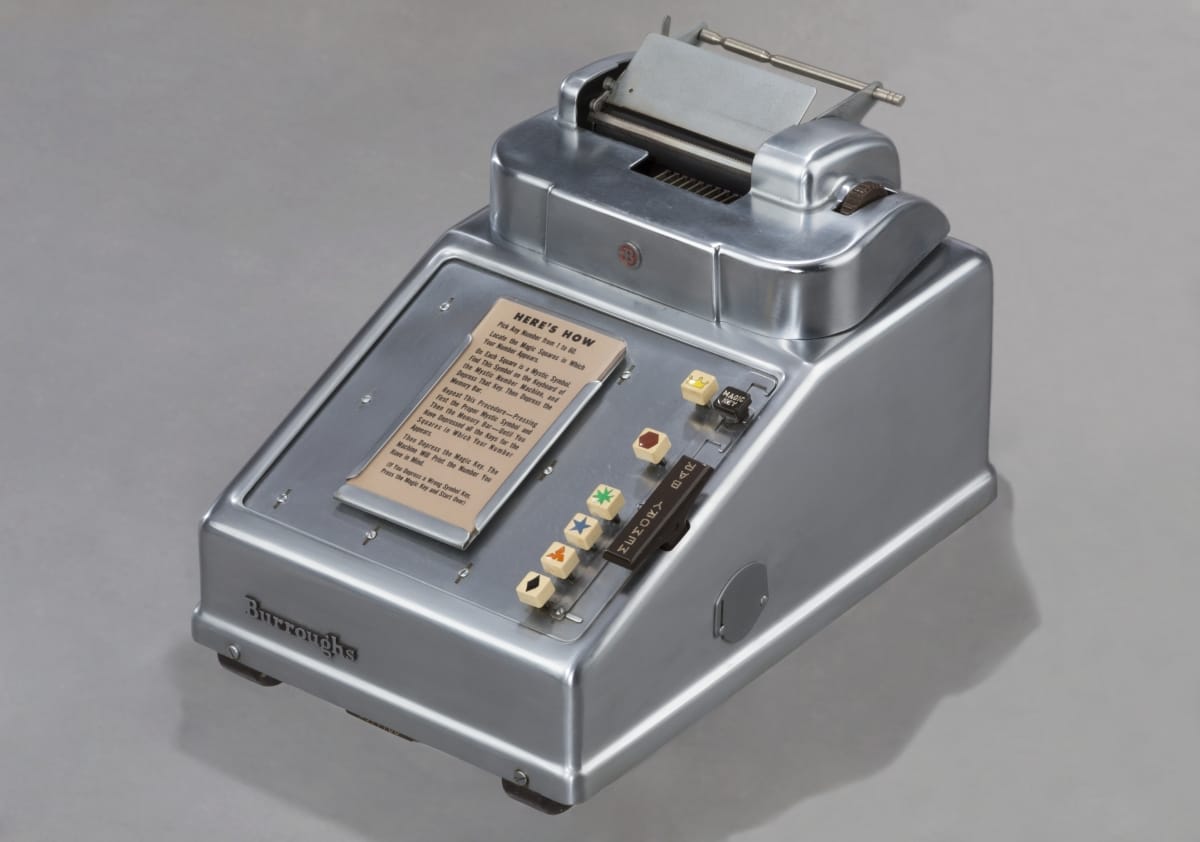
- Burroughs "Magic Square Machine," circa 1950 -
- circa 1950
- Collections - Artifact
Burroughs "Magic Square Machine," circa 1950
- Burroughs Electric Typewriter, 1938 -
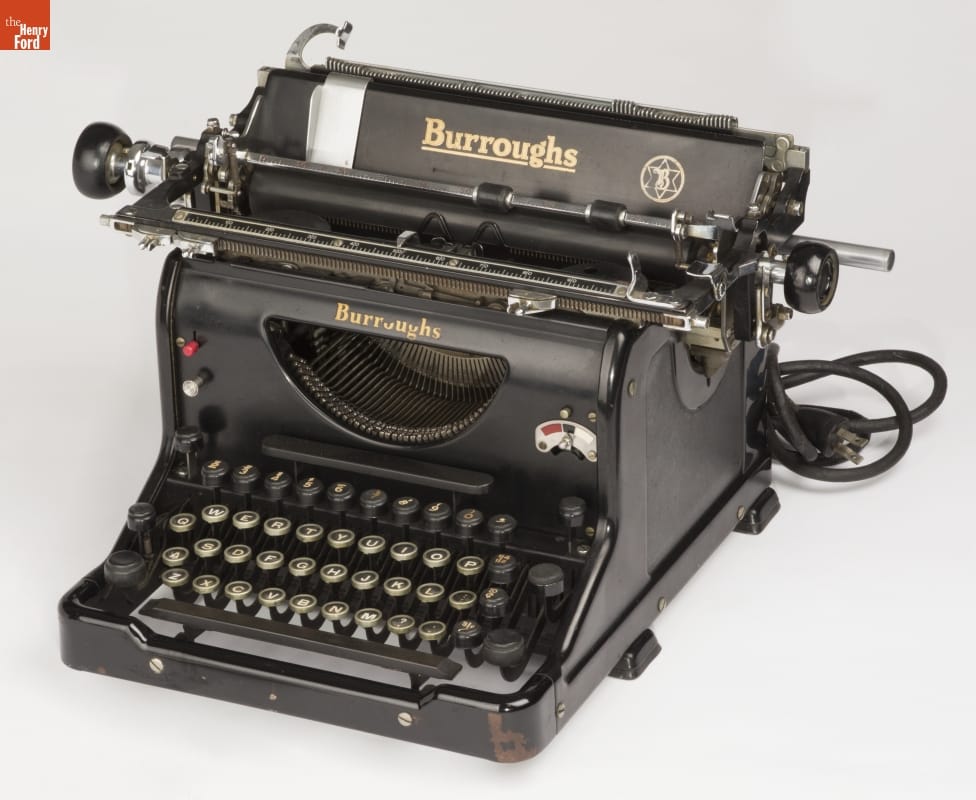
- 1938
- Collections - Artifact
Burroughs Electric Typewriter, 1938
- Burroughs Class 7 Bookkeeping Machine, circa 1935 - Bookkeeping machines were the precursors to the computer -- they processed and moved complex numeric and alphabetic data. Combining elements of typewriters, adding machines, and calculators, bookkeeping machines processed payroll, taxes, and recorded payments and billing. Efficient and reliable, these devices eased the workload of office workers. They were also used as vote tabulators and for complex calculation of scientific data.
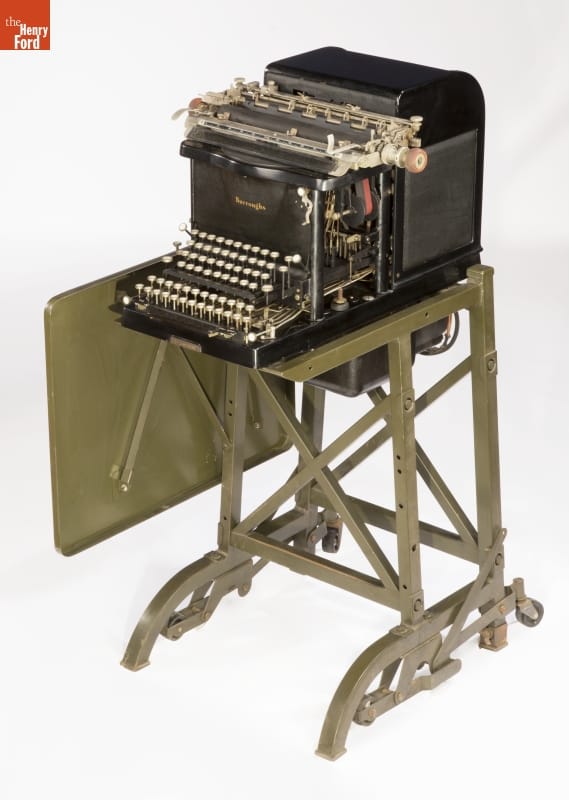
- circa 1935
- Collections - Artifact
Burroughs Class 7 Bookkeeping Machine, circa 1935
Bookkeeping machines were the precursors to the computer -- they processed and moved complex numeric and alphabetic data. Combining elements of typewriters, adding machines, and calculators, bookkeeping machines processed payroll, taxes, and recorded payments and billing. Efficient and reliable, these devices eased the workload of office workers. They were also used as vote tabulators and for complex calculation of scientific data.