
Search
- Jenkins Laboratories Mechanical Scanning Television Receiver Amateur Kit, circa 1928 - In 1925, Charles Francis Jenkins became the first American to demonstrate mechanical scanning television. This is the only Jenkins Laboratories Radiovisor Kit known to survive. Radio amateurs could build this kit to view nightly "radiovision" broadcasts originating from Jenkins' experimental television station, W3XK, near Washington, D.C. Jenkins's broadcasts consisted of silhouette puppet shows -- crude by today's standards, but pioneering nonetheless.
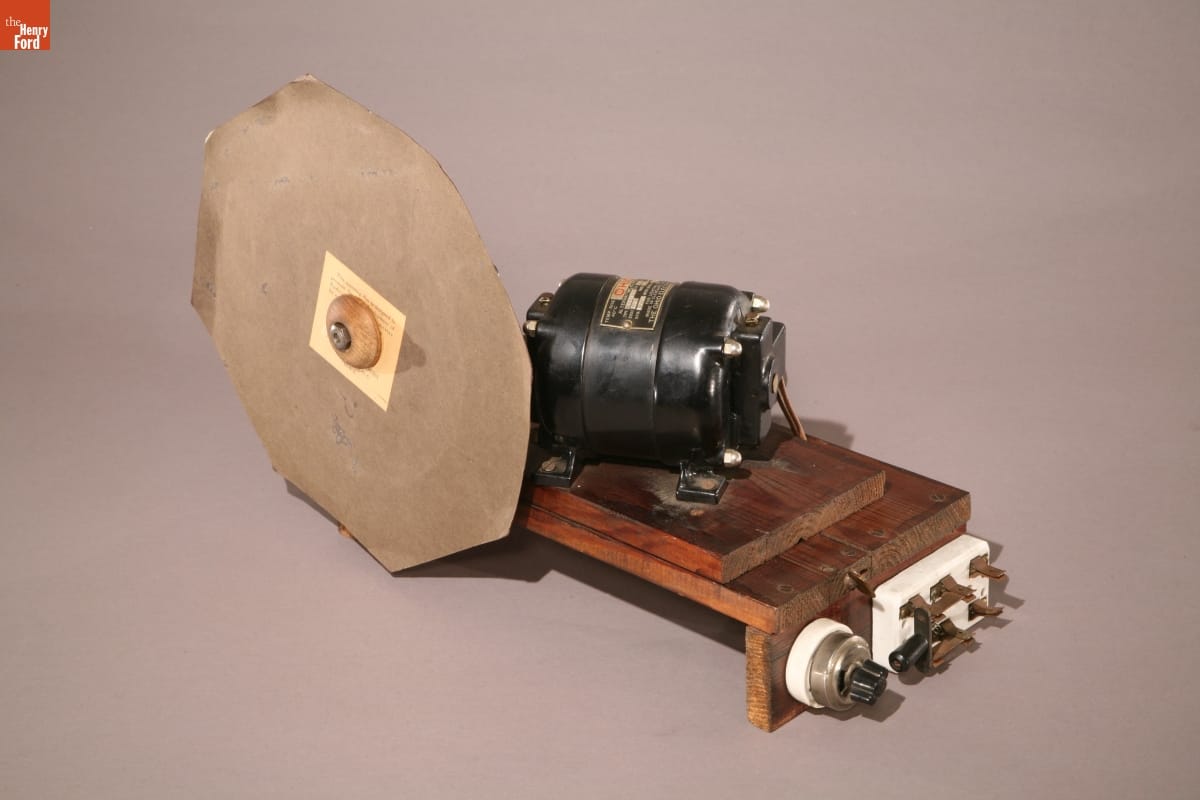
- circa 1928
- Collections - Artifact
Jenkins Laboratories Mechanical Scanning Television Receiver Amateur Kit, circa 1928
In 1925, Charles Francis Jenkins became the first American to demonstrate mechanical scanning television. This is the only Jenkins Laboratories Radiovisor Kit known to survive. Radio amateurs could build this kit to view nightly "radiovision" broadcasts originating from Jenkins' experimental television station, W3XK, near Washington, D.C. Jenkins's broadcasts consisted of silhouette puppet shows -- crude by today's standards, but pioneering nonetheless.
- Jenkins Transmitting Scanning Device for Weather Map Facsimile Recorder, circa 1927 - Charles Francis Jenkins, pioneer of mechanical scanning television, also developed one of the first marine facsimile systems, depicted here. In 1926, Jenkins created an experimental device similar to a modern fax machine, capable of transmitting weather maps to ships at sea. In September, it became a lifeline, guiding the USS <em>Kittery</em> to safety against the blows of the Great Miami Hurricane.
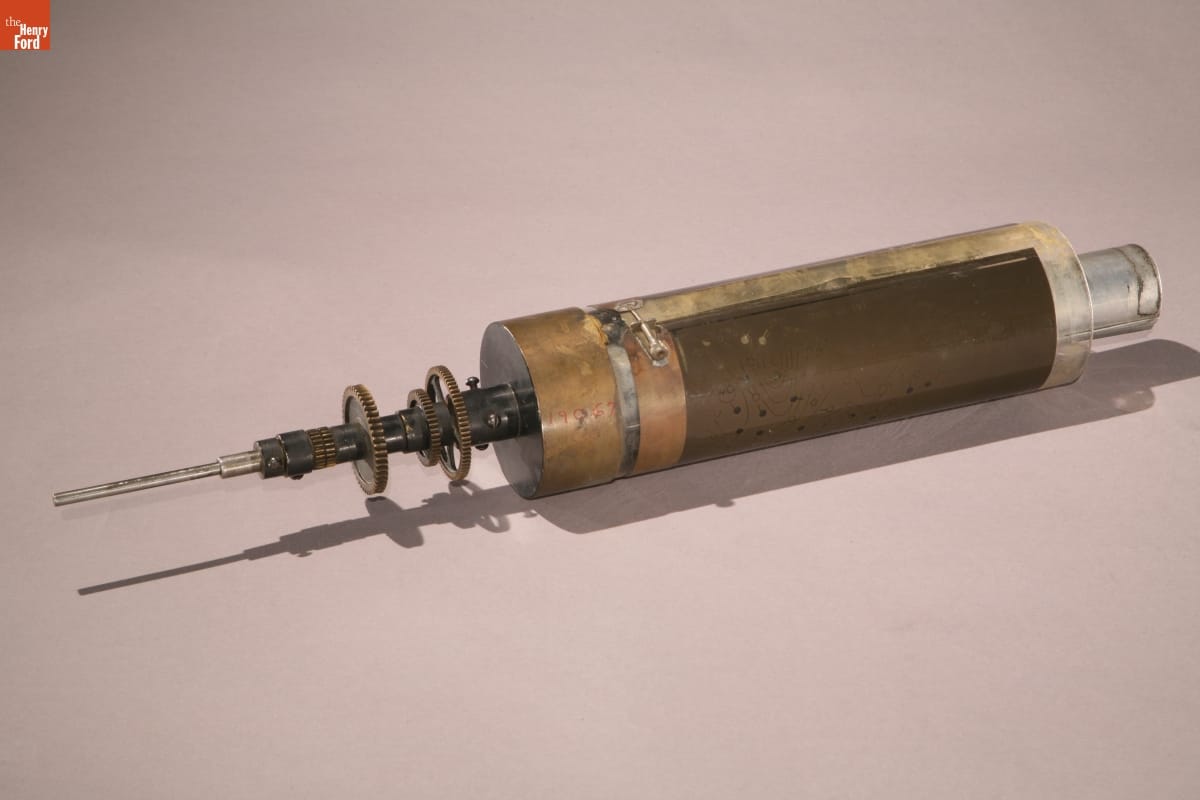
- circa 1927
- Collections - Artifact
Jenkins Transmitting Scanning Device for Weather Map Facsimile Recorder, circa 1927
Charles Francis Jenkins, pioneer of mechanical scanning television, also developed one of the first marine facsimile systems, depicted here. In 1926, Jenkins created an experimental device similar to a modern fax machine, capable of transmitting weather maps to ships at sea. In September, it became a lifeline, guiding the USS Kittery to safety against the blows of the Great Miami Hurricane.
- Audio Frequency Amplifier, Used By Charles F. Jenkins, 1922-1927 - Charles Francis Jenkins, pioneer of mechanical scanning television, also developed one of the first marine facsimile systems, depicted here. In 1926, Jenkins created an experimental device similar to a modern fax machine, capable of transmitting weather maps to ships at sea. In September, it became a lifeline, guiding the USS <em>Kittery</em> to safety against the blows of the Great Miami Hurricane.
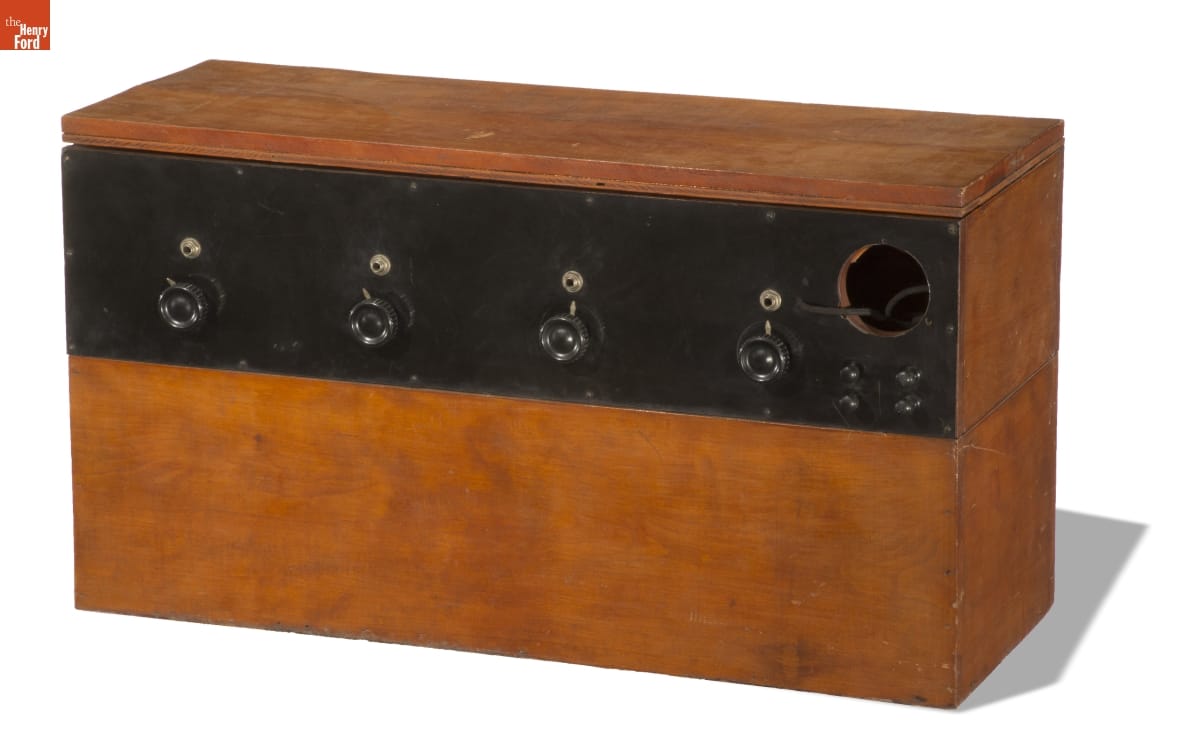
- 1922-1927
- Collections - Artifact
Audio Frequency Amplifier, Used By Charles F. Jenkins, 1922-1927
Charles Francis Jenkins, pioneer of mechanical scanning television, also developed one of the first marine facsimile systems, depicted here. In 1926, Jenkins created an experimental device similar to a modern fax machine, capable of transmitting weather maps to ships at sea. In September, it became a lifeline, guiding the USS Kittery to safety against the blows of the Great Miami Hurricane.
- Jenkins Scanner Drum for a Facsimile Receiver, circa 1927 - Charles Francis Jenkins, pioneer of mechanical scanning television, also developed one of the first marine facsimile systems, depicted here. In 1926, Jenkins created an experimental device similar to a modern fax machine, capable of transmitting weather maps to ships at sea. In September, it became a lifeline, guiding the USS <em>Kittery</em> to safety against the blows of the Great Miami Hurricane.
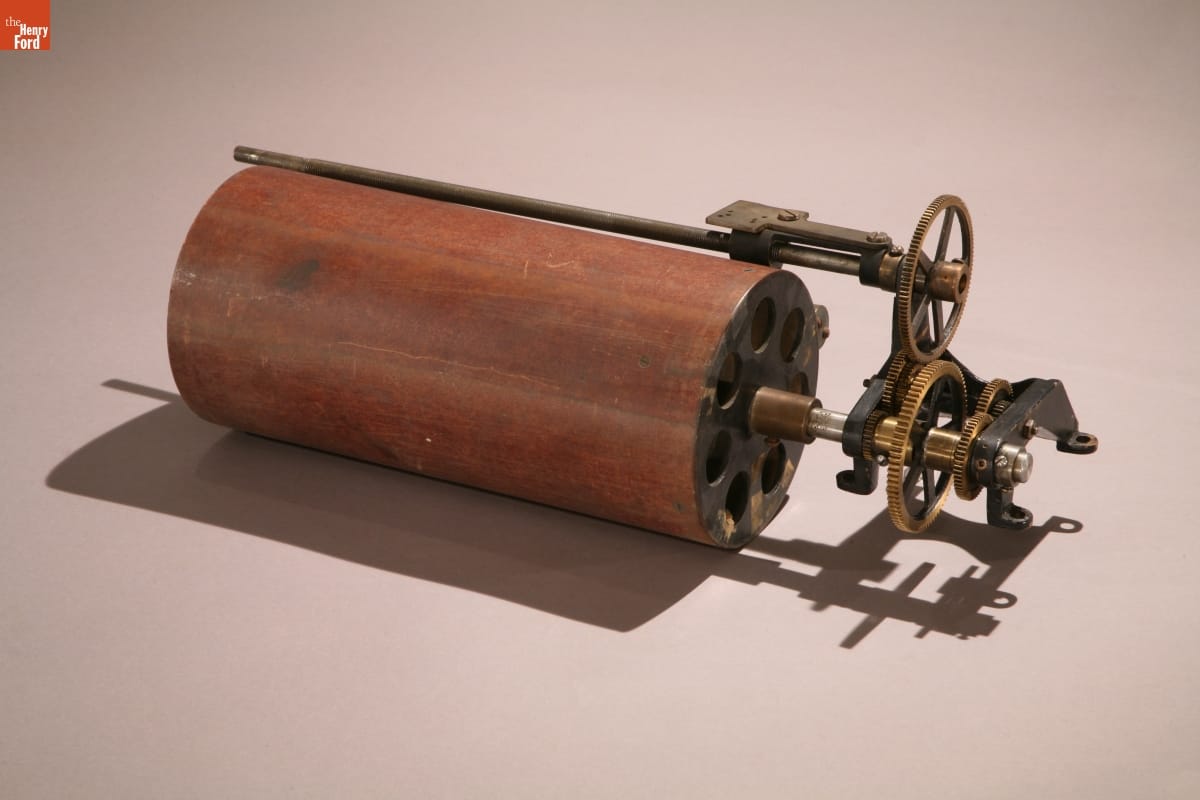
- circa 1927
- Collections - Artifact
Jenkins Scanner Drum for a Facsimile Receiver, circa 1927
Charles Francis Jenkins, pioneer of mechanical scanning television, also developed one of the first marine facsimile systems, depicted here. In 1926, Jenkins created an experimental device similar to a modern fax machine, capable of transmitting weather maps to ships at sea. In September, it became a lifeline, guiding the USS Kittery to safety against the blows of the Great Miami Hurricane.