
Search
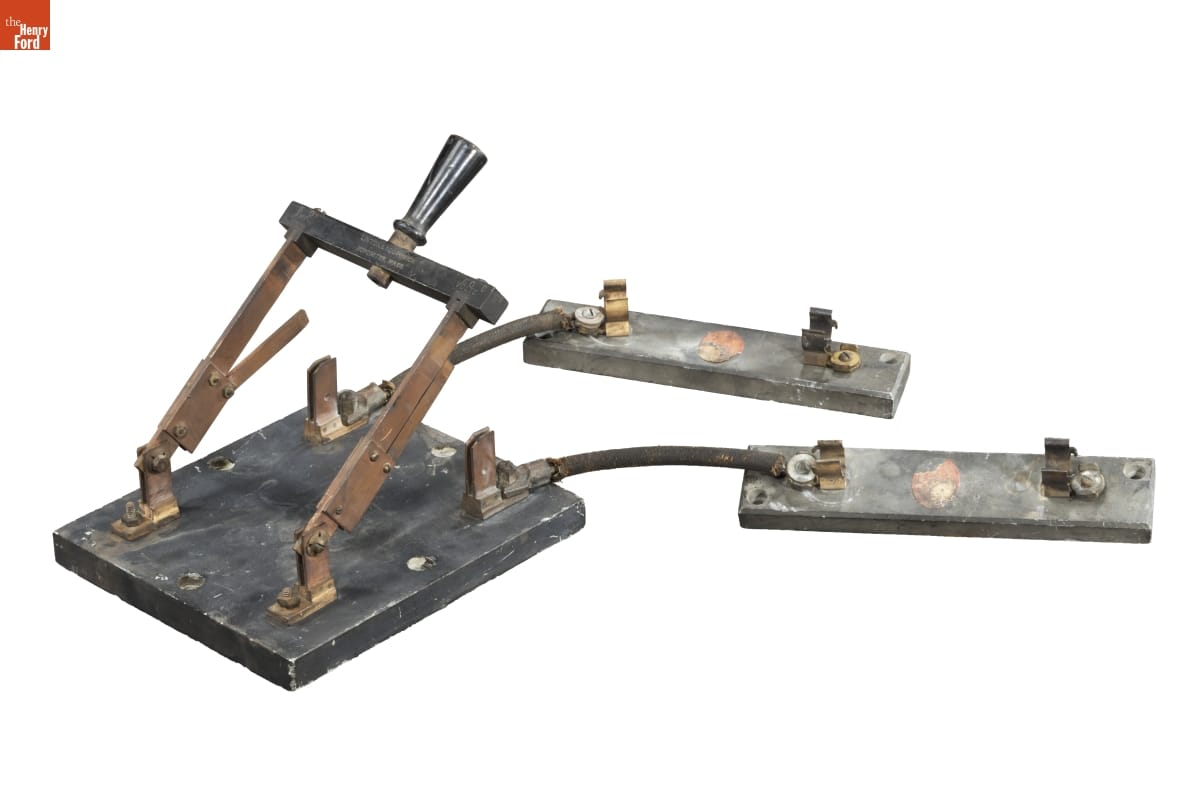
- Linton & Southwick Electric Switch with Fuse Blocks, 1890-1910 - Switches open or close an electrical circuit to turn things off or on. In the late 1800s and early 1900s, knife switches were commonly found in engine or generating rooms, connected to factory motors, or mounted on a building's power and lighting switchboard. Operators pushed the hinged, metal blades into the switch's jaws to send electricity to where it was needed.
- 1890-1910
- Collections - Artifact
Linton & Southwick Electric Switch with Fuse Blocks, 1890-1910
Switches open or close an electrical circuit to turn things off or on. In the late 1800s and early 1900s, knife switches were commonly found in engine or generating rooms, connected to factory motors, or mounted on a building's power and lighting switchboard. Operators pushed the hinged, metal blades into the switch's jaws to send electricity to where it was needed.
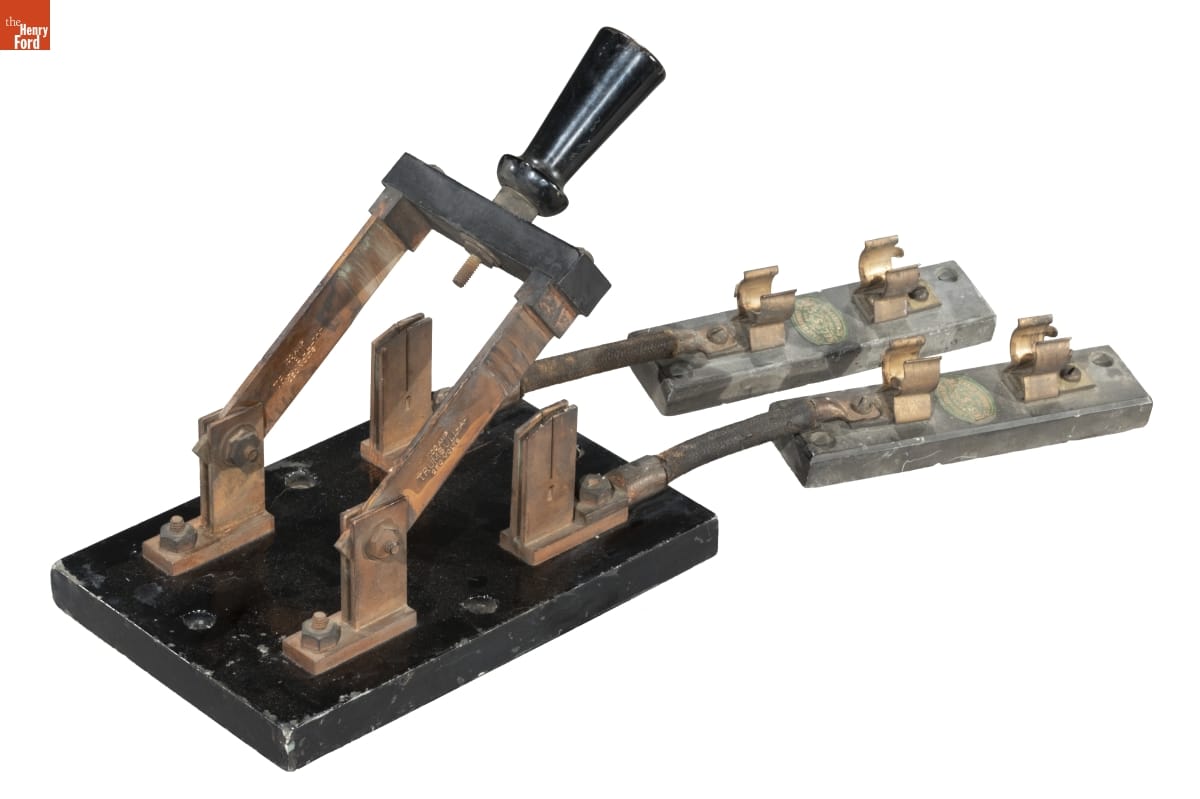
- Trumbull Electric Manufacturing Company Electric Switch with Fuse Blocks, 1900-1920 - Switches open or close an electrical circuit to turn things off or on. In the late 1800s and early 1900s, knife switches were commonly found in engine or generating rooms, connected to factory motors, or mounted on a building's power and lighting switchboard. Operators pushed the hinged, metal blades into the switch's jaws to send electricity to where it was needed.
- 1900-1920
- Collections - Artifact
Trumbull Electric Manufacturing Company Electric Switch with Fuse Blocks, 1900-1920
Switches open or close an electrical circuit to turn things off or on. In the late 1800s and early 1900s, knife switches were commonly found in engine or generating rooms, connected to factory motors, or mounted on a building's power and lighting switchboard. Operators pushed the hinged, metal blades into the switch's jaws to send electricity to where it was needed.