
Search
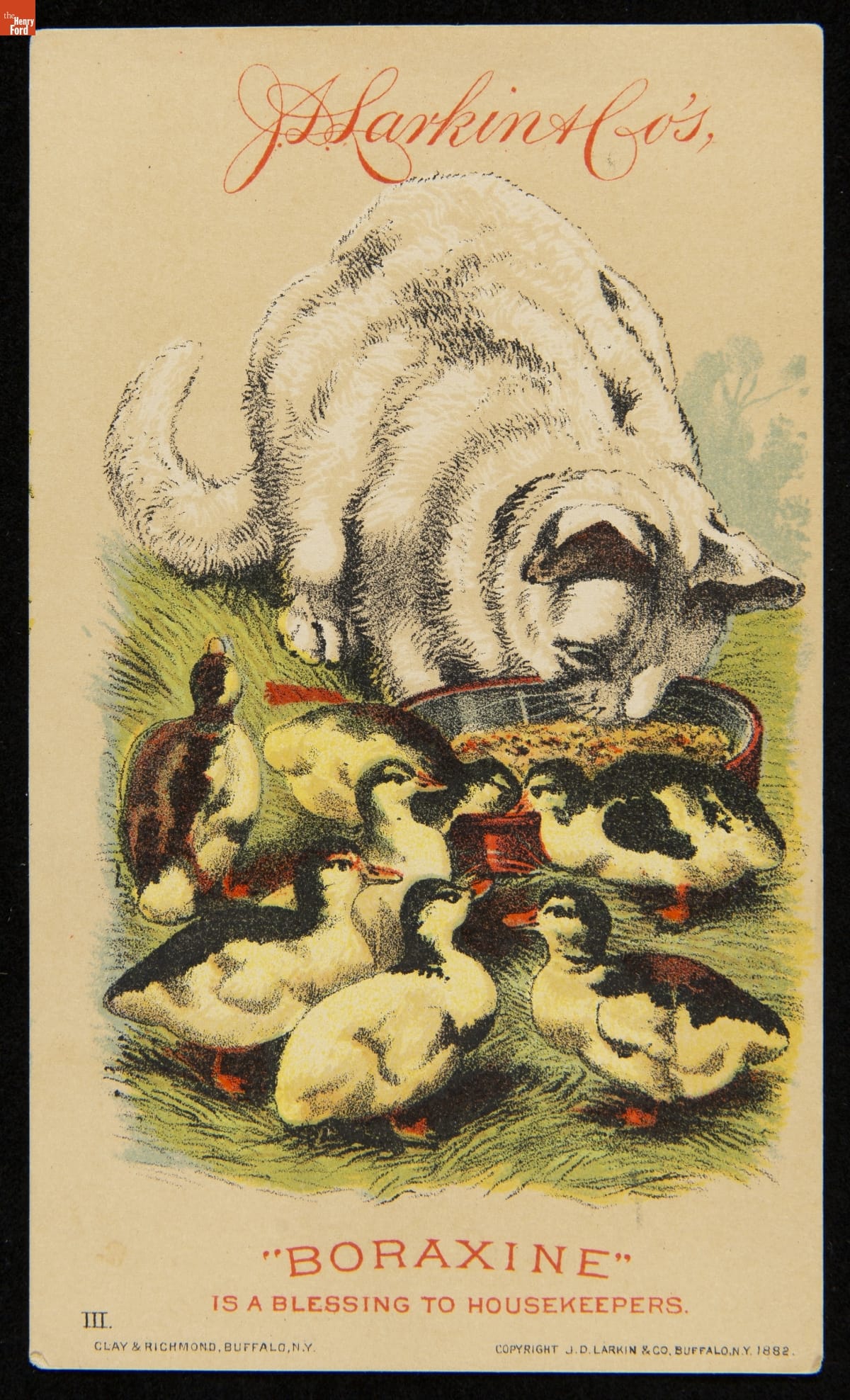
- Trade Card for "Boraxine" Soap, J.D. Larkin & Co., 1882 - As color printing gained momentum in the late 19th century, advertisers bombarded potential customers with trade cards. Americans enjoyed and often saved the little advertisements found in product packages or distributed by local merchants. J.D. Larkin & Co. began as a soap manufacturer before producing a wide variety of products as the Larkin Company. This trade card features J.D. Larkin's popular soap product, Boraxine.
- 1882
- Collections - Artifact
Trade Card for "Boraxine" Soap, J.D. Larkin & Co., 1882
As color printing gained momentum in the late 19th century, advertisers bombarded potential customers with trade cards. Americans enjoyed and often saved the little advertisements found in product packages or distributed by local merchants. J.D. Larkin & Co. began as a soap manufacturer before producing a wide variety of products as the Larkin Company. This trade card features J.D. Larkin's popular soap product, Boraxine.
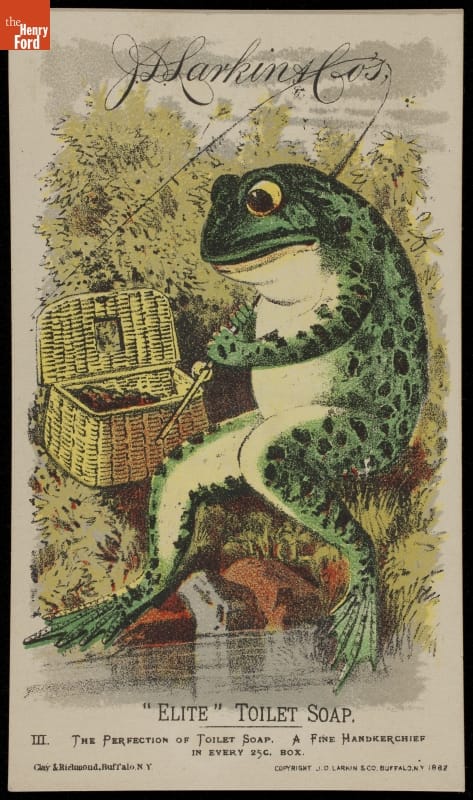
- Trade Card for "Elite" Toilet Soap, J. D. Larkin and Company, 1882 - In the last third of the nineteenth century, an unprecedented variety of consumer goods and services flooded the American market. Advertisers, armed with new methods of color printing, bombarded potential customers with trade cards. Americans enjoyed and often saved the vibrant little advertisements found in product packages or distributed by local merchants. Many survive as historical records of commercialism in the United States.
- 1882
- Collections - Artifact
Trade Card for "Elite" Toilet Soap, J. D. Larkin and Company, 1882
In the last third of the nineteenth century, an unprecedented variety of consumer goods and services flooded the American market. Advertisers, armed with new methods of color printing, bombarded potential customers with trade cards. Americans enjoyed and often saved the vibrant little advertisements found in product packages or distributed by local merchants. Many survive as historical records of commercialism in the United States.
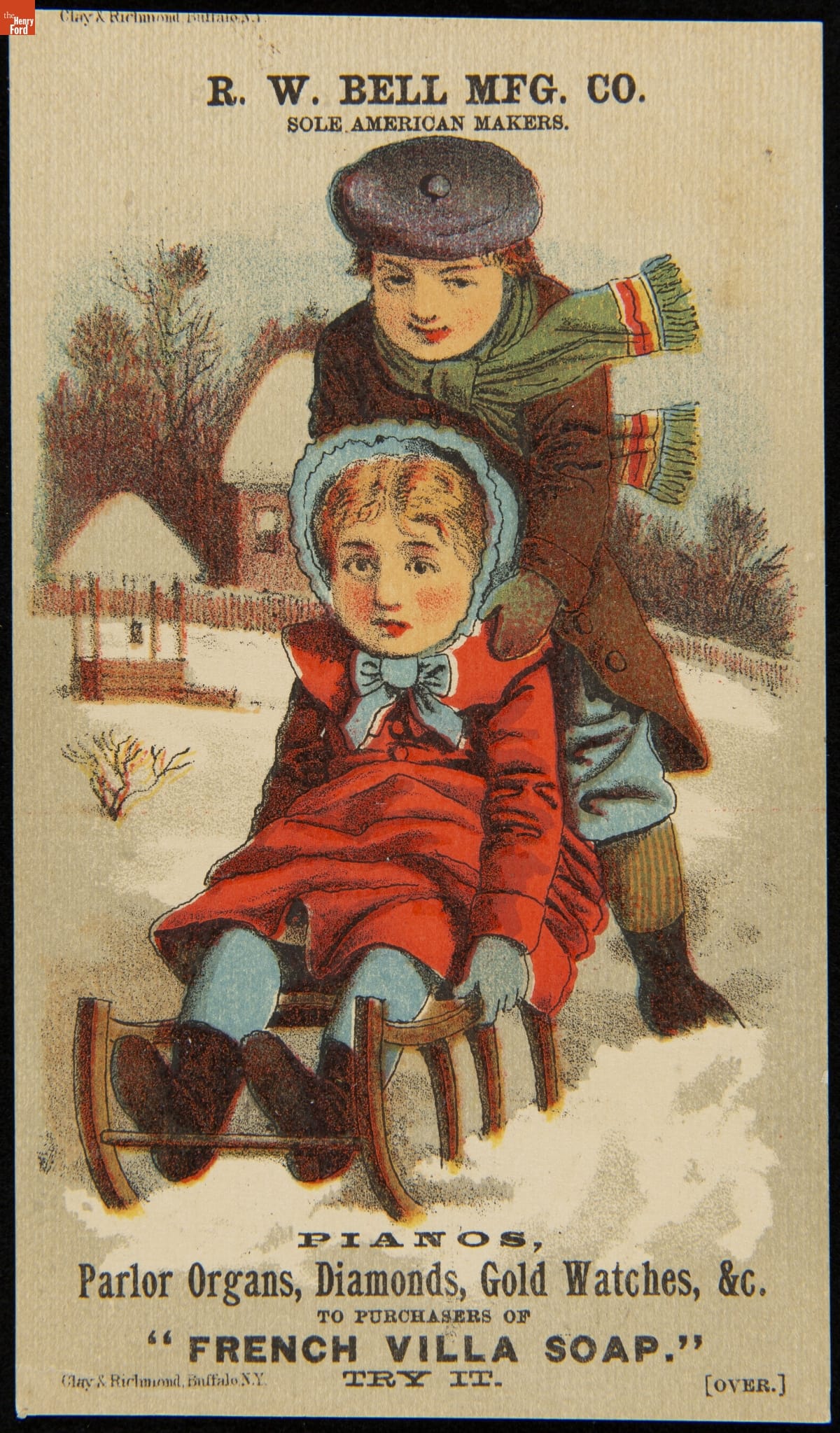
- Trade Card for French Villa Soap, R.W. Bell Mfg. Co., 1879-1886 - In the last third of the nineteenth century, an unprecedented variety of consumer goods and services flooded the American market. Advertisers, armed with new methods of color printing, bombarded potential customers with trade cards. Americans enjoyed and often saved the vibrant little advertisements found in product packages or distributed by local merchants. Many survive as historical records of commercialism in the United States.
- 1879-1886
- Collections - Artifact
Trade Card for French Villa Soap, R.W. Bell Mfg. Co., 1879-1886
In the last third of the nineteenth century, an unprecedented variety of consumer goods and services flooded the American market. Advertisers, armed with new methods of color printing, bombarded potential customers with trade cards. Americans enjoyed and often saved the vibrant little advertisements found in product packages or distributed by local merchants. Many survive as historical records of commercialism in the United States.
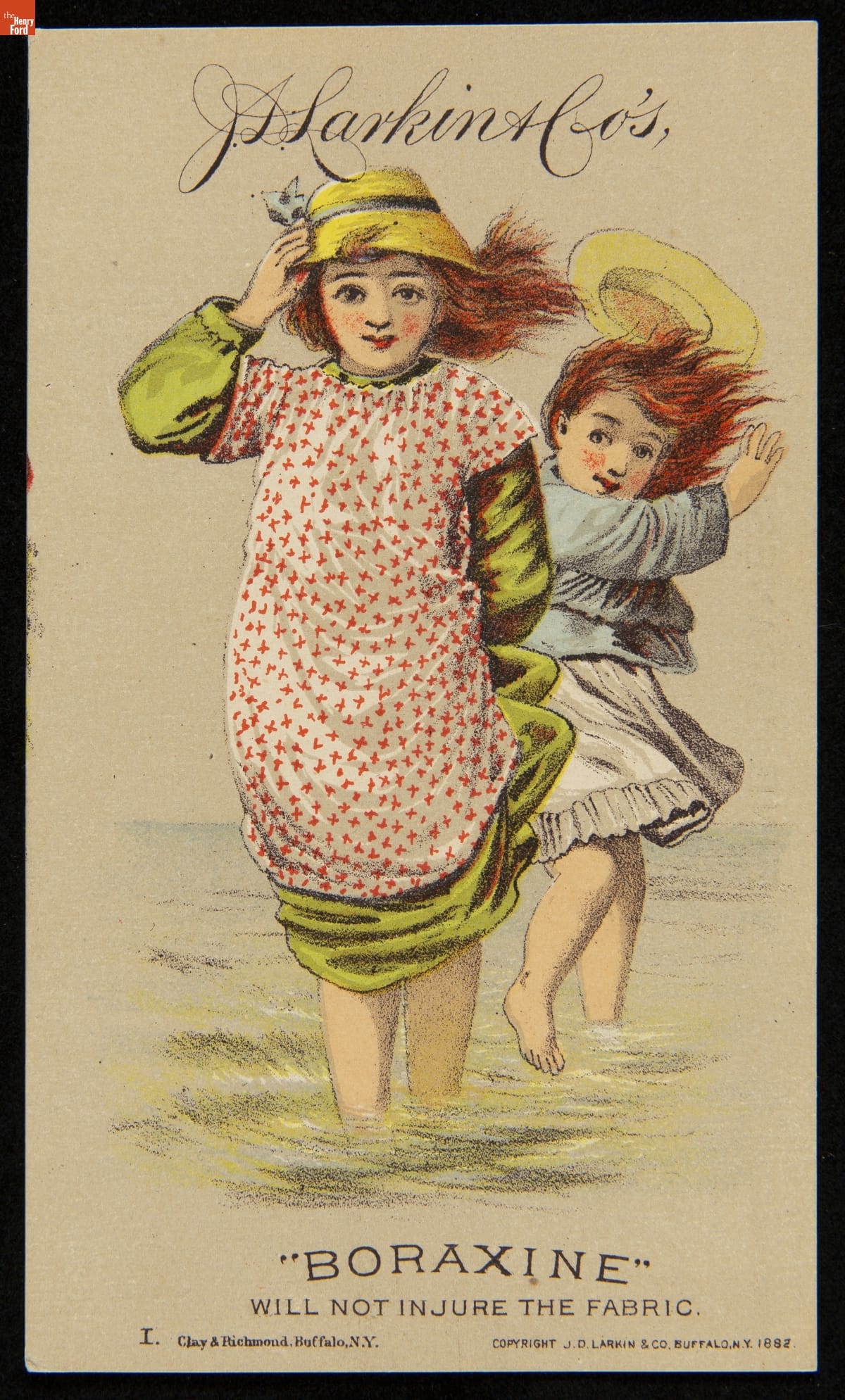
- Trade Card for "Boraxine" Soap, J.D. Larkin & Co., 1882 - As color printing gained momentum in the late 19th century, advertisers bombarded potential customers with trade cards. Americans enjoyed and often saved the little advertisements found in product packages or distributed by local merchants. J.D. Larkin & Co.'s trade cards were known for promoting premium gifts with the purchase of a product. This card offers a silk handkerchief with the purchase of "Elite" toilet soap.
- 1882
- Collections - Artifact
Trade Card for "Boraxine" Soap, J.D. Larkin & Co., 1882
As color printing gained momentum in the late 19th century, advertisers bombarded potential customers with trade cards. Americans enjoyed and often saved the little advertisements found in product packages or distributed by local merchants. J.D. Larkin & Co.'s trade cards were known for promoting premium gifts with the purchase of a product. This card offers a silk handkerchief with the purchase of "Elite" toilet soap.
- Trade Card for "Boraxine" Soap, J.D. Larkin & Co., 1882 - As color printing gained momentum in the late 19th century, advertisers bombarded potential customers with trade cards. Americans enjoyed and often saved the little advertisements found in product packages or distributed by local merchants. J.D. Larkin & Co. began as a soap manufacturer before producing a wide variety of products as the Larkin Company. This trade card features J.D. Larkin's popular soap product, Boraxine.
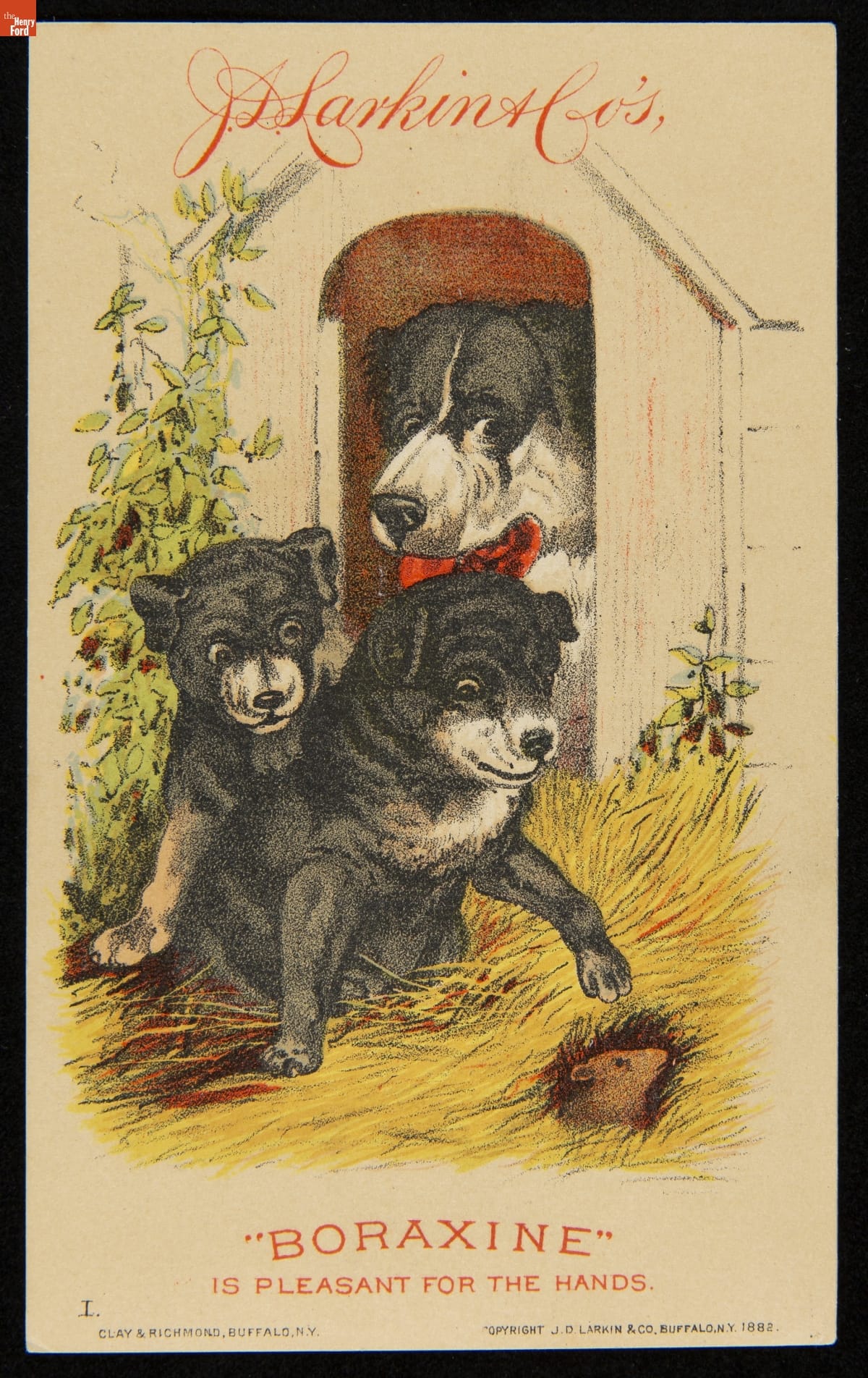
- 1882
- Collections - Artifact
Trade Card for "Boraxine" Soap, J.D. Larkin & Co., 1882
As color printing gained momentum in the late 19th century, advertisers bombarded potential customers with trade cards. Americans enjoyed and often saved the little advertisements found in product packages or distributed by local merchants. J.D. Larkin & Co. began as a soap manufacturer before producing a wide variety of products as the Larkin Company. This trade card features J.D. Larkin's popular soap product, Boraxine.
- Trade Card for "Boraxine" Soap, J.D. Larkin & Co., 1882 - As color printing gained momentum in the late 19th century, advertisers bombarded potential customers with trade cards. Americans enjoyed and often saved the little advertisements found in product packages or distributed by local merchants. J.D. Larkin & Co. began as a soap manufacturer before producing a wide variety of products as the Larkin Company. This trade card features J.D. Larkin's popular soap product, Boraxine.
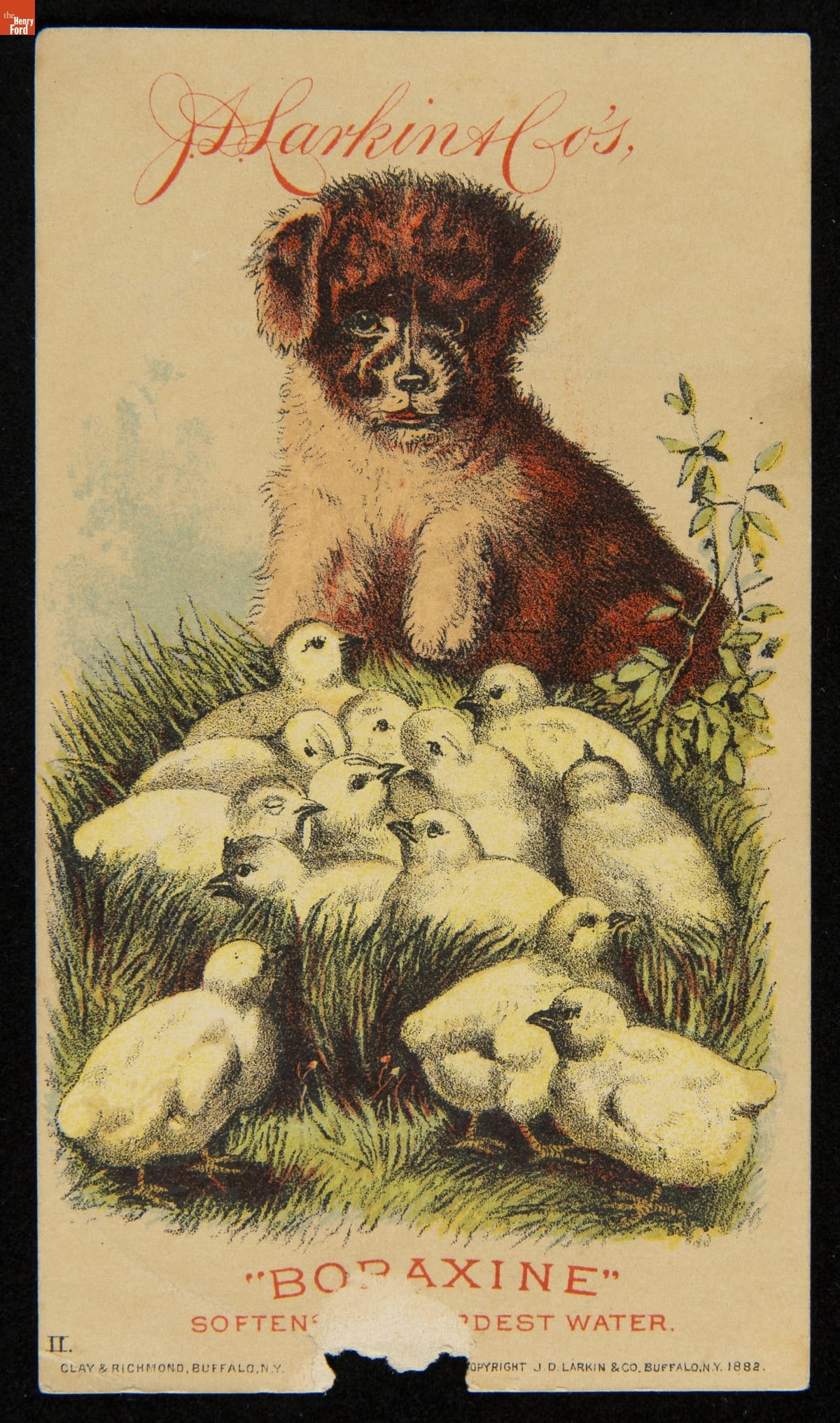
- 1882
- Collections - Artifact
Trade Card for "Boraxine" Soap, J.D. Larkin & Co., 1882
As color printing gained momentum in the late 19th century, advertisers bombarded potential customers with trade cards. Americans enjoyed and often saved the little advertisements found in product packages or distributed by local merchants. J.D. Larkin & Co. began as a soap manufacturer before producing a wide variety of products as the Larkin Company. This trade card features J.D. Larkin's popular soap product, Boraxine.
- Hiram Sibley & Co. "Citron Melon for Preserves" Seed Packet, Used in the C.W. Barnes Store, 1882-1888 - Distributing seeds required sealing them into little packets or "papers" constructed like envelopes. Seed companies advertised their businesses on these packets, illustrated the vegetable with hand-colored images, and specified growing directions, sometimes in multiple languages. Hiram Sibley and Co. packaged collections of vegetable seeds in specially designed boxes and shipped them to general stores for sale to home gardeners.
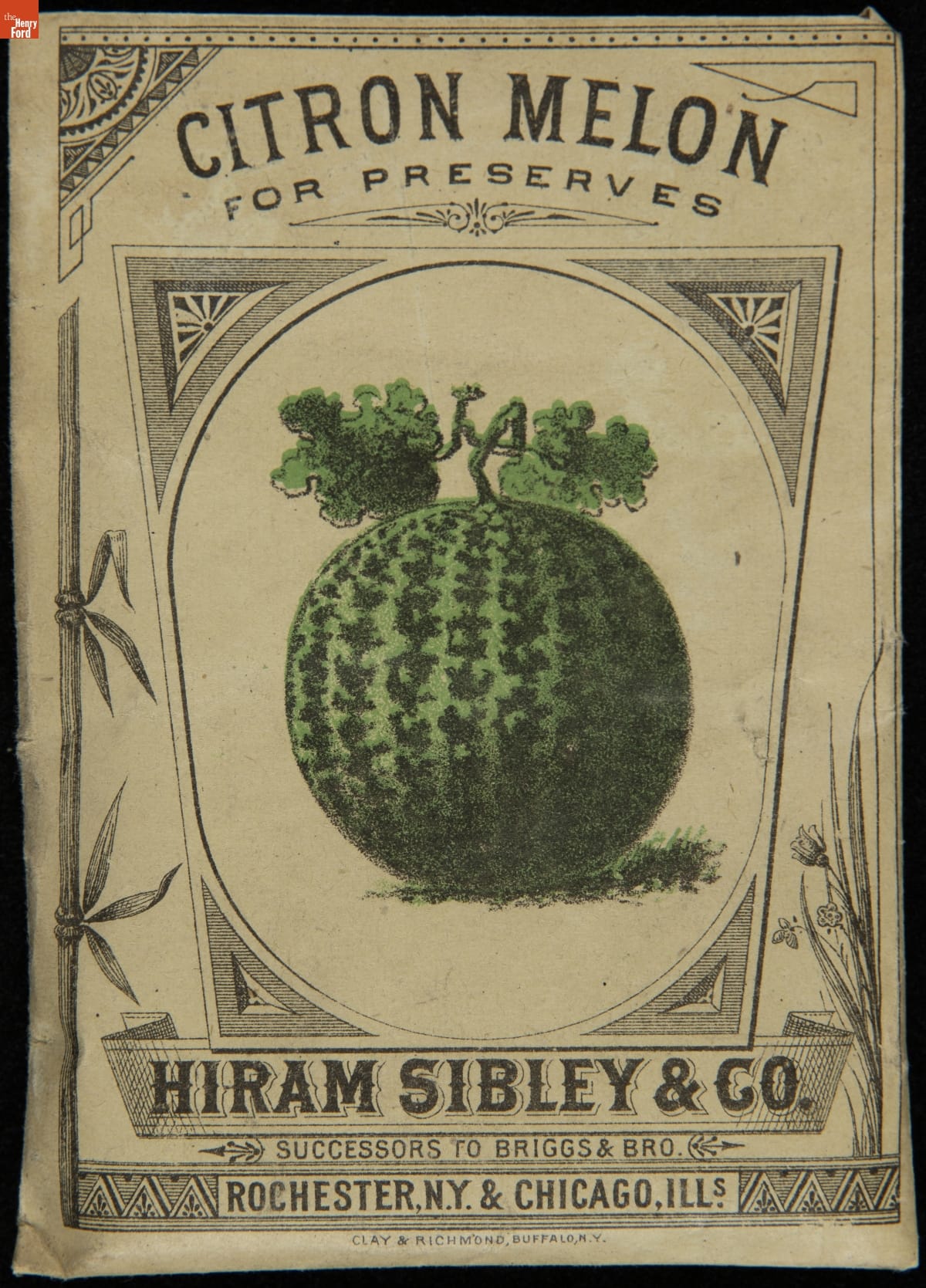
- 1882-1888
- Collections - Artifact
Hiram Sibley & Co. "Citron Melon for Preserves" Seed Packet, Used in the C.W. Barnes Store, 1882-1888
Distributing seeds required sealing them into little packets or "papers" constructed like envelopes. Seed companies advertised their businesses on these packets, illustrated the vegetable with hand-colored images, and specified growing directions, sometimes in multiple languages. Hiram Sibley and Co. packaged collections of vegetable seeds in specially designed boxes and shipped them to general stores for sale to home gardeners.
- Trade Card for "Elite" Toilet Soap, J.D. Larkin & Co., 1882 - As color printing gained momentum in the late 19th century, advertisers bombarded potential customers with trade cards. Americans enjoyed and often saved the little advertisements found in product packages or distributed by local merchants. J.D. Larkin & Co.'s trade cards were known for promoting premium gifts with the purchase of a product. This card offers a silk handkerchief with the purchase of "Elite" toilet soap.

- 1882
- Collections - Artifact
Trade Card for "Elite" Toilet Soap, J.D. Larkin & Co., 1882
As color printing gained momentum in the late 19th century, advertisers bombarded potential customers with trade cards. Americans enjoyed and often saved the little advertisements found in product packages or distributed by local merchants. J.D. Larkin & Co.'s trade cards were known for promoting premium gifts with the purchase of a product. This card offers a silk handkerchief with the purchase of "Elite" toilet soap.
- Trade Card for Bay State Fertilizer, The Clark's Cove Guano Company, 1885 - In the last third of the nineteenth century, an unprecedented variety of consumer goods and services flooded the American market. Advertisers, armed with new methods of color printing, bombarded potential customers with trade cards. Americans enjoyed and often saved the vibrant little advertisements found in product packages or distributed by local merchants. Many survive as historical records of commercialism in the United States.
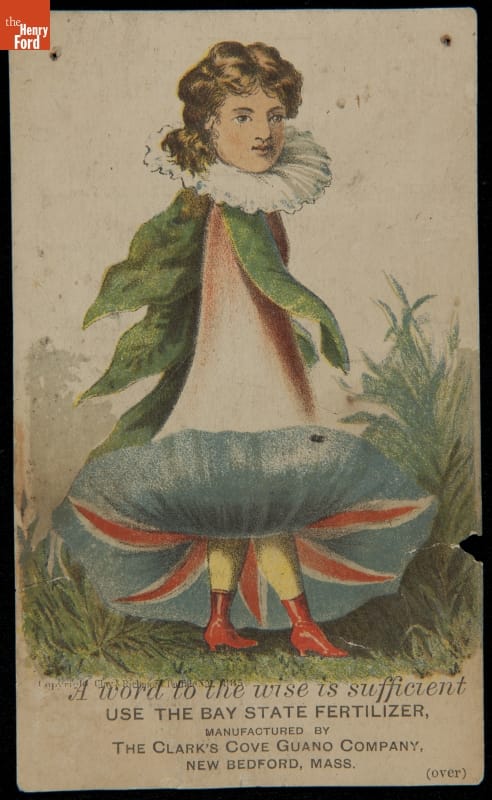
- 1885
- Collections - Artifact
Trade Card for Bay State Fertilizer, The Clark's Cove Guano Company, 1885
In the last third of the nineteenth century, an unprecedented variety of consumer goods and services flooded the American market. Advertisers, armed with new methods of color printing, bombarded potential customers with trade cards. Americans enjoyed and often saved the vibrant little advertisements found in product packages or distributed by local merchants. Many survive as historical records of commercialism in the United States.
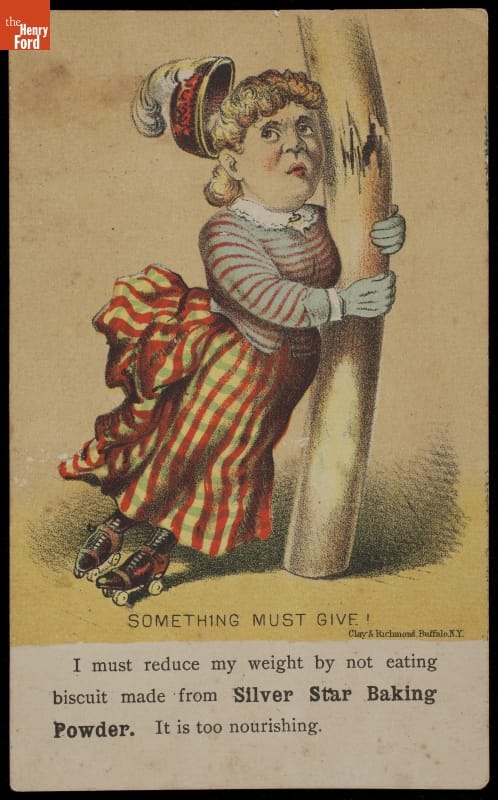
- Trade Card for Silver Star Baking Powder, 1880-1885 - In the last third of the nineteenth century, an unprecedented variety of consumer goods and services flooded the American market. Advertisers, armed with new methods of color printing, bombarded potential customers with trade cards. Americans enjoyed and often saved the vibrant little advertisements found in product packages or distributed by local merchants. Many survive as historical records of commercialism in the United States.
- 1880-1885
- Collections - Artifact
Trade Card for Silver Star Baking Powder, 1880-1885
In the last third of the nineteenth century, an unprecedented variety of consumer goods and services flooded the American market. Advertisers, armed with new methods of color printing, bombarded potential customers with trade cards. Americans enjoyed and often saved the vibrant little advertisements found in product packages or distributed by local merchants. Many survive as historical records of commercialism in the United States.