
Search
- Jar, circa 1830 -
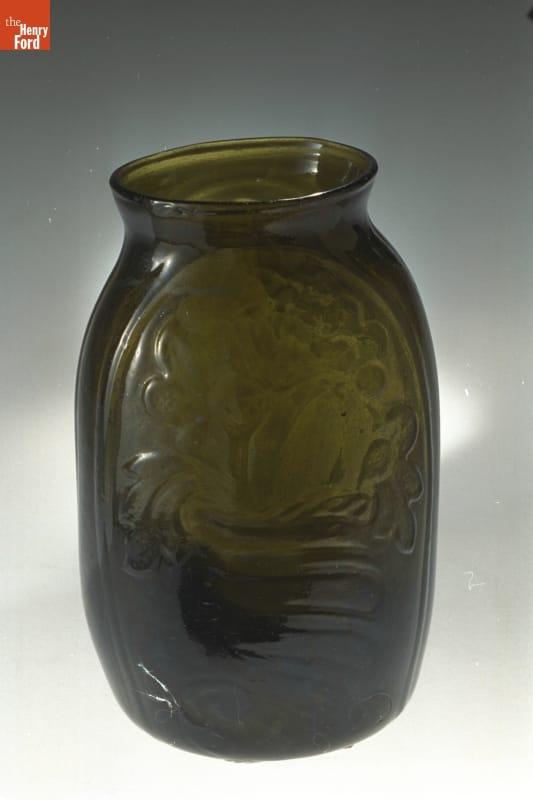
- circa 1830
- Collections - Artifact
Jar, circa 1830
- Wine Bottle, 1800-1825 -
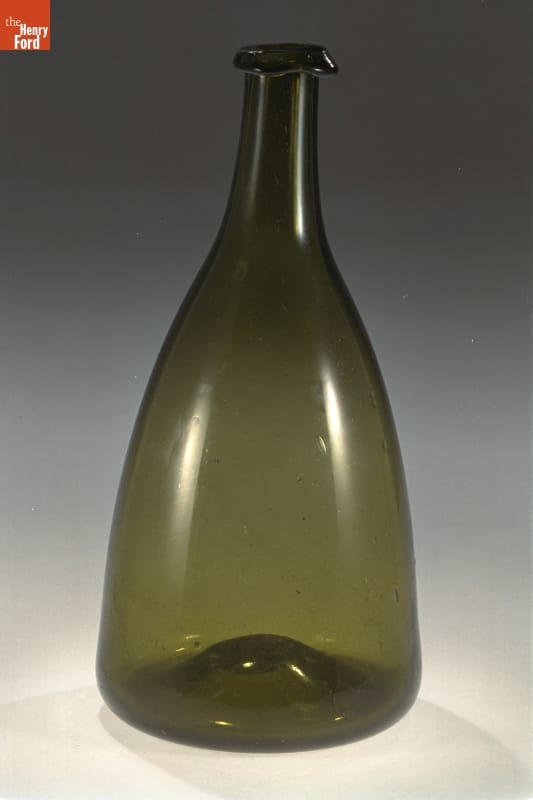
- 1800-1825
- Collections - Artifact
Wine Bottle, 1800-1825
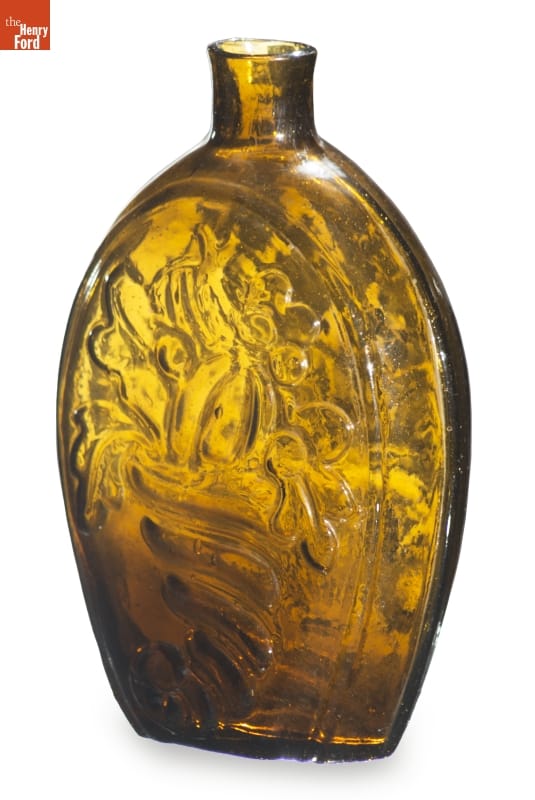
- Flask, 1820-1848 - Glass factories in America began producing inexpensive, mold-formed flasks in the early 1800s. These figured flasks, often decorated with symbols of national pride or political or cultural affiliation, appealed to America's common man. The overflowing cornucopia and urn found on either side of this flask alludes to America's agricultural bounty.
- 1820-1848
- Collections - Artifact
Flask, 1820-1848
Glass factories in America began producing inexpensive, mold-formed flasks in the early 1800s. These figured flasks, often decorated with symbols of national pride or political or cultural affiliation, appealed to America's common man. The overflowing cornucopia and urn found on either side of this flask alludes to America's agricultural bounty.
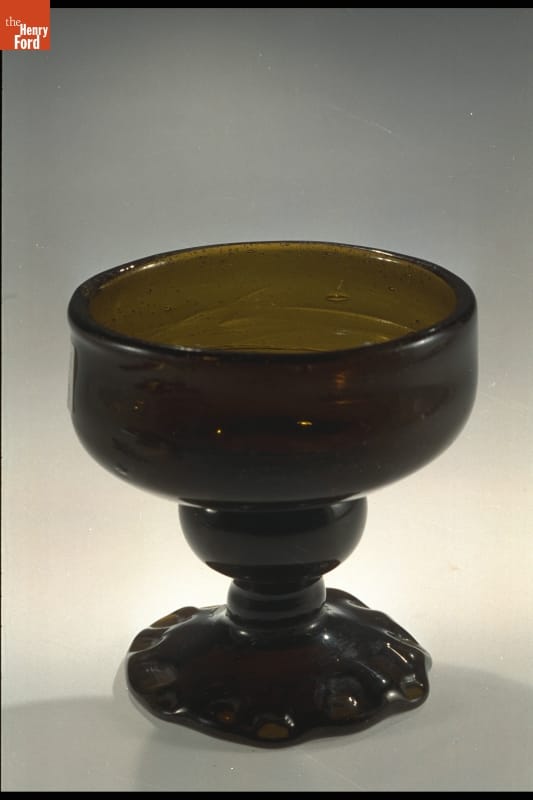
- Footed Salt, 1813-1848 - Prior to the early 20th century, Americans would have put several small, open dishes filled with salt on their dining tables. These "salts" placed the necessary seasoning within easy reach of family and guests. In the early 1800s, pattern-molded or hand-blown "salts" became affordable to the general public from a growing number of regional American glass factories.
- 1813-1848
- Collections - Artifact
Footed Salt, 1813-1848
Prior to the early 20th century, Americans would have put several small, open dishes filled with salt on their dining tables. These "salts" placed the necessary seasoning within easy reach of family and guests. In the early 1800s, pattern-molded or hand-blown "salts" became affordable to the general public from a growing number of regional American glass factories.
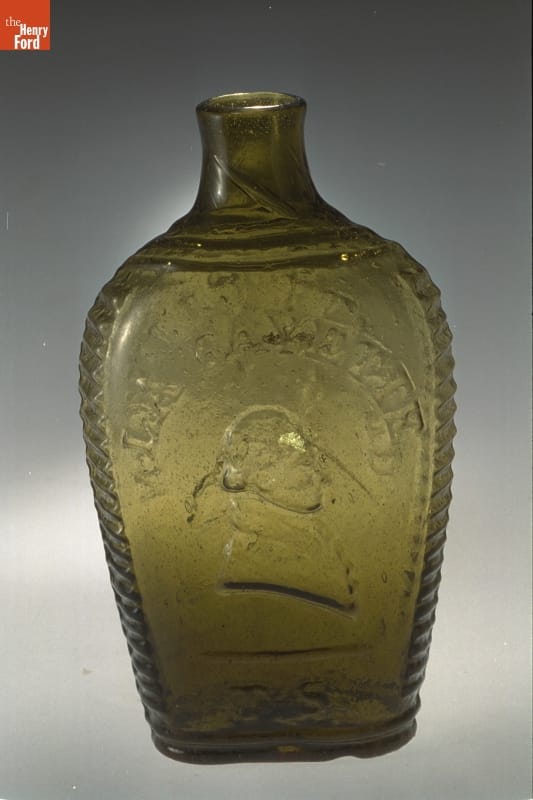
- Flask, 1824-1825 - Glass factories in America began producing inexpensive, mold-formed flasks in the early 1800s. These figured flasks, often decorated with symbols of national pride, appealed to America's common man. This early 1820s flask contains images of two historic figures: General Lafayette, a French aristocrat who helped America win its independence; and DeWitt Clinton, the New York governor who supported construction of the Erie Canal.
- 1824-1825
- Collections - Artifact
Flask, 1824-1825
Glass factories in America began producing inexpensive, mold-formed flasks in the early 1800s. These figured flasks, often decorated with symbols of national pride, appealed to America's common man. This early 1820s flask contains images of two historic figures: General Lafayette, a French aristocrat who helped America win its independence; and DeWitt Clinton, the New York governor who supported construction of the Erie Canal.
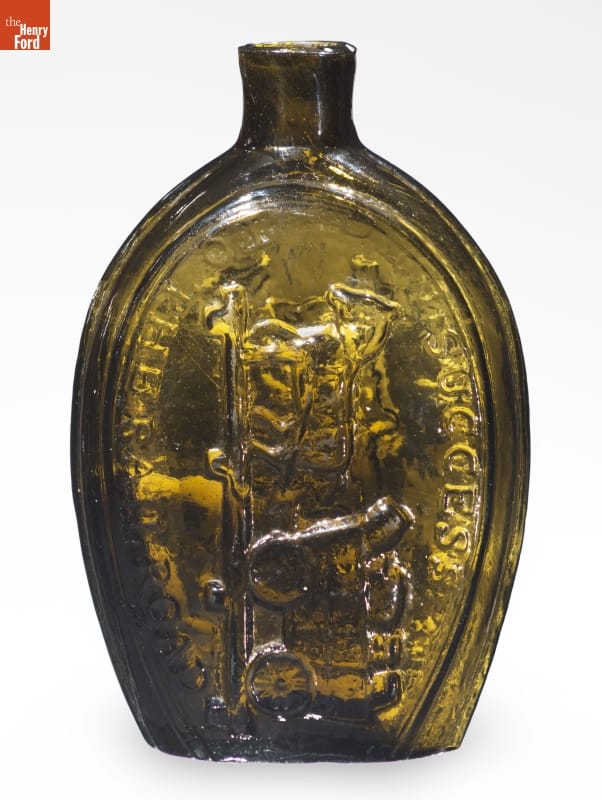
- Flask, 1830-1848 - Glass factories in America began producing inexpensive, mold-formed flasks in the early 1800s. These figured flasks, often decorated with symbols of national pride or political or cultural affiliation, appealed to America's common man. Americans' fascination with railroads began in the late 1820s when rail lines began connecting distant communities. Early flasks depicted horses, an alternative to steam engines, hauling freight down railway tracks.
- 1830-1848
- Collections - Artifact
Flask, 1830-1848
Glass factories in America began producing inexpensive, mold-formed flasks in the early 1800s. These figured flasks, often decorated with symbols of national pride or political or cultural affiliation, appealed to America's common man. Americans' fascination with railroads began in the late 1820s when rail lines began connecting distant communities. Early flasks depicted horses, an alternative to steam engines, hauling freight down railway tracks.
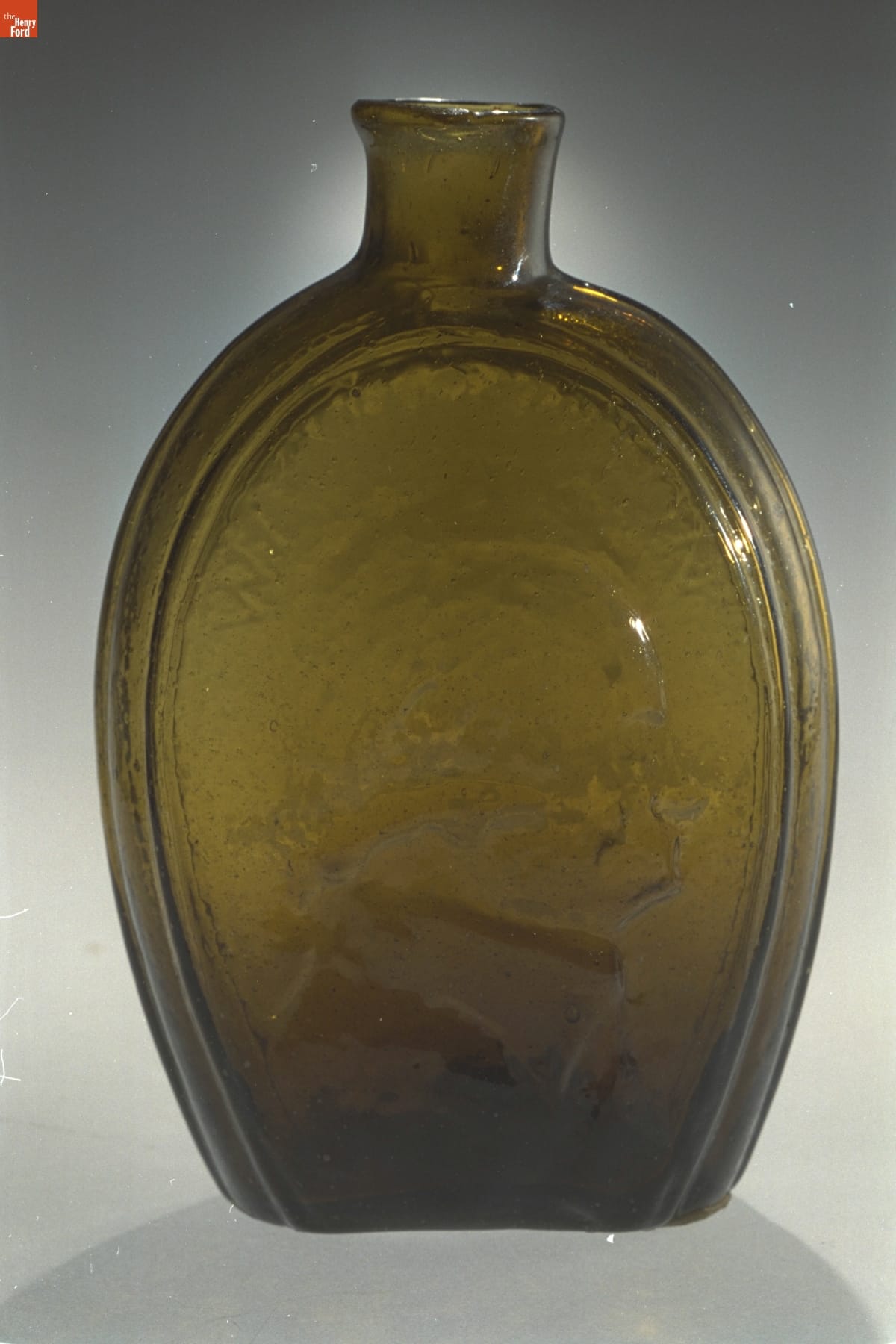
- Flask, 1828-1840 - Whether depicted as commander-in-chief of the Continental Army or the first president of the United States, George Washington is a common likeness on early American flasks. Washington appears on 72 recorded flask designs--more than any other person. This example depicts Washington and later president Andrew Jackson in military uniform.
- 1828-1840
- Collections - Artifact
Flask, 1828-1840
Whether depicted as commander-in-chief of the Continental Army or the first president of the United States, George Washington is a common likeness on early American flasks. Washington appears on 72 recorded flask designs--more than any other person. This example depicts Washington and later president Andrew Jackson in military uniform.
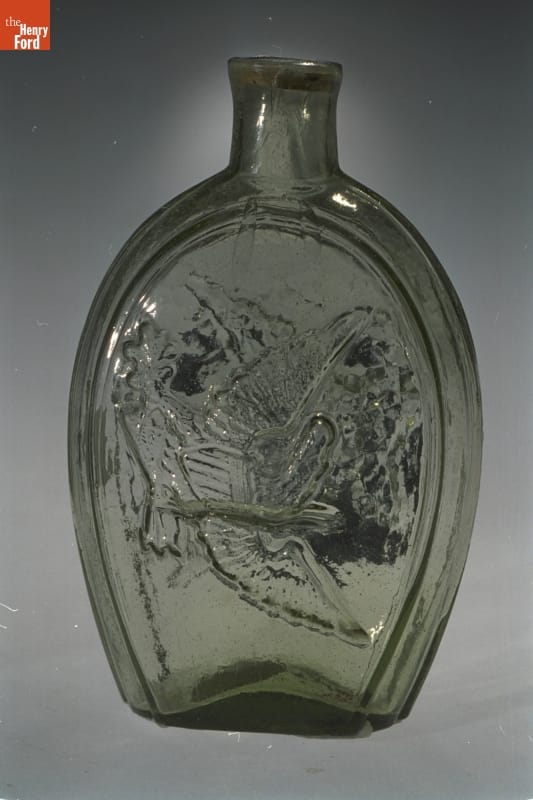
- Flask, 1815-1848 - Glass factories in America began producing inexpensive, mold-formed flasks in the early 1800s. These figured flasks, often decorated with symbols of national pride or political or cultural affiliation, appealed to America's common man. Many flasks, like this one, contain images of an eagle -- a traditional symbol for America.
- 1815-1848
- Collections - Artifact
Flask, 1815-1848
Glass factories in America began producing inexpensive, mold-formed flasks in the early 1800s. These figured flasks, often decorated with symbols of national pride or political or cultural affiliation, appealed to America's common man. Many flasks, like this one, contain images of an eagle -- a traditional symbol for America.
- Flask, 1830-1848 - Glass factories in America began producing inexpensive, mold-formed flasks in the early 1800s. These figured flasks, often decorated with symbols of national pride or political or cultural affiliation, appealed to America's common man. Americans' fascination with railroads began in the late 1820s when rail lines began connecting distant communities. Early flasks depicted horses, an alternative to steam engines, hauling freight down railway tracks.
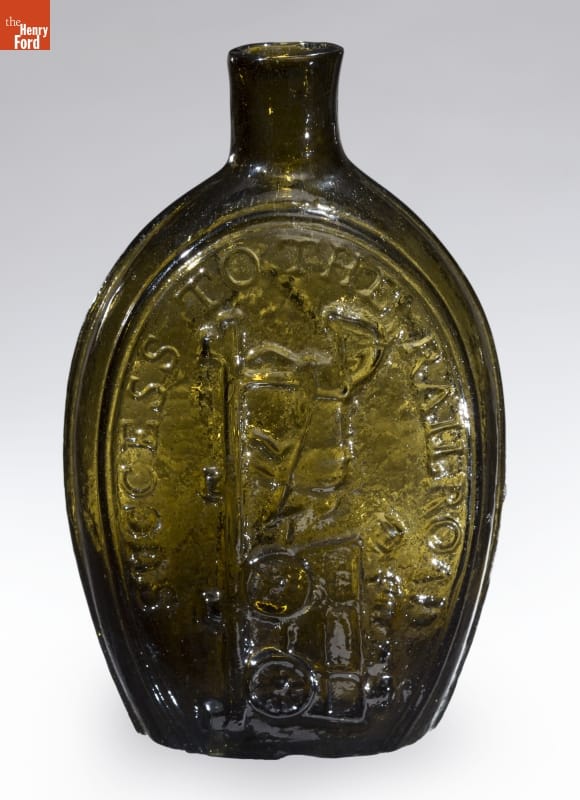
- 1830-1848
- Collections - Artifact
Flask, 1830-1848
Glass factories in America began producing inexpensive, mold-formed flasks in the early 1800s. These figured flasks, often decorated with symbols of national pride or political or cultural affiliation, appealed to America's common man. Americans' fascination with railroads began in the late 1820s when rail lines began connecting distant communities. Early flasks depicted horses, an alternative to steam engines, hauling freight down railway tracks.
- Flask, 1824-1825 - Glass factories in America began producing inexpensive, mold-formed flasks in the early 1800s. These figured flasks, often decorated with symbols of national pride or political or cultural affiliation, appealed to America's common man. In the mid-1820s, General Lafayette, a French aristocrat who helped America win its independence, revisited the United States. His image adorned flasks commemorating his tour.
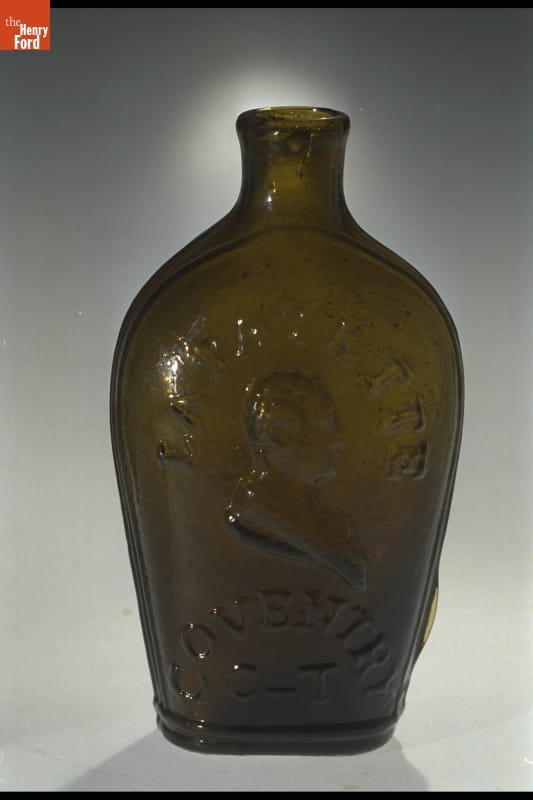
- 1824-1825
- Collections - Artifact
Flask, 1824-1825
Glass factories in America began producing inexpensive, mold-formed flasks in the early 1800s. These figured flasks, often decorated with symbols of national pride or political or cultural affiliation, appealed to America's common man. In the mid-1820s, General Lafayette, a French aristocrat who helped America win its independence, revisited the United States. His image adorned flasks commemorating his tour.