
Search
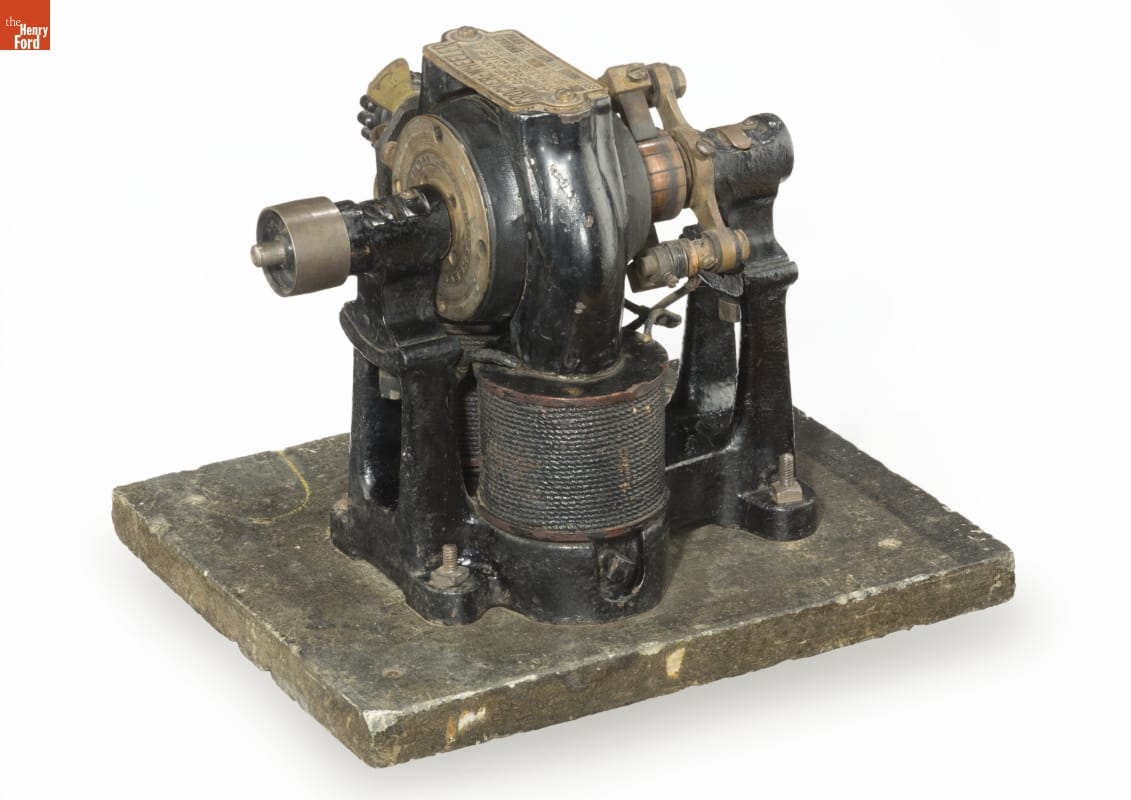
- Crocker-Wheeler Type T Motor, circa 1900 - Francis Crocker teamed up with Schuyler Wheeler to form Crocker-Wheeler Electric Motor Company in 1888-89. Their company manufactured motors for use in factories, small shops, offices and homes. Their motors powered lathes, presses, and drills and ran elevators, fans, and sewing machines. The two men were well-respected engineers, both serving as president of the American Institute of Electrical Engineers.
- circa 1900
- Collections - Artifact
Crocker-Wheeler Type T Motor, circa 1900
Francis Crocker teamed up with Schuyler Wheeler to form Crocker-Wheeler Electric Motor Company in 1888-89. Their company manufactured motors for use in factories, small shops, offices and homes. Their motors powered lathes, presses, and drills and ran elevators, fans, and sewing machines. The two men were well-respected engineers, both serving as president of the American Institute of Electrical Engineers.
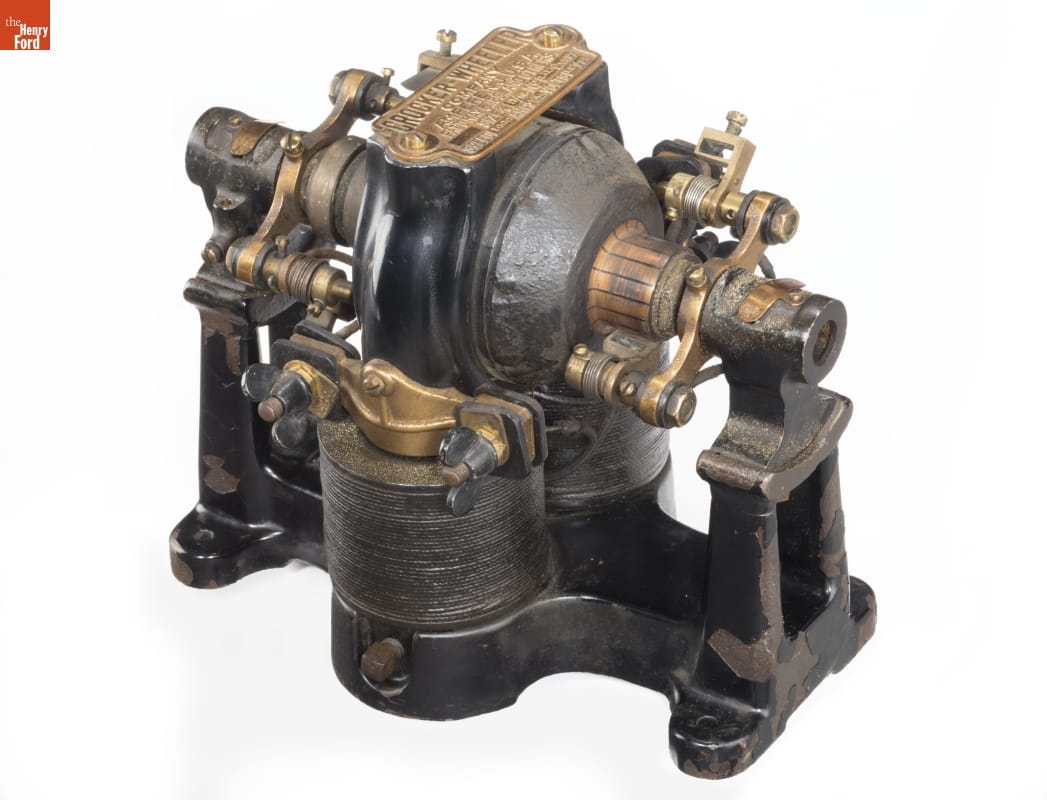
- Crocker-Wheeler Motor, circa 1900 - Francis Crocker teamed up with Schuyler Wheeler to form Crocker-Wheeler Electric Motor Company in 1888-89. Their company manufactured motors for use in factories, small shops, offices and homes. Their motors powered lathes, presses, and drills and ran elevators, fans, and sewing machines. The two men were well-respected engineers, both serving as president of the American Institute of Electrical Engineers.
- circa 1900
- Collections - Artifact
Crocker-Wheeler Motor, circa 1900
Francis Crocker teamed up with Schuyler Wheeler to form Crocker-Wheeler Electric Motor Company in 1888-89. Their company manufactured motors for use in factories, small shops, offices and homes. Their motors powered lathes, presses, and drills and ran elevators, fans, and sewing machines. The two men were well-respected engineers, both serving as president of the American Institute of Electrical Engineers.
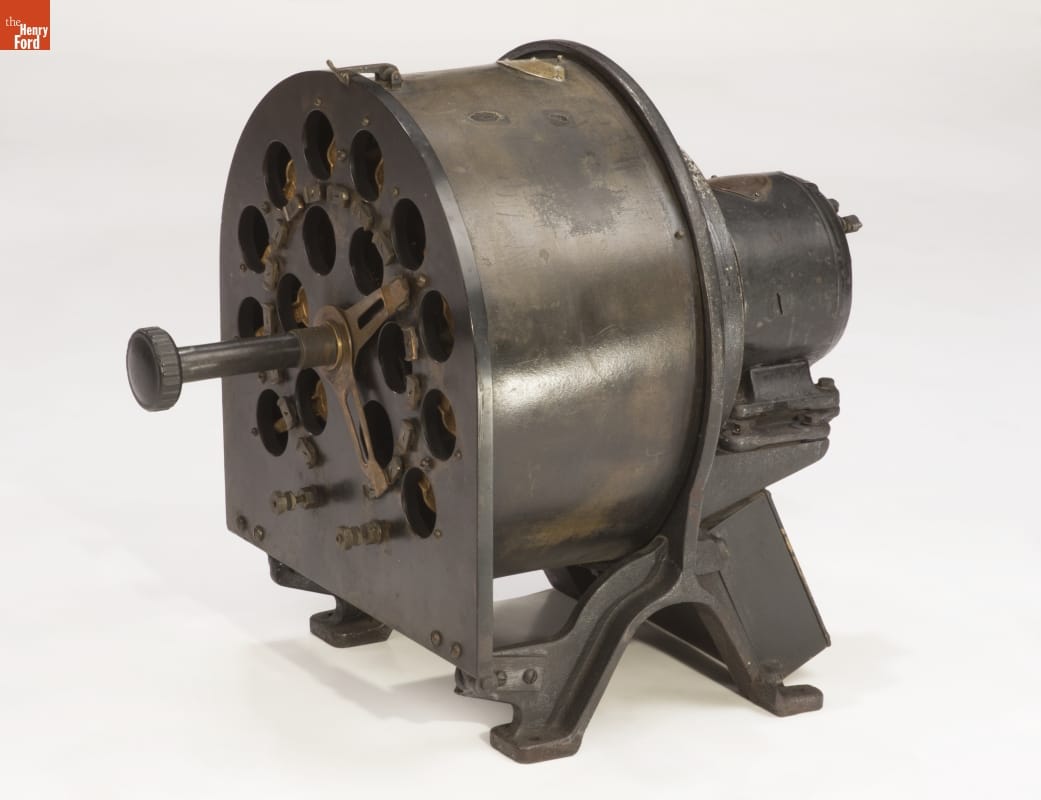
- Lowenstein Quenched Spark Gap Transmitter, Type A-16G, Used aboard the USS Rowan, circa 1916 - Spark gap transmitters were the first means of practical radio transmission for the first thirty years of radio development. By the end of WWI, vacuum tube technology advanced sufficiently, replacing the spark gap. Even though the vacuum tube ensured more efficient and reliable transmissions, commercial use of spark gap transmitters continued up until WWII as back-up transmitters.
- circa 1916
- Collections - Artifact
Lowenstein Quenched Spark Gap Transmitter, Type A-16G, Used aboard the USS Rowan, circa 1916
Spark gap transmitters were the first means of practical radio transmission for the first thirty years of radio development. By the end of WWI, vacuum tube technology advanced sufficiently, replacing the spark gap. Even though the vacuum tube ensured more efficient and reliable transmissions, commercial use of spark gap transmitters continued up until WWII as back-up transmitters.
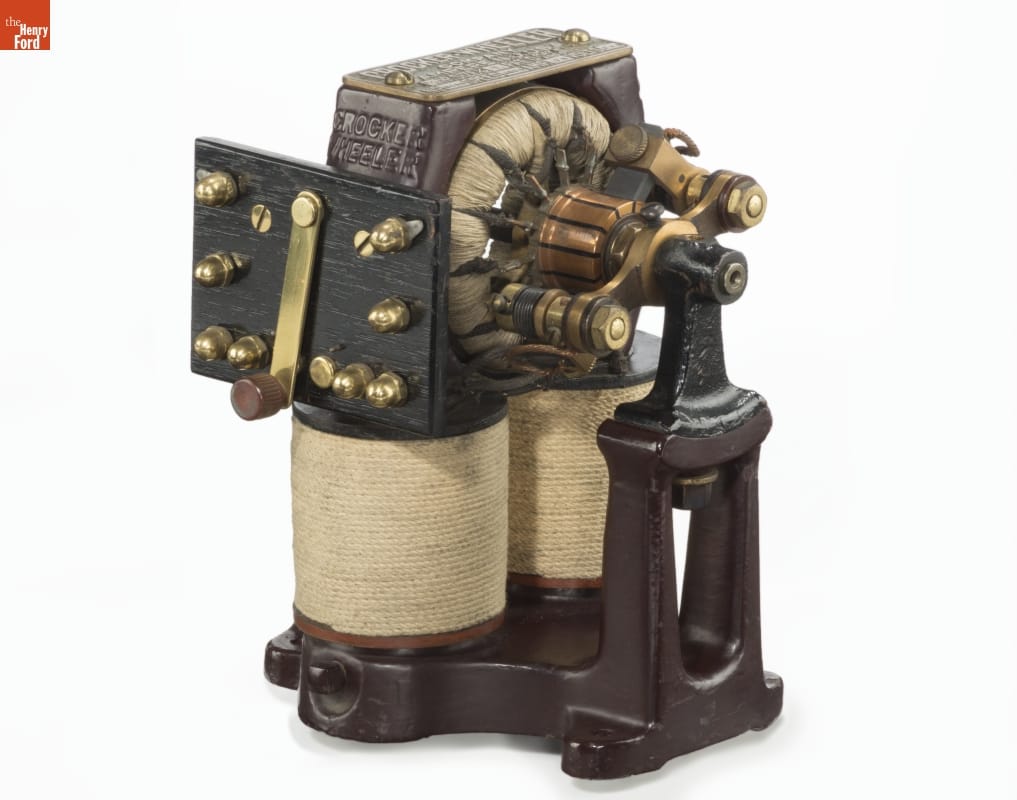
- Crocker-Wheeler Motor, circa 1900 - Francis Crocker teamed up with Schuyler Wheeler to form Crocker-Wheeler Electric Motor Company in 1888-89. Their company manufactured motors for use in factories, small shops, offices and homes. Their motors powered lathes, presses, and drills and ran elevators, fans, and sewing machines. The two men were well-respected engineers, both serving as president of the American Institute of Electrical Engineers.
- circa 1900
- Collections - Artifact
Crocker-Wheeler Motor, circa 1900
Francis Crocker teamed up with Schuyler Wheeler to form Crocker-Wheeler Electric Motor Company in 1888-89. Their company manufactured motors for use in factories, small shops, offices and homes. Their motors powered lathes, presses, and drills and ran elevators, fans, and sewing machines. The two men were well-respected engineers, both serving as president of the American Institute of Electrical Engineers.
- Crocker-Wheeler Motor, circa 1900 - Francis Crocker teamed up with Schuyler Wheeler to form Crocker-Wheeler Electric Motor Company in 1888-89. Their company manufactured motors for use in factories, small shops, offices and homes. Their motors powered lathes, presses, and drills and ran elevators, fans, and sewing machines. The two men were well-respected engineers, both serving as president of the American Institute of Electrical Engineers.
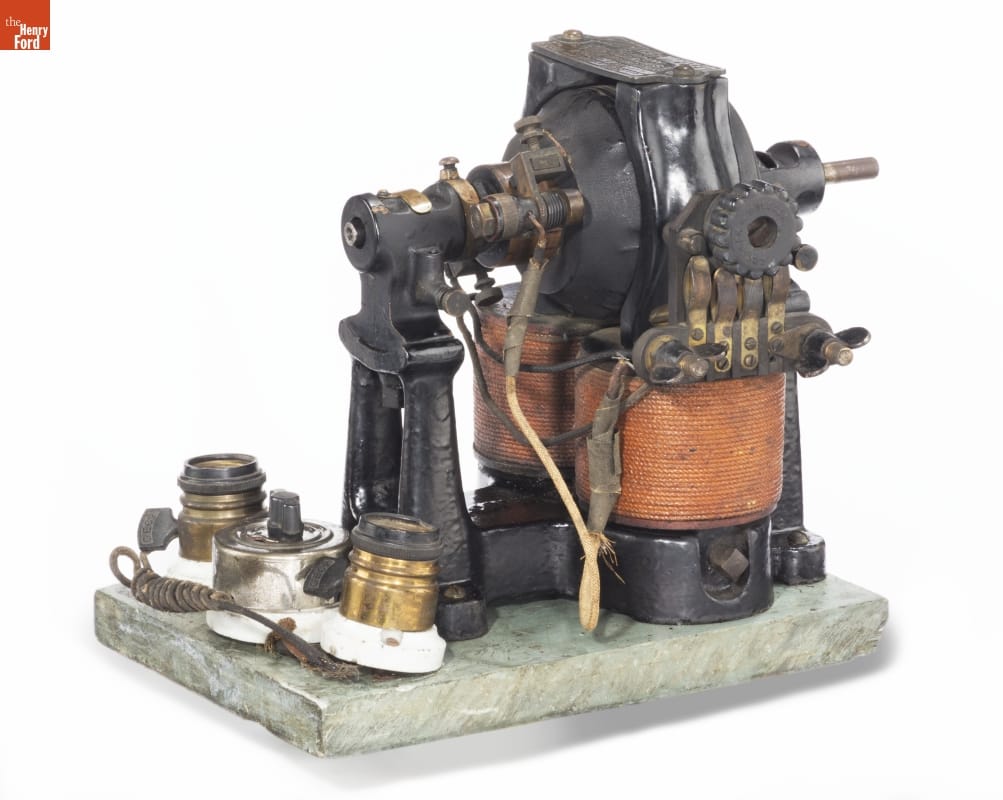
- circa 1900
- Collections - Artifact
Crocker-Wheeler Motor, circa 1900
Francis Crocker teamed up with Schuyler Wheeler to form Crocker-Wheeler Electric Motor Company in 1888-89. Their company manufactured motors for use in factories, small shops, offices and homes. Their motors powered lathes, presses, and drills and ran elevators, fans, and sewing machines. The two men were well-respected engineers, both serving as president of the American Institute of Electrical Engineers.
- Crocker-Wheeler Motor, circa 1900 - Francis Crocker teamed up with Schuyler Wheeler to form Crocker-Wheeler Electric Motor Company in 1888-89. Their company manufactured motors for use in factories, small shops, offices and homes. Their motors powered lathes, presses, and drills and ran elevators, fans, and sewing machines. The two men were well-respected engineers, both serving as president of the American Institute of Electrical Engineers.
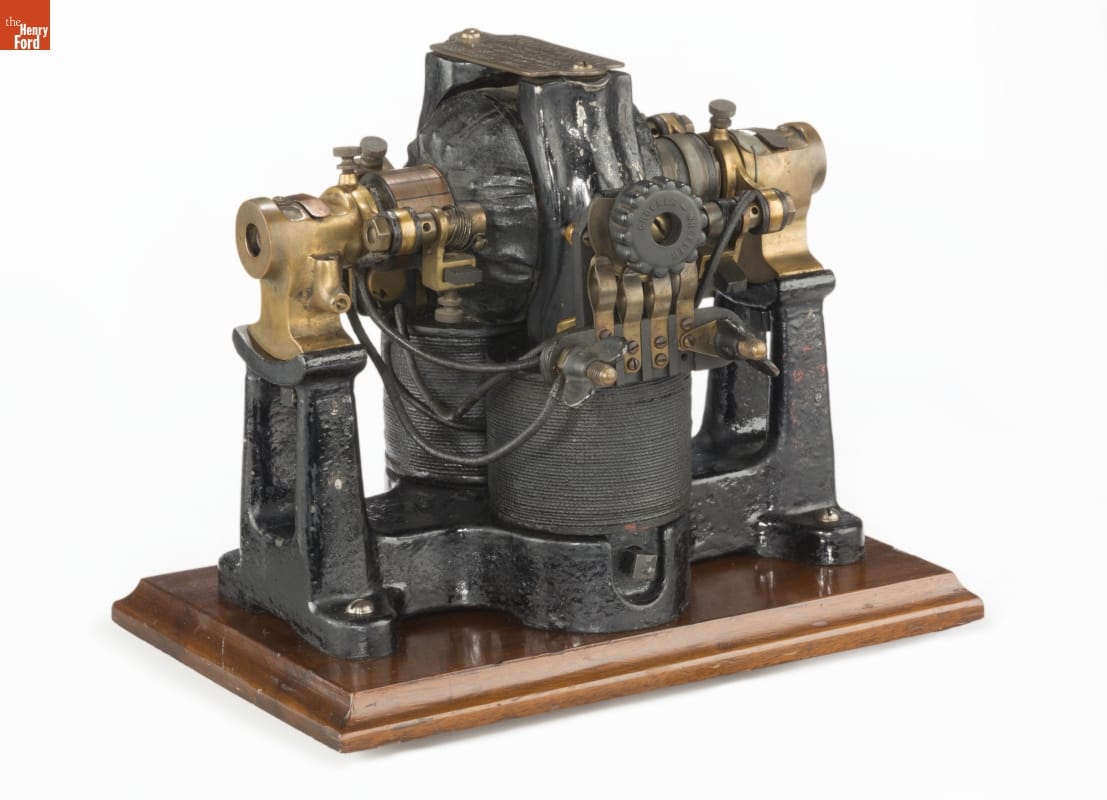
- circa 1900
- Collections - Artifact
Crocker-Wheeler Motor, circa 1900
Francis Crocker teamed up with Schuyler Wheeler to form Crocker-Wheeler Electric Motor Company in 1888-89. Their company manufactured motors for use in factories, small shops, offices and homes. Their motors powered lathes, presses, and drills and ran elevators, fans, and sewing machines. The two men were well-respected engineers, both serving as president of the American Institute of Electrical Engineers.
- Marconi Radio Motor Generator, 1917 - In the early days of radio, a motor generator was used to convert electrical power from one form to another. These devices were typically used to convert frequency, voltage, or phase of power. By doing do, they enhanced or modified radio signals, and extended the abilities of radio equipment.
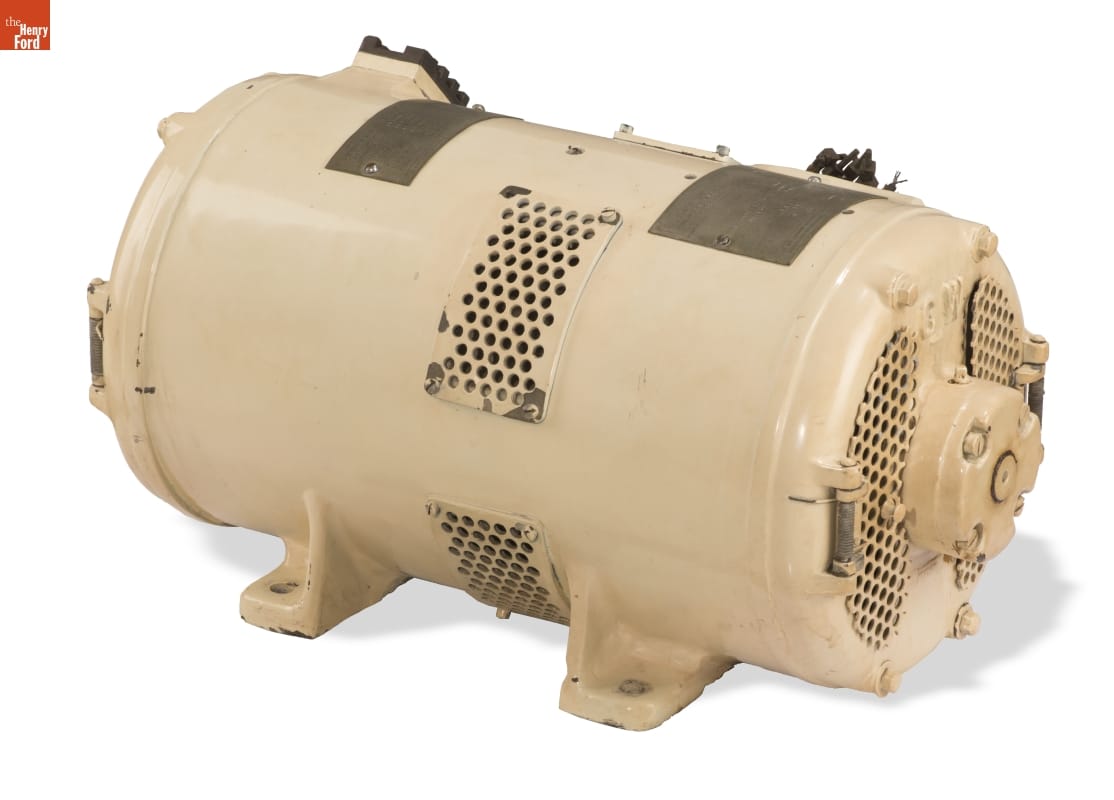
- November 27, 1917
- Collections - Artifact
Marconi Radio Motor Generator, 1917
In the early days of radio, a motor generator was used to convert electrical power from one form to another. These devices were typically used to convert frequency, voltage, or phase of power. By doing do, they enhanced or modified radio signals, and extended the abilities of radio equipment.
- Highland Park Plant Engine- Generator, 1915-1916 - Ford's Model T mass production system would not have been practical without electricity; by 1919 nine of these Ford-designed hybrid internal combustion/steam engines generated the power needed by the Highland Park plant's assembly lines and associated machinery. By 1926 the engines were rendered obsolete when electricity was fed from the power plant at Ford's River Rouge plant ten miles away.
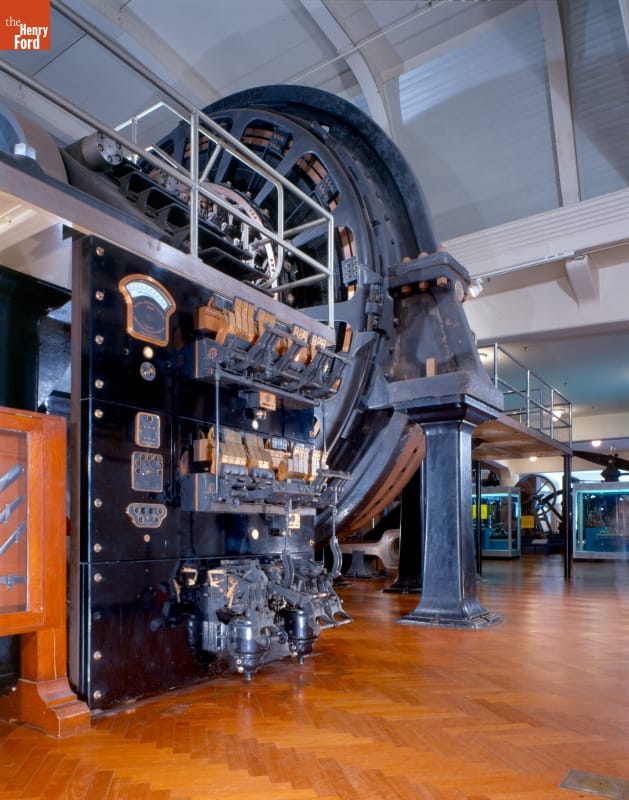
- 1915-1916
- Collections - Artifact
Highland Park Plant Engine- Generator, 1915-1916
Ford's Model T mass production system would not have been practical without electricity; by 1919 nine of these Ford-designed hybrid internal combustion/steam engines generated the power needed by the Highland Park plant's assembly lines and associated machinery. By 1926 the engines were rendered obsolete when electricity was fed from the power plant at Ford's River Rouge plant ten miles away.