
Search
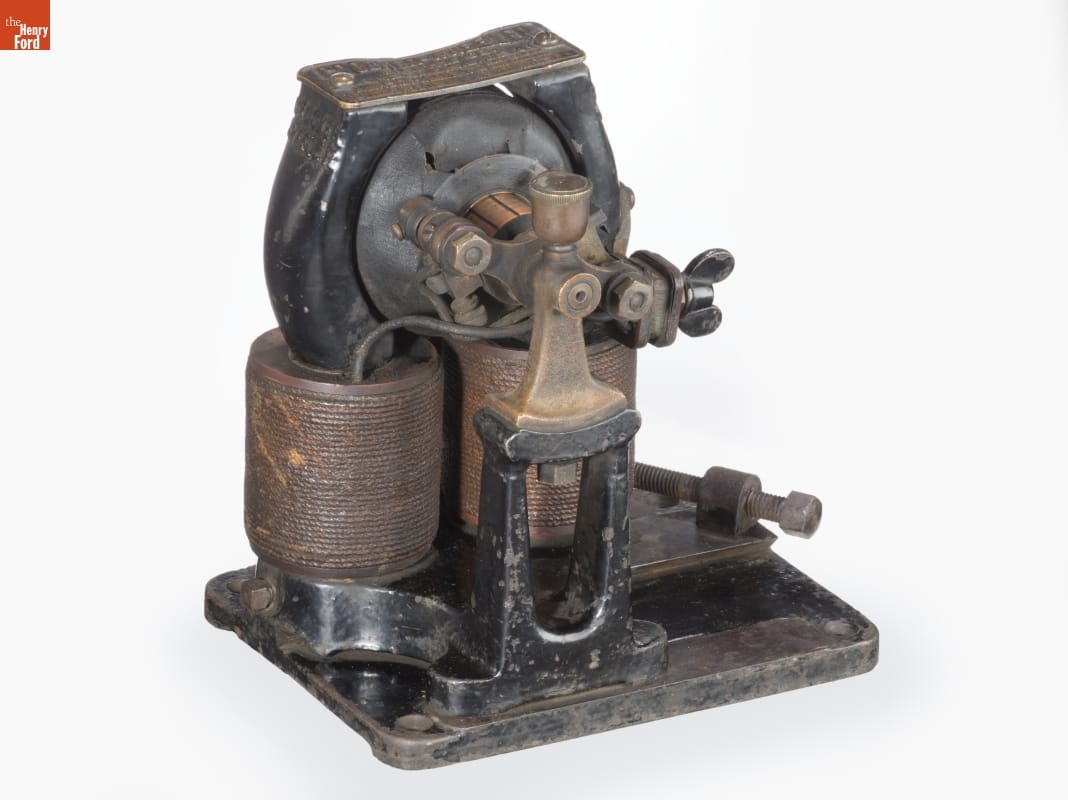
- Crocker-Wheeler Type S Motor, 1893-1900 - Francis Crocker teamed up with Schuyler Wheeler to form Crocker-Wheeler Electric Motor Company in 1888-89. Their company manufactured motors for use in factories, small shops, offices and homes. Their motors powered lathes, presses, and drills and ran elevators, fans, and sewing machines. The two men were well-respected engineers, both serving as president of the American Institute of Electrical Engineers.
- 1893-1900
- Collections - Artifact
Crocker-Wheeler Type S Motor, 1893-1900
Francis Crocker teamed up with Schuyler Wheeler to form Crocker-Wheeler Electric Motor Company in 1888-89. Their company manufactured motors for use in factories, small shops, offices and homes. Their motors powered lathes, presses, and drills and ran elevators, fans, and sewing machines. The two men were well-respected engineers, both serving as president of the American Institute of Electrical Engineers.
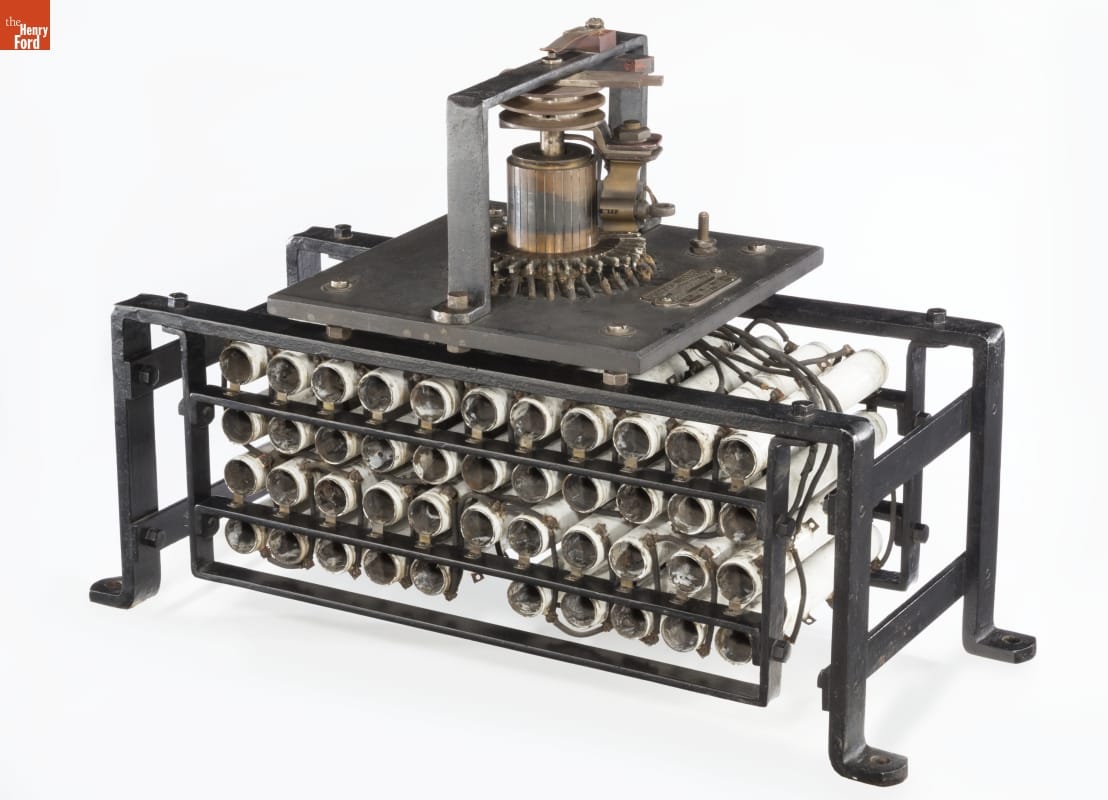
- Crocker-Wheeler Speed Regulator, Used by the First Unitarian Church of Baltimore, 1893-1900 -
- 1893-1900
- Collections - Artifact
Crocker-Wheeler Speed Regulator, Used by the First Unitarian Church of Baltimore, 1893-1900
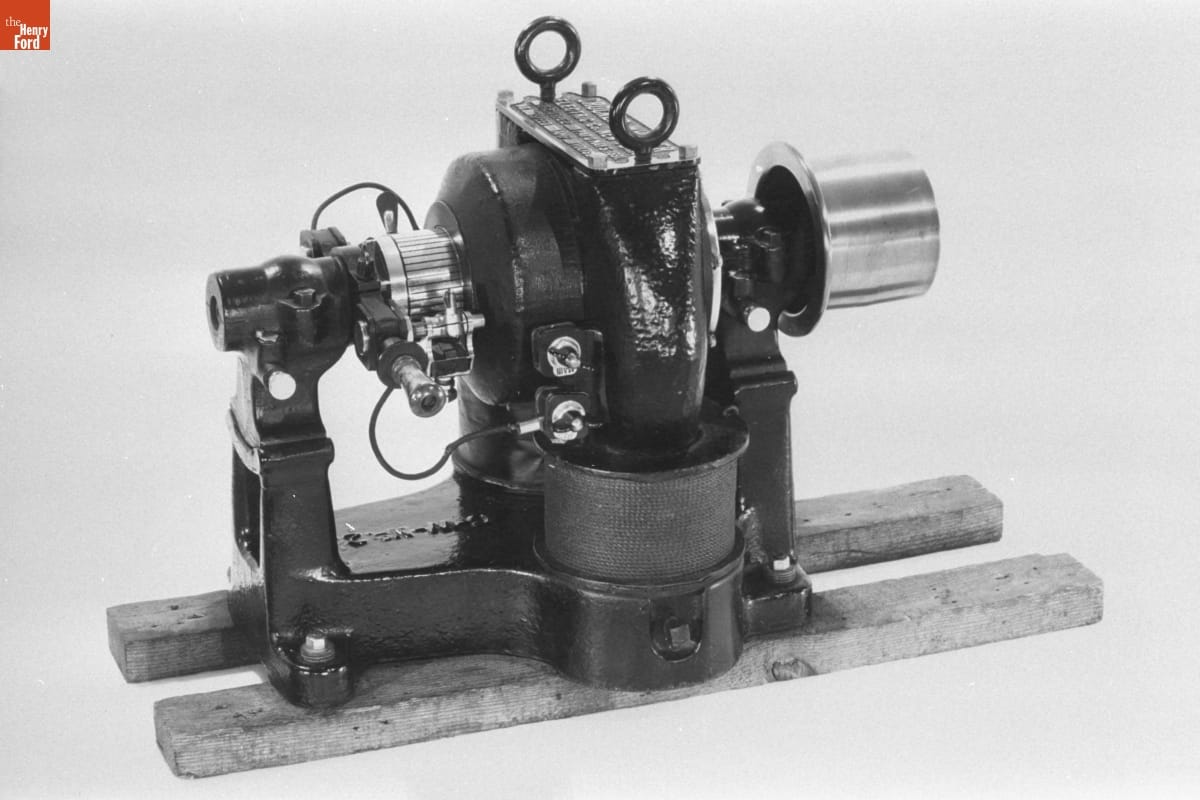
- Crocker-Wheeler Type 2S Electric Motor, Used by the First Unitarian Church of Baltimore, 1891-1893 - Francis Crocker teamed up with Schuyler Wheeler to form Crocker-Wheeler Electric Motor Company in 1888-89. Their company manufactured motors for use in factories, small shops, offices and homes. Their motors powered lathes, presses, and drills and ran elevators, fans, and sewing machines. The two men were well-respected engineers, both serving as president of the American Institute of Electrical Engineers.
- 1891-1893
- Collections - Artifact
Crocker-Wheeler Type 2S Electric Motor, Used by the First Unitarian Church of Baltimore, 1891-1893
Francis Crocker teamed up with Schuyler Wheeler to form Crocker-Wheeler Electric Motor Company in 1888-89. Their company manufactured motors for use in factories, small shops, offices and homes. Their motors powered lathes, presses, and drills and ran elevators, fans, and sewing machines. The two men were well-respected engineers, both serving as president of the American Institute of Electrical Engineers.
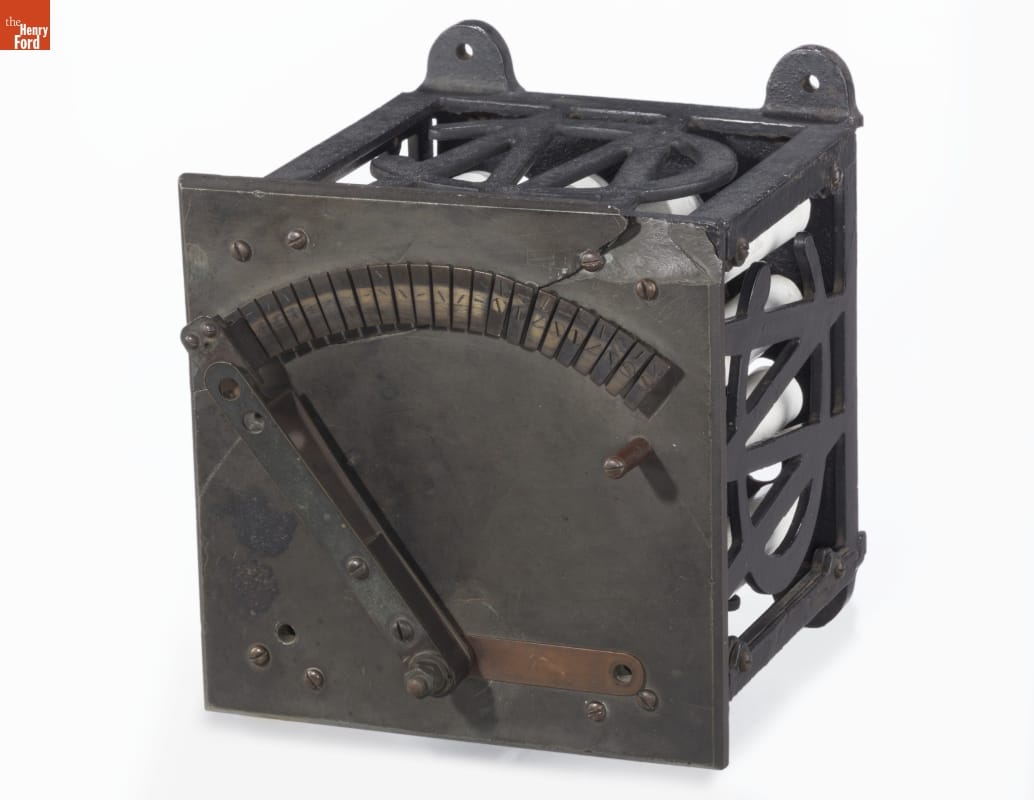
- Crocker-Wheeler Rheostat, 1893 - Rheostats vary the amount of electrical resistance in a circuit. They proved beneficial as the use of electrical power expanded in the late 1800s. Among their many applications, rheostats helped motors start safely, controlled motor speed, maintained a constant current in battery chargers, and adjusted volume and light levels.
- 1893
- Collections - Artifact
Crocker-Wheeler Rheostat, 1893
Rheostats vary the amount of electrical resistance in a circuit. They proved beneficial as the use of electrical power expanded in the late 1800s. Among their many applications, rheostats helped motors start safely, controlled motor speed, maintained a constant current in battery chargers, and adjusted volume and light levels.