
Search
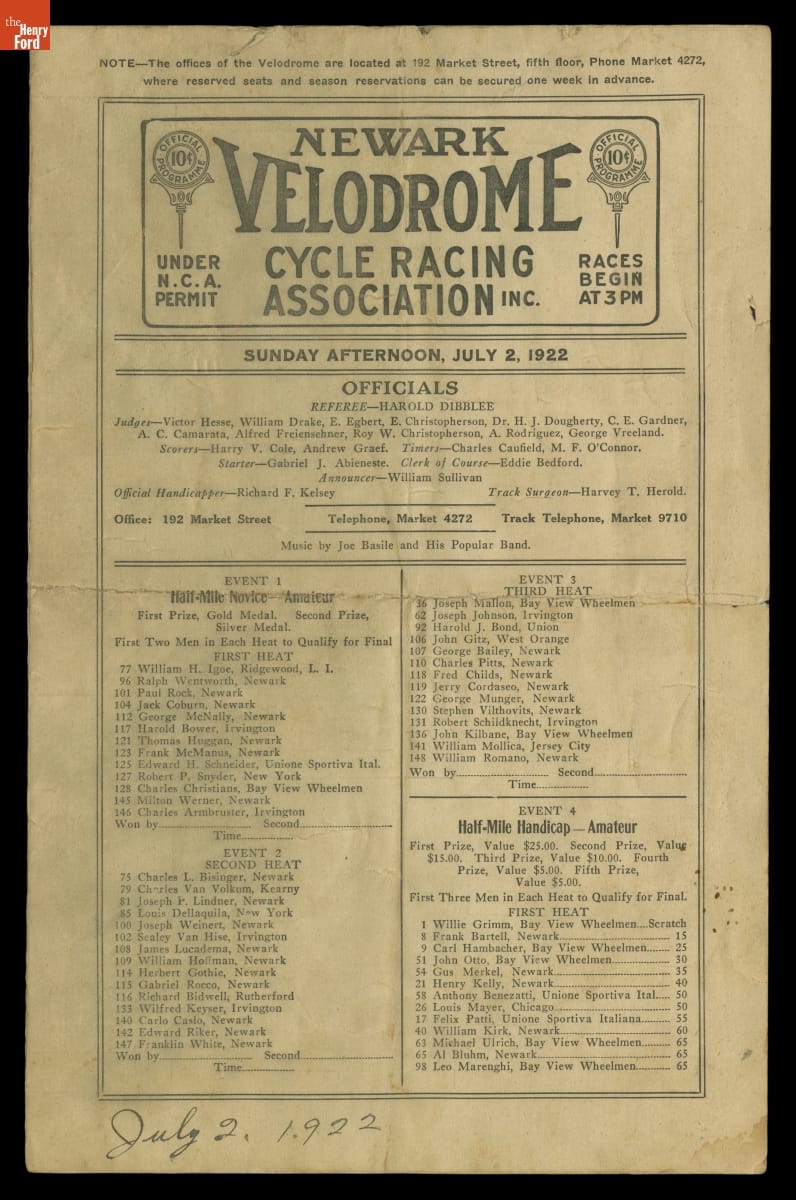
- Newark Velodrome Cycle Racing Association Program, Sunday, July 2, 1922 - "Velodrome" describes indoor or outdoor tracks used for bicycle racing. The first tracks were flat, with simple surfaces of cinders or shale. By the early 20th century, steeply banked turns and improved wood, concrete or asphalt surfaces were common. This program is for a series of races at New Jersey's Newark Velodrome. The arena and its one-sixth-mile track were demolished in 1930.
- July 02, 1922
- Collections - Artifact
Newark Velodrome Cycle Racing Association Program, Sunday, July 2, 1922
"Velodrome" describes indoor or outdoor tracks used for bicycle racing. The first tracks were flat, with simple surfaces of cinders or shale. By the early 20th century, steeply banked turns and improved wood, concrete or asphalt surfaces were common. This program is for a series of races at New Jersey's Newark Velodrome. The arena and its one-sixth-mile track were demolished in 1930.
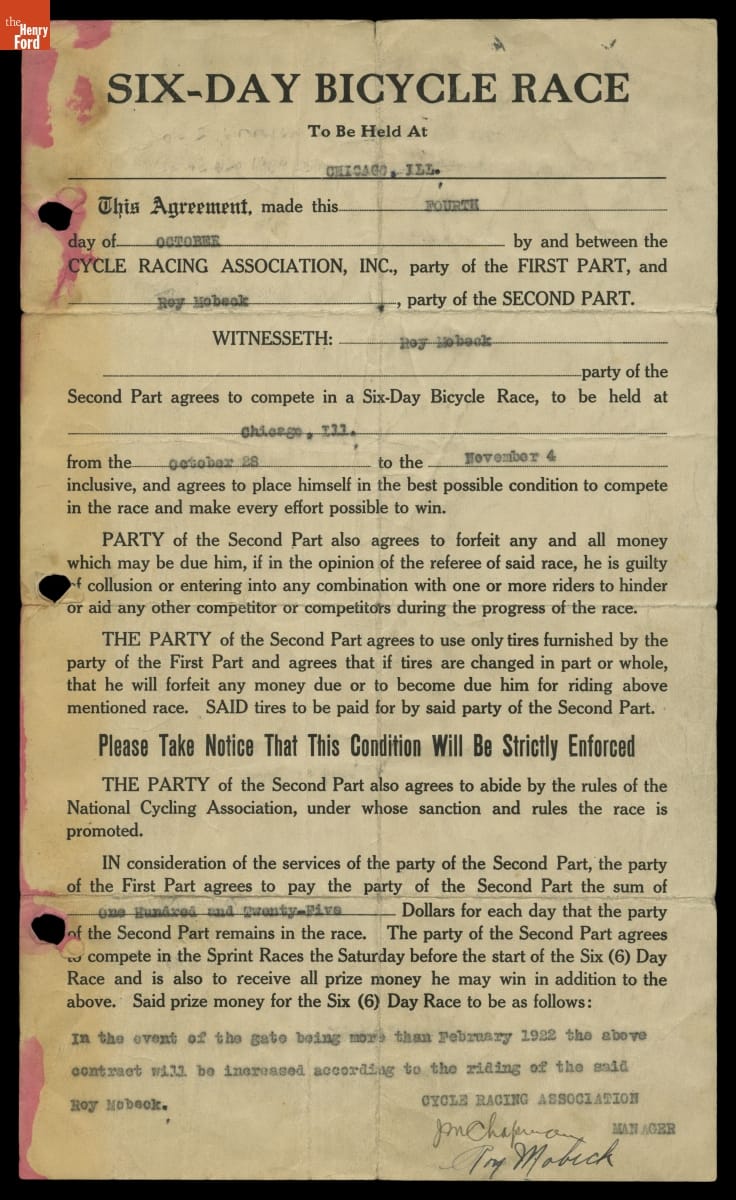
- Cycle Racing Association, Inc. Six-Day Bicycle Contract Signed by Roy Mobeck, 1922 - Roy Mobeck of Chicago, Illinois, began bicycle racing as an amateur in the late 1910s. He participated in and won several local competitions. Mobeck turned professional in the early 1920s, and he competed in six-day races throughout the Midwest. These extreme endurance contests had cyclists riding continuously for six days with only brief stops for food or rest.
- 1922
- Collections - Artifact
Cycle Racing Association, Inc. Six-Day Bicycle Contract Signed by Roy Mobeck, 1922
Roy Mobeck of Chicago, Illinois, began bicycle racing as an amateur in the late 1910s. He participated in and won several local competitions. Mobeck turned professional in the early 1920s, and he competed in six-day races throughout the Midwest. These extreme endurance contests had cyclists riding continuously for six days with only brief stops for food or rest.