
Search
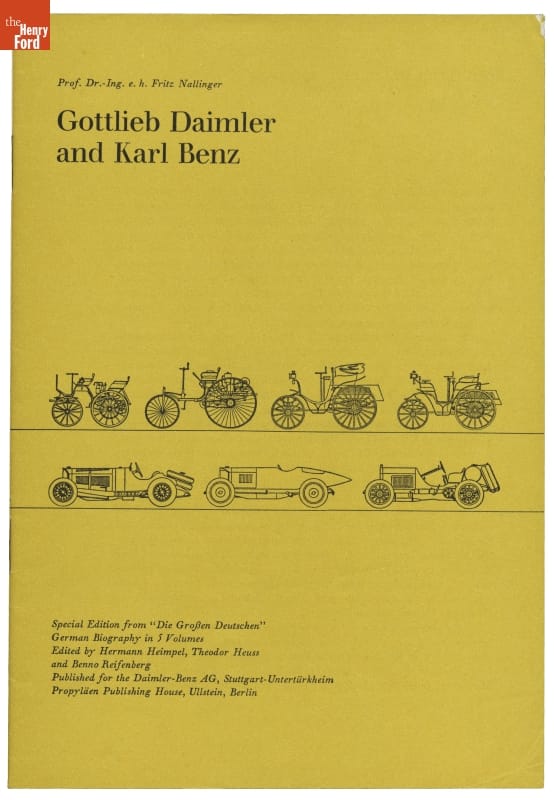
- "Gottlieb Daimler and Karl Benz," circa 1969 - This late 1960s publication highlights the achievements of two of Germany's automotive pioneers. Karl Benz developed the world's first practical gasoline-powered automobile in 1885. Gottlieb Daimler developed small, high-speed gasoline engines and built the world's first internal combustion motorcycle in 1885.
- circa 1900
- Collections - Artifact
"Gottlieb Daimler and Karl Benz," circa 1969
This late 1960s publication highlights the achievements of two of Germany's automotive pioneers. Karl Benz developed the world's first practical gasoline-powered automobile in 1885. Gottlieb Daimler developed small, high-speed gasoline engines and built the world's first internal combustion motorcycle in 1885.
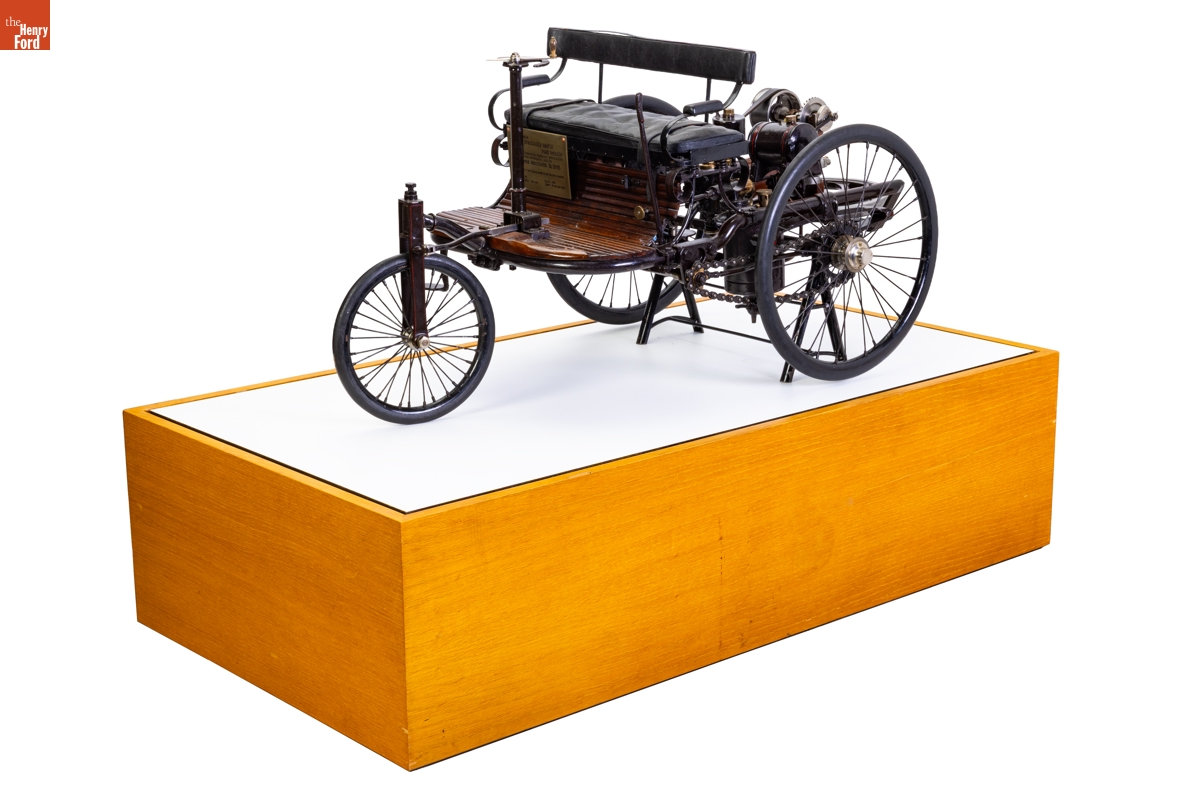
- Working Model of First Automobile, Gifted to Henry Ford in 1938 - The automobile's invention cannot be traced to any one person, place or moment in time. However, historians generally credit the Benz Patent-Motorwagen, built in Germany by engineer Karl Benz in 1885, with being the first self-propelled vehicle designed around an internal combustion engine. This one-fifth-scale replica was given to Henry Ford by Daimler-Benz Company on Ford's 75th birthday.
- July 30, 1938
- Collections - Artifact
Working Model of First Automobile, Gifted to Henry Ford in 1938
The automobile's invention cannot be traced to any one person, place or moment in time. However, historians generally credit the Benz Patent-Motorwagen, built in Germany by engineer Karl Benz in 1885, with being the first self-propelled vehicle designed around an internal combustion engine. This one-fifth-scale replica was given to Henry Ford by Daimler-Benz Company on Ford's 75th birthday.
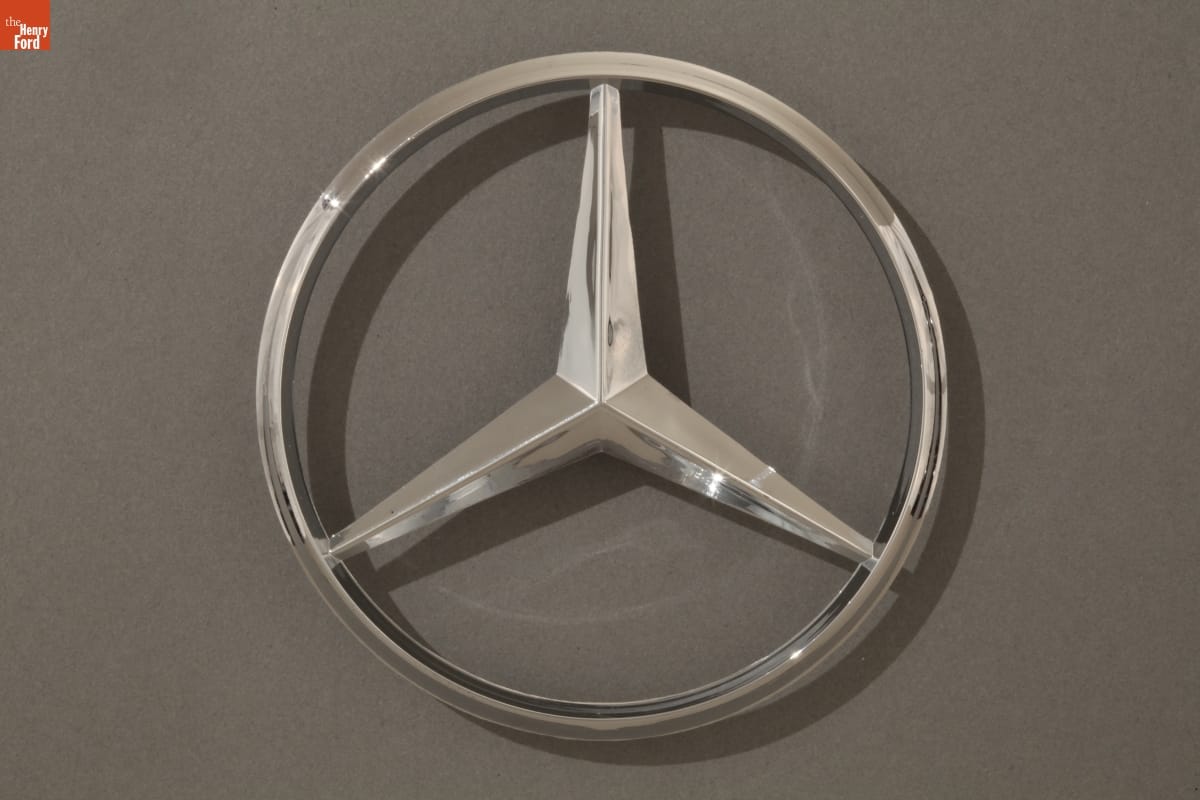
- Mercedes-Benz Emblem, 2011 - An automobile manufacturer's badge is fundamental to the company's brand identity -- just as the maker's name is often important to <EM>our</EM> identity as consumers and drivers. Early automobile badges tended to be small and often discreetly located; today they have evolved into enlarged, prominently placed, and frequently symmetrical logos -- easy to recognize, even at a glance in a rear-view mirror.
- 2011
- Collections - Artifact
Mercedes-Benz Emblem, 2011
An automobile manufacturer's badge is fundamental to the company's brand identity -- just as the maker's name is often important to our identity as consumers and drivers. Early automobile badges tended to be small and often discreetly located; today they have evolved into enlarged, prominently placed, and frequently symmetrical logos -- easy to recognize, even at a glance in a rear-view mirror.