
Search
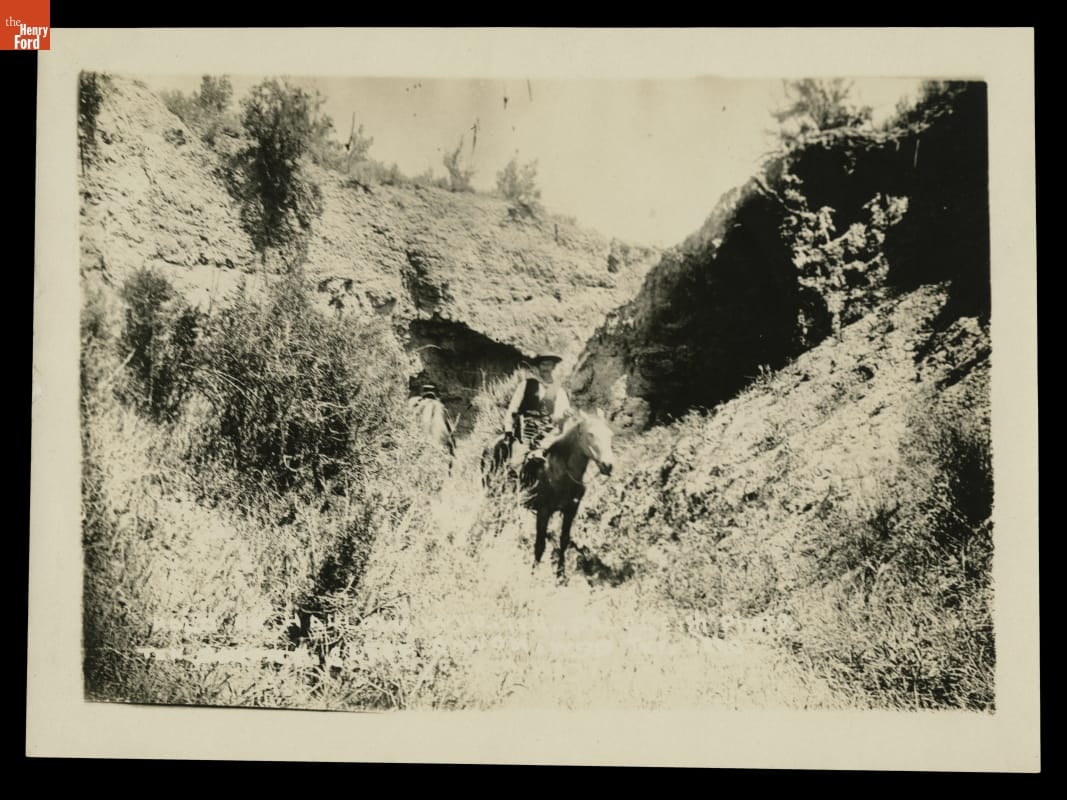
- Horseman in a Canyon, Wyoming Territory, 1880-1889 - George and Thomas Dalgleish owned a photography studio in the Wyoming Territory in the 1880s. The brothers traveled the territory documenting the region's people, towns and activities. The notation on the back of the photograph refers to this man as "Billy the Kid," a hunter and trapper. A friend of the photographer, he was not the infamous outlaw who died in a shootout in 1881.
- 1880-1889
- Collections - Artifact
Horseman in a Canyon, Wyoming Territory, 1880-1889
George and Thomas Dalgleish owned a photography studio in the Wyoming Territory in the 1880s. The brothers traveled the territory documenting the region's people, towns and activities. The notation on the back of the photograph refers to this man as "Billy the Kid," a hunter and trapper. A friend of the photographer, he was not the infamous outlaw who died in a shootout in 1881.
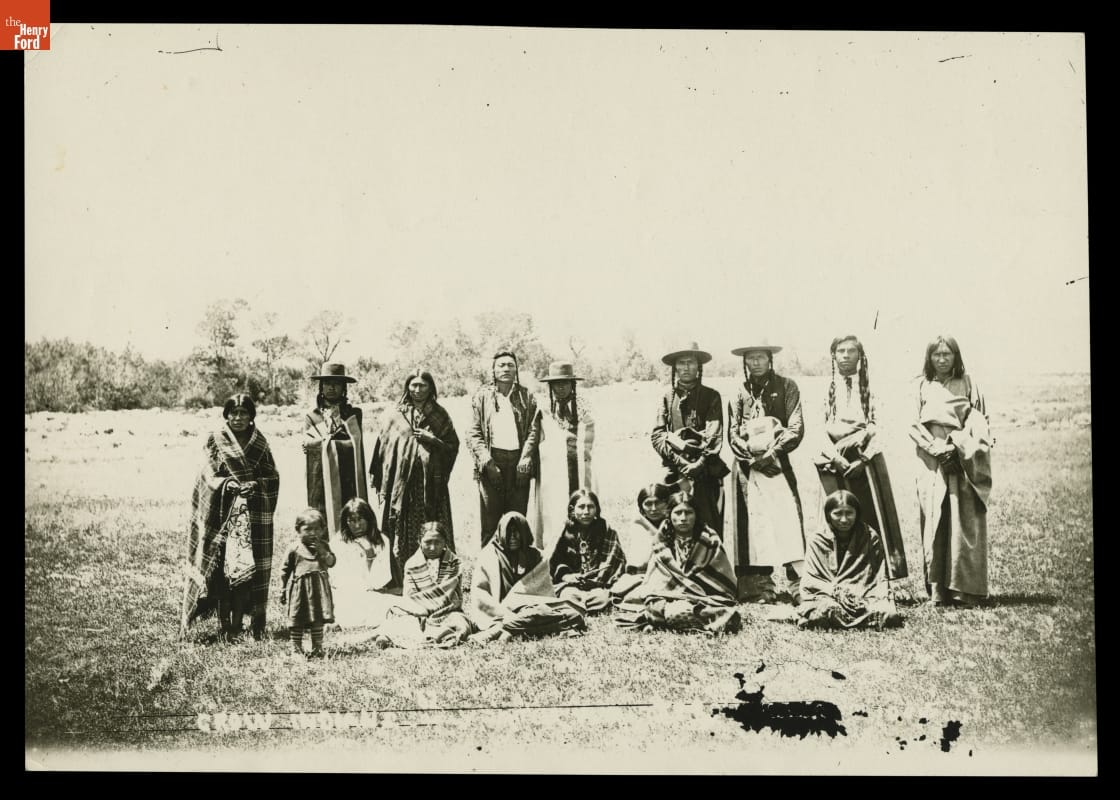
- Crow People, Wyoming Territory, 1882 - The Apsaalooke (Crow) occupied the game rich lands in the Yellowstone River basin of Wyoming and Montana. By the second half of the 1800s, encroachment by other Native American tribes and the influx of white settlers constricted the size of their traditional hunting grounds. Treaties signed with the U.S. government in 1868 and 1882 ultimately confined the Apsaalooke to a reservation in south central Montana.
- 1882
- Collections - Artifact
Crow People, Wyoming Territory, 1882
The Apsaalooke (Crow) occupied the game rich lands in the Yellowstone River basin of Wyoming and Montana. By the second half of the 1800s, encroachment by other Native American tribes and the influx of white settlers constricted the size of their traditional hunting grounds. Treaties signed with the U.S. government in 1868 and 1882 ultimately confined the Apsaalooke to a reservation in south central Montana.
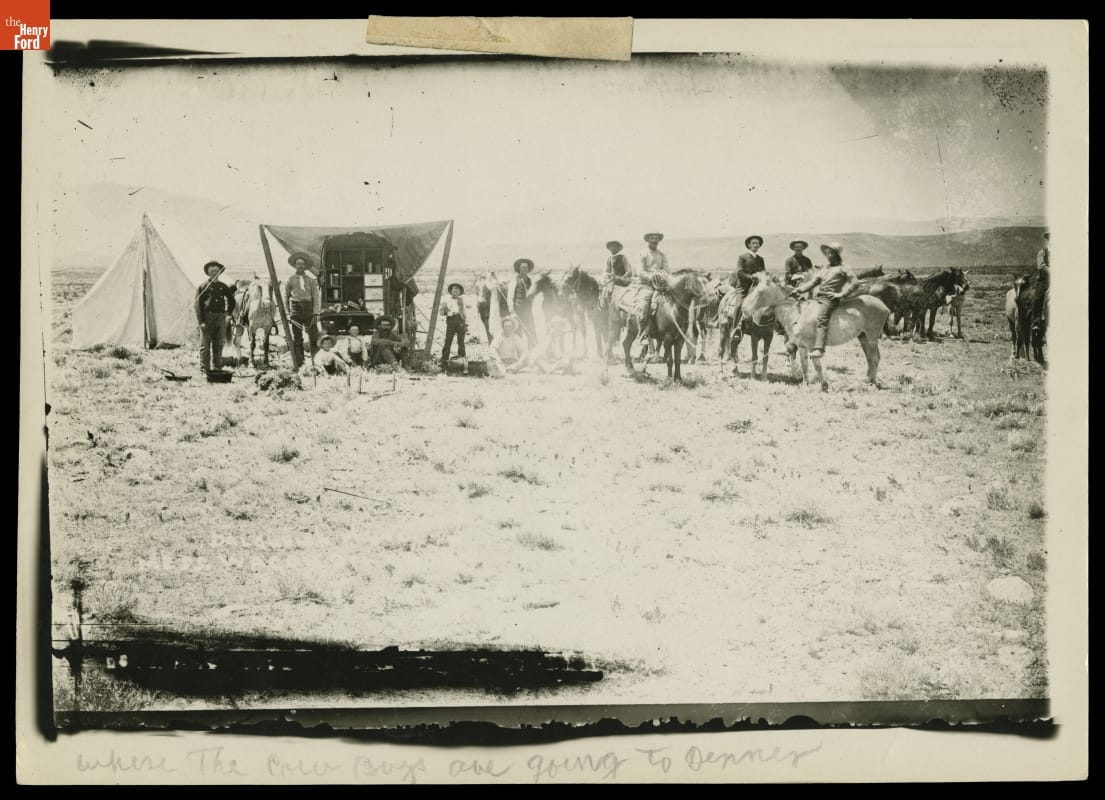
- Cowboys at the Chuck Wagon, Crazy Woman Creek, Wyoming Territory, 1885 - A chuck wagon served as a mobile kitchen and a social space for hard-working cowboys on the trail or open range. The cook who drove the chuck wagon loaded it with food, utensils, tools and other supplies. At each stop, he unpacked, set up camp, started fires, and prepared food. Hungry cowboys gathered around the chuck wagon and enjoyed a hot meal, friendship and a bit of home.
- 1885
- Collections - Artifact
Cowboys at the Chuck Wagon, Crazy Woman Creek, Wyoming Territory, 1885
A chuck wagon served as a mobile kitchen and a social space for hard-working cowboys on the trail or open range. The cook who drove the chuck wagon loaded it with food, utensils, tools and other supplies. At each stop, he unpacked, set up camp, started fires, and prepared food. Hungry cowboys gathered around the chuck wagon and enjoyed a hot meal, friendship and a bit of home.
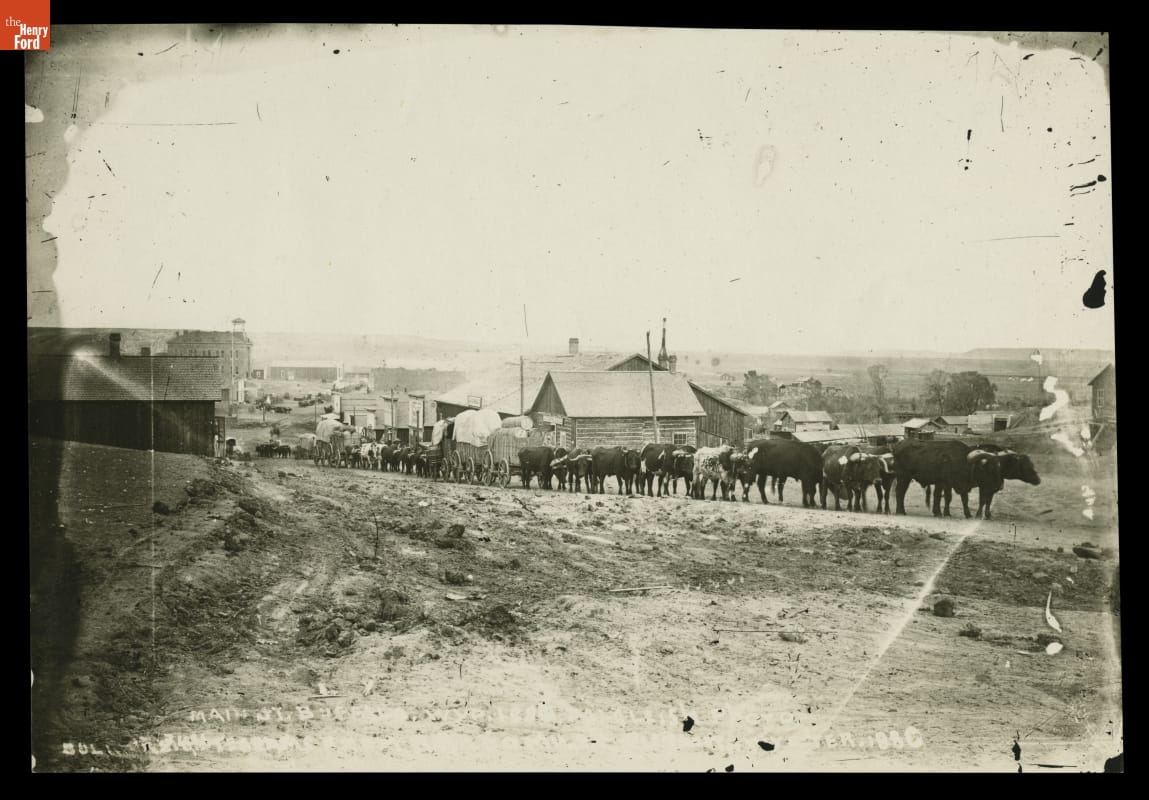
- Oxen and Wagons on Main Street, Buffalo, Wyoming Territory, 1885 - In the 1880s, towns in the western United States that were isolated from river and rail transportation networks relied on freight haulers to supply needed goods. Drivers navigated heavy, product-laden wagons hitched to teams of mules or oxen over mountain passes and across lonely, open expanses to deliver their cargo. This image show wagons loaded with goods on Main Street in Buffalo, Wyoming.
- 1885
- Collections - Artifact
Oxen and Wagons on Main Street, Buffalo, Wyoming Territory, 1885
In the 1880s, towns in the western United States that were isolated from river and rail transportation networks relied on freight haulers to supply needed goods. Drivers navigated heavy, product-laden wagons hitched to teams of mules or oxen over mountain passes and across lonely, open expanses to deliver their cargo. This image show wagons loaded with goods on Main Street in Buffalo, Wyoming.
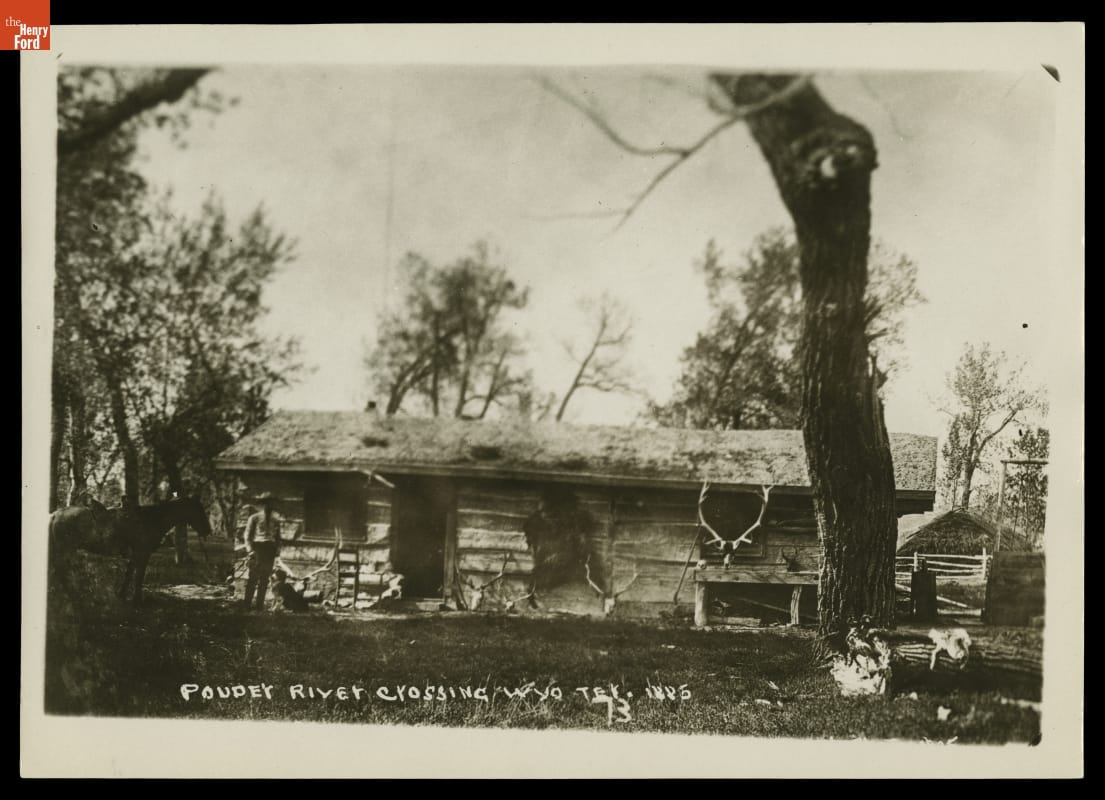
- House at the Powder River Crossing, Wyoming Territory, 1885 - By the late 1870s, pioneers began settling the Powder River Basin of Wyoming. Ranchers brought in cattle, prospectors traveled safely to Montana mine fields, and towns sprang up along the connecting trails and stage routes. This image shows a log cabin built by one of the settlers at Powder River Crossing.
- 1885
- Collections - Artifact
House at the Powder River Crossing, Wyoming Territory, 1885
By the late 1870s, pioneers began settling the Powder River Basin of Wyoming. Ranchers brought in cattle, prospectors traveled safely to Montana mine fields, and towns sprang up along the connecting trails and stage routes. This image shows a log cabin built by one of the settlers at Powder River Crossing.
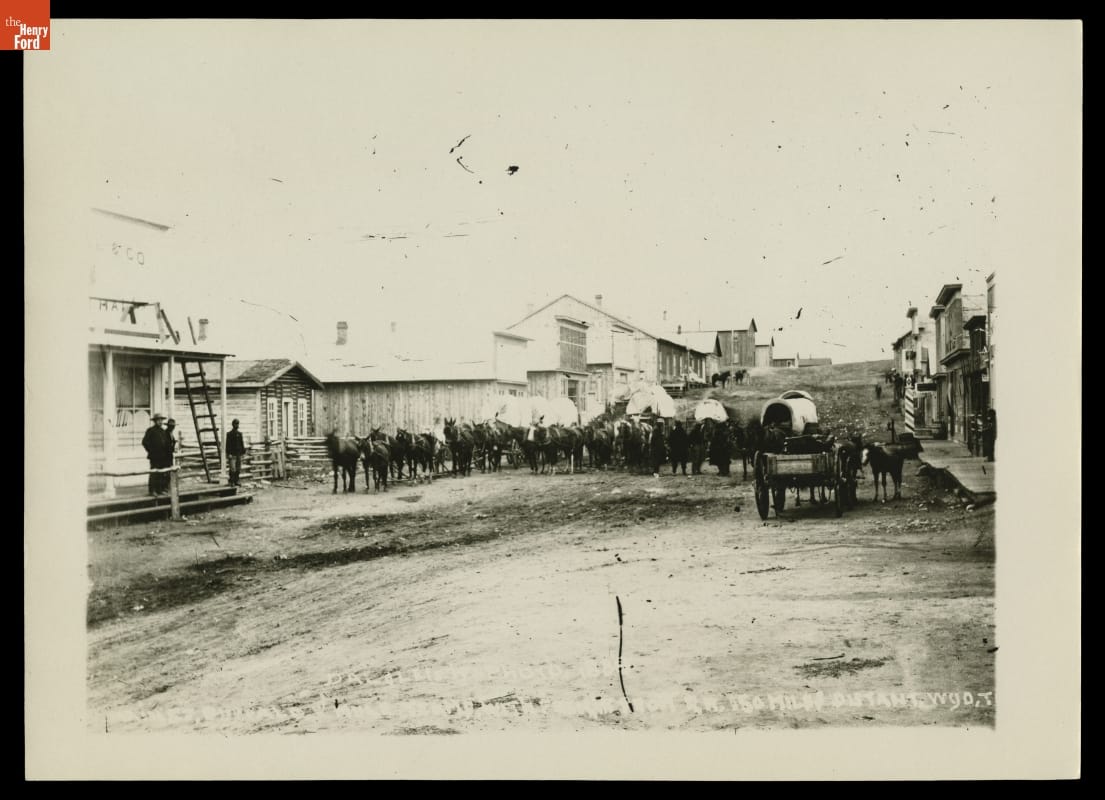
- Mule Teams and Wagons on Main Street, Buffalo, Wyoming Territory, 1885 - In the 1880s, towns in the western United States that were isolated from river and rail transportation networks relied on freight haulers to supply needed goods. Drivers navigated heavy, product-laden wagons hitched to teams of mules or oxen over mountain passes and across lonely, open expanses to deliver their cargo. This image show wagons loaded with goods on Main Street in Buffalo, Wyoming.
- 1885
- Collections - Artifact
Mule Teams and Wagons on Main Street, Buffalo, Wyoming Territory, 1885
In the 1880s, towns in the western United States that were isolated from river and rail transportation networks relied on freight haulers to supply needed goods. Drivers navigated heavy, product-laden wagons hitched to teams of mules or oxen over mountain passes and across lonely, open expanses to deliver their cargo. This image show wagons loaded with goods on Main Street in Buffalo, Wyoming.
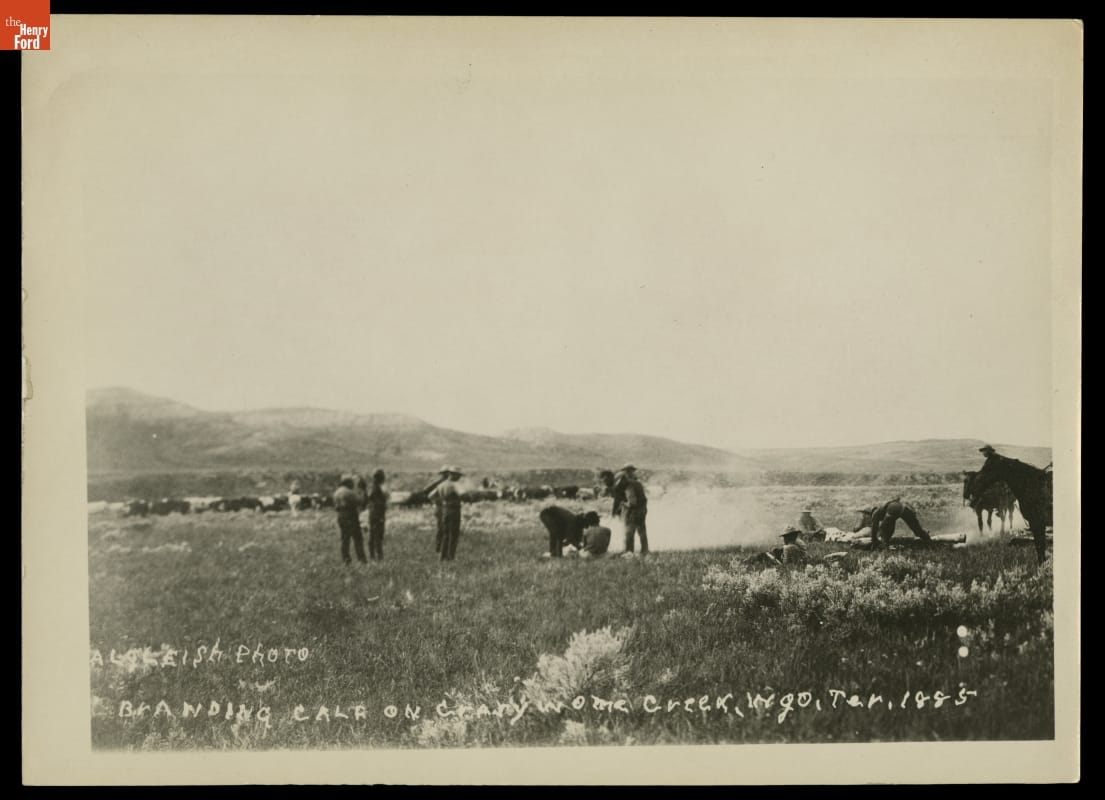
- Branding a Calf at Crazy Woman Creek, Wyoming Territory, 1884-1885 - Cattle ranchers in the American West marked their livestock with a unique brand. Cowboys heated branding irons and then pressed the hot metal onto the cow's hide. The branded cattle were then allowed to wander the open range--mingling with cattle belonging to other ranchers. Later when the cattle was rounded up, the brand helped ranchers identify the livestock they owned.
- 1884-1885
- Collections - Artifact
Branding a Calf at Crazy Woman Creek, Wyoming Territory, 1884-1885
Cattle ranchers in the American West marked their livestock with a unique brand. Cowboys heated branding irons and then pressed the hot metal onto the cow's hide. The branded cattle were then allowed to wander the open range--mingling with cattle belonging to other ranchers. Later when the cattle was rounded up, the brand helped ranchers identify the livestock they owned.
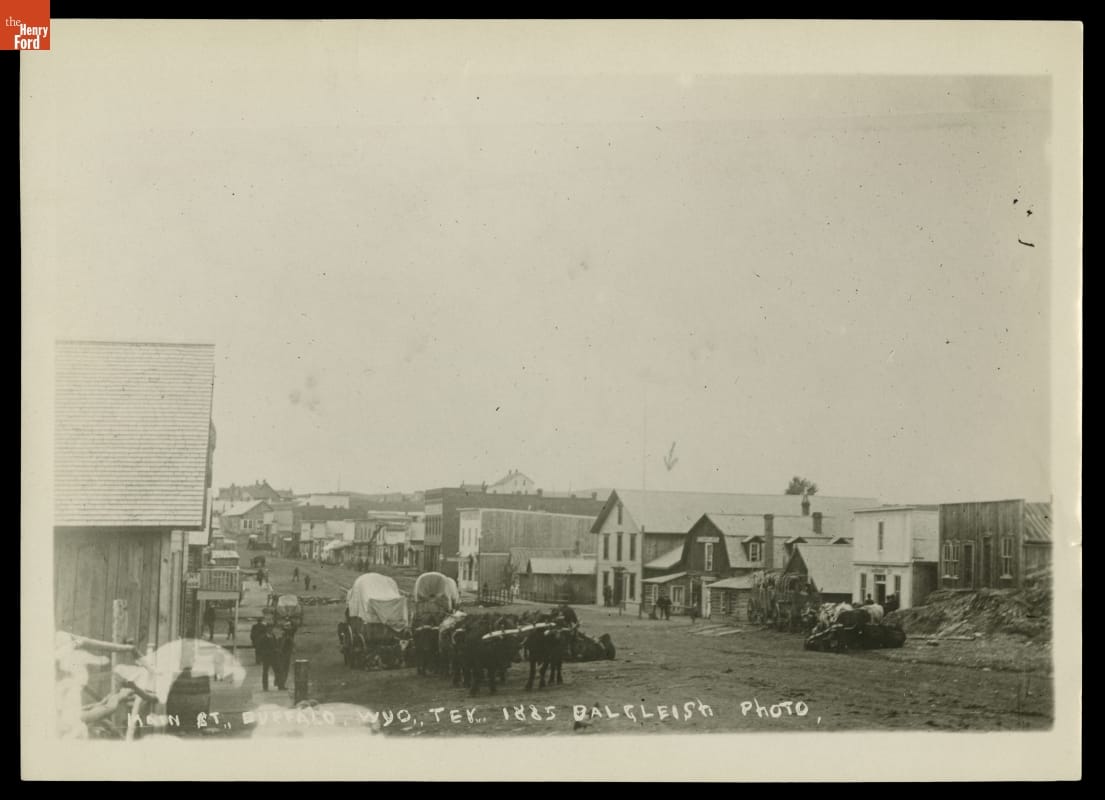
- Main Street, Buffalo, Wyoming Territory, 1885 - In the 1880s, towns in the western United States that were isolated from river and rail transportation networks relied on freight haulers to supply needed goods. Drivers navigated heavy, product-laden wagons hitched to teams of mules or oxen over mountain passes and across lonely, open expanses to deliver their cargo. This image show wagons loaded with goods on Main Street in Buffalo, Wyoming.
- 1885
- Collections - Artifact
Main Street, Buffalo, Wyoming Territory, 1885
In the 1880s, towns in the western United States that were isolated from river and rail transportation networks relied on freight haulers to supply needed goods. Drivers navigated heavy, product-laden wagons hitched to teams of mules or oxen over mountain passes and across lonely, open expanses to deliver their cargo. This image show wagons loaded with goods on Main Street in Buffalo, Wyoming.
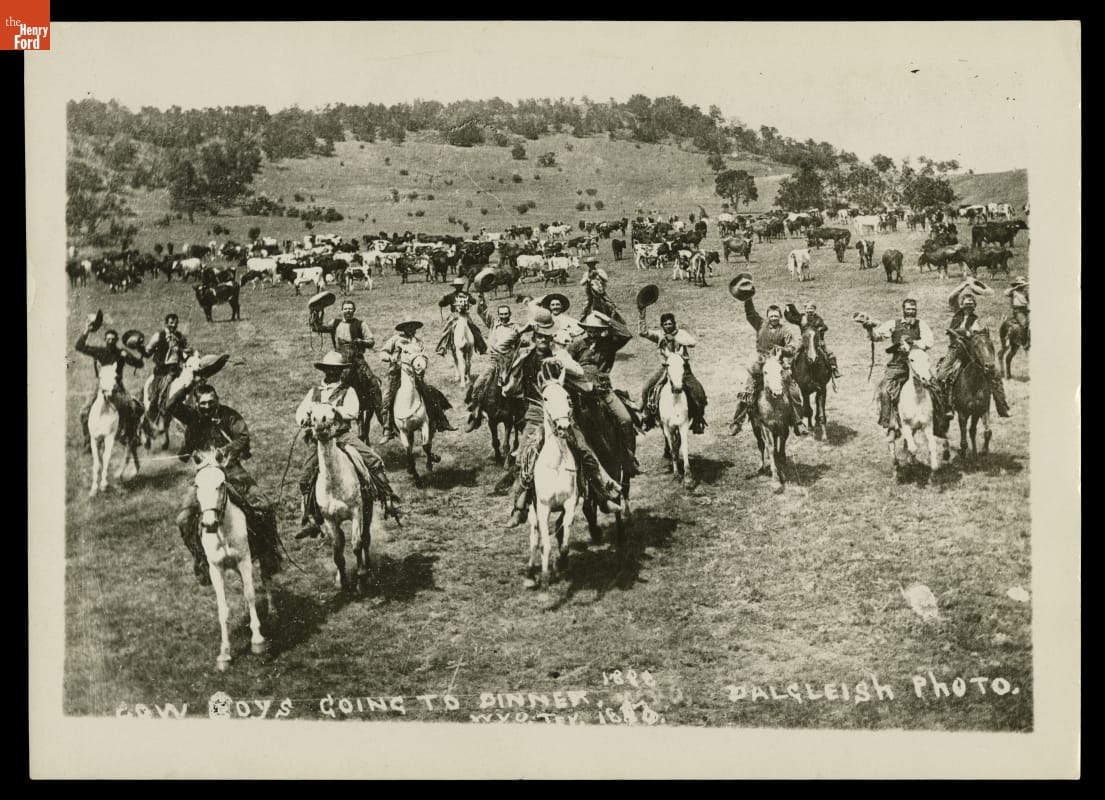
- Cowboys Going to Dinner, Wyoming Territory, 1880-1889 - The Wyoming cattle boom began soon after the Civil War. Ranchers hired cowboys to tend the herds that roamed the open range. Cowboys rounded up cattle, branded calves, and drove the herd to market among other jobs. Here, hard-working cowboys have some fun as they race toward the photographer waving their hats.
- 1880-1889
- Collections - Artifact
Cowboys Going to Dinner, Wyoming Territory, 1880-1889
The Wyoming cattle boom began soon after the Civil War. Ranchers hired cowboys to tend the herds that roamed the open range. Cowboys rounded up cattle, branded calves, and drove the herd to market among other jobs. Here, hard-working cowboys have some fun as they race toward the photographer waving their hats.
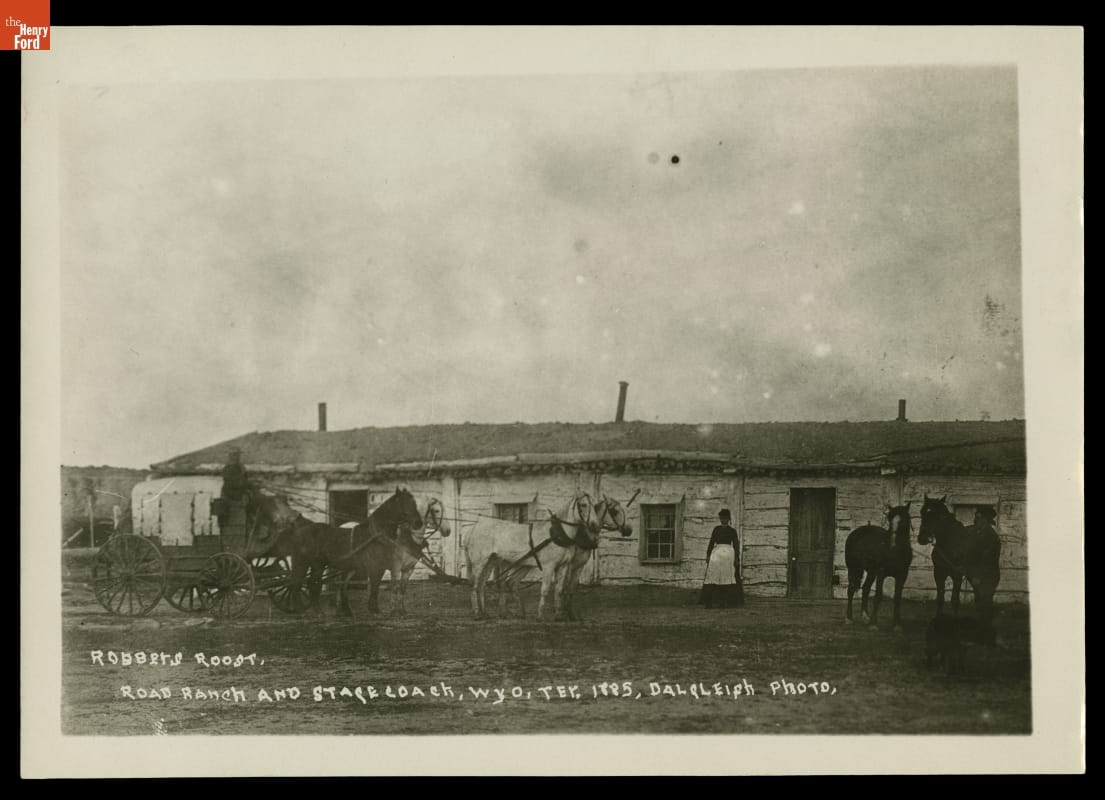
- Robbers Roost Road Ranch and Stagecoach Station, Wyoming Territory, 1885 - Stagecoach lines brought news, mail, and passengers to distant and isolated western towns during the late 19th century. Stops along the route broke up the long, monotonous, and sometimes dangerous journey. This image shows a station located on a route connecting Cheyenne, Wyoming, with the gold fields in the Black Hills of South Dakota. Robbers Roost derived its name from the many robberies in the area.
- 1885
- Collections - Artifact
Robbers Roost Road Ranch and Stagecoach Station, Wyoming Territory, 1885
Stagecoach lines brought news, mail, and passengers to distant and isolated western towns during the late 19th century. Stops along the route broke up the long, monotonous, and sometimes dangerous journey. This image shows a station located on a route connecting Cheyenne, Wyoming, with the gold fields in the Black Hills of South Dakota. Robbers Roost derived its name from the many robberies in the area.