
Search
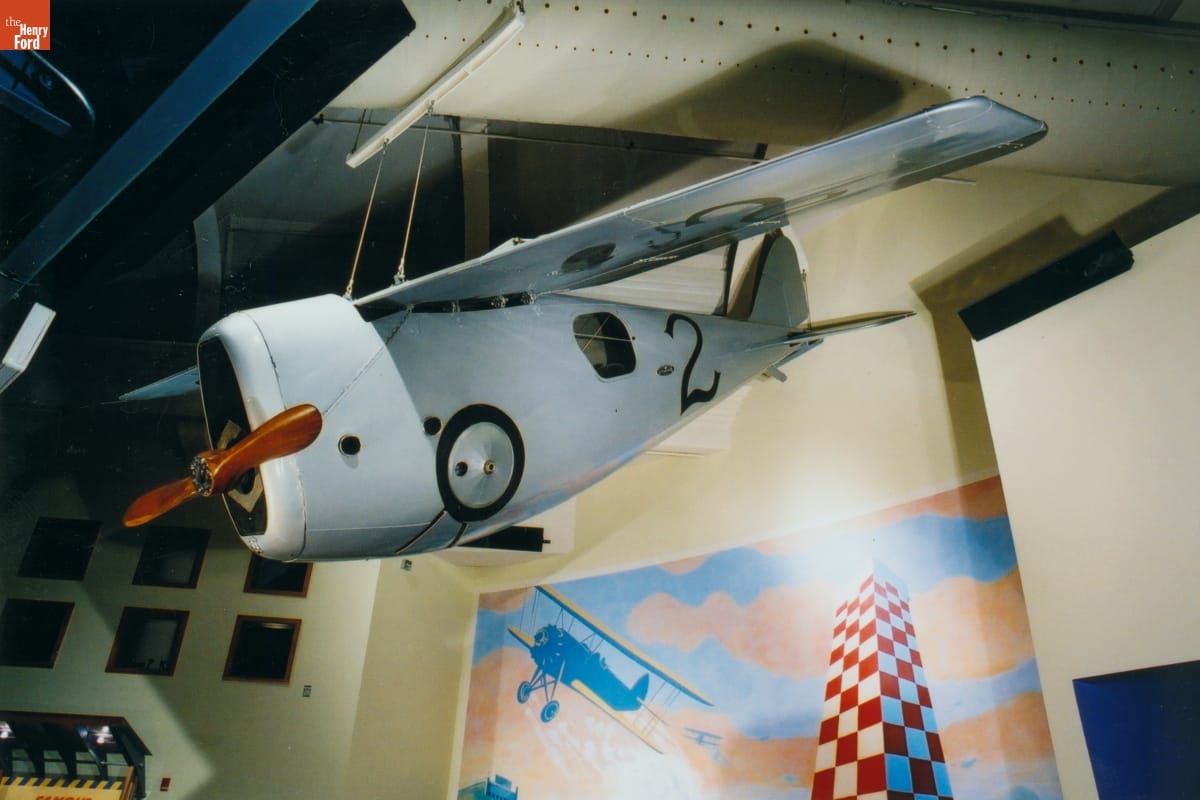
- 1920 Dayton-Wright RB-1 Monoplane - Designer Milton Baumann and pilot Howard Rinehart hoped to win the 1920 Gordon Bennett Air Race with their Dayton-Wright RB-1. Years ahead of its time, the airplane featured a single cantilevered wing, movable wing flaps for adjustable camber settings, an enclosed cockpit, and retractable landing gear. But a failed control cable knocked Rinehart out of contention. The RB-1 never raced again.
- 1920
- Collections - Artifact
1920 Dayton-Wright RB-1 Monoplane
Designer Milton Baumann and pilot Howard Rinehart hoped to win the 1920 Gordon Bennett Air Race with their Dayton-Wright RB-1. Years ahead of its time, the airplane featured a single cantilevered wing, movable wing flaps for adjustable camber settings, an enclosed cockpit, and retractable landing gear. But a failed control cable knocked Rinehart out of contention. The RB-1 never raced again.
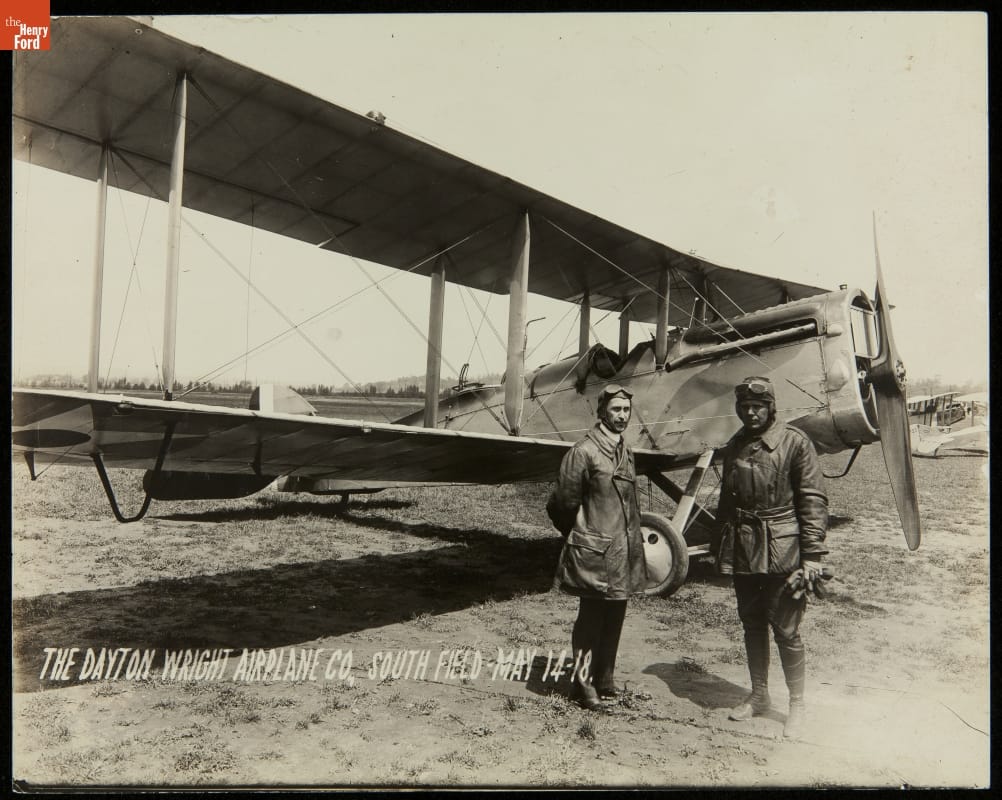
- Orville Wright and Howard Rinehart with DeHavilland DH-4 Bomber, Dayton-Wright Company, South Field, Dayton, Ohio, 1918 - Investors formed the Dayton-Wright Company of Dayton, Ohio, in 1917. Orville Wright lent the use of his name and served as a consultant to the firm. Dayton-Wright manufactured some 3,000 DH-4 military airplanes during World War I. General Motors purchased the company in 1919, and Dayton-Wright ended operations in 1923.
- May 14, 1918
- Collections - Artifact
Orville Wright and Howard Rinehart with DeHavilland DH-4 Bomber, Dayton-Wright Company, South Field, Dayton, Ohio, 1918
Investors formed the Dayton-Wright Company of Dayton, Ohio, in 1917. Orville Wright lent the use of his name and served as a consultant to the firm. Dayton-Wright manufactured some 3,000 DH-4 military airplanes during World War I. General Motors purchased the company in 1919, and Dayton-Wright ended operations in 1923.
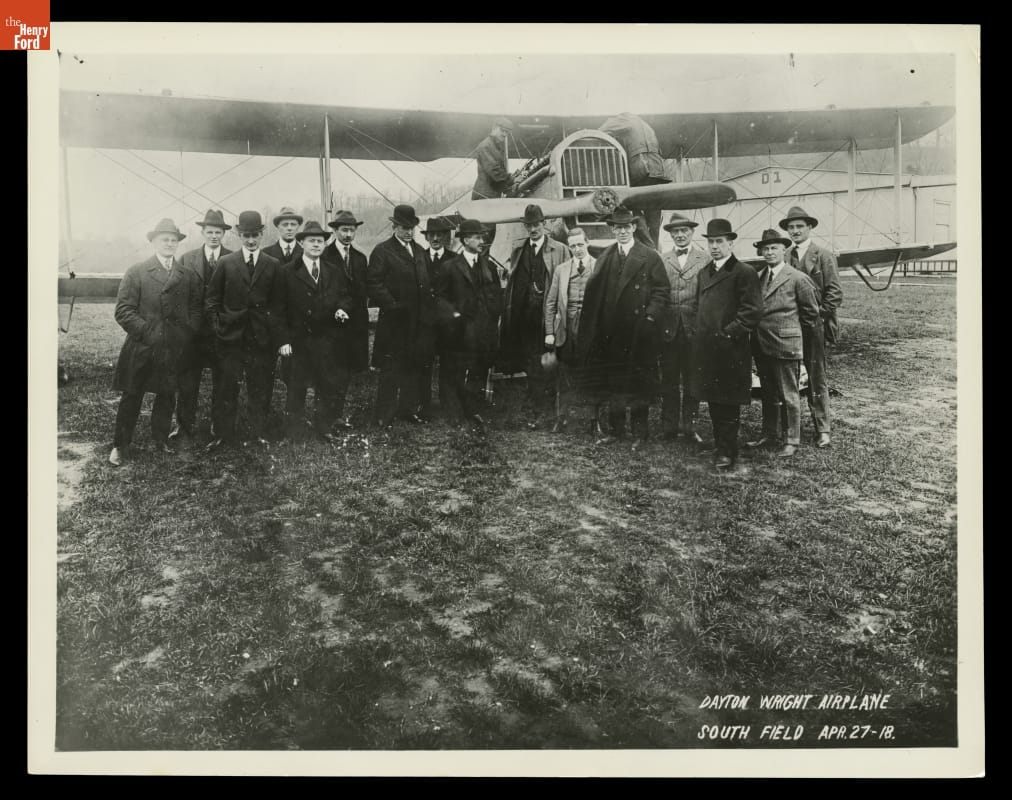
- Orville Wright, William B. Stout, Charles Kettering with De Havilland DH-4, Dayton-Wright Company, South Field, Dayton, Ohio, 1918 - Charles Kettering was one of a group of investors who formed the Dayton-Wright Company in 1917. Orville Wright lent the use of his name and served as a consultant to the firm. Dayton-Wright manufactured some 3,000 DH-4 military airplanes during World War I. General Motors purchased the company in 1919, and Dayton-Wright ended operations in 1923.
- April 27, 1918
- Collections - Artifact
Orville Wright, William B. Stout, Charles Kettering with De Havilland DH-4, Dayton-Wright Company, South Field, Dayton, Ohio, 1918
Charles Kettering was one of a group of investors who formed the Dayton-Wright Company in 1917. Orville Wright lent the use of his name and served as a consultant to the firm. Dayton-Wright manufactured some 3,000 DH-4 military airplanes during World War I. General Motors purchased the company in 1919, and Dayton-Wright ended operations in 1923.
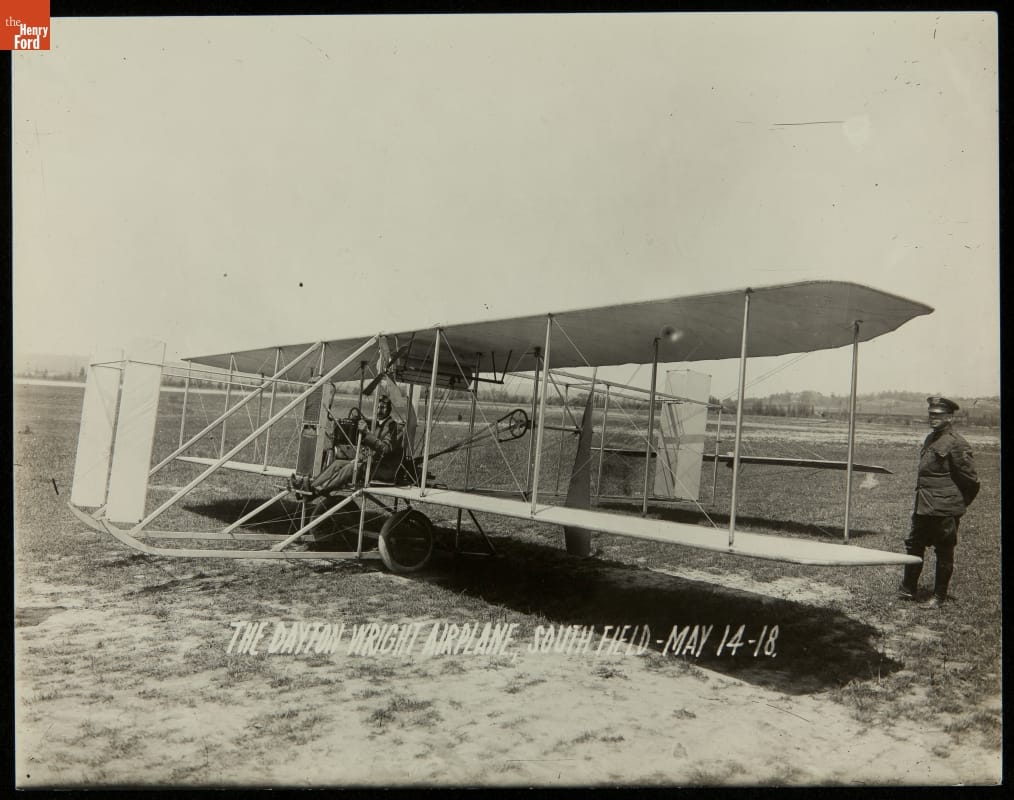
- Orville Wright at Controls of Wright Biplane, Dayton-Wright Company, South Field, Dayton, Ohio, 1918 - Orville Wright was photographed at the controls of a 1911 Wright Model B in May 1918. As part of a press event, he flew the biplane alongside the first Dayton-Wright DH-4 military plane built for World War I. Though Wright retired in 1915, he continued to consult on aviation projects. This was the last time Orville Wright piloted an airplane.
- May 14, 1918
- Collections - Artifact
Orville Wright at Controls of Wright Biplane, Dayton-Wright Company, South Field, Dayton, Ohio, 1918
Orville Wright was photographed at the controls of a 1911 Wright Model B in May 1918. As part of a press event, he flew the biplane alongside the first Dayton-Wright DH-4 military plane built for World War I. Though Wright retired in 1915, he continued to consult on aviation projects. This was the last time Orville Wright piloted an airplane.