
Search
- "Saran Wrap" Transparent Cling Wrap, circa 1954 - Saran Wrap, introduced in 1953, came from the research and development that created many plastics during World War II. Its strength and tight clinginess--and ability to keep food fresher longer--made it popular with consumers. Though convenient and inexpensive, plastic wrap is made from chemicals that are potentially harmful as they break down. Plastic wrap is hard to recycle, contributing to the plastic pollution crisis.
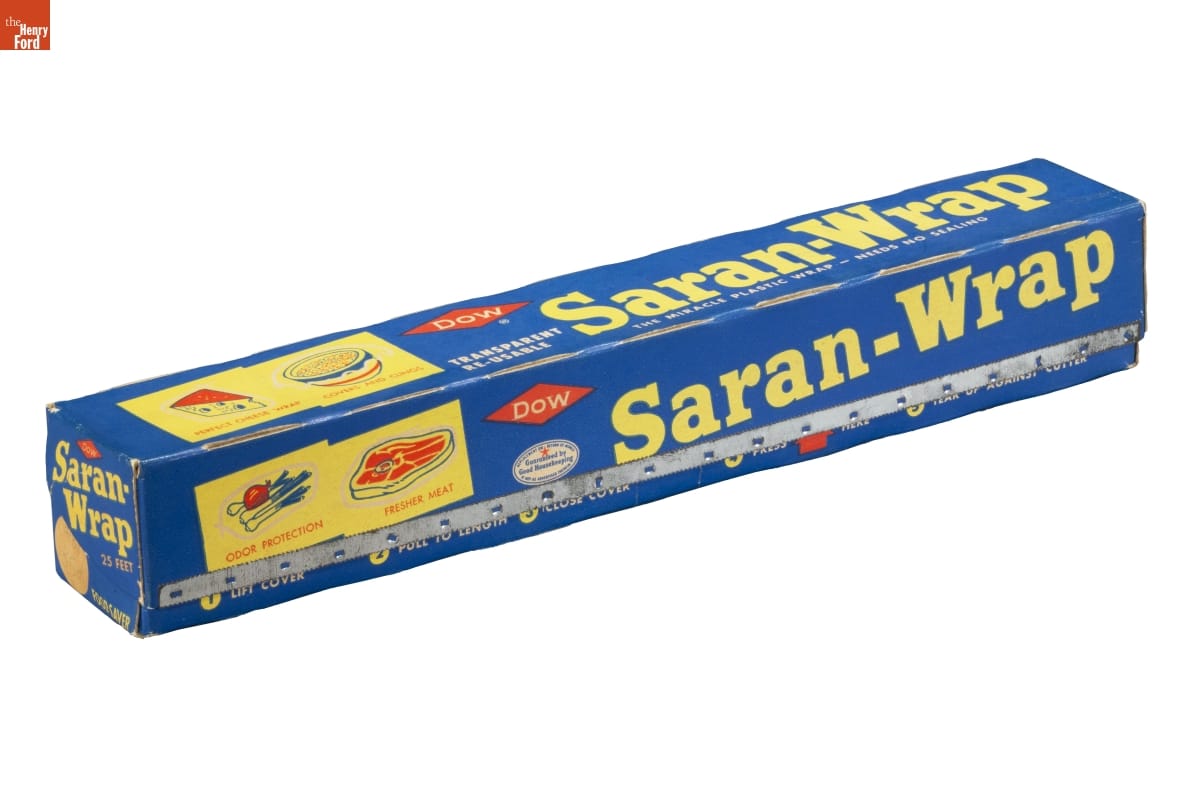
- circa 1954
- Collections - Artifact
"Saran Wrap" Transparent Cling Wrap, circa 1954
Saran Wrap, introduced in 1953, came from the research and development that created many plastics during World War II. Its strength and tight clinginess--and ability to keep food fresher longer--made it popular with consumers. Though convenient and inexpensive, plastic wrap is made from chemicals that are potentially harmful as they break down. Plastic wrap is hard to recycle, contributing to the plastic pollution crisis.
- "Plastic Housewares Made of Styron, a Dow Plastic," circa 1952 -
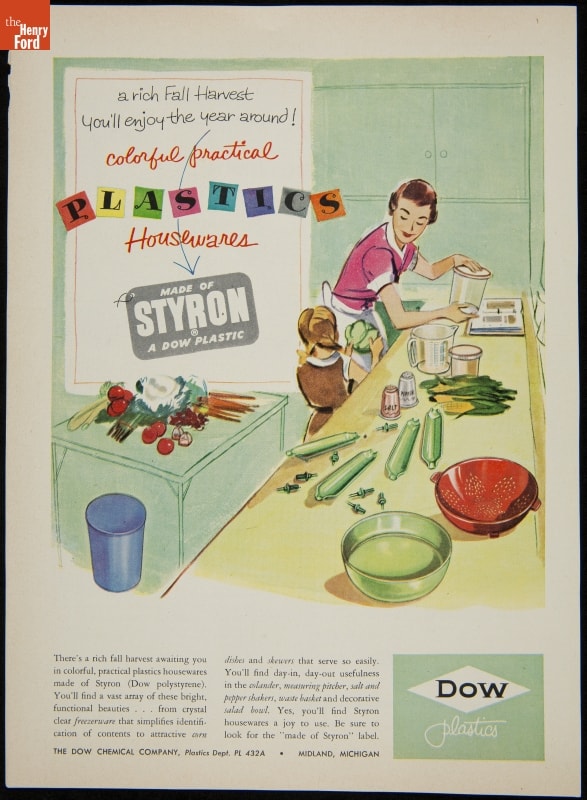
- circa 1952
- Collections - Artifact
"Plastic Housewares Made of Styron, a Dow Plastic," circa 1952
- "Zip-Strip Saran Wrap" Transparent Cling Wrap, circa 1959 - Saran Wrap, introduced in 1953, came from the research and development that created many plastics during World War II. Its strength and tight clinginess--and ability to keep food fresher longer--made it popular with consumers. Though convenient and inexpensive, plastic wrap is made from chemicals that are potentially harmful as they break down. Plastic wrap is hard to recycle, contributing to the plastic pollution crisis.
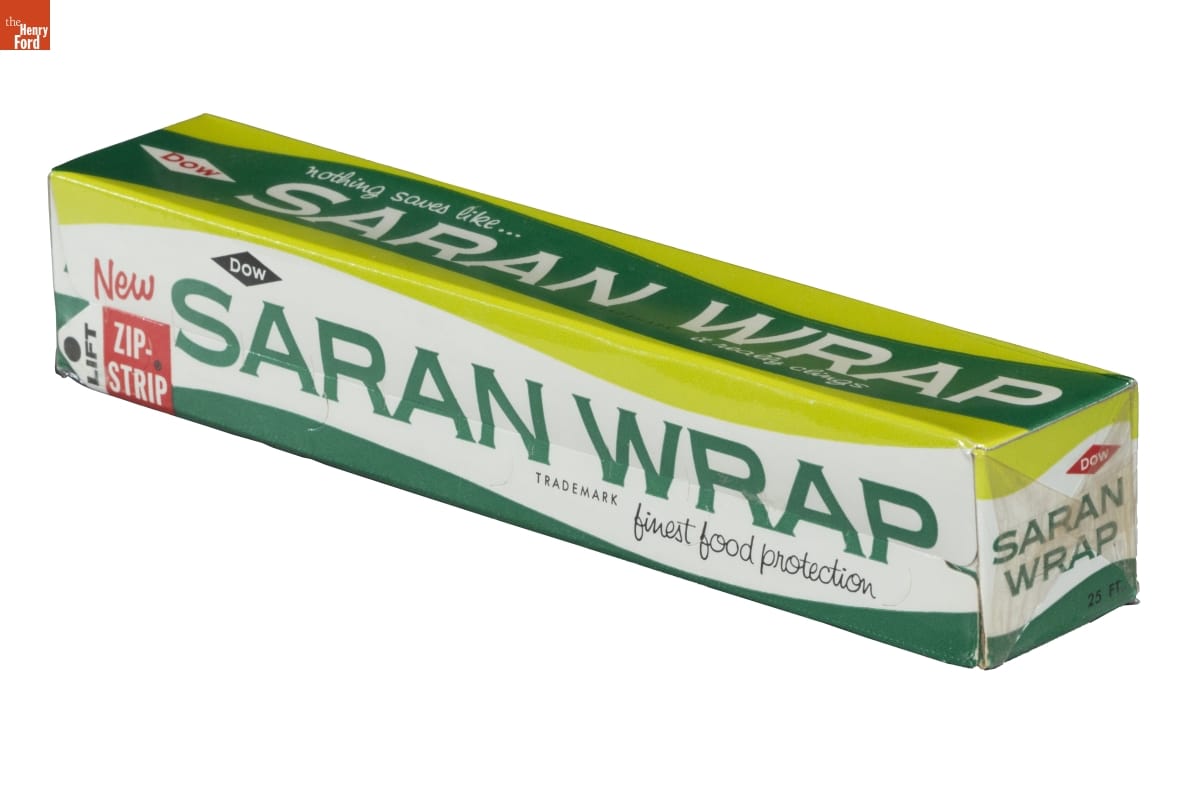
- circa 1959
- Collections - Artifact
"Zip-Strip Saran Wrap" Transparent Cling Wrap, circa 1959
Saran Wrap, introduced in 1953, came from the research and development that created many plastics during World War II. Its strength and tight clinginess--and ability to keep food fresher longer--made it popular with consumers. Though convenient and inexpensive, plastic wrap is made from chemicals that are potentially harmful as they break down. Plastic wrap is hard to recycle, contributing to the plastic pollution crisis.
- "Saran Wrap" Transparent Cling Wrap, circa 1954 - Saran Wrap, introduced in 1953, came from the research and development that created many plastics during World War II. Its strength and tight clinginess--and ability to keep food fresher longer--made it popular with consumers. Though convenient and inexpensive, plastic wrap is made from chemicals that are potentially harmful as they break down. Plastic wrap is hard to recycle, contributing to the plastic pollution crisis.
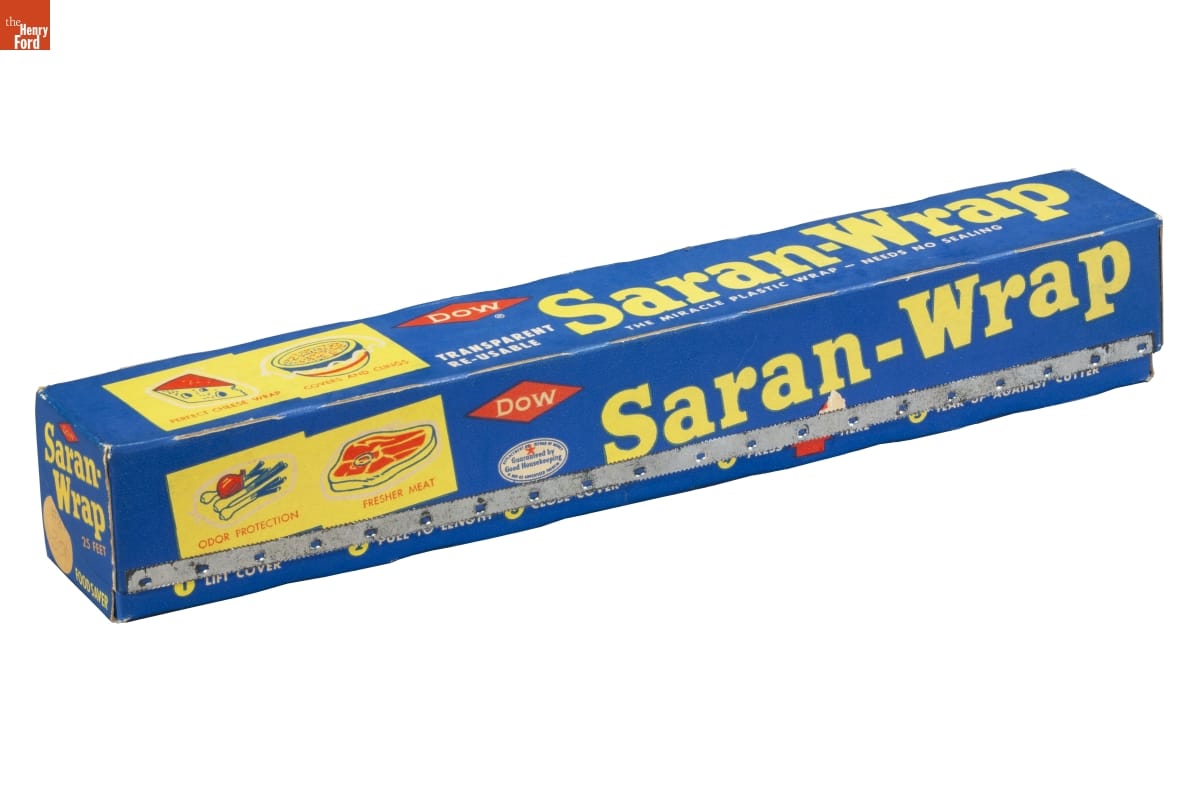
- circa 1954
- Collections - Artifact
"Saran Wrap" Transparent Cling Wrap, circa 1954
Saran Wrap, introduced in 1953, came from the research and development that created many plastics during World War II. Its strength and tight clinginess--and ability to keep food fresher longer--made it popular with consumers. Though convenient and inexpensive, plastic wrap is made from chemicals that are potentially harmful as they break down. Plastic wrap is hard to recycle, contributing to the plastic pollution crisis.
- The New Dow Plastics, 1966 -
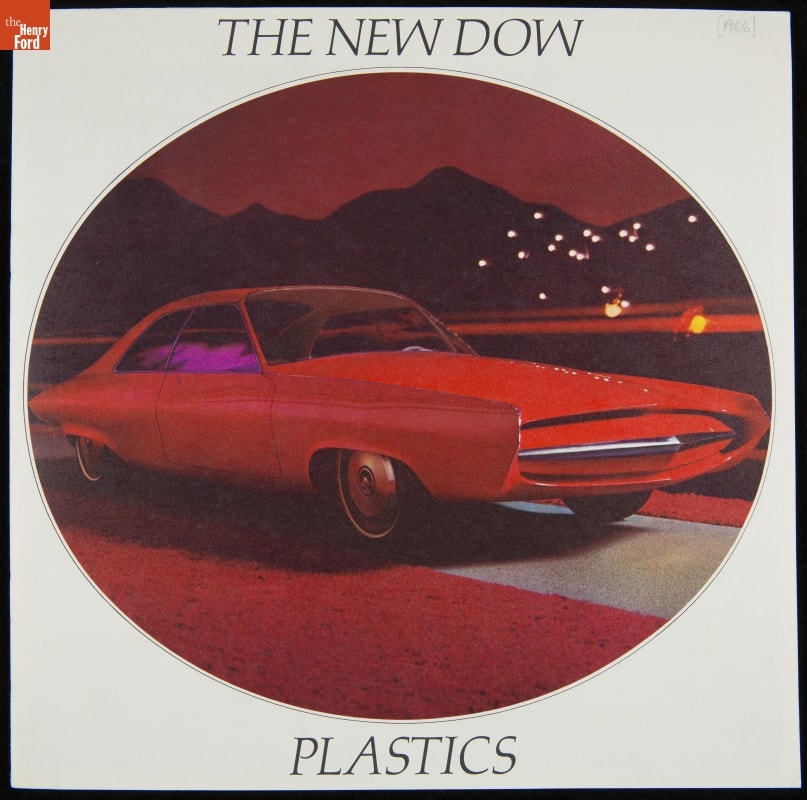
- 1966
- Collections - Artifact
The New Dow Plastics, 1966
- "A World of Ideas from Saran Wrap," 1970 - Saran Wrap, introduced in 1953, came from the research and development that created many plastics during World War II. Its strength and tight clinginess--and ability to keep food fresher longer--made it popular with consumers. Though convenient and inexpensive, plastic wrap is made from chemicals that are potentially harmful as they break down. Plastic wrap is hard to recycle, contributing to the plastic pollution crisis.
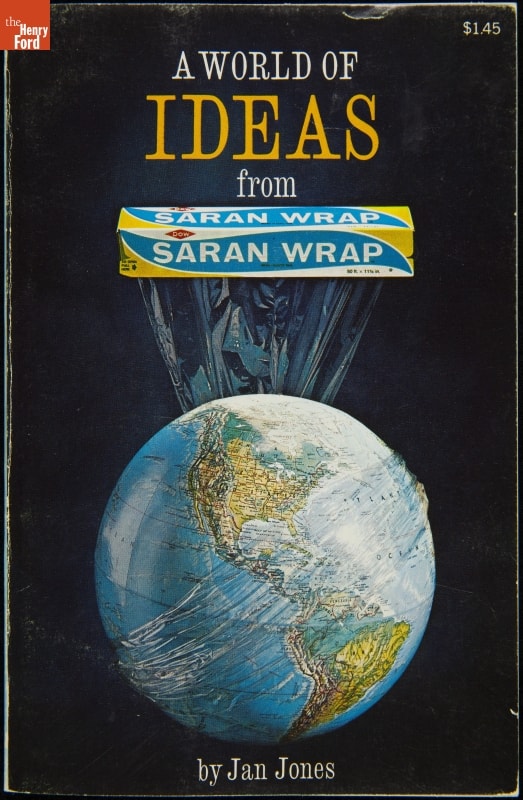
- 1970
- Collections - Artifact
"A World of Ideas from Saran Wrap," 1970
Saran Wrap, introduced in 1953, came from the research and development that created many plastics during World War II. Its strength and tight clinginess--and ability to keep food fresher longer--made it popular with consumers. Though convenient and inexpensive, plastic wrap is made from chemicals that are potentially harmful as they break down. Plastic wrap is hard to recycle, contributing to the plastic pollution crisis.
- "Zip-Strip Saran Wrap" Transparent Cling Wrap, circa 1959 - Saran Wrap, introduced in 1953, came from the research and development that created many plastics during World War II. Its strength and tight clinginess--and ability to keep food fresher longer--made it popular with consumers. Though convenient and inexpensive, plastic wrap is made from chemicals that are potentially harmful as they break down. Plastic wrap is hard to recycle, contributing to the plastic pollution crisis.
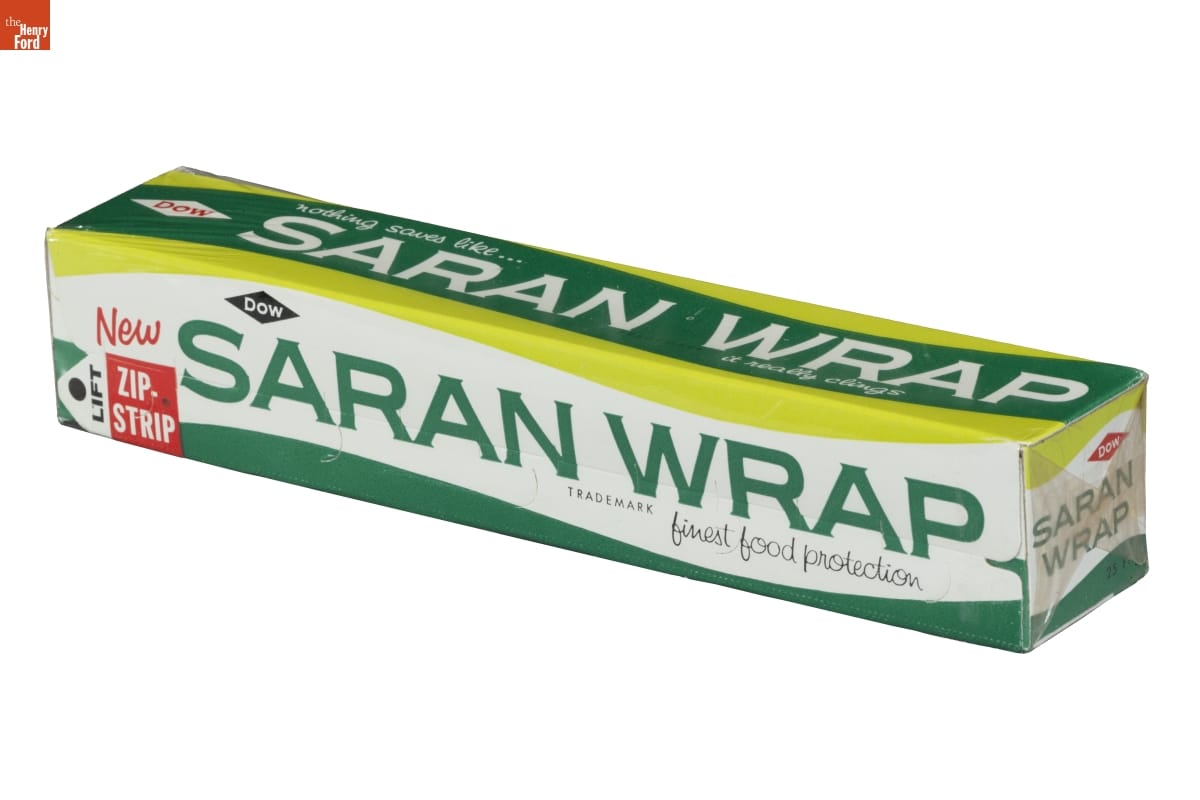
- circa 1959
- Collections - Artifact
"Zip-Strip Saran Wrap" Transparent Cling Wrap, circa 1959
Saran Wrap, introduced in 1953, came from the research and development that created many plastics during World War II. Its strength and tight clinginess--and ability to keep food fresher longer--made it popular with consumers. Though convenient and inexpensive, plastic wrap is made from chemicals that are potentially harmful as they break down. Plastic wrap is hard to recycle, contributing to the plastic pollution crisis.
- 1/4 Scale Model Automobile Created for Dow Chemical Company Based upon Virgil Exner Design, circa 1965 - Virgil Exner's long career in design included time with General Motors, Raymond Loewy Associates, and Studebaker. Exner is best remembered for his work at Chrysler, where he headed design efforts from 1953 to 1961. Following his retirement from Chrysler, Exner consulted on multiple projects including concept cars, motorboats, and revivals of the Duesenberg and Stutz automobile brands.
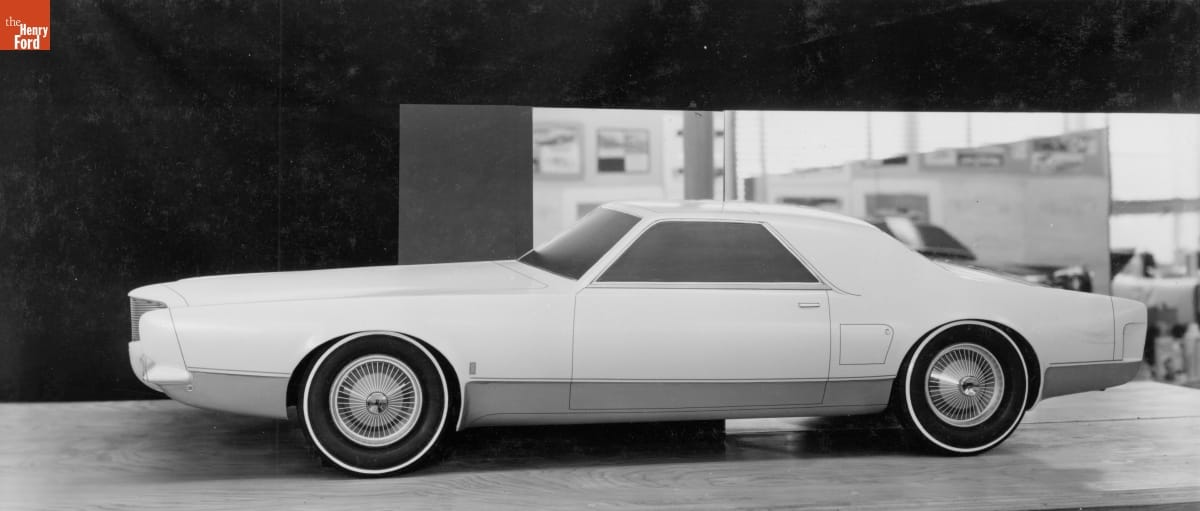
- circa 1967
- Collections - Artifact
1/4 Scale Model Automobile Created for Dow Chemical Company Based upon Virgil Exner Design, circa 1965
Virgil Exner's long career in design included time with General Motors, Raymond Loewy Associates, and Studebaker. Exner is best remembered for his work at Chrysler, where he headed design efforts from 1953 to 1961. Following his retirement from Chrysler, Exner consulted on multiple projects including concept cars, motorboats, and revivals of the Duesenberg and Stutz automobile brands.