
Search
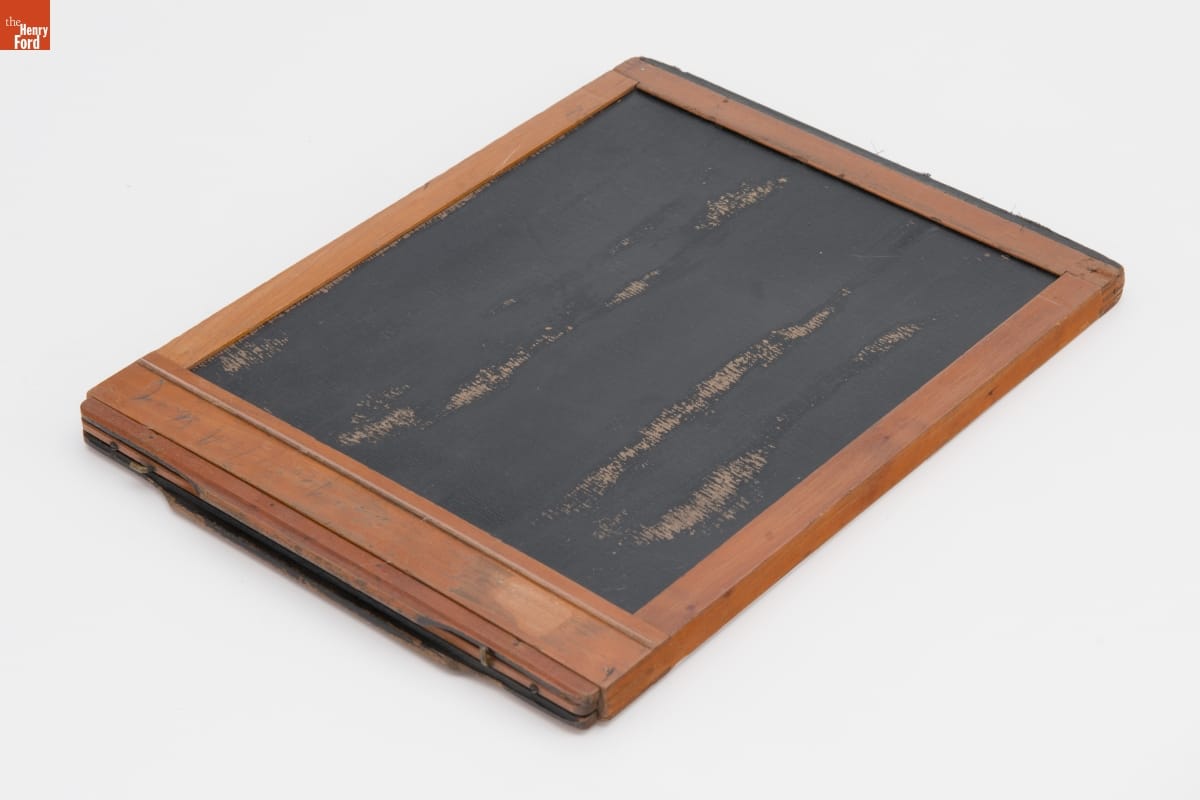
- Kodak Sheet Film Holder, circa 1925 - In 1913, Kodak introduced their pioneering Eastman Portrait Film for the professional photographer as an alternative to glass plate photography. Individual sheets of flexible cellulose nitrate were housed in light-safe film holders. Large format film produced by Kodak and others held copious amounts of information, perfect for crisp, faithful reproductions. A less flammable "safety" sheet film was introduced in 1925.
- circa 1925
- Collections - Artifact
Kodak Sheet Film Holder, circa 1925
In 1913, Kodak introduced their pioneering Eastman Portrait Film for the professional photographer as an alternative to glass plate photography. Individual sheets of flexible cellulose nitrate were housed in light-safe film holders. Large format film produced by Kodak and others held copious amounts of information, perfect for crisp, faithful reproductions. A less flammable "safety" sheet film was introduced in 1925.
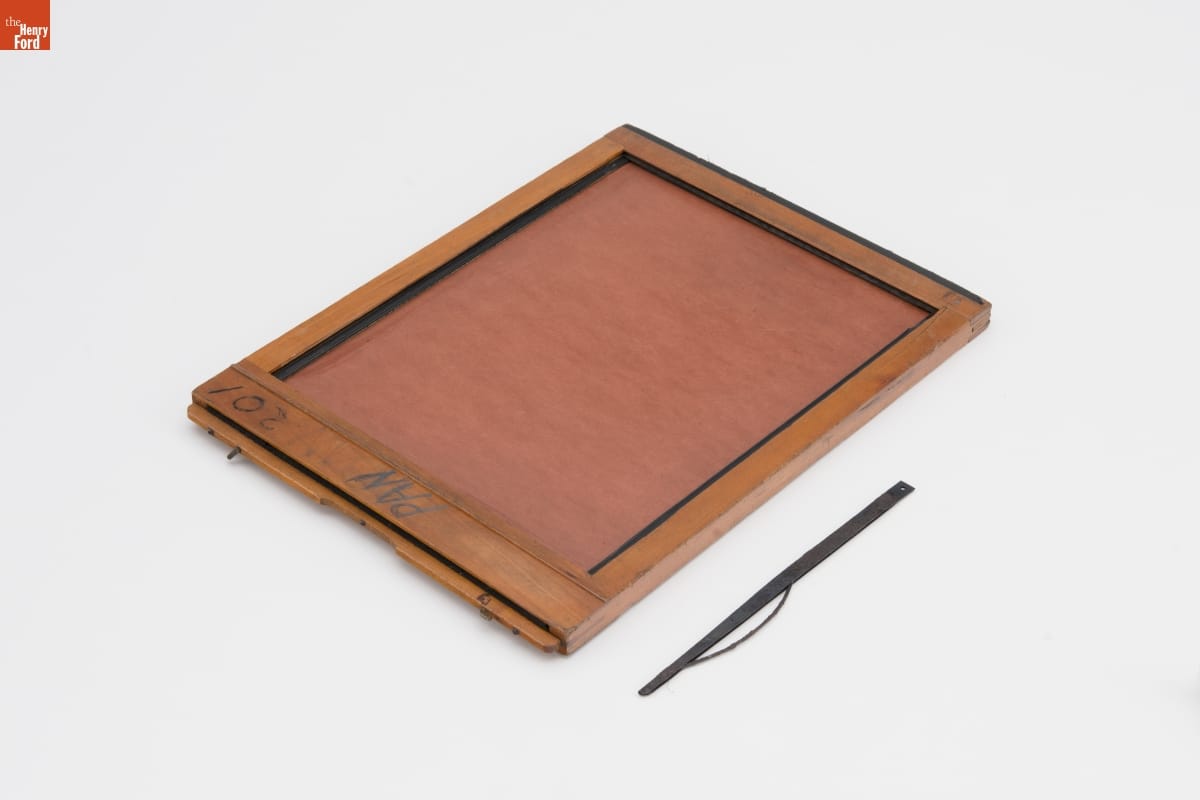
- Plate Film Holder, 1915-1925 - Wet plate photography was a primary photographic method until the invention of roll-film in the 1880s. Metal or glass plates were coated with light-sensitive collodion, placed into holders, and exposed in a camera. Before the plate dried, it was developed in a darkroom. Exacting and demanding, wet plate photography was the opposite of being a mobile, spontaneous, or user-friendly process.
- 1915-1925
- Collections - Artifact
Plate Film Holder, 1915-1925
Wet plate photography was a primary photographic method until the invention of roll-film in the 1880s. Metal or glass plates were coated with light-sensitive collodion, placed into holders, and exposed in a camera. Before the plate dried, it was developed in a darkroom. Exacting and demanding, wet plate photography was the opposite of being a mobile, spontaneous, or user-friendly process.
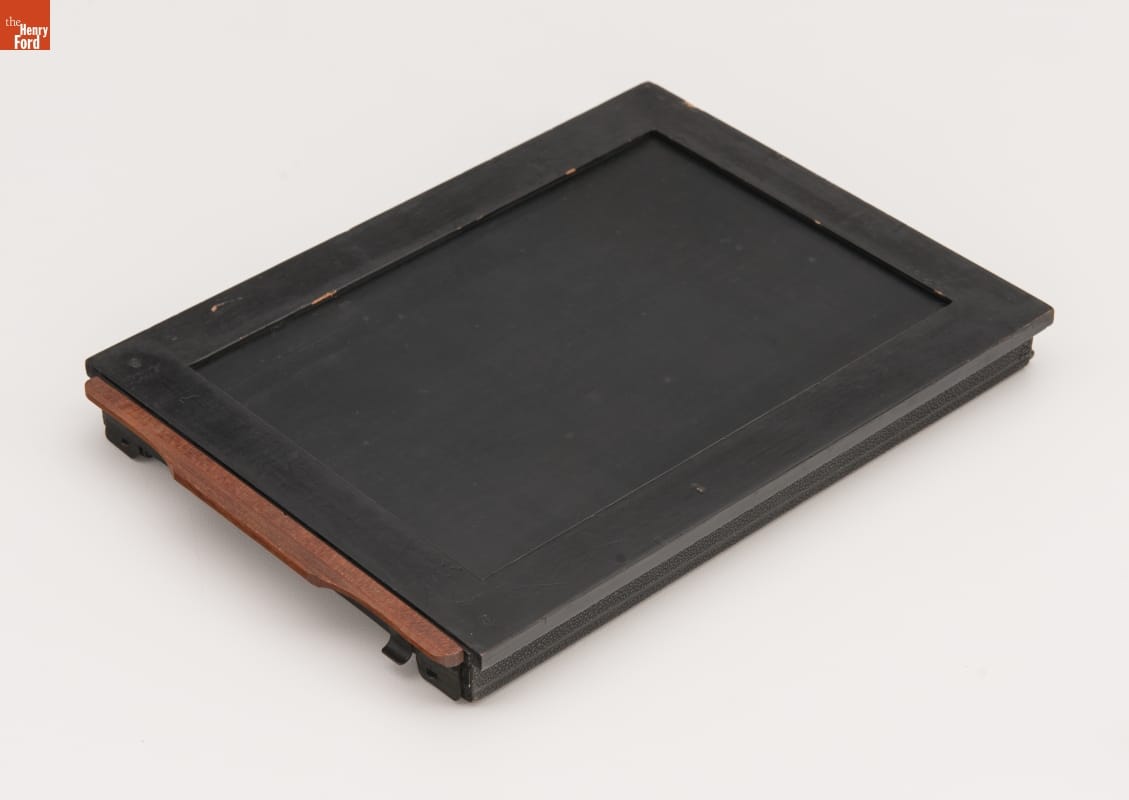
- Graflex Photographic Plate Holder, circa 1925 - This Graflex aerial camera magazine holds multiple sheets of film. Film sheets are loaded into the metal body of the magazine. After making an exposure a lever slides towards the leather bag; the film shifts into the attached bag and then up into the stack of film sheets. Safe from further exposure by light, the film remains here until processing.
- circa 1925
- Collections - Artifact
Graflex Photographic Plate Holder, circa 1925
This Graflex aerial camera magazine holds multiple sheets of film. Film sheets are loaded into the metal body of the magazine. After making an exposure a lever slides towards the leather bag; the film shifts into the attached bag and then up into the stack of film sheets. Safe from further exposure by light, the film remains here until processing.
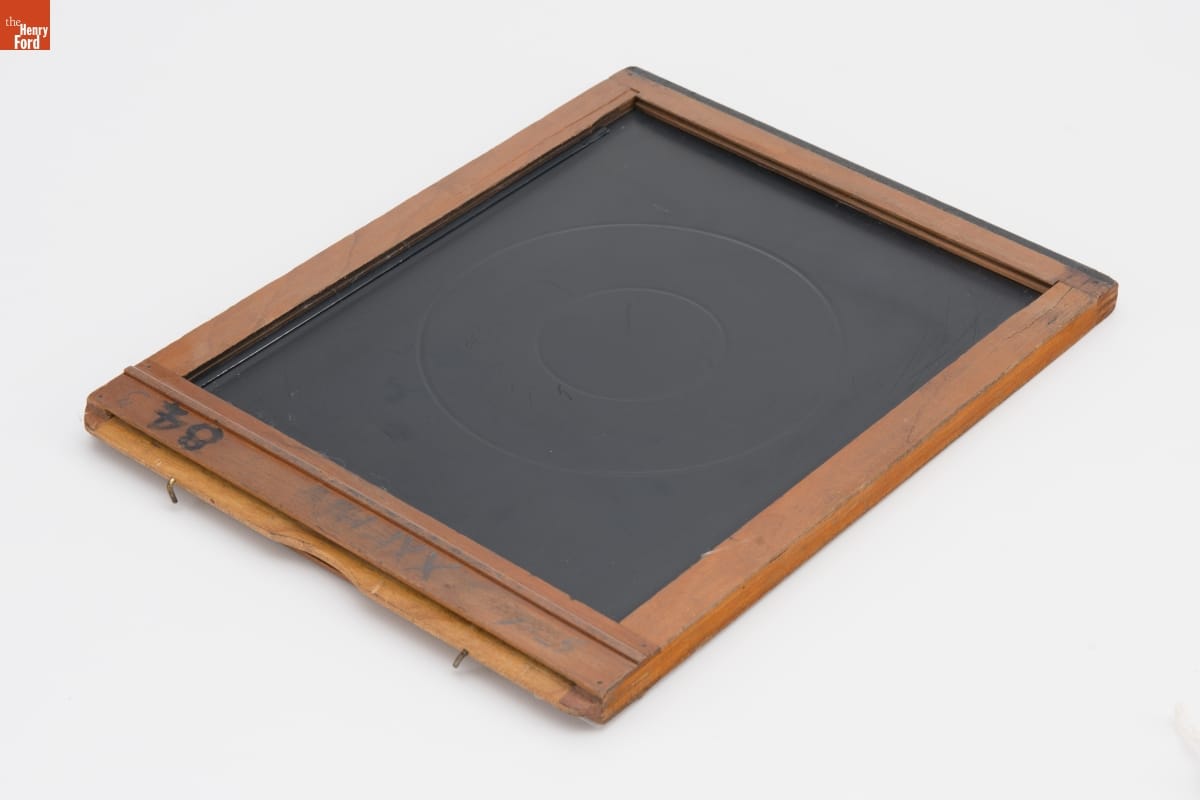
- Kodak Sheet Film Holder, circa 1925 - In 1913, Kodak introduced their pioneering Eastman Portrait Film for the professional photographer as an alternative to glass plate photography. Individual sheets of flexible cellulose nitrate were housed in light-safe film holders. Large format film produced by Kodak and others held copious amounts of information, perfect for crisp, faithful reproductions. A less flammable "safety" sheet film was introduced in 1925.
- circa 1925
- Collections - Artifact
Kodak Sheet Film Holder, circa 1925
In 1913, Kodak introduced their pioneering Eastman Portrait Film for the professional photographer as an alternative to glass plate photography. Individual sheets of flexible cellulose nitrate were housed in light-safe film holders. Large format film produced by Kodak and others held copious amounts of information, perfect for crisp, faithful reproductions. A less flammable "safety" sheet film was introduced in 1925.
- Kodak Cut Film Holder, circa 1925 - In 1913, Kodak introduced their pioneering Eastman Portrait Film for the professional photographer as an alternative to glass plate photography. Individual sheets of flexible cellulose nitrate were housed in light-safe film holders. Large format film produced by Kodak and others held copious amounts of information, perfect for crisp, faithful reproductions. A less flammable "safety" sheet film was introduced in 1925.
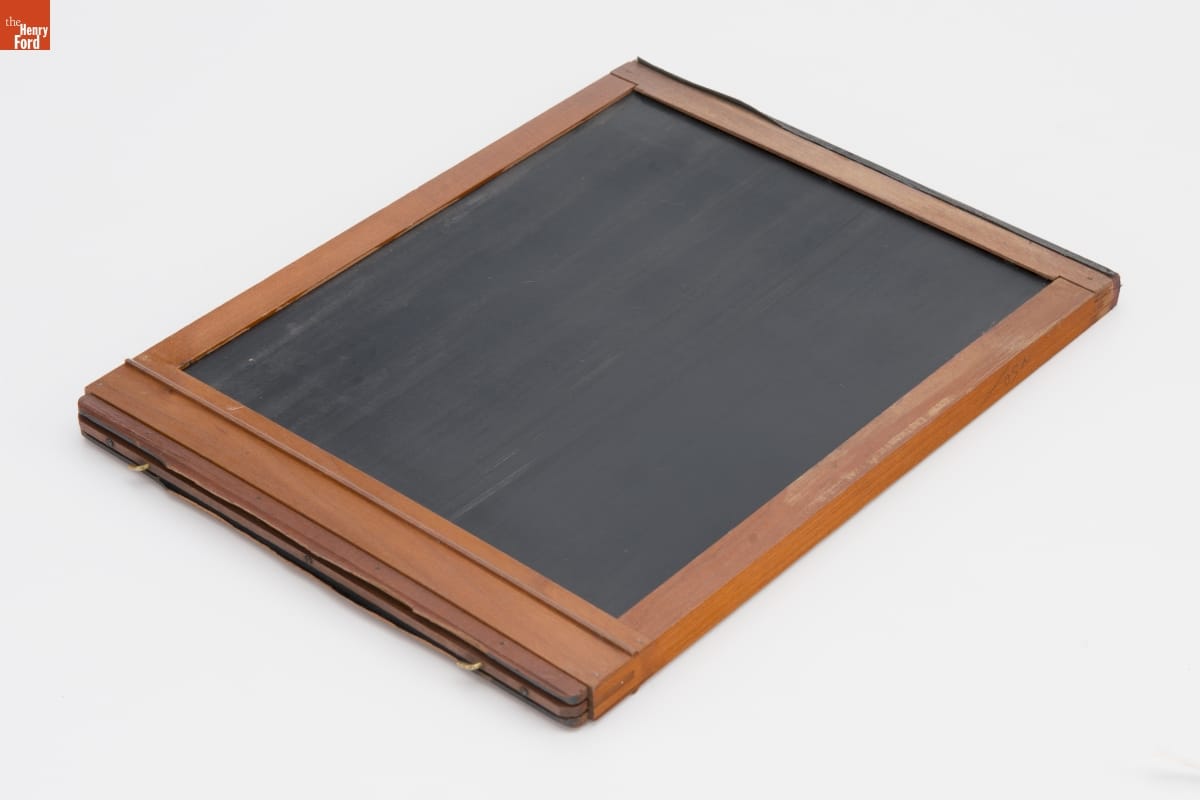
- circa 1925
- Collections - Artifact
Kodak Cut Film Holder, circa 1925
In 1913, Kodak introduced their pioneering Eastman Portrait Film for the professional photographer as an alternative to glass plate photography. Individual sheets of flexible cellulose nitrate were housed in light-safe film holders. Large format film produced by Kodak and others held copious amounts of information, perfect for crisp, faithful reproductions. A less flammable "safety" sheet film was introduced in 1925.
- Kodak Sheet Film Holder, circa 1925 - In 1913, Kodak introduced their pioneering Eastman Portrait Film for the professional photographer as an alternative to glass plate photography. Individual sheets of flexible cellulose nitrate were housed in light-safe film holders. Large format film produced by Kodak and others held copious amounts of information, perfect for crisp, faithful reproductions. A less flammable "safety" sheet film was introduced in 1925.
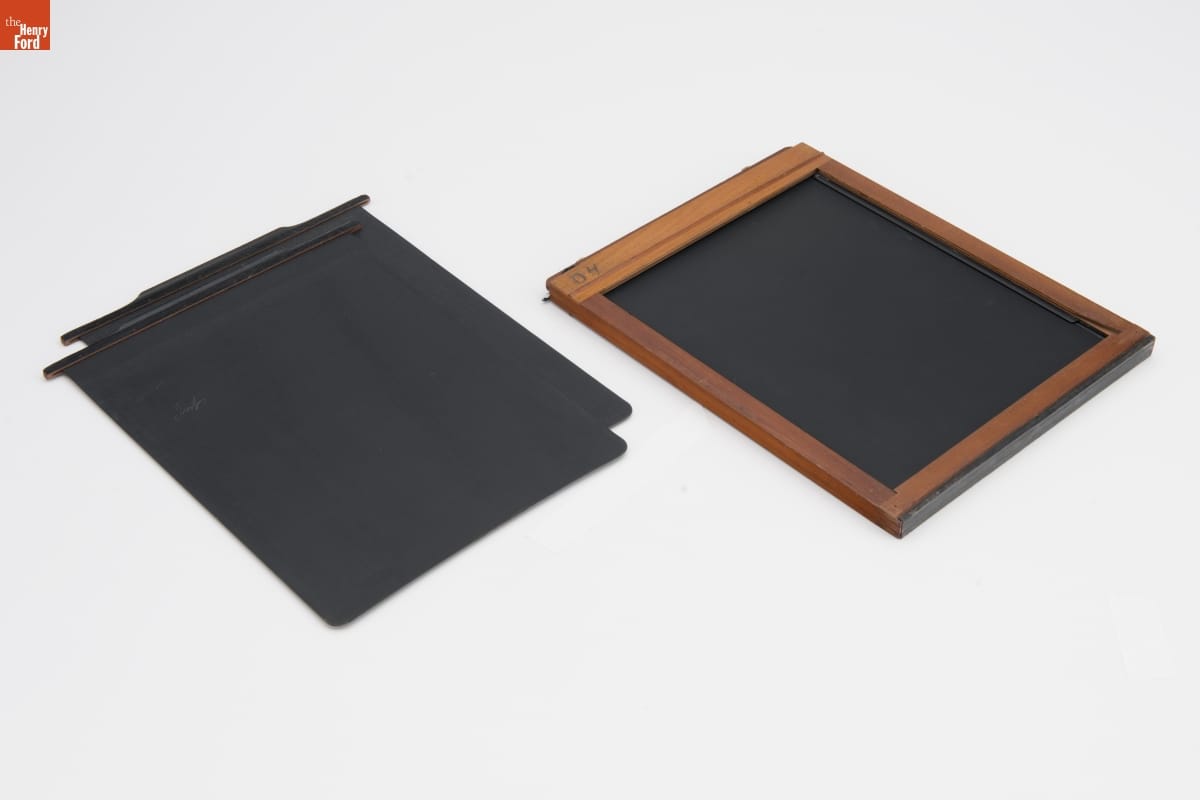
- circa 1925
- Collections - Artifact
Kodak Sheet Film Holder, circa 1925
In 1913, Kodak introduced their pioneering Eastman Portrait Film for the professional photographer as an alternative to glass plate photography. Individual sheets of flexible cellulose nitrate were housed in light-safe film holders. Large format film produced by Kodak and others held copious amounts of information, perfect for crisp, faithful reproductions. A less flammable "safety" sheet film was introduced in 1925.
- Kodak Lens Cleaning Paper Packaging, Used by John Margolies, circa 1975 - In the mid-1970s, John Margolies began to assemble a visual record of America's built roadside landscape. Over the following three decades, he traveled thousands of miles to photograph the overlooked and often quickly vanishing structures that had grown out of American automobile culture and main street commerce. His photographs celebrate a unique chapter of American history. He used this equipment on his travels.
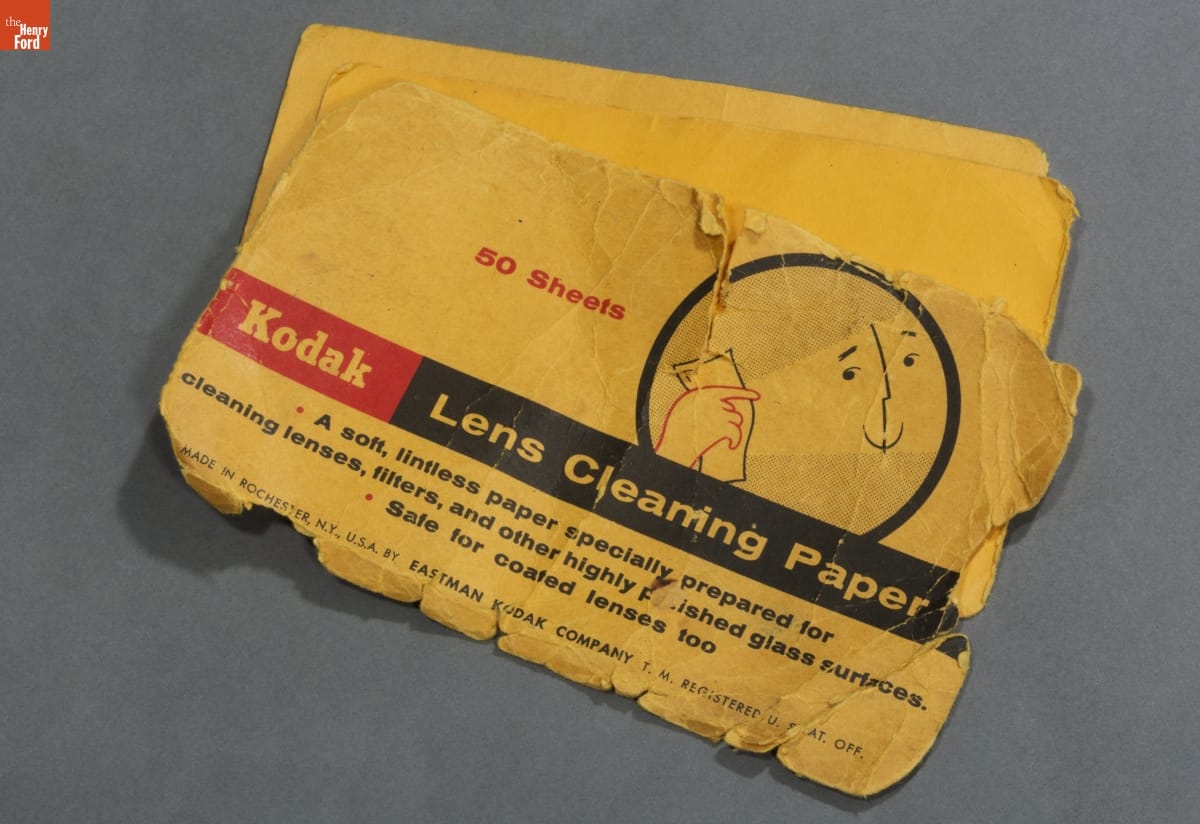
- circa 1975
- Collections - Artifact
Kodak Lens Cleaning Paper Packaging, Used by John Margolies, circa 1975
In the mid-1970s, John Margolies began to assemble a visual record of America's built roadside landscape. Over the following three decades, he traveled thousands of miles to photograph the overlooked and often quickly vanishing structures that had grown out of American automobile culture and main street commerce. His photographs celebrate a unique chapter of American history. He used this equipment on his travels.
- Manicurist and Employee inside Main Plant, H. J. Heinz Company, Pittsburgh, Pennsylvania, 1912 - H.J. Heinz was one of the first to emphasize the importance of cleanliness and sanitation in manufactured food production. Those who directly handled food were given a mandatory manicure once per week. This not only was a sanitation necessity for Heinz but was also a welcome luxury for the workers.
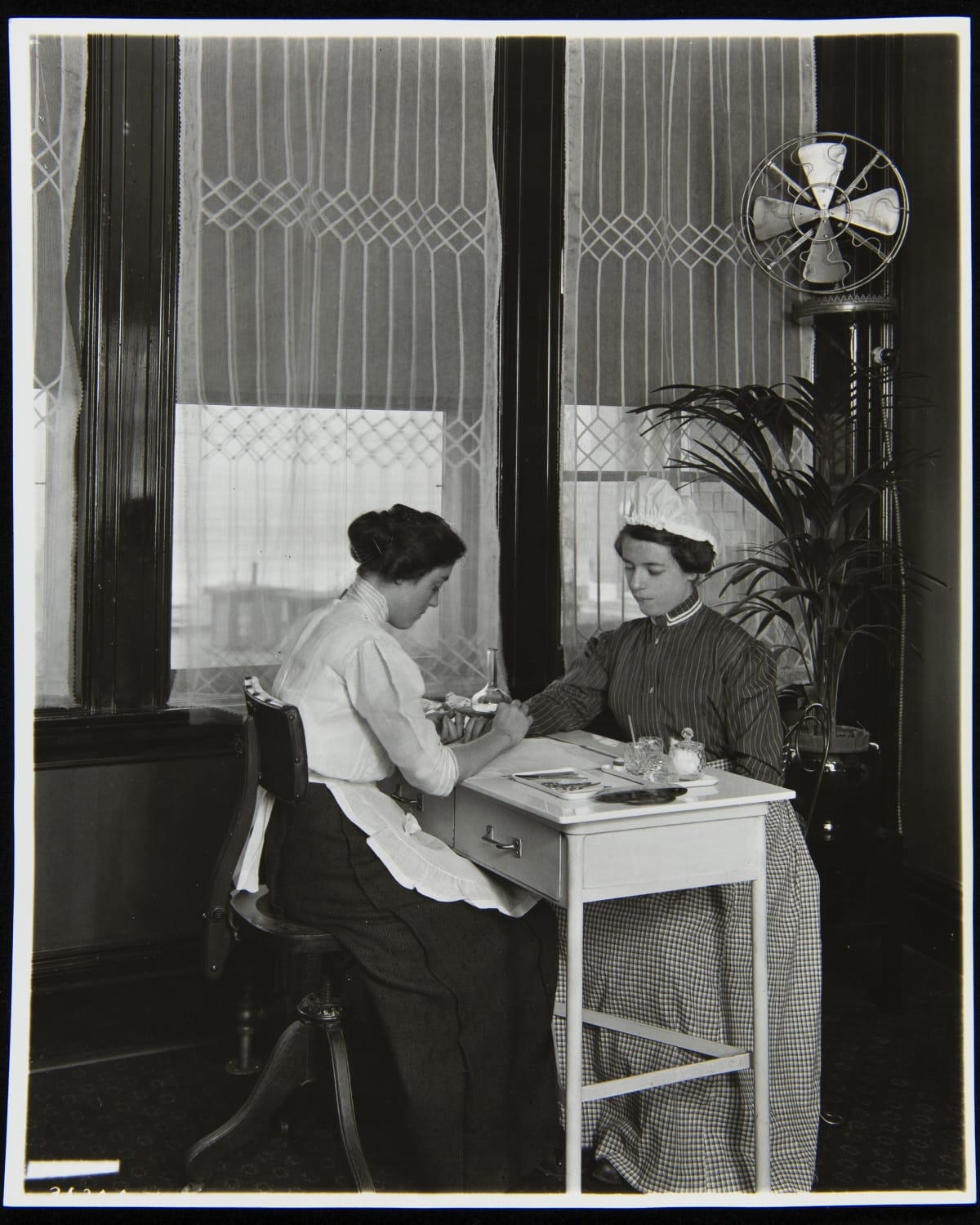
- 1912
- Collections - Artifact
Manicurist and Employee inside Main Plant, H. J. Heinz Company, Pittsburgh, Pennsylvania, 1912
H.J. Heinz was one of the first to emphasize the importance of cleanliness and sanitation in manufactured food production. Those who directly handled food were given a mandatory manicure once per week. This not only was a sanitation necessity for Heinz but was also a welcome luxury for the workers.
- Kodak Film Developer Tank, 1907-1920 -
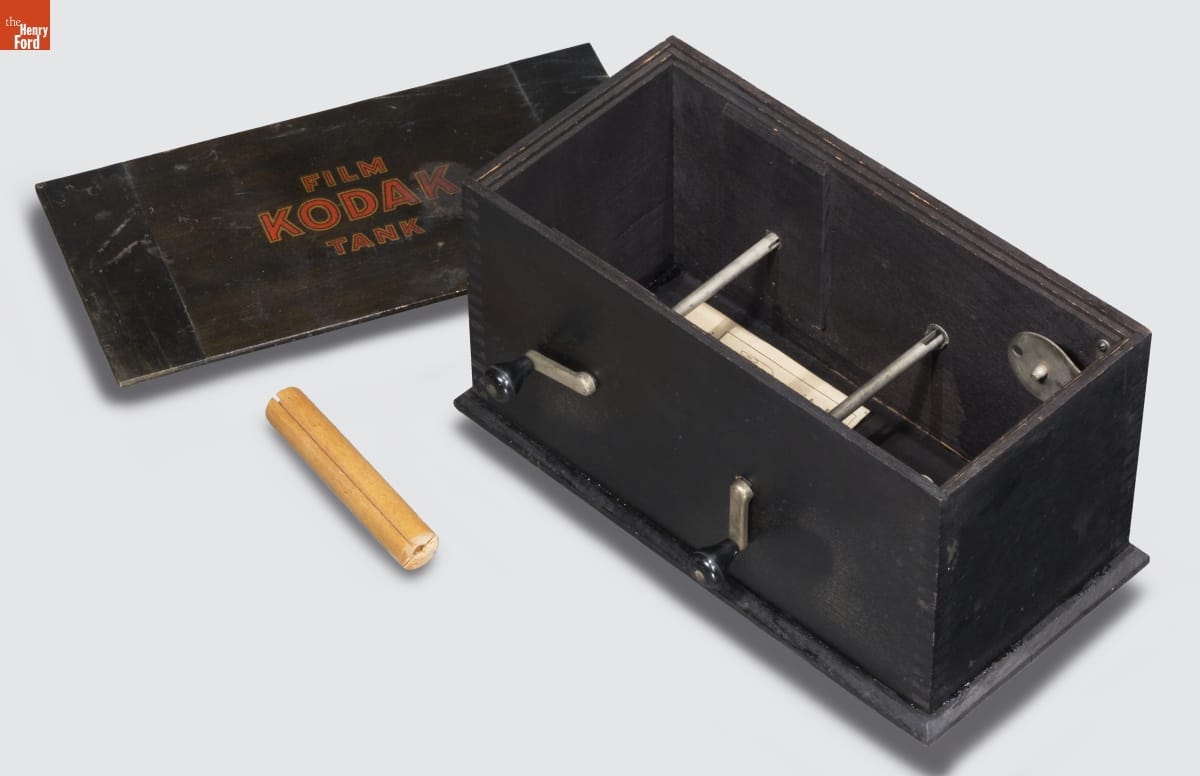
- 1907-1920
- Collections - Artifact
Kodak Film Developer Tank, 1907-1920
- Kodak Film Developer Tank with Developing Powder, 1907-1920 -
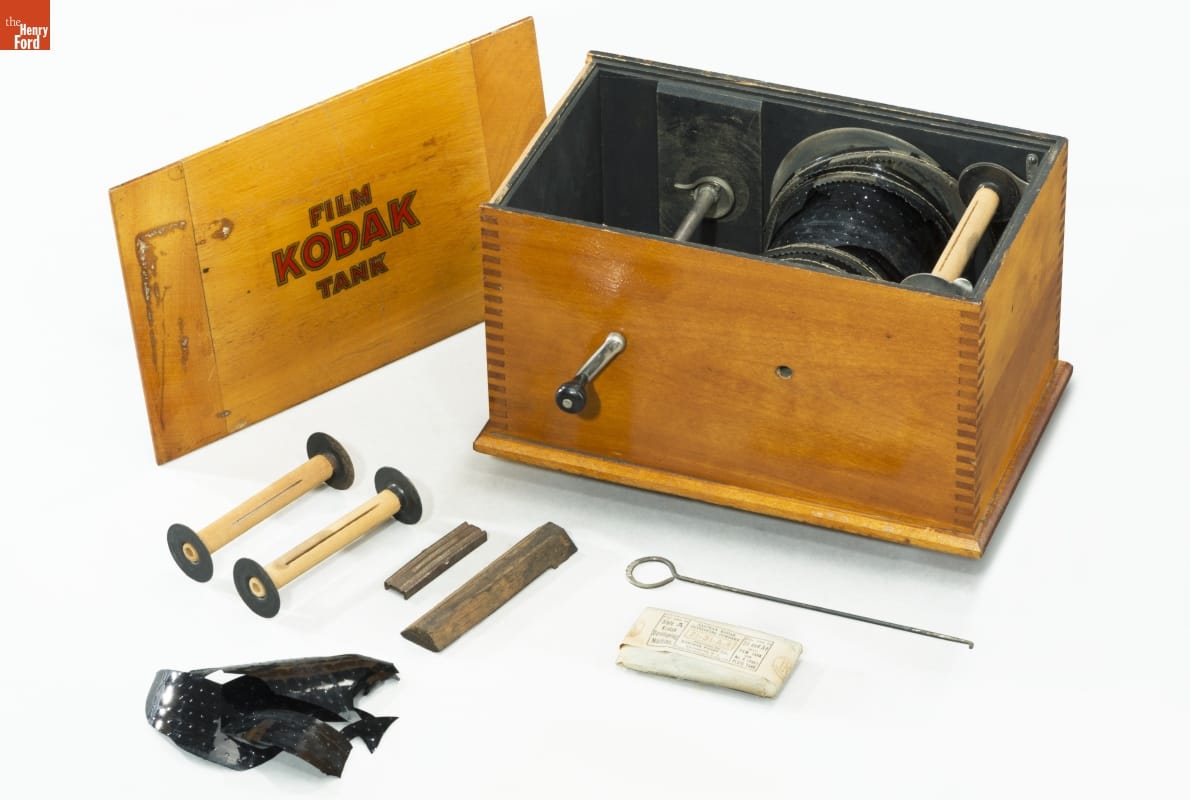
- 1907-1920
- Collections - Artifact
Kodak Film Developer Tank with Developing Powder, 1907-1920