
Search
- "Herald" Magazine, Bound Volume IX for February 1942 - January 1943 - The students of the Greenfield Village and Associated Schools of the Edison Institute began publishing the <em>Herald</em> in 1934. They took the name from a weekly newspaper printed and sold by Thomas Alva Edison when he worked for the Grand Trunk Railroad in 1862-63. The students' version included articles on academic, social, and recreational activities. The publication continued until 1952.
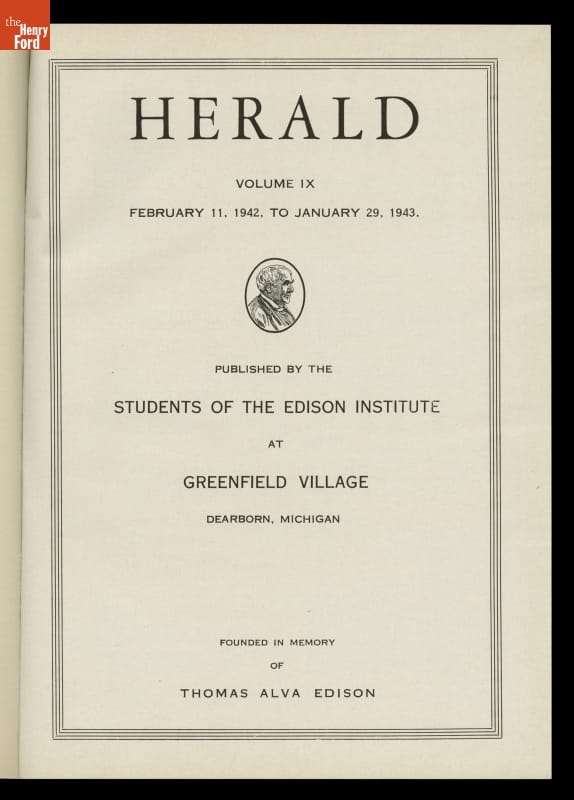
- 11 February 1942 - 29 January 1943
- Collections - Artifact
"Herald" Magazine, Bound Volume IX for February 1942 - January 1943
The students of the Greenfield Village and Associated Schools of the Edison Institute began publishing the Herald in 1934. They took the name from a weekly newspaper printed and sold by Thomas Alva Edison when he worked for the Grand Trunk Railroad in 1862-63. The students' version included articles on academic, social, and recreational activities. The publication continued until 1952.
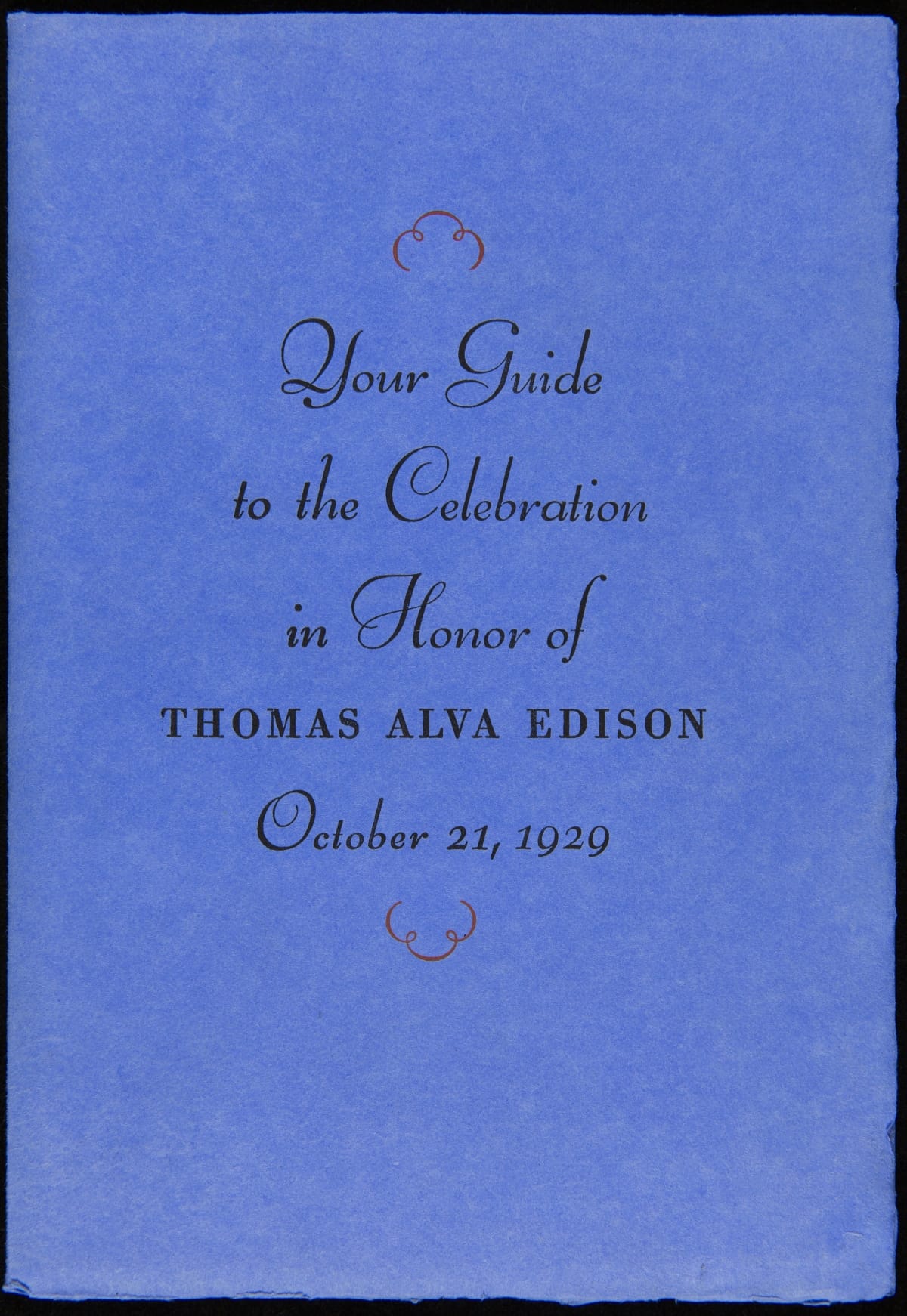
- Your Guide to the Celebration in Honor of Thomas Alva Edison, October 21, 1929 - On October 21, 1929, Henry Ford hosted an event, Light's Golden Jubilee, which celebrated the 50th anniversary of Thomas Edison's invention of a practical incandescent lamp. The event also served as the official dedication of The Edison Institute, Ford's museum complex named in honor of his friend. This detailed guide provided guests with instructions on logistics and a description of the events to be enjoyed during the day-long celebration.
- October 21, 1929
- Collections - Artifact
Your Guide to the Celebration in Honor of Thomas Alva Edison, October 21, 1929
On October 21, 1929, Henry Ford hosted an event, Light's Golden Jubilee, which celebrated the 50th anniversary of Thomas Edison's invention of a practical incandescent lamp. The event also served as the official dedication of The Edison Institute, Ford's museum complex named in honor of his friend. This detailed guide provided guests with instructions on logistics and a description of the events to be enjoyed during the day-long celebration.
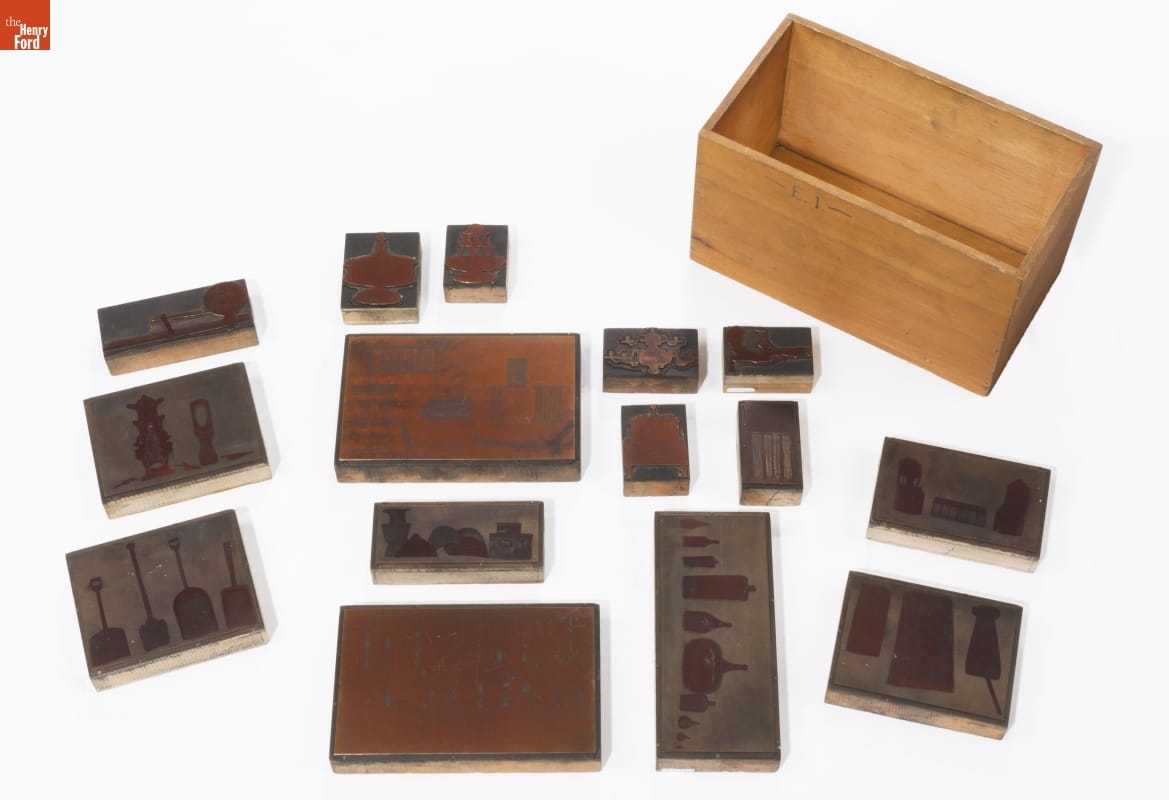
- Box of Edison Institute Printing Plates, 1929-1940 -
- 1929-1940
- Collections - Artifact
Box of Edison Institute Printing Plates, 1929-1940
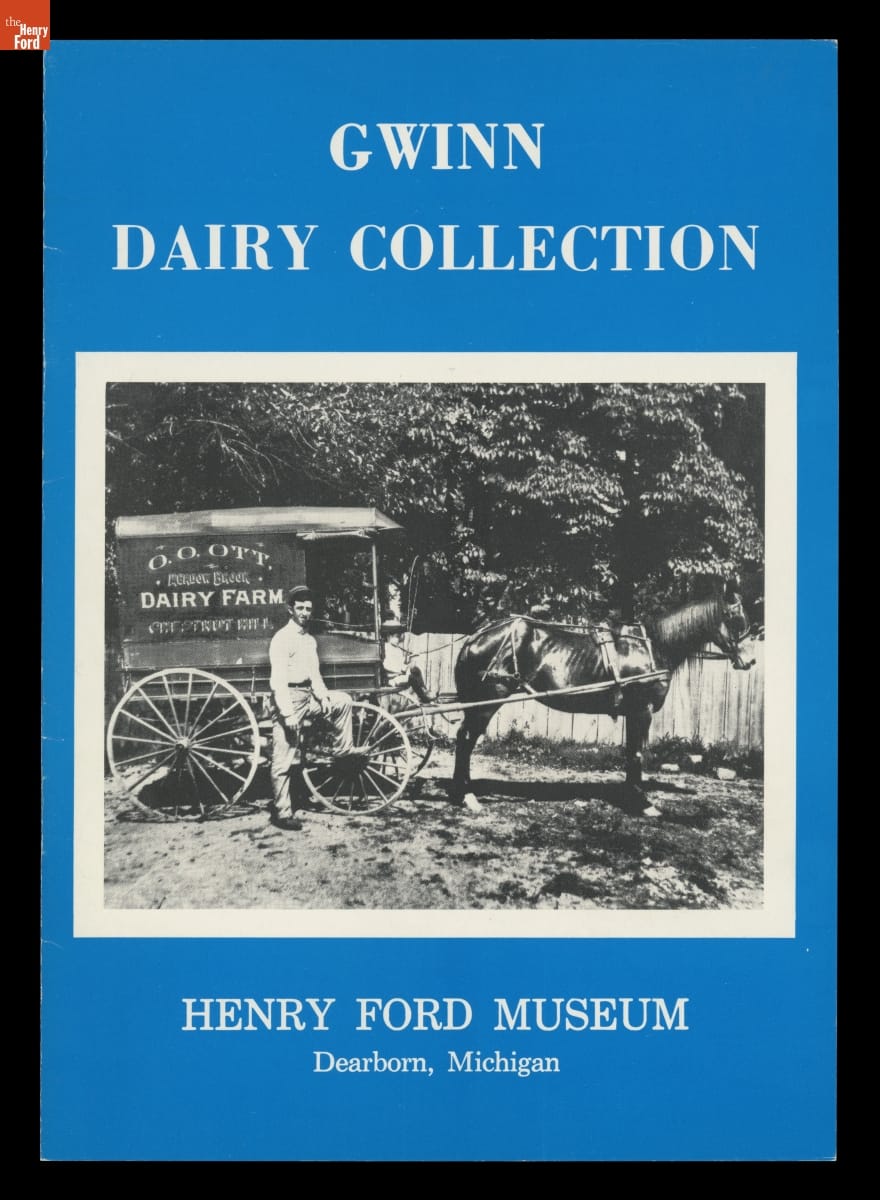
- Gwinn Dairy Collection, Henry Ford Museum, Dearborn, Michigan, 1971 -
- 1971
- Collections - Artifact
Gwinn Dairy Collection, Henry Ford Museum, Dearborn, Michigan, 1971
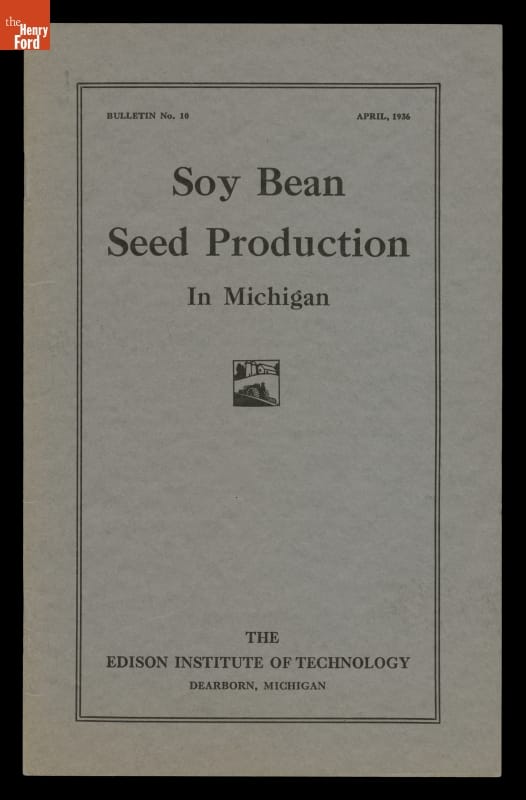
- "Soy Bean Seed Production in Michigan," 1936 -
- April 01, 1936
- Collections - Artifact
"Soy Bean Seed Production in Michigan," 1936
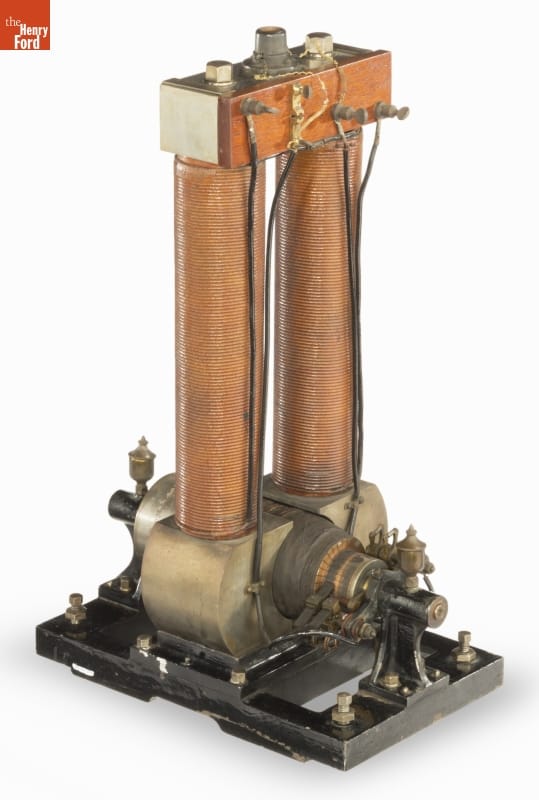
- Miniature Generator, Displayed at the New York World's Fair, 1939 - Henry Ford firmly believed in the "practical educational value" of World's Fair exhibits. During the 1939-40 New York World's Fair, he highlighted the work of students attending his experimental schools. In a miniature machine shop in the Ford building, boys from Ford's Edison Institute Schools operated quarter-size replicas based on machines from Thomas Edison's Menlo Park.
- 1939
- Collections - Artifact
Miniature Generator, Displayed at the New York World's Fair, 1939
Henry Ford firmly believed in the "practical educational value" of World's Fair exhibits. During the 1939-40 New York World's Fair, he highlighted the work of students attending his experimental schools. In a miniature machine shop in the Ford building, boys from Ford's Edison Institute Schools operated quarter-size replicas based on machines from Thomas Edison's Menlo Park.
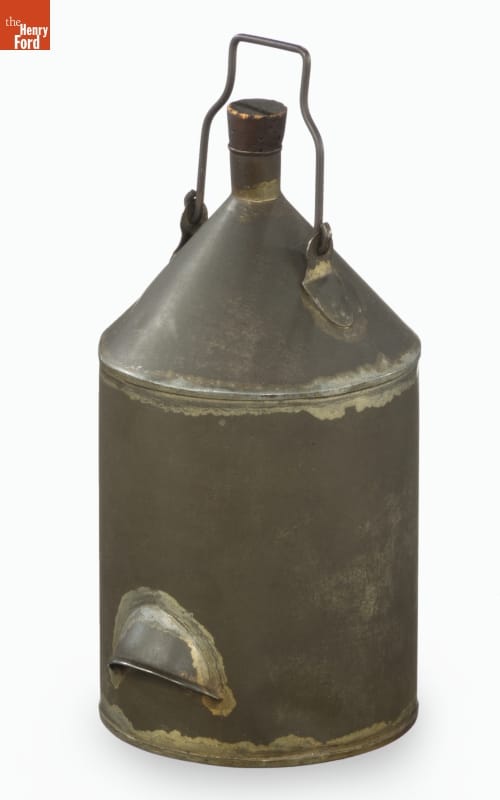
- Miniature Canister, Displayed at the New York World's Fair, 1939 - Henry Ford firmly believed in the "practical educational value" of World's Fair exhibits. During the 1939-40 New York World's Fair, he highlighted the work of students attending his experimental schools. In the Ford building, boys from Ford's Edison Institute Schools operated quarter-size replicas based on machines from Thomas Edison's Menlo Park. Miniature equipment and displays completed the scene.
- 1939
- Collections - Artifact
Miniature Canister, Displayed at the New York World's Fair, 1939
Henry Ford firmly believed in the "practical educational value" of World's Fair exhibits. During the 1939-40 New York World's Fair, he highlighted the work of students attending his experimental schools. In the Ford building, boys from Ford's Edison Institute Schools operated quarter-size replicas based on machines from Thomas Edison's Menlo Park. Miniature equipment and displays completed the scene.
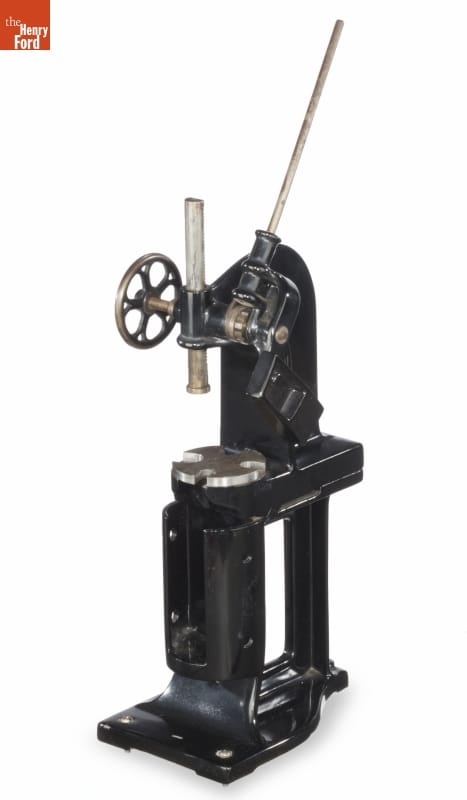
- Miniature Vertical Press, Displayed at the New York World's Fair, 1939 - Henry Ford firmly believed in the "practical educational value" of World's Fair exhibits. During the 1939-40 New York World's Fair, he highlighted the work of students attending his experimental schools. In a miniature machine shop in the Ford building, boys from Ford's Edison Institute Schools operated quarter-size replicas based on machines from Thomas Edison's Menlo Park.
- 1939
- Collections - Artifact
Miniature Vertical Press, Displayed at the New York World's Fair, 1939
Henry Ford firmly believed in the "practical educational value" of World's Fair exhibits. During the 1939-40 New York World's Fair, he highlighted the work of students attending his experimental schools. In a miniature machine shop in the Ford building, boys from Ford's Edison Institute Schools operated quarter-size replicas based on machines from Thomas Edison's Menlo Park.
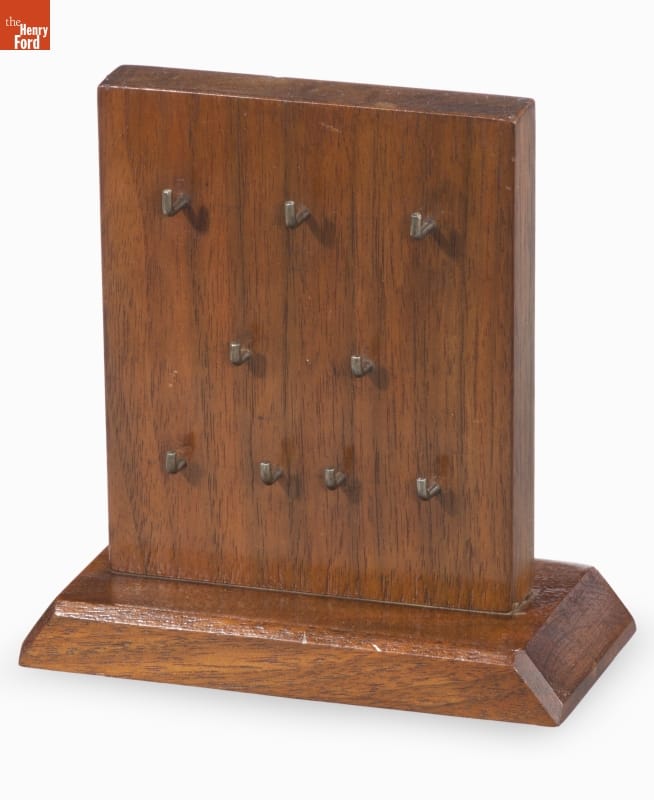
- Miniature Rack, Displayed at the New York World's Fair, 1939 - Henry Ford firmly believed in the "practical educational value" of World's Fair exhibits. During the 1939-40 New York World's Fair, he highlighted the work of students attending his experimental schools. In the Ford building, boys from Ford's Edison Institute Schools operated quarter-size replicas based on machines from Thomas Edison's Menlo Park. Miniature equipment and displays completed the scene.
- 1939
- Collections - Artifact
Miniature Rack, Displayed at the New York World's Fair, 1939
Henry Ford firmly believed in the "practical educational value" of World's Fair exhibits. During the 1939-40 New York World's Fair, he highlighted the work of students attending his experimental schools. In the Ford building, boys from Ford's Edison Institute Schools operated quarter-size replicas based on machines from Thomas Edison's Menlo Park. Miniature equipment and displays completed the scene.
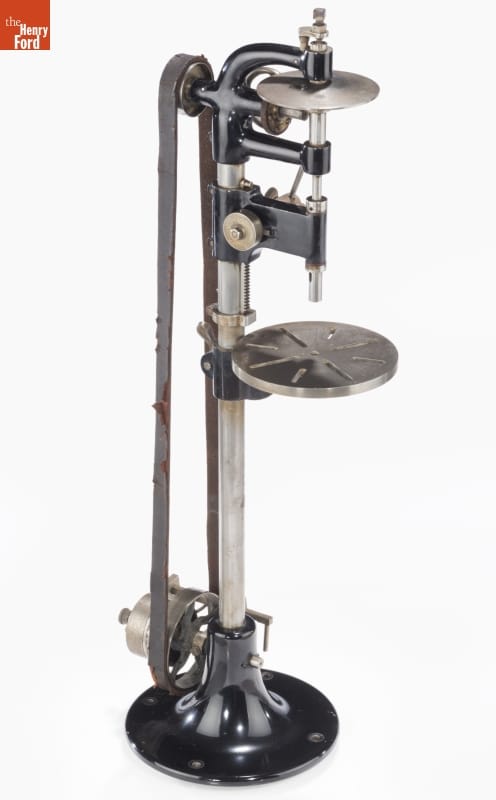
- Miniature Drill Press, Displayed at the New York World's Fair, 1939 - Henry Ford firmly believed in the "practical educational value" of World's Fair exhibits. During the 1939-40 New York World's Fair, he highlighted the work of students attending his experimental schools. In a miniature machine shop in the Ford building, boys from Ford's Edison Institute Schools operated quarter-size replicas based on machines from Thomas Edison's Menlo Park.
- 1939
- Collections - Artifact
Miniature Drill Press, Displayed at the New York World's Fair, 1939
Henry Ford firmly believed in the "practical educational value" of World's Fair exhibits. During the 1939-40 New York World's Fair, he highlighted the work of students attending his experimental schools. In a miniature machine shop in the Ford building, boys from Ford's Edison Institute Schools operated quarter-size replicas based on machines from Thomas Edison's Menlo Park.